18 923 résultats
réf. 3871700495-11-1-29Appel-Druck Donau-Verlag. Very Good. With dust jacket. It's a well-cared-for item that has seen limited use. The item may show minor signs of wear. All the text is legible with all pages included. It may have slight markings and/or highlighting. Appel-Druck Donau-Verlag unknown
1854réf. 111805Boston: The Press of William White 1854 Book. Good. Hardcover. First Edition. Printed by order of the Legislature. This "fifth volume of the manuscript records commences with the proceedings of the General Court of Election which convened at Boston on the twenty-seventy of May 1674 and includes all the records of the Massachusetts Colony for a period of about thirteen years from that time to the close of the May session in 1686. . ." Includes a list of the freemen of the colony for these years; indexed. Moderate corner and edge wear; front cover has several scuff marks; text is in very good condition. The Press of William White hardcover
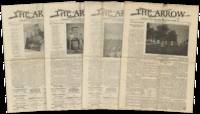
1907réf. List3875Carlisle Pennsylvania: Carlisle Indian Industrial School 1907. Four issues. 12 x 17 ¾ inches folio folded as issued. Folded again vertically with some folded vertically twice. Wear and some tears and loss at folds with toning and stains some with marginal damage. Very good to excellent. The Carlisle Indian Industrial School had a number of publications including The Indian Helper The Red Man The Red Man and Helper The Indian Craftsman and The Arrow. The latter was founded in 1904 when William A. Mercer became superintendent after the school's founder Richard Henry Pratt left the position. The paper's motto describes it as "A Paper Devoted to the Interest of the Progressive Indian" and the very first edition states that its aim is to "become a medium for the best thought obtainable upon all sides of the Indian question" Vol. I no. 1 August 25 1904. Offered here are four issues of The Arrow all Vol. III: no. 9 October 26 1906 no. 11 November 9 1906 no. 16 December 14 1906 and no. 40 May 31 1907. Contents include sports news-Carlisle was known for its football team-news from current and former students school events poetry and short articles. Football is almost always front-page news and the paper typically reports big wins for Carlisle which one article describes as "Bringing Home Another Scalp" Nov. 1906. Football news is also a place to emphasize the importance of obedience for instance "'Pop' Warner had his men under good control and as event after event was pulled off the value of efficient coaching and strict compliance with instructions was plainly manifested"; May 1907 a theme which is reiterated in a number of the articles. Students provide updates on school events both religious and secular and brief updates on individual students at home and away such as "Louise Hardin who is out in the country at Mt. Airy Penn. writes that she likes her place very much. William Garlow one of our baseball twirlers is under the weather. His friends wish him a speedy recovery." The Arrow also reprints articles from other newspapers about the school such as a November 1906 article from the New York World which describes the school: "The Indians in the school range from little tots six years of age to grown men and women who have been at the institution for a dozen years. They represent every tribe in the United States. Many of the youngsters are just entering the state of civilization while those in the graduating class are fine specimens of the modern educated Indian." Carlisle Indian School Digital Resource Center hosts digitized copies of the school's publications; we find no physical holdings on OCLC. Of interest to historians of Carlisle and the assimilationist project. . Carlisle Indian Industrial School unknown
réf. 0985201630-8-1American Museum of Natural History. Very Good. It's a well-cared-for item that has seen limited use. The item may show minor signs of wear. All the text is legible with all pages included. It may have slight markings and/or highlighting. American Museum of Natural History unknown
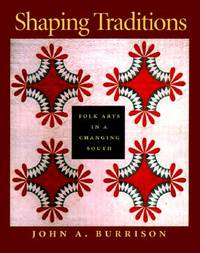
2000réf. G0820322083I3N01Univ of Georgia Pr 2000. Hardcover. Good. Missing dust jacket; Pages can have notes/highlighting. Spine may show signs of wear. ~ ThriftBooks: Read More Spend Less.Dust jacket quality is not guaranteed. Univ of Georgia Pr hardcover
réf. 0985201630-11-1American Museum of Natural History. Very Good. It's a well-cared-for item that has seen limited use. The item may show minor signs of wear. All the text is legible with all pages included. It may have slight markings and/or highlighting. American Museum of Natural History unknown
réf. 68051252-6Cengage Gale. Used - Good. Pages intact with minimal writing/highlighting. The binding may be loose and creased. Dust jackets/supplements are not included. Stock photo provided. Product includes identifying sticker. Better World Books: Buy Books. Do Good. Cengage Gale unknown
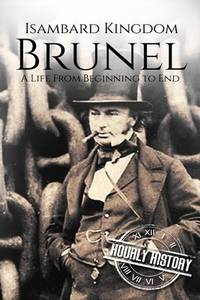
réf. 1521426376-11-1Independently published. Very Good. It's a well-cared-for item that has seen limited use. The item may show minor signs of wear. All the text is legible with all pages included. It may have slight markings and/or highlighting. Independently published unknown
réf. 1558765794-11-1Markus Wiener Publishers. Very Good. It's a well-cared-for item that has seen limited use. The item may show minor signs of wear. All the text is legible with all pages included. It may have slight markings and/or highlighting. Markus Wiener Publishers unknown
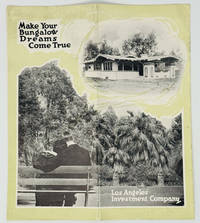
réf. FRE6816 p.: numerous halftone photographs and floor plans; printed in black and pale green throughout; pictorial wrappers. 23.2 × 12.1 cm 9.1 × 4.8 in. Very good condition. llustrated sales brochure issued by the Los Angeles Investment Company for newly built bungalows in its New College Tract and Rodgers Park developments in South Los Angeles. Both tracts were being mapped and developed by the company in 1913 and surviving houses illustrated here can be dated to 1913–14 strongly suggesting that the brochure was produced at the moment the neighborhoods were first being offered to home buyers. Rather than presenting hypothetical architectural designs the brochure illustrates individual houses already erected or nearing completion each identified by street address and accompanied by a detailed account of its exterior interior fittings price and often a floor plan. The houses concentrated along First through Fifth Avenues and West 68th through 78th Streets document a wide range of Southern California bungalow forms: one- and one-and-a-half-story houses Swiss chalet and Craftsman variants shingled and clapboard exteriors clinker-brick and cobblestone piers broad porches sleeping porches pergolas and extensive built-in cabinetry. Descriptions specify such details as quarter-sawn oak floors built-in bookcases and buffets fireplaces breakfast rooms screened porches Dutch kitchens plastered interiors window seats and carefully coordinated interior color schemes. The introductory sections promote the New College Tract through its paved streets cement curbs and walks utilities streetcar connections lawns and landscaped surroundings with separate discussions of construction finish floors buffets kitchens doors porches and fixtures. Rodgers Park is similarly presented as a planned residential district with ornamental planting paved streets playgrounds tennis courts utilities and convenient transportation. Houses were offered largely in the $2200–$4500 range with low down payments and monthly installments explicitly targeting aspiring middle-class white first-time homeowners. The brochure also belongs to the early history of racially restricted home ownership in Los Angeles. The Los Angeles Investment Company is documented imposing Caucasian-only deed restrictions on its residential developments within only a few years of the present publication. In Los Angeles Investment Co. v. Gary 1919 arising from the company's attempted eviction of African American homeowner Alfred Gary from 1728 West 51st Street 17 blocks away from the described lot the California Supreme Court considered an LAIC deed prohibiting sale lease rental or occupancy by anyone outside the Caucasian race. The property was one of 167 lots in an LAIC tract subject to such restrictions. A separate LAIC deed dating from 1915 similarly combined racial exclusion with architectural and residential-use controls. The New College and Rodgers Park tracts advertised here were developed in 1913 at a time when racial covenants were already in use in Los Angeles and immediately before their documented employment by LAIC. Although the precise deed restrictions for these two tracts have not yet been located the company's contemporary practices give an important racial dimension to the brochure's repeated celebration of attainable home ownership and “your own home.” The neighborhoods represented here subsequently formed part of the broader South Los Angeles area into which African American homeownership expanded during the following decades particularly from the 1920s through the postwar period. Black homeownership in South Central Los Angeles approached 40% by the 1920s while the city’s African American population grew from 63774 in 1940 to 334916 by 1960. By 1960 roughly 70% of the population of the broader South Los Angeles area was African American as Black families increasingly acquired homes beyond the older Central Avenue corridor. unknown
1999réf. G0878912584I3N10Research & Education Association 1999. Paperback. Good. Former library book; Pages can have notes/highlighting. Spine may show signs of wear. ~ ThriftBooks: Read More Spend Less.Dust jacket quality is not guaranteed. Research & Education Association paperback
réf. 68727987-6Used - Good. Pages intact with minimal writing/highlighting. The binding may be loose and creased. Dust jackets/supplements are not included. Stock photo provided. Product includes identifying sticker. Better World Books: Buy Books. Do Good. unknown
réf. 0820602957-11-1Chemical Publishing Company. 7th Revised ed. Very Good. It's a well-cared-for item that has seen limited use. The item may show minor signs of wear. All the text is legible with all pages included. It may have slight markings and/or highlighting. Chemical Publishing Company unknown
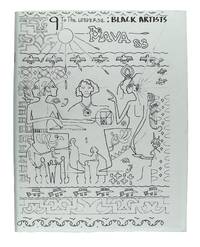
1983réf. 50199Philadelphia: Black History Museum UMUM Publishers 1983. Near Fine. Philadelphia: Black History Museum UMUM Publishers 1983. First Edition. Quarto 27.5cm; illustrated wraps featuring cover design by Isaac Foy; 89pp.; black and white photographs and illustrations. A touch of rubbing to covers with partially-removed museum store sticker to rear. A group festschrift to support and celebrate Black artists divided into three panels the first celebrating Selma Burke Roy DeCarava and Tom Feelings the second dedicated to Art Institutions Collections Patrons and Galleries and concluding with "New Voices in the Tradition - Historians Critics.". Black History Museum UMUM Publishers unknown
1840réf. 112392Philadelphia: Thomas Cowperthwait & Co. 1840 Ex-Library. Fair. Hardcover. RARE copy of this 19th century biography of George Washington copyright 1932 by S. G. Goodrich. 174 pages nicely illustrated throughout. Binding has moderate wear and rub marks scattered foxing within 1 leaf is starting to separate from the binding library withdrawal stamp in two places with no other library markings. Thomas, Cowperthwait & Co. hardcover
2009réf. ANAIS-2913903967Histoire & Collections 2009-11-01. Illustrated. hardcover. Good. 0x0x0. Buy with confidence. Excellent Customer Service & Return policy. Histoire & Collections hardcover
réf. ANAIS-0804715653Stanford University Press. First Edition. other. Good. 9.5X6.5X1.5. Buy with confidence. Excellent Customer Service & Return policy. Stanford University Press unknown
réf. ANAIS-0440027918Delacorte 1976. hardcover. Good. 9.1x7.1x1.5. Buy with confidence. Excellent Customer Service & Return policy. Delacorte, (1976) hardcover
1990réf. 26-01-26-di-201-jmKeith Watkings 1990. hardcover. Good. 0x0x0. As pictured. Some wear. Very readable copy. Keith Watkings hardcover
réf. 1728249961-11-1Sourcebooks. Very Good. It's a well-cared-for item that has seen limited use. The item may show minor signs of wear. All the text is legible with all pages included. It may have slight markings and/or highlighting. Sourcebooks unknown
1925réf. 058319London 1920 / Philadelphia: Sidgwick & Jackson / Lippincott 1925. Second Revised Edition Second Printing 1st Printing. Red Cloth Gilt. Fine/Very Good Dustjacket. 11 1/4'' Tall. Plates Throughout; Folding Color Map. 352 Pp. Red Cloth Gilt. Maps On Endpapers. Second American Printing Of The Second Revised Edition. A Particularly Bright Clean Example With Gilt Still Brilliant No Names Or Marks Hinges Tight Pages Unopened Still Uncut And Attached Along Foredge. Dust Jacket For The American Distribution With "Lippincott" On Spine Worn At Corners With Small Losses Chipping About 1/4" Deep Along Top Of Spine 1" Tears Along Top Of Rear Spine Edge And Rear Flap Fold 1/2" Closed Tear At Top Of Front Panel. No Loss Of Color Or Design Or Lettering. Ownership Signatures Of Prof. Estelle A. C. Cross Of Los Angeles. Per Wikipedia John Clarke Stobart 1878 - 1933 Commonly Known As J. C. Stobart Was A Classical Scholar A University Of Cambridge Lecturer An Hm Inspector Of Schools And The Bbc's First Director Of Education. After The War He Helped Organize The 1924 British Empire Exhibition At Wembley And In 1925 Joined The Bbc As Its First Director Of Education. He Was Responsible For Two Long-Lasting Programs Children's Hour And The Epilogue And According To One Source Suggested The Bbc's Motto 'Nation Shall Speak Peace Unto Nation'. He Also Proposed Creating A New Cultural Network To Be Named The Minerva Programme After The Roman Goddess Of Wisdom But This Idea Was Turned Down And Was Not Realised Until The Creation Of 'The Third Programme' At The End Of The Second World War. Stobart Became Well-Known All Over The World For His Regular New Year's Eve Broadcast 'The Grand Good-Night'. He Disagrees With Edward Gibbon's Pessimistic View Of The Decline And Fall Of The Roman Empire Pointing Out That 'The Mere Notion Of Empire Continuing To Decline And Fall For Five Centuries Is Ridiculous' And Remarking That 'This Is One Of The Cases Which Prove That History Is Made Not So Much By Heroes Or Natural Forces As By Historians' Since 'If All The Roman Historians Had Perished And Only The Inscriptions Remained We Should Have A Very Different Picture Of The Roman Empire A Picture Much Brighter And I Think Much More Faithful To Truth.' He Admires The Romans For Their Law Discipline Engineering And Especially Their Sanitation But It Is Clear That He Prefers The Greeks For Their Art Philosophy Mathematics And Literature. Sidgwick & Jackson / Lippincott hardcover
2023réf. 24-12-23-gw-38835-lczIndependently published 2023-07-19. paperback. Good. 8x0x8. Some light wear. Good copy. Independently published paperback
1891réf. 96958New York: Henry Holt and Company 1891. First Edition. Hardcover. Very Good. Hardcover in blue cloth boards with title in gilt on spine. First edition. Very good condition clean and unmarked. Top and bottom of spine are lightly softened No spotting or writing. Solidly bound. The book is divided into chapters that reflect aspects and phases of women's work each written by a woman notable in that field. There is no chapter on "women in marriage" because as the editor notes in her introduction ".women had never been denied that privilege and so it could have no legitimate place in my book." No dust jacket. A valuable historical resource. Small 8vo. 457 pp. including index. Henry Holt and Company hardcover
1923réf. 058026London: The Macmillan Company 1923. First Edition First Printing . Blue Cloth. Near Fine/No DJ. Maps. 549 pp. Touch of wear at corners small bump to lower front tip. No names no marks hinges tight. The Macmillan Company hardcover
1925réf. 058052Constantinople: Rizzo & Son 1925. First Edition stated . Green Cloth. Near Fine. Maps and Photographs. 530 Pp. Green Cloth Printed In Black. First Edition Stated. An Exceptionally Nice Copy Probably Never Used Scarce Thus. Rizzo & Son hardcover