(DRINK HISTORY)ABAA
709.555 risultati
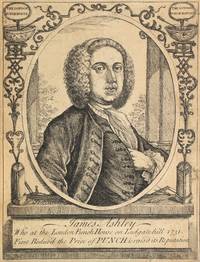
rif. 267079London: Thomas Worlidge mid-18th century. Engraved portrait of James Ashley in cartouche flanked by ornate pedestals supporting two punch bowls with engraved caption as above by Thomas Worlidge. 7-9/16 x 5-3/4 in. A strong impression with very slight rubbing and discoloration. Engraved portrait of James Ashley in cartouche flanked by ornate pedestals supporting two punch bowls with engraved caption as above by Thomas Worlidge. 7-9/16 x 5-3/4 in. Scarce trade card of James Ashley proprietor of the London Coffee House and Punch-House 1731-1776 who was "London's leading purveyor of Punch in the eighteenth century" Wondrich Punch p. 65 and "the world's first celebrity mixologist the first man to become famous for compounding and selling a mixed drink" ibid p. 172. Ashley a former cheese merchant opened his Punch-House in 1731 in Ludgatehill London. Extensive advertising in London papers as well as the distinct ornate pedestals surmounted by iron punch bowls which flanked its entrance made the London Punch-House one of the most well-known drinking establishments in the city. Clientele included Hogarth Boswell Oliver Goldsmith and Benjamin Franklin. A large sign outside of the Punch-House echoes the caption on this trade card "Pro bono publico. James Ashley in 1731 first reduced the price of punch raised its reputation and brought it into universal esteem." Ashley did indeed reduce the price of punch - from 8 shillings for punch made from a quart of arrack to 6 shillings - but his great innovation was to offer punch in smaller portions in servings as small as two ounces. These small servings made to order for the customer were the precursor to the modern cocktail. This trade card is engraved by Ashley's friend Thomas Worlidge 1700-1766 dubbed "the English Rembrandt" who also engraved portraits of Ashley's wife and one Mrs. Graywood the bar-keep at the London Punch-House. Not in ESTC Thomas Worlidge unknown books
1918rif. 182991918. Fairmont High School Diploma for female student. 1918. Measures 14 x 20 inches. Certificate reads in part "This diploma certifies that Edna Lillian Squires has completed the course of study prescribed by the Board of Education of this District for the High School and is entitled to all the honors and privileges of a Graduate of this Institution." Beneath the decorative text displaying the school's name across top is an illustration of the state seal of West Virginia at the time. The early 20th century saw new educational opportunities for American women who upon graduating from high school could attend integrated colleges. Educational activists like Catharine E Beecher advocated fiercely against for women's right to enter any college based on the belief that gender equality was contingent on the quality of female education and institutional opportunities to support it. Light foxing does not affect text or image. Includes state seal and original stamp from school board with ribbon still attached. Overall good condition. unknown books
1914rif. 183001914. Miss Gill's School for Girls Diploma. 1914. Measures 16 x 21.5 inches. Awarded to Constance Madeleine McFadden for satisfactory completion of the subjects of Arithmetic History of Art French Physiology English Psychology and English History. Miss Gill's School in Philadelphia was founded by Miss Elizabeth Gill an educational activist who championed small class sizes and close student-teacher collaboration a nonhierarchical classroom model rare for its time. Unlike women's "finishing schools" Miss Gill's emphasized a rigorous curriculum individualized to students' needs. Creased where folded. Light toning to edges does not affect text. Overall very good condition. unknown books
1994rif. 61580N.p.: American Printing History Association 1994. Edition limited to 200 copies folio consisting of a bifoliate title with introduction a list of the 28 contributors and 28 broadsides all contained in a natural linen folding box with a red morocco label on the upper cover; fine. From the library of Kim Merker. Introduction by editor Michael Peich designed by Jerry Kelly title page introduction and contributor list printed at the Stinehour Press. Selections from the work of Dwight Agner Harold Berliner Barbara Henry Allan Kornblum Henry Morris Michael Peich Gaylord Schanilec Neil Shaver Roderick Steinhour W. Thomas Taylor and many others. American Printing History Association unknown books
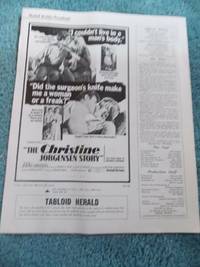
rif. 18133Jorgensen Christine. The Christine Jorgensen Story 1970 an original promotional pressbook for the biographical film recounting the life of one of the first American transgender women to receive widespread publicity following gender-affirming surgery. Directed by Irving Rapper and starring John Hansen as Jorgensen the film adapted her 1967 autobiography for American movie audiences nearly two decades after her medical treatment in Denmark made international headlines. The pressbook documents Hollywood's presentation of transgender experience in 1970 emphasizing Jorgensen's physical transition romantic relationships and questions of sexuality through provocative advertising imagery and language. The Christine Jorgensen Story. 1970. Original film pressbook. Four pages uncut measuring 12 x 15 inches. Black-and-white promotional photographs depict scenes from Jorgensen's life as dramatized in the film including a pre-transition scene in which the central character kisses a woman and a later scene showing the character as a woman in bed with a man. Advertising copy includes the declarations "I couldn't live in a man's body" and "Could I ever love a man physically" The juxtaposition of these images and questions emphasizes the film industry's treatment of gender transition through bodily transformation and heterosexual romance. The pressbook preserves the promotional language used to introduce Jorgensen's story to mainstream audiences including the emphasis placed on her personal relationships rather than her public advocacy. Jorgensen became an international celebrity in December 1952 when newspapers publicized her medical treatment in Copenhagen. In a letter written following her 1951 operation she had described her transformation to friends: "Remember the shy miserable person who left America Well that person is no more." Although she had initially hoped to maintain a private life her return to New York in February 1953 attracted crowds of journalists and she subsequently established a career as an entertainer author and public speaker. Jorgensen used her celebrity to challenge misconceptions about transgender people and advocate for greater public understanding. Released in 1970 the film brought her autobiography to a new audience while its publicity relied heavily on the sensational treatment of gender and sexuality that had characterized newspaper coverage of her transition in the 1950s. The pressbook records those promotional conventions during an early period of transgender subjects appearing in mainstream American cinema. In very good condition. unknown books
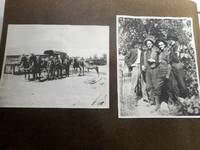
1920rif. 181251920. California photograph and postcard scrapbook 1920s-1950s documents the development of regional identity tourism and youth leisure culture during a period of rapid population growth and national attention to the American West. The album captures informal social life alongside curated views of California's built and natural environments including missions urban centers and recreational landscapes. Images of camping excursions bathing scenes and staged outdoor portraits present a visual record of mobility and leisure that accompanied the expansion of automobile travel and the increasing accessibility of California as a destination. The inclusion of postcards depicting historic sites such as mission architecture and Olvera Street situates the scrapbook within broader efforts to frame California's past for visitors while candid photographs of young men and women emphasize social bonding performance of identity and recreation within emerging twentieth century youth culture. Scrapbook containing approximately 200 photographs and postcards dating from the 1920s through the 1950s primarily depicting locations and activities across California. Photographs and cards range in size from approximately 2 x 1.5 inches to 9 x 6 inches and include both candid and posed images. Notable sequences include a group of four young men on a camping trip in the 1920s shown cooking washing dishes outdoors with tin buckets and a camp stove posing individually before a shared tent and engaging in playful staging including one image of a figure standing on a rock over a stream partially covered by a towel. Additional sequences depict groups of young women in bathing caps and swimwear posed in coordinated arrangements. Postcards interspersed throughout the album depict missions streetscapes and scenic landmarks reinforcing the connection between personal travel experience and widely circulated images of California. Produced across decades that saw the rise of the film industry expansion of tourism infrastructure and continued migration into California the scrapbook offers a layered record of how individuals encountered and documented the state. The juxtaposition of personal photographs with commercial postcards reflects the intersection of private memory and public imagery in shaping perceptions of place. Camping and outdoor leisure scenes align with broader trends in early twentieth century recreation while the repeated use of specific sites and poses suggests intentional documentation of shared experience. Brown cloth boards with gilt title "Photographs" on front cover; album measures approximately 7 x 11 inches. Minor wear to boards and edges with typical age toning to some images; contents remain stable and intact. Overall very good. unknown books
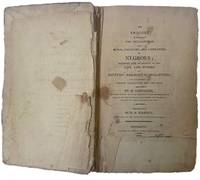
1810rif. 181831810. African AmericanSlavery and Abolition Grégoire Henri. "An Enquiry Concerning the Intellectual and Moral Faculties and Literature of Negroes." First American Edition. This work constitutes one of the earliest sustained Enlightenment arguments in print asserting the intellectual and moral equality of people of African descent. Originally published in French in 1808 as De la littérature des nègres Abbé Henri Grégoire's treatise directly challenged racial pseudoscience and proslavery ideology by assembling biographical and literary evidence of Black achievement. Appearing in English in 1810 in both London and Brooklyn the present Brooklyn printing represents the first American edition and marks the earliest circulation of Grégoire's antiracist argument within the United States issued just two years after the federal abolition of the transatlantic slave trade and decades before emancipation. A Catholic priest revolutionary statesman and Constitutional Bishop of Blois Grégoire was among the most visible European advocates of racial equality and universal civil rights; this text stands as his most focused intervention into transatlantic debates over slavery human capacity and citizenship. Grégoire Henri. An Enquiry Concerning the Intellectual and Moral Faculties and Literature of Negroes; Followed with an Account of the Life and Works of Fifteen Negroes & Mulattoes Distinguished in Science Literature and the Arts. Brooklyn: Printed by Thomas Kirk 1810. First American edition of the first English translation translated by D. B. Warden. Sabin 28728. Blockson 18. Octavo. 253 pages. The text systematically dismantles claims of Black inferiority through documentary case studies examining figures such as Phillis Wheatley as evidence of Black literary achievement Olaudah Equiano as moral and intellectual witness against slavery Benjamin Banneker for scientific accomplishment and Toussaint Louverture as an exemplar of political and military leadership. By grounding abolitionist argument in documented intellectual production rather than abstract sentiment Grégoire constructs what may be understood as an early printed compendium of Black intellectual history aligning Enlightenment universalism with emerging Atlantic abolitionist discourse. Original marbled boards heavily worn. Spine crudely retaped with losses; spine cracked where tape is lacking and back board partially detached. Front free endpaper loose. Title page and contents leaf with partial tear without loss of text. Early manuscript ex-libris note affixed to front pastedown. Textblock clean and complete with scattered foxing. Overall condition fair. Issued contemporaneously with the London printing of 1810 and at a moment when the United States had prohibited the slave trade but not slavery itself this Brooklyn edition represents one of the earliest and most explicit antiracist works printed in the early republic asserting Black intellectual and moral equality through documented achievement and thereby providing foundational documentary evidence for the development of American abolitionist thought. unknown books
1894rif. 182811894. Imperial size albumen photo of students and faculty at the Albany Business College. 1894. This very large photograph measures 24 x 20 inches. The image consist of 4 smaller group photos showing 35 subjects total including 5 female Graduates. Names of all the subjects listed at the bottom. The albumen is mounted to photographer's board. Although women did own and operate businesses during the 19th century many of them were apprenticed or self-taught as educational opportunities were limited. For a graduating class to include women at all much less 5 makes this group exceptionally scarce. Financial independence through business acumen provides a level of freedom women were not often allowed within a patriarchal society as rigid as 19th century America. Dampstains to side of photographer mat board does not affect photographic image. Toning and foxing to mat. One corner clipped. Light sunning. Features are crisp and details clear. Overall very good condition. unknown books
1854rif. 4539Walesville NY 1854. Contemporary quarter roan over marbled boards. Spine and boards worn with loss to foot of spine and evidence of label removal to front board. Internally foxed and soiled but remaining legible throughout. Comprised of 53 handwritten pages in various hands. Documenting the founding of the women's group focused on local philanthropy which allowed men entry only as silent "honorary" members the manuscript outlines the group's goals and structure in addition to recording officers participants and meetings during its first eight years. At its founding on December 31 1846 the Union Benevolent Society laid down its Constitution consisting of 9 articles. In addition to naming itself the group set out a mission to "relieve the wants of the poor of our own vicinity" and articulated that it would be run by women. "Gentlemen may become honorary members" through financial contribution but they would have no governing say. At this meeting the women elected their eight officers and recorded 52 members and 39 honorary gentlemen many sharing surnames with the married and unmarried members. It becomes clear that the organization will be embedded in the community's families and that the women in charge managed to get significant financial support from local men. The minutes in the first few years are succinct and lacking in detail about the "much work" that the secretary reports being done. These early entries simply report on the location of meetings -- usually gentlemen's homes -- and whether there was high or low attendance. As new secretaries take on the role the minutes change in structure. We begin to learn more about the men invited to speak the topics on which they lecture and the financial contributions raised at the end of each meeting. Still we get no strong sense of the group's real work; and there is increasing evidence that the men use the meetings as an opportunity to reinforce domestic feminine values for the group's members. The present manuscript is an opportunity for genealogical study and potential work to discover whether and the Society accomplished within its community. It also offers a chance for scholars to consider how the founders' and members' good intentions were watered down by such a broadly articulated mission and whether by opening the door to men's financial contributions such groups came under the governance of those men. unknown books
1793rif. 325411New- York: Printed by Friar McLean No. 41 Hanover-Square 1793. First edition printed in an edition of 200 copies; the introduction states: "In Friary Wednesday November 13th 1793 On Motion resolved That the Thanks of the Society be presented to Brother Samuel L. Mitchill. That two hundred copies of Brother S. L. Mitchill's Oration be printed. for use of the Members of the Friary. 34pp. A good copy. The fragile marbled wrappers are worn on spine and extremities of covers with loss to most of spine revealing sewning on spine upper edge of front cover and the entire text pages have an early uneven two-inch brown stain with some tears and loss to paper at blank top margin of first few printed pages. The stain is visible on unprinted verso of front cover and front flyeaf and at unprinted top margin of title page and all text pages in upper blank margin only-- the printed text is complete and entire printed text is quite fresh and clean. First edition printed in an edition of 200 copies; the introduction states: "In Friary Wednesday November 13th 1793 On Motion resolved That the Thanks of the Society be presented to Brother Samuel L. Mitchill. That two hundred copies of Brother S. L. Mitchill's Oration be printed. for use of the Members of the Friary.". 34pp. A rare publication; unrecorded by OCLC with no citation for this publication. OCLC cites seven other individual publications by Samuel L. Mitchell including the following: -- The life exploits and precepts of Tammany the famous Indian chief : being the anniversary oration pronounced before the Tammany Society or Columbian Order in the old Presbyterian church in the city of New-York on Tuesday the 12th May 1795. New- York: Printed by J. Buel . 1795. A biography in 36 pages. -- Some of the memorable events and occurrences in the life of Samuel L. Mitchill etc. New York : s.n. 1826. -- An address to the citizens of New-York : who assembled in the Brick Presbyterian Church to celebrate the twenty-third anniversary of American independence. New-York Printed and sold by George F. Hopkins at Washington's Head 84 Maiden-Lane.1800. -- A discourse on the character and services of Thomas Jefferson more especially as a promoter of natural and physical science. Pronounced by request before the New York Lyceum of Natural History on the 11th October 1826. Printed by Friar McLean, No. 41, Hanover-Square unknown books
1911rif. 174621911. Women's Education. The Story of the Manchester High School for Girls. Manchester: University Press 1911. First edition. Red cloth boards. A number of plates inside depicting key figures and the facilities of the school. The school was founded in 1874 by nine men and women who were prominent citizens of Manchester. The author Sara Burstall had been the Headmistress of the high school since 1898 as well as a Special Lecturer in Education at the University of Manchester. Manchester High School for Girls is today one of Britain's leading girls' schools. Some minor staining to covers but interior is clean and bright. Ex libris. Overall in very good condition. unknown books
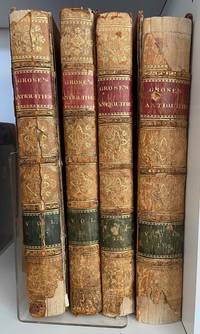
1773rif. 174921773. Grose Francis. Antiquities of England and Wales 1773 a foundational eighteenth century antiquarian survey that documents medieval castles abbeys and architectural remains across England and Wales at a moment when systematic historical preservation had not yet emerged as an institutional practice. Compiled from Grose's own field observations and drawings the work records structures that in many cases were already in decay providing a visual and descriptive archive of the built environment prior to nineteenth century restoration movements. Grose working outside formal academic institutions while serving in excise duties and later traveling with the Surrey Militia produced one of the earliest large scale efforts to catalog national architectural heritage for a broader readership. Grose Francis. Antiquities of England and Wales. London: S. Hooper 1773. Four volumes. Folio. The set is extensively illustrated with engravings based on Grose's drawings including frontispieces vignette title pages and numerous plates throughout each volume depicting abbeys castles and other historic sites. The accompanying descriptive texts provide historical context and architectural detail reflecting Grose's stated aim to produce a readable and accessible account of England and Wales's historical monuments. Upon Grose's death his preparatory sketches and finished drawings for the work were acquired for George III and are now preserved in the British Library underscoring the recognized importance of his documentation. Produced during a period of growing antiquarian interest in Britain Antiquities of England and Wales contributed to the emergence of national historical consciousness tied to landscape architecture and medieval heritage. The work precedes later institutional preservation efforts and remains a key source for the study of sites that have since been altered or lost. Grose's combination of fieldwork illustration and narrative description established a model for subsequent antiquarian publications and shaped how historical monuments were studied and valued. Bound in leather with gilt decoration and marbled endpapers; armorial bookplate present. Some scuffing and abrasions to boards with minor loss at spine ends and reinforcement to one gutter; interiors clean and stable. Overall good condition. unknown books
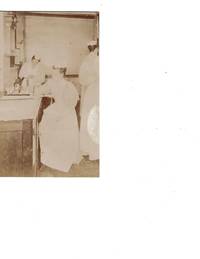
1900rif. 168731900. Three female nurses at work circa 1900 documents women performing routine clinical duties during the formative decades of professional nursing. One nurse prepares or dispenses liquid into a bottle another sits at a table writing in what may be a patient record or other hospital register and a third stands with her back to the camera giving the scene an unusually work-centered rather than posed character. The image belongs to a period in which hospital-based nurse training was expanding and nurses were increasingly organizing around formal standards of education and practice; the first modern nurse-training schools in the United States opened in 1873 followed by national professional organizations in the 1890s concerned with nursing education and professional standards. Original gelatin silver photograph. Circa 1900. Approximately 4 x 7 inches. The three women wear white caps and aprons over floor-length striped dresses with prominent leg-of-mutton sleeves. Their activities provide specific visual evidence of the knowledge-based and administrative dimensions of nursing work: preparation of medicine or supplies written documentation and coordinated activity within a hospital interior. These functions were increasingly central to trained nursing as late nineteenth-century hospitals incorporated new practices surrounding hygiene antisepsis asepsis and patient observation. Historical scholarship on nursing education during this period likewise emphasizes that trainees were taught developing medical practices concerning infection control and wound care rather than serving merely as informal caregivers. The photograph also belongs to a broader history of women's changing access to professional medicine. Women had entered American medical schools during the nineteenth century but continued to encounter institutional exclusion; in 1870 only a small proportion of women medical students attended regular medical schools with many relying upon separate women's medical colleges and gender barriers remained significant thereafter. Nursing meanwhile developed into a heavily female profession and offered an important avenue into skilled medical employment although access and advancement were also shaped by race and class. Census-based research shows that by 1900 the category of professional nurse in the United States was already overwhelmingly female and disproportionately white. Surface abrasion along the lower left edge; otherwise light handling wear good condition. A candid visual record of women's skilled hospital labor at a formative stage in the professionalization of modern nursing. unknown books
1900rif. 163901900. Women's Education Student Life Wellesley College student decorated fan circa 1900 documents the social networks visual culture and institutional affiliations of women in higher education at the turn of the twentieth century. The object preserves a dense assemblage of personal and collegiate imagery combining photographic portraits of peers with printed insignia from universities and clubs establishing direct evidence of how female students constructed identity and community within elite academic environments. Produced during a period of expanding access to higher education for women the fan records both interpersonal relationships and broader institutional connections linking Wellesley students to a wider network of colleges and social organizations across the United States. Decorated folding fan circa 1900 composed of fabric leaf and wooden guards measuring approximately 10.5 x 19 inches when fully extended. One side features approximately 66 small black-and-white photographic cutouts depicting fellow students and acquaintances from Wellesley College. The reverse incorporates approximately 84 printed and decorative elements including color lithographed and gilt paper logos badges and emblems representing colleges and social clubs with identifiable institutions including Wellesley College Worcester Polytechnic Institute Stanford University and Clark University. The arrangement forms a curated collage integrating personal photography with institutional symbolism. Created within the context of early twentieth-century women's collegiate life the fan reflects the emergence of women's colleges as sites of intellectual formation and social organization where visual memorabilia played a role in documenting friendships affiliations and aspirations. The combination of portraiture and institutional insignia demonstrates how students navigated both intimate and formal networks situating individual experience within a broader academic landscape. Such objects contribute to research in women's education material culture and the history of student life offering insight into how identity and community were materially constructed and preserved. Light soiling to fabric edges with minor wear to wooden elements; images and printed components remain intact and legible. Overall very good condition. unknown books
1944rif. 147961944. Bloom Barbara C. Typed Letter Signed to WAVES officer's mother and accompanying photographs 1944 documents United States Navy WAVES service during World War II and the recognition of women's military labor within the wartime home front. The material captures the relationship between enlisted women's service and familial acknowledgment situating women's naval participation within the broader Allied military campaigns against Germany and Japan. The letter explicitly ties the daughter's service to active wartime offensives while the accompanying photographs provide visual evidence of WAVES personnel in both formal and informal settings offering insight into daily life camaraderie and presentation of women in uniform during the final year of the war. Bloom Barbara C. Typed Letter Signed. Office of Naval Procurement December 1944. One page. Accompanied by six black-and-white photographs of Navy WAVES stationed aboard USS Hunter. The letter addressed to Mrs. Cadman praises her daughter's contribution to the war effort stating: "You have the right to be very proud of what your daughter has done in speeding our recent offensive ever closer to the heart of Germany and Japan" and includes statements attributed to Franklin D. Roosevelt and Ernest J. King recognizing the WAVES' service. It further references the daughter's conduct discipline and contribution to the reputation of the organization. The six photographs depict groups of uniformed WAVES women aboard USS Hunter including posed portraits group formations and informal off-duty scenes in which women are gathered socially. One larger photograph bears period handwritten identifications on the reverse naming the women pictured. Image sizes range from small personal formats to larger prints capturing both individual and collective representation. The Women Accepted for Volunteer Emergency Service WAVES program established in 1942 expanded the role of women within the U.S. Navy by assigning them to non-combat duties thereby releasing male personnel for deployment. By 1944 WAVES had become an established component of naval operations with thousands serving in administrative technical and logistical roles. The letter reflects official efforts to frame women's service as both militarily essential and socially respectable emphasizing family pride moral conduct and national duty. The photographs reinforce this narrative through visual presentation of uniformed discipline and group cohesion. Together the materials provide direct documentation of women's participation in wartime service and the integration of that service into domestic and public recognition structures during World War II. Light edge wear and minor foxing to photographs; one image with handwritten identifications on verso; letter with docket holes at top margin not affecting text; overall very good condition. A cohesive grouping linking official wartime communication with visual documentation of WAVES personnel. unknown books
1919rif. 162951919. Three Sisters photograph album 1918-1927 documents the daily lives leisure activities and social environments of three young women growing up in the American Midwest during the interwar period. The album captures their progression from childhood into early adulthood recording domestic settings recreational outings and educational experiences across multiple locations including suburban Ohio the shores of Michigan and the Ozarks. The majority are captioned in white pencil or white ink with the name of the person in the photo and a brief description like "Sunday best"; some are a little ironic tone such as "Seeking sunburn" underneath a photo of two of the sisters sweaty and bare armed in a row boat and "No water but our tongues" under a picture of the sisters as little children in bathing suits on their porch pulling silly faces. We follow the women from childhood through early adulthood through their schools and summer camps across suburban Ohio the shores of Michigan and the wooded Ozarks. The private lives of these young girls are revealed to be impish spirited and silly in these intimate photographs; At the same time they were growing up in a period of great change. With the passage of the 19th Amendment in 1920 they were the first generation of women to come of age in a time when they could exercise the right to vote. Bumping at corners and a half-inch tear at top of spine otherwise clean. First page separated. A fascinating cultural artifact of a historically significant period for women's rights. The material provides direct visual evidence of middle-class female youth culture during a period of expanding civic identity for women following the ratification of the Nineteenth Amendment to the United States Constitution. Photograph album titled "Photographs." Midwest 1918-1927. Oblong octavo format containing 230 black-and-white and sepia snapshots in a range of sizes from approximately 1.5 x 2.25 inches to 7 x 5 inches. The images depict the three sisters in a variety of settings including posed portraits in "Sunday best" informal outdoor scenes such as rowing excursions and lakeside bathing and groupings at schools and summer camps. Recurring subjects include the sisters alone together and with peers often engaged in leisure activities such as boating hiking and social gatherings. Many photographs are captioned in white pencil or ink identifying individuals and adding commentary; captions range from straightforward identifications to humorous remarks such as "Seeking sunburn" beneath an image of the sisters in a rowboat and "No water but our tongues" accompanying a childhood porch scene in bathing attire. The album presents consistent attention to social presentation dress and gesture with repeated visual emphasis on companionship and informal expression. The period covered by the album corresponds with significant shifts in women's legal and social status in the United States particularly as young women of this generation reached maturity following the expansion of voting rights in 1920. The images document not political activity but lived experience within this changing context showing how leisure education and mobility shaped female identity in middle-class environments. The album's sustained chronological scope allows for observation of changes in dress posture and social grouping over nearly a decade. Brown cloth boards with tie binding; light bumping at corners and a short tear at the head of spine; first page detached; occasional minor silvering and slight edge wear to photographs with a few images torn at folds; overall good to very good condition. A cohesive visual record of girlhood and early adulthood in the interwar Midwest. unknown books
1967rif. 798171967. Paperback. Very Good. All issues in original wrappers. 24cm. paperback books
1973rif. 68015Granada: Departamento de Historia del Arte de la Universidad de Granada 1973. Paperback. Very Good. 247p. Wrapper. 26cm. Departamento de Historia del Arte de la Universidad de Granada paperback books
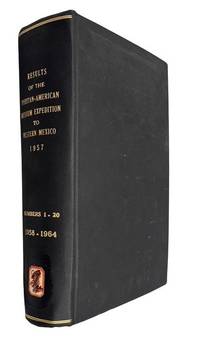
1957rif. 5932New York 1957. Hardcover. Good. Black buckram library binding. 28 cm. Ex lib. Cal-Berkeley. These were issued as whole numbers of American Museum Novitiates Nos. 1894 1895 1899 1903 1940 1969 1973 1992 1995 2013 2053 2084 2112 2136 2144 2153 2202 and as issues of the Bulletin of the American Museum of Natural History Vol. 118 article 7; Vol. 119 article 2; and Vol. 123 article 5. hardcover books
1931rif. 24326n.p.: The Central Press Association 1931. The cartoon shows a young man trying to solicit a pretty neighbor's help while a black handyman rushes to an inopportune rescue. 1 vols. 10-1/2 x 10-1/2 inches. The cartoon shows a young man trying to solicit a pretty neighbor's help while a black handyman rushes to an inopportune rescue. 1 vols. 10-1/2 x 10-1/2 inches. A vintage cartoon by the artist who later created the popular comic strip "Skeets". The Central Press Association unknown books
1854rif. 14986Boston: Little Brown 1854. Seventh Edition. 3 vols. 8vo. Dark brown 3/4 morocco raised bands on spine marbled sides and endpapers t.e.g. some light foxing mostly to prelims else fine and attractive. With the signature in each volume of Geo. Shea and the dates 1858 and 1859: an endpaper note identifies him as being a judge. Seventh Edition. 3 vols. 8vo. A nice copy of a large-type edition of this standard and important work. Shea was the Chief-Justice of the Marine Court. Little, Brown unknown books
1900rif. 28014London: Various publishers 1900. First Editions. 8 vols. 8vo. Bound in 3/4 brown polished calf t.e.g. by Bickers & Son London. With the bookplate of R.D. Jackson. First Editions. 8 vols. 8vo. Various publishers unknown books
1838rif. 35862Paris: F. Bonnaire; Dupuis Dumarsais 1838. First editions of vols. I-IV; second edition of vol. V. Illustrated with folding charts maps facsimiles and numerous engravings after Johannot Raffet and others. 5 vols. 8vo. Mid-nineteenth-century quarter calf and blue marbled boards. Bookplates. Some rubbing to extremities. First editions of vols. I-IV; second edition of vol. V. Illustrated with folding charts maps facsimiles and numerous engravings after Johannot Raffet and others. 5 vols. 8vo. F. Bonnaire; Dupuis Dumarsais unknown books
1740rif. 36937La Haye: La Veuve Le Vier et Pierre Paupie 1740. First edition. Engraved allegorical frontispiece by Schley. 2 parts in one volumes. 1 vols. 4to. Contemporary French mottled calf gilt spine marbled endpapers. Upper joint starting at bottom and apart from some minor toning this is a lovely unsophisticated copy in contemporary dress. First edition. Engraved allegorical frontispiece by Schley. 2 parts in one volumes. 1 vols. 4to. Printed by Prosper Marchand a Huguenot publisher and journalist who fled France in 1709 the work appeared at the 300th anniversary of the invention of printing. Marchand writes that he produced the book "a la sollicitation de quelques amis qui ont cru que le troisième jubile ou la troisième année séculaire de l'imprimerie reveilleroit infailliblement la curiosité du publique touchant l'origine de ce bel art at the request of some friends who believed that the third jubilee or the tercentenary of printing would infallibly wake the public curiosity concerning the origin of this beautiful art." The allegorical frontspiece by J.V. Schley show Minerva and Mercury descending from Heaven granting the gift of printing to Germany who in turn gives it to England Holland France and Italy. Bigmore & Wyman II p. 22 La Veuve Le Vier et Pierre Paupie unknown books
1931rif. 24346n.p.: The Central Press Association 1931. The cartoon shows a black man asleep in bed dreaming about being asleep on a bed of roses and on a tropical isle. 1 vols. 10-1/2 x 10-1/2 inches. Fine. The cartoon shows a black man asleep in bed dreaming about being asleep on a bed of roses and on a tropical isle. 1 vols. 10-1/2 x 10-1/2 inches. A vintage cartoon by the artist who later created the popular comic strip "Skeets". The Central Press Association unknown books