1 338 résultats
2014réf. 010414Edition Régionale De La Revue Nationale brochure Couverture Illustrée Bruxelles 2014 pages 65 à 96 en format 15.5 - 23.5 cm - photographies et gravures
2014réf. 010415Edition Régionale De La Revue Nationale brochure Couverture Illustrée Bruxelles 2014 pages 97 à 127 en format 15.5 - 23.5 cm - photographies et gravures
2014réf. 010416Edition Régionale De La Revue Nationale brochure Couverture Illustrée Bruxelles 2014 32 pages en format 15.5 - 23.5 cm - photographies et gravures
2014réf. 010417Edition Régionale De La Revue Nationale brochure Couverture Illustrée Bruxelles 2014 32 pages en format 15.5 - 23.5 cm - photographies et gravures
2014réf. 017564Edition Régionale De La Revue Nationale brochure Couverture Illustrée Bruxelles 2014 30 pages en format 15.5 - 23.5 cm - photographies et gravures
2014réf. 017565Edition Régionale De La Revue Nationale brochure Couverture Illustrée Bruxelles 2014 30 pages en format 15.5 - 23.5 cm - photographies et gravures
1900réf. 117527Couverture souple. Broché. A l'italienne 40 pages. Légèrement défraîchi.
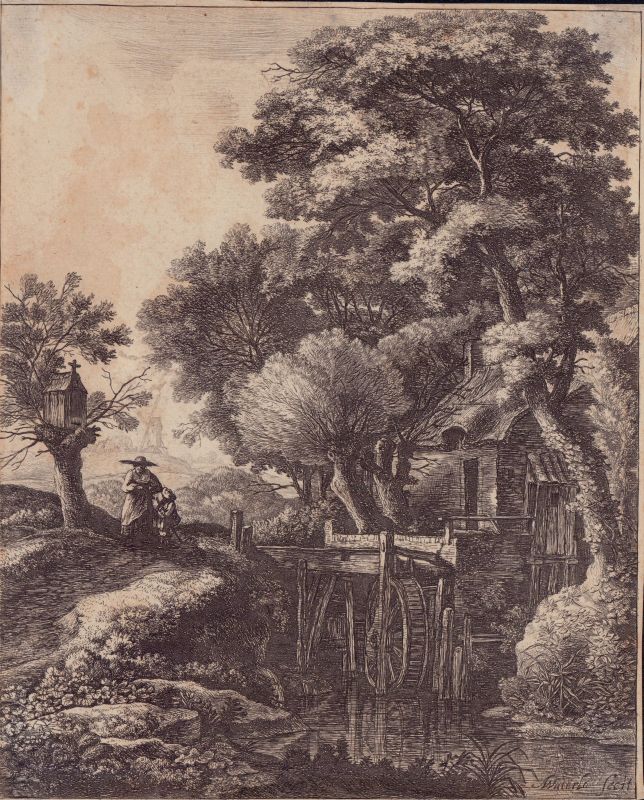
1700réf. 901401AG[Um 1700?]. Radierung 28,5 x 23 cm
réf. SONG0853683409Used: Good unknown
réf. 1332566731.Gpaperback. Good. Access codes and supplements are not guaranteed with used items. May be an ex-library book. paperback
réf. 42875Burslem: Printed and Published by John Tregortha 1817. First edition 8vo iv 708pp. hand-coloured folding engraved map frontispiece 7 engraved plates nineteenth-century cloth. Burslem: Printed and Published by John Tregortha, 1817 hardcover
1850réf. TATLL(WA48Brussels: Gérard c1850. 1850. oblong 4to. folding partly hand-coloured lithographed plan & 12 lithographed plates. 19th century half vellum original printed front wr. bound in. some foxing throughout stain in lower margin of 5 plates. Brussels: Gérard, [c1850]. hardcover
réf. DADAX0267827164New unknown
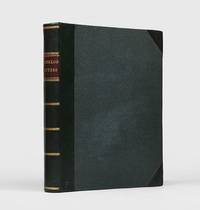
1806réf. 1547621806-45. They "succeeded to the utmost & overthrew every thing" - Uxbridge and the "heavies" at Waterloo In two vivid deeply detailed letters Lord Uxbridge - later Marquess of Anglesey and commander of allied cavalry at Waterloo - recounts the withdrawal from Quatre Bras and the battle of Waterloo. Written within six months of the engagement they are almost certainly among his earliest surviving narratives. Autograph correspondence from any senior Allied commander is exceptionally rare. Uxbridge 1768-1854 had been Wellington's brilliant and inspirational cavalry commander in the Peninsula. At Waterloo he reached his zenith at a critical juncture when Picton's infantry was under overwhelming pressure. He personally led the British heavy cavalry in a sweeping charge that routed vastly superior French numbers destroyed batteries and took prisoners and eagles though at severe cost in men and horses. Throughout the day he moved ceaselessly between units - losing eight or nine horses - until his right knee was shattered by grapeshot in the battle's final moments. His supposed exchange with Wellington - "By God sir I've lost my leg!" / "By God sir so you have!" - became the most famous anecdote of the field. John Morewood quoted both letters in Waterloo General 2016 and Edward Owen cited them in The Waterloo Papers 1997. Owen identifies the recipient as Colonel James Allan of the 57th Foot formerly Fitzroy Somerset's successor as Wellington's military secretary a veteran of the Cape 1795 Seringapatam 1799 and the Peninsular War. Written from Beaudesert Staffordshire in December 1815 and addressed to "My dear Sir" and earlier "My dear Colonel" the first letter 10 pages 9 December describes Uxbridge's management of the Allied withdrawal from Quatre Bras. After a quiet morning a substantial force of French cavalry and artillery appeared on the left of Quatre Bras advancing from the pursuit of the defeated Prussians. As the Anglo-allied light battalions withdrew Uxbridge organized the cavalry retreat over the Genappe. He gives a sharply observed account of the fighting there where French harassment became so severe that he ordered a spirited attack by the Hussars followed by a decisive charge of the Life Guards which checked the French advance. The second letter 9 pages 18 December covers the day of Waterloo. Uxbridge begins by admitting that to answer Allan fully "wd be writing a history of my own exploits" before setting out the celebrated charge of the heavy cavalry: their simultaneous assault under Sir William Ponsonby and Lord Edward Somerset the overthrow of infantry and cavalry the seizure of two eagles and some 2500 prisoners and the deep penetration into French squares. He notes their over-extension and heavy losses from French artillery then comments on the actions of Dörnberg Colquhoun Grant Arentsschildt Vandeleur who took over after Uxbridge fell and Hussey Vivian. He ends by directing Allan to his aide-de-camp Captain Thomas Wildman of the 7th Hussars at Stevens's Hotel Bond Street for further detail. The collection includes a note of 17 January 1816 from FitzRoy Somerset - Wellington's military secretary at Waterloo and later Lord Raglan - giving allied numbers engaged and remarking "I hope it will be as useful to you as you are welcome to it". Written shortly after Somerset himself lost an arm at Waterloo it is reproduced in Owen's Waterloo Papers. Three letters from Wellington to his former India colleague Sir Alexander Allan first baronet date from 1806 1814 and 1820 and address James Paull's actions against Richard Wellesley Allan's candidacy for an East India Company directorship which Wellington strongly endorsed and Wellington's request for Allan's influence at India House during the 1820 general election. Two revealing letters from Catherine Duchess of Wellington express her lifelong devotion to her husband ask to keep a portrait lent by Allan and describe her efforts to canvass support for Allan's directorship bid. A brief account of Allan notes his service in the Mysore Wars his published aquatints his parliamentary career and his later role as an East India Company director trusted by Richard Wellesley. The remaining correspondence includes Allan's three political letters of July 1813 advocating Lord Wellesley's alignment with Sidmouth Buckinghamshire and John Sullivan; an 1809 letter from the Marquis de Montalembert describing winter campaigning in the Peninsula; an 1816 note from Sir William Knighton apparently on Allan's mother's death; a friendly letter from "von Kuefstein" in Vienna referring to dispatches to Genoa and to Captain Cotton; a Stuttgart letter of February 1820 on affairs in Württemberg; and two mid-19th-century letters involving John Palfrey Burrell and William Boone seeking access to Waterloo documentation likely addressed to Major Edward Thomas Fitzgerald a wounded Waterloo veteran. Folio 300 x 245 mm contains an archive of 17 letters 55 pp. various sizes letters gummed direct to the leaf or with paper tape. Black half morocco-grain skiver album green pebble-grain cloth boards linen hinged mounting leaves;. Bookplate of Otto Orren Fisher 1881-1961 who after studying medicine at Johns Hopkins became an industrial surgeon for the Hudson Motor Company in Detroit establishing one of the first modern industrial first aid units there. Expected folds and minor toning to most letters generally very good the volume presenting handsomely. The Marquess of Anglesey One-Leg: The Life and Letters of Henry William Paget First Marquess of Anglesey 1768-1854 1991; David Howarth Waterloo: A Near Run Thing 1974. hardcover
1845réf. 47205Bruxelles chez Gerard lithographe-éditeur n.d. ca. 1845. 4to-oblong. Orig. lithographed boards. Small nicks to spine. With 12 lithographed views Lith. de Gerard. Faint dampstain to lower left corners of plates. hardcover
1817réf. 195022London: J. Adlard 1817. The biggest box office hit of its day Second edition related to the stunningly popular panorama of the battle installed at Leicester Square from 1815. The key shows among other incidents Wellington on horseback the Life Guards charging a burning ammunition wagon and the Royal Dragoons capturing the eagle of the French 105th Regiment. The pamphlet gives a detailed breakdown of the battle which Barker assures his readers he researched personally in Paris. Henry Barker 1774-1856 was the son of Robert Barker 1739-1806 the inventor of the panorama. His father designed and built a circular rotunda with walls covered by a continuous painting fully immersing visitors in the scene. It housed two paintings simultaneously each on a separate floor such that one could be replaced while the other was still open for public viewing. The spectacle of Waterloo in the public imagination provided Barker with a perfect opportunity for a panorama which opened to instant success. "He charged 1 shilling admittance yet within a few short months he grossed over £10000 some £500000 in modern terms" Summerville p. 27. It then went on tour through England Scotland and the USA. Visitors could buy keys descriptive pamphlets and etchings as souvenirs. The first edition was published in 1816. Octavo pp. 12; single sheet 381 x 317 mm woodblock illustration on one side only edges untrimmed. Original self-wrappers wire-stitched as issued. Single sheet loose. Pamphlet a little toned and dust-soiled: a near-fine copy; panorama key creased where sometime folded edges soiled and nicked especially left edge light offsetting: a very good copy. Christopher Summerville Who Was Who at Waterloo: A Biography of the Battle 2014. unknown
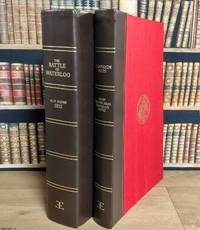
réf. 21131442015. London: Extraordinary Editions. 2015. Two volumes folio. Original chocolate brown calf with stitched title and decoration on front cover; all housed in a wooden writing slope; as new.One of 200 copies of the Exemplary Edition. ""The Exemplary Edition consists of the same book block and end papers however all three sides are gilded. In addition the book is fully leather bound by hand in a specially selected chocolate calf with raised bands and gold lettering to the spine and featuring the cover design embroidered in coloured thread with gold and silver details. The map portfolio is also hand crafted in a full leather binding of matching calf with raised bands on the spine blocked in gold with the design of the Waterloo medal and lined with scarlet silk. The Exemplary also features two additional maps including a facsimile of the Duke of Wellington's own map which he is believed to have used during the battle and a full sized copy of Du Craan's incredibly detailed map which he created for the King. The key to which appears fully translated on the reverse. The Exemplary Edition and the leather map portfolio are presented together in a hand crafted wooden writing slope designed to replicate the traditional travelling desk that an officer would have taken on the campaign"" publisher's website. hardcover
1816réf. WATERLOO010935Printed by J. Russell Birmingham 1816. Second edition enlarged from the 1814 edition with the account of the Battle of Waterloo. Octavo. 476 pages. Five woodcut plates. Original boards with later leather spine retaining the endpapers.Covers rubbed. Discreet repairs to minor insect damage at bottom edges of first few leaves. Very good. Very scarce; no copies of this edition on Library Hub. Printed by J. Russell, Birmingham, hardcover
réf. ria9789354783289_inpHardcover. New. New Book; Fast Shipping from UK; Not signed; Not First Edition; N/A hardcover
réf. 44296186like new. unknown
2022réf. x-9354783287Zinc Read 2022. Hardcover. New. 466 pages. 6.00x1.00x9.00 inches. Zinc Read hardcover
réf. B9789354783289Hardback. New. hardcover
2015réf. 376726Extraordinary Editions London 2015. Hardcover. Fine Condition. The Waterloo Commemorative Anthology. 2015. Limited edition of 1815 copies. Two-volume set comprising the anthology and a matching portfolio of maps in a slipcase. An illustrated account of the Waterloo campaign combining William Mudford’s "An Historical Account of the Campaign in the Netherlands in 1815" with contemporary letters reports and eyewitness recollections from participants of different nationalities and ranks on both sides. These include Wellington’s correspondence immediately before and after the battle together with his first draft of the Waterloo Dispatch reproduced in full with a transcription and explanatory footnotes. The anthology contains over 200 illustrations maps diagrams and facsimile documents drawn from collections in Europe and the United States including some previously unpublished material. These include reproductions from hand-coloured publishers’ proofs; a series of 34 etchings originally published by John Booth; sketches and Napoleonic satires from the Anne S. K. Brown collection; and sketches and diagrams supplied by Siborne’s correspondents. Tipped-in illustrations include Booth’s panorama of the battlefield Jones’s battle plan Mudford’s battle panorama and an etching after Daniel Maclise’s depiction of Wellington meeting Blücher. Smaller campaign maps and battle plans appear within the text. The separate portfolio contains full-size reproductions of all eight of Siborne’s anaglyptograph maps each folding. Vol 1 : 31 pages 470 pages with over 200 prints maps diagrams and facsimile documents. Vol 2 : with 8 maps on 4 fold-outs all in fine condition. The anthology and portfolio are both hand-bound in quarter chocolate calf with gilt spine bands and lettering and scarlet bookbinders’ silk boards. The anthology’s cover design depicts the British and Prussian flags above the fallen French Tricolour; its specially designed endpapers reproduce scenes from Maclise’s cartoons. Both are housed in a chocolate-brown Kashgar-covered slipcase retained in the publisher’s original double-walled foam-lined mailing box. Category: Antiquarian & Rare; New Arrivals;. Extraordinary Editions hardcover
1927réf. 133243Waterloo Ont. 1927. Softcover. Good. 104 p. 31 cm. B&w photos of persons and places in Waterloo Ont. Paper covers. Soiling chips small tears. A little thumbing inside. paperback
réf. 20728Croydon Barracks 5 July 1822. 1 page 12 x 8 inches in very good condition. Uncommon. General Sir George Scovell GCB 17741861 is remembered for the crucial role he played in breaking the codes of the French Army during the Peninsular War. See: Urban Mark. The man who broke Napoleon's codes 2001. He served as an Assistant Quartermaster General at Waterloo. unknown