373 résultats
2015New English Paperback. Pbo. 4to. (29 x 24 cm). In English and Turkish. 195 p., color ills. Images of our time: Works from the Academy of Fine Arts in Sarajevo.= Günümüz imgeleri: Saraybosna Güzel Sanatlar Akademisi'nden yapitlar. [Exhibition catalogue]. The Academy of Fine Arts at the University of Sarajevo was founded in 1972 as the first Academy of Fine Arts in Bosnia and Herzegovina and became one of the forerunners in Bosnian contemporary art. An openness for diverse artistic poetics, a departure from strict academism, flexibility of curricula in interaction with the wider social community, synergy between traditional design knowledge and skills and new media challenges have all led the numerous graduates from the Academy of Fine Arts in Sarajevo to become recognised artists, designers and professors throughout the world. The exhibition catalogue presents an essay by curator Aida Abadzic Hodzic discussing the contemporary interpretations of Bosnian young artists and works in various media created by undergraduate and graduate students, as well as graduates of the six faculties of the academy, including painting, sculpture, art education, printmaking, graphic and product design. The works survey contemporary art in Bosnia Herzegovina and offers comments and reflections by its young artists on the history, and social, political, economic and cultural issues of the country.
2004br. La guerra in Bosnia fu "anche" una guerra psichiatrica, non solo per il protagonismo di molti psichiatri, ma perché in essa si perseguiva la separazione e la soppressione dei diversi in nome della pulizia etnica, secondo una pratica comune nella psichiatria sociale. Una deprecabile operazione affidata ai cecchini-infermieri che operavano agli ordini dello psichiatra Radovan Karadzic. A Sarajevo la guerra etnica e religiosa svelò anche i suoi contenuti affaristici, mostrò quanto rapidamente i conflitti proclamati in nome dell'identità logoravano le comunità locali anziché proteggerle. Così si è disperso il patrimonio di Sarajevo, una città in grado di riunire la complessità culturale dell'Oriente.
190824 cm, brossura editoriale; pp. 12
1963Mm 130x200 Volume nella sua brossura originale, 485 pagine. Collana "Il Bosco" - Opera in buone condizioni. Spedizione in 24 ore dalla conferma dell'ordine.
1995Classici moderni. Un ponte diventato un simbolo, che unisce due mondi, quello cristiano e quello mussulmano.
1961DISPONIBILITÀ GARANTITA AL 99%; SPEDIZIONE ENTRO 12 ORE DALL'ORDINE. OTTIMO ESEMPLARE: LIEVISSIMI SEGNI DEL TEMPO ALLA SOVRACCOPERTA, LIEVISSIMA BRUNITURA. Alla confluenza di due mondi quello cristiano e quello musulmano sorge Visegrad, in Bosnia, da sempre città di incontro fra diverse razze, religioni e culture. Ed è qui che nel Cinquecento il visir Mehmed-pascià fece erigere un ponte, diventato un simbolo dell'oppressione perché costruito grazie alla fatica e ai sacrifici di molti cristiani , ma anche una testimonianza della fusione di due diversi mondi. Il ponte è il centro del romanzo di Andric: un grande affresco che va dal Cinquecento alla Prima guerra mondiale e che ha per sfondo una Bosnia romantica, con le sue complesse vicende storiche ma anche con i drammi quotidiani degli uomini che vi abitano. Andric si conferma interprete e commosso cantore di questa terra tormentata. Informazioni bibliografiche Titolo: Il ponte sulla Drina: romanzo Titolo originale: Na Drini ćuprija Collana: Volume 442 di Medusa Autore: Ivo Andrić Traduzione di: Bruno Meriggi Editore: Milano: Arnoldo Mondadori, 1961 Edizione: quinta, 5 Lunghezza: 485 pagine, 21 cm Soggetti: Letteratura slava, Narrativa, Romanzi storici, Classici, Novecento, premio Nobel, Romanzi epici, Jugoslavia, Bosnia Erzegovina, Sarajevo, Storia, Politica. Belgrado, Serbia, Multiculturalismo, Religioni, Racconti, Balcani, The Bridge Over the Drina, Drini most, Muslims, Christians, Jews, Sanjak, Romanzo storico
1961Mm 120x195 Collana Medusa n. 442, diretta da Elio Vittorini. prima edizione italiana. Volume in copertina rigida, 485 pagine Opera in buone condizioni. Spedizione in 24 ore dalla conferma dell'ordine.
2010Mm 150x210 Piccoli Saggi. Brossura editoriale di pagine 221. Nuovo
2020br. "Cari amici e fratelli, Croati, Serbi, Macedoni, Montenegrini, Albanesi, non aspirate a restare solo croati, serbi, macedoni, montenegrini, albanesi; siate anche pienamente europei. L'Europa potrà veramente diventare Europa solo creando molteplici e diverse associazioni tra nazioni ed etnie collegate, e sarà proprio l'integrazione di tutte queste unioni a costituire il suo tessuto vivente". È l'accorato appello di Edgar Morin, posto in apertura a questa lucida analisi delle guerre iugoslave, delineata nel periodo di maggior asprezza del conflitto. Lo sguardo del grande sociologo francese illustra lo scontro fra due concezioni incompatibili dello stato e dell'identità nazionale: una rigida, esclusiva, intollerante, follemente "purificatrice", e una rispettosa delle pluralità delle culture, delle memorie e dei modi di vita, considerata come la fonte stessa della vitalità di uno stato e dell'Europa tutta.
1883réf. 12345Paris, E. Plon et Cie, 1883 ; in-4, demi-chagrin maroquiné rouge cerise à coins, dos à nerfs soulignés de filets à froid et dorés, caissons richement décorés et dorés, titre doré, doubles filets dorés sur les plats, tête dorée, non rogné (reliure de l’époque) ; (6), 412 pp. ; 10 planches en héliogravure et 1 carte dépliante en couleurs hors-texte, très nombreuses illustrations in-texte, 17 à pleine page.
1964351pp.with maps + folding map out-of-text, 25cm., in the serie "Studies in European history" vol.1, cloth, dustwrapper, G, X71701
1964réf. X71701The Hague, Mouton 1964 351pp.with maps + folding map out-of-text, 25cm., in the serie "Studies in European history" vol.1, cloth, dustwrapper, G, X71701
réf. 68961045-75Used - Good. Former library copy. Pages intact with minimal writing/highlighting. The binding may be loose and creased. Dust jackets/supplements are not included. Includes library markings. Stock photo provided. Product includes identifying sticker. Better World Books: Buy Books. Do Good. unknown
1976réf. 168809Lumen 1976. Tapa dura. 2ª Mano. A favor de las niñas . . Muy Ilustrado. Nombre anterior propietario. . . Tapa dura 36 pag . ; 27x22 cm Lumen hardcover
1895réf. GF358021895 Paris - Ernest Leroux - 1895 - 1 volume in8 broché de 490 pages - bon état -
1991Mm 155x240 Edizione francese / French edition - Brossura editoriale di 532 pagine, in ottimo stato. SPEDIZIONE IN 24 ORE DALLA CONFERMA DELL'ORDINE.
1997réf. Q-0764301349Schiffer Publishing Ltd 1997-09-01. Hardcover. New. New. In shrink wrap. Looks like an interesting title! Schiffer Publishing, Ltd hardcover
1876Stampa antica ed originale con testo al retro
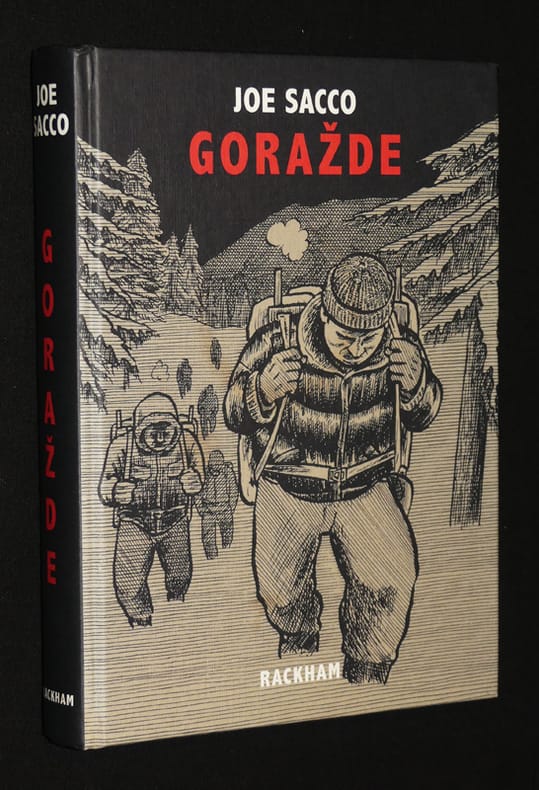
2018réf. es615Editions Rackham Relié 2018 "In-8 relié (25 x 18 cm.), couverture illustrée, 227 pages illustrées en noir et 25 pages de texte in fine, Témoignage-reportage sur la ville de Goražde, encerclée par les forces serbes de Bosnie, qui endure les assauts et de rudes privations, tandis que le reste de la Bosnie orientale a été sauvagement ""nettoyé"" de sa population non serbe. Avec le recul nécessaire du temps et du dessin, Joe Sacco nous fait partager ses rencontres et ses impressions, en remplaçant les faits évoqués dans leur contexte historique. L'émotion submerge le lecteur qui ne se sortira pas intact d'une telle lecture. (source BDgest) ; très bel exemplaire. Livraison a domicile (La Poste) ou en Mondial Relay sur simple demande."
pp. 621-694,[6], 3 pls. of photos (mostly of ammonites), 2 fold. diagrs., 25 ilus. in text, refs. Large 8vo. Wrs. - Triassic.
2008Very Good Turkish Paperback. Demy 8vo. (21 x 15,5 cm). In Turkish. [vii], 174 p., b/w ills. Genç Müslümanlar, 1939-2005. Bosna-Hersek. The Bosnian Young Muslims, a reformist Islamic movement that emerged in Sarajevo in 1939 and - officially - ceased to exist ten years later. The Young Muslim movement developed around a group of students (Husref Basagic, Emin Granov, Esad Karadjozovic, and Tarik Muftic), who initiated a common forum for discussions and debates on Islamic subjects. The first Young Muslims were mainly students from universities and high schools aged between 16 and 26 years. Their activities during the years 1939 and 1941 were established on the basis of private contacts and informal meetings.
réf. DADAX0815730047Brookings Institution Press 2017-06-20. hardcover. New. 6.33x1.11x9.08. Buy with confidence. Excellent Customer Service & Return policy. Brookings Institution Press hardcover
réf. 1332406238.Gpaperback. Good. Access codes and supplements are not guaranteed with used items. May be an ex-library book. paperback
19981st edition. 8vo, 269 pages, illustrated, 6 maps drawn by Reginald Piggott, notes, list of acronyms and terms, glossary of names. Fine condition hardback with very good condition dust jacket.38922. eng
1896Very Good English Modern full leather each volumes in traditional Ottoman style. Roy. 8vo. (25 x 17 cm). In Ottoman script. Last 2 volumes are in Modern Turkish. 10 volumes set: ([23], 674, [10] p.; 479, [5] p.; 534, [5] p.; 432, [4] p.; 602, [6] p.; [4], 554, [5] p.; [21], 912 p.; [1], [5], 786, [4] p.; 892 p.; 1112 p)., folding maps, b/w plates. 1896 - 1938. Their contents are: Vol. 1: Description of Contantinople and environs, as of 1631. Vol. 2: Journey to Brousse and Nicomedia, 1640, Pontus, Caucasus and Crimea, 1640-44.i expedition to Crete, 1645; journey to Erzerum and Caucasus, 1648. Vol. 3: Syria, Kurdistan, Armenia, 1650; Roumelia, Bulgaria and Dobrudja, 1655-56. Vol. 4: Persia and Iraq, 1655-56. Vol. 5: Journey to Moldavia and expeditions to Transylvania and Russia, 1658; to Anatolia, then across the Dardanelles to Adrianople, 1659; expeditions to Moldavia and Dalmatia, 1660. Vol. 6: Expedition to Transylvania and journey to Albania, 1661-62; expeditions to Hungary, Montenegro and Croatia, 1663-64. Vol. 7: Austria, Crimea, Daghestan, Caucasus, Astrakhan. Vol. 8: Crimea, Crete, Salonica, Roumelia (Greece). Vol. 9: Pilgrimage to Mecca and Medina. Vol. 10: Egypt. Evliya Çelebi was son of the chief court jeweler, he was educated in a madrasah (Islamic college) and a Qur?an school in Constantinople; and, excelling as a Qur'ân reciter, he was shown favour by the reigning sultan, Murad IV. Entering the Ottoman palace school, he developed skills in Arabic, calligraphy, and music. Under the patronage of the court he began the journeys that took him from Belgrade to Baghdad and from Crimea to Cairo, sometimes as an official representative of the government and sometimes on his own. The result of these travels was his masterwork, the Seyahatname (1898-1939; 'Book of Travels'). This work is also referred to as the Tarih-i seyyah ('Chronicle of a Traveler'). Evliya possessed a vivid imagination, occasionally mixing fact and fantasy; he described places he could not possibly have visited. Noted for his fascinating anecdotes and charming style, he wrote about the ethnography, history, and geography of the Ottoman Empire and neighbouring lands and about the inner workings of the Ottoman government during the 17th century. (Source: Britannica). Currently there is no English translation of the entire Seyahatname, although there are translations of various parts. The longest single English translation was published in 1834 by Joseph von Hammer-Purgstall, an Austrian orientalist: it may be found under the name "Evliya Efendi." Von Hammer-Purgstall's work covers the first two volumes (Istanbul and Anatolia) but its language is antiquated. Other translations include Erich Prokosch's nearly complete translation into German of the tenth volume, the 2004 introductory work entitled The World of Evliya Çelebi: An Ottoman Mentality written by University of Chicago professor Robert Dankoff, and Dankoff and Sooyong Kim's 2010 translation of select excerpts of the ten volumes, An Ottoman Traveller: Selections from the Book of Travels of Evliya Çelebi. Evliya is noted for having collected specimens of the languages in each region he traveled in. There are some 30 Turkic dialects and languages cataloged in the Seyâhatnâme. Çelebi notes the similarities between several words from the German and Persian, though he denies any common Indo-European heritage. The Seyâhatnâme also contains the first transcriptions of many languages of the Caucasus and Tsakonian, and the only extant specimens of written Ubykh outside the linguistic literature. First Printed Set of Evliya Chalabi's book(s) of travels. Voyages and Travels in Greece, the Near East and adjacent regions made previous to the year 1801; being a part of a larger catalogue of work on geography, cartography, voyages and travels, in the Gennadius Library in Athens, compl. by Shirley Howard Weber, Vol. II: 1631.; TBTK 10360.; Özege .; Only 2 copies located in OCLC as set: 80395042. Rare as set.