1 155 résultats
2009réf. 40690Berlin [u.a.] : Bloomsbury Berlin, 2009. 476 S. 8°. Dt. Ausg. Bibl.- Einbd.
1928réf. 230704052043ybvkJapan, Osaka Mainichi Schimbun / Tokyo Nichinichi shinbun, Showa 3 (1928). 61 of 62, smaller (12: ca. 14 x 9,5 cm), medium-size (34 of 35: ca. 19 x 14,5 / 14,5 x 19 cm) and largesize (15: ca. 20,5 x 26 cm) original vintage photographs in 14 titled brown orig. delivery-envelopes (ca. 30 x 22 cm); each envelope-folder contains a loose sheet with detailed explanations of every photograph.
1966réf. 1801150075xbvkNaha-Japan, Yoneko Shimoji, 1966. 80 pages, photographically illustrated throughout; Publisher's softcover; 4to.(ca. 27 x 19 cm).
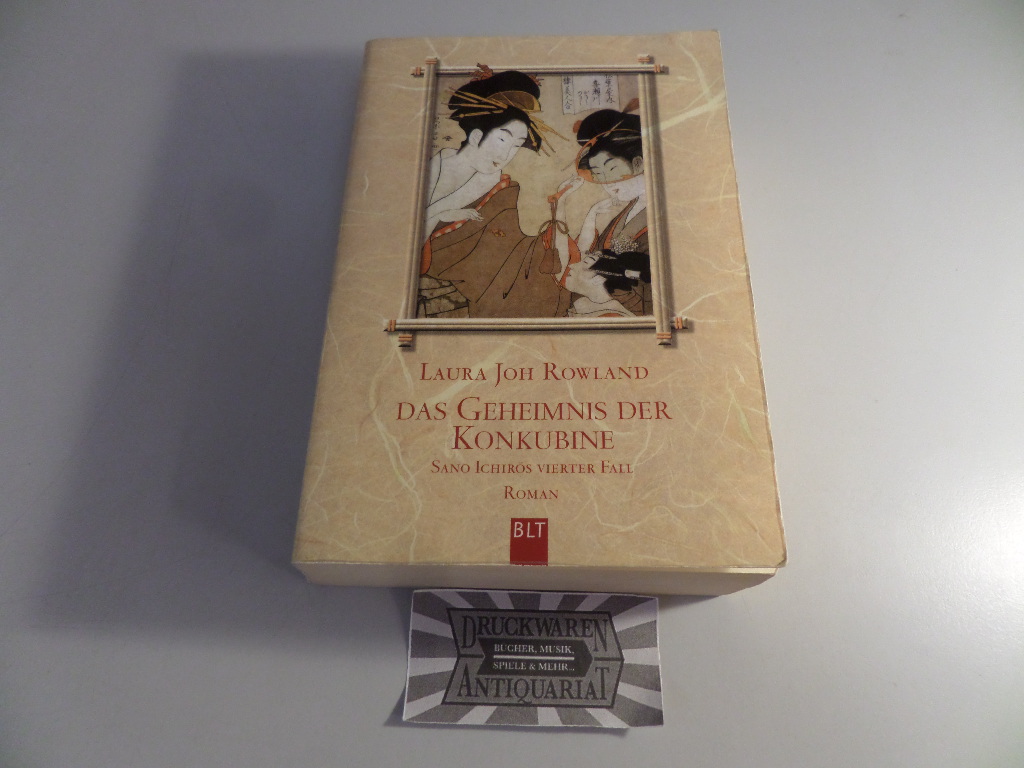
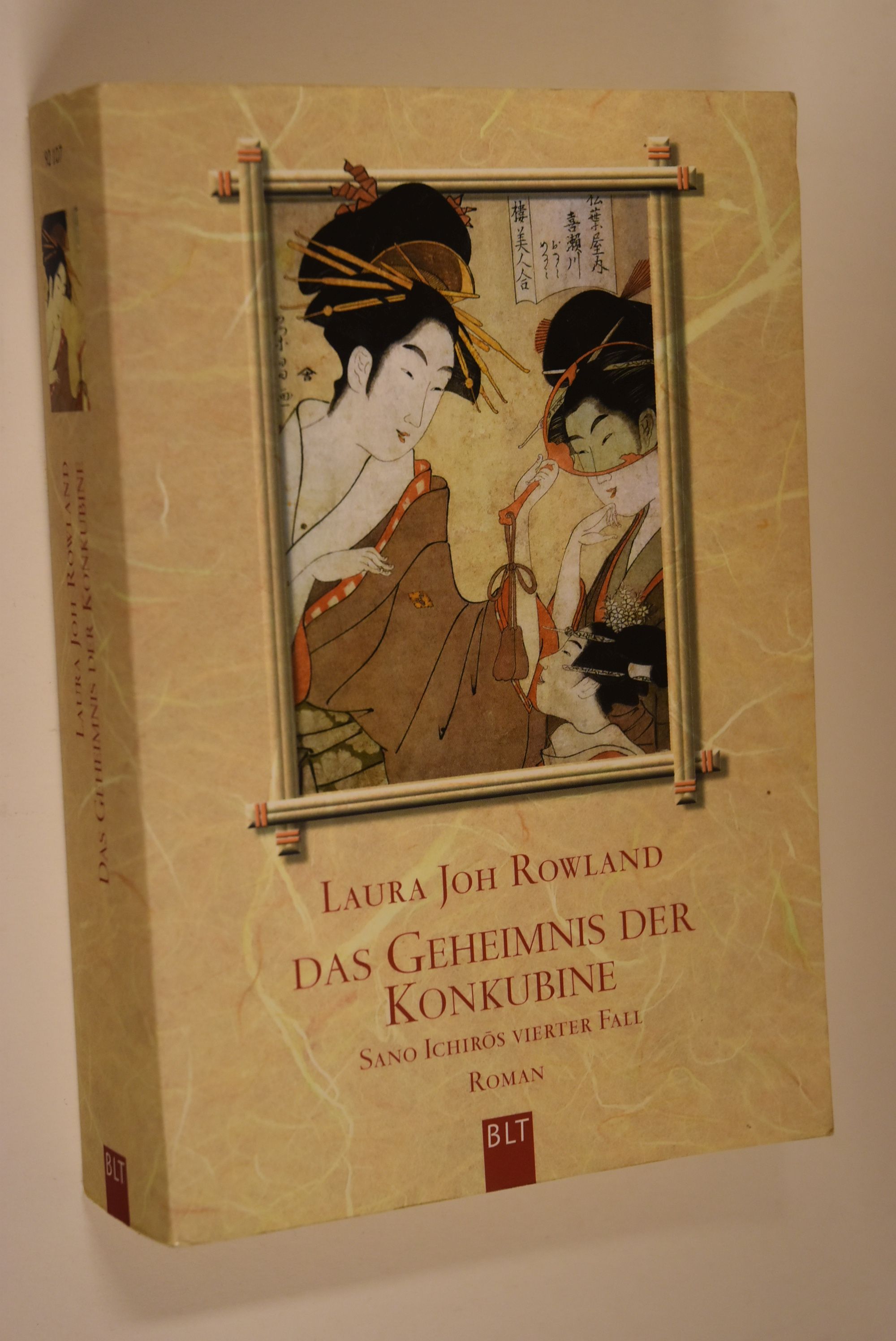
2004réf. 61546Bergisch Gladbach: BLT 2004. 3. Aufl. 606 S.: Ill.; 19 cm Taschenbuch 0
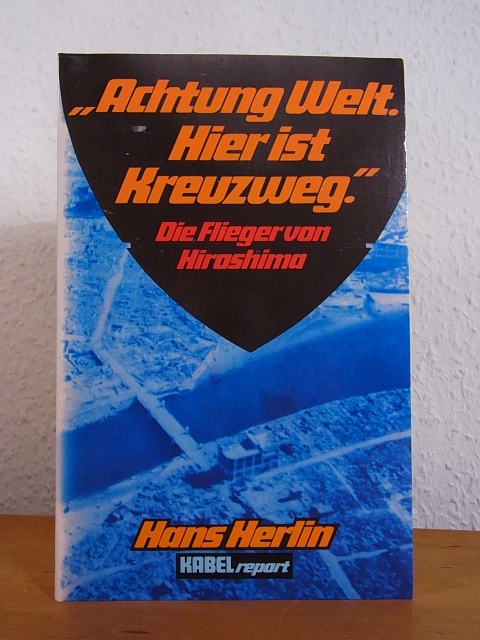
1983réf. 96699Hamburg: Ernst Kabel Verlag, 1983. 21,5 cm ; kart.
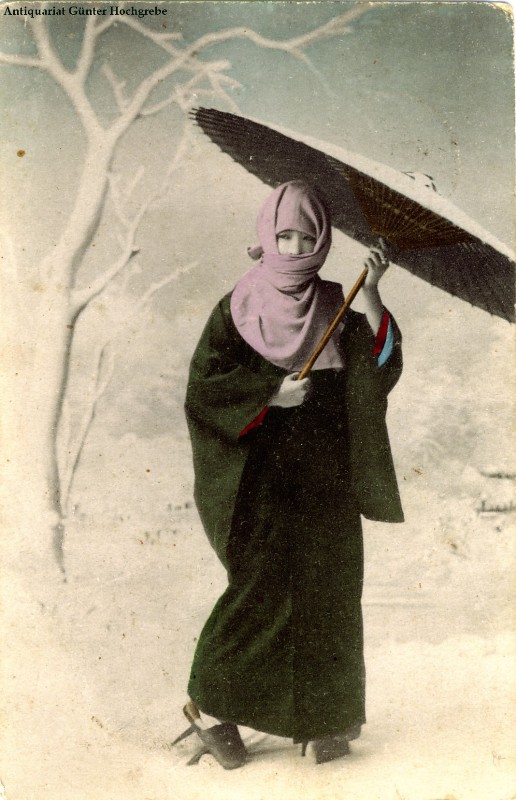
1909réf. 185361909. Farbige Postkarte mit Briefmarke und Stempel. Verschickt von Nagasaki/Japan nach Mannheim am 30.12.1909. Format ca. 14 x 9 cm. Kanten mit Abrieb, etwas fleckig.
1981réf. 30823Hamburg, 1981. 63 S., 2 Bll., mit Abbildungen. 4°. Orig.-Broschur (wenige Gebrauchsspuren).
2003réf. 141552Bergisch Gladbach : BLT, 2003. 606 S. kart., broschiert.
réf. 14847o.J. 8°, 55 S. Text, 8 s/w. Abb., Einband ger. beschabt und ger. bestoßen, altersbedingte Bräunungen, sonst ger. Gebr.sp., kartoniert
1802réf. 1728101802. NAGASAKI. Hizen Nagasaki-zu. Woodcut map of Nagasaki. Coloured woodcut map with outer wrappers the front illustrated. 620 x 860 mm folded in a new chitsu case. Nagasaki: n.p. 1802. A masterpiece of the woodblock printer's art. This splendid and boldly coloured map of Nagasaki includes a distance chart and a table of navigable routes to Nagasaki. The map also depicts the lively maritime life in the Nagasaki harbour. The map also depicts the island of Dejima the only place in which foreign traders were allowed to conduct business with Japan during the Edo period. Extremely rare with OCLC listing only the copies at Princeton LC and Stanford in the U.S. unknown books
2009réf. 232686VIZ Media LLC 2009-05-19. paperback. Good. 5x0x8. Clean has a good binding no marks or notations glue on the spine tpb. LF VIZ Media LLC paperback books
2009réf. 232699VIZ Media LLC 2009-03-17. paperback. Very Good. 5x0x8. Clean has a good binding no marks or notations tpb. LF VIZ Media LLC paperback books
2009réf. 233955VIZ Media LLC 2009-02-17. paperback. Very Good. 5x0x8. Clean has a good binding no marks or notations. LF VIZ Media LLC paperback books
1985réf. 21635Japan: Shukosha Printing Co 1985. First Edition First Printing. Near Fine/Fine. THIS ASSOCIATION COPY SERVES AS ASTRIKING CULTURAL ARTIFACT OF POST-WAR DIPLOMACY GIFTED BY THE PRESIDENT OF THE NAGASAKI JAPAN-AMERICAN SOCIETY to the COMMANDING OFFICER of the USS ST. LOUIS LKA-116. While primarily a lavishly illustrated topographical survey of Nagasaki's national parks and scenery the volume is notably silent on the events of August 1945. This deliberate editorial choice reflects a specific era of regional branding-focusing on the 'International City of Culture'-and serves as a primary document of high-level naval diplomacy during a 1987 port visit. ASSOCIATION COPY PROTOCOL Associate: Captain R. M. Butler USN Commanding Officer of the USS St. Louis. The Link: Inscribed to Butler by Mr. Kiyoshima President of the Nagasaki Japan-American Society during a port visit on January 4 1987. Interpretive Value: The USS St. Louis LKA-116 was an amphibious cargo ship critical to the U.S. Pacific Fleet. This gift represents the formal 'soft-power' hospitality extended to U.S. Naval leadership in a city with a unique and sensitive history regarding the American military. The absence of WWII mentions in the text when presented as a gift to a U.S. Navy Captain highlights a carefully curated 1980s diplomatic narrative. KEY FEATURES Provenance: Explicitly documents a 1987 Naval port visit with a high-level diplomatic inscription. Scarcity: Institutionally rare; OCLC locates only a single copy worldwide Germany. Visuals: 60 pages of color photography topography and regional maps of Kyushu. Imprint: Nagasaki Prefectural Government Edition; Shukosha Printing Co. 1985. Specs: Large square format; 10 by 10.5 inches. CONDITION Fine/Near Fine -- In collectible condition. Bound in light brown cloth with a vibrant wrap-around pictorial dust jacket protected in a fitted sleeve. Internally clean with 60 pages of bilingual Japanese/English text and color illustrations. Exhibits minimal shelf handling with light age-spotting restricted to the perimeters of the preliminaries. Inscribed on the front free endpaper. HISTORICAL SIGNIFICANCE -- In the mid-1980s Nagasaki's prefectural government leaned heavily into its identity as a gateway of international trade and natural beauty. This book produced for the Tourist Section avoids the 'Atomic Martyrdom' narrative common in other local publications choosing instead to emphasize the region's national parks and historical ties to the West such as Glover Garden. The presentation of this specific 'neutral' history to the Captain of a U.S. Navy vessel is a profound example of 20th-century geopolitical etiquette. It underscores the transition of Nagasaki from a site of conflict to a strategic partner in the Japan-American alliance during the late Cold War. SUBJECTS: Nagasaki History US Navy History USS St. Louis Cold War Diplomacy Japan-American Relations Maritime History. BIBLIOGRAPHIC REFERENCE: OCLC 934905329. Shukosha Printing Co unknown books
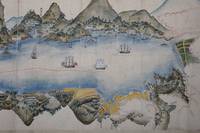
réf. 11453Scroll 535 x 2790 mm. pale brown silk on outer front endpaper inside covered with gold paper wooden core roller. Japan: late Edo 1855 or later. While Edo was the center of government and Osaka the national market hub Nagasaki was an extremely important center of commerce crafts and travel. It is no wonder that Nagasaki became the locus for trade with the rest of the world during the Tokugawa era: the port facing China and near Korea is at the end of a long and narrow entranceway - ideal for soldiers to observe from elevated positions the comings and goings of ships. The city itself at the eastern end of this long "neck" is shaped as an amphitheater by low mountains that enclose the bay to the north and west. Nagasaki was the only official port in Japan allowed to receive goods from around the world brought in initially by the Portuguese and Chinese and then by the Dutch. It served as the main port for export as well. The city also became the main conduit of "Dutch learning" and Chinese knowledge into the island nation. Artificial islands - Dejima for the Dutch and the dock island Shinchi 新地 for the Chinese connected to the Chinese quarter called TÅjin yashiki å”人屋敷 - were created for the myriad of goods and strange objects imported into Japan from the West and throughout Asia. Our scroll consists of one long highly detailed map of the city port areas and entrance to Nagasaki all surrounded by hills and low mountains. The map depicts cliffs beaches mountains and hills the many islands and dangerous rock outcroppings of the entrance outer observation stations etc. The beginning depicts the Urakami shinden 浦上新田 area of reclaimed land built in the 1730s used as fields for crops. As we proceed westward we see warehouses for saltpeter and rice storage and then the artificial islands of Dejima and the Chinese loading docks attached to the Chinese quarter by a bridge. The surrounding mountains and notable islands and points are labelled throughout as are the magistrates' offices of a number of domains. In the harbor we see Dutch two British American and Russian trading ships each with its national flag along with the ShÅhei Maru the first Western-style warship built in Japan 1853-54 constructed by the Satsuma fiefdom and presented to the Tokugawa shogunate in 1855. The scroll then shows the long narrow entranceway to Nagasaki with eight odaiba 御å°å ´ forts with cannons placed in strategic locations protecting the port from unwanted ships. Constructed in the early 19th century these were the first odaiba built in Japan as the government became increasingly anxious about possible attacks by foreign ships. Red lines depict the desired routes of entrance and exit for trading ships allowing the Japanese to easily observe the arriving Chinese and Dutch vessels. Distances from many points of the entrance to Nagasaki are given. The beginning of the outer GotÅ islands and the Nomozaki peninsula are shown at the end of the scroll. Fine condition; preserved in a modern wooden box. unknown books
1999réf. 197408Tokyo: Shibundo 1999. Paperback. Good Wraps and textblock edges are lightly worn generally overall; interior is clean; binding is solid. Color-photo-illustrated wraps with black purple grey and pink lettering; 97 pp.; richly illustrated. Text in Japanese. Shibundo paperback books
2005réf. 197396Tokyo: Kyoritsu Joshi Gakuen 2005. Paperback. Good Wraps are lightly worn/scuffed/smudged generally overall; rear cover is bowed at the lower corner; textblock edges are lightly worn/scuffed/smudged; interior is clean; binding is solid. White wraps with color illustration and black and white lettering; 109 pp.; richly illustrated. Text in Japanese. Gorgeous illustrations! Kyoritsu Joshi Gakuen paperback books
1994réf. 197428Tokyo: Shibundo 1994. Paperback. Good Wraps and textblock edges are lightly worn/smudged/scuffed generally overall; interior is clean; binding is solid. White and peach-colored illustrated wraps with black and purple lettering; 98 pp.; richly illustrated. Text in Japanese. Shibundo paperback books
2002réf. 197414Tokyo: Shibundo 2002. Paperback. Good Wraps and textblock edges are lightly worn generally overall; interior is clean; binding is solid. White wraps with colorful illustration and colorful lettering; 98 pp.; richly illustrated. Text in Japanese. Shibundo paperback books
1992réf. 101699.1Providence RI: Rhode Island School of Design 1992. Hardbound. VG/VG. Orange paper covered boards with color pictorial dustjacket. 190 pp. profusely illustrated in color some bw. THIS IS A HARDCOVER EDITION of this title. A collection of Japanes robes used in the No plays. Profuse illustratins and documentation. Rhode Island School of Design hardcover books
1992réf. 101669Providence RI: Rhode Island School of Design 1992. Softbound. VG. Color illustrated wraps. 190 pp. profusely illustrated in color some bw. A collection of Japanes robes used in the No plays. Profuse illustratins and documentation. Rhode Island School of Design paperback books
réf. 10960Scroll 385 x 8560 mm. with fine colored paintings using brush ink & various colors of wash of the route and major features along the way. Japan: mid-Edo. The route from Edo today’s Tokyo to Nagasaki and vice versa by land and by sea was one of the major thoroughfares and trade routes of Edo-period Japan. The Dutch and Chinese had been allowed to establish exclusive trading outposts in Nagasaki and Edo was the heart of domestic commerce and administration. Foreign goods especially silks other luxury items raw materials useful to the military and medicinal goods flowed through Nagasaki to Edo and the rest of Japan while Japanese goods including copper silver and porcelain were transported to Nagasaki for export. Most of the silver was sent to China to settle the trade balance. From the late 1670s to the 1740s Japan was the world’s largest copper producer and exporter. This route also carried the head of Nagasaki’s Dejima trading post to Edo for frequent mandatory ceremonial audiences with the shogun. The beginning of our scroll depicts the land route from Edo to Kyoto and then on to Osaka. The famous battleship Atake Maru is seen docked at the mouth of the Sumida River. Starting from Edo Castle in the great capital the scroll proceeds to Nagoya and Kyoto along the TÅkaidÅ road which was the most important highway of the Edo period. It depicts in great detail and with manuscript labels: stations on the route; bridges; major castles temples and shrines; the palace at Kyoto; other notable buildings; important geographical features including Mount Fuji partly shrouded in clouds; and towns and villages along the way. Distances are given and travellers are well-depicted showing their various clothing. Also shown are ships and skiffs in the nearby sea. We see more landmarks along the TÅkaidÅ road from Kyoto to the commercial hub and port city of Osaka an extension built in the 1620s. Arriving at Osaka we view the great castle the city’s canals and other sites. The rest of the scroll shows the hazardous passage from Osaka to Nagasaki through the 400 km. long Inland Sea Seto Naikai. The accomplished artist depicts the two main routes and alternate routes depending on the weather one for summertime in the open sea and the other hugging the coast for wintertime. Another route is shown that involved landing in the Bungo area of Kyūshū island and crossing overland to Nagasaki. Navigating through the Inland Sea with its 3000 plus islands and rocky outcroppings presented enormous problems in the era before modern navigation systems. Shown in very great detail are areas of turbulence including famous whirlpools numerous islands rock formations landscapes for orientation anchorages harbors along the way and fishing areas. The route then passes through the narrow Kanmon Strait the stretch of water separating the main island of Honshu and Kyūshū to the Sea of Japan finally arriving in Nagasaki. Dejima is prominently shown. A foreign ship is shown passing the GotÅ islands making its way to Nagasaki. Our scroll is finely drawn in black ink and heightened with wash in green blue gray pink and red. The routes are drawn from a partial “bird’s-eye” perspective with lovely vistas of mountains and islands and villages and towns. In fine condition preserved in an oldish wooden box which has the inscription on the outside of the lid 江戸長崎海陸é“ä¸çµµå›³ “From Edo to Nagasaki Travel by Land and by Sea Illustrated”. Inside this lid is the ownership inscription of RyÅra Gakuto. unknown books
2022br. Il Nyokodo, il "luogo dell'amore a se stessi", è una piccolissima capanna di legno, di soli quattro metri quadrati, costruita nel cuore del quartiere di Nagasaki ridotto in cenere dalla bomba atomica. È in quella dimora che Takashi Paolo Nagai trascorse gli ultimi anni di vita, in ricercata povertà materiale e di spirito, immobilizzato a letto dalla leucemia, ma in una corsa inarrestabile alla scoperta di sé e del significato della vita e della morte. Qui scrisse libri e accolse centinaia di visitatori, sempre testimoniando come la fede e la speranza cristiane siano in grado di vincere la distruzione della guerra e della morte e riportare vita e pace in un mondo che sembrava annientato per sempre. Pensieri dal Nyokodo raccoglie suoi brevi scritti, meditazioni e lettere tradotti per la prima volta dal giapponese. È un'opera preziosissima per seguire, in familiare intimità con lui, i passi di Takashi verso l'incontro finale con Cristo.
1985Mm 130x210 Brossura originale di pp. 230 con 16 tavole b/n. Fioriture esclusivamente ai tagli e all'antiporta. Opera in buone condizioni. SPEDIZIONE IN 24 ORE DALL'ORDINE.
2001Mm 140x210 Saggi blu. Brossura editoriale con bandelle di pp. 402, in ottimo stato. SPEDIZIONE IN 24 ORE DALLA CONFERMA DELL'ORDINE.