27 983 résultats
1956réf. 83299Department of the Army 1956. First Edition. Presumed First Edition. Very Good plus in black cloth semi-flexible boards with gilt titles to the front board and spine. Department of the Army unknown books
1956réf. UDEPROT00LAWU.S. Government Printing Office 1956. Good. Department of the Army. ROTCM 145-20 Department of the Army Manual: American Military History 1607-1953. Washington D. C.: U.S. Government Printing Office 1956. 510pp. Indexed. Illustrated. 8vo. Tan cloth. Book condition: Good with lightly soiled extremities and lightly bumped and rubbed corners. Small stain on lower corner of rear endsheet. Former owner's stamp on front free endsheet. U.S. Government Printing Office hardcover books
1908réf. 288258Washington Barracks D. C.: The Battalion Press Press of the Engineer School Government Printing Office 1908. Hard Cover. Very Good binding. Six pamphlets from the late 19th early 20th century primarily on military engineering bound together in one volume. Brown buckram with a black leather label. Spots of discoloration to the spine. Very Good binding. The Battalion Press | Press of the Engineer School | Government Printing Office unknown books
1959réf. UGRASTO00FPBonanza Books 19596. Very Good. Graham U.S. Army Ret'd Colonel W.A. The Story of the Little Big Horn. New York NY: Bonanza Books 19596. fifth printing. xxxiii 178 44pp. Illustrated. 8vo. Hardcover. Book condition: Very good. Bumping to both ends of spine and small stain to top edge of text block. Dust Jacket Condition: Very good. Light rubbing to extremities. Bonanza Books hardcover books
réf. 25054401China n.d. ca. 1927-1928. Brown simulated alligator cloth covers 37 x 27.5 cm. black pages spine ribbon-tied ca. 400 b.w. photos corner mounted images very good sharp and clear images NOT fadedsolidnicely done. V E R Y R A R E ! . . SUPERB PHOTO ALBUM OF THE CHINESE CIVIL WAR: . . Beginning of The Communist Party led led by Mao Tse-tung . . V.S. the Kuomintang KMT or Chinese Nationalist Party . Led by Chiang Kai Shek. . The United States Supported the KMT. In this album we see how the KMT soldiers hosted the American Army in China using their trains and military bases throughout China. This unusual album contains 400 original b. w. photographs & and is an historic photographic record of American military deployment showing Dough-boys in China probably from the U.S. Army's 2nd. Battalion 15th. infantry per the flag and insignia found on a group formation photograph. A minority are with written captions by and large taken by the person who made the album also enhanced with a small percent of professional Chinese photos some of which have in-negative captions. There are ca. 3 or so photos missing else completely filling 32 pages or 64 sides one on the inside back cover. The inside of the front cover has five attractive period color luggage type adverts from various hotels: Hotel Lankershim & Coast Line Military & Naval Hotel San Francisco Cal; The Court Hotel Tientsin North China; Grand Hotel des Wagons Litz; Astor House Hotel Ltd. Tientsin. The album begins with photos of a Chinese playing a Pi-pa snake skin banjo then there are three other photos: first two show a Chinese military camouflage train engine from which a Yank soldier in his campaign hat descends and a long train of cars with a large howitzer mounted upon one last shows French troops at parade rest with their rifles and white gloves and crested helmets with anchors naval or marines with others in the background with some officers. The next two pages show Chinese coolies swing a basket from the creek top water a field a mother suckling her baby with her family at the farm a large water tower in the wet slums and a group of Doughboys at attention in formation they wear boots leggings chrome World War I type dress helmets a rifle back pack with bayonet cartridge pouch belts with green wool hip-length jackets. The opposite page shows another view of the Chinese military train a pair of large mounted guns on an armored train car. To the right is a Chinese officer pointing to a large pierced hole in the train with a foreign engineer peering out from the small window. The train sports the Republic of China flag with a Chinese military unit flag painted on the side. Another view shows a group of abandoned Chinese coffins that went to the dogs; a group of soldiers in garrison caps at attention with fixed bayonets as the officers salute someone near the person taking the photo some Chinese officers also present. Next 2 pages show Chinese on a wheel barrow some Japanese women by a pond in Kimono and a group of British troops from their colonial Empire: blacks Indians white trumpeter Chinese and others with musical instruments all wear white cork-type pith helmets. A group of Japanese officers mugging for the camera. Photos of the railhead and large number of Chinese troops with rifles and kit at the railway station some on march carrying their flags others in open box cars with touring cars that are on the move another of camouflaged armored train cars one shows a number of foreign soldiers looking out of a train car window some are with tiny embossed stamp at right corner: "Mei Lee Tien Tsin." The album continues with a mixture of images of civilian Chinese Chinese military their trains moving air planes weapons war refugees in tents military views of barbed wire fortifications trenches machine gunners Russian soldiers Chinese officers Chinese air force funerals rickshaw pullers camel trains captured & wounded prisoners foreign soldiers at their sand-bagged posts. Photos of the great wall magnificent Chinese architectural monuments buildings and pagodas religious icons coffins more coffins mortars & Chinese junks and a plethora of others. The American Consulate General's compound in Tientsin American military band welcoming the newly arrived replacement troops. A large photo group shot of the American officers seated for a memorial photograph with their Battalion flag proudly posted on the wall where they pose source of our citation at the top of the unit name; two buglers are at each outside position the commander is ram-rod straight and taller than all others seated in the front & center; he and only two others on his sides wear full leather knee boots probably indicating the highest ranking officers; others are in boots & leggings. Photos of Doughboys aboard a ship showing the Naval officers with one stunning photo of an American high officer with his Japanese & Chinese counter parts posing for the camera. And a photo of the "Mail Boat Gazun Panama" and a few others of Panama giving credence to the fact that some of these soldiers came from the American East coast via Panama to San Francisco then on to China. Nice photo of semi-nude Panamanian family men women children. Doughboys at target practice photos of Chinese poverty coolies pulling great loads and street vendors. More showing Chinese life style street life horse & bullock carts and yet more caskets left in the open unburied and abandoned train cars full of horses Chinese troops smoke rising from a burning city another with "Tian jin" written in Chinese catholic church more parading of American soldiers within the Tientsin American Consulate parade grounds trooping of the colors. And a nice photo of the "U.S. Army Transport Thomas" Chinese junk &c. A U.S. soldier in a necktie his rifle at fixed bayonet at parade-rest before the Consulate General compound with sand bags inside a photo of a U.S. soldier with his Colt-45 on his hip with canteen looking at some communications connections another photo of two mini U.S. tanks and a very long bridge over the water. Photo of the Tientsin downtown with a Sikh Indian policeman directing traffic. Next page shows a public Chinese street execution: the guilty on his knees with the executioner ready to swing a very large sword and another headless corpse is before him the Tientsin YMCA compound opposite which is likely the inside of the American Consulate offices showing very ancient typewriters and three women staff and one other female Navy person. They all mug for the camera with a good number of U.S. Army or Marine officers behind three desks. Chinese hauling "magnum gold" brand ammunition on hand- trucks a U.S. Army band performing before the Consulate's office. At this point we find a few photos with penned captions: "One of China's Department Stores it shows a bird vendor; Peanut Gambler a mountain of P-nuts; Chinese Shimboo photo of the office and maker of the album and his Chinese officer friend ; "A Chinese Taxi" shows him in a Rickshaw "Me and the boy friend 11/3/28" shows a tiny goat cart carrying a child's coffin with a Chinese man. This penned date gives substantial proof of the date range of the entire album which was placed about the center of the whole work. The next page shows two more penned captions: "Chinese cavalry" and "Note mud house and fence" shows two Chinese officers on horse-back and a very very poor house with very starved animals. The next shows six Chinese undercover men two each holding a Chinese being readied for execution; and a very grizzly photo of a Chinese officer actually executing a Chinese man with his pistol who is seated on a rock: the photo captures the action as the shot blows away the mans brains. Behind the execution scene is a crowd of American soldiers in campaign hats and Chinese military officers who are witness to the event. More views of Chinese street life vendors pullers haulers & horse carts religious icons and a stunning Chinese roofed gate more Chinese troops on the move via train with a very horrible view of a large number of dead Chinese in the muddy filthy waters by a bridge. Homeless Chinese at a "soup kitchen" war refugees hauling their belongings house boat street barbers a group of 7 photos by the ocean. They show American soldiers at leisure looking at Chinese fishermen nets naked fishermen hauling in a net of fish to the beach a burning waterfront village the jetty where several large American transport ships are at anchor and a great assembly of Yankee soldiers on the beach with duffel bags and their gear at the railhead. The last photo shows a great number of various whisky bottles lined up for display. More photos show a coffin maker large coffin basket seller and "chow" sellers on the street. A military formation of 100's of either Scottish or Irish soldiers with fixed bayonets marching down the main street before the "RNC Electricity Dept." below which is a very long line of British soldiers on one side of the street opposite from a good number of American soldiers who are on the side of the street a British Union Jack flies over a castle-like structure this is clearly some kind of grand military parade. More photos of the Great Wall the military parade and army chaplains with an Australia flag flying over another castle tower. Chinese river scene with large numbers of native boats in a canal a beggar's camp with straw -mat tents a canal crossing ferry for people a photo of a U.S. officer stand on top a wooden coffin for a closer look. More poverty-stricken Chinese haulers fortune tellers graves tethered horses log sawyers rice haulers electric trolley with English and Chinese language sign on the roof panorama post card of Shanghai's Bund. The album now shifts to photos of the Peking area. Shows the Ming tombs and the camel-lined road; military train the Americans were transported by that train a large bivouac and tent city where the U. S. military troops camped some Chinese "house boys" proudly holding the American troop's unit flag. More photos of two U.S. soldiers posing near Chinese coffins in a wet ditch. A group of very young Chinese boys posed near the railroad; one is so poor that he has no clothes at all and is in nude. A large group of Nationalist Chinese soldiers marching along a street one classic photo of a single American soldier on guard standing at attention as stands vigil on a barbed-wire barrier his rifle at fixed bayonet. A group of five Chinese young "ladies" who pose for the camera who seemed NOT to be bewildered by the photographer they look like "Sing-song girls" hookers who entertained the U.S. troops. Chinese Buddhist priests in white robes with shaved heads a great gate to Peking Shanghai harbor views shanty huts captured Chinese criminal or traitor guarded by Chinese soldiers train car full of rifles more Chinese soldiers on trains marching in formation on the road. And a good photo of several American officers: one with a whip posing for the camera in garrison hat. Chinese bivouac and American soldiers with bullet and pouches for ammo with rifles at parade rest. More barbed-wire barricades Chinese & British soldiers armored train-mounted gun. More Chinese prisoners traitors being executed heads hoisted on power poles in baskets as a form of public warning and display for other would-be traitors. An American tent bivouac camp at the train yard two more public exec executions by beheading at the moment of loosing one's head an executed dead man lying in the street. Photos of Peking's Forbidden City a Chinese hung to death from a tree a Yank soldier in overalls carries a Chinese bamboo "yoke" with two baskets and smokes a pipe while Chinese look on and laugh. Two photos of lines of Rickshaws waiting for passengers. One comic photo with negative caption: "Find the Chinaman;" it shows two American soldiers sitting among Chinese. Nice shot of the Summer Palace Peking and a U.S. soldier riding in a Rickshaw. The very last photo inside the back cover shows the whole battalion dressed up wearing their chrome helmets standing at attention in formation for a classic and most historic memorial photograph. Their commanding officer is front and center; all have their rifles ammo belts and very polished boots with back packs. They could be standing in the Tientsin American Consulate compound grounds. Followed by a few other photos of Chinese a Chinese soldier et al. This work shows the typical things seen in China during this period of political and military chaos. The feuding war lords and political parties at war; the landing of American military to protect American diplomatic interests. Support & assistance given to the Americans and other foreign military groups by the Nationalist Chinese army. The desperate situation of the tragic Chinese people caught in the grips of upheaval and the summary punishment of traitors in a public display of the swift and ruthless law of China. A riveting and most compelling true record of a U.S. military officer's sojourn to and deployment in China. THE PHOTOGRAPHER AND THE SIZE OF PHOTOGRAPHS: This is not a professional group of photographs but there a very small amount which were obviously purchased by the maker of the album and inserted. The vast majority are his personal photographs these again are obvious to anyone who looks at the album. This is an excellent example of private work of an unknown American Army officer stationed in China during a very chaotic period. He was interested in recording for posterity his experiences and the sights that he saw while on duty. We thank him for giving us privy to this slice of American and Chinese military history. SIZE OF THE PHOTOGRAPHS: The size varies considerably sizes in cm.: the smallest are 8 x 5 most are 14 x 9 3 larger photos 24.5 x 18 and the last 30 x 10. CONDITION OF THE PHOTOGRAPHS: These are original period photos they are all very clear sharp images no fading and in excellent condition. They have been corner mounted. RARITY: Photographic albums of this period in China are NOT commonly found; one made by an American Army officer stationed in China at this time is exceptionally unusual and RARE ! This is a charming primary source with a large number of clean & sharp images taken by an actual participant in this historic period of China. The officer and photographer of these photographs shared for posterity his keen insight and view of these events. We thank him for giving us privy to this slice of American & Chinese military history. . hardcover books
1952réf. 53706Baton Rouge: Louisiana State University Press 1952. First Edition. First printing. Octavo 23cm. Cloth-covered boards; dustjacket; 523pp. Tight Near Fine copy in lightly rubbed but still VG or better dustwrapper. Sharp copy of an uncommon title. Louisiana State University Press unknown books
1974réf. 47958Helsinki: Comisión Internacional para la Investigación de los Crímenes de la Junta Militar en Chile n.d. ca. 1974. First Edition. Octavo; 42 leaves printed on rectos only loosely housed as issued in cream printed card chemise. Light wear to chemise extremities else Fine. List of forty-two members of the Chilean junta beginning with Pinochet and his top officials after which proceding alphabetically from Luis Alarcón Gacitua to Luis Vidal providing a list of crimes committed during the regime. Though described as the first such list this appears to be complete and all published. We find no copies separately catalogued in OCLC as of March 2020. Comisión Internacional para la Investigación de los Crímenes de la Junta Militar en Chile unknown books
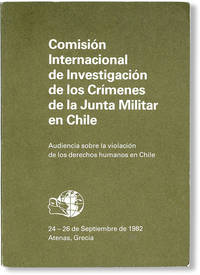
1982réf. 48015Helsinki: Comisión Internacional de Investigación de los Crímenes de la Junta Militar en Chile 1982. First Edition. Slim octavo; publisher's olive green card wrappers lettered in white; 74pp. Light shelf wear else Near Fine. Does not appear to be separately catalogued in OCLC as of March 2020. Comisión Internacional de Investigación de los Crímenes de la Junta Militar en Chile unknown books
1939réf. 46634Shanghai: Nishimura Company 1939. Edition not stated. Quarto 26.5cm; black simulated leather stamped in red and gilt in brown paper slipcover; unpaginated photo-illustrated plates w/ rice paper overlays. Wear minor scuffs and soiling to boards; toning and foxing intermittent throughout text especially on overlays; some overlays creased or torn. Slipcover worn and chapped with abrasions and two large one repaired tears across front panel. Photo-illustrated pastedowns and endpapers. Very Good in Good slipcover. All text in Japanese with some obsolete/antiquated kana/kanji oriented right to left. This is a privately-issued commemorative yearbook-type photo album shashin-cho published on behalf of the Imperial Japanese Army medical forces during the Second Sino-Japanese War 1937-1945. Specifically it was produced for those who served under military physician captains/commanding officers Nobuo Isa and Tetsuo Fukaya who were stationed in or near Shanghai at the time. By July 1939 the Imperial Japanese Army was beginning to feel the impact of its own mounting casualties and costs; the Chinese Red Army would launch a major offensive later that November. While the Japanese occupation of Shanghai was notably brutal there is little evidence of violence in this album. However some photographs do depict the aftermath of battle with ruined buildings and soldiers being treated for injuries. Other subjects are mundane in nature: Staff and group portraits hospitals and other facilities physicians at work company events and ceremonies. Also includes photographs of Shanghai and a fold-out map of the Hangzhou Bay area. Apparently not cataloged in OCLC or available commercially as of November 2019. Nishimura Company unknown books
1932réf. 43672V.p. 1932. Five original press photographs all approx. 17.5x23cm. or the inverse and ten photographic postcards 9 real photo one collotype.; typescript snipe or newsclippings versos of four press photos with some attendant cockling from adhesive; snipes slightly toned; uniformly Very Good. One image has been touched up for publication with Johnstown Mayor McCloskey mid-speech circled in black an arrow pointing to a nurse clad in white behind him. Photographs stamped on verso by Acme Photo Cleveland; Acme Newspictures New York; and the Associated Press. Photo postcards depict Bonus Army encampments and activities in Washington; most bear the "Official B.E.F. Photo" slug in image. In 1924 a grateful Congress voted to give a bonus to WWI veterans ranging from $1.00 for each day served in the U.S. to $1.25 for each day served overseas. The catch was that payment would not be made until 1945. By 1932 the nation was in the throes of the Depression and the unemployed veterans wanted their compensation immediately. In May of that year nearly 15000 veterans many unemployed destitute and hungry descended on Washington DC to demand immediate payment of their bonuses. Led by a man named Walter Waters the veterans called themselves the "Bonus Expeditionary Force" B.E.F.; the media largely sympathetic to their plight dubbed them "The Bonus Army." At its height approximately 17000 veterans and their families lived in shanty towns around Washington. They built camps and roads dug latrines and nearly 43000 people lived in a well-ordered mini-society. The largest of these camps was at Anacostia Flats across the river from the Capitol where a significant portion of the veterans women and children lived in shelters built from whatever scrap materials could be scavenged. As the B.E.F. settled in they began lobbying Congress and organizing marches by day and by night; in the interim the government became paranoid about radical elements and armed revolt--indeed the newsprint snipe on verso of one photographs erroneously describes the B.E.F. as "communist" despite the fact that only three of the twenty-six leaders were card-carrying members of the CPUSA. According to journalist and eyewitness Joseph C. Harsch "This was not a revolutionary situation. This was a bunch of people in great distress wanting help.These were simply veterans from World War I who were out of luck out of money and wanted to get their bonus--and they needed the money at that moment." The BEF's hopes rose in June when the House passed a bill allowing for early payment of the bonuses; their hopes were crushed when the Senate defeated the bill and the marchers refused to leave. For the most part they were peaceful and orderly but many government officials saw them as a threat especially when their leader Waters was close to openly supporting fascism. One July 28 1932 Attorney General Mitchell ordered police to remove the marchers and things quickly deteriorated. Two veterans were shot both later succombing to their wounds. President Hoover ordered the army to evict the marchers so General Douglas MacArthur with an infantry and cavalry regiment supported by six battle tanks commanded by Major George S. Patton massed on Pennsylvania Avenue. The infantry evicted the veterans and their families advancing upon them with fixed bayonets and tear gas. The marchers fled to their largest camp Camp Anacostia and while Hoover ordered the assault stopped MacArthur ignored his directive and attacked anyway. Though it remains unclear which side was the perpetrator the camp was set afire during the assault; the end result left 55 veterans seriously injured one man's spouse suffered a miscarriage and a 12-week old child died from exposure to tear-gas. Dwight Eisenhower later wrote "the whole scene was pitiful. The veterans were ragged ill-fed and felt themselves badly abused. To suddenly see the whole encampment going up in flames just added to the pity." The five present photographs were taken after the events described above at the depleted Bonus Army's "Camp McCloskey" named after the mayor in Johnstown Pennsylvania August 2-5 1932 during a heat wave one of the images showing men cooling off and bathing in a creek near their camp. Of the photographs in this collection at least one made it into print the shot showing the camp in its entirety on the day members learned that Bonus Army member Eric Carlson had died of his wounds inflicted when the B.E.F. was ejected from Washington a few days earlier. Additional photographs show member Mike Matich being taken away on a stretcher after collapsing from heat stroke; another shows Johnstown mayor McCloskey looking on as another member is escorted from his tent when a typhoid outbreak threatened the camp. McCloskey eventually succeeded in ordering the men out of town offering free gas or train fare and money for food. unknown books
1919réf. 34793Washington DC: Navy Department Commission on Training Camp Activities 1919. First Edition. Oblong 12mo 10x13.5cm.; publisher's dark blue staple-bound card wrappers; 298pp.; chiefly musical scores two full-page photographic illus. linocuts by John Held throughout. A hint of toning to wrapper extremities else Very Good to Near Fine. Collection of patriotic songs with illustrations by a young John Held signed in image either "JH" or "J. Held" but otherwise unattributed to him. The noted Jazz Age cartoonist had already had work published in Vanity Fair though after the United States entered World War I he worked for Naval Intelligence in Central America as an illustrator and cartographer. Navy Department Commission on Training Camp Activities unknown books
1975réf. 25551Washington DC: Department of the Army 1975. First Edition. Large quarto 28.5cm.; green pictorial binder; mixed pagination; illus. folding tables; 38 folded maps including five in color loose in chemise mounted to inside of rear cover. Last leaf blank creased and partly separated else Fine. "DA Pamphlet 550-7-1." Compilation of bibliographical material on Latin America and the Caribbean compiled from the US Army Library. Scarce in commerce. Department of the Army unknown books
1885réf. 31347Cincinnati: Robert Clarke 1885. First edition. Cloth. Extremities rubbed small nick to spine else a very good copy with the bookplate of the Military Order of the Loyal Legion of the United States Commandery of the State of Illinois on front pastedown shelf sticker on foot of backstrip their stamp on title page otherwise crisp and clean. 282 pp. 8vo. Presentation copy from the Society of the Army of the Cumberland. Illus. with frontis engraving of Captain W.H. Nelson from a photograph by Matthew Brady and a color reproduction of the Society badge. Includes minutes addresses and orations in Memoriam banquet letters constitution by-laws and list of members. Robert Clarke hardcover books
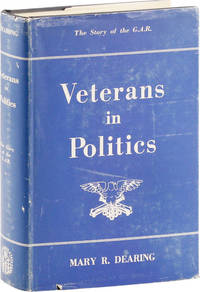
1867réf. 005330Salem OH: Hudson & Son Printers 1867. Book. Very good condition. Paperback. First Edition. Octavo 8vo. ii printed wrapper with verso blank 12 pages of text followed by ii blank rear wrapper. Moderate soiling and age-toning to wraps with a few small tears to edges and a few tiny stains on front wrapper. Includes a Preamble 23 Articles and Resolutions. At this the First National Encampment of the Grand Army of the Republic; it is likely that General John M. Palmer Major B. F. Stephenson surgeon of the Fourteenth Illinois regiment and General S. A. Hurlbut were present and involved in the formation of the national rules. First edition. Hudson & Son, Printers Paperback books
1942réf. 2312679Washington D.C: U.S. Government Printing Office 1942. Trade Paperback. Very Good. Spine and wrappers lightly faded. 1942 Trade Paperback. We have more books available by this author!. iv 145 pp. Photographs and four silhouettes from various angles of dozens of aircraft printed during WWII. Aircraft identification of type and model is important for service personnel to assess threats posed by aircraft and importantly to recognize "friendly" aircraft. U.S. Government Printing Office paperback books
1941réf. 58616Washington D.C.: Government Printing Office 1941. 8vo pp. 34; 9 folding tables and maps; fine in original printed gray wrappers; together with: Marshall G. C. Biennial report of the Chief of Staff of the United States Army July 1 1941 to June 30 1943 Washington D.C.: G.P.O. 1943; pp. v 1 56; 6 folding maps printed in color 19 folding graphs charts and tables; fine in original printed gray wrappers. These reports summarize important events affecting the U.S. Army between July 1 1939 to June 30 1943. "It is a record of what was done and why it was done . This report is based on messages current reports and official records of the War Department which are sufficientlt complete to form an acccurate picture" Foreword. George Catlett Marshall Jr. 1880-1959 rose through the United States Army to become Chief of Staff under presidents Franklin D. Roosevelt and Harry S. Truman then served as Secretary of State and Secretary of Defense under Truman. As Secretary of State Marshall advocated a U.S. economic and political commitment to post-war European recovery including the Marshall Plan that bore his name. In recognition of this work he was awarded the Nobel Peace Prize in 1953. Government Printing Office unknown books
1950réf. 3117New York: Published for the Honorary consultants to the Army Medical Library by Henry Schuman. Printed by the Anthoensen Press Portland ME 1950. Large 8vo. xiv 361 1 pp. With 12 plates. Original buckram. Edges of textblock a little dusty insignificant shelf wear. In very good clean condition. NOT ex-library! Detailed and very useful catalogue of incunabula and early manuscripts well written. Unlike many such catalogues the present volume contains valuable information about bindings and provenance. The work is divided into two parts: Incunabula of which there are 490 and Early Western Manuscripts nos. 491-525. Part Two describes Oriental Manuscripts Arabic Persian Turkish Singhalese and Hebrew. There is a Concordance index of titles and an index of names. ¶ B.H. Breslauer copy with his circled acquisition number on first blank; purchased from sale of the famed Bibliotheca Bibliographica Breslaueriana Christie's New York 2005 lot 1300. Garrison/Morton 6783. Published for the Honorary consultants to the Army Medical Library by Henry Schuman. [Printed by the Anthoensen Press, Portland, unknown books
réf. SKU1037451Minister of National Defence. Hardcover. Very Good. B000RT6FEE Burgundy boards have only light wear. Clean has a good binding no marks or notations. Volume 1. 253 pages. Minister of National Defence hardcover books
1878réf. 33304Washington 1878. Each 7-1/2" x 9-3/4" 1-3pp. Wide margins Very Good. The orders deal with promotions discharges assignments prison sentences at Leavenworth western outposts and other matters. unknown books
1842réf. 33152Philadelphia: Published at the Temperance Office No. 3 North Eighth Street 1842. Certificate oblong 8-3/4" x 5-1/2". Ornately printed in gilt on black glazed stock with elaborate bank-note border. Subscriber's name is blank. Faded in a few spots but always visible Very Good. The 'Cold Water Army' was a juvenile temperance organization founded in the belief that its message was best directed at children who were more likely to follow it when they became adults. The 'Pledge' begins: "Here Lord! I pledge perpetual hate/ To all that can intoxicate;/ I'll never use the filthy weed/ Then from its evils I'll be freed." Asa Fitz Secretary of this Philadelphia branch was a writer on temperance subjects and editor of the 'Cold Water Boy' a periodical published in Providence. This certificate was probably published at the same address as Fitz's Temperance Pictorial Songster Philadelphia: Nathan Moore. 3 Carpenter's Buildings North Eighth Street. 1843. We do not locate this on OCLC as of August 2016. Published at the Temperance Office, No. 3 North Eighth Street unknown books
1861réf. 32019Richmond Va.: West & Johnston Publishers 1861. 198 2- Index pp. Title page with rubberstamp and light soil verso with ink accession number. Text lightly to moderately spotted. Bound in later buckram gilt-lettered morocco spine labels gum label at spine base. Good. This foundation Confederate imprint also issued from several other southern cities during 1861. The Articles of War generally copied from U.S. Army Articles reflect the deadly serious nature of the rebellion: "All officers and soldiers who have received pay or have been duly enlisted in the services of the Confederate States and shall be convicted of having deserted the same shall suffer death or such other punishment as by sentence of a court-martial shall be inflicted." Parrish & Willingham 2215. Sabin 2054. West & Johnston, Publishers unknown books
1863réf. 23743Washington 1863. 12mo broadside two punch holes in blank inner margin Very Good. The Order appoints General Hooker to the command of the Army of the Potomac and relieves General Burnside from command "at his own request. unknown books
1926réf. 302881926. Judge Advocate General of the Army. Consolidated Index of Published Volumes of Opinions and Digests of Opinions of the Judge Advocate General of the Army 1912 to 1924 Inclusive. Washington; Government Printing Office 1926. 352 pp. Hardcover. Cloth rubbed. Ex-U.S. Army library stamp on top edge endpapers title page. Hinges slightly cracked. Good. $25. unknown books
1917réf. 303801917. Judge Advocate General. A Digest of Opinions of the Judge Advocates General of the Army 1912. Washington: Government Printing Office 1917. 1171 pp. Hardcover. Cloth rubbed. Ex-US Army library stamp stamp on top edge and endpapers. Mild shelf wear. Good. $4. unknown books
1919réf. 303761919. Judge Advocate General. Opinions of the Judge Advocate General of the Army. April 1 1917 to December 31 1917 Volume I. Washington: Government Printing Office 1919. xi 320 pp. Hardcover. Cloth rubbed some shelf wear. Ex-U.S. Army library stamp on front cover top edge endpapers. Hinges cracked but holding. Good. $20. unknown books