449 résultats
2012réf. 75155Mechanicsburg: Stackpole 2012-13. 1st editions. New Books. small quarto. dust jackets viii 326 v 330pp. b/w plates text ills. maps & plans appends. ÔThe German 3rd Panzer Division was established in 1935 under the command of Generalleutnant Ernst Fessmann. It later participated in the 1939 invasion of Poland the 1940 invasion of France and the 1941 invasion of the Soviet Union. On the Eastern Front it participated in the 1942 drive on the Caucasus and participated in the Battle of Kursk as part of the 48th Panzer Corps fighting alongside the 11th Panzer division the 167th Infantry division and the elite Panzergrenadier division Grossdeutschland. During the battle the 3rd Panzer was used to achieve the initial breakthrough and inflicted heavy damage to the Soviet forces. It was then used to protect the flanks of the 48th Panzer Corps. After the Soviet counter-attack at Kursk in which the 3rd Panzer division tried unsuccessfully to defend Kharkov it retreated as the Germans were driven back westward. This is a fully illustrated account of the German 3rd Panzer Division in World War II from 1943 through the end of the warÕ Stackpole unknown
1955réf. 93132Washington: the Board 1955. 123p. iv 8.5x11 inches wraps very good condition. Testimony mostly by SACB witnesses - including a number of former ALB members as well as Louis Budenz Herb Romerstein and Harvey Matusow with Jose Asensio and Milt Wolff among others testiying for VALB. Shockingly the SACB found VALB to be a commie front. the Board unknown
1915réf. 40978New Orleans 1915. Three printed broadside letters each signed in facsimile by Wm. E. Mickle Adjutant General and Chief of Staff dated 27 February 1904; 17 June 1912; and 1 Nov. 1915. First letter signed in type by Stephen D. Lee Lieutenant General Commanding; the others signed in type by Bennett H. Young General Commanding. Light edge wear else Very Good. Fifty-two delegates representing nine Confederate veterans' organizations elected General John B. Gordon of Georgia as their first commander in chief a position that he held until his death in 1904" "United Confederate Veterans ." Dictionary of American History. . Encyclopedia website 15 May. 2026. The 1912 Letter General Orders No. 4 announces "the following resolution adopted at the Reunion held in Macon Ga. That we hereby most heartily commend to the favorable consideration of the reading public the book written by Hon. Hillary A. Herbert titled 'The Abolition Crusade and Its Consequences.' The book is especially adapted for use in the public and other schools; and the school authorities would do well to make it one of their books of history.". unknown books
1915réf. 40978New Orleans 1915. Three printed broadside letters each signed in facsimile by Wm. E. Mickle Adjutant General and Chief of Staff dated 27 February 1904; 17 June 1912; and 1 Nov. 1915. First letter signed in type by Stephen D. Lee Lieutenant General Commanding; the others signed in type by Bennett H. Young General Commanding. Light edge wear else Very Good. Fifty-two delegates representing nine Confederate veterans' organizations elected General John B. Gordon of Georgia as their first commander in chief a position that he held until his death in 1904" "United Confederate Veterans ." Dictionary of American History. . Encyclopedia website 15 May. 2026. The 1912 Letter General Orders No. 4 announces "the following resolution adopted at the Reunion held in Macon Ga. That we hereby most heartily commend to the favorable consideration of the reading public the book written by Hon. Hillary A. Herbert titled 'The Abolition Crusade and Its Consequences.' The book is especially adapted for use in the public and other schools; and the school authorities would do well to make it one of their books of history.". unknown
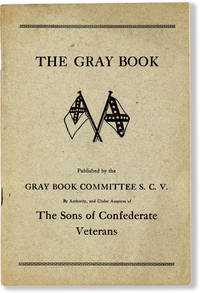
1920réf. 61886n.p.: The Gray Book Committee n.d.; 1920. First Edition. First printing. Octavo 23cm. Stapled pamphlet in grey paper wrappers printed in black; 531pp. Lightly rubbed with minor external soil and faint sunning along spine pages facing wrappers browned else bright: Very Good. A collection gathered from various sources of Confederate apologetics and "states' rights" pseudohistory published at the height of Lost Cause propaganda as a sort of vade mecum for members of the association. #61886. The Gray Book Committee unknown books
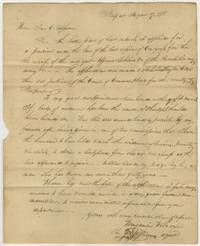
réf. BK0194Newport Rhode Island August 11 181. Manuscript letter one page on a folded sheet signed in Wilcox's name by Thomas Williams as agent. 7 ¾ x 9 ¾ inches. Old folds light toning and minor marginal wear. Very good. An early appeal under the landmark pension act of March 18 1818 the first federal legislation extending lifetime pensions to needy Revolutionary War veterans who had not been disabled in service. Benjamin Wilcox a former lieutenant in the Rhode Island Continental Line had applied almost immediately after the law's passage submitting his claim before a Newport judge in late March. Nearly five months later having received no response he wrote directly to Secretary of War John C. Calhoun: "To my great disappointment I have heard nothing of it since. If lack of evidence has been the cause I think I should have heard so. But this was deemed hardly possible by my friends after having given in one of two commissions that I have the honour to have held & such other evidence of services poverty & inability to obtain a livelihood from old age & weakness as the law appeared to require." The new program attracted far more applicants than anticipated forcing Congress to tighten eligibility requirements in 1820. Calhoun himself reported to Congress in 1823 that the War Department had not kept count of pension applications until August 1818 the very month Wilcox wrote demanding to know what had become of his claim. . unknown books
réf. BK0194Newport Rhode Island August 11 181. Manuscript letter one page on a folded sheet signed in Wilcox's name by Thomas Williams as agent. 7 ¾ x 9 ¾ inches. Old folds light toning and minor marginal wear. Very good. An early appeal under the landmark pension act of March 18 1818 the first federal legislation extending lifetime pensions to needy Revolutionary War veterans who had not been disabled in service. Benjamin Wilcox a former lieutenant in the Rhode Island Continental Line had applied almost immediately after the law's passage submitting his claim before a Newport judge in late March. Nearly five months later having received no response he wrote directly to Secretary of War John C. Calhoun: "To my great disappointment I have heard nothing of it since. If lack of evidence has been the cause I think I should have heard so. But this was deemed hardly possible by my friends after having given in one of two commissions that I have the honour to have held & such other evidence of services poverty & inability to obtain a livelihood from old age & weakness as the law appeared to require." The new program attracted far more applicants than anticipated forcing Congress to tighten eligibility requirements in 1820. Calhoun himself reported to Congress in 1823 that the War Department had not kept count of pension applications until August 1818 the very month Wilcox wrote demanding to know what had become of his claim. . unknown
1973réf. 41784N.p.: Vietnam Veterans Against the War 1973. First Edition. Original offset lithographed poster in colors 56cm x 43cm 22" x 17". Fine fresh apparently unused example. Poster sold as a fundraiser for the defense of the Gainesville Eight a group of Florida Vietnam veterans who were accused on dubious evidence of conspiracy to disrupt the 1972 Republican National Convention in Miami Beach. All eight defendants including the reputed ringleader Scott Camil were eventually acquitted. A rare poster and this is a lovely fresh example. Not catalogued in OCLC; we note only one institutionally-held copy Library of Congress. Vietnam Veterans Against the War unknown books
1973réf. 41784N.p.: Vietnam Veterans Against the War 1973. First Edition. Original offset lithographed poster in colors 56cm x 43cm 22" x 17". Fine fresh apparently unused example. Poster sold as a fundraiser for the defense of the Gainesville Eight a group of Florida Vietnam veterans who were accused on dubious evidence of conspiracy to disrupt the 1972 Republican National Convention in Miami Beach. All eight defendants including the reputed ringleader Scott Camil were eventually acquitted. A rare poster and this is a lovely fresh example. Not catalogued in OCLC; we note only one institutionally-held copy Library of Congress. Vietnam Veterans Against the War unknown
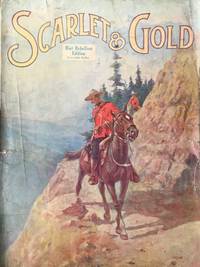
1935réf. 9900045230Vancouver BC: Mounted Police Veterans Assoc 1935. Stapled Wraps. pp. 102. 4to. Cover shows creasing and tears and separated from text some loss to spine and first page cup ring to one page ink to foredge text shows marginal ride marks; fair. This edition of the magazine of the Mounted Police Veterans' Association published on the 50th anniversary of the North West Rebellion presents 'many interesting stories of that time written chiefly by the men who took an active part in this Canadian drama. We. believe that this issue should be treasuresd as an historical souvenir'. Articles include: 'Riel Rebellion of 1885' by Judge Forin 4 pgs; 'Pioneering in the West' by J B Ross 4 pgs; 'Toronto to Fort Garry' by James T. Fullerton 2 pgs; 'Prisoners with Indians' by Neil Brodie 4 pgs; 'Sergeant D B Smith Honored' 1 pg; 'With General Strange's Column in the Riel Rebellion': reprinted from the 1885 'The Souvenir Number of the Illustrated War News' 9 pgs; 'Charles Dickens' Son' by George Shepherd 1 pg; 'On the March with 'The Little Black Devils' ' by Monro St. John 20 pgs; 'The Trial and Sentence of Louis Riel' by George Bartley 5 pgs; and 'Jubilee Year of Loyalists' Victory Riel's Second Rebellion in 1885' by George Bartley 19 pgs. All articles are peppered with photos and illustrations. Last two pages appear in duplicate. Mounted Police Veterans Assoc unknown
1998réf. 68852Rosenheim: Deutsche Verlagsgsellschaft 1998. 3rd edition. As New. folio. dust jacket 280pp. b/w plates maps plans Well-illustrated history of one unit of the Leibstandarte Adolf Hitler. inc. many previously unpublished photos esp. Eastern front. GERMAN TEXT Deutsche Verlagsgsellschaft unknown
1993réf. 39971Rosenheim: Deutsche Verlagsgsellschaft 1993. 2nd edition. Fine. folio. dust jacket 280pp. b/w pls. maps plans Well-illustrated history of one unit of the Leibstandarte Adolf Hitler. inc. many previously unpublished photos esp. Eastern front. GERMAN TEXT Deutsche Verlagsgsellschaft unknown
1925réf. 2228Chicago: Veteran Foreign Wars of The United States 1925. Prepared Expressly For Patrons of Record. America; Great Crises In Our History Told by Its Makers. A Library of Original Sources Americanization Department VFW Veteran Foreign Wars Edition prepared expressly for Patrons of Record with multicolor dedication pages each volume "registered in the name of its owner at headquarters and certified to in Volume I". Signed by both the Commander-in-Chief of the VFW and the Adjutant-General with the blind-stamp of the National Encampment. Bound in full faux leather bindings. Gilded spines. Gilded eagle and VFW motifs on covers. The top edges are gilded. Printed on thick quality paper. With wide margins. Frontisplates. Gilded dedication page Dedicated to 'Our Boys Who Made The Supreme Sacrifice'. 8.5 inches tall. 16 inches of shelf space. Index in volume 12. VERY GOOD condition. The hinges are 100% fully attached. Some general shelf wear / abrasion. Printed on quality paper that is fresh bright and clean. This set displays beautifully. This set would make an excellent gift and/or addition to any fine library. In addition to their shelf presence antiquarian books make an excellent investment. We always pack very securely to help ensure safe handling during transit. All books are individually wrapped and are always professionally padded. We offer a full refund guarantee per our terms described on our site with notification of such intent requested. Please contact us with any inquiries. Veteran Foreign Wars of The United States unknown
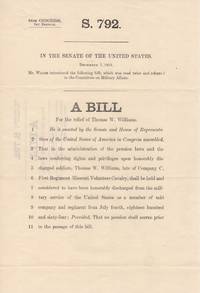
1922réf. List2720Butte Montana 1922. Approximately 113 pieces: fifty-one letters to Thomas Williams; thirteen to various politicians mainly members of Congress; and twenty to Williams’ advocates mostly from Congresspeople; fifteen miscellaneous items including Grand Army of the Republic materials and Williams’ citizenship document; and fourteen empty envelopes. Materials date from between 1911 and 1922. Near fine with normal wear. Thomas W. Williams 1845–1931 was born outside of Swansea Wales and died in a Soldier’s Home in Los Angeles California. According to his obituary he came to the United States in about 1857 as a very young boy briefly left to learn blacksmithing in Toronto Canada and then returned stateside. He enlisted with the Union army at the outbreak of the Civil War shortly before he turned 16 and served in the 1st Missouri Cavalry of Volunteers Company C. After the war he was a resident of Butte Montana to or from which many of these letters are written. Offered here is a large lot of materials relating to Williams’ efforts late in life to secure a veteran’s pension for his service – or at least to have his 1864 dishonorable discharge expunged from his record. Williams enlists a number of people to help him with this task including fellow 1st Cavalry veteran Abraham Brokaw several local attorneys and the mayor of Butte. Their letters on Williams’ behalf are mainly addressed to congressmen mostly from Montana whose replies start out with polite deferrals—they would of course love to do anything in their power to help but these matters are difficult and now is simply not the right time—but devolve into accusations and firm denials. According to Williams he had served with Company C until his honorable discharge in May of 1864 at which point he immediately reenlisted. He received a thirty-day furlough on reenlistment and decided to visit his uncle in Hamilton Ontario as he had no other family on the continent. On attempting to return to his post: “As I was not of age my uncle held me and prevented me from returning to my command. I tried to get away so as to get back ran away twice but was recaptured twice my uncle having a letter from my mother instructing him to hold me as I would only be 19 on Sept 15 1864. I was branded as a deserter when I applied for a copy of my discharge.” December 11 1919 His record prior to this he claims had been stellar as he lays out in an eleven-page notarized statement as part of his appeal May 3 1922. He describes being sent as a member of General Frémont’s bodyguard into the First Battle of Springfield: “we were sent to lexington to drive Price and the Rebels out of Mo. we camp about 20 miles away in a viliage before we reached Springfield and General Freemont called the Body guard out at 2 oclock in the morning for volenteers we came out . we did not know where we were going. after we had gone a few miles we had a fight with the Rebels pickets and whiped and drove them away and we went two or three miles towards Springfield . we made the charge and drove the rebels out there were 2200 of them. we laid out in the prairies all night without Hat Coat or Blanket to keep us warm and Held our Horses by the Bridel all night”. The men “formed a camp near Springfield and you can see cut in a large rock the name of Camp Bliss which I cut and the dait of the year.” When Frémont was ordered back to Washington he ordered a dispatch sent from Springfield to Sedalia which Williams carried “132 miles from 8 oclock in the morning on our same Horses. and only one drink of water for our selves our Horses from the time we left camp that night untill 11 oclock when we arrived in Seidailia we then returned to Springfield with General Hunters comand escorted General fremont to Rolla”. The men go on “to Levenworth Kansas and the Bushwackers fought us all the way”. They winter in Leavenworth and are then sent to “Independence Mo to drive Quantrell and his gang out of North Mo” – that is William Quantrill and his Raiders an infamous pro-Confederate guerilla group. Williams writes: “We left the Sargent of Co E. in Kansas City to get our mail and a citizen and his son was with him Quantrell gang captured them and striped the both and placed them in a fence corner and killed them Both and placed fence rail over them and Burned them up and left the Boy see them do this he came to our Captain Miles Kehoe who sent us out in squads on all the roads and we captured 9 of the Rebles Captain line them up and told the Boy to pick out the man that killed his father . they coart Marcheled him and Hanged him the next morning at 8 oclock Capt Kehoe let the others go and told them if they were caught in any thing But a fair fight he would Hang them too”. Quantrill’s men heed Keogh’s warning and go much easier on six of the company’s men who are captured while searching for more feed for the horses: “Quantrals gang caught them after disarming took them to a farm house gave them supper and sent some of his men around and collected all the young ladies they could get and an old Mo fidler they danced all night and then Quantral gave them Brekfast and sent them to there camps this was the last trouble we had with him and his gang”. At this point Williams does admit to running into some trouble himself: another soldier “started to curse queen Victoria and I hit him . my Welch Blood could not stand to hear him”. Williams asks the soldier what he “would do to a man if he damned presedent Lincoln” and the soldier “went and swore I damned the president and I was Coart Marceled and sent to Alton then a Military Prison and at the Cort Marshal they did not alow me to say one word to protect myself when I arrived at Alton I explained the whole afair to the officer who had charge of this prison he advised me to write to president Lincoln”. Williams is shortly released from prison and sent back to his post at Little Rock; in later tellings of the story by Williams’ advocates including in a resolution of the Grand Army of the Republic Lincoln personally ordered Williams released. Willliams’ company fights in the Battle of Prairie D'Ane and then camps with “a comand of Jenensons coulered troops”—probably Colonel Charles Jennison—who were “attacked by the rebles” and “shot at them and then went at them with Bainets and drove them for miles it was a Sight to see the dead rebles how they were Killed”. Shortly before his initial discharge Williams’ company goes on to Camden where: “some of our troops were on picket and those not on guard were asleep around a fire and the rebles made a charge and shot the Boys around the fire after that the Boys took logs and put Hats and overcoats on the logs and the Rebles tryed the same game But was caught in a trap”. Finally Williams is discharged reenlists and is furloughed and heads to Canada where his troubles begin. He first appeals to fellow 1st Missourian Abraham Brokaw since Brokaw could act as a witness to his claims. In their correspondence Brokaw sometimes recalls interesting anecdotes from the war including the “dirty irishman thief and libertine” Kelley “who the boys you will call to mind was going to hang at Little Rock for steeling our postals” April 18 1912 and a “band of gurillas from Ark. that had captured and was holding the little town” of Ozark Missouri who “had got word of our coming and left for parts unknown a few hours before our coming” January 26 1915. The letters to Williams and his advocates are frustrating – what he’s told is inconsistent and he makes little progress. First he has to get confirmation of his first honorable discharge which he seems to receive around September of 1916. Then he applies for a pension; however the office of the Bureau of Pensions writes to him the following year that his pension “claim was rejected November 13 1916 on the ground that you were never honorably discharged from the only contract of service you entered into during the Civil War” August 31 1917. A month later the Missouri Adjutant General writes a certificate of his service which “clears your record both here and in Washington” and congratulates him “on receiving at last your just due as a Veteran so richly merited” September 20 1917. By the end of the year though he is still trying to clear the desertion charge and has now resorted to trying to pass a bill in congress to do so. Montana Senator Thomas Walsh writes that “I have tried very hard to secure a favorable report . but have been unable to induce the Military Committee to take action thereon” December 11 1917. The congressmen to whom he appeals—including Senators Walsh Tom Stout and Henry Myers and Representatives Frank W Mondell Carl W Riddick and Henry Z Osborne—are less than helpful. They often claim that there is insufficient time remaining in the current congressional session remind him that such bills are difficult to pass even in favorable circumstances and ask him to furnish them with the same information he has already provided. After years of this Senator Myers suddenly tells Charles Juttner one of Williams’ advocates a very different story about Williams’ service: “The report of the War Department shows that in March 1863 Mr. Williams was tried by court-martial on a long list of serious charges and that he was found guilty on all of them; that he was sentenced to imprisonment at hard labor for the duration of the war or at least until his term of enlistment should expire and that other penalties were assessed against him one of which was that at the expiration of his term of imprisonment he should be dishonorably discharged from the Army. It appears however that after having been imprisoned nearly a year the remainder of his sentence was remitted and that he was allowed to rejoin his company and that he did rejoin it in February 1864. The records of the War Department however show that July 4 1864 at St. Louis while on furlough Mr. Williams deserted and never rejoined the army.” July 18 1921 A letter from the War Department Adjutant General adds the details that he “was found guilty . of conduct prejudicial to good order and military discipline and of disobedience to orders” and that his sentence had included “a ball and chain weighing twelve pounds attached to his leg” and the forfeiture of all present and future pay and allowances January 16 1922. It is difficult to say which account is true. Myers however had given some telling further reason that Williams’ bill might have been rejected: “There is an intense prejudice in Congress against such bills. . The senators and representatives seem to think that such a bill is merely a prelude to an application for a pension and the expenses of the government are now so enormous and the expenses of providing for the veterans of the World War are so great . that there seems to be a general disposition in Congress not to increase the Civil War pension list any more by a single dollar.” Overall a record of one veteran’s experience dealing with the federal government. Of interest to scholars of the American Civil War and postbellum civilian life both for its firsthand accounts of engagements in the trans-Mississippi theater and for the look it offers at the treatment of veterans. unknown books
1922réf. List2720Butte Montana 1922. Approximately 113 pieces: fifty-one letters to Thomas Williams; thirteen to various politicians mainly members of Congress; and twenty to Williams’ advocates mostly from Congresspeople; fifteen miscellaneous items including Grand Army of the Republic materials and Williams’ citizenship document; and fourteen empty envelopes. Materials date from between 1911 and 1922. Near fine with normal wear. Thomas W. Williams 1845–1931 was born outside of Swansea Wales and died in a Soldier’s Home in Los Angeles California. According to his obituary he came to the United States in about 1857 as a very young boy briefly left to learn blacksmithing in Toronto Canada and then returned stateside. He enlisted with the Union army at the outbreak of the Civil War shortly before he turned 16 and served in the 1st Missouri Cavalry of Volunteers Company C. After the war he was a resident of Butte Montana to or from which many of these letters are written. Offered here is a large lot of materials relating to Williams’ efforts late in life to secure a veteran’s pension for his service – or at least to have his 1864 dishonorable discharge expunged from his record. Williams enlists a number of people to help him with this task including fellow 1st Cavalry veteran Abraham Brokaw several local attorneys and the mayor of Butte. Their letters on Williams’ behalf are mainly addressed to congressmen mostly from Montana whose replies start out with polite deferrals—they would of course love to do anything in their power to help but these matters are difficult and now is simply not the right time—but devolve into accusations and firm denials. According to Williams he had served with Company C until his honorable discharge in May of 1864 at which point he immediately reenlisted. He received a thirty-day furlough on reenlistment and decided to visit his uncle in Hamilton Ontario as he had no other family on the continent. On attempting to return to his post: “As I was not of age my uncle held me and prevented me from returning to my command. I tried to get away so as to get back ran away twice but was recaptured twice my uncle having a letter from my mother instructing him to hold me as I would only be 19 on Sept 15 1864. I was branded as a deserter when I applied for a copy of my discharge.” December 11 1919 His record prior to this he claims had been stellar as he lays out in an eleven-page notarized statement as part of his appeal May 3 1922. He describes being sent as a member of General Frémont’s bodyguard into the First Battle of Springfield: “we were sent to lexington to drive Price and the Rebels out of Mo. we camp about 20 miles away in a viliage before we reached Springfield and General Freemont called the Body guard out at 2 oclock in the morning for volenteers we came out . we did not know where we were going. after we had gone a few miles we had a fight with the Rebels pickets and whiped and drove them away and we went two or three miles towards Springfield . we made the charge and drove the rebels out there were 2200 of them. we laid out in the prairies all night without Hat Coat or Blanket to keep us warm and Held our Horses by the Bridel all night”. The men “formed a camp near Springfield and you can see cut in a large rock the name of Camp Bliss which I cut and the dait of the year.” When Frémont was ordered back to Washington he ordered a dispatch sent from Springfield to Sedalia which Williams carried “132 miles from 8 oclock in the morning on our same Horses. and only one drink of water for our selves our Horses from the time we left camp that night untill 11 oclock when we arrived in Seidailia we then returned to Springfield with General Hunters comand escorted General fremont to Rolla”. The men go on “to Levenworth Kansas and the Bushwackers fought us all the way”. They winter in Leavenworth and are then sent to “Independence Mo to drive Quantrell and his gang out of North Mo” – that is William Quantrill and his Raiders an infamous pro-Confederate guerilla group. Williams writes: “We left the Sargent of Co E. in Kansas City to get our mail and a citizen and his son was with him Quantrell gang captured them and striped the both and placed them in a fence corner and killed them Both and placed fence rail over them and Burned them up and left the Boy see them do this he came to our Captain Miles Kehoe who sent us out in squads on all the roads and we captured 9 of the Rebles Captain line them up and told the Boy to pick out the man that killed his father . they coart Marcheled him and Hanged him the next morning at 8 oclock Capt Kehoe let the others go and told them if they were caught in any thing But a fair fight he would Hang them too”. Quantrill’s men heed Keogh’s warning and go much easier on six of the company’s men who are captured while searching for more feed for the horses: “Quantrals gang caught them after disarming took them to a farm house gave them supper and sent some of his men around and collected all the young ladies they could get and an old Mo fidler they danced all night and then Quantral gave them Brekfast and sent them to there camps this was the last trouble we had with him and his gang”. At this point Williams does admit to running into some trouble himself: another soldier “started to curse queen Victoria and I hit him . my Welch Blood could not stand to hear him”. Williams asks the soldier what he “would do to a man if he damned presedent Lincoln” and the soldier “went and swore I damned the president and I was Coart Marceled and sent to Alton then a Military Prison and at the Cort Marshal they did not alow me to say one word to protect myself when I arrived at Alton I explained the whole afair to the officer who had charge of this prison he advised me to write to president Lincoln”. Williams is shortly released from prison and sent back to his post at Little Rock; in later tellings of the story by Williams’ advocates including in a resolution of the Grand Army of the Republic Lincoln personally ordered Williams released. Willliams’ company fights in the Battle of Prairie D'Ane and then camps with “a comand of Jenensons coulered troops”—probably Colonel Charles Jennison—who were “attacked by the rebles” and “shot at them and then went at them with Bainets and drove them for miles it was a Sight to see the dead rebles how they were Killed”. Shortly before his initial discharge Williams’ company goes on to Camden where: “some of our troops were on picket and those not on guard were asleep around a fire and the rebles made a charge and shot the Boys around the fire after that the Boys took logs and put Hats and overcoats on the logs and the Rebles tryed the same game But was caught in a trap”. Finally Williams is discharged reenlists and is furloughed and heads to Canada where his troubles begin. He first appeals to fellow 1st Missourian Abraham Brokaw since Brokaw could act as a witness to his claims. In their correspondence Brokaw sometimes recalls interesting anecdotes from the war including the “dirty irishman thief and libertine” Kelley “who the boys you will call to mind was going to hang at Little Rock for steeling our postals” April 18 1912 and a “band of gurillas from Ark. that had captured and was holding the little town” of Ozark Missouri who “had got word of our coming and left for parts unknown a few hours before our coming” January 26 1915. The letters to Williams and his advocates are frustrating – what he’s told is inconsistent and he makes little progress. First he has to get confirmation of his first honorable discharge which he seems to receive around September of 1916. Then he applies for a pension; however the office of the Bureau of Pensions writes to him the following year that his pension “claim was rejected November 13 1916 on the ground that you were never honorably discharged from the only contract of service you entered into during the Civil War” August 31 1917. A month later the Missouri Adjutant General writes a certificate of his service which “clears your record both here and in Washington” and congratulates him “on receiving at last your just due as a Veteran so richly merited” September 20 1917. By the end of the year though he is still trying to clear the desertion charge and has now resorted to trying to pass a bill in congress to do so. Montana Senator Thomas Walsh writes that “I have tried very hard to secure a favorable report . but have been unable to induce the Military Committee to take action thereon” December 11 1917. The congressmen to whom he appeals—including Senators Walsh Tom Stout and Henry Myers and Representatives Frank W Mondell Carl W Riddick and Henry Z Osborne—are less than helpful. They often claim that there is insufficient time remaining in the current congressional session remind him that such bills are difficult to pass even in favorable circumstances and ask him to furnish them with the same information he has already provided. After years of this Senator Myers suddenly tells Charles Juttner one of Williams’ advocates a very different story about Williams’ service: “The report of the War Department shows that in March 1863 Mr. Williams was tried by court-martial on a long list of serious charges and that he was found guilty on all of them; that he was sentenced to imprisonment at hard labor for the duration of the war or at least until his term of enlistment should expire and that other penalties were assessed against him one of which was that at the expiration of his term of imprisonment he should be dishonorably discharged from the Army. It appears however that after having been imprisoned nearly a year the remainder of his sentence was remitted and that he was allowed to rejoin his company and that he did rejoin it in February 1864. The records of the War Department however show that July 4 1864 at St. Louis while on furlough Mr. Williams deserted and never rejoined the army.” July 18 1921 A letter from the War Department Adjutant General adds the details that he “was found guilty . of conduct prejudicial to good order and military discipline and of disobedience to orders” and that his sentence had included “a ball and chain weighing twelve pounds attached to his leg” and the forfeiture of all present and future pay and allowances January 16 1922. It is difficult to say which account is true. Myers however had given some telling further reason that Williams’ bill might have been rejected: “There is an intense prejudice in Congress against such bills. . The senators and representatives seem to think that such a bill is merely a prelude to an application for a pension and the expenses of the government are now so enormous and the expenses of providing for the veterans of the World War are so great . that there seems to be a general disposition in Congress not to increase the Civil War pension list any more by a single dollar.” Overall a record of one veteran’s experience dealing with the federal government. Of interest to scholars of the American Civil War and postbellum civilian life both for its firsthand accounts of engagements in the trans-Mississippi theater and for the look it offers at the treatment of veterans. unknown
1961réf. 2708Washington DC 1961. Very good. 88pp. Quarto. Original textured padded cloth printed in gilt and black with calendar designs on front cover. Minor edge wear rubbing and abrading to covers. Ink gift inscription on front free endpaper toning to endpapers but otherwise internally clean. A rare yearbook from Veterans High School Center - an segregated academic and vocational training high school for American servicemen and other non-traditional male African-American students in the District of Columbia. Veterans High School was started in the old Armstrong Manual Training High School building in 1946 and operated until 1964 at which time it became an adult education center. During its run Veterans High School Center graduated around a hundred students a year trained in various academic and vocational specialties. The range of study is reflected in the senior class section here noting that each student is graduating on an "Academic" track or gaining a diploma in such vocational avenues as Printing Radio-TV Shoe Repair Auto Mechanics Brickmasonry Barber Science Electricity Drafting and Tailoring. Other sections of the yearbook feature students in typical settings such as the classroom in clubs playing sports and so forth. There is also a list of school patrons followed by an eight-page section of advertisements for local businesses. We could locate no other yearbooks from the segregated all-male Veterans High School in Washington D.C. unknown books
1961réf. 2708Washington DC 1961. Very good. 88pp. Quarto. Original textured padded cloth printed in gilt and black with calendar designs on front cover. Minor edge wear rubbing and abrading to covers. Ink gift inscription on front free endpaper toning to endpapers but otherwise internally clean. A rare yearbook from Veterans High School Center - an segregated academic and vocational training high school for American servicemen and other non-traditional male African-American students in the District of Columbia. Veterans High School was started in the old Armstrong Manual Training High School building in 1946 and operated until 1964 at which time it became an adult education center. During its run Veterans High School Center graduated around a hundred students a year trained in various academic and vocational specialties. The range of study is reflected in the senior class section here noting that each student is graduating on an "Academic" track or gaining a diploma in such vocational avenues as Printing Radio-TV Shoe Repair Auto Mechanics Brickmasonry Barber Science Electricity Drafting and Tailoring. Other sections of the yearbook feature students in typical settings such as the classroom in clubs playing sports and so forth. There is also a list of school patrons followed by an eight-page section of advertisements for local businesses. We could locate no other yearbooks from the segregated all-male Veterans High School in Washington D.C. unknown
réf. 8234broché - 16x24 - 4 pp - 1900 -
199060 pages. Undated but appears to be circa 1990. A periodical for those who served with the B.E.F. (France) from 10th May 1940. Clean and unmarked with moderate wear. A quality copy. Book
19168vo; Original publisher's cloth. Dampstains to boards and lower margins of 1st & last pages, otherwise Very Good Condition. (am-4-2)
198272 pages. Circa 1982-83. Perhaps the first book to be written by workers on the question of Canada's entering the second depression. Their dismay at finding another generation of young families faced with the same prospects of unemployment, has prompted them to compile an outline of world and national development leading to recurring crises in private enterprise systems. The authors have used a historical materialist approach in attempting to make the history and background of depressions understandable to the average working class reader. Gift greetings inside front cover else clean and unmarked. Light wear. Very nice copy. Book
1982réf. 83700782Winnipeg Manitoba Canada: Ad hoc Winnipeg Committee of Unemployed Youth and Veterans of the Great Depression 1982. Book. Very Good. Paperback. First Edition. 8vo - over 7¾" - 9¾" tall. 72 pages. Circa 1982-83. Perhaps the first book to be written by workers on the question of Canada's entering the second depression. Their dismay at finding another generation of young families faced with the same prospects of unemployment has prompted them to compile an outline of world and national development leading to recurring crises in private enterprise systems. The authors have used a historical materialist approach in attempting to make the history and background of depressions understandable to the average working class reader. Gift greetings inside front cover else clean and unmarked. Light wear. Very nice copy. (Ad hoc) Winnipeg Committee of Unemployed Youth and Veterans of the Great Depression Paperback
réf. ABE-10069156276TIRAGE ARGENTIQUE NOIR ET BLANC-20 CM X 15 CM-LEGENDE SUR PAPIER "LA JOURNEE DU 8 JUILLET A PARIS. LES CROIX DE FEU ET LES BRISCARDS A L'ARC DE TRIOMPHE; LE COLONEL LA ROCQUE HARANGUANT LA FOULE. PHOTO NYT PARIS LE 8.7.34"-AU DOS CACHET HUMIDE NYT RUE REAUMUR PARIS-LE COLONEL LA ROCQUE DEBOUT DANS UNE VOITURE DECAPOTABLE-DRAPEAUX- (CP1)
1772réf. GITh279A Grenoble chez la Veuve Faure et Fils 1772. In-12 27pp dont le titre 14 feuillets non chiffrés sur double page ou repliés (fac similes de documents). Dérelié, brochage solide, bon état.