[American Missionaries in Japan - Methodist Missionary Schools - Kwassui School] Ikuta, PhotographerABAA

661 résultats
1893réf. List1712Nagasaki: Ikuta 1893. Albumen photograph measuring 5 x 3 ½ inches on a larger mount with the imprint of Ikuta Uwajima on mount recto. Slight fading near fine condition. With identifying marks to verso. Near Fine. A photograph of the wedding party of the American missionary and author William Jackson Callahan and Martha Taylor Callahan taken at the Kwassui Girls' School later Kwassui Women's University in Nagasaki. At the time Taylor was representing the Women's Board of the Methodist Episcopal Church and serving perhaps as principal of the school which had been started in 1879. Callahan began his work as a teacher in Japan shortly after graduating from Emory in 1890. The two would spend over forty-five years in Japan as missionaries. Ikuta unknown books
1881réf. 5494Beawar Rajasthan 1881. Good plus. Three letters totaling 12pp. Old folds with a few minor separations. Some toning. A group of three interesting letters that reflect the work of Scottish missonary Williamson Shoolbred and local convert Chaukas Ram in Beawar Rajasthan. Shoolbred was sent to India in 1858 by the Mission Board of the United Churches of Scotland and opened a school in Beawar in early 1860.The yearly letters each two pages in Hindi are from Ram who became Shoolbred's fellow teacher and are both translated into English by Shoolbred on the following two pages of the bifolium. Ram's letters from 1880 and 1881 report on his experience converting to Christianity discuss his teaching at the school detail his life in Rajasthan talks about the hardships of rural farming etc. and are addressed to the teachers and children of the Sydney Place Sabbath School in Glasgow. Shoolbred's standalone letter dated November 28 1881 is addressed to the superintendent at the school and offers more detail about their conversion efforts and encourages more responses from the children to Ram's letters. With great details on this otherwise little known missionary outpost in western India. unknown books
1929réf. 4780Oxford Oh 1929. Good plus. 169pp. Contemporary notebook bound in limp black cloth sewn. Covers chipped and creased with a closed vertical tear spine perished but well-sewn and holding strong. Occasional toning to text. An informative manuscript minutes book recording monthly meeting activities written by a series of recording secretaries for the Young Ladies Missionary Society of the United Presbyterian Church of Oxford Ohio over the course of more than fifteen years in the early-20th century. Later in the volume the group begins referring to itself as the Young Women's Missionary Society. The meeting notes range from a few lines to more than one page with most consisting of two-thirds of a page or more. The notes generally open with the month and date followed by an opening statement identifying the location of the meeting and sometimes how many members attended that month's meeting. During the meetings the women engage in scripture lessons the singing of religious songs report on club finances and are often treated to a paper or presentation on a variety of subjects related to missionary work. The subjects of the papers include China works of the Mission Press African Americans Mexico Mormonism South America children's issues immigration mission work in Alaska home missions and a variety of other subjects with numerous presentations focusing on Native Americans. A typical entry from the second meeting recorded here on August 11 1913 reads as follows: "The July meeting of the Y.L.M.S. was held at the Parsonage. As this was the month for the picnic the Ladies Missionary Society was invited to be us. Miss Elizabeth Wallace was the devotional leader and had a very interesting program which consisted of short poems the scripture lesson memory verses from the Bible and some Bible songs. Miss Beaton read a splendid paper on 'An Educational Revolution in China.' The carpet for the church was discussed after which we adjourned and enjoyed a fine picnic supper on the lawn. Ruth Stephenson Sect." In addition to the monthly entries the minutes book also contains occasional lists of members providing additional valuable information on the composition of the society and occasional financial statements or detailed treasurer's reports enumerating informative financial data on the functioning of the organization. The location of the group was ferreted out of clues in the text including a handful of references to activities in Cincinnati a note about the membership deciding at one point to gather "old papers and magazines for the Champion Coated Paper Company" whose western paper mill was located in Hamilton Ohio and most pointedly there is one financial report headed "Report of the Treasurer of Y.W.M.S. of the U.P. Church of Oxford O. for year ending Mar 31 1919." Information is scant on this local Ohio women's organization devoted to missionary work though the present work should certainly illuminate their activities both before and well after the First World War. unknown books
1923réf. 5584Various locations in Guatemala and Mexico 1923. Very good. 145 real photo postcards photographs and printed pictorial postcards thirty-eight with manuscript notes on verso. Minor wear overall. A wonderful collection of images featuring the people and places involved with the educational missionary work of Lula Maud Jackson later Tolosa of Birmingham Michigan. Jackson was a Baptist missionary teacher at schools in El Salvador Cuba Mexico and Guatemala before returning to Michigan in the early-1920s. Not long after her return Lula married an El Salvadorian minister named Ramon Alberto Tolosa in Michigan on June 26 1923; apparently Tolosa moved to Michigan to be with Lula and thereafter established the First Mexican Baptist Church in Saginaw where he remained as pastor until his retirement in 1975. The present collection of photographs feature numerous people and places Jackson knew during her time in Latin America. The collection contains a few photographs that appear to include Jackson but the great majority show various native settings and subjects including the children she was teaching pictured in class group shots. Most are not captioned but many of these images are dated in 1921. The images feature students at play fruit vendors carrying large baskets churches and other buildings and more. Almost forty of the images however which are mostly portrait postcards or photographs include inscriptions to Lula on the verso from the numerous named subjects. All of the captions are written in Spanish. Seventeen of these identify various subjects in Mexico by name including multiple members of the same family in one case. One postcard is covered completely on the verso with the musical notation and lyrics of a song called "Ven a El pecador!" Two of these postcards were actually postmarked to Lula in Cuba while she was there in 1916 and 1919. Eighteen of these annotated real photo postcards were sent to Lula by her soon-to-be husband Ramon Tolosa all but one in either May or early June 1923 before the couple married later in June of that year. At the time Ramon was working in Tampico Mexico from where he sent all of these postcards. The postcards are not postmarked indicating Ramon may have sent them inside other letters; plus the captions contain straightforward descriptions of the subjects and settings of the postcards and not the personal correspondence that might be expected from two people about to be married. All in all a diverse and personal collection of images of Mexico kept by a missionary teacher from Michigan to memorialize her earlier work there offering several avenues for further research. unknown books
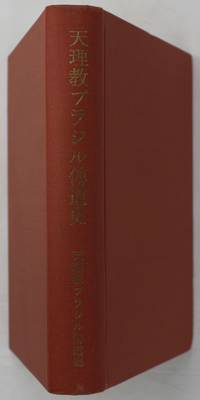
1958réf. 5047Sao Paulo: Tenrikyo Brazil Mission 1958. Very good. 52162511pp. including 32pp. of photographically-illustrated plates. Original orange cloth gilt spine titles housed in original cardboard slipcase with black spine lettering. Very minor wear internally clean. Some chipping and toning to slipcase. An unrecorded history of the Japanese immigrant Tenrikyo Mission in Brazil providing valuable information on many Tenrikyo churches across the country. Tenrikyo was a new Japanese religion founded in the 19th century in Japan by Nakayama Miki and spread to Hawaii Brazil and other regions where Japanese immigrants moved over the course of the first few decades of the 20th century. The photographic plates contain portraits of some mission members views of churches scenes from church life and more. The text is almost wholly in Japanese save for occasional listings of Spanish names and other information. Not reported in OCLC. Tenrikyo Brazil Mission unknown books
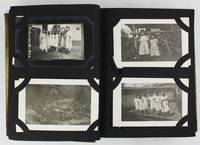
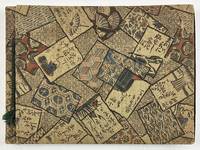
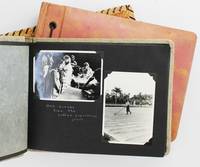
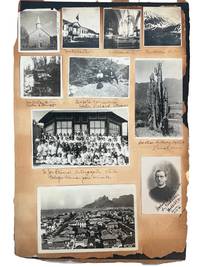
1928réf. 12860Various locations in Hawaii and Japan 1928. 12 leaves illustrated with 123 mounted sepia-toned photographs many captioned in the image area occasional manuscript captions on the album leaves. Oblong folio. Contemporary pictorial cloth illustrated with various Japanese motifs string tied. Minor wear to cloth. Internally clean. Very good. An attractive and informative vernacular photograph album memorializing the experiences of Protestant missionaries in the Pacific. Protestant missionaries came to Hawaii starting in the 1820s and eventually became quite socially and politically influential. The first Protestant missionaries arrived in Japan in the mid-1840s. They were relegated to treaty ports and prohibited from proselytizing but once these restrictions were lifted they were fairly successful with 300 churches and 34000 converts by 1889. Their main avenue was education and by the 1920s they were well established in this sector. The present album of photographs were taken by an American missionary in Hawaii and Japan in 1927 and 1928. It is not entirely clear whether the photographer did any missionary work in Hawaii or if it was just a stop on the way to Japan; the photos from Hawaii show Honolulu harbor from the deck of the President Madison the "Club House" and Diamond Head. The photographs from Japan are more clearly missionary. The photographer was involved in teaching in Kyoto; captions include "Kami Kyoku Bishamon Cho" listed as a theological school in the 1928 Japan Mission Year Book "Japanese Language School" "The Faculty" "Nihongo Faculty" and "St Agnes Ena -- Music." There are two St. Agneses in the Year Book both middle schools one in Tokyo and one in Kyoto. Two photos of an older Japanese man in a clerical collar captioned "Mr Hayakawa" suggest this is the St. Agnes in Kyoto as Mr. K. Hayakawa is listed as the head of that school. Other individuals listed in the Year Book include Sally Rembert Thora Johnson and "Maxine" who is probably Maxine Schannep with the ABCFM. Generally the school shots are exteriors of buildings and people posing outside of them; there are also shots of Christmas trees at St. Agnes the students of "Helen’s Kindergarten" in Koriyama girls in school uniform with deer at Nara Park and several of the nurse's home at St. Luke's Hospital in Tokyo. Other photos show life around Kyoto and other cities including Nikko and Fukui. Most of the men are in Western dress while the women and children wear kimono. Two photos of Buddhist monks included in the album were taken by Japanese photographer Kurokawa Suizan; these show a KomusÅ in a tengai hat playing the flute and a kasa-hatted monk on the steps of a building. Finally some uncaptioned shots show a procession taking place in front of an audience. Some in the procession carry flags a few are on horseback and a few carry plants on their heads and part of the procession carries a litter. Overall the album documents both religious education and everyday life in late 1920s Japan; of particular interest to historians of Protestant missionaries. unknown books
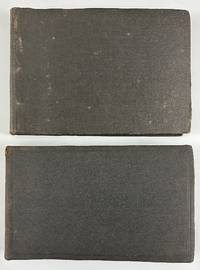
1939réf. 12870Various locations mostly in India 1939. Two contemporary photograph albums bound in matching black cloth. Album 1: 47 leaves illustrated with 347 mounted photographs including a handful of real photo postcards profusely captioned in white pencil on album leaves. Album 2: 30 leaves illustrated with 285 photographs including some real photo postcards and commercial images with only a few manuscript captions. Oblong quarto. A unique pictorial record of American Christian missionary service in India during the years of the Great Depression detailing the life and work of Seventh Day Adventists Edward and Edna Mabel Pohlman. Edward Pohlman 1906-1970 and Edna Mabel 1906-1997 married in 1928 and served in the Northern India Union NIU Section which was part of the Southern Asia Division from 1929 to 1946. While in India it appears that the Pohlman family lived at least in Mussoorie Roorkee and Poona during which time they had one son Edward Wendell born in Punjab in 1933. The father Edward received an M.A. and PhD from Ohio State University. The couple likely lived in Roorkee early on where Pohlman likely taught at Roorkee Adventist College as there are images of the faculty at Roorkee their bungalow and so forth. They may also have been associated with the Vincent Hill School in Mussoorie of which there are several images. He definitely taught theology at Spicer Missionary College Now Spicer Adventist University in Poona Pune and became president of Spicer in 1939 a position he held until 1946. Spicer College was the church’s flagship educational institution in India. Pohlman also held SDA conference positions including educational and missionary volunteer secretary for the Southern Asia Division. The SAD NIU section focused on establishing mission schools doing medical work publishing and direct preaching aiming to spread the gospel this way. The organization worked to establish churches and develop indigenous leadership and self-supporting missions in communities across northern India. The albums only pertain to his time in India but following his time there Pohlman taught at the Western College for Women in Oxford Ohio then in 1958 was a Fulbright lecturer in sociology and anthropology at the University of Karachi and then served as executive director of the U. S. Educational Foundation in Pakistan. In 1960 he joined Queens College in Charlotte North Carolina where he taught and was head of the sociology and anthropology departments until his death. He was fluent in Urdu and Hindustani. The first few images in the first album document the Pohlman's trip from New York to India as a young married couple in 1929. They spent some time in England and the Holy Land before arriving in India. The first images from India show their first house in Mussoorie and the Vincent Hill School which was part of the SDA educational system. Other early India images feature Najababad including a dispensary a village meeting and their colleagues the Kimble's bungalow there plus an image of a building captioned "Northwest Union Headquarters of our work" in Lucknow. The next group of photos are of Roorkee in 1931 picturing another SDA school the Roorkee Adventist College the faculty a group of students a sewing class a Bible class and a dispensary. Numerous images include Edna and Edward as well as their colleagues the Steeves the Kimbles the Garners and others. One shows Edna and four young men and is captioned "my first English class." Several historic photographs relate to important SDA events meetings and facilities. One of the bigger photographs shows a very large group and is captioned "workers from India Burma & Ceylon at Poona SDA Council 1931." Another shows the Division Headquarters at Poona and a third shows attendees from the Northwest India Union that attended the Poona Council in 1931. Another group of images shows workers and students at the SDA Colporteur Institute a school that trained people to evangelize and pass out literature. Another shows 17 Abbott Road in Lucknow the location of the SAD Publishing House. There are also images of the Seventh Day Adventist Training School many uncaptioned images of SDA student and graduate groups and some of Edna or Edward with their students. Other photographs illustrate the missionaries' lives through their bungalows outings trips to Kashmir a large group of images Lahore and Delhi riding elephants celebrating Christmas and more. Other images show local people harvesting sugar cane bathing in the Ganges a pilgrim knee-walking a street sewing service Indian weddings a group in front of the Seventh Day Adventist Training School many uncaptioned images of SDA large and small student and/or graduate groups and more. The albums also provide images of the couple's missionary colleagues including several who traveled out to India with them and some who were especially notable. These include: John Milton Steeves 1905-1998 an important SDA missionary and educator who became a career diplomat serving as acting ambassador to Jakarta Indonesia deputy assistant secretary of state for Far Eastern Affairs 1959-62 and ambassador to Afghanistan 1966-69. The Steeves family lived in Western Washington between 1919 and 1927 where Steeves graduated from Walla Walla College an SAD-affiliated school and the University of Washington. Raleigh and Edna Garner from Nampa Idaho who served sixteen years in India then pastored in Idaho. Garner also graduated from Walla Walla College. Ray LeRoy R.L. Kimble 1890-1972 and his wife Jessie M. Estep Kimble. Kimble was a pastor and missionary who served in India from around 1915 to 1950 and was president of the Northern India Union Section from 1946 to 1950. His wife was principal of the North Agra Mission Girl's School from 1930 to 1932; earlier they ran a sanitarium at Bombay. After India's independence Kimble was part of a delegation in August 1947 that met with Nehru Gandhi and Jinnah to explain the role of the Seventh Day Adventist Church in India. Marion Hulda Belchambers 1886-1949 a pioneer teacher administrator and publishing house pioneer who became secretary and treasurer of the Northwest / Northern India Union in 1923. The two albums document important contributions made by the Pohlmans and their colleagues to education and healthcare in India and also provide visual documentation of important Seventh Day Adventist events and meetings and insights into the daily lives of missionaries of the period. unknown books
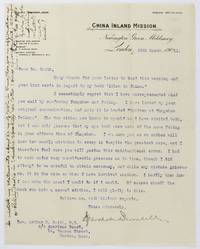
1911réf. 5251London: March 29 1911. Very good. 1p. Previously folded. Contemporary manuscript annotation is left margin. Light toning. A brief but interesting letter dated March 29 1911 from Marshall Broomhall Editorial Secretary of England's China Inland Mission to the Rev. Arthur H. Smail a prominent American Missionary in China. Broomhall had recently published a book Islam in China in which he promoted the use of Arabic-speaking missionaries to proselytize Chinese Muslims. The book used information received from Smail about the Chinese Muslim population but Broomhall at certain points managed to confuse Beijing Peking and nearby Tongzhou Tungchow while apparently attempting to criticize Smail's statements. This letter apologizes to Smail for his error though the American seems to have still been cross -- having received the letter Smail noted in the left margin "Two pages gives to demolishing what I never said! March 29 unknown books
1955réf. 6091Various locations in Costa Rica and Panama 1955. Very good. Three photograph albums: 10 leaves illustrated with thirty photographs most with manuscript annotations in white pencil; 22 leaves illustrated with seventy-one photographs most with manuscript annotations; 20 leaves illustrated with forty-nine photographs each with manuscript annotation. Each album oblong octavo in different colored cloth bindings string tied. Minor overall wear with a handful of loose photographs. A collection of three annotated vernacular photograph albums documenting the activities of Methodist missionaries in Costa Rica and Panama in the mid-20th century. The photographs picture the subjects traveling in the two countries scenes inside and outside the classroom views of native peoples and dwellings a mission in Costa Rica and the associated language school headed by Denton Powell Royster who is pictured here and identified as "Pastor Royster". The images capture missionaries on the road at roadside picnics enjoying leisure time at meetings and dinner celebrations and engaging in similar activities. Many of the subjects are named providing excellent opportunities for deeper study; individuals here include Stan Sheldon Jean Spahr or Spahn Virginia Miller Virginia Forkell Naomi Calkine Lois Henry Lorraine Roth Betty Brown Gordon and Marilyn Marken Norm Piersma Wally DeSmet John Gilmore and others. The album was compiled by a female missionary likely a member of the Benz family as one image is captioned "Peggy Daddy Mom and Steve Benz." Another photograph of a young woman is captioned "Me enroute to the falls at Catalina." She also identifies herself in other photos including one of her swimming at Ojo de Agua but never seems to indicate her name. She appears to have been an instructor at the language school; one image shows her and a few others in "Phonetics" class and another pictures her with other teachers of the grammar class. A couple of the image indicate some of the missionaries are part of a "Honduran prayer meeting." Other scenes of interest feature a group photograph of the language school "scenes from a woodworking shop on our paseo to the Roysters" activities in a coffee processing plant and views of the Irazu volcano among others. The indigenous or local peoples pictured here include the Baltadano family of the Central American Church a woman named Angela de Varga an oxcart operator in Costa Rica a young woman identified as "Maria una buena empleada" a man named Don Antonio and a few others. Identified South American locations include Cartago Church "the ruins of the oldest church in Costa Rica" Gatun Locks and other scenes in the Panama Canal Roble Alto the countryside near Cartago and the interior of a church in Cartago. A diverse collection of images memorializing American missionary activities in South American in the Eisenhower years with excellent potential for further study. unknown books
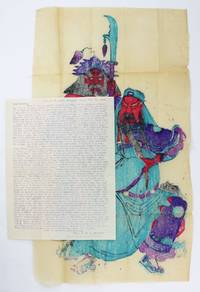
1928réf. 6054Shanghai China: February 24 1928. Very good. 1p. plus colored woodblock print 21.5 x 12.5 inches. With original envelope. Old folds minor wear. Mimeographed fundraising letter sent by Reverend H.G.C. Hallock to a supporter in Vermont. Henry Galloway Comingo Hallock 1870-1951 was a West Virginia native who studied at Princeton Theological Seminary. He moved to China as a Presbyterian missionary and teacher in 1905 where he taught Sunday School served as a pastor and also taught theology at St. John's University in Shanghai. He survived war disease famine and a Japanese prison during World War II; he died in China in 1951. One thing that set Hallock apart was his inclusion of local Chinese woodblock prints with his fundraising letters which today have become desirable collectibles. Such a print is present here showing the God of War Wu-ti. His letter opens discussing the print: "Wars in China suggest sending you 'Wu-ti' the Chinese god-of-war. . The general idea about Wu-ti is that he delights in war. That is not the Chinese idea of him. . Officials and scholars worship him as the ideal of loyalty soldiers do it to make them brave and protect them in battle and the people worship him to protect them from war's horrors. He's called 'Peace Bringer Protector Great God of Loyalty.' But he makes not peace nor protects nor makes loyal so is a failure. He's also called 'Warrior Prince.' As to that name he's a great success! There are lots of wars." He goes on to discuss the many conflicts which are like "a real Chinese puzzle" noting that it's not the people of China who are at issue or fault. "Recently I have received letters from America suggesting that since 'China has altogether gone to the bad and the Chinese are absolutely impossible' and since our 'work among them has gone for nothing' then I should 'quit and come home.' I hope you don't think thus. The masses of Chinese tho reminding me of 'dumb driven cattle' are still friendly as ever. The war-lords the Nationalists the Reds the bandits wars and evil propaganda are disturbing elements; but they are NOT China nor the Chinese. . The troubles in China have come from a fiercely aggressive and 'noisy minority' who make the great mass of Chinese suffer untold hardships." He goes on to defend the Christian work being done in China as of great benefit to the people. February 24 unknown books
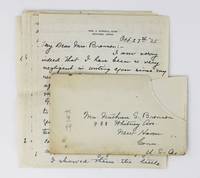
1925réf. 5493Okayama 1925. Very good. 15pp. Old fold lines minor wear. With original envelope. Lengthy letter written by Mrs. C. Burnell Olds to a friend and donor back in Connecticut Mrs. Nathan S. Bronson. Okayama is located to the west of Osaka and Kyoto in the southern portion of the country; Mrs. Olds was born to a missionary family stationed in Japan and had worked in that country since 1903. In her letter Olds relates her current round of activities the ways in which Mrs. Bronson's funds have been of great use and the other activities she observes and participates in within the local community. She opens recounting a visit to the True Beauty Girls' School to which Mrs. Bronson has donated. She writes "The fact that an American woman was willing to give to a non-Christian school way over here in Japan has made a great impression here in Okayama." She goes on to discuss the building of a new church by some "earnest young men" briefly noting that they still need money to furnish the church. "We are very anxious to start some kind of social work here -- if possible to open an amusement hall where young men can come to have a good time in a good way -- with good women. There is no such place in our city and how many evil resorts there are." She relates further activities an endless stream of clubs and activities and teaching efforts for the Lord closing with family news. An interesting missive chock full of information on a local missionary's efforts in 1920s Japan. unknown books
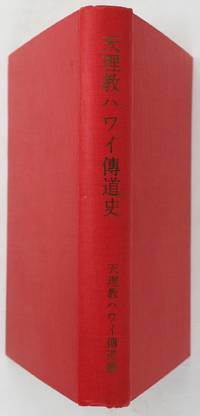
1957réf. 5046Honolulu: Tenrikyo Hawaii Mission 1957. Very good. 1632365pp. including 32pp. of photographically-illustrated plates errata slip laid in. Original orange cloth gilt spine titles housed on the original cardboard slipcase with black spine lettering. Very minor wear to boards internally clean. Small puncture and some wear to spine of slipcase. A rare history of the Tenrikyo Mission in Hawaii beginning with the founding of its first church in Honolulu in 1929. Tenrikyo was a new Japanese religion founded in the 19th century in Japan by Nakayama Miki. The present work also includes information on many other churches on the islands including the Hilo Church Kauai Church the Maui Church and more. The photographic plates contain portraits of some mission members views of churches scenes from church life and more. The text is mostly in Japanese save for a fifteen-page section printing a series of English-language lectures on the Tenrikyo religion by members of the Hawaiian mission. OCLC records just a single physical copy of this rare Japanese-American work at the University of Hawaii at Manoa. Tenrikyo Hawaii Mission unknown books
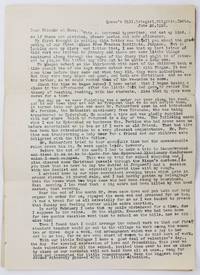
1926réf. 4568Queen's Hill Kotagiri Nilgiris India: June 26 1926. Very good. 5pp. typed on plain folio sheets. Old folds minor wear. An informative and entertaining correspondence by Kate M. French written while serving as a missionary teacher at the Preston Institute in Jangaon India. Writing to "Friends at Home" French opens by reporting that the school year started well "except for two of the boys whose mother was ill with Plague" the mother subsequently died. French also mentions students getting stung by scorpions a cobra snake killed by the headmaster of the school making valentines for the entire school on Valentine's Day and much more. French also recounts the comings-and-goings of various officials to her mission writes in detail about her attendance at a "teachers' institute" composed of teachers from "the American Methodist the English Wesleyan the American Mennonites and our own" details the school's commencement at the end of the term and more. The local plague is mentioned several times in French's letter. She mentions her own inoculation against the plague. She also records that "before long we learned that there had been several deaths from plague in our town. We had nearly all our Christians innoculated some time before and Mrs. Rutherford at once had the stragglers attended to those who had fever when the doctor was innoculating and one or two who were not very strong and would only be done if the disease came near." Shortly thereafter French notes that "people are leaving town on account of the plague." An interesting letter from an American woman teaching at a mission in India in the midst of the Roaring Twenties. June 26 unknown books
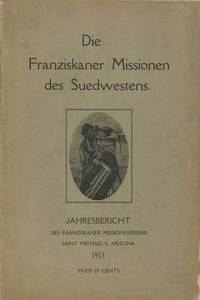
1913réf. List3016St. Michaels Arizona: Anselm Weber and Berard Haile 1913. Sixty-eight page booklet measuring 6 ¾ x 10 inches. Wear mainly to covers; excellent. Catholic missionaries—Franciscans in particular—have been present in what is now the American Southwest since the 16th century. For most of this time these were Spanish missionaries missioning to the Pueblo people mainly in New Mexico; these missionaries’ presence waned over time. In 1898 several decades after the Navajo were allowed to return to a reservation on part of their former territory the first permanent Catholic mission to the Navajo was organized. St. Michael’s was founded by Fathers Anselm Weber and Berard Haile German Franciscans from Cincinnati. Their approach was different from the Spanish friars’ and that of the United States government primarily in that Weber and Haile advocated learning the Navajo language understanding the culture and approaching their conversion from that angle especially focusing on children who were more impressionable.1 Haile in particular became an expert in the language and culture translating many Catholic texts and producing dictionaries and writing anthropological studies of Navajo culture and religion. Offered here is a German-language copy—both Haile and Anselm were German—of the first volume of St. Michael’s yearly publication The Fransiscan Missions of the Southwest Die Franziskaner Missionen des Suedwestens. The illustrated journal was published from 1913 to 1922 and discussed the Navajo and Pueblo people and cultures and the activities of the missionaries in the area. Among other topics this volume contains an article about the Navajo Fire Dance “Der Feuertanz der Navajo-Indianer" with photographs taken from Haile’s Ethnologic Dictionary of the Navaho Language 1910. We find sixteen holdings on OCLC of the full run of the journal and three of this specific volume. Of interest to historians of Catholic missionaries to the Pueblo and Navajo people. 1 Ross Enochs “The Franciscan Mission to the Navajos: Mission Method and Indigenous Religion 1898–1940” The Catholic Historical Review 92 no. 1 January 2006: 46–73. Anselm Weber and Berard Haile unknown books
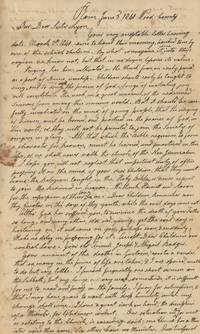
1840réf. List2979Perrysburg Ohio 1840. Single three-page letter measuring 7 ½ x 12 ½ inches. Some stains folded with small tears at folds and tear at seal; overall near fine. Joseph Badger 1757–1846 was the first missionary to be sent to the Connecticut Western Reserve.1 He served in the Continental Army received a degree from Yale and was sent to Ashtabula County by the Connecticut Missionary Society in 1802. He retired in about 1833 after many years of organizing schools and churches around the Western Reserve plus a stint as a brigade chaplain during the War of 1812. Abigail Ely was Badger’s second wife; they married in 1819. The two write here to a widowed friend Harriet Lyon and her children in Gustavus Ohio. They discuss the importance of singing to religious work and of teaching children to sing and describe their living situation—on a farm nearby to some of their children who help them out. They also briefly complain about the quality of ministry in the area writing that the situation: “is exceedingly dark; one Church has a Minister worse than none; Six others have no Minister. . Much of the preaching that comes along occationally is calculated to excite the super-ficial affections of the mind without reaching the heart or enlightening the understanding.” Of interest to historians of Ohio and religion in the Western Reserve. 1 “Badger Joseph” in Encyclopedia of Cleveland History accessed March 20 2025 https://case.edu/ech/articles/b/badger-joseph. unknown books
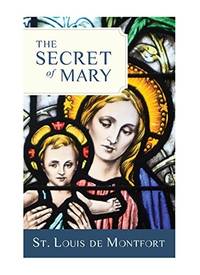
réf. F18A-03877Montfort Pubns. Used - Very Good. Very Good condition. A copy that may have a few cosmetic defects. May also contain light spine creasing or a few markings such as an owner’s name short gifter’s inscription or light stamp. Montfort Pubns unknown
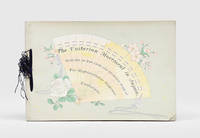
1900réf. 178748Tokyo: Japan Unitarian Mission 1900. First edition first printing. This window onto Japan's Westernization in the wake of the Meiji Restoration surveys the mission's history and work as well as its ambitious book distribution program which disseminated 100000 pamphlets in 1899. Landscape octavo. Tissue-guarded halftone frontispiece illustrations in text. Original illustrated green card wrappers purple thread musubi toji binding front cover lettered in black. Covers a little marked small tear at lower tip of front cover contents clean: very good. unknown
2010réf. DADAX1120919371Kessinger Publishing 2010-01-29. paperback. New. 6.00x0.22x9.00. Buy with confidence. Excellent Customer Service & Return policy. Kessinger Publishing paperback
2014réf. G0820822000I5N002014. Hardcover. Acceptable. Disclaimer:A readable copy. All pages are intact and the cover is intact. Pages can include considerable notes-in pen or highlighter-but the notes cannot obscure the text. At ThriftBooks our motto is: Read More Spend Less.Dust jacket quality is not guaranteed. hardcover
1930réf. 236691930. American Catholic missionary photograph album documenting the expansion of religious infrastructure across Peru Brazil Argentina Chile Colombia and Mexico during the 1930s and early 1940s showing how churches schools workshops sacramental programs women's committees and transport networks extended ecclesiastical authority into local communities. The photographs center on named clerical staff local populations across South America and the religious and educational infrastructure produced by mission activity: churches under construction children gathered for instruction and First Communion women's sewing and relief programs parish congregations and Indigenous populations classified and presented through missionary categories. Archive of approximately 200 primarily silver gelatin photographs ranging from 1.5 x 3 to 8 x 9 inches. The Peru photographs show Father Anthony Hollik seated with children dressed for a sacramental occasion; clergy and laymen traveling with horses and heavily loaded trucks through mountain terrain; large parish groups gathered before wooden mission buildings and a stucco church; women holding infants outside elevated wooden structures; rural families agricultural landscapes and a man carrying a seated woman in a wooden chair also reproduced on a printed sheet captioned "Carrying Mother to Church." A portrait inscribed "Andrew H. F. Auwele the South American missionary Hollik Peru Lima 2.12.36" identifies Hollik and dates one phase of the work to 1936. Specific educational and religious sites include the sign "Colegio Elementar 1934 Boqueirão"; a Santa Ursula school group in Lima; a girls' school at Antofagasta; a church under construction at the bishop's residence in Boa Vista Brazil; a new "Taller de Barrio" chapel in Resistencia Argentina; a women's clothing exhibition identified as another "Taller de Barrio"; First Communion groups; churches and civic processions in Frutillar Chile; and the church at Tepotzotlán Estado de México. German captions identify Toba people in Chaco and Formosa including a young woman described as a chief's daughter and a group labeled as chiefs while another photograph records First Communions at La Escondida in August 1940. Named clergy and contacts include Father Richard Struve at Boquete Colombia; Father Bernard Hagedorn holding a camera; Rev. William A. Heim and Bishop William Turner in Buffalo New York; Father May Strains in Brazil; and Professor Anton Bruer of the Philosophical Theological Academy in Paderborn Germany. Other photographs show views of Resistencia the Río Negro Reserva Ipanema Boquete and Lima. Interwar Catholic missions expanded through schools chapels workshops sacramental instruction and charitable programs designed to draw local populations into permanent parish structures. The album records that program in practice across Latin America from school groups and church construction to suburban workshops intended to become chapels First Communions in industrial settlements and missionary captions that classify Toba subjects through imposed ethnic and hierarchical categories. Its photographs show how Catholic institutions pursued religious authority cultural assimilation and social reorganization through architecture schooling charity and ritual. Most photographs remain in very good condition and most captions remain wholly legible. The photographs are adhered to unbound album leaves with heavy wear tonal variation tears losses and missing edges; a few laser printed duplicates are included. Overall in good condition. A photographic record of the institutional methods by which Catholic missions sought to reshape education worship and community life across Latin America. unknown
1903réf. 164381903. Woman's Board of Missions. Life and Light for Women 1903 an issue of the Congregational women's missionary periodical reporting on female-led educational medical and religious work in Africa and Asia. Published during the expansion of American Protestant women's missionary organizations the August issue includes accounts of medical work undertaken by Dr. Ruth Hume in India and developments at missionary schools in Africa and Asia. A frontispiece photograph depicting pupils at a missionary school in present-day Zimbabwe provides a contemporary visual record of African children receiving education through Congregational missionary institutions. Life and Light for Women. Vol. XXXIII No. 8. Boston: Woman's Board of Missions August 1903. First edition. Original printed paper wrappers staplebound. The frontispiece shows pupils at a missionary school in Zimbabwe then part of Southern Rhodesia accompanied by reports concerning the Board's international missionary activities. Among the subjects addressed are Dr. Ruth Hume's medical work in India and educational initiatives in Africa and Asia. The publication records the activities of American women missionaries working as teachers physicians and nurses including their efforts to establish schools and provide medical treatment in regions where prevailing social customs often restricted women's access to male religious instructors and medical practitioners. Founded in the nineteenth century the Woman's Board of Missions worked in association with the American Board of Commissioners for Foreign Missions supporting Protestant missionary activities abroad and organizing American women to finance and administer educational and medical programs. Life and Light for Women circulated accounts of these undertakings among Congregational supporters in the United States reporting on missionary personnel schools medical services and religious instruction. The August 1903 issue preserves contemporary reporting on women's participation in overseas missionary institutions with particular attention to African education and women's medical work in India. In very good condition. unknown
1871réf. 5815Nellore: March 17 1871. Very good. Broadside 8.25 x 5 inches. Old horizontal folds minor toning. An unrecorded broadside calling a meeting of the General Committee of the Jaffna Auxiliary Bible Society JABS at the Wesleyan Mission House in Jaffna in March 1871. The Jaffna Auxiliary Bible Society is an arm of the British & Foreign Bible Society focused on distributing Bibles and engaging in scriptural education within the Jaffna district of Sri Lanka. In the present broadside the secretary of the JABS Thomas Good writes from Nellore and lays out the business of the meeting in six line items. The meeting is meant to include Devotional Exercises a reading of the minutes from the last meeting "Brief Verbal Reports of Bible Work" sub-committee reports a reading of a paper by Rev. L. Spaulding on the "best method of doing Bible Work" and a discussion of said paper. Original materials held by institutions relating to the Jaffna Auxiliary Bible Society are almost exclusively either their printings of various Books of the Bible into Tamil or later annual reports. Ephemera from the society's work in Sri Lanka is almost nonexistent. March 17 unknown
1897réf. 65520Calcutta:: The Calcutta Auxiliary to the B.A.F. Bible Society 1897. Revised Edition; First edition with references. full blind-ruled sheep; all edges stained red. Some light scuffing to binding; a very nice copy. Large 8vo. Translated out of the Original Tongues by the Calcutta Baptist Missionaries with Bengali Assistants. Title page printed in red and black. The Calcutta Auxiliary to the B.A.F. Bible Society, unknown
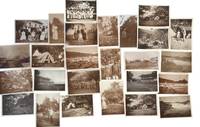
1912réf. 236551912. American Protestant mission photo archive depicting schools Western and African Christian workers in Portuguese Angola 1912 to 1914 recording the local life missionary presenceand infrastructure extending Western religious and educational authority. Dated inscriptions identify "missionaries and native workers" in 1912 and a "boys school" in 1914 while another photograph is captioned "At the Quanza" the historical English spelling of Angola's Kwanza River. Protestant missions had operated in Angola since the late nineteenth century establishing schools training African evangelists and teachers and creating networks that could compete with Portuguese colonial institutions for influence over language education and community allegiance. We believe the se are American Protestant missionaries because the language of the captions itself sounds North American. One phrase especially stands out: "Our force" That wording was commonly used by North American Protestant missionaries to describe their combined European and African staff. British missionaries more often wrote "our staff" "our workers" or "the mission staff." Likewise the informal captions "Hopefuls" "Sit down rest a while" resemble private North American missionary albums more than official British mission records. Photo archive of 27 photographs seven silver gelatin and and twenty laser-printed photographs all large format ranging from 7 x 5 to 7 x 4 inches Portuguese Angola circa 1912 to 1914. Formal portraits show European missionaries with Angolan personnel before stuccoed mission buildings including a large group captioned "Missionaries and native workers 1912" and a smaller portrait captioned "Our force 1912." School photographs depict boys girls and younger children arranged in rows with European instructors; one verso reads "Boys school 1914" while an individual portrait of two neatly dressed boys is titled "Hopefuls." Mission compounds include long veranda buildings fenced grounds thatched dwellings tents cooking equipment folding furniture and temporary encampments occupied by missionaries and local residents. Several photographs record travel and subsistence away from the station: missionaries pose beside rapids captioned "At the Quanza" rest in wooded country prepare meals outside canvas tents exchange food or supplies with African residents and occupy a mixed camp of tents and thatched structures. Other images show a fruiting orange grove men and women gathering fruit a landscape identified as "The lumbermen's camp" mission residents seated among dense vegetation river scenery village buildings and African children and adults photographed at schools settlements and work sites. Verso captions also include "Down for the night" and "Sit down rest a while" language that frames travel camp life and mission expansion through the photographer's informal record of daily activity. Portuguese rule in Angola remained uneven in the early twentieth century particularly beyond coastal administrative centers and mission stations often supplied education printing agricultural instruction medical care and religious training where the colonial state maintained little permanent infrastructure. Schools were central to this expansion. Literacy and teacher training enabled missionaries to circulate Christian texts while African instructors and evangelists carried teaching and worship into communities that European personnel could not reach directly. The photographs expose the racial hierarchy of this arrangement through clothing spatial placement and captioning: European missionaries are named collectively as the directing body while Angolan colleagues are reduced to categories such as "native workers" even when formal group portraits present them as teachers clergy assistants or institutional staff. Agricultural scenes the lumber camp mission residences school groups and mobile tent sites further demonstrate how evangelization depended upon land food production transport construction and locally recruited labor rather than preaching alone. Protestant educational networks later produced generations of Angolan teachers clergy writers and political organizers while Portuguese authorities repeatedly regarded independent mission schooling and African language literacy as potential challenges to colonial control. Light surface wear occasional creasing and fading scattered stains and adhesive or paper residue on several versos; captions remain legible. Overall in good condition. unknown
1911réf. 95663n.p.: West African African Mission A. B. F. F. M. 1911. Good. 400 248p. Lacks cover we don't know whether this uncommon linguistic item was originally hard or soft cover. Outer leaves soiled. This 1911 edition appears to be much explanded from the first edition of 1885. The first part Umbundu-English is longer and more detailed than the second part English-Umbundu. This feature is explained or excused in the Preface: "Having as a basis the Engliush-Umbundu vocabulary which fairly enough gathers up the Umbundu-English each one can prepare for his own use a serviceable English-Umbundu vocabulary. The work of printing has been so exacting on all concerned that adding to correcting or classifying the Umbundu words in the second part could not be attempted." The Preface also warns that "The necessity of substituting ordinary c for c with cedilla in Portuguese words containing that letter is one among several infelicities occasioned by an inadequate supply of type which are much regretted." Umbundu is spoken by about a third of the inhabitants of Angola making it that country's most widely spoken indigenous language. West African African Mission, A. B. F. F. M. unknown