Meijer, Jan M (Editor)/ Trotsky, LeonBiblio.com

1 243 résultats
réf. __3111137929Mouton De Gruyter 1964. Hardcover. New. reprint edition. 873 pages. 9.45x6.69x9.61 inches. Mouton De Gruyter hardcover
réf. 252793n.p. n.d. 78p. staplebound pamphlet very good. Facsimile reprint of the 1925 edition. Trotzki-Archiv Nr. 10. unknown books
réf. 3111137929.Ghardcover. Good. Access codes and supplements are not guaranteed with used items. May be an ex-library book. hardcover
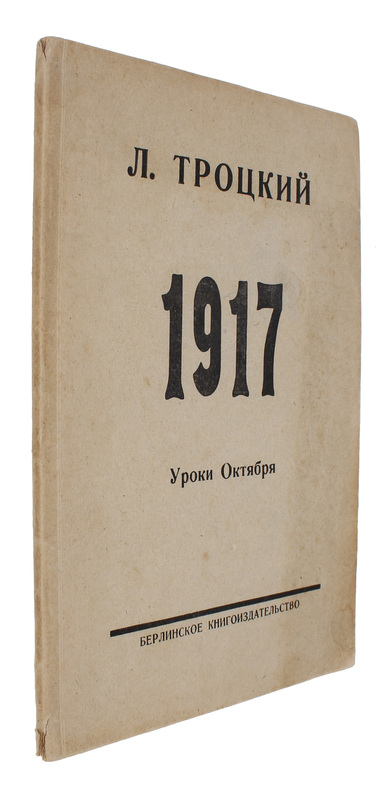
1924réf. 58185Berlin 1924. Original printed wrappers. A bit of browning to wrappers and a bit loose at the inner hinges. But overall in very nice condition. 59pp. First edition in the extremely scarce separate off-print of this seminal essay which appeared in October 1924 as the preface to the third volume of Trotsky's collected works. The essay now counts as a work in its own and was subsequently reprinted numerous times on its own by the Trotskyist movement. This seminal essay came to play a defining role in the development of post-Lenin politics in Russia. It was extremely critical of the purported revolutionary failings of two key members of the collective leadership that ruled Soviet Russia in the months after Lenin's death Grigory Zinoviev and Lev Kamenev and Trotsky was seen as main threat to the accession of power. The publication of his foundational essay on the October Revolution was used as a pretext for the Soviet leadership to isolate and attack Trotsky. It now constitutes a cornerstone of post-Revolutionaly Russian politics. "When Lenin was stricken with his first cerebral hemorrhage in May 1922 the question of eventual succession to the leadership of Russia became urgent. Trotsky owing to his record and his charismatic qualities was the obvious candidate in the eyes of the party rank and file but jealousy among his colleagues on the Politburo prompted them to combine against him. As an alternative the Politburo supported the informal leadership of the troika composed of Grigory Zinovyev Lev Kamenev and Stalin.In the winter of 1922-23 Lenin recovered partially and turned to Trotsky for assistance in correcting the errors of the troika particularly in foreign trade policy the handling of the national minorities and reform of the bureaucracy. In December 1922 warning in his then secret "Testament" of the danger of a split between Trotsky and Stalin Lenin characterized Trotsky as a man of "exceptional abilities" but "too far-reaching self-confidence and a disposition to be too much attracted by the purely administrative side of affairs." Just before he was silenced by a final stroke in March 1923 Lenin invited Trotsky to open an attack on Stalin but Trotsky chose to bide his time possibly contemplating an alliance against Zinovyev. Stalin moved rapidly to consolidate his hold on the Central Committee at the 12th Party Congress in April 1923.By fall alarmed by inroads of the secret police among party members and efforts to weaken his control of the war commissariat Trotsky decided to strike out against the party leadership. In October he addressed a wide-ranging critique to the Central Committee stressing especially the violation of democracy in the party and the failure to develop adequate economic planning. Reforms were promised and Trotsky responded with an open letter detailing the direction they should take. This however served only as the signal for a massive propaganda counterattack against Trotsky and his supporters on grounds of factionalism and opportunism. At this critical moment Trotsky fell ill of an undiagnosed fever and could take no personal part in the struggle. Because of Stalin's organizational controls the party leadership easily won and the "New Course" controversy was terminated at the 13th Party Conference in January 1924 the first substantially stage-managed party assembly with the condemnation of the Trotskyist opposition as a Menshevik-like illegal factional deviation. Lenin's death a week later only confirmed Trotsky's isolation. Convalescing on the Black Sea coast Trotsky was deceived about the date of the funeral failed to return to Moscow and left the scene to Stalin. His eulogy for the late party leader was in effect delivered in a biography of Lenin that Trotsky wrote for the 13th edition 1926 of the Encyclopædia Britannica.Attacks on Trotsky did not cease. When the 13th Party Congress in May 1924 repeated the denunciations of his violations of party discipline Trotsky vainly professed his belief in the omnipotence of the party. The following fall he took a different tack in his essay "The Lessons of October 1917" linking the opposition of Zinovyev and Kamenev to the October Revolution with the failure of the Soviet-inspired German communist uprising in 1923. The party leadership replied with a wave of denunciation counterposing Trotskyism to Leninism denigrating Trotsky's role in the Revolution and denouncing the theory of permanent revolution as a Menshevik heresy. In January 1925 Trotsky was removed from the war commissariat." Encycl. Britt. unknown
réf. ria9783111137926_inpHardcover. New. New Book; Fast Shipping from UK; Not signed; Not First Edition; N/A hardcover
réf. 42357909-nnew. unknown
réf. 42357909like new. unknown
1924réf. 58185(Berlin, 1924). Original printed wrappers. A bit of browning to wrappers and a bit loose at the inner hinges. But overall in very nice condition. 59pp.
réf. 0394715152.Gpaperback. Good. Access codes and supplements are not guaranteed with used items. May be an ex-library book. paperback
1971réf. 008255Random House. First Printing. DJ in archival cover. Stated first edition with a full number line starting with 1. . Fine. Hardcover. 1st Edition. 1971. Random House hardcover
1971réf. ANAIS-0394471776Random House 1971-01-01. First Edition. hardcover. Good. 23.9x16x3.8. Buy with confidence. Excellent Customer Service & Return policy. Random House hardcover
réf. Z1-F-043-00722Random House. Used - Good. Ships from UK in 48 hours or less usually same day. Your purchase helps support Sri Lankan Children's Charity 'The Rainbow Centre'. Ex-library so some stamps and wear but in good overall condition. 100% money back guarantee. We are a world class secondhand bookstore based in Hertfordshire United Kingdom and specialize in high quality textbooks across an enormous variety of subjects. We aim to provide a vast range of textbooks rare and collectible books at a great price. Our donations to The Rainbow Centre have helped provide an education and a safe haven to hundreds of children who live in appalling conditions. We provide a 100% money back guarantee and are dedicated to providing our customers with the highest standards of service in the bookselling industry. Random House unknown
réf. 0394471776.Ghardcover. Good. Access codes and supplements are not guaranteed with used items. May be an ex-library book. hardcover
réf. SONG0394471776Random House 0000-00-00. First Edition. hardcover. Used: Good. 0.00x0.00x0.00. Buy with confidence. Excellent Customer Service & Return policy. Random House hardcover
1955réf. 198100Colombo Ceylon: Lanka Samasamaja 1955. 14p. staplebound wraps toned and edgeworn. Lanka Samasamaja unknown books
Paris, Calmann Lévy, "Liberté de l'Esprit", 1951. 3 volumes n-12, brochés, 274 , 384 et 400 pp. Première édition. L'ouvrage de Bertram D. Wolfe consacré à Lénine, Trotsky, Staline a paru aux Etats-Unis en un seul volume sous le titre : Three who made a Revolution. L'édition française est scindée en trois volumes : La Jeunesse de Lénine. - Lénine et Trotsky. - Lénine, Trotsky, Staline.
réf. 14377Paris, Calmann Lévy, "Liberté de l'Esprit", 1951. 3 volumes n-12, brochés, 274 , 384 et 400 pp.
réf. 20810Paris, l'Herne, "cahiers 3 et 5", 2007. Broché, couverture illustrée (portrait). Fort in-4 de 430-(2) pages, photos hors-texte dont 1 à pleine page (portrait).
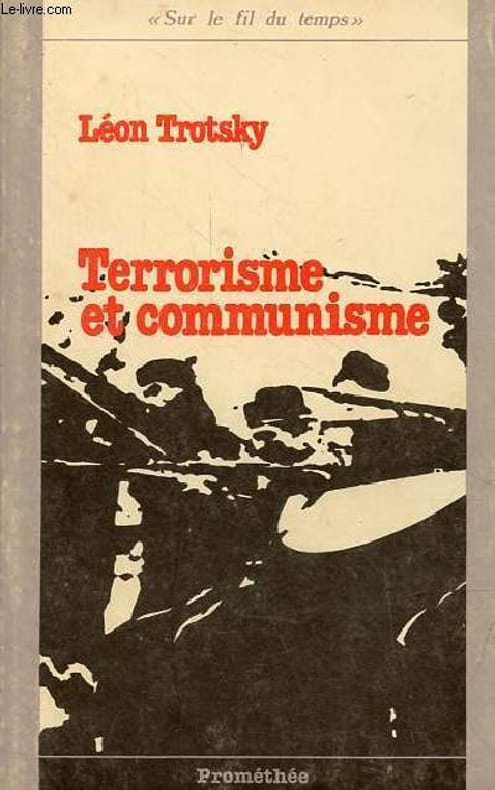
1980réf. R100066253Prométhée. 1980. In-8. Broché. Bon état, Couv. convenable, Dos satisfaisant, Intérieur frais. 201 pages.. . . . Classification Dewey : 303.62-Terrorisme
1974réf. R300276702Seuil. 1974. In-8. Broché. Etat d'usage, Couv. légèrement passée, Dos satisfaisant, Intérieur acceptable. 217 pages. Quelques rousseurs sur les plats.. . . . Classification Dewey : 940.53-Seconde Guerre mondiale 1939-1945
1970réf. R300276894François Maspero. 1970. In-12. Broché. Etat d'usage, Couv. convenable, Agrafes rouillées, Intérieur frais. 42 pages agrafées.. . . . Classification Dewey : 947-Europe de l'Est, URSS
1969réf. R100064306François Maspero. 1969. In-12. Broché. Etat d'usage, Coins frottés, Agrafes rouillées, Intérieur frais. 42 pages agrafées.. . . . Classification Dewey : 947-Europe de l'Est, URSS
1971réf. R240148915Denoël/Gonthier. 1971. In-12. Broché. Etat d'usage, Couv. légèrement passée, Dos fané, Intérieur acceptable. 218 pages.. . . . Classification Dewey : 947-Europe de l'Est, URSS
1922réf. R300328146Lib. de l'humanité. 1922. In-8. Broché. Etat d'usage, Couv. légèrement passée, Dos fané, Papier jauni. 142 pages. Ex libris à l'encre sur le 1er contreplat. Quelques passages annotés et soulignés à l'encre et au crayon de couleurs dans le texte.. . . . Classification Dewey : 320-Science politique
1966réf. R300325262Gallimard. 1966. In-12. Broché. Etat d'usage, Couv. légèrement pliée, Dos plié, Papier jauni. 692 pages. Tranche rouges.. . . . Classification Dewey : 923-Politiciens, economistes, juristes, enseignants