596 resultados
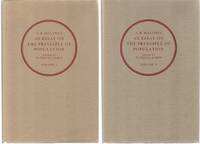
ref. 133669Cambridge University Press 1989. 2 Vols. 8vos 446; 397pp. A near fine hardback set in like dust jackets. Cambridge University Press, 1989 hardcover
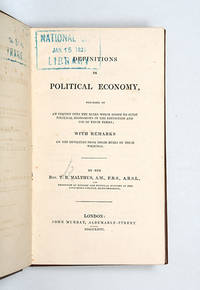
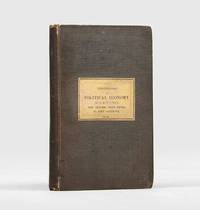
1827ref. 195032London: John Murray 1827. One of the earliest works on the methodology of economics First edition of "a valiant attempt to resolve differences of opinion in political economy by codifying its terminology and establishing rules for the definition of terms. It could be regarded as one of the earliest works on the methodology of economics" ODNB. Malthus devotes separate chapters to among others the French economists Adam Smith Say Ricardo James Mill McCulloch and Samuel Bailey although the latter's name was not known to him. The work is bound with an offprint of J. R. McCulloch's hostile review of the work from the Scotsman 10 March 1827 in which McCulloch questions Malthus's qualifications for the office of "Dictator in the Economical Republic". Octavo 193 x 114 mm. Complete with half-title without terminal colophon. Recent brown calf spine lettered gilt marbled endpapers cloth hinge supports marbled edges. Library stamp "National City Library Jan 15 1921" to title page offsetting to half-title. Slight chip to corner of front free endpaper p. 3 with faint offset where the original title label was inserted some light foxing. A good copy. Goldsmiths' 25180; Kress C.1924. hardcover
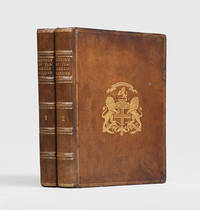
1807ref. 185282London: Printed for Longman Hurst Rees and Orme 1807. Though his theories were so cruel his heart and manners were most kindly and courteous Second edition presented and inscribed by Thomas Malthus: "East India College Awarded to Mr John Trotter at the Public Examination of December 1817 as the first of his Class in Political Economy T. Rob. Malthus". Malthus taught as professor of history and political economy at the East India Company College at Haileybury from 1805 to his death in 1834 training generations of EIC management. Writing many years later a former student recalled "We called him Pop; not in derision for we had a great but rather distant respect for him. Though his theories were so cruel his heart and manners were most kindly and courteous" quoted in Maureen Alexander Turner p. 54. John Trotter 1800-1825 entered the college in 1816 and subsequently joined the EIC; he died seven years later aboard the Royal George just off Penang in Malaya which was then an EIC port. Trotter was the son of Alexander Trotter d. 1842 the financially imaginative paymaster of the Royal Navy. His engraved armorial bookplate is in both volumes; Malthus's ink inscription is on the front free endpaper verso. The History of the Anglo-Saxons by Sharon Turner 1768-1847 was originally published from 1799 to 1805. It quickly became "a powerful influence on historical thought for the succeeding half-century" ODNB and remains acknowledged as a turning point in Anglo-Saxon studies and a benchmark in historiography. Writing with a clear eye on the British Empire of his own day - in which Trotter's East India Company played so prominent a role - Turner presents the Anglo-Saxons as central to the historical development that set England on its imperial course. 2 vols quarto 271 x 213 mm pp. x 499 1; viii 472 8. Large hand-coloured engraved folding map by Neele showing "Territory inhabited by the Ancient Saxons north of the Elbe" as frontispiece of vol. I. Contemporary calf rebacked spines ruled and lettered in gilt covers with double-rule panel in gilt crest of the East India Company College blocked in gilt to centre turn-ins in blind marbled endpapers edges sprinkled in brown and red. Light rubbing extremities neatly restored infrequent damp staining to otherwise clean contents short closed tear to inner margin of folding map: just about a very good copy. Maureen Alexander Turner The Educational Ideas and Influence of Thomas Robert Malthus 1766-1834 University of Glasgow Department of Education PhD thesis 1991. unknown
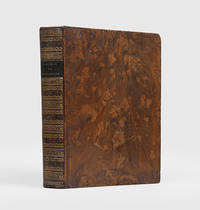
1803ref. 182784London: printed for J. Johnson by T. Bensley 1803. Malthus softens his conclusions The Great Quarto edition notionally the second edition following the first of 1798 but so substantially enlarged rewritten and re-titled as to be effectively a new book. The Essay was one of the most influential works in the history of economic thought arguing the link between food supply and population size and the inevitability of famine and suffering once population exceeded its limits. "For today's readers living in a post-Malthus era the world's population problems are well known and serious but no longer sensational. It is difficult therefore to appreciate the radical and controversial impact made by the Essay at the time of publication. It challenged the conventional notion that population growth is an unmixed blessing. It discussed prostitution contraception and other sexual matters. And it gave vivid descriptions of the horrendous consequences of overpopulation and of the brutal means by which populations are checked" ODNB. In the second edition Malthus "made clear what was only implicit in the first that prudential restraint should if humanly possible be 'moral restraint' - that is delayed marriage accompanied by strictly moral pre-marital behaviour although he admitted that moral restraint would not be easy and that there would be occasional failures. Whereas in the first edition he had said that all the checks to population would involve either misery or vice in the second edition he attempted to lighten this 'melancholy hue' and 'to soften some of the harshest conclusions of the first essay' by arguing that moral restraint if supported by an education emphasizing the immorality of bringing children into the world without the means of supporting them would tend to increase rather than diminish individual happiness" ODNB. Quarto 269 x 205 mm pp. viii 4 610. Contemporary tree calf rebacked and recornered with original spine laid down spine gilt in compartments with black morocco label. Twentieth-century bookplate of Virginia bibliophile and historian Christopher Clark Geest. Scattered light foxing else a very good copy. Einaudi 3668; Goldsmiths' 18640; Kress B.4701. unknown
ref. 5692568-nnew. unknown
ref. 12217590-nnew. unknown
ref. 5705271-nnew. unknown
ref. 5705272-nnew. unknown
ref. 838244like new. unknown
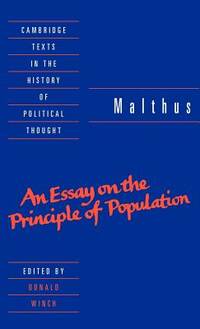
1998ref. x-0521581389Cambridge Univ Pr 1998. Hardcover. New. 140 pages. 9.50x6.50x0.75 inches. Cambridge Univ Pr hardcover
1997ref. x-0714647500Frank Cass & Co 1997. Hardcover. New. 1st edition. 151 pages. 9.75x6.50x0.75 inches. Frank Cass & Co hardcover
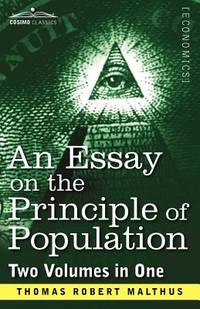
2007ref. x-1602068623Cosimo Inc 2007. Hardcover. New. 324 pages. 8.60x5.60x1.20 inches. Cosimo Inc hardcover
2008ref. SKU0635060Oxford University Press 2008-08-01. paperback. New. 7x5x0. New Textbook Ships with Tracking Oxford University Press paperback
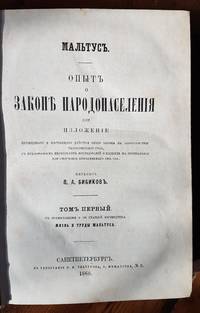
1868ref. 178Scarce first Russian edition of a major landmark of economic literature the Essay on the Principle of Population first published in English in 1798. With much added material. The translator P. A. Bibikov was a historian philosopher and literary critic who had already translated Smith's Wealth of Nations in 1866. With this background he added a wealth of material to this edition making it more than just a translation but also an a posteriori analysis. Next to the 80 pages on Malthus' life and works Bibikov added in a rich appendix translations of foreign commentators as well as his own footnotes relating to Russia. Very interestingly he updated and commented the many pages Malthus had already devoted to the Russian case. The appendix includes texts by Townsend Garnier Chernyshevskiy and Prudhon as well as a convenient 20-pp. alphabetical index. "The central idea of the essay - and hub of the Malthusian theory - was a simple one. If the natural increase in population occurs the food supply becomes insufficient and the size of the population is checked by 'misery' - that is the poorest sections of the community suffer disease and famine. Malthus recognises two other possible checks to population expansion: first 'vice' - that is homosexuality prostitution and abortion all totally unacceptable to Malthus; and second 'moral restraint' - the voluntary limitation of the product of children by the postponement of marriage." PMM. Provenance: Unidentified symbolistic booklabel to upper endpapers; small Baltic bookseller's stamps to lower endpapers. Physical description:Two volumes 8vo. 476 pp. incl. half-title title and table of contents at end; 468 pp. incl. table of contents. Later plain brown cloth author titled in ink on the spines. Condition:Very occasional light spotting. Glazunov, Skt. Peterburg, hardcover
1853ref. 133496London: Simpkin and Marshall 1853. Presentation copy to the editor of The Economist Second edition presentation copy of Malthus's Definitions edited and with a new preface notes and additional remarks by John Cazenove 1788-1879 an intimate friend and protégé of Malthus who described him as "a very clever man and good political economist." Cazenove's writings are "a worthwhile contribution to political economy in their own right and an important part of the anti-Ricardian tradition" New Palgrave. This copy is inscribed on the half-title: "To the Editor of The Economist with Mr Cazenove's Comps." The founder and first editor of The Economist was James Wilson 1805-1860 a businessman economist and Liberal politician who continued as editor until 1857. Octavo. Original green cloth printed paper label to front board yellow coated endpapers. Pencil annotation to one or two pages. Spine ends and corners rubbed joints with short splits to extremities occasional marginal finger marks: a very good copy. Sraffa 3702. hardcover
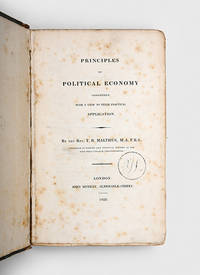
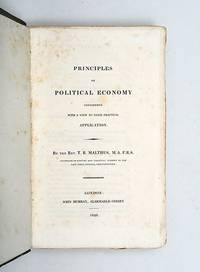
1820ref. 168311London: John Murray 1820. In the original boards First edition of the author's major late work a re-examination of his economic work in the early 1800s and a point-by-point response to David Ricardo's Principles of Political Economy 1817. Notably Keynes held that "if economics had followed Malthus instead of being constrained by Ricardo in an artificial groove the world would be a much wiser and richer place" ODNB. In the Principles Malthus summarizes his earlier writing on rents currency food prices and corn laws. The book was conceived as a series of tracts rather than a comprehensive and systematic treatise though Malthus published it to establish his own position against that of Ricardo with whom he disagreed about the nature of labour demand and profit. "In his Principles of Political Economy Malthus was proposing investment in public work and private luxury as a means of increasing effective demand and hence as a palliative to economic distress. The nation he thought must balance the power to produce and the will to consume" DSB. In the 20th century the Principles received recognition "largely as a result of the comments by J. M. Keynes in the 1930s. Keynes argued that Malthus's theory of effective demand provided a scientific explanation of unemployment and that the hundred-year domination of Ricardo over Malthus had been a disaster for the progress of economics" ODNB. This copy includes an extremely early reback presumably by the original bookseller. The reback preserves the original blue boards while a section has been cut from the cloth backstrip to expose the original printed label. Octavo. Uncut in original blue boards early reback in brown cloth preserving original printed paper label. Circular "Y.S." ink stamp to title. Light bumping and wear moderate foxing to endpapers and contents front hinge cracked and lacking front free endpaper holding firm slight separations between and within several gatherings small hole to head of K4: a very good copy. Goldsmiths' 22767; Kress C.577; Mattioli 2221. hardcover
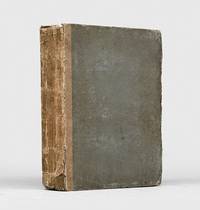
1820ref. 151433London: John Murray 1820. First edition. The book was conceived as a series of tracts rather than a comprehensive and systematic treatise though Malthus published it to establish his own position against that of Ricardo with whom he had been having an ongoing debate about the nature of labour demand and profit. "In his 'Principles of Political Economy' Malthus was proposing investment in public work and private luxury as a means of increasing effective demand and hence as a palliative to economic distress. The nation he thought must balance the power to produce and the will to consume" DSB. "The Principles had only a limited impact at the time and was severely criticized by J. R. McCulloch and Ricardo; the latter prepared extensive critical notes. But more recently it has received greater recognition largely as a result of the comments by J. M. Keynes in the 1930s. Keynes argued that Malthus's theory of effective demand provided a scientific explanation of unemployment and that the hundred-year domination of Ricardo over Malthus had been a disaster for the progress of economics. Keynes believed that if economics had followed Malthus instead of being constrained by Ricardo in an artificial groove the world would be a much wiser and richer place" ODNB. Octavo. Uncut and unopened in the original drab paper-backed blue boards printed paper spine label. Housed in a dark blue quarter morocco solander box by the Chelsea Bindery. Engraved book plate "Bibliothèque de Mr de Barante" to front pastedown paper library shelf label to foot of spine. Head of spine chipped front joint cracked rear joint cracked at head spine label a little chipped all still very strong; a very good copy. Goldsmiths' 22767; Kress C.577. hardcover
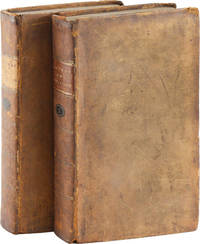
1806ref. 156997London: for J. Johnson by T. Bensley 1806. The foundation text of modern demography Third edition the first edition to be published in two octavo volumes the format which was to remain the standard in Malthus's lifetime. This third edition has important alterations and additions particularly the appendix in which Malthus replied to some of his many critics; it follows the first edition of 1798 in a single octavo volume and the expanded second edition in quarto in 1803. Malthus's treatise on population is one of the most important and influential works in the history of economic thought and the foundation text of modern demography. "For today's readers living in a post-Malthus era the world's population problems are well known and serious but no longer sensational. It is difficult therefore to appreciate the radical and controversial impact made by the Essay at the time of publication. It challenged the conventional notion that population growth is an unmixed blessing. It discussed prostitution contraception and other sexual matters. And it gave vivid descriptions of the horrendous consequences of overpopulation and of the brutal means by which populations are checked" ODNB. Despite its unpopularity with liberal critics Malthus's principle of population became accepted as a central tenet of classical political economy and Charles Darwin acknowledged Malthus's influence in the development of his theory of natural selection. 2 vols octavo 209 x 128 mm. Bound without half-titles. Recent half calf red morocco label marbled sides. A few contemporary annotations in vol. II. Repairs to closed tears at head of A7 and A8 into text without loss slight sporadic spotting light dampstaining at lower outer corner of vol. II towards rear. A very good copy. Einaudi 3689; Goldsmiths' 19210; Kress B5067. unknown
1817ref. 157003London: John Murray 1817. The foundation text of modern demography Fourth edition of Malthus's Essay first published in 1798 one of the most important and influential works in the history of economic thought and the foundation text of modern demography. 2 vols octavo 203 x 126 mm. With half-titles. Contemporary calf spines lettered in gilt. Contemporary ownership signature to title pages bookplate of one C. W. Clementine dated 1901 to front pastedowns. Slight scratch to rear cover of vol. I endpapers toned and a little soiled slight worming in fore margin of vol. II not affecting text an excellent copy in a well-preserved contemporary binding. unknown
1803ref. 156812London: printed for J. Johnson by T. Bensley 1803. A classic of economic thought significantly expanded The Great Quarto edition notionally the second edition of the Essay on Population published in 1798 but so substantially enlarged rewritten and re-titled as to be a new book. "In 1803 Malthus published a greatly expanded second edition of the Essay incorporating details of the population checks that had been in operation in many different countries and periods. Although nominally a second edition it was regarded by Malthus as a substantially new work. He did not claim originality for the idea that population tends to outrun the food supply. In the preface to the second edition he stated that in writing the first edition he had deduced the principle of population from the writings of David Hume Robert Wallace Adam Smith and Richard Price but that in the intervening period he had become aware that much more had been published on the subject. He nevertheless believed that even more remained to be done especially in describing the means by which populations are checked and in drawing out the practical implications of the principle of population. In the second edition he made clear what was only implicit in the first that prudential restraint should if humanly possible be 'moral restraint' - that is delayed marriage accompanied by strictly moral pre-marital behaviour although he admitted that moral restraint would not be easy and that there would be occasional failures. Whereas in the first edition he had said that all the checks to population would involve either misery or vice in the second edition he attempted to lighten this 'melancholy hue' Essay on the Principle of Population 1st edition 1798 p. iv and 'to soften some of the harshest conclusions of the first essay' 2nd edition 1803 p. vii by arguing that moral restraint if supported by an education emphasizing the immorality of bringing children into the world without the means of supporting them would tend to increase rather than diminish individual happiness" ODNB. Quarto. Uncut in the original boards manuscript lettering to spine. Housed in a custom solander box with red label. Neat 20th-century ownership label to front pastedown. Joints and corners worn some expert reconsolidation to binding horizontal tear to head of title neatly repaired without loss and short vertical tear to lower margin of the same; a very good copy. Einaudi 3668; Goldsmiths' 18640; Kress B.4701. hardcover
ref. DADAX0415454816New unknown
1718ref. 149970London: John Murray Eden: London J. Wright 1817 Eden: 1800. An excellent copy in contemporary calf Fourth edition of Malthus's Essay first published in 1798 one of the most important and influential works in the history of economic thought and the foundation text of modern demography. The second volume is appended with the first edition of Frederick Morton Eden's An Estimate of the Number of Inhabitants in Great Britain an appropriate pairing by the contemporary owner - Eden's population census preceded the first national decennial population census by a year but undershot the official figure by five million. It nonetheless marks like Malthus's Essay an important milestone in the study of population. Two works bound in 2 vols octavo 210 x 128 mm. Bound without half-titles. Contemporary sprinkled calf orange and dark green morocco labels gilt in compartments gilt roll border to covers blind serrated turn-ins marbled endpapers brown speckled edges. Contemporary ownership signature of Thomas Entwisle to title pages later small ink notation to front free endpapers versos. Minor patch of abrasion to rear cover of vol. I joints just beginning to split but holding firm light browning to Eden else contents fresh. An excellent copy. unknown
1807ref. 55024London: Printed for J. Johnson in St Paul's Church-Yard by T. Bensley 1807. Fourth edition. Octavo 22cm in two volumes. In contemporary brown calf seven sets of double gilt rules to spine titled in gilt on red leather spine label numbered on black leather spine labels blind tool to board edges all edges sprinkled grey; plain endpapers; vol. I: i-xvi 1-580pp; vol. II: i-viii 1-484 60pp. Sturdy copies much rubbed vol. I slightly cocked lower front joint of vol. I and upper front joint of vol. II cracking vol. II lacking spine label scratch to upper board of vol. II endleaves and some prelims foxed but otherwise internally free from soil: Good or better. The fourth edition of Malthus' widely influential discussion of overpopulation. Malthus 1766-1834 argued that population "increases geometrically while food supplies increase only arithmetically" and that some misery was inevitable unless population growth could be restrained. He proposed "moral restraint" as a solution. Many of his theories have now been largely rejected but "the Essay was highly influential in the progress of thought in early nineteenth-century Europe" and "his influence on social policy whether for good or evil was considerable." The first edition was shorter; "later editions were considerably altered and grew bulkier as Malthus defended his views against a host of critics" Printing and the Mind of Man. KRESS B.5219. GOLDSMITHS 19373. PMM 251 1st edn. Printed for J. Johnson in St Paul's Church-Yard, by T. Bensley unknown
2011ref. x-1616405708Cosimo Inc 2011. Paperback. New. 610 pages. 8.43x5.51x1.57 inches. Cosimo Inc paperback
1829ref. 147796London: J. Murray 1829. First appearance in print of these two papers by Malthus on the subject of value as contained in parts I pp. 171-180 and II pp. 74-81 of the first volume of the Transactions of the Royal Society of Literature here bound together. The papers were read before the society by Malthus in May 1825 and November 1827. In the first paper Malthus argues that "the natural and necessary conditions of the supply of all commodities not subject to a monopoly are represented and measured by the labour which they will ordinarily and on an average command and that no other object whatever can be substituted for labour or can represent and measure the natural and necessary conditions of the supply of commodities" p. 171. It was essentially a repetition of the arguments in Malthus's Measure of Value 1823. The second paper's aim was to show that when the term "value of a commodity" is used without referring to some other commodity in which it is to be estimated the term is "generally understood to refer and can only refer correctly to the conditions of its supply or the natural and necessary costs of its production" p. 74. The paper appears to have been intended as a development of the themes treated in his Definitions in Political Economy published earlier in 1827. 2 works bound in 1 vol. quarto 275 x 211 mm. With 21 plates of which 2 folding in first part; 7 plates of which 2 folding in second part. Twentieth-century blue quarter calf spine lettered gilt blue mottled sides marbled endpapers. With the book label to the front pastedown of the Ducs de Luynes at the Château de Dampierre. Residue from label removal at the foot of spine peripheral rubbing skilfully retouched contents clean and crisp. A very good copy. unknown