1 177 résultats
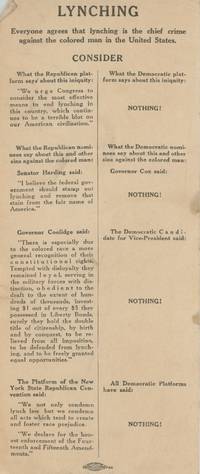
1920réf. List2706Chicago or New York 1920. 6 x 9 inches single sided. Toning several small stains small fold at top left corner; near fine. An anonymous handbill decrying lynching in the United States and advertising the differences in anti-lynching policy between the Republican and Democratic parties. The header states that “Everyone agrees that lynching is the chief crime against the colored man in the United States” and the remainder illustrates the great disagreement over just what to do about it. The left column quotes the Republican platform and its then-nominees Warren G. Harding and Calvin Coolidge who would shortly be elected to office on their support for federal anti-lynching legislation. The right column points out that the Democratic platform and its nominees James M. Cox and Franklin D. Roosevelt all “said: NOTHING!” on this issue. Lynching would not be made a federal hate crime until 2022 nearly 100 years later. As of writing we find no other copies of this handbill in OCLC. unknown books
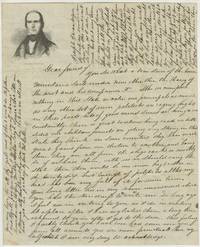
1844réf. List3860N.p. 1844. Folded letter on Henry Clay campaign lettersheet with portrait of Clay and printed caption: "And Frelinghuysen." Addressed to Mr. Joseph Griswold Benson Rutland County Vermont. Blue circular postmark and manuscript postage. Milgram No. HC-2 with listing example illustrated in James W. Milgram's Presidential Campaign Illustrated Envelopes and Letter Paper 1840-1872 p. 41. Light toning to address panel minor fold flaws; very good. A long 1844 letter from T. W. Goodrich to Joseph Griswold written on a Henry Clay campaign lettersheet during the presidential contest between Clay and James K. Polk. The printed lettersheet shows Clay's portrait with the caption "And Frelinghuysen" referring to Theodore Frelinghuysen Clay's Whig running mate. The letter opens with direct campaign content identifying the writer as a supporter of "the Harry of the West and his companion F-": "You see what a true Son of the Green Mountains sails under none other than the Harry of the West and his companion F-. Altho we accomplish nothing in this State we value our principals as much as any other set of men. Politics are raging high in these parts. Bets of good round sums are being made constantly. There is great exertions being made on both sides." Goodrich then gives the letter its strongest political passage complaining that abolitionists were gaining strength and drawing support away from the Whig ticket: "Our abolition friends are getting very strong in this State. They think in some counties they have made great gains from one election to another and hang them they are all from the Whig ranks or mostly so. If we had them with us we should carry the State. Then there would be one more bright star in the twenty six." The remainder of the letter turns to family visits courtship gossip local marriages schoolteaching music lessons and delays in correspondence. Goodrich teases Griswold about his interest in "Say" or Sarah closing with the advice to "not sigh oftener for her than she does for you. Sigh not but act." A good 1844 campaign lettersheet combining a printed Clay-Frelinghuysen design with manuscript political content on the Whigs abolitionist defections and the electoral consequences of antislavery politics. . unknown
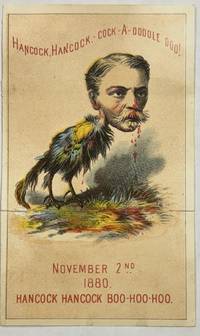
1880réf. 40342New York: Copyright by Geo. H. Hanks 1880. Metamorphic card 3-1/4" x 5-3/8" fully opened. Richly colored light wear Very Good. The unopened illustration depicts a dignified serious Hancock as a rooster in elaborate feathers. But when opened Hancock has lost his feathers is emaciated and bleeding from the mouth. The caption reads "November 2nd. 1880 Hancock Hancock Boo-Hoo-Hoo." Winfield Scott Hancock a decorated Civil War general and a hero of Gettysburg was the losing Democrats' presidential candidate in 1880 opposing Republican James A. Garfield. The verso entitled 'Rhymes for Young Democrats' brilliantly skewers the overt racism of the Democratic Party. It begins: "Sing a song of shotguns Pocket full of knives Four-and- twenty black men Running for their lives; When the polls are open Shut the nigger's mouth Isn't that a bully way To make a solid South" OCLC 32320004 1- Brown as of August 2024. Copyright by Geo. H. Hanks unknown
1844réf. List3860N.p. 1844. Folded letter on Henry Clay campaign lettersheet with portrait of Clay and printed caption: "And Frelinghuysen." Addressed to Mr. Joseph Griswold Benson Rutland County Vermont. Blue circular postmark and manuscript postage. Milgram No. HC-2 with listing example illustrated in James W. Milgram's Presidential Campaign Illustrated Envelopes and Letter Paper 1840-1872 p. 41. Light toning to address panel minor fold flaws; very good. A long 1844 letter from T. W. Goodrich to Joseph Griswold written on a Henry Clay campaign lettersheet during the presidential contest between Clay and James K. Polk. The printed lettersheet shows Clay's portrait with the caption "And Frelinghuysen" referring to Theodore Frelinghuysen Clay's Whig running mate. The letter opens with direct campaign content identifying the writer as a supporter of "the Harry of the West and his companion F-": "You see what a true Son of the Green Mountains sails under none other than the Harry of the West and his companion F-. Altho we accomplish nothing in this State we value our principals as much as any other set of men. Politics are raging high in these parts. Bets of good round sums are being made constantly. There is great exertions being made on both sides." Goodrich then gives the letter its strongest political passage complaining that abolitionists were gaining strength and drawing support away from the Whig ticket: "Our abolition friends are getting very strong in this State. They think in some counties they have made great gains from one election to another and hang them they are all from the Whig ranks or mostly so. If we had them with us we should carry the State. Then there would be one more bright star in the twenty six." The remainder of the letter turns to family visits courtship gossip local marriages schoolteaching music lessons and delays in correspondence. Goodrich teases Griswold about his interest in "Say" or Sarah closing with the advice to "not sigh oftener for her than she does for you. Sigh not but act." A good 1844 campaign lettersheet combining a printed Clay-Frelinghuysen design with manuscript political content on the Whigs abolitionist defections and the electoral consequences of antislavery politics. . unknown books
1880réf. 40342New York: Copyright by Geo. H. Hanks 1880. Metamorphic card 3-1/4" x 5-3/8" fully opened. Richly colored light wear Very Good. The unopened illustration depicts a dignified serious Hancock as a rooster in elaborate feathers. But when opened Hancock has lost his feathers is emaciated and bleeding from the mouth. The caption reads "November 2nd. 1880 Hancock Hancock Boo-Hoo-Hoo." Winfield Scott Hancock a decorated Civil War general and a hero of Gettysburg was the losing Democrats' presidential candidate in 1880 opposing Republican James A. Garfield. The verso entitled 'Rhymes for Young Democrats' brilliantly skewers the overt racism of the Democratic Party. It begins: "Sing a song of shotguns Pocket full of knives Four-and- twenty black men Running for their lives; When the polls are open Shut the nigger's mouth Isn't that a bully way To make a solid South" OCLC 32320004 1- Brown as of August 2024. Copyright by Geo. H. Hanks unknown books
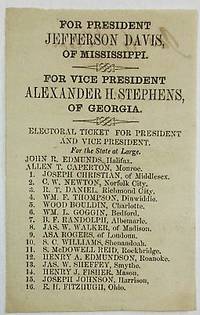
1861réf. 33882Richmond 1861. Small broadside ticket 3" x 4-3/4". Very Good. A rare Virginia Confederate electoral ticket for the Confederacy's first and only national election: Jefferson Davis for President Alexander Stephens for Vice President. Also listed are two at-large electors and sixteen others by District. Variant of Parrish & Willingham 5367 5368; Crandall 2744 noting "four variant printings and sizes"; and Hummel 4667-4669. unknown
1861réf. 33882Richmond 1861. Small broadside ticket 3" x 4-3/4". Very Good. A rare Virginia Confederate electoral ticket for the Confederacy's first and only national election: Jefferson Davis for President Alexander Stephens for Vice President. Also listed are two at-large electors and sixteen others by District. Variant of Parrish & Willingham 5367 5368; Crandall 2744 noting "four variant printings and sizes"; and Hummel 4667-4669. unknown books
1724réf. 16349Roma, Typis Reu. Cam. Apostolicae (Stamperia della reveranda Camera apostolica), 1724 ; in-4 ; vélin ivoire de l’époque, titre manuscrit au dos ; (2) ff. d’Index. Suivi par : Compendio delle cose principali Contenute nel Ceremoniale di Gregorio XV. De electione Romani Pontificis. Per facilitare alli Signori Cardinali il nuovo modo di elegere il Papa, e per istruttione delli Maestri di Ceremonie. Roma, nella Stamperia della Reu. Cam. Apost., 1724 ; (6) ff. y compris le titre séparé, 11 pp., (1 bl.) ; (10) ff.: Riforma delle Spese solite farsi in tempo di Sede Vacante, e per il Conclave. Vignette sur bois identique aux deux titres, aux armes du Vatican.
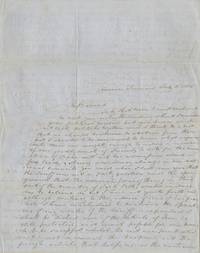
1845réf. List3867Hanover Furnace New Jersey 1845. 3 pp autograph letter signed "Richard Jones" written on an embossed Henry Clay campaign lettersheet from the 1844 presidential election. Letter written on Henry Clay lettersheet identified as HC-9 in Milgram's reference on presidential letterhead. 8 ¼ x 10 ½ inches. Some small tears to final page intersecting with text; else Near Fine condition. A strong post-election Whig letter written shortly before James K. Polk's inauguration discussing Texas annexation slavery the tariff manufacturing and the defeat of Henry Clay. Jones writes to a friend whose "political heresies" he rejects asking what could have induced "a member of our goodly society of Friends" to support annexation. His objection is not only to territorial expansion but to the political consequences of adding Texas to the Union: "will not her admission secure a free trade & slavery ascendency always in our national councils." He then turns to the tariff from the perspective of a furnace operator or manufacturer worrying that repeal would damage his works and the broader market for manufactured goods. The Clay campaign lettersheet is itself part of the letter's content: Jones calls it paper "with the brand of the last campaign upon it" declares himself "a true Whig" and says he may save some sheets until 1848 though he dislikes "that silly looking coon in the corner." Full text follows. "Hanover Furnace Feby 5 1845 Resp. Friend "For by that term I must continue to call you notwithstanding what I consider your political heresies but you know we do not talk politicks together and I think it is best that we should continue to abstain from them but I should like very much to know what arguments there are weighty enough to induce a member of our goodly society of Friends to vote for the annexation of Texas will not her admission secure a free trade & slavery ascendency always in our national councils. You said when I last saw you that the tariff was not a party question and the open ground that the advocates some of them in this part of the country of I or V. Polk would induce me to believe so but I have not quite found so and although contrary to the advice of some of my friends I have concluded to continue the operations of my works if the tariff is repealed I shall be dished even if the article of is still protected as it is not possible for one branch to be successful whilst the rest are prostrated as it is not so much the keeping out the foreign article that helps us as the customers that general prosperity enables to consume the article manufactured. I did not sit down to write a political letter but would like your judgment with regard to the course which will be pursued by the next administration & congress with regard to the Tariff. "I do not think it requires an apology from me for writing to you upon paper with the brand of the last campaign upon it for you know me to be a true Whig and as such shall keep my Banner flying to the last. I am come of a Welsh tribe who have never been conquered and I think of keeping a few of these sheets until 48 although I do not like that silly looking coon in the corner and I hope by that time that nothing but sterling argument will be used and our congressional candidates will be forced to stump it face to face but I will not tire you with my foolishness. I cannot give you much information as to the tone of Public conversation but I never knew any matter of great importance to be before congress that has excited so little feeling as the annexation of Texas there is not one man in twenty that knows any thing about it. The Whigs beaten and disappointed feel themselves powerless for the present and do not think it worth while to agitate themselves about things they cannot help but let me assure you that they feel themselves only beaten but not conquered and when the occasion comes they will raise in their might mighty and woe unto those who legislate for any other view than the good of their country. But I am like a lady I have come to the postscript before I begin to write about what I commenced for. Mr. Spencer says you have been making some enquiries about some Atkins claims upon McDonald Branch and I have promised Black that I will commence proceedings against him as soon as I have your opinion now if you have formed one upon the subject let me have it if not will you give it your attention when you come home and can also devote some time to the Polebridge affair in the Spring. I am very desirous that should be settled as well as some other things and you are the only man that can do it for me.I remain as I always have been and always hope to be your personal friend Richard Jones" An interesting letter from the aftermath of the 1844 election with unusually direct content on Texas annexation slavery free trade tariff protection and Whig political identity. The letter is also a good use of campaign stationery: Jones not only writes on a Henry Clay lettersheet but comments on the "brand of the last campaign" the Whig "Banner" and the campaign imagery itself. . unknown
1845réf. List3867Hanover Furnace New Jersey 1845. 3 pp autograph letter signed "Richard Jones" written on an embossed Henry Clay campaign lettersheet from the 1844 presidential election. Letter written on Henry Clay lettersheet identified as HC-9 in Milgram's reference on presidential letterhead. 8 ¼ x 10 ½ inches. Some small tears to final page intersecting with text; else Near Fine condition. A strong post-election Whig letter written shortly before James K. Polk's inauguration discussing Texas annexation slavery the tariff manufacturing and the defeat of Henry Clay. Jones writes to a friend whose "political heresies" he rejects asking what could have induced "a member of our goodly society of Friends" to support annexation. His objection is not only to territorial expansion but to the political consequences of adding Texas to the Union: "will not her admission secure a free trade & slavery ascendency always in our national councils." He then turns to the tariff from the perspective of a furnace operator or manufacturer worrying that repeal would damage his works and the broader market for manufactured goods. The Clay campaign lettersheet is itself part of the letter's content: Jones calls it paper "with the brand of the last campaign upon it" declares himself "a true Whig" and says he may save some sheets until 1848 though he dislikes "that silly looking coon in the corner." Full text follows. "Hanover Furnace Feby 5 1845 Resp. Friend "For by that term I must continue to call you notwithstanding what I consider your political heresies but you know we do not talk politicks together and I think it is best that we should continue to abstain from them but I should like very much to know what arguments there are weighty enough to induce a member of our goodly society of Friends to vote for the annexation of Texas will not her admission secure a free trade & slavery ascendency always in our national councils. You said when I last saw you that the tariff was not a party question and the open ground that the advocates some of them in this part of the country of I or V. Polk would induce me to believe so but I have not quite found so and although contrary to the advice of some of my friends I have concluded to continue the operations of my works if the tariff is repealed I shall be dished even if the article of is still protected as it is not possible for one branch to be successful whilst the rest are prostrated as it is not so much the keeping out the foreign article that helps us as the customers that general prosperity enables to consume the article manufactured. I did not sit down to write a political letter but would like your judgment with regard to the course which will be pursued by the next administration & congress with regard to the Tariff. "I do not think it requires an apology from me for writing to you upon paper with the brand of the last campaign upon it for you know me to be a true Whig and as such shall keep my Banner flying to the last. I am come of a Welsh tribe who have never been conquered and I think of keeping a few of these sheets until 48 although I do not like that silly looking coon in the corner and I hope by that time that nothing but sterling argument will be used and our congressional candidates will be forced to stump it face to face but I will not tire you with my foolishness. I cannot give you much information as to the tone of Public conversation but I never knew any matter of great importance to be before congress that has excited so little feeling as the annexation of Texas there is not one man in twenty that knows any thing about it. The Whigs beaten and disappointed feel themselves powerless for the present and do not think it worth while to agitate themselves about things they cannot help but let me assure you that they feel themselves only beaten but not conquered and when the occasion comes they will raise in their might mighty and woe unto those who legislate for any other view than the good of their country. But I am like a lady I have come to the postscript before I begin to write about what I commenced for. Mr. Spencer says you have been making some enquiries about some Atkins claims upon McDonald Branch and I have promised Black that I will commence proceedings against him as soon as I have your opinion now if you have formed one upon the subject let me have it if not will you give it your attention when you come home and can also devote some time to the Polebridge affair in the Spring. I am very desirous that should be settled as well as some other things and you are the only man that can do it for me.I remain as I always have been and always hope to be your personal friend Richard Jones" An interesting letter from the aftermath of the 1844 election with unusually direct content on Texas annexation slavery free trade tariff protection and Whig political identity. The letter is also a good use of campaign stationery: Jones not only writes on a Henry Clay lettersheet but comments on the "brand of the last campaign" the Whig "Banner" and the campaign imagery itself. . unknown books
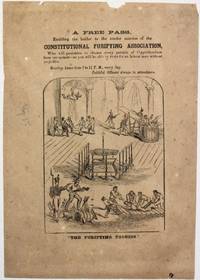
1864réf. 40035np 1864. Broadside 6.25" x 9" with two-thirds of the sheet consisting of a wood engraving entitled "The Purifying Process." Toned with a few short blank edge chips. Good. This scarce political broadside mocks the Copperheads who opposed the Lincoln Administration and the Civil War. The broadside depicts humorous rituals imposed on the Copperheads designed to purge Copperhead-ism from their natures. Weitenkampf and OCLC call this an 1864 broadside with the Lincoln-McClellan election the subject of this piece. Weitenkampf page 140. OCLC 14137917 4- Lincoln Presidential Library Brown U IL Princeton 1360327631 1- DLC 1085916488 1- AAS as of May 2024. unknown
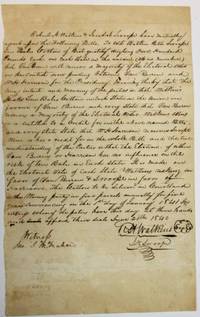
1840réf. 39023Courtland Lawrence Cty. Alabama 1840. Single page 7-3/4" x 12-3/4." Entirely in ink manuscript. Dated June 20 1840 and signed at the end by Watkins and Swoope with Jno. J. McMahon as witness. Inner edge is irregular. Closed tear no loss repaired expertly at blank bottom margin. Very Good. This documents records the terms of a wager on the outcome of the 1840 presidential election. "Watkins betts Swoope Ten Bales Cotton of Best quality weighing Five Hundred Pounds Each on each State in the union 26 in number that Van Buren will receive a majority of the Electoral votes in the contest now pending between Van Buren and Wm. H. Harrison for the Presidency." In case that's not entirely clear "The true intent and meaning of the parties is that Watkins risks Ten Bales Cotton in each State in the Union in favour of Van Buren and every state that Van Buren receives a majority of the Electoral votes." The bet is made on the electoral vote of each State. Watkins risking in favor of Van Buren & Swoope in favor of Harrison. . . The cotton to be delivered in Courtland to the winning party in five parcels annually for five years commencing on the 1st day of January 1841." A calculation of States and bales can be seen at the bottom left corner in pencil. Robert Herndon Watkins 1782-1855 was a farmer in Courtland. Jacob Kuhn Swoope 1800-1841 partnered with his two brothers in the successful Courtland mercantile firm of J & J Swoope in Courtland. John T. McMahon c.1805-1857 was a Courtland commission merchant in the firm of Bierne & McMahon for many years. Saunders Col. James E.: EARLY SETTLERS OF ALABAMA WITH NOTES AND GENEALOGIES New Orleans:1899 accessed online. unknown
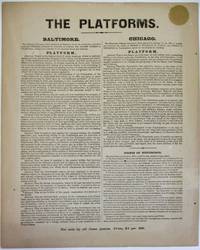
1864réf. 38115New York: For sale by all News Agents. Price $1 per 100 1864. Broadside 9" x 11 1/2". One margin spot from removal of a gum label light uniform toning. Very Good. Printed in two columns separated by a rule. The Column on the left is headed "Baltimore Platform" for the National Union Republican Party; the right hand column is headed "Chicago Platform" for the Democrat-Copperhead Party. A Republican recitation of the Democrats' Platform and the Republicans' Platform in 1864 and an analysis of their 'Points of Difference.' "The Union platform looks to the ending of the war through the defeat and overthrow of the Rebellion while the Democratic contemplates peace through the virtual triumph of the traitors." The broadside exhorts "Freemen of the United States! read mark weigh resolve and VOTE! This is preeminently a contest regarding important principles and measures compared with which personal considerations are of small account." We conclude that this broadside was printed in New York as the legend "For sale by all News Agents. Price $1 per 100" appears in similar broadside material with a New York imprint. Sabin 63348. Not in Bartlett. For sale by all News Agents. Price, $1 per 100 unknown
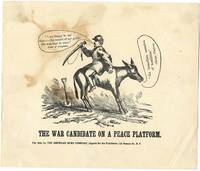
1864réf. 40123New York: For Sale by the AMERICAN NEWS COMPANY Agents for the Publishers. 121 Nassau St. 1864. Oblong broadside 8" x 9-3/8." Couple of light fox spots not affecting illustration. Very Good. The broadside mocks the dissonance in the Democrats' 1864 presidential campaign. Candidate McClellan's acceptance speech supported a continued War Effort; but his Party's platform called for an end to the War. McClellan sitting backward on a jackass says "I am happy to say that -- the record of my public life was kept in view". The jackass however facing the other direction says quoting from the Chicago Platform "An immediate cessation of hostilities." Weitenkampf 145. Not in Reilly. OCLC 57744783 2- Boston Ath. NYHS as of June 2024. AAS also owns a copy For Sale by the AMERICAN NEWS COMPANY, (Agents for the Publishers.) 121 Nassau St. unknown
1840réf. 39023Courtland Lawrence Cty. Alabama 1840. Single page 7-3/4" x 12-3/4." Entirely in ink manuscript. Dated June 20 1840 and signed at the end by Watkins and Swoope with Jno. J. McMahon as witness. Inner edge is irregular. Closed tear no loss repaired expertly at blank bottom margin. Very Good. This documents records the terms of a wager on the outcome of the 1840 presidential election. "Watkins betts Swoope Ten Bales Cotton of Best quality weighing Five Hundred Pounds Each on each State in the union 26 in number that Van Buren will receive a majority of the Electoral votes in the contest now pending between Van Buren and Wm. H. Harrison for the Presidency." In case that's not entirely clear "The true intent and meaning of the parties is that Watkins risks Ten Bales Cotton in each State in the Union in favour of Van Buren and every state that Van Buren receives a majority of the Electoral votes." The bet is made on the electoral vote of each State. Watkins risking in favor of Van Buren & Swoope in favor of Harrison. . . The cotton to be delivered in Courtland to the winning party in five parcels annually for five years commencing on the 1st day of January 1841." A calculation of States and bales can be seen at the bottom left corner in pencil. Robert Herndon Watkins 1782-1855 was a farmer in Courtland. Jacob Kuhn Swoope 1800-1841 partnered with his two brothers in the successful Courtland mercantile firm of J & J Swoope in Courtland. John T. McMahon c.1805-1857 was a Courtland commission merchant in the firm of Bierne & McMahon for many years. Saunders Col. James E.: EARLY SETTLERS OF ALABAMA WITH NOTES AND GENEALOGIES New Orleans:1899 accessed online. unknown books
1864réf. 40035np 1864. Broadside 6.25" x 9" with two-thirds of the sheet consisting of a wood engraving entitled "The Purifying Process." Toned with a few short blank edge chips. Good. This scarce political broadside mocks the Copperheads who opposed the Lincoln Administration and the Civil War. The broadside depicts humorous rituals imposed on the Copperheads designed to purge Copperhead-ism from their natures. Weitenkampf and OCLC call this an 1864 broadside with the Lincoln-McClellan election the subject of this piece. Weitenkampf page 140. OCLC 14137917 4- Lincoln Presidential Library Brown U IL Princeton 1360327631 1- DLC 1085916488 1- AAS as of May 2024. unknown books
1864réf. 38115New York: For sale by all News Agents. Price $1 per 100 1864. Broadside 9" x 11 1/2". One margin spot from removal of a gum label light uniform toning. Very Good. Printed in two columns separated by a rule. The Column on the left is headed "Baltimore Platform" for the National Union Republican Party; the right hand column is headed "Chicago Platform" for the Democrat-Copperhead Party. A Republican recitation of the Democrats' Platform and the Republicans' Platform in 1864 and an analysis of their 'Points of Difference.' "The Union platform looks to the ending of the war through the defeat and overthrow of the Rebellion while the Democratic contemplates peace through the virtual triumph of the traitors." The broadside exhorts "Freemen of the United States! read mark weigh resolve and VOTE! This is preeminently a contest regarding important principles and measures compared with which personal considerations are of small account." We conclude that this broadside was printed in New York as the legend "For sale by all News Agents. Price $1 per 100" appears in similar broadside material with a New York imprint. Sabin 63348. Not in Bartlett. For sale by all News Agents. Price, $1 per 100 unknown books
1864réf. 40123New York: For Sale by the AMERICAN NEWS COMPANY Agents for the Publishers. 121 Nassau St. 1864. Oblong broadside 8" x 9-3/8." Couple of light fox spots not affecting illustration. Very Good. The broadside mocks the dissonance in the Democrats' 1864 presidential campaign. Candidate McClellan's acceptance speech supported a continued War Effort; but his Party's platform called for an end to the War. McClellan sitting backward on a jackass says "I am happy to say that -- the record of my public life was kept in view". The jackass however facing the other direction says quoting from the Chicago Platform "An immediate cessation of hostilities." Weitenkampf 145. Not in Reilly. OCLC 57744783 2- Boston Ath. NYHS as of June 2024. AAS also owns a copy For Sale by the AMERICAN NEWS COMPANY, (Agents for the Publishers.) 121 Nassau St. unknown books
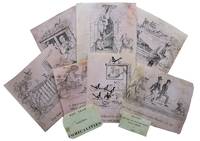
1833réf. AQ25008Birmingham: Printed by William Wood 1833. Seven trimmed woodcut engravings printed on pink paper with a further trimmed title and imprint panel on white paper. Browned and marked. An apparently unknown example of pictorial electoral satire removed from an album by a previous owner where the items were by repute grouped together with the title and imprint panel albeit printed on different paper - suggesting that these perhaps issued in book form but have since sunk without trace. The seven captioned images are: 'Reading the Riot Act' 'A Crane two Walkers and a Barker or the Political Dis-Union' 'A Fry-er setting a trap for the Consumers of Corn and longing for a Broil' 'A Maiden Speech or an Orator and his note book' 'A windfall to the Friars assistant in the shape of a Stoner' 'Cock Robin and Cock Robin's son' 'Negro head short cut pigtail and York returns or a boat about until the ferry no glee' The issues raised including radicalism the corn laws and the riot act all and the reference to a 'new year' election all suggest that these were issued around the time of the 1832/3 General Election; the first conduced after the introduction of the Reform Act which expanded the electorate especially in cities like Birmingham where in this election two radicals were elected unopposed. Entirely unrecorded in OCLC; neither the title nor the captions of any of the seven images elicits any locations in institutional collections. . Dimensions at maximum 100 x 110 mm. Printed by William Wood unknown
1944Contents: Seattle will build 15,000 fine new homes (ad); Schlitz beer ad - in color with lovely model; New York Central Railroad ad - "Black Magic" - 95,000,000 tons of coal per year; Block votes tipped teh balance in closest election since 1916 - photo of FDR with Harry Truman; Photos of voting shenanigans in Chicago; V-2 weapons may win next war but come too late for this one - detailed article with air photo; Ignorant men and modern weapons - the inside story of the Chinese Army - with photos of refugees fleeing the Japanese; White trucks - color ad; France given more say in Europe in prelude to Big Three Meeting; Reprieve for the Canadian Zombies; Doukhobor mass disrobing; Cuban housecleaning - Grau purges Batista henchmen; Long-suffering victims of sinus problems can be cured; Nikola Tesla - prophet of tomorrow; Very military ad by Bankers Trust Company shows a soldier pulling the pin from a grenade with his teeth; Color Sheaffer's pen ad inside back cover. Average wear. Address label atop front cover. Unmarked. A sound copy. Book
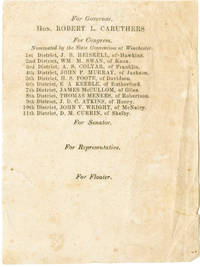
1863réf. 53688Winchester 1863. Running for State Office in Confederate Tennessee An exceedingly rare Confederate Tennessee state election ticket from 1863 nominating Robert L. Caruthers for governor and eleven others as state senators. In 1863 state elections were due in Tennessee. The state was fractured by war and secession and both Unionists and Confederates expressed the desire to hold elections for state government. Confederate supporters held a convention in Winchester and nominated a governor the State Legislature and members for the Confederate Congress. It was a bit of a fool's errand. Isham G. Harris who still considered himself the governor of Tennessee issued a proclamation calling for the election to be held on the first Thursday in August. Just who voted and how many or how few will probably never be known. According to historians the State Archives in Nashville are scant and inconclusive; returns from only thirty-two counties are found some of which reported the vote of only one civil district. Not a single report was from West Tennessee counties and only eight Middle Tennessee counties made returns. Robert L. Caruthers was elected governor on the face of returns but he was never inaugurated and thus never served a day as governor of Tennessee. No Confederate State Legislature ever convened either. The Confederate Congressmen were the only lucky ones. Those who were elected in 1863 took their seats in Richmond however briefly. George Webb notes this copy in his NOT IN ALLEN bibliography in 2013. Not in Parrish & Willingham. The only other copy or shall we say copies resides at the Library of Virginia in an uncut sheet of six tickets. This will likely be the only copy ever available in the marketplace. Toned minor soiling and wrinkling. Very good. WEBB NOT IN ALLEN 199 this copy. unknown
1863réf. 53688Winchester 1863. Running for State Office in Confederate Tennessee An exceedingly rare Confederate Tennessee state election ticket from 1863 nominating Robert L. Caruthers for governor and eleven others as state senators. In 1863 state elections were due in Tennessee. The state was fractured by war and secession and both Unionists and Confederates expressed the desire to hold elections for state government. Confederate supporters held a convention in Winchester and nominated a governor the State Legislature and members for the Confederate Congress. It was a bit of a fool's errand. Isham G. Harris who still considered himself the governor of Tennessee issued a proclamation calling for the election to be held on the first Thursday in August. Just who voted and how many or how few will probably never be known. According to historians the State Archives in Nashville are scant and inconclusive; returns from only thirty-two counties are found some of which reported the vote of only one civil district. Not a single report was from West Tennessee counties and only eight Middle Tennessee counties made returns. Robert L. Caruthers was elected governor on the face of returns but he was never inaugurated and thus never served a day as governor of Tennessee. No Confederate State Legislature ever convened either. The Confederate Congressmen were the only lucky ones. Those who were elected in 1863 took their seats in Richmond however briefly. George Webb notes this copy in his NOT IN ALLEN bibliography in 2013. Not in Parrish & Willingham. The only other copy or shall we say copies resides at the Library of Virginia in an uncut sheet of six tickets. This will likely be the only copy ever available in the marketplace. Toned minor soiling and wrinkling. Very good. WEBB NOT IN ALLEN 199 this copy. unknown books
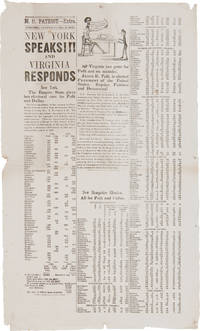
1844réf. 66208Concord: Hill & Moore November 9 1844. New Hampshire Democrats Celebrate Polk's Victory An ebullient "Extra" issue of the staunchly Democratic New Hampshire Patriot & Daily Gazette celebrating the not-quite-confirmed victory of James K. Polk in the 1844 presidential election. Published by lifelong Democratic partisan and former New Hampshire governor Isaac Hill the New Hampshire Patriot was a long-running political newspaper in that stronghold of Northern Democracy and this illustrated extra issue printed on Saturday November 9 displays the extent to which the editors and indeed the people of Concord rejoiced at the news. The main headline "New York Speaks!!!" refers to the pivotal flip of New York state from Whig to Democrat a fact which when combined with the expected news of a comfortable victory in Virginia more or less clinched the victory for Polk despite the results being out on several other states. While the optimistic figures in this article report a whopping majority for Polk in reality the Democrats won New York by a narrow margin of just one percent. A short article following this news offhandedly reports on a fatal local celebration noting that "A most shocking casualty occurred in Concord last evening while the democrats were celebrating the triumph of Polk and Dallas in New York by the firing of cannon. Mr. John L. Haynes of this town one of the officers of the Columbian Artillery had his left arm almost entirely blown off his right arm dreadfully shattered and his face shockingly burned in the act of ramming down a cartridge. The discharge took place in consequence of the vent not being stopped in the excitement and hurry of the firing." At the top of the central column a small cartoon depicts a man with an oversized steak knife and glass of wine declaring "That roast beef fetch it on!-and them 'two dollars a day!'" referencing William Henry Harrison's 1840 campaign slogan of "Harrison two dollars a day and roast beef." The remainder of the text reports the election results by county in New Hampshire which voted for Polk by a margin of nearly nineteen percent including votes for the ballot issues "On amending Constitution" and "On abolishing capital punishment." An entertaining and ephemeral piece printed at the culmination of a pivotal election. Old folds. Light tanning a few small chips and tears at edges. Very good. BRIGHAM p.444. unknown
1844réf. 66208Concord: Hill & Moore November 9 1844. New Hampshire Democrats Celebrate Polk's Victory An ebullient "Extra" issue of the staunchly Democratic New Hampshire Patriot & Daily Gazette celebrating the not-quite-confirmed victory of James K. Polk in the 1844 presidential election. Published by lifelong Democratic partisan and former New Hampshire governor Isaac Hill the New Hampshire Patriot was a long-running political newspaper in that stronghold of Northern Democracy and this illustrated extra issue printed on Saturday November 9 displays the extent to which the editors and indeed the people of Concord rejoiced at the news. The main headline "New York Speaks!!!" refers to the pivotal flip of New York state from Whig to Democrat a fact which when combined with the expected news of a comfortable victory in Virginia more or less clinched the victory for Polk despite the results being out on several other states. While the optimistic figures in this article report a whopping majority for Polk in reality the Democrats won New York by a narrow margin of just one percent. A short article following this news offhandedly reports on a fatal local celebration noting that "A most shocking casualty occurred in Concord last evening while the democrats were celebrating the triumph of Polk and Dallas in New York by the firing of cannon. Mr. John L. Haynes of this town one of the officers of the Columbian Artillery had his left arm almost entirely blown off his right arm dreadfully shattered and his face shockingly burned in the act of ramming down a cartridge. The discharge took place in consequence of the vent not being stopped in the excitement and hurry of the firing." At the top of the central column a small cartoon depicts a man with an oversized steak knife and glass of wine declaring "That roast beef fetch it on!-and them 'two dollars a day!'" referencing William Henry Harrison's 1840 campaign slogan of "Harrison two dollars a day and roast beef." The remainder of the text reports the election results by county in New Hampshire which voted for Polk by a margin of nearly nineteen percent including votes for the ballot issues "On amending Constitution" and "On abolishing capital punishment." An entertaining and ephemeral piece printed at the culmination of a pivotal election. Old folds. Light tanning a few small chips and tears at edges. Very good. BRIGHAM p.444. unknown books
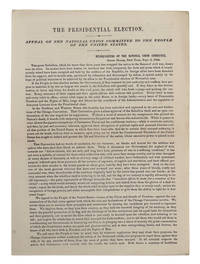
1864réf. 68899New York: National Union Executive Committee Sept. 9 1864. National Union Party Denounces the Chicago Platform A scarce National Union Party circular from the 1864 presidential election responding to the infamous Democratic Nation Convention in Chicago and asserting that "every rebel organ in the rebel States or in foreign lands-- every hater of Democratic Freedom and the Rights of Man longs and labors for the overthrow of the Administration and the expulsion of Abraham Lincoln from the Presidential chair." The committee urges voters "not to arrest the blow which is just ready to descend upon the rebellion now tottering to its fall; not to give the rebels time to renew their strength for fresh conflicts; not to aid those who would aid them in overthrowing our Government in destroying our Union in plunging into a chaos of anarchy the great communities of which the Constitution makes one great and glorious nation and in thus extinguishing finally and forever the hopes of all who have faith in Freedom and the Rights of Man." The missive is signed in type by Henry J. Raymond as Chairman and twenty other members of the National Union Committee. Whether thanks to their extensive literature output or merely a reflection of the existing public will the National Union Party's aim was carried in 1864 by a historic margin with Lincoln winning over ninety percent of the electoral vote. An uncommon fine piece of Civil War political ephemera. Light foxing and soiling to edges. Near fine. unknown