1314 risultati
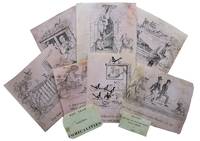
1936rif. 24942This sheet contains five rough sketches of graphics calling on the workers and voters of America to support Franklin D. Roosevelt's reelection in 1936. They did in record numbers. PRESIDENTIAL ELECTION OF 1936. Typed Document Signed. Artwork by Franz Felix and Ideas and Copy by Richard Barron "Set of Rough Sketches Containing Some Suggested Promotion Ideas to be Used in the 1936 Democratic Presidential Campaign" July 2 1936. 1 p. 12 x 10½ in. Excerpts: "1. Sounding the call against 'economic royalists' in the spirit of 1776." "2. Appropriating the well-known symbol of violence upraised fist diverting it to peaceful democratic use. To include the farmer phrase the appeal: TOILERS OF AMERICA – UNITE FOR ROOSEVELT." "3. The statue of 'The Thinker' as a symbol of the man today who thinks the toiler with brawn and brain.everyman." "4. Direct appeal to radical labor and leftists in general." "5. Another way of appealing to the working class men and women." "This collaborative effort respectfully submitted for consideration to the Chairman of the Democratic National Committee Mr. James A. Farley." Historical Background After unseating incumbent Republican President Herbert Hoover in 1932 President Franklin D. Roosevelt ran for reelection in 1936. His Republican opponent was Governor Alf Landon of Kansas. Although the Great Depression had entered its eighth year Roosevelt's New Deal policies were broadly popular. He won the highest share of the popular and electoral vote since the uncontested 1820 election. Roosevelt attracted more than 60 percent of the popular vote and won the electoral votes of 46 states; Landon won the electoral votes of only Maine and Vermont. Democratic Party chairman James Farley had predicted that Roosevelt would lose only Maine and Vermont. After the results of the 1936 election Farley quipped that the nation needed to revise the conventional political wisdom of "As Maine goes so goes the nation" to "As Maine goes so goes Vermont." These ideas for campaign imagery employed or modified common images to support Roosevelt's campaign. One drew on the imagery of artist Archibald Willard's 1875 painting The Spirit of '76 and employed three figures of workers to match the subjects of Willard's image. Another appropriated the upraised fist as a symbol of violence and repurposed it as a symbol of defiant unity against "economic royalists." A third used an image of The Thinker by French sculptor Auguste Rodin 1840-1917 to appeal to thinking voters. Another image appeals to the fears of radicals that the alternative to Roosevelt is "Reaction." Richard Barron and artist Franz Felix submitted these ideas to Democratic National Committee chairman James A. Farley on July 2 1936 three weeks before the Democratic Party held its convention in Philadelphia. There is no evidence that these images were used in the campaign and it is possible that Farley rejected them. At the end of the campaign the Democratic National Committee had a campaign deficit of approximately $850000. To help offset those expenses the treasurer convinced President Roosevelt to sign 2500 brief Forewords which were bound into The Democratic Book 1936 and sent to donors of $250. Purchases brought in more than $400000 for the party and led Republicans to charge corrupt practices for allowing corporations to contribute to the campaign by buying copies. Franz Felix 1892-1967 was born in Vienna Austria and developed an ability as a child to draw portraits in charcoal. He studied portraiture in Vienna and immigrated to the United States shortly after World War I. He settled in San Francisco where he established himself as a portrait artist and commercial illustrator. In the late 1920s he moved to New York and established a studio in the suburb of Spring Valley where he produced book and magazine illustrations. During World War II he painted a series of murals of wartime activities of Spring Valley residents. James A. Farley 1888-1976 was born in New York into an Irish Catholic family. After his father died he helped his mother with a small business to support the family. After graduating from Packard Business College in New York City where he studied bookkeeping and other business skills Farley got a job with the U.S. Gypsum Corporation. He served as a Democratic town clerk in Stony Point New York and became chairman of the county's Democratic Party in 1918. He organized upstate Democrats and helped elect Alfred E. Smith as Governor that year. He served in the New York State Assembly in 1923 but was defeated at the next election for supporting the repeal of Prohibition. As chair of the state Athletic Commission Farley fought for the civil rights of African American athletes. Farley founded he General Builders Corporation from smaller firms to become New York City's largest building supply company. Farley directed Franklin D. Roosevelt's narrowly successful New York gubernatorial campaign in 1928 and his reelection in 1930. Farley served as chairman of the New York State Democratic Committee from 1930 to 1944 and helped build the national New Deal coalition that elected Roosevelt to the Presidency four times. In 1932 Farley became the chairman of the Democratic National Committee and in 1933 U.S. Postmaster General. He held both positions until 1940. Farley and Roosevelt broke on the two-term tradition of the Presidency in 1940 and he later helped propose the 22nd Amendment to the U.S. Constitution limiting a person to two elections as president approved by Congress in 1947 and ratified in 1951. Farley became chairman of the board of the Coca-Cola Export Corporation in 1940 and held that position for more than thirty years. books
1936rif. 24942This sheet contains five rough sketches of graphics calling on the workers and voters of America to support Franklin D. Roosevelt's reelection in 1936. They did in record numbers. PRESIDENTIAL ELECTION OF 1936. Typed Document Signed. Artwork by Franz Felix and Ideas and Copy by Richard Barron "Set of Rough Sketches Containing Some Suggested Promotion Ideas to be Used in the 1936 Democratic Presidential Campaign" July 2 1936. 1 p. 12 x 10½ in. Excerpts: "1. Sounding the call against 'economic royalists' in the spirit of 1776." "2. Appropriating the well-known symbol of violence upraised fist diverting it to peaceful democratic use. To include the farmer phrase the appeal: TOILERS OF AMERICA – UNITE FOR ROOSEVELT." "3. The statue of 'The Thinker' as a symbol of the man today who thinks the toiler with brawn and brain.everyman." "4. Direct appeal to radical labor and leftists in general." "5. Another way of appealing to the working class men and women." "This collaborative effort respectfully submitted for consideration to the Chairman of the Democratic National Committee Mr. James A. Farley." Historical Background After unseating incumbent Republican President Herbert Hoover in 1932 President Franklin D. Roosevelt ran for reelection in 1936. His Republican opponent was Governor Alf Landon of Kansas. Although the Great Depression had entered its eighth year Roosevelt's New Deal policies were broadly popular. He won the highest share of the popular and electoral vote since the uncontested 1820 election. Roosevelt attracted more than 60 percent of the popular vote and won the electoral votes of 46 states; Landon won the electoral votes of only Maine and Vermont. Democratic Party chairman James Farley had predicted that Roosevelt would lose only Maine and Vermont. After the results of the 1936 election Farley quipped that the nation needed to revise the conventional political wisdom of "As Maine goes so goes the nation" to "As Maine goes so goes Vermont." These ideas for campaign imagery employed or modified common images to support Roosevelt's campaign. One drew on the imagery of artist Archibald Willard's 1875 painting The Spirit of '76 and employed three figures of workers to match the subjects of Willard's image. Another appropriated the upraised fist as a symbol of violence and repurposed it as a symbol of defiant unity against "economic royalists." A third used an image of The Thinker by French sculptor Auguste Rodin 1840-1917 to appeal to thinking voters. Another image appeals to the fears of radicals that the alternative to Roosevelt is "Reaction." Richard Barron and artist Franz Felix submitted these ideas to Democratic National Committee chairman James A. Farley on July 2 1936 three weeks before the Democratic Party held its convention in Philadelphia. There is no evidence that these images were used in the campaign and it is possible that Farley rejected them. At the end of the campaign the Democratic National Committee had a campaign deficit of approximately $850000. To help offset those expenses the treasurer convinced President Roosevelt to sign 2500 brief Forewords which were bound into The Democratic Book 1936 and sent to donors of $250. Purchases brought in more than $400000 for the party and led Republicans to charge corrupt practices for allowing corporations to contribute to the campaign by buying copies. Franz Felix 1892-1967 was born in Vienna Austria and developed an ability as a child to draw portraits in charcoal. He studied portraiture in Vienna and immigrated to the United States shortly after World War I. He settled in San Francisco where he established himself as a portrait artist and commercial illustrator. In the late 1920s he moved to New York and established a studio in the suburb of Spring Valley where he produced book and magazine illustrations. During World War II he painted a series of murals of wartime activities of Spring Valley residents. James A. Farley 1888-1976 was born in New York into an Irish Catholic family. After his father died he helped his mother with a small business to support the family. After graduating from Packard Business College in New York City where he studied bookkeeping and other business skills Farley got a job with the U.S. Gypsum Corporation. He served as a Democratic town clerk in Stony Point New York and became chairman of the county's Democratic Party in 1918. He organized upstate Democrats and helped elect Alfred E. Smith as Governor that year. He served in the New York State Assembly in 1923 but was defeated at the next election for supporting the repeal of Prohibition. As chair of the state Athletic Commission Farley fought for the civil rights of African American athletes. Farley founded he General Builders Corporation from smaller firms to become New York City's largest building supply company. Farley directed Franklin D. Roosevelt's narrowly successful New York gubernatorial campaign in 1928 and his reelection in 1930. Farley served as chairman of the New York State Democratic Committee from 1930 to 1944 and helped build the national New Deal coalition that elected Roosevelt to the Presidency four times. In 1932 Farley became the chairman of the Democratic National Committee and in 1933 U.S. Postmaster General. He held both positions until 1940. Farley and Roosevelt broke on the two-term tradition of the Presidency in 1940 and he later helped propose the 22nd Amendment to the U.S. Constitution limiting a person to two elections as president approved by Congress in 1947 and ratified in 1951. Farley became chairman of the board of the Coca-Cola Export Corporation in 1940 and held that position for more than thirty years.
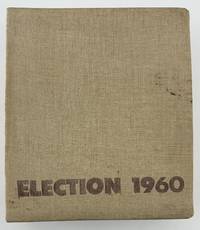
1960rif. 4337Various locations in and around Chicago Il: likely early November 1960. Very good plus. Title leaf plus 25 leaves illustrated with forty-seven silver gelatin photographs pasted one per leaf or page all about 5.5 x 7.5 inches plus five loose images two duplicates and three other images not pasted in. Square quarto. Contemporary tan cloth custom photograph album metal-hinged spine front cover printed with title reading "ELECTION 1960." Minor wear and soiling to album. Light occasional thumb-soiling to album leaves ownership signature reading "G. Robert Hillman" on title leaf. Photographs in excellent condition. An utterly charming vernacular photograph album assembled during the seminal Presidential Election of 1960 one of the closest presidential elections in United States history which pitted Vice President Richard Nixon against the junior Senator from Massachusetts John F. Kennedy. The album features about fifty original photographs on the campaign trail in Illinois beginning with about a dozen-and-a-half images of Richard Nixon and his local supporters. The photographs capture various angles of Nixon during his stump speech a young boy waving an "I'm for Nixon" handmade sign another young boy with a Nixon button on his coat crowd scenes a large campaign sign for Nixon-Lodge outside a local store and more. One image featuring a mixed crowd of Nixon and Kennedy supporters transitions into the next section of photographs which concentrates on JFK's campaign. The first image in this section is a closeup of a "Kennedy for President" hat followed by four images of JFK's campaign manager Robert Kennedy making a speech three images of Eleanor Roosevelt stumping for Kennedy five images of Lyndon Johnson and his airplane numerous shots of Kennedy supporters and crowd shots outside Chicago Blackhawks stadium. The photographs then feature the inside of Chicago Auditorium where the first three images depict John F. Kennedy - the first shaking hands with Chicago's longtime Mayor Richard Daley and two during his speech likely his speech of November 4 1960 - just four days before Election Day. The final three images show supporters of both candidates. The 1960 United States Presidential Election was a watershed moment for the campaign politics of the country. Senator Kennedy won the election with a clear Electoral College margin of 303 to 219. However Vice President Nixon won three more states than Kennedy and lost the popular vote only by about 110000 votes out of more than 68 million votes cast. The election set the course for most of the remainder of the 1960s but left Nixon soured and suspicious that the election had been stolen from him - a feeling he never let go and one with ominous echoes today. As indicated in the present album the 1960 presidential election was passionate on both sides with each candidate drawing large enthusiastic crowds for their appearances. The signature on the title leaf of the present album likely identifies the compiler. G. Robert Hillman is a Senior Editor for Politico. Hillman was born in Peoria and grew up on a farm near Flanagan Illinois about a hundred miles from Chicago. He went to college at the University of Illinois at Urbana-Champaign and began his career at Chicago Today and the Chicago Sun-Times. Hillman would have been in middle school during the 1960 election campaign not too precocious for a young man obsessed with politics especially during one of the most heated and media-intensive campaigns of the 20th century. likely early November unknown
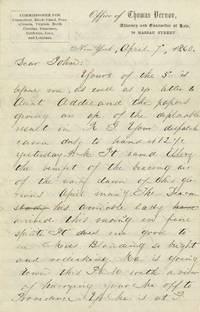
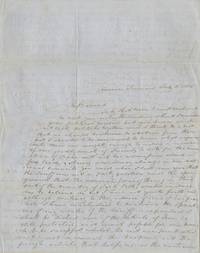
1860rif. List38104New York City 1860. Autograph letter signed "W." to "Dear John" written on the printed letterhead of Thomas Vernon attorney Nassau Street New York. 4 pp. on a single 8 x 10 inch sheet folded to make four pages of approximately 8 x 5 inches. Fine condition. An April 1860 political letter written in the months before the presidential election with the writer discussing the recent Rhode Island election and the way it was being read in New York. The letter refers to the April 4 1860 Rhode Island gubernatorial election in which William Sprague IV running as a Democratic/Conservative fusion candidate defeated Republican Seth Padelford. Outside Rhode Island the result was read by many as a meaningful Republican setback in the tense months before the presidential election. The author describes the result as producing "a profound sensation" among Democrats and Republicans and worries that outside Rhode Island it appeared as though "New England sentiment was faltering" on the "non-extension of Slavery." The letter also includes family news travel to Providence and Perth Amboy and legal/business matters relating to Ohio notes and accounts. Full text follows. "New York April 7th 1860 Dear John: "Yours of the 5th is before me as well as your letter to Aunt Addie and the papers giving an a/c of the deplorable result in R.I. Your despatch came duly to hand at 12-1/2 yesterday P.M. It saved Ellery the benefit of the bracing air of the early dawn of this glorious April morning. The Deacon & his amiable lady arrived this morning in fine spirits. It does me good to see Miss. Blanding so bright and rollicking. Ma is going down this P. M. with a view of hurrying your Ma off to Providence. Your Ma is at P. Amboy and I do hope she will go on to Prov. She has been subjected to too much wear and tear and anxiety & looks very much worn and depressed. She needs some cheerful faces and absence from constant and present trouble. I wish I could see some opening in the clouds. When I reflect upon the sorrows and exalted natures of Uncle Thomas and Aunt Addie it confers upon me the truth of another state where worth and purity will find reward. I do not think that Aunt Addie carries out however her favorite idea of the claims of parents as paramount to those of children. I think that she practically ignores her own claims or regards them as altogether subordinate. She has never given herself a chance and acts with a single view to the views of her children. "The news of the R.I. Election created a profound sensation here on Thursday morn'g. The joy of the Democrats was unbounded while the Republicans regarded it as the severest blow that their party has rec'd more disastrous than the national defeat of /56; for it looks to the County at large who do not understand the local issues upon which the contest went off as the New England sentiment was faltering in its devotion to the cause of non-extension of Slavery. "It is everywhere out of R.I. heralded as a Democratic triumph & hence inspires the Democrats while it depresses the Republicans. I hope that those deluded Republicans who voted for Sprague under the apprehension that they were not voting practically for the Democracy may be at some time able to forgive themselves and also receive the forgiveness of their country after due penance and probation. I am much obliged to you for the papers. "We are about foreclosing some of those Ohio notes and the delay is now caused by my inability to discover whether James Gregory's Thos. Bowen's & Anthony R. Jenkins' notes to your Father are paid or how much is paid on a/c of said notes. Do write me at once all you know. Uncle T. knows nothing about it. I have just rec'd the expected remittance from Brown on ac of the new sale of the 80 acre lot but have not yet Ex'd B's a/c. He says it took him all day to make it out and he hopes it is satisfactory. An a/c from Brown is a wonder indeed worth remarking. Do keep Aunt Addie a month. My love to Addie whom I hope to see soon. G.T.O. has gone to Newport 'via' Boston today. I saw Slater at the 5th Ave. Hotel on Thursday. Ma has just gone to P. Amboy. Aff'y W." A useful prewar political letter strongest for the writer's immediate reaction to the Rhode Island election of 1860 as understood from New York. Its interest lies less in the local election itself than in the way the result was taken as a national sign encouraging Democrats and discouraging Republicans over the issue of slavery's extension. . unknown books
1860rif. List38104New York City 1860. Autograph letter signed "W." to "Dear John" written on the printed letterhead of Thomas Vernon attorney Nassau Street New York. 4 pp. on a single 8 x 10 inch sheet folded to make four pages of approximately 8 x 5 inches. Fine condition. An April 1860 political letter written in the months before the presidential election with the writer discussing the recent Rhode Island election and the way it was being read in New York. The letter refers to the April 4 1860 Rhode Island gubernatorial election in which William Sprague IV running as a Democratic/Conservative fusion candidate defeated Republican Seth Padelford. Outside Rhode Island the result was read by many as a meaningful Republican setback in the tense months before the presidential election. The author describes the result as producing "a profound sensation" among Democrats and Republicans and worries that outside Rhode Island it appeared as though "New England sentiment was faltering" on the "non-extension of Slavery." The letter also includes family news travel to Providence and Perth Amboy and legal/business matters relating to Ohio notes and accounts. Full text follows. "New York April 7th 1860 Dear John: "Yours of the 5th is before me as well as your letter to Aunt Addie and the papers giving an a/c of the deplorable result in R.I. Your despatch came duly to hand at 12-1/2 yesterday P.M. It saved Ellery the benefit of the bracing air of the early dawn of this glorious April morning. The Deacon & his amiable lady arrived this morning in fine spirits. It does me good to see Miss. Blanding so bright and rollicking. Ma is going down this P. M. with a view of hurrying your Ma off to Providence. Your Ma is at P. Amboy and I do hope she will go on to Prov. She has been subjected to too much wear and tear and anxiety & looks very much worn and depressed. She needs some cheerful faces and absence from constant and present trouble. I wish I could see some opening in the clouds. When I reflect upon the sorrows and exalted natures of Uncle Thomas and Aunt Addie it confers upon me the truth of another state where worth and purity will find reward. I do not think that Aunt Addie carries out however her favorite idea of the claims of parents as paramount to those of children. I think that she practically ignores her own claims or regards them as altogether subordinate. She has never given herself a chance and acts with a single view to the views of her children. "The news of the R.I. Election created a profound sensation here on Thursday morn'g. The joy of the Democrats was unbounded while the Republicans regarded it as the severest blow that their party has rec'd more disastrous than the national defeat of /56; for it looks to the County at large who do not understand the local issues upon which the contest went off as the New England sentiment was faltering in its devotion to the cause of non-extension of Slavery. "It is everywhere out of R.I. heralded as a Democratic triumph & hence inspires the Democrats while it depresses the Republicans. I hope that those deluded Republicans who voted for Sprague under the apprehension that they were not voting practically for the Democracy may be at some time able to forgive themselves and also receive the forgiveness of their country after due penance and probation. I am much obliged to you for the papers. "We are about foreclosing some of those Ohio notes and the delay is now caused by my inability to discover whether James Gregory's Thos. Bowen's & Anthony R. Jenkins' notes to your Father are paid or how much is paid on a/c of said notes. Do write me at once all you know. Uncle T. knows nothing about it. I have just rec'd the expected remittance from Brown on ac of the new sale of the 80 acre lot but have not yet Ex'd B's a/c. He says it took him all day to make it out and he hopes it is satisfactory. An a/c from Brown is a wonder indeed worth remarking. Do keep Aunt Addie a month. My love to Addie whom I hope to see soon. G.T.O. has gone to Newport 'via' Boston today. I saw Slater at the 5th Ave. Hotel on Thursday. Ma has just gone to P. Amboy. Aff'y W." A useful prewar political letter strongest for the writer's immediate reaction to the Rhode Island election of 1860 as understood from New York. Its interest lies less in the local election itself than in the way the result was taken as a national sign encouraging Democrats and discouraging Republicans over the issue of slavery's extension. . unknown
1832rif. 004517Retford: B. Dewhirst Printer 1832. Single sided printed broadside approximately 220mm x 280mm in size. Laid on to paper probably ex-library but no evidence of this. With light creasing and associated dust staining and a couple of small tears to foot before being laid down. Thomas Houldsworth 1771-1852 became the Tory MP for North Nottinghamshire at this election in 1832 having previously represented Pontefract and then Newton stepping down at the general election of July 1852 and dying a couple of months later. First Edition. Unbound. Good. 4to. Broadside. B. Dewhirst [Printer] Paperback
1856rif. 41369Albany NY: Comstock & Cassidy 1856. First edition. Self wrappers. A very good copy with a fold removed from a bound volume; small tears along fore edge. Unpaged 4 pp. 27 1/2 x 21 1/4 inches. Supports the Democratic Party. Extensive coverage of the 1856 elections with large ad for James Buchanan for President and John C. Breckinridge for Vice President. Also notice for the sale of Delaware Indian Lands at Fort Leavenworth Kansas Territory moving the sale until the 17th of November with a list of tracts. Comstock & Cassidy unknown books
1856rif. 41369Albany NY: Comstock & Cassidy 1856. First edition. Self wrappers. A very good copy with a fold removed from a bound volume; small tears along fore edge. Unpaged 4 pp. 27 1/2 x 21 1/4 inches. Supports the Democratic Party. Extensive coverage of the 1856 elections with large ad for James Buchanan for President and John C. Breckinridge for Vice President. Also notice for the sale of Delaware Indian Lands at Fort Leavenworth Kansas Territory moving the sale until the 17th of November with a list of tracts. Comstock & Cassidy unknown
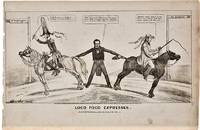
1838rif. 38949New York: H.R. Robinson 1838. Oblong lithograph broadside 13-1/4" x 20." Shallow blank left margin chips from a prior mounting. Light outer margin darkening. A clean image signed 'Blanks fecit' perhaps Edward Williams Clay. Very Good. A satiric commentary on thwarted Democratic hopes to control New York City. Whigs dashed Democratic expectations in the New York municipal elections of spring 1838. Successful Whig mayoral candidate Aaron Clark holds and restrains two horses by their tails: 'Stop my good fellows you are going on a fools errand you are counting your chickens before they are hatched'." His victory has delayed if not destroyed Loco Foco hopes of political dominance. On the right a Loco Foco supporter in the garb of a carman or driver sits on a horse and tries to ride toward Albany to fulfill his ambitions: 'Marcy must resign in my favor and I'll be next Governor myself for this job!' Reilly suggests the man is either Isaac Varian the Loco Foco mayoral candidate or Democratic Congressman C.C. Cambreling. On the left a uniformed Jacksonian Democrat sits on his horse. He wants to go to Washington: 'I shall insist on Matty's making me next Collector.' He is probably Tammany leader Jesse Hoyt who indeed was successful in his quest to be Collector of the Port of New York. Reilly 1838-11. Weitenkampf 52. OCLC 299944597 1- DLC 1136565725 1- AAS as of December 2025. Not at NYPL or NYHS web sites. H.R. Robinson unknown books
1838rif. 38949New York: H.R. Robinson 1838. Oblong lithograph broadside 13-1/4" x 20." Shallow blank left margin chips from a prior mounting. Light outer margin darkening. A clean image signed 'Blanks fecit' perhaps Edward Williams Clay. Very Good. A satiric commentary on thwarted Democratic hopes to control New York City. Whigs dashed Democratic expectations in the New York municipal elections of spring 1838. Successful Whig mayoral candidate Aaron Clark holds and restrains two horses by their tails: 'Stop my good fellows you are going on a fools errand you are counting your chickens before they are hatched'." His victory has delayed if not destroyed Loco Foco hopes of political dominance. On the right a Loco Foco supporter in the garb of a carman or driver sits on a horse and tries to ride toward Albany to fulfill his ambitions: 'Marcy must resign in my favor and I'll be next Governor myself for this job!' Reilly suggests the man is either Isaac Varian the Loco Foco mayoral candidate or Democratic Congressman C.C. Cambreling. On the left a uniformed Jacksonian Democrat sits on his horse. He wants to go to Washington: 'I shall insist on Matty's making me next Collector.' He is probably Tammany leader Jesse Hoyt who indeed was successful in his quest to be Collector of the Port of New York. Reilly 1838-11. Weitenkampf 52. OCLC 299944597 1- DLC 1136565725 1- AAS as of December 2025. Not at NYPL or NYHS web sites. H.R. Robinson unknown
1860rif. 69456NP: np 1860. Narrow printed broadside 26 x 10 cm. Edge tears repaired on verso with Japanese paper. Claiborne F. Jackson won the Governorship of Missouri and began his term of office in January 1861. The debate over whether Missouri would secede from the Union began shortly after he took office and he aligned himself with the Confederacy. The state legislature vacated his election and a provisional governor was appointed to replace him. Jackson and his supporters removed to Arkansas after the Battle of Pea Ridge. see: his brief biography on the Missouri State Archives Digital Heritage site. np unknown books
1860rif. 69456NP: np 1860. Narrow printed broadside 26 x 10 cm. Edge tears repaired on verso with Japanese paper. Claiborne F. Jackson won the Governorship of Missouri and began his term of office in January 1861. The debate over whether Missouri would secede from the Union began shortly after he took office and he aligned himself with the Confederacy. The state legislature vacated his election and a provisional governor was appointed to replace him. Jackson and his supporters removed to Arkansas after the Battle of Pea Ridge. see: his brief biography on the Missouri State Archives Digital Heritage site. np unknown
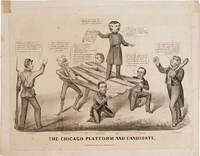
1864rif. 63169New York: Published by Currier & Ives 1864. A Political Cartoon Exposing McClellan's Hypocrisy A rare Currier and Ives print from the presidential election of 1864 satirizing the Democratic presidential candidate and former general George B. McClellan as an equivocating hypocrite. As Neely and Holzer explain the presidential campaign of 1864 inspired a flurry of "separate-sheet display cartoons: thought-provoking witty but often cruel lampoons that struck hard at the most divisive political and personal issues of 1864. In these cartoons one can see illustrated vividly the raw toughness of the campaign as well as the skill of the artists who covered it." These prints they note could be "vicious: personal mean-spirited cruel race-baiting and divisive" and in this context McClellan "the military man now running on a peace platform made for one obvious target." The image here shows a two-faced McClellan at center standing atop rickety planks - a literal representation of the Democratic party's Chicago peace platform - and holding a copy of his letter of acceptance. The planks are supported precariously at each corner on the shoulders of four figures: Confederate president Jefferson Davis; New York congressman and prominent Copperhead Fernando Wood; another Copperhead and the author of the Chicago platform Clement Vallandigham; and "Jeffs friend" the devil. Standing on opposite sides of the image are representatives of each of the constituencies to whom the two-faced McClellan is pandering: a uniformed "Union Soldier" and a "Peace Democrat" caricatured here as a club-wielding simian Irishman. From the face addressing the Peace Democrat McClellan says "You see my friend I accept the nomination and of course stand on the platform" to which the Peace Democrat replies "All right General! if yere in favor of resistin the draft killing the Nagurs and pace wid the Southerners I'll knock any man on the head that'll vote aginye." From his other face addressing the Union soldier McClellan contradicts himself saying "If you don't like the Platform I refer you to my letter of acceptance" a copy of which McClellan holds in his and which reads "War! - preservation Union - could not look my gallant Comrades in the - face; ---" The soldier says "Its no use General! you can't stand on that platform and come that blarney over me; I smell brimstone!" Below McClellan the devil speaking to Jefferson Davis gives expression to the futility of the lost cause: "Well Jeff it's no use trying to hold up this rickety old platform I guess I'll leave you to your fate!" Davis says in reply "I'm in a pretty fix! Weldon road gone!! Atlanta taken!!! Mobile Forts surrendered!!!! Early licked!!!!! and now when my last hope is in keeping up this platform and getting Mac elected you who led me into the scrape threaten to leave me!!!!!" Meanwhile an exasperated Vallandingham exclaims "Confound that letter! I've a good mind to bolt and let the whole concern go to a smash!" Fernando tries to reassure his fellow Copperhead: "Hold on Val. don't you see it's only his little game to ring in the war men if he is elected he is bound to carry out our policy and nothing else!" The image mocks the seeming hypocrisy of McClellan a military man running on his war record who has just accepted the nomination of a party whose platform calls for an end to the war even as the candidate himself expresses his support for the war in his acceptance letter. Reilly notes that the cartoon was probably drawn by the prolific artist Louis Maurer. This print is scarce. The Currier & Ives catalogue raisonné locates only the copies at the Chicago Historical Society and the Library of Congress. OCLC locates another two copies at the time of cataloguing one at the Ohio History Center and another at the Clements Library. We find additional copies at the American Antiquarian Society the Library Company of Philadelphia and the Metropolitan Museum of Art. A rare and stinging political cartoon from the bitter war-time election of 1864. Tanned with some scattered foxing. Small pinholes to top center and to top and bottom of left margin. Two small pieces of linen tape to top edge of verso; some soiling to verso and some discoloration from old tape since removed showing through to recto. Very good. REILLY AMERICAN POLITICAL PRINTS 1864-20. WEITENKAMPF p.143. PETERS CURRIER & IVES 1621. GALE CURRIER & IVES: A CATALOGUE RAISONNÉ 1126. NEELY & HOLZER UNION IMAGE pp.132 134 137 144-45. Bryan F. Le Beau Currier & Ives: America Imagined Washington: Smithsonian Institution Press 2001 pp.280-81. OCLC 818725064 1292629697. unknown books
1864rif. 63169New York: Published by Currier & Ives 1864. A Political Cartoon Exposing McClellan's Hypocrisy A rare Currier and Ives print from the presidential election of 1864 satirizing the Democratic presidential candidate and former general George B. McClellan as an equivocating hypocrite. As Neely and Holzer explain the presidential campaign of 1864 inspired a flurry of "separate-sheet display cartoons: thought-provoking witty but often cruel lampoons that struck hard at the most divisive political and personal issues of 1864. In these cartoons one can see illustrated vividly the raw toughness of the campaign as well as the skill of the artists who covered it." These prints they note could be "vicious: personal mean-spirited cruel race-baiting and divisive" and in this context McClellan "the military man now running on a peace platform made for one obvious target." The image here shows a two-faced McClellan at center standing atop rickety planks - a literal representation of the Democratic party's Chicago peace platform - and holding a copy of his letter of acceptance. The planks are supported precariously at each corner on the shoulders of four figures: Confederate president Jefferson Davis; New York congressman and prominent Copperhead Fernando Wood; another Copperhead and the author of the Chicago platform Clement Vallandigham; and "Jeffs friend" the devil. Standing on opposite sides of the image are representatives of each of the constituencies to whom the two-faced McClellan is pandering: a uniformed "Union Soldier" and a "Peace Democrat" caricatured here as a club-wielding simian Irishman. From the face addressing the Peace Democrat McClellan says "You see my friend I accept the nomination and of course stand on the platform" to which the Peace Democrat replies "All right General! if yere in favor of resistin the draft killing the Nagurs and pace wid the Southerners I'll knock any man on the head that'll vote aginye." From his other face addressing the Union soldier McClellan contradicts himself saying "If you don't like the Platform I refer you to my letter of acceptance" a copy of which McClellan holds in his and which reads "War! - preservation Union - could not look my gallant Comrades in the - face; ---" The soldier says "Its no use General! you can't stand on that platform and come that blarney over me; I smell brimstone!" Below McClellan the devil speaking to Jefferson Davis gives expression to the futility of the lost cause: "Well Jeff it's no use trying to hold up this rickety old platform I guess I'll leave you to your fate!" Davis says in reply "I'm in a pretty fix! Weldon road gone!! Atlanta taken!!! Mobile Forts surrendered!!!! Early licked!!!!! and now when my last hope is in keeping up this platform and getting Mac elected you who led me into the scrape threaten to leave me!!!!!" Meanwhile an exasperated Vallandingham exclaims "Confound that letter! I've a good mind to bolt and let the whole concern go to a smash!" Fernando tries to reassure his fellow Copperhead: "Hold on Val. don't you see it's only his little game to ring in the war men if he is elected he is bound to carry out our policy and nothing else!" The image mocks the seeming hypocrisy of McClellan a military man running on his war record who has just accepted the nomination of a party whose platform calls for an end to the war even as the candidate himself expresses his support for the war in his acceptance letter. Reilly notes that the cartoon was probably drawn by the prolific artist Louis Maurer. This print is scarce. The Currier & Ives catalogue raisonné locates only the copies at the Chicago Historical Society and the Library of Congress. OCLC locates another two copies at the time of cataloguing one at the Ohio History Center and another at the Clements Library. We find additional copies at the American Antiquarian Society the Library Company of Philadelphia and the Metropolitan Museum of Art. A rare and stinging political cartoon from the bitter war-time election of 1864. Tanned with some scattered foxing. Small pinholes to top center and to top and bottom of left margin. Two small pieces of linen tape to top edge of verso; some soiling to verso and some discoloration from old tape since removed showing through to recto. Very good. REILLY AMERICAN POLITICAL PRINTS 1864-20. WEITENKAMPF p.143. PETERS CURRIER & IVES 1621. GALE CURRIER & IVES: A CATALOGUE RAISONNÉ 1126. NEELY & HOLZER UNION IMAGE pp.132 134 137 144-45. Bryan F. Le Beau Currier & Ives: America Imagined Washington: Smithsonian Institution Press 2001 pp.280-81. OCLC 818725064 1292629697. unknown
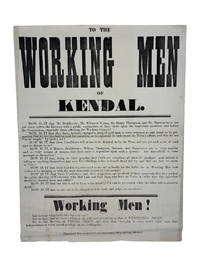
rif. 005230No Place: No Publisher Single sided printed broadside approximately 380mm x 490mm in size no publisher no place but almost certainly Kendal n.d. c.1874. Creased with a couple of small tears to foot a couple of spots of foxing but generally clean. Probably for a municipal election in Kendal in 1874 Henry Thompson stood in the West Ward and Hargreaves in the East Ward. Not in Library Hub. First Edition. Unbound. Good. Elephant Folio. Broadside. No Publisher Paperback
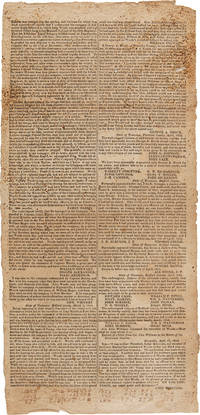
1828rif. 56513N.p. 1828. A Very Rare Broadsheet Attack on Andrew Jackson in 1828 A rare broadside recounting Andrew Jackson's infamous execution of Private John Woods published in 1828 by Jackson's opponents during the 1828 election. There was considerable mud-slinging between the Jackson and Adams camps during that campaign which eventually saw the defeat of incumbent John Quincy Adams and the election of Andrew Jackson. This dense broadside recounts the events of March 1814 at Fort Strother during the Creek Campaign when Jackson charged John Woods an eighteen-year-old militiaman with disobedience disrespect and mutiny. According to the text the trial itself only occurred because Jackson's soldiers would not shoot Woods at the moment of the offense despite Jackson's cries to "Shoot the damned rascal!.blow ten balls through the damned rascal!" The court martial followed soon after; Woods was found guilty and sentenced to die. Some testimonies here state that Jackson offered to spare Woods' life if he would enlist in the regular army but Woods refused; others disagree. He was executed thirty-six hours later. Then follows the sworn testimony of several witnesses: Thomas Couch Robert Ferguson Samuel Hanna George A. Brock Isaac Roberts James Harris William Stewart Joseph Alexander Isaac Anderson Abm. Whitney and John Williams all fellow soldiers of Woods who witnessed or had personal knowledge of the facts in the case. Their accounts of Woods' supposed mutiny substantially downplay the severity of Woods' disobedience suggesting that it was likely a misunderstanding; they also emphasize the draconian nature of the punishment and make several mentions of Woods' aging and infirm parents. Williams' account closes: "It is not true that Woods on the ground of Execution with oaths and defiance refused to promise obedience. On the contrary he wept loud and bitterly." All of the testimonies are datelined in Tennessee in the first few months of 1828. The nature of the printing lends itself to the possibility of a Tennessee press. Though not as famous as the "Coffin Handbills" that appeared at the same time listing Woods' execution among many other crimes by Jackson this was definitely addressed to the same audiences. John Spencer Bassett in his Life of Andrew Jackson notes that the "execution of mutinous militiamen in the campaigns of 1813 and 1814 was recalled to show Jackson's ferocious temper; and when a Philadelphia editor published a hand-bill showing a coffin with the victims standing by its side the idea was caught up eagerly and repeated in all parts of the country." Not in Wise & Cronin and we could find no listing for this broadside in OCLC or in American Imprints. It has only appeared at auction twice and then not since 1925 when Anderson Galleries offered a copy as part of the sale of the Henry De Puy collection which was strong in Andrew Jackson material. The only copy in the trade seems to be one offered by the Eberstadts in 1939. Broadsheet 19 x 9 inches text printed in two columns on both sides. Old folds some chips to edges minor loss to upper left corner and closed tear to bottom edge no text affected. Two small holes affecting just one word a few areas of soiling light foxing even tanning. Manuscript annotations to verso. About very good. unknown books
1828rif. 56513N.p. 1828. A Very Rare Broadsheet Attack on Andrew Jackson in 1828 A rare broadside recounting Andrew Jackson's infamous execution of Private John Woods published in 1828 by Jackson's opponents during the 1828 election. There was considerable mud-slinging between the Jackson and Adams camps during that campaign which eventually saw the defeat of incumbent John Quincy Adams and the election of Andrew Jackson. This dense broadside recounts the events of March 1814 at Fort Strother during the Creek Campaign when Jackson charged John Woods an eighteen-year-old militiaman with disobedience disrespect and mutiny. According to the text the trial itself only occurred because Jackson's soldiers would not shoot Woods at the moment of the offense despite Jackson's cries to "Shoot the damned rascal!.blow ten balls through the damned rascal!" The court martial followed soon after; Woods was found guilty and sentenced to die. Some testimonies here state that Jackson offered to spare Woods' life if he would enlist in the regular army but Woods refused; others disagree. He was executed thirty-six hours later. Then follows the sworn testimony of several witnesses: Thomas Couch Robert Ferguson Samuel Hanna George A. Brock Isaac Roberts James Harris William Stewart Joseph Alexander Isaac Anderson Abm. Whitney and John Williams all fellow soldiers of Woods who witnessed or had personal knowledge of the facts in the case. Their accounts of Woods' supposed mutiny substantially downplay the severity of Woods' disobedience suggesting that it was likely a misunderstanding; they also emphasize the draconian nature of the punishment and make several mentions of Woods' aging and infirm parents. Williams' account closes: "It is not true that Woods on the ground of Execution with oaths and defiance refused to promise obedience. On the contrary he wept loud and bitterly." All of the testimonies are datelined in Tennessee in the first few months of 1828. The nature of the printing lends itself to the possibility of a Tennessee press. Though not as famous as the "Coffin Handbills" that appeared at the same time listing Woods' execution among many other crimes by Jackson this was definitely addressed to the same audiences. John Spencer Bassett in his Life of Andrew Jackson notes that the "execution of mutinous militiamen in the campaigns of 1813 and 1814 was recalled to show Jackson's ferocious temper; and when a Philadelphia editor published a hand-bill showing a coffin with the victims standing by its side the idea was caught up eagerly and repeated in all parts of the country." Not in Wise & Cronin and we could find no listing for this broadside in OCLC or in American Imprints. It has only appeared at auction twice and then not since 1925 when Anderson Galleries offered a copy as part of the sale of the Henry De Puy collection which was strong in Andrew Jackson material. The only copy in the trade seems to be one offered by the Eberstadts in 1939. Broadsheet 19 x 9 inches text printed in two columns on both sides. Old folds some chips to edges minor loss to upper left corner and closed tear to bottom edge no text affected. Two small holes affecting just one word a few areas of soiling light foxing even tanning. Manuscript annotations to verso. About very good. unknown
1845rif. List3867Hanover Furnace New Jersey 1845. 3 pp autograph letter signed "Richard Jones" written on an embossed Henry Clay campaign lettersheet from the 1844 presidential election. Letter written on Henry Clay lettersheet identified as HC-9 in Milgram's reference on presidential letterhead. 8 ¼ x 10 ½ inches. Some small tears to final page intersecting with text; else Near Fine condition. A strong post-election Whig letter written shortly before James K. Polk's inauguration discussing Texas annexation slavery the tariff manufacturing and the defeat of Henry Clay. Jones writes to a friend whose "political heresies" he rejects asking what could have induced "a member of our goodly society of Friends" to support annexation. His objection is not only to territorial expansion but to the political consequences of adding Texas to the Union: "will not her admission secure a free trade & slavery ascendency always in our national councils." He then turns to the tariff from the perspective of a furnace operator or manufacturer worrying that repeal would damage his works and the broader market for manufactured goods. The Clay campaign lettersheet is itself part of the letter's content: Jones calls it paper "with the brand of the last campaign upon it" declares himself "a true Whig" and says he may save some sheets until 1848 though he dislikes "that silly looking coon in the corner." Full text follows. "Hanover Furnace Feby 5 1845 Resp. Friend "For by that term I must continue to call you notwithstanding what I consider your political heresies but you know we do not talk politicks together and I think it is best that we should continue to abstain from them but I should like very much to know what arguments there are weighty enough to induce a member of our goodly society of Friends to vote for the annexation of Texas will not her admission secure a free trade & slavery ascendency always in our national councils. You said when I last saw you that the tariff was not a party question and the open ground that the advocates some of them in this part of the country of I or V. Polk would induce me to believe so but I have not quite found so and although contrary to the advice of some of my friends I have concluded to continue the operations of my works if the tariff is repealed I shall be dished even if the article of is still protected as it is not possible for one branch to be successful whilst the rest are prostrated as it is not so much the keeping out the foreign article that helps us as the customers that general prosperity enables to consume the article manufactured. I did not sit down to write a political letter but would like your judgment with regard to the course which will be pursued by the next administration & congress with regard to the Tariff. "I do not think it requires an apology from me for writing to you upon paper with the brand of the last campaign upon it for you know me to be a true Whig and as such shall keep my Banner flying to the last. I am come of a Welsh tribe who have never been conquered and I think of keeping a few of these sheets until 48 although I do not like that silly looking coon in the corner and I hope by that time that nothing but sterling argument will be used and our congressional candidates will be forced to stump it face to face but I will not tire you with my foolishness. I cannot give you much information as to the tone of Public conversation but I never knew any matter of great importance to be before congress that has excited so little feeling as the annexation of Texas there is not one man in twenty that knows any thing about it. The Whigs beaten and disappointed feel themselves powerless for the present and do not think it worth while to agitate themselves about things they cannot help but let me assure you that they feel themselves only beaten but not conquered and when the occasion comes they will raise in their might mighty and woe unto those who legislate for any other view than the good of their country. But I am like a lady I have come to the postscript before I begin to write about what I commenced for. Mr. Spencer says you have been making some enquiries about some Atkins claims upon McDonald Branch and I have promised Black that I will commence proceedings against him as soon as I have your opinion now if you have formed one upon the subject let me have it if not will you give it your attention when you come home and can also devote some time to the Polebridge affair in the Spring. I am very desirous that should be settled as well as some other things and you are the only man that can do it for me.I remain as I always have been and always hope to be your personal friend Richard Jones" An interesting letter from the aftermath of the 1844 election with unusually direct content on Texas annexation slavery free trade tariff protection and Whig political identity. The letter is also a good use of campaign stationery: Jones not only writes on a Henry Clay lettersheet but comments on the "brand of the last campaign" the Whig "Banner" and the campaign imagery itself. . unknown books
1845rif. List3867Hanover Furnace New Jersey 1845. 3 pp autograph letter signed "Richard Jones" written on an embossed Henry Clay campaign lettersheet from the 1844 presidential election. Letter written on Henry Clay lettersheet identified as HC-9 in Milgram's reference on presidential letterhead. 8 ¼ x 10 ½ inches. Some small tears to final page intersecting with text; else Near Fine condition. A strong post-election Whig letter written shortly before James K. Polk's inauguration discussing Texas annexation slavery the tariff manufacturing and the defeat of Henry Clay. Jones writes to a friend whose "political heresies" he rejects asking what could have induced "a member of our goodly society of Friends" to support annexation. His objection is not only to territorial expansion but to the political consequences of adding Texas to the Union: "will not her admission secure a free trade & slavery ascendency always in our national councils." He then turns to the tariff from the perspective of a furnace operator or manufacturer worrying that repeal would damage his works and the broader market for manufactured goods. The Clay campaign lettersheet is itself part of the letter's content: Jones calls it paper "with the brand of the last campaign upon it" declares himself "a true Whig" and says he may save some sheets until 1848 though he dislikes "that silly looking coon in the corner." Full text follows. "Hanover Furnace Feby 5 1845 Resp. Friend "For by that term I must continue to call you notwithstanding what I consider your political heresies but you know we do not talk politicks together and I think it is best that we should continue to abstain from them but I should like very much to know what arguments there are weighty enough to induce a member of our goodly society of Friends to vote for the annexation of Texas will not her admission secure a free trade & slavery ascendency always in our national councils. You said when I last saw you that the tariff was not a party question and the open ground that the advocates some of them in this part of the country of I or V. Polk would induce me to believe so but I have not quite found so and although contrary to the advice of some of my friends I have concluded to continue the operations of my works if the tariff is repealed I shall be dished even if the article of is still protected as it is not possible for one branch to be successful whilst the rest are prostrated as it is not so much the keeping out the foreign article that helps us as the customers that general prosperity enables to consume the article manufactured. I did not sit down to write a political letter but would like your judgment with regard to the course which will be pursued by the next administration & congress with regard to the Tariff. "I do not think it requires an apology from me for writing to you upon paper with the brand of the last campaign upon it for you know me to be a true Whig and as such shall keep my Banner flying to the last. I am come of a Welsh tribe who have never been conquered and I think of keeping a few of these sheets until 48 although I do not like that silly looking coon in the corner and I hope by that time that nothing but sterling argument will be used and our congressional candidates will be forced to stump it face to face but I will not tire you with my foolishness. I cannot give you much information as to the tone of Public conversation but I never knew any matter of great importance to be before congress that has excited so little feeling as the annexation of Texas there is not one man in twenty that knows any thing about it. The Whigs beaten and disappointed feel themselves powerless for the present and do not think it worth while to agitate themselves about things they cannot help but let me assure you that they feel themselves only beaten but not conquered and when the occasion comes they will raise in their might mighty and woe unto those who legislate for any other view than the good of their country. But I am like a lady I have come to the postscript before I begin to write about what I commenced for. Mr. Spencer says you have been making some enquiries about some Atkins claims upon McDonald Branch and I have promised Black that I will commence proceedings against him as soon as I have your opinion now if you have formed one upon the subject let me have it if not will you give it your attention when you come home and can also devote some time to the Polebridge affair in the Spring. I am very desirous that should be settled as well as some other things and you are the only man that can do it for me.I remain as I always have been and always hope to be your personal friend Richard Jones" An interesting letter from the aftermath of the 1844 election with unusually direct content on Texas annexation slavery free trade tariff protection and Whig political identity. The letter is also a good use of campaign stationery: Jones not only writes on a Henry Clay lettersheet but comments on the "brand of the last campaign" the Whig "Banner" and the campaign imagery itself. . unknown
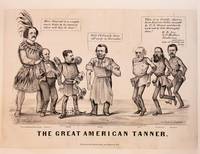
1868rif. 36501New York: Currier & Ives 1868. Lithograph illustrated broadside by Currier & Ives oblong 11" x 15-1/2". Matted. Light dusting Near Fine. Cartoon characters identified by name; in lower right corner "on Stone by Cameron." John Cameron was a talented artist employed at Currier & Ives. In lower left corner "Thos. Worth. Sketch." Worth designed many cartoon broadsides for Currier & Ives. "An election-year cartoon invoking both Grant's humble beginnings as a tanner and his successful Civil War military career. Popular New York governor John Thompson Hoffman dressed as an Indian the 'Great Sachem of Tammany' presents Democratic candidates Horatio Seymour and Francis P. Blair Jr. to Grant. He addresses Grant 'Here General is a couple more hides to be tanned when will they be done' Grant smokes a cigar and wears the leather apron of a tanner rolled-up sleeves exposing his muscular arms. He replies 'Well I'll finish them off early in November.' "At right corner former Confederate generals Robert E. Lee Simon Bolivar Buckner and John C. Pemberton hold their rumps and hop about in pain. They announce 'This is to Certify that we have had our hides tanned and that the work was by him thoroughly done." Reilly AAS's entry asserts "Issued well before 1868 election." Reilly 1868-11. Weitenkampf 159. OCLC 191119896 1- Villanova 1136555720 1- AAS as of October 2024. Currier & Ives unknown books
1868rif. 36501New York: Currier & Ives 1868. Lithograph illustrated broadside by Currier & Ives oblong 11" x 15-1/2". Matted. Light dusting Near Fine. Cartoon characters identified by name; in lower right corner "on Stone by Cameron." John Cameron was a talented artist employed at Currier & Ives. In lower left corner "Thos. Worth. Sketch." Worth designed many cartoon broadsides for Currier & Ives. "An election-year cartoon invoking both Grant's humble beginnings as a tanner and his successful Civil War military career. Popular New York governor John Thompson Hoffman dressed as an Indian the 'Great Sachem of Tammany' presents Democratic candidates Horatio Seymour and Francis P. Blair Jr. to Grant. He addresses Grant 'Here General is a couple more hides to be tanned when will they be done' Grant smokes a cigar and wears the leather apron of a tanner rolled-up sleeves exposing his muscular arms. He replies 'Well I'll finish them off early in November.' "At right corner former Confederate generals Robert E. Lee Simon Bolivar Buckner and John C. Pemberton hold their rumps and hop about in pain. They announce 'This is to Certify that we have had our hides tanned and that the work was by him thoroughly done." Reilly AAS's entry asserts "Issued well before 1868 election." Reilly 1868-11. Weitenkampf 159. OCLC 191119896 1- Villanova 1136555720 1- AAS as of October 2024. Currier & Ives unknown
175811 p. in-8° Musica di Michelangelo Vella, Parole di un brillante socio colombario.
1833rif. AQ25008Birmingham: Printed by William Wood 1833. Seven trimmed woodcut engravings printed on pink paper with a further trimmed title and imprint panel on white paper. Browned and marked. An apparently unknown example of pictorial electoral satire removed from an album by a previous owner where the items were by repute grouped together with the title and imprint panel albeit printed on different paper - suggesting that these perhaps issued in book form but have since sunk without trace. The seven captioned images are: 'Reading the Riot Act' 'A Crane two Walkers and a Barker or the Political Dis-Union' 'A Fry-er setting a trap for the Consumers of Corn and longing for a Broil' 'A Maiden Speech or an Orator and his note book' 'A windfall to the Friars assistant in the shape of a Stoner' 'Cock Robin and Cock Robin's son' 'Negro head short cut pigtail and York returns or a boat about until the ferry no glee' The issues raised including radicalism the corn laws and the riot act all and the reference to a 'new year' election all suggest that these were issued around the time of the 1832/3 General Election; the first conduced after the introduction of the Reform Act which expanded the electorate especially in cities like Birmingham where in this election two radicals were elected unopposed. Entirely unrecorded in OCLC; neither the title nor the captions of any of the seven images elicits any locations in institutional collections. . Dimensions at maximum 100 x 110 mm. Printed by William Wood unknown
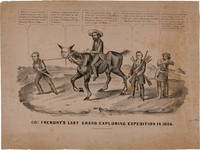
1856rif. 63167New York: Nathaniel Currier 1856. Fremont as an Overland Explorer for the Presidency A cutting satirical cartoon aimed at the great western explorer John C. Fremont and his main supporters in his 1856 bid for the White House. Fremont was the Republican nominee for the presidency and ran on an anti-slavery platform. He was backed by New York Tribune editor Horace Greeley and radical abolitionist minister Henry Ward Beecher. In the image Fremont rides a horse - called the "abolition nag" - that has the face of Greeley. Fremont says "This is pretty hard riding - but if he only carries me to the White house in safety I will forgive my friends for putting me astride of such a crazy Old Hack." The horse is led toward the Salt River a metaphor for political disaster by leading Republican William Seward who proclaims that "Which ever road I travel always brings me to this confounded river I thought we had a sure thing this time on the Bleeding Kansas dodge." Mountains in the background are identified as Kansas and Nebraska. The Greeley-headed horse addresses Seward: "Seward it seems to me we are going the same Road we did in 'fifty two' but as long as you lead I'll follow if I 'go it blind.'" Henry Ward Beecher who was known to have furnished antislavery emigrants with firearms to participate in the Kansas struggles follows behind Fremont's horse his arms laden with rifles. A mountain man - evoking Fremont's exploring past - cautions the Pathfinder: "Ah! Colonel - you've got into a bad crowd - you'll find that dead Horse on the prairie is better for the Constitution than Abolition Soup or Wooly head stew in the White house." The embossed seal to the bottom left corner is that of F.A. Caspari of Baltimore "Dealer in Books & Stationery." This print is scarce. The Currier & Ives catalogue raisonné locates only the copies at the Chicago Historical Society and the Library of Congress. OCLC adds only two copies one at the American Antiquarian Society and another at the University of Rochester. A fine satirical print of John Fremont and his abolitionist supporters in the 1856 presidential election. Light even tanning lightly foxed. Old vertical fold running the length of right edge. Closed tears with repairs to the right and left edges plus small closed tear to top right edge along fold. Contemporary dealer's embossed seal to bottom left corner. Three small pieces of linen tape to top of the verso some discoloration from old tape since removed on verso. Very good. REILLY AMERICAN POLITICAL PRINTS 1856-20. WEITENKAMPF p.117. PETERS CURRIER & IVES 1635a. GALE CURRIER & IVES: A CATALOGUE RAISONNÉ 1309. OCLC 192110863. OCLC 1136567691. unknown books
1856rif. 63167New York: Nathaniel Currier 1856. Fremont as an Overland Explorer for the Presidency A cutting satirical cartoon aimed at the great western explorer John C. Fremont and his main supporters in his 1856 bid for the White House. Fremont was the Republican nominee for the presidency and ran on an anti-slavery platform. He was backed by New York Tribune editor Horace Greeley and radical abolitionist minister Henry Ward Beecher. In the image Fremont rides a horse - called the "abolition nag" - that has the face of Greeley. Fremont says "This is pretty hard riding - but if he only carries me to the White house in safety I will forgive my friends for putting me astride of such a crazy Old Hack." The horse is led toward the Salt River a metaphor for political disaster by leading Republican William Seward who proclaims that "Which ever road I travel always brings me to this confounded river I thought we had a sure thing this time on the Bleeding Kansas dodge." Mountains in the background are identified as Kansas and Nebraska. The Greeley-headed horse addresses Seward: "Seward it seems to me we are going the same Road we did in 'fifty two' but as long as you lead I'll follow if I 'go it blind.'" Henry Ward Beecher who was known to have furnished antislavery emigrants with firearms to participate in the Kansas struggles follows behind Fremont's horse his arms laden with rifles. A mountain man - evoking Fremont's exploring past - cautions the Pathfinder: "Ah! Colonel - you've got into a bad crowd - you'll find that dead Horse on the prairie is better for the Constitution than Abolition Soup or Wooly head stew in the White house." The embossed seal to the bottom left corner is that of F.A. Caspari of Baltimore "Dealer in Books & Stationery." This print is scarce. The Currier & Ives catalogue raisonné locates only the copies at the Chicago Historical Society and the Library of Congress. OCLC adds only two copies one at the American Antiquarian Society and another at the University of Rochester. A fine satirical print of John Fremont and his abolitionist supporters in the 1856 presidential election. Light even tanning lightly foxed. Old vertical fold running the length of right edge. Closed tears with repairs to the right and left edges plus small closed tear to top right edge along fold. Contemporary dealer's embossed seal to bottom left corner. Three small pieces of linen tape to top of the verso some discoloration from old tape since removed on verso. Very good. REILLY AMERICAN POLITICAL PRINTS 1856-20. WEITENKAMPF p.117. PETERS CURRIER & IVES 1635a. GALE CURRIER & IVES: A CATALOGUE RAISONNÉ 1309. OCLC 192110863. OCLC 1136567691. unknown