BLUM, LéonLivre Rare Book
1177 risultati
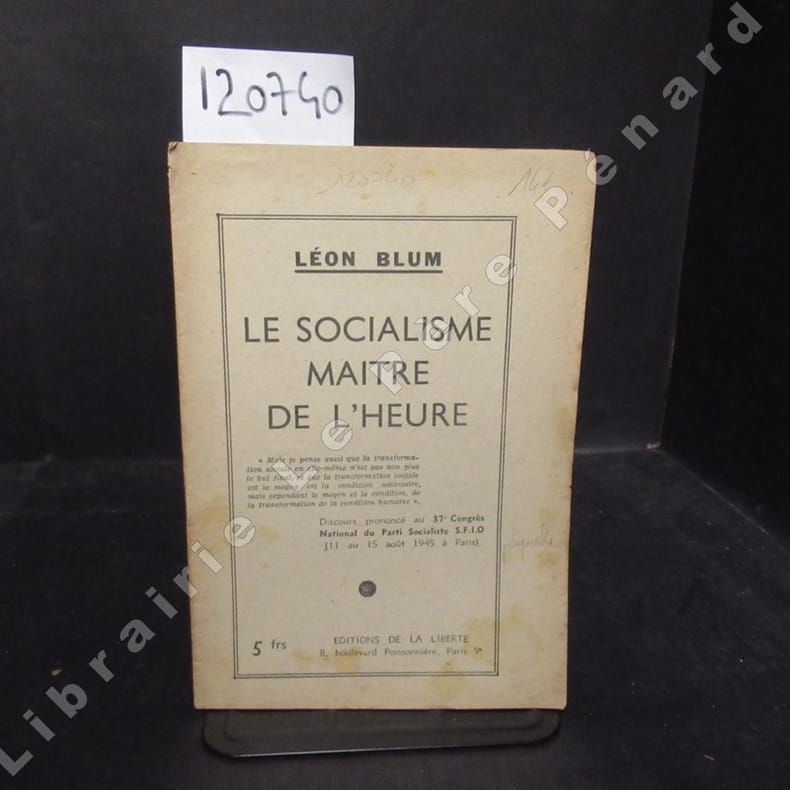
1945rif. 1207401945 Editions de la Liberté - 1945 - Petit in-8, broché - 14 p.
rif. 70471Moscou, éd. Agance de presse Novosti, 1974, in-16, cartonnage souple, couv. texte en noir sur fond blanc et rouge éd., 96 pp., très nb. photos en noir, table des matières, Comment fonctionnennent les élections en Union Soviétique ? Très bon état
1977rif. 84349Washington DC: The Federal Election Commission 1977. Presumed First Edition First printing. Hardcover. Very good/No DJ present. Format is approximately 8.75 inches by 11.25 inches. v 1 1223 3 pages. Some edge soiling. Some cover soiling. Sticker residue on spine location code--no signs that this is a formal ex-library copy. Bottom corner of pages 1211-1212 trimmed. Subject Index to Legislative History. Index to Days of Congressional Debate. The contents include: S. 3044; Report to Accompany S. 3044; Senate Floor Debates on S. 3044; H. R. 16090; Report to Accompany H. R. 16090; House Floor Debates on H.R. 16090; Report of Committee of Conference; Senate Floor Debate on Conference Report; House Floor Debate on Conference Report; President Ford's Remarks at Bill Signing Ceremony; and Public Law 93-443. Oversized book that would require additional shipping charges if sent overseas. The Federal Election Commission FEC is the independent regulatory agency charged with administering and enforcing the federal campaign finance law. The FEC has jurisdiction over the financing of campaigns for the U.S. House Senate Presidency and the Vice Presidency. In 1971 Congress consolidated its earlier reform efforts in the Federal Election Campaign Act instituting more stringent disclosure requirements for federal candidates political parties and political action committees PACs. Still without a central administrative authority the campaign finance laws were difficult to enforce. Following reports of serious financial abuses in the 1972 presidential campaign Congress amended the Federal Election Campaign Act in 1974 to set limits on contributions by individuals political parties and PACs. The 1974 amendments also established an independent agency the FEC. The FEC opened its doors in 1975. Not until 1974 following the documentation of campaign abuses in the 1972 Presidential elections did a consensus emerge to create an independent body to ensure compliance with the campaign finance laws. Comprehensive amendments to the FECA P.L. No. 93-443 established the Federal Election Commission an independent agency to assume the administrative functions previously divided between Congressional officers and GAO. The Commission was given jurisdiction in civil enforcement matters authority to write regulations and responsibility for monitoring compliance with the FECA. Additionally the amendments transferred from GAO to the Commission the function of serving as a national clearinghouse for information on the administration of elections. Under the 1974 amendments the President the Speaker of the House and the President pro tempore of the Senate each appointed two of the six voting Commissioners. The Secretary of the Senate and the Clerk of the House were designated nonvoting ex-officio Commissioners. The first Commissioners were sworn in on April 14 1975. The 1974 amendments also completed the system currently used for the public financing of Presidential elections. The amendments provided for partial Federal funding in the form of matching funds for Presidential primary candidates and also extended public funding to political parties to finance their Presidential nominating conventions. Complementing these provisions Congress also enacted strict limits on both contributions and expenditures. These limits applied to all candidates for Federal office and to political committees influencing Federal elections. Another amendment relaxed a 1939 prohibition on contributions from Federal government contractors. The FECA as amended now permitted corporations and unions with Federal contracts to establish and operate PACs. The Federal Election Commission hardcover
1977rif. 84350Washington DC: The Federal Election Commission 1977. Presumed First Edition First printing. Hardcover. Very good/No DJ present. Format is approximately 8.75 inches by 11.25 inches. v 1 1198 4 pages. Some edge soiling. Some cover soiling. Sticker residue on spine location code--no signs that this is a formal ex-library copy. Subject Index to Legislative History. Index to Days of Congressional Debate. The contents include: Federal Election Campaign Act Amendments of 1976 S. 3065; Report to Accompany S. 3065; Senate Floor Debates on S. 3065; H. R. 12406; Report to Accompany H. R. 12406; House Floor Debates on H.R. 12406; Report of Committee of Conference; House and Senate Floors Debate on Conference Report; President Ford's Remarks at Bill Signing Ceremony; and Public Law 93-283. Oversized book that would require additional shipping charges if sent overseas. The Federal Election Commission FEC is the independent regulatory agency charged with administering and enforcing the federal campaign finance law. The FEC has jurisdiction over the financing of campaigns for the U.S. House Senate Presidency and the Vice Presidency. In 1971 Congress consolidated its earlier reform efforts in the Federal Election Campaign Act FECA instituting more stringent disclosure requirements for federal candidates political parties and political action committees PACs. Still without a central administrative authority the campaign finance laws were difficult to enforce. FECA has been amended in 1976 after the Supreme Court struck down several provisions as unconstitutional in Buckley v. Valeo. Buckley v. Valeo 424 U.S. 1 1976 was a landmark decision of the US Supreme Court on campaign finance. A majority of justices held that as provided by section 608 of the Federal Election Campaign Act of 1971 limits on election expenditures are unconstitutional. In a per curiam by the Court opinion they ruled that expenditure limits contravene the First Amendment provision on freedom of speech because a restriction on spending for political communication necessarily reduces the quantity of expression. It limited disclosure provisions and limited the Federal Election Commission's power. By some measures Buckley is the longest opinion ever issued by the Supreme Court. The Federal Election Commission hardcover
1927rif. 1238701927 Les Cahiers de l'Ordre - Numéro spécial pour les élections - 1927 - In-8 broché - 79 pages - Ouvrage dressant la liste des parlementaires francs-maçons
1956rif. REG2716ML'entre deux guerres. Editions Mont-de-Marsan. 1956. In-8° broché, 98pp.
1956rif. REG2717MEditions Mont-de-Marsan. 1957. In-8° broché, 120pp.
1996rif. PALESTINEEE90623Centre d'Etudes et de Recherches sur le Moyen-orient Contemporain, "Les Cahiers du CERMOC" n° 22, 17,5 x 24, 1999, 452 pages cousues sous couverture souple illustrée.
rif. 88353Paris, Armand Colin, 1934. 11 x 17, 223 pp., broché, partiellement coupé, bon état.
2013rif. FRHIST77813Paris, La documentation française, "Les études", 2013, 16 x 24, 214 pages sous couverture illustrée.
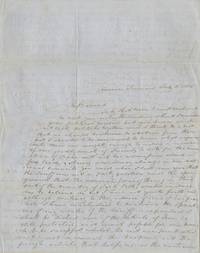
1845rif. List3867Hanover Furnace New Jersey 1845. 3 pp autograph letter signed "Richard Jones" written on an embossed Henry Clay campaign lettersheet from the 1844 presidential election. Letter written on Henry Clay lettersheet identified as HC-9 in Milgram's reference on presidential letterhead. 8 ¼ x 10 ½ inches. Some small tears to final page intersecting with text; else Near Fine condition. A strong post-election Whig letter written shortly before James K. Polk's inauguration discussing Texas annexation slavery the tariff manufacturing and the defeat of Henry Clay. Jones writes to a friend whose "political heresies" he rejects asking what could have induced "a member of our goodly society of Friends" to support annexation. His objection is not only to territorial expansion but to the political consequences of adding Texas to the Union: "will not her admission secure a free trade & slavery ascendency always in our national councils." He then turns to the tariff from the perspective of a furnace operator or manufacturer worrying that repeal would damage his works and the broader market for manufactured goods. The Clay campaign lettersheet is itself part of the letter's content: Jones calls it paper "with the brand of the last campaign upon it" declares himself "a true Whig" and says he may save some sheets until 1848 though he dislikes "that silly looking coon in the corner." Full text follows. "Hanover Furnace Feby 5 1845 Resp. Friend "For by that term I must continue to call you notwithstanding what I consider your political heresies but you know we do not talk politicks together and I think it is best that we should continue to abstain from them but I should like very much to know what arguments there are weighty enough to induce a member of our goodly society of Friends to vote for the annexation of Texas will not her admission secure a free trade & slavery ascendency always in our national councils. You said when I last saw you that the tariff was not a party question and the open ground that the advocates some of them in this part of the country of I or V. Polk would induce me to believe so but I have not quite found so and although contrary to the advice of some of my friends I have concluded to continue the operations of my works if the tariff is repealed I shall be dished even if the article of is still protected as it is not possible for one branch to be successful whilst the rest are prostrated as it is not so much the keeping out the foreign article that helps us as the customers that general prosperity enables to consume the article manufactured. I did not sit down to write a political letter but would like your judgment with regard to the course which will be pursued by the next administration & congress with regard to the Tariff. "I do not think it requires an apology from me for writing to you upon paper with the brand of the last campaign upon it for you know me to be a true Whig and as such shall keep my Banner flying to the last. I am come of a Welsh tribe who have never been conquered and I think of keeping a few of these sheets until 48 although I do not like that silly looking coon in the corner and I hope by that time that nothing but sterling argument will be used and our congressional candidates will be forced to stump it face to face but I will not tire you with my foolishness. I cannot give you much information as to the tone of Public conversation but I never knew any matter of great importance to be before congress that has excited so little feeling as the annexation of Texas there is not one man in twenty that knows any thing about it. The Whigs beaten and disappointed feel themselves powerless for the present and do not think it worth while to agitate themselves about things they cannot help but let me assure you that they feel themselves only beaten but not conquered and when the occasion comes they will raise in their might mighty and woe unto those who legislate for any other view than the good of their country. But I am like a lady I have come to the postscript before I begin to write about what I commenced for. Mr. Spencer says you have been making some enquiries about some Atkins claims upon McDonald Branch and I have promised Black that I will commence proceedings against him as soon as I have your opinion now if you have formed one upon the subject let me have it if not will you give it your attention when you come home and can also devote some time to the Polebridge affair in the Spring. I am very desirous that should be settled as well as some other things and you are the only man that can do it for me.I remain as I always have been and always hope to be your personal friend Richard Jones" An interesting letter from the aftermath of the 1844 election with unusually direct content on Texas annexation slavery free trade tariff protection and Whig political identity. The letter is also a good use of campaign stationery: Jones not only writes on a Henry Clay lettersheet but comments on the "brand of the last campaign" the Whig "Banner" and the campaign imagery itself. . unknown
1845rif. List3867Hanover Furnace New Jersey 1845. 3 pp autograph letter signed "Richard Jones" written on an embossed Henry Clay campaign lettersheet from the 1844 presidential election. Letter written on Henry Clay lettersheet identified as HC-9 in Milgram's reference on presidential letterhead. 8 ¼ x 10 ½ inches. Some small tears to final page intersecting with text; else Near Fine condition. A strong post-election Whig letter written shortly before James K. Polk's inauguration discussing Texas annexation slavery the tariff manufacturing and the defeat of Henry Clay. Jones writes to a friend whose "political heresies" he rejects asking what could have induced "a member of our goodly society of Friends" to support annexation. His objection is not only to territorial expansion but to the political consequences of adding Texas to the Union: "will not her admission secure a free trade & slavery ascendency always in our national councils." He then turns to the tariff from the perspective of a furnace operator or manufacturer worrying that repeal would damage his works and the broader market for manufactured goods. The Clay campaign lettersheet is itself part of the letter's content: Jones calls it paper "with the brand of the last campaign upon it" declares himself "a true Whig" and says he may save some sheets until 1848 though he dislikes "that silly looking coon in the corner." Full text follows. "Hanover Furnace Feby 5 1845 Resp. Friend "For by that term I must continue to call you notwithstanding what I consider your political heresies but you know we do not talk politicks together and I think it is best that we should continue to abstain from them but I should like very much to know what arguments there are weighty enough to induce a member of our goodly society of Friends to vote for the annexation of Texas will not her admission secure a free trade & slavery ascendency always in our national councils. You said when I last saw you that the tariff was not a party question and the open ground that the advocates some of them in this part of the country of I or V. Polk would induce me to believe so but I have not quite found so and although contrary to the advice of some of my friends I have concluded to continue the operations of my works if the tariff is repealed I shall be dished even if the article of is still protected as it is not possible for one branch to be successful whilst the rest are prostrated as it is not so much the keeping out the foreign article that helps us as the customers that general prosperity enables to consume the article manufactured. I did not sit down to write a political letter but would like your judgment with regard to the course which will be pursued by the next administration & congress with regard to the Tariff. "I do not think it requires an apology from me for writing to you upon paper with the brand of the last campaign upon it for you know me to be a true Whig and as such shall keep my Banner flying to the last. I am come of a Welsh tribe who have never been conquered and I think of keeping a few of these sheets until 48 although I do not like that silly looking coon in the corner and I hope by that time that nothing but sterling argument will be used and our congressional candidates will be forced to stump it face to face but I will not tire you with my foolishness. I cannot give you much information as to the tone of Public conversation but I never knew any matter of great importance to be before congress that has excited so little feeling as the annexation of Texas there is not one man in twenty that knows any thing about it. The Whigs beaten and disappointed feel themselves powerless for the present and do not think it worth while to agitate themselves about things they cannot help but let me assure you that they feel themselves only beaten but not conquered and when the occasion comes they will raise in their might mighty and woe unto those who legislate for any other view than the good of their country. But I am like a lady I have come to the postscript before I begin to write about what I commenced for. Mr. Spencer says you have been making some enquiries about some Atkins claims upon McDonald Branch and I have promised Black that I will commence proceedings against him as soon as I have your opinion now if you have formed one upon the subject let me have it if not will you give it your attention when you come home and can also devote some time to the Polebridge affair in the Spring. I am very desirous that should be settled as well as some other things and you are the only man that can do it for me.I remain as I always have been and always hope to be your personal friend Richard Jones" An interesting letter from the aftermath of the 1844 election with unusually direct content on Texas annexation slavery free trade tariff protection and Whig political identity. The letter is also a good use of campaign stationery: Jones not only writes on a Henry Clay lettersheet but comments on the "brand of the last campaign" the Whig "Banner" and the campaign imagery itself. . unknown books
12mo, small hole in first leaf with the loss of the word 'to' in the drop-head title, 8pp., disbound. Relates to 1803 contested Nottingham election between Daniel P. Coke and J. Birch. University of Nottingham copy only on Copac.
rif. 8525Paris, de l’imprimerie Royale, le 24 janvier 1789. Placard in folio, 565x860mm.Sur papier fort. Texte sur 4 colonnes séparées par un filet noir. Pliures, ainsi qu’une mouillure (sans gravité). Il s’agit de l’acte initial de la Révolution Française. La détresse financière à la veille de la Révolution. Il ne se trouve plus personne qui veuille prêter au ROI et les privilèges résistent opiniâtrement à toute création d’impôt les atteignant dans leur privilège ; le gouvernement de Louis XVI se trouve ainsi acculé à la nécessité de s’adresser à la Nation pour en obtenir de l’argent et convoquer pour cela, les Etats-Généraux. Cette convocation, aboutissement d’un conflit d’ordre fiscal entre le ROI et les privilégiés, est l’acte décisif qui ouvre l’ère Révolutionnaire. Les privilégiés, en la réclamant, le ROI en l’accordant, fournissent à la Nation l’instrument nécessaire avec lequel elle va faire la REVOLUTION. Cette grande affiche règle les modalités d'élection des députés aux Etas-Généraux et la confection des cahiers de doléances. Rare et précieux document
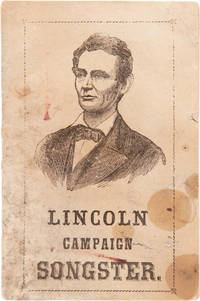
1864rif. 62679Philadelphia: Published by Mason & Co. 1864. Singing for Lincoln in '64 A pocket songster printed to support Lincoln's reelection campaign in 1864 featuring a rather youthful portrait of the president on the front wrapper and twelve spirited pro-Union songs. The titles largely military in theme include such works as "Give us Noble Leaders" "The Veteran Volunteer" "Cast Your Votes for Abraham" "For Lincoln or McClellan you'll be called on to decide/ The one to save the union the other to divide" and "We are Coming Father Abraham 600000 More." The advertisements on the rear wrapper encourage readers to purchase a wide variety of Lincoln campaign badges emblems pins and photographs from the publishers. Despite Lincoln's overwhelming electoral victory in 1864 the race was rather close in Pennsylvania where this was printed – Lincoln took Philadelphia County by a scant few percent and actually failed to secure a majority in neighboring Montgomery and Bucks counties. 16mo. Original pictorial wrappers. Wrappers soiled and stained. Largely clean internally. Advertisements on rear wrapper shaved slightly at outer edge as issued. Good plus. MONAGHAN 323. unknown
1864rif. 62679Philadelphia: Published by Mason & Co. 1864. Singing for Lincoln in '64 A pocket songster printed to support Lincoln's reelection campaign in 1864 featuring a rather youthful portrait of the president on the front wrapper and twelve spirited pro-Union songs. The titles largely military in theme include such works as "Give us Noble Leaders" "The Veteran Volunteer" "Cast Your Votes for Abraham" "For Lincoln or McClellan you'll be called on to decide/ The one to save the union the other to divide" and "We are Coming Father Abraham 600000 More." The advertisements on the rear wrapper encourage readers to purchase a wide variety of Lincoln campaign badges emblems pins and photographs from the publishers. Despite Lincoln's overwhelming electoral victory in 1864 the race was rather close in Pennsylvania where this was printed – Lincoln took Philadelphia County by a scant few percent and actually failed to secure a majority in neighboring Montgomery and Bucks counties. 16mo. Original pictorial wrappers. Wrappers soiled and stained. Largely clean internally. Advertisements on rear wrapper shaved slightly at outer edge as issued. Good plus. MONAGHAN 323. unknown books
rif. 0666198322.Ghardcover. Good. Access codes and supplements are not guaranteed with used items. May be an ex-library book. hardcover
rif. 1333790848.Gpaperback. Good. Access codes and supplements are not guaranteed with used items. May be an ex-library book. paperback
rif. 0365798142.Ghardcover. Good. Access codes and supplements are not guaranteed with used items. May be an ex-library book. hardcover
rif. 0365775649.Gpaperback. Good. Access codes and supplements are not guaranteed with used items. May be an ex-library book. paperback
rif. 0666238278.Ghardcover. Good. Access codes and supplements are not guaranteed with used items. May be an ex-library book. hardcover
rif. 026590482X.Ghardcover. Good. Access codes and supplements are not guaranteed with used items. May be an ex-library book. hardcover
rif. 0526351403.Gpaperback. Good. Access codes and supplements are not guaranteed with used items. May be an ex-library book. paperback
rif. 0526351381.Gpaperback. Good. Access codes and supplements are not guaranteed with used items. May be an ex-library book. paperback