[JOURNALISM - Underground Press - Seattle] DORPAT, Paul with John Cunnick, Walt Crowley, et al (eds)Biblio.com

1969rif. 9192Seattle: Helix 1969. First Printing. Tabloid Newspaper. Very Good. Bevis Walt Crowley. Tabloid printed on newsprint measuring 11.5 x 15 inches. Pp. 20 including covers. Cover wrap printed in color. Light age-toning to edges some chipped corners and torn edges otherwise a fresh copy. An issue of the Seattle hippie rag with articles on Woodstock the Sky River Rock Fest and an interview with musicans Gram Parsons and Chris Hillman of the group The Flying Burrito Brothers. Rear cover features a scene of a band including a naked man performing at the Sky River Rock Fest. In late spring 1967 Helix joined a burgeoning underground press then including groundbreaking alternative papers the East Village Other the Los Angeles Free Press the Fifth Estate and the Berkeley Barb. Founded by Paul Sawyer Paul Dorpat and Lorenzo Milam it sprang from their intellectual fervor at the Free University an alternative thinktank they also founded. Eventually star-illustrator Walt Crowley assumed editorship. A pebble in the shoe of Seattle establishment the "hip rag" brought attention to civic injustice by rallying its youthful readership to activism. The apogee of that effort followed the 1970 killing of students at Kent State: over the course of May 5-8 Helix organized protests that blocked US Interstate 5 while marching between the University District and rallies at the Federal Courthouse in downtown Seattle. Protected in a removable clear sleeve with acid-free backing. . Helix unknown
1969rif. 9190Seattle: Helix 1969. First Printing. Tabloid Newspaper. Very Good. Bevis Walt Crowley. Tabloid printed on newsprint measuring 11.5 x 15 inches. Pp. 24 including covers. Cover wrap and center spread printed in color. Some age-toning to edges some torn edges otherwise a fresh copy. An issue of the Seattle alternative rag with several articles on tensions between hippies and others in Seattle's University District highlighting the history of these conflicts and ongoing negotiations to alleviate them. Rear cover features an ad for the Sky River Rock Festival and Lighter Than Air Fair. In late spring 1967 Helix joined a burgeoning underground press then including groundbreaking alternative papers the East Village Other the Los Angeles Free Press the Fifth Estate and the Berkeley Barb. Founded by Paul Sawyer Paul Dorpat and Lorenzo Milam it sprang from their intellectual fervor at the Free University an alternative thinktank they also founded. Eventually star-illustrator Walt Crowley assumed editorship. A pebble in the shoe of Seattle establishment the "hip rag" brought attention to civic injustice by rallying its youthful readership to activism. The apogee of that effort followed the 1970 killing of students at Kent State: over the course of May 5-8 Helix organized protests that blocked US Interstate 5 while marching between the University District and rallies at the Federal Courthouse in downtown Seattle. Housed in a removable clear sleeve with an acid-free backing. Helix unknown
1969rif. 9196Seattle: Helix 1969. First Printing. Tabloid Newspaper. Very Good. Walt Crowley. Tabloid printed on newsprint measuring 11.5 x 15 inches. Pp. 20 including covers. Wraps printed in color. Light age toning and minor wear to edges. A solid copy of the Seattle underground paper featuring an article on Huey P. Newton and Bobby Seale and an Ad for the Moody Blues at the Seattle Center Arena. The rear cover reprints a 1942 broadside demanding that Japanese Americans report to a "Civil control station" at San Francisco's Presidio. Helix joined a burgeoning underground press then including groundbreaking alternative papers the East Village Other the Los Angeles Free Press the Fifth Estate and the Berkeley Barb. Founded by Paul Sawyer Paul Dorpat and Lorenzo Milam it sprang from their intellectual fervor at the Free University an alternative thinktank they also founded. Eventually star-illustrator Walt Crowley assumed editorship. A pebble in the shoe of Seattle establishment the "hip rag" brought attention to civic injustice by rallying its youthful readership to activism. The apogee of that effort followed the 1970 killing of students at Kent State: over the course of May 5-8 Helix organized protests that blocked US Interstate 5 while marching between the University District and rallies at the Federal Courthouse in downtown Seattle. This issue is housed in a removable clear sleeve with an acid-free backing. . Helix unknown
1967rif. 8481Seattle: Helix 1967. First Printing. Tabloid Newspaper. Very Good. Walt Crowley Gary Eagle John Cunnick. Tabloid printed on newsprint measuring 11.5 x 17.5 inches. Pp. 12 including covers. Front and rear covers printed in color. Age toning to edges; lower fore-edge corner a tad crimped. An early issue of Seattle's underground hippie rag featuring a Walt Crowley color illustration with a mushroom cloud a screaming child on a TV set and a dystopian rubble; on the dos-a-dos cover by Gary Eagle is a bare-breasted hippie chick sitting in a blissful state. With an article on the recent Grateful Dead drug bust an upcoming Lightnin' Hopkins show at the Seattle Folklore Society and an article on Seattle's fresh crop of young junkies. Ads include one for Chrome Syrcus Magic Fern opening at Eagles Auditorium. In late spring 1967 Helix joined a burgeoning underground press then including groundbreaking alternative papers the East Village Other the Los Angeles Free Press the Fifth Estate and the Berkeley Barb. Founded by Paul Sawyer Paul Dorpat and Lorenzo Milam it sprang from their intellectual fervor at the Free University an alternative thinktank they also founded. Eventually star-illustrator Walt Crowley assumed editorship. A pebble in the shoe of the Seattle establishment Helix brought attention to civic injustice by rallying its youthful readership to activism. The apogee of that effort followed the 1970 killing of students at Kent State: over the course of May 5-8 Helix organized protests that blocked US Interstate 5 while marching between the city's University District and rallies at the Federal Courthouse in downtown Seattle. Early issues are increasingly scarce. This copy is housed in a removable clear sleeve with an acid-free backing. . Helix unknown
1969rif. 8820Seattle: Helix 1969. First Printing. Tabloid Newspaper. Very Good. Maryl Clemmens Walt Crowley Gary Finholt. Tabloid printed black on newsprint measuring 11.25 x 17.5 inches. Pp. 27 including covers. Horizontal fold now mellowed; light age-toning to edges. An issue of the Seattle underground bi-weekly with articles on the moon landing multiple the self-expression of army officers the Black Panther Party's first national United Front Against Fascism conference and a profile of "Karma" magazine. With an ad for the Seattle Pop Festival Gold Creek Park Woodinville. Rear cover advertises the first US tour of "Blind Faith' featuring Eric Clapton Steve Winwood Ginger Baker and Rick Grech. Helix joined a burgeoning underground press then including groundbreaking alternative papers the East Village Other the Los Angeles Free Press the Fifth Estate and the Berkeley Barb. Founded by Paul Sawyer Paul Dorpat and Lorenzo Milam it sprang from their intellectual fervor at the Free University an alternative thinktank they also founded. Eventually star-illustrator Walt Crowley assumed editorship. A pebble in the shoe of Seattle establishment the "hip rag" brought attention to civic injustice by rallying its youthful readership to activism. The apogee of that effort followed the 1970 killing of students at Kent State: over the course of May 5-8 Helix organized protests that blocked US Interstate 5 while marching between the University District and rallies at the Federal Courthouse in downtown Seattle. Early issues are increasingly scarce. This copy is housed in a removable clear sleeve with an acid-free backing. . Helix unknown
1969rif. 8828Seattle: Helix 1969. First Printing. Tabloid Newspaper. Very Good. Maryl Clemmens Walt Crowley Gary Finholt. Tabloid printed black on newsprint measuring 11.25 x 17.5 inches. Pp. 28 including covers. Edges lightly age-toned. A well preserved copy. An issue of the Seattle underground bi-weekly with articles on a Portland meeting of the Black Panther Party the Victorian architecture of Port Townsend efforts to save Pike Place Market from redevelopment and film reviews including John Wayne's "True Grit." Rear cover advertises a memorial for Wharton T Funk. Helix joined a burgeoning underground press then including groundbreaking alternative papers the East Village Other the Los Angeles Free Press the Fifth Estate and the Berkeley Barb. Founded by Paul Sawyer Paul Dorpat and Lorenzo Milam it sprang from their intellectual fervor at the Free University an alternative thinktank they also founded. Eventually star-illustrator Walt Crowley assumed editorship. A pebble in the shoe of Seattle establishment the "hip rag" brought attention to civic injustice by rallying its youthful readership to activism. The apogee of that effort followed the 1970 killing of students at Kent State: over the course of May 5-8 Helix organized protests that blocked US Interstate 5 while marching between the University District and rallies at the Federal Courthouse in downtown Seattle. Early issues are increasingly scarce. This copy is housed in a removable clear sleeve with an acid-free backing. . Helix unknown
rif. 0548712379.Gpaperback. Good. Access codes and supplements are not guaranteed with used items. May be an ex-library book. paperback
rif. 9589442846.Gpaperback. Good. Access codes and supplements are not guaranteed with used items. May be an ex-library book. paperback
rif. 0394462742.Ghardcover. Good. Access codes and supplements are not guaranteed with used items. May be an ex-library book. hardcover
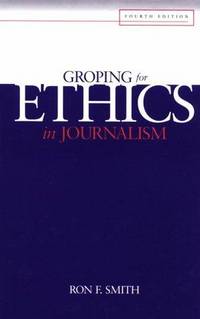
rif. G12L-0013Iowa State University Press. Used - Good. Good condition. A copy that has been read but remains intact. May contain markings such as bookplates stamps limited notes and highlighting or a few light stains. Iowa State University Press unknown
rif. 0313261784.Ghardcover. Good. Access codes and supplements are not guaranteed with used items. May be an ex-library book. hardcover
rif. 54337169like new. unknown
1870rif. 45149London: s.i. 1870. Very Good. London: s.i. ca. 1870s. Small broadside flyer 20x13.5cm printed on laid paper. A few small closed tears at previous folds light soil and spotting else Very Good. Unrecorded broadside poking fun at the press and an England awash in the different newspapers that mushroomed throughout the middle of the 19th century--national local daily women's art science sports religious--and all providing wildly different takes on the same story. The handbill lists the opinions of twenty-two newspapers "upon the subject of the text which tells you that Jacob kissed Rachel and lifted up his voice and wept." The Daily Telegraph states "If Rachel was a pretty girl and kept her face clean we can't see what Jacob had to cry about" while the Jewish Chronicle surmises that "He wept for joy because it tasted so good" in direct contradiction with the British Standard which reports that "We reckon Jacob cried because Rachel had been eating onions." Not separately catalogued in OCLC or Library Hub as of August 2025. s.i. unknown
rif. 1341685802.Ghardcover. Good. Access codes and supplements are not guaranteed with used items. May be an ex-library book. hardcover
rif. 53918550like new. unknown
rif. 53918550-nnew. unknown
rif. 54337169-nnew. unknown
rif. 016739London UK: The London School of Journalism. Hardcover. Good/No Jacket. 4to - over 9¾ - 12" tall. Red cloth boards with leather spine with gilt title to spine. Page edges marbled. 14 lessons. Text on one side of pages only. Page not numbered. Some writing - letters & numbers-- at the top of at least three of the pages. Minor foxing. The London School of Journalism hardcover
rif. B9781013913037Hardback. New. hardcover
rif. 69-1967Berkeley: Graduate School of Journalism University of California Berkeley 1993. 8vo. circa 50 pp. Soft Cover Very Good. B&W Plates. Berkeley: Graduate School of Journalism, University of California, Berkeley, 1993. paperback
rif. 1628475404.Ghardcover. Good. Access codes and supplements are not guaranteed with used items. May be an ex-library book. hardcover
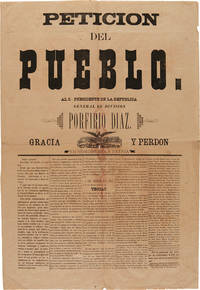
1890rif. 55735N.p. but Puebla: Tip. Rinconada de Manzanares ca.1890s. Broadside Calling for Porfirio Díaz to Pardon Journalists and Political Prisoners An apparently unrecorded broadside from Mexico printed during the reign of President Porfirio Díaz who served a total of thirty-one years as the chief executive and effectively the dictator of Mexico. As with other dictatorial regimes Díaz had a contentious and sometimes violent relationship with the press. He is known to have very occasionally condoned if not initiated the murder and imprisonment of journalists though he also often courted journalists to give them the impression that he was on their side expecting support in return. As a result Diaz often favored imprisonment over the outright assassination of journalists. During his dictatorship Díaz sent numerous dissident politicians and journalists to the prisons of Belén or San Juan de Ulúa though being sent to the former was widely considered tantamount to a death sentence anyway. Journalists and political enemies were just two groups subject to Díaz's theory of rule - that cruel means though unfortunate were justified by the end result of national progress. The present broadside calls for clemency from Díaz in his dealings with imprisoned journalists and politicians. The author of the broadside mentions past injustices related to journalists and political prisoners. In the first column the text mentions Ignacio Ramirez and his pen name "el Nigromante;" Ramirez was a liberal writer and thinker who often defended the rights of indigenous peoples in Mexico. Here the author accuses the conservative party of trying to intimidate Ramirez and many others like him by putting "the hand of an enraged hitman on the neck of the liberal journalist." a rough translation. The text also references the Third Battle of Puebla fought on April 2 1867 and won by Porfirio Díaz. At the conclusion of that battle instead of executing the imperialist Mexican prisoners Díaz released them after they signed a promise not to take up further arms against the Mexican republic. The text appeals to Díaz's demonstrated sense of mercy and reads in part and in English translation: "We the members of the working class know well and have witnessed your energetic courage in the battlefields as an intrepid and worthy son of Mars but now also this time we do not demand but we beg to have the happiness and satisfaction to see and admire him as a hero of clemency for imprisoned journalists.and more so for his afflicted families who at this moment endure the crying and perhaps even the misery and fatal consequences of that prison in which the heads of those anguished families reside." The text also calls for clemency or pardons for a long list of political prisoners. The names of the prisoners held at Belén occupy the last column-and-a-half of the broadside. At the conclusion of the text there is a notice that indicates the petitioners have 4000 signatures in their favor for the demands made here. OCLC is silent on this broadside. It is at least an exceedingly rare if not a unique surviving example of the political tensions between President Díaz and his political opponents and journalists in Mexico at the end of the 19th century and a powerful and important entry in the ever-present struggle for the freedom of the press. Broadside 23½ x 15¾ inches printed in five columns with masthead showing a version of Mexico's coat of arms with eagle holding rattlesnake perched on crossed pikes above a cannon. Uniformly toned. Old folds and wrinkles short splits and minor loss at crossfolds mild staining. Overall good plus. unknown
rif. 1356443540.Ghardcover. Good. Access codes and supplements are not guaranteed with used items. May be an ex-library book. hardcover
rif. 44087581like new. unknown
rif. 1365025667.Ghardcover. Good. Access codes and supplements are not guaranteed with used items. May be an ex-library book. hardcover