15,978 results
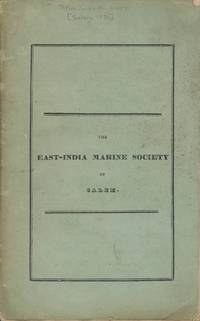
1831ref. BK0165Salem Massachusetts: Salem Press Palfray Ives Foote & Brown 1831. 78 pp. 8vo. Original printed wrappers. Wrappers frayed at spine; light dampstaining at margins of a portion of the leaves at rear. Good. An early catalogue of the collections of the East-India Marine Society of Salem recording the maritime journals and objects gathered by Salem captains and merchants during the city's great period of overseas trade. Founded in 1799 by captains and supercargoes who had sailed beyond the Cape of Good Hope or Cape Horn the Society required its members to contribute to a cabinet of "natural and artificial curiosities" the collection from which the present Peabody Essex Museum developed. The Society moved the collection into the newly built East India Marine Hall in 1825 and this expanded catalogue appeared only six years later. The volume includes the Society's act of incorporation bylaws lists of members and officers a catalogue of its manuscript journals of voyages and an extensive catalogue of the museum. The voyage journals occupy pages 33-42 and document Salem voyages to ports throughout Asia and the Indian Ocean; the balance of the catalogue records the ethnographic natural-history and other objects brought home by the Society's members. This was a substantially enlarged successor to the Society's 1821 catalogue which ran to 100 pages; the 1831 edition extends to 178 pages and was followed by a further supplement in 1837. A national bibliography of American library catalogues records copies of the 1831 edition at only a small group of institutional collections.1 1 Robert Singerman American Library Book Catalogues 1801-1874: A National Bibliography Graduate School of Library and Information Science University of Illinois at Urbana-Champaign 1996 94. . Salem Press, Palfray, Ives, Foote & Brown unknown books
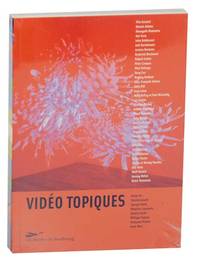
2002ref. 178466Strasbourg: Musees de Strasbourg 2002. Softcover. 189 pages. Text in French with contributions by Patrick Javault Georges Heck Maurizio Lazzarato Sandra Lischi Philippe Dubois Francoise Parfat and Anna Marx. . Includes illustrations of works by Vito Acconci Dennis Adams John Baldessari Roderick Buchanan Wim Delvage Rodney Graham Gary Hill Mike Kelley Paul McCarthy Les Levine Bruce Nauman Tony Oursler Nam June Paik Martha Rosler Bill Viola and others. A fine copy in wrappers. As new and still in the publisher's shrinkwrap. Musees de Strasbourg unknown books
1969ref. 17890scsOttawa: Queen’s Printer for Canada 1969. Octavo stapled wrappers paperbound 10 pp. Near-Fine with former-owner signature. Contents: The Ecosystem; The Ecological Population; Quantifiable Variables; Other Variables; Culture and Ecology. Queen’s Printer for Canada, 1969. unknown books
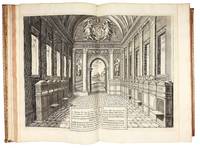
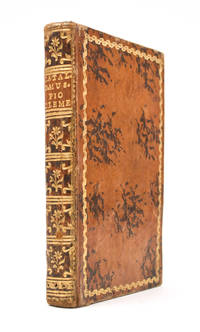
1719ref. 5406Rome: Ex officina Jo. Mariæ Salvioni 1717- 1719. SOLE EDITION. Second issue with the 1719 cancel title page to the first part to coordinate with the date of the 1719 supplement with which this copy is bound. Hardcover. Fine. With added engraved plates: Part I: Portrait of Mercati folding view of the museum Cabinet I folding view of the mines of Pozzuoli a coral at p. 101. Part II: portrait of Lancisi. The engraved frontis. with portrait of Pope Clement XI the engraved t.p. and the other armaria are printed on leaves integral to the collation. An excellent copy with a little light toning to scattered leaves and sporadic faint soiling in the upper margin. Bound in contemporary blond calf boards gilt ruled spine gilt deft repairs to the leather of the boards. First edition of Michele Mercati's illustrated catalogue of the Vatican mineralogical collection "a pioneering endeavor in the organized display of scientific specimens" Nancy Siraisi Rome Reborn p. 194. Mercati's book although only half-finished at the author's death in 1593 offers a valuable example of the emerging genre of wunderkammern and museum catalogues. It is also valuable for comparison with the first published illustrated catalogue of a private collection of natural history specimens Ferrante Imperato's "Historia Naturale" Naples 1599. Although the book remained in manuscript until the eighteenth-century the "Metallotheca" is of great importance in the history of the establishment of collections of scientific specimens and the development of museums. This is a large copy bound in contemporary stiff vellum over boards binding lightly soiled corners bumped split to foot of the front hinge with the title and author's name tooled in gold in the second compartment of the spine. There is light foxing mostly marginal to a number of leaves and some instances of heavier foxing or light browning e.g. gatherings R-T X-Y Hh-Ii Zz and the index; Leaf C1 is stained the plate of Pozzuoli is lightly tanned. The text is illustrated with 150 fine engravings of rocks minerals fossils and corals all rendered in marvelous detail the 20 in the supplement are repeated or re-engraved. As this was the Vatican mineralogical collection Mercati has included a number of marble statues from the Vatican collections including the Belvedere torso and the Laocoön. The illustrations of glossopetrae fossilized sharks' teeth and the head of a shark Lamia are of particular importance as the original plates for the engravings unpublished but available to artists and scientists were used by Nicolaus Steno in his "Canis carcariae dissectum caput" 1667. "Michele Mercati was born to a wealthy family in San Miniato between Pisa and Florence Italy. His father was a prominent physician and his grandfather was a noted humanist and philosopher who moved in the highest scholarly circles. Mercati studied first in San Miniato then enrolled in the University of Pisa for his degree in Philosophy and Medicine. There he studied under Andrea Cesalpino 1519-1603 a celebrated physician and botanist and later to be the author of De Metallicis 'On Minerals' 1596. The two became lifelong friends. Mercati earned his degree in 1561 and opened a medical practice in Rome where he so distinguished himself during an epidemic there that Pope Pius V called him to the Vatican and offered him the post of Prefect of the Vatican Botanical Gardens. In 1577 Mercati was officially received among the "familiars" of Pope Gregory XIII who having learned of Mercati's passion for mineralogy suggested that he create a natural history museum inside the Vatican focusing on minerals. Mercati was delighted by this idea and worked for many years building the collection while serving as Chief Physician under a succession of Popes. He had 19 large expensive custom-made cabinets constructed to house the collection in a room in the Pio-Clementine Museum. The collection eventually ranked among the largest and best in all of Europe. "Mercati spent years writing a scholarly description of the collection and having 127 high-quality copper-plate engravings of specimens prepared but by the time of his death he had managed to cover only the first nine cabinets containing the non-metallic minerals. His manuscript and engravings were claimed by his relatives and placed in storage and his magnificent collection of minerals was eventually reduced to nothing by pilferage. The manuscript and its illustrations were rediscovered and published as Metallotheca Vaticana in 1717."Mineralogical Record Collation: Part I: π4 π1 blank π 2 half-title π3 engraved frontis. π4 letterpress t.p. b-f4 f4 engraved t.p. g-h4 A-Z4 Aa-Zz4 Aaa-Ccc4 π2 errata and register. Part II: π1 A-G4 complete with blank leaf G4. Ex officina Jo. Mariæ Salvioni, 1717- hardcover books
ref. B306780-1San Francisco 1986. 6pp. =one folding leaf. 7 illus. 1 color. 4to. Wraps. San Francisco, 1986. paperback books
ref. B306780-2San Francisco 1986. 6pp. =one folding leaf. 7 illus. 1 color. 4to. Wraps. San Francisco, 1986. paperback books
1809ref. 16046Leipzig: Karl Tauchnitz 1809. First only Edition. Contemporary three-quarter leather. Very good. 8vo xii 2 258 pp. The earliest text to call for the organization of museum collections on principles of art history rather than antiquarian ordering. The author is best known for his work in architectural history. As director of the Dresdener Antiken Galerie he had hundreds of items from his own collection of coins duplicated as sulphur casts for exhibition. The copy offered here was once owned by his brother Conrad 1724 - 1795 and then passed to the Sixt family whose last owner Friedrich Sixt recorded the descent of the book through the family on the free front endpaper. Karl Tauchnitz hardcover books
1826ref. 15035Paris: Galerie D'Antiquites Egyptiennes 1826. First Edition. Original paper wrappers. Fine. 8vo xv 1 - blank 1 - 303 1 - blank pp. two folding lithographic plates. An important collection eventually the foundation of the Egyptian Museum in Berlin. Giuseppe Passalacqua was an Italian who originally had travelled to Egypt in order to trade in horses. At this he failed. He did however take up a side line in antiquities that succeeded. Between 1822 - 1825 he undertook several excavations at Thebes and amassed a collection of 1600 artifacts and manuscripts. He placed these on exhibition in Paris in 1826. Accompanying the exhibition he published an elaborate thematic catalog offered here. The catalog itself was an innovation. It provided detailed descriptions noted experts of the day were contributors for the text of the catalog of the objects and translations of hieroglyphs seeking to sell the collection to the French government. Instead it drew the attention of Friederich Wilhelm III who purchased nearly all of it. Passalacqua was appointed 'keeper' of the antiquities once the collection was installed in Berlin. Blackmer II 900; notably absent from Marchand German Orientalism . Galerie D'Antiquites Egyptiennes unknown books
1934ref. 4891Madrid: Office Int'l. des Musees 1934. First Edition. Original stiff printed wrappers. Very good. 4to. Both vols. are illus. throughout. The official report of an international conference on museum design and management that was held in Spain in 1934. The text is comprised of the series of papers by different authors who were generally regarded to be authorities in their respective field. The first volume is devoted to the problems and issues of the design of modern museum buildings. The second volume is concerned with the design and lighting of exhibitions mangement of collections of a special nature e.g. ethnographic or numismatic etc. . A superb reference beautifully printed. Office Int'l. des Musees unknown books
ref. 28671ROYAL PAVILION ART GALLERY AND MUSEUMS. GOTHICK. Brighton: 1975. Square 8vo. Wrappers. 59 pages 24 pages of plates. First edition. Exhibition catalogue on Gothic architecture art furniture and decorative arts sponsored by the Brighton Festival Society 1975. Preface by Sir Nikolaus Pevsner. Very good. unknown books
1759ref. 4991Florence: Nella stamperia Imperiale 1759. FIRST EDITION. Hardcover. Fine. An exceptional copy bound in contemporary carta rustica. A few leaves creased boards very lightly soiled. The text is adorned with attractive woodcut initials and headpieces. Printed on thick crisp paper with broad margins; a number leave with the lower edges untrimmed. A crisp bright copy in original three-quarter calf and speckled paper over boards spine with floral ornaments. The text is adorned with attractive woodcut initials and headpieces. First edition of the first guide to one of the world's most important museums. This guide to the Medici collections of the Uffizi Gallery was written by the museum's first custodian who had been appointed after the gallery's conversion to a public institution under the terms established by the last of the Medici the Palatine Electrix Anna Maria Ludovica in 1737. The custodian Giuseppe Bianchi is a notorious figure. He was later found to have robbed the Uffizi of works of precious metal which he melted down and sold. He was condemned to exile for his perfidy. See Barrochi and Bertelà "Danni e furti di Giuseppe Bianchi in Galleria Labyrinthos 13/16 1988-89 321-336. Bianchi's guide published in the same year that the British Museum opened to the public is an important record of the disposition and scope of the newly "public" collections in the period prior to their dramatic reorganization by Grand Duke Pietro Leopoldo of Lorraine 1780-82. In some instances the notices in the guide are the earliest extant record for some works in the collections. The portable and scholarly guide is similar in format and composition to Pasquale Massi's 1792 guide to the Vatican Museums which Bianchi's guide predates by a generation. Bianchi prefaces his tour with a history of the construction of the Uffizi palace designed and begun by Vasari in 1560 and completed -following Vasari's design- by Alfonso Parigi and Bernardo Buontalenti in 1581. This is followed by a description of the various elements that make up the entire palace complex. The formal guide to the galleries begins with a detailed description of the decorative program of the frescoed ceilings and the series of portraits that line the walls beneath them. This is followed by descriptions and commentaries on each of the 62 statues and 92 busts housed in the galleries in this period. Francesco I was the first Medici to add ancient marbles to the newly completed Uffizi and these ancient sculptures were juxtaposed with contemporary Renaissance masterpieces. Thus we find in Bianchi's guide the famous Medici Venus the Niobe group Bandonelli's Laocöon and Michelangelo's Bacchus. The sarcophagus of Hippolytus is absent since it was still in the Palazzo Medici Riccardi in 1759. Next Bianchi takes us into the Camera dei Pittori. Yet here he is unable to give a comprehensive discussion. This is due in large part to the sheer size of the collection but also to the fact that the painting collection has changed so much over the years some of the paintings having been transferred to the Pitti Palace others that formerly hung in the Palace having come to the Gallery and others still having been given as gifts to great lords or used to decorate villas. Moreover the paintings are in many media: oil tempera fresco and encaustic. Bianchi decides to focus on the collection of artist self-portraits which are divided into the three principal schools arrived at by the consensus of the most famous scholars of the art of painting: Romana Lombarda and Oltramontana. Here we find the famous self-portrait of Raphael. From here we pause briefly in the Camera delle Porcellane before entering the Camera degl' Idoli with its collection of 300 Greek Roman Etruscan and Egyptian bronzes which Bianchi considers in detail. Next we enter the Camera delle Arti where we find paintings by Raphael Andrea del Sarto Leonardo Botticelli Mantegna and Fra Angelico. In the Camera de' Fiamminghi are housed 140 paintings by northern European artists: Albrecht Dürer Lucas Cranach Van Dyck Brueghel and Callot among others. The German Cabinet: The center of the Camera delle Arti is occupied by a wondrous machine for which Bianchi provides a two-page description. It is a magnificent octagonal cabinet over nine feet tall incorporating a clock a pneumatic organ and moving figures in silver. The architectural details are all composed of granatiglia an ebony-like luxury hardwood and the surfaces of the cabinet are inlaid with precious stone including lapis jasper and verde antico. The cabinet is adorned with painted scenes of the Old and New Testaments which are rendered so minutely and with such fine skill that they are believed to be by the school of Brueghel. Within the cabinet is a machine that rotates showing four scenes: birds and arabesques executed in stone-inlay; a wax relief of the deposition "the work of the immortal Buonarroti"; an amber relief of Jesus and the Apostles; and an amber crucifixion scene. The final ornament of the machine is a mirror box that produces an infinite number of reflections. Bianchi tells us that the cabinet was made in Germany "around a century ago" and was purchased by Grand Duke Ferdinando II 1610-1670. The sixth camera houses mathematical instruments and a pair of celestial and terrestrial globes. Among the marvels here are an enormous magnet and a huge burning mirror. It was with the addition of the mathematical and scientific collections that the Uffizi began to take on the aspect of a wunderkammer. Next we enter the heart of the museum the Tribuna the octagonal room that houses the most important treasures of the Uffizi. Bianchi begins with individual descriptions of the 14 marble statues among them the Medici Venus the Wrestlers the Dancing Satyr the Arrotino and the infant Hercules. After a brief description of the room itself designed by Bernardo Buontalenti for Ferdinando III Bianchi lists the artists whose paintings adorn the room: Correggio Titian Veronese Parmigianino and above all Raphael. There is also a detailed description of the famous table of pietre dure. Leaving the Tribuna we come to the Camera dell' Ermafrodita the focal point of which is the hermaphrodite in Parian marble acquired by Ferdinando II from the Ludovisi Collection. Our tour concludes with brief visits to the room of medals the arsenal and the room of the ciborium with the incomplete parts of that structure created by Buontalenti for the Medici mausoleum in San Lorenzo. Nella stamperia Imperiale hardcover books
1792ref. 3234Florence: Per Gaetano Cambiagi 1792. Hardcover. Fine. Bound with: Massi Pasquale da Cesena Indicazione Antiquaria del Pontificio Museo Pio-Clementino in Vaticano stesa da Pasquale Mass Cesenate Custode del Museo Stesso/ Catalogue Indicatif des Antiquitès Composant Le Musèe Pie-Clèmentin au Vatican par Paschal Massi de Cesèns Garde du dit Musèe. Roma: Presso Lazzarini 1792 Two Octavo Volumes in one: 15.5 x 10 cm. I. Cambiagi: 279 p. Octavo: A-Q8 R12. II Massi: 4 216 pp. Collation: 2 a-m8 n12 - blank 1 FIRST EDITIONS OF BOTH WORKS. Bound in early 19th c. quarter sheep and boards with vellum corners. Gilt title label to spine "Galleries di Florence et Rome". Some wear to boards and corners hinges lightly rubbed. The text is in fine condition edges of the text-block stained an even yellow. I. Guide to the Uffizi: An important guide to Florence's Uffizi galleries documenting the radical re-organization of the Medicean collections under the Dukes of Lorraine and in particular the dramatic changes made by Grand Duke Peter Leopold 1747-1792. "Across his twenty-five year reign 1765-1790 Duke Leopold made significant changes to the artistic culture of Florence including a wholesale renovation of the Uffizi bringing it. towards the modern museum."Reid The guide is attributed to the publisher Gaetano Cambiagi custodian of Florence's two astounding public libraries: the Uffizi's Bibliotheca Magliabechiana and the magnificent Bibliotheca Marucelliana; and author of a history of the Uffizi 1779. Cambiagi's guide book replaced the long-out-of-print and out-of-date guide written by Giuseppe Bianchi in 1759. Luigi Lanzi's 1782 description of the Uffizi collections "La Real Galleria di Firenze accresciuta e riordinata per comando di s.a.r. l'arciduca granduca di Toscana" was not designed for use as a hand-held guide book. The book appeared shortly after the death of Peter Leopold whose great contributions to the Uffizi are described on pages 23 ff. and are manifest throughout the book in the description of the collections and their arrangement. The reorganization was executed under three directors of the museum: Giuseppe Querci 1769-73 Raimondo Cocchi 1773-75 and especially Giuseppe Pelli Bencivenni 1775-93 in often fraught collaboration the museum's first co-director Luigi Lanzi 1732- 1810. For a detailed discussion of the transformation of the Uffizi collections under the Dukes of Lorraine and of Peter Leopold in particular see Callum Reid "Twenty Magnificent Temples of the Arts" Geographic Schools in the Uffizi Gallery" in "Florence After the Medici Tuscan Enlightenment 1737-1790" Chapter 10. II. The Vatican Museums: Massi's "Indicazione Antiquaria" is the first catalogue of the Museo Pio-Clementino - founded by Pope Clement XIV in 1771 and greatly expanded his successor by Pius VI- written for the use of visitors by the keeper of the museum Pasquale Massi of Cesena. II. Here bound with a contemporary guide book to the Uffizi galleries in Florence. The Museo Pio-Clementino was the first major curatorial museum within what are known today collectively as the Vatican Museums. In 1771 Pope Clement XIV had Michelangelo Simonetti adapt the Belvedere Pavilion to accommodate the papal collection of ancient art. When Clement's successor the avid art collector Pius VI was elevated to the pontificate in 1775 the pace of acquisition increased dramatically and very soon the collections outgrew the rooms arranged for them by Simonetti. In 1776 Pius VI called for a radical restructuring of the existing museum and the construction of new grand spaces to house the ever-expanding collection. Massi's catalogue a room-by-room guide of the museum with descriptions of all of the artifacts and artworks housed therein is an invaluable record of how the greatly expanded museum of antiquities looked in the late 18th century with its newly constructed series of rooms and the recently installed masterpieces of ancient sculpture -the fruits of some of the most important excavations in Italy including the excavation of Hadrian's villa at Tivoli. In addition to providing a record of the arrangement of the exhibits Massi's catalogue in which he provides details of provenance acquisition and attribution of each artwork described serves as a history of the museum's formation and preserves valuable information about the art trade and the function of archaeology in the late 18th century. Massi has used a system of numbers and letters to indicate which works were added to the museums by Julius II and his various successors above all Clement XIV and the then-current pope Pius VI. In his introduction Massi tells us that he has designed his guide for portability and easy reference by tourists by arranging the descriptions of the objects in each room in the form of a walking itinerary. Since it is necessary at two points to retrace one's steps Massi's guide leads us along one side of each room as we proceed through the galleries. When it is time to reverse our course he leads us along the opposite side of the rooms already traversed thus keeping us engaged and entertained as we retrace our steps through the vast complex. Our tour begins at the new entrance to the museum in the corridor of Cleopatra also known as the corridor of the inscriptions just within the new entrance to the museum. We then pass through two vestibules. The first one is square with frescoes by Giovanni da Udine in the vault. In it we encounter the tomb of the Scipios and the Belvedere Torso. The second vestibule is round and in its center is a large bowl made of pavonazzetto. From here we proceed through a corridor into the porticoed octagonal courtyard of the Belvedere the site of Julius II's first installation of ancient sculpture transformed by Simonetti in the 1770's. Massi then leads us through the hall of the animals the gallery of statues the gallery of busts and the "loggia scoperta" the room of masks. We make our way back through these galleries to arrive at the series of rooms created by Simonetti in the 1780's. The first of these is the hall of the muses. We then enter the breathtaking Sala Rotonda with its immense newly installed ancient porphyry basin from the Domus Aurea through which we make our way to the Sala of the Greek Cross where we find the newly installed ancient porphyry sarcophagus of Constantine's daughter Constantia. From here Massi takes us via Simonetti's new staircase up past the unfinished hall of the biga to Bramante's vast gallery of the candelabra which is itself divided into numerous rooms with vases statuary and jewelry. Exiting by the stairs we visit the library and trace our way back through the new wing and via the Belvedere courtyard where we marvel at the Laocoön and the Belvedere Apollo to the cortile the great open court of the complex where our tour ends. Per Gaetano Cambiagi hardcover books
1792ref. 3602Rome: Presso Lazzarini 1792. FIRST EDITION. Hardcover. Fine. Printed on blue paper. In contemporary mottled calf the spine and boards tooled in gold. A very fine copy of the very rare first catalogue of the Museo Pio-Clementino - founded by Pope Clement XIV in 1771 and greatly expanded his successor by Pius VI- written for the use of visitors by the keeper of the museum Pasquale Massi of Cesena. Rare. The Museo Pio-Clementino was the first major curatorial museum within what are known today collectively as the Vatican Museums. In 1771 Pope Clement XIV had Michelangelo Simonetti adapt the Belvedere Pavilion to accommodate the papal collection of ancient art. When Clement's successor the avid art collector Pius VI was elevated to the pontificate in 1775 the pace of acquisition increased dramatically and very soon the collections outgrew the rooms arranged for them by Simonetti. In 1776 Pius VI called for a radical restructuring of the existing museum and the construction of new grand spaces to house the ever-expanding collection. Massi's catalogue a room-by-room guide of the museum with descriptions of all of the artifacts and artworks housed therein is an invaluable record of how the greatly expanded museum of antiquities looked in the late 18th century with its newly constructed series of rooms and the recently installed masterpieces of ancient sculpture -the fruits of some of the most important excavations in Italy including the excavation of Hadrian's villa at Tivoli. In addition to providing a record of the arrangement of the exhibits Massi's catalogue in which he provides details of provenance acquisition and attribution of each artwork described serves as a history of the museum's formation and preserves valuable information about the art trade and the function of archaeology in the late 18th century. Massi has used a system of numbers and letters to indicate which works were added to the museums by Julius II and his various successors above all Clement XIV and the then-current pope Pius VI. In his introduction Massi tells us that he has designed his guide for portability and easy reference by tourists by arranging the descriptions of the objects in each room in the form of a walking itinerary. Since it is necessary at two points to retrace one's steps Massi's guide leads us along one side of each room as we proceed through the galleries. When it is time to reverse our course he leads us along the opposite side of the rooms already traversed thus keeping us engaged and entertained as we retrace our steps through the vast complex. Our tour begins at the new entrance to the museum in the corridor of Cleopatra also known as the corridor of the inscriptions just within the new entrance to the museum. We then pass through two vestibules. The first one is square with frescoes by Giovanni da Udine in the vault. In it we encounter the tomb of the Scipios and the Belvedere Torso. The second vestibule is round and in its center is a large bowl made of pavonazzetto. From here we proceed through a corridor into the porticoed octagonal courtyard of the Belvedere the site of Julius II's first installation of ancient sculpture transformed by Simonetti in the 1770's. Massi then leads us through the hall of the animals the gallery of statues the gallery of busts and the "loggia scoperta" the room of masks. We make our way back through these galleries to arrive at the series of rooms created by Simonetti in the 1780's. The first of these is the hall of the muses. We then enter the breathtaking Sala Rotonda with its immense newly installed ancient porphyry basin from the Domus Aurea through which we make our way to the Sala of the Greek Cross where we find the newly installed ancient porphyry sarcophagus of Constantine's daughter Constantia. From here Massi takes us via Simonetti's new staircase up past the unfinished hall of the biga to Bramante's vast gallery of the candelabra which is itself divided into numerous rooms with vases statuary and jewelry. Exiting by the stairs we visit the library and trace our way back through the new wing and via the Belvedere courtyard where we marvel at the Laocoön and the Belvedere Apollo to the cortile the great open court of he complex where our tour ends. Presso Lazzarini hardcover books
1997ref. 181454Glasgow: Glasgow Museums 1997. Softcover. VG slight bumping to corners. Illustrated glossy wraps; 32 pages : color illustrations. Exhibition catalogue held May 23 - September 7 1997. Includes bibliographical references. Glasgow Museums paperback books
ref. B04098-4Cambridge 1985. 49 1pp. Prof. illus. 4to. Wraps. Cambridge, 1985. paperback books
1980ref. 210673Paris: Éditions de la Réunion des musées nationaux 1980. Hardcover. VG. Corners slightly bumped. Square octavo. Hardcover. Blue cloth boards with illustration pasted center front. Approximately 500 pages illustrations some color. Includes bibliographical references pages 142-147-Includes index. Accompanied exhibition Feb 5-April 1980. Czech Art Nouveau painter and decorative artist most well known for his images of women. Éditions de la Réunion des musées nationaux hardcover books
2019ref. 2032182019. VG. Partially opaque plastic covering over clamshell white box with blue emblem of museum. Box contains invitation card as well as wooden board with stylized model of traditional architecture of the area done in gold-colored metal. Metal architecture can be stood up in board as three dimensional ornament. "Under the patronage and in the presence of His Highness Sheikh Tamim bin Hamad bin Khalifa Al Thani The Emir of the State of Qatar Her Excellency Sheikha Al Mayassa bint Hamad bin Khalifa Al Thani Chairperson of Qatar Museums cordially invites you to celebrate the opening of The National Museum of Qatar on Wednesday March 27 2019." unknown books
2010ref. 197671New Providence New Jersey: National Register Publishing 2010. Softcover. VG scuffs scratches to wraps; rubbed edge-wear. rubbing to corners; crease to lower front. glossy blue wraps w/ grey & yellow printing. 3083 pgs. Pages inspected and appear clean but there may be errant markings notations marginalia etc. Approximately 9lbs for shipping. National Register Publishing paperback books
1970ref. 191962Brighton England: Gallery and Museum 1970. Paperback. Good Cover is heavily worn and torn in the middle of the spine; wearing on all edges and corners; library sticker on cover and inside front cover; wraps are sun-toned; there is a bend in the top left corner; pages are age-toned and dog-eared; binding is solid. Illustrated paper wraps with grey lettering; Ex-Library copy with accompanying stickers on the cover and inside cover; 53 pp; 4 unnumbered plates. This ex-library copy is an interesting catalog of an exhibition held in Brighton England. Gallery and Museum paperback books
1987ref. 177543Paris: Ministère de la culture et de la communication 1987. Softcover. VG light shelfwear to wraps corners bumped pages otherwise clean and clear. White wraps with bw illustrations on front and rear red lettering 125 pp 162 bw illustrations throughout. Text in French. "This exhibition was produced by the Réunion des musées nationaux with the assistance of the technical services of the Louvre Museum" -translation from title page verso. Includes bibliographical references pages 115-119 and index. Catalogue of an exhibition held June 12 through September 21 1987. Ministère de la culture et de la communication paperback books
1995ref. 175624Marseille France: Reunion des Musees Nationaux 1995. Softcover. VG light shelf-wear/scratches to back cover. back cover corner has minor rubbing & crease. pgs edge-toned. pgs clean & unmarked. flexible glued purple wraps w/ cover illustration & printing. 191 pages w/ bw & color illustrations. In French. Reunion des Musees Nationaux paperback books
1997ref. 135589Paris: Paris-Musees Gallimard/Electa 1997. Softcover. VG Ex-library with few markings and label bookplate at front inside cover pages are slightly tanned at top margin otherwise very nice. Black & white wraps 236 pp. many color & BW illus. Text is in French. Issued in conjunction with a 1997 exhibition in Paris. Illustrations are supplemented by explanatory text. "If you love love you'll love the surrealism" is the focus. Paris-Musees, Gallimard/Electa paperback books
1969ref. 131940Paris: Reunion des Musees Nationaux 1969. Softcover. VG- ex-museum library with ink stamp on front cover or side. Minor wear and minor age toning to cover. White wraps with color illustration. 52 pp plus plates. 16 BW plates. Text in French. Exhibition at the Orangerie des Tuileries. Catalogue lists 295 works. Reunion des Musees Nationaux paperback books
1975ref. 131939Genève Geneva Switzerland: Cabinet des estampes Musées d’art er d’histoire Geneve 1975. Softcover. VG- ex-private library with stamps on cover and text block. Black and white pictorial wraps. 174 pp. 131 bw plates and one in color. Text in French. Quite scarce. Catalogue for an exhibition held 17 October - 16 November 1975 at the Cabinet des estampes Musee d'art et d'histoire Geneve. Cabinet des estampes, Musées d’art er d’histoire Geneve paperback books
1974ref. 131993Paris: Editions des Musees Nationaux 1974. Softcover. VG. edge-wear to covers & spine edges back cover scuffed. previous owners name to inside cover. Color illustrated wraps. 164 pp. 18 color many BW plates; select color. In French. Catalogue for 1974 Orangerie des Tuileries exhibition. Exhibition held July 19 to October 14 1974. Editions des Musees Nationaux paperback books