Kirkpatrick, GrantAntiquariat.de
628 resultados
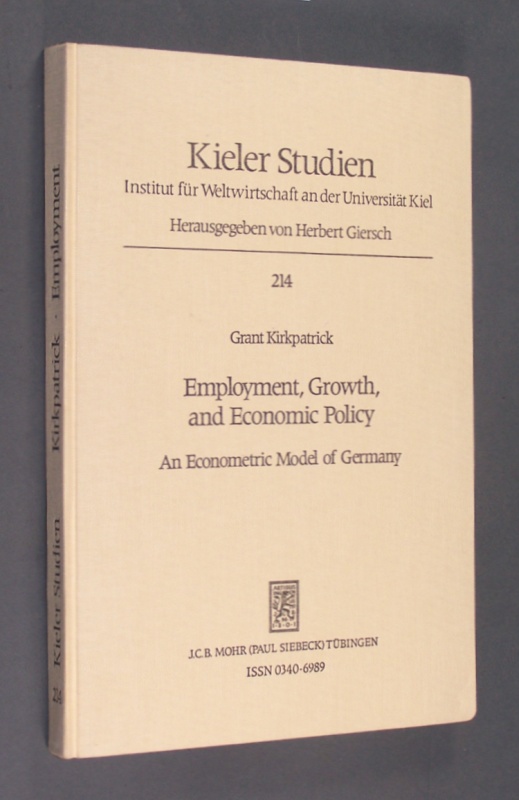
1987ref. 53451Tübingen, J. C. B. Mohr (Paul Siebeck) 1987. VII, 221, (3) Seiten. Gr. 8° (24 x 16,5 cm), (Hardcover, gebunden), Orig.-Leineneinband.
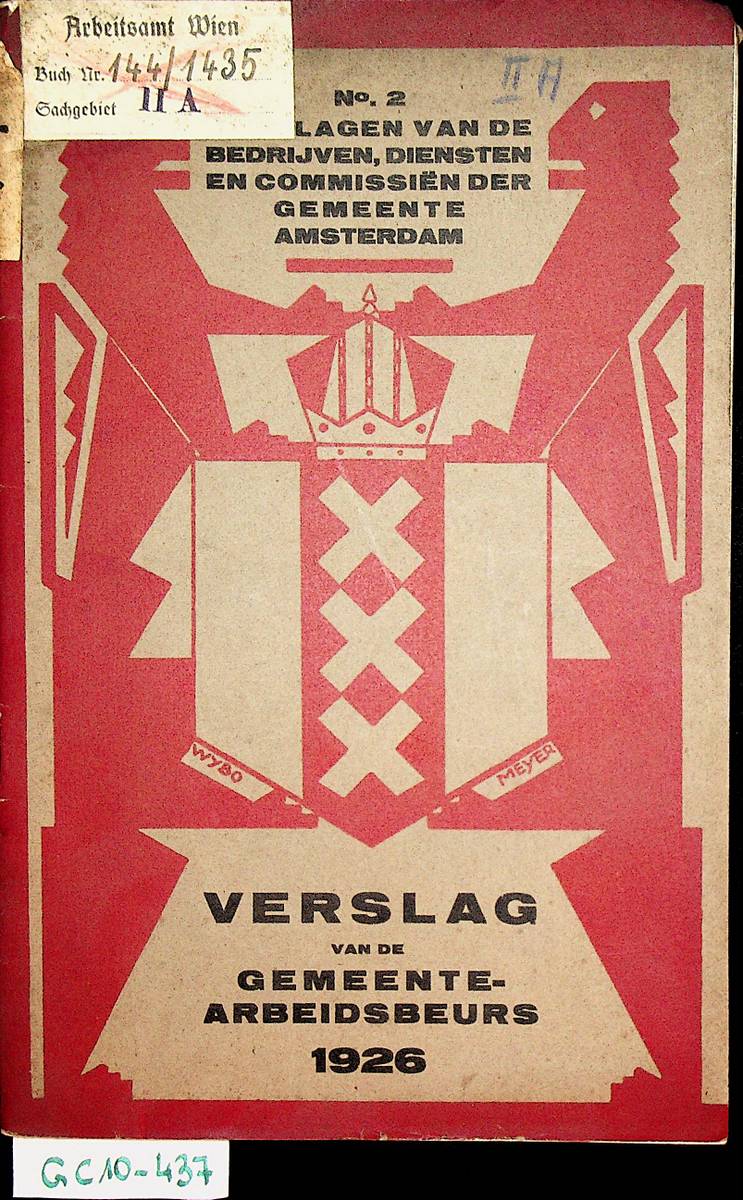
1926ref. GC10-437Amsterdam, Stadsdrukkerij, ca 1926. original Broschur, gr.-8?, 56 S.; Bibliothekstempel / bibliotheekstempel / cachet de biblioth?que / librarystamp
1991ref. VIEN0130(Wien), Verlag f. Gesellschaftskritik (1991). 235 S., 2 Bl. Anzeigen, OKart., schwache Knickspuren. (= Aufrisse Buch 15).
1933ref. 3089060Jena, Fischer, 1933. 132 S. Mit 10 Diagrammen im Text. OKart.
1977ref. 3111982Baden-Baden, Nomos, 1977. 295 S. OKart.
1928ref. 3495322Berlin, Hobbing, 1928. XVI, 301 S. Mit Tabellen und graphischen Darstellungen. Hlwd (Stempel auf Titel).
1938ref. 3145223Jena, Fischer, 1938. 87 S. OKart.
1932ref. 3080648Jena, Fischer, 1932. 66 S. Kart.
1952ref. 3061292Tübingen, Mohr, 1952. XVI, 675 S. Lwd (mit OUmschlag) (verstempelt).
1932ref. 3144012Jena, Fischer, 1932. VIII, 239 S. Kart.
1976ref. 3019255Stuttgart, Fischer, 1976. X, 213 S. Kart.
2004ref. MED1989Aurora, Ontario, Garamond Press (Health care in Canada series), 2004. 224 pages, engl., bibliographical references, index, Gr.-8° (23 cm H.), ill. Okart. (TB in englischer Sprache) - auf unterer Ecke des Rückendeckels kleiner Leseknick, sonst sehr gute Erhaltung. broschiert/ Taschenbuch/ paperback
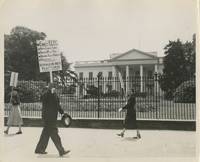
1950ref. BK0056Washington D.C.: Harris & Ewing Photographic News Service 1950. Original gelatin silver press photograph showing Paul Robeson picketing in front of the White House carrying a large placard reading "Enact F.E.P.C. / Anti-Lynch Law / Abolish Poll Tax / Amend Taft-Hartley / Housing / Republican Party Platform." Harris & Ewing Photographic News Service credit stamp and original typed caption to verso with later Globe Photos label. 8 x 10 inches. Light handling wear and creasing otherwise very good. A photograph of Paul Robeson demonstrating directly outside the Truman White House. The original Harris & Ewing caption identifies him as leading representatives of the Progressive Party who "began picketing the White House today asking for more positive action by President Truman on FEPC." The demands on Robeson's placard reflect the stalled federal civil rights agenda of the period. Roosevelt had created the Fair Employment Practice Committee in 1941 after A. Philip Randolph threatened a mass march on Washington over discrimination in defense employment. Truman's President's Committee on Civil Rights subsequently recommended a permanent FEPC federal anti-lynching legislation and abolition of the poll tax; in February 1948 Truman formally asked Congress to enact those measures. The Progressive Party's 1948 platform had called for immediate anti-poll tax legislation and an expansive federal civil-rights program. By 1950 however the major legislative proposals remained blocked in Congress. . Harris & Ewing Photographic News Service unknown books
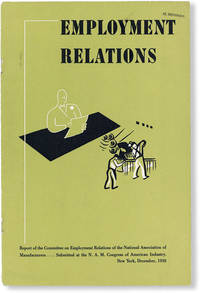
1938ref. 49692New York: National Association of Manufacturers N.A.M. 1938. First Edition. Octavo 23cm.; publisher's green pictorial staplebound wrappers; 11pp. Some wrinkling to wrappers small ownership rubberstamp to upper cover else Very Good and sound. National Association of Manufacturers [N.A.M.] unknown books
1975ref. 38446Washington DC: U.S. Government Printing Office 1975. First Edition. Octavo 23.25cm.; staplebound self-wrappers; v129pp. Fine condition. U.S. Government Printing Office unknown books
1971ref. 38440Washington DC: United States Department of Labor 1971. First Edition. Quarto 26.5cm.; publisher's staplebound self-wrappers; 25pp. Minor toning along extremities else Near Fine. Published as an Interpretive Bulletin of the Code of Federal Regulations and WH Publication 1209. United States Department of Labor unknown books
1873ref. 165661873. Taylor Whately Cooke. The Employment of Married Women in Manufacture 1874. First edition of a paper delivered at the Social Science Congress in Norwich in October 1873 opposing proposed legislation that would restrict or prohibit married women's employment in British manufacturing. Taylor challenges the argument that married women should be excluded from factory labor because of their maternal and domestic responsibilities emphasizing the financial consequences for working-class families dependent upon women's earnings. He condemns the inconsistency of restricting married women's industrial employment while permitting women in agriculture and domestic service to continue working without comparable legal limitations. His argument addresses a central dispute in Victorian labor reform: whether legislation intended to protect women from industrial exploitation could instead deprive them of economic independence and impose unequal restrictions upon their employment. Taylor Whately Cooke. The Employment of Married Women in Manufacture. A Paper Read at the Social Science Congress Held at Norwich October 1873. London: Frederick Bell & Co. Steam Printers King's Rd. Chelsea 1874. First edition. 12 pages. Original paper wrappers measuring 8 x 5¼ inches. Reprinted for the Vigilance Association for the Defence of Personal Rights the pamphlet develops an economic and legal argument against restricting married women's factory employment. Taylor writes: "It is at first sign a very humane sentiment no doubt to assert that married women should be relieved from all hard work because of the duties which maternity casts upon them; but when as that the same time you relieve them of some fifteen shillings a-week without providing any substitute you must not be surprised if they themselves do not view your condescension in the same light." His reference to fifteen shillings a week places the loss of wages rather than the stated benevolence of protective legislation at the center of his objection. The pamphlet appeared during parliamentary debates preceding the Factory Act of 1874 which further regulated the working hours of women and young persons in textile factories. The Vigilance Association for the Defence of Personal Rights opposed legislation that restricted adult women's freedom to contract for employment particularly when comparable restrictions did not apply to men. Taylor's comparison of factory workers with women employed in agriculture and domestic service exposes the unequal treatment of female occupations under proposed labor regulations. His paper documents opposition to sex-specific industrial legislation within the nineteenth-century movement for women's legal and economic rights. Very good condition. unknown books
1960ref. 238201960. Civil rights law and racial justice ephemera from circa 1961 to 1975 documenting the expansion of anti discrimination policy from state and local campaigns into federal employment regulation fair housing advocacy administrative enforcement and the 1970s critique of institutional racism. The six publications move from the Kentucky Advisory Committee's reporting on discrimination in Louisville Lexington Frankfort and Hopkinsville through the federal legal apparatus created around the Civil Rights Act of 1964 and Executive Order 11246 then into national organizing and statistical analysis of racial disparities during the following decade. By 1975 Fact Sheets on Institutional Racism framed inequalities in business ownership banking education housing media health and government as products of "White Control and Minority Oppression" extending the group's documentary range from laws against discriminatory acts to an analysis of the institutions in which racial inequality persisted. Archive of six pamphlets and ephemeral publicationseach approx 7 x 8 inches to 8 x 10 inches United States circa 1961 to 1975. 1 Kentucky Advisory Committee to the U.S. Commission on Civil Rights. Kentucky. Circa 1961. Report on civil rights activity in Louisville Lexington Frankfort and Hopkinsville addressing public accommodations employment housing and the development of the Kentucky Commission on Human Rights. Its introduction describes the state committee reports as "on-the-spot findings of informed and conscientious citizens seeking to discover the extent of denials of equal justice in their respective States and possible remedies" while also recording the activity of religious groups in breaking racial barriers. 2 Fair Housing for All: We Welcome Neighbors of Any Race Creed or Color. Circa 1960s. Public facing fair housing advocacy piece built around the image of a house enclosing the words "FOR ALL" explicitly joining residential integration to opposition to discrimination by race creed or color. 3 U.S. Commission on Civil Rights. Equal Employment Opportunity Under Federal Law: A Guide to Federal Law Prohibiting Discrimination on Account of Race Religion or National Origin in Private and Public Employment. Clearinghouse Publication No. 17. August 1969. The guide sets out "The Duty of Nondiscrimination" and procedures for filing employment discrimination complaints then explains coverage under the Civil Rights Act of 1964 the Equal Employment Opportunity Commission Executive Order 11246 for federal contractors and subcontractors the National Labor Relations Act Section 1981 the Civil Rights Act of 1968 Title VI federal employment state and local government employment and "Affirmative Steps Toward Equal Employment Opportunity." 4 State of Kansas Commission on Civil Rights. The Kansas Act Against Discrimination. Circa 1972 or later. The introductory note traces the statute from its passage in 1953 through amendments in 1961 1963 1965 1967 1970 and 1972. Those amendments successively extended protection into employment hotels and restaurants broader public accommodations and real estate transactions while enlarging the Commission's investigatory and subpoena powers and in 1972 authorizing investigation of complaints of sex discrimination. 5 YWCA of the U.S.A. National Convocation on Racial Justice. Americana Hotel New York City June 15 1972. Program for a national meeting organized around plenary sessions and morning and afternoon panels naming Senator Hugh Scott Representative Ronald V. Dellums Representative Shirley Chisholm Dr. Reginald Wilson Hon. Richard Hatcher and Hon. McGeorge Bundy among its speakers. 6 Foundation for Change Inc. and Council for Interracial Books for Children. Fact Sheets on Institutional Racism: White Control and Minority Oppression. August 1975. Organized under the headings Economy Health Housing Education Media Government and Census the publication compiles contemporary statistics from sources including the U.S. Bureau of the Census Black Enterprise Ebony Jet and the Economic Priorities Report. Its economy section reports that Black Americans owned 1.2 percent of business equity 1.2 percent of farm equity and 0.1 percent of stock equity; that only one of 650 seats on the American Stock Exchange belonged to a Black firm; and that Black Americans held 72 of 14000 directorships among the 1000 largest corporations. The publications record successive stages in the institutional response to racial discrimination. The Kentucky report belongs to the period when state advisory committees gathered local testimony and documented unequal treatment before the principal federal civil rights legislation of the mid 1960s; the Kansas pamphlet records how one state repeatedly enlarged the jurisdiction and enforcement powers of its civil rights commission between 1953 and 1972. The 1969 federal employment guide shows the resulting network of statutes executive authority complaint procedures commissions and sanctions through which nondiscrimination became an administrative responsibility extending across private employment public employment organized labor and federal contracting. The fair housing piece translates the same legal and political struggle into direct public persuasion while the 1972 YWCA program places elected officials including Dellums and Chisholm within a national organizational campaign for racial justice. By 1975 Fact Sheets on Institutional Racism measured disparities that remained after more than a decade of civil rights legislation citing ownership corporate governance banking and income statistics to argue that formal legal equality had not altered the distribution of economic power. Light handling and edge wear scattered toning and occasional spotting or soiling visible to wrappers; manuscript notation and institutional library markings to the Kentucky report; contents generally clean and legible. Overall good condition. A compact documentary record of the movement from prohibiting racial discrimination in law to enforcing those prohibitions through public institutions and confronting the economic and institutional inequalities that remained. unknown books
1979ref. 227401979. Korean-American Women's Employment Fashion Photo Album of a Korean-American dressmaker students and Korean pageant shows 1960s. Provenance unknown but most photos seem to be on the East Coast with a few in Korea. Collection of approximately 45 black and white and color Polaroid prints housed in a black faux-leather spiral album. Album measures 11" x 5.5" and photos approximately 3.5" x 3" each. Some have captions in Korean and/or English en verso. An evocative and culturally layered mid-century photo album documenting the life and career of a Korean American woman likely working as a tailor or dressmaking instructor in the United States during the 1960s. The album juxtaposes scenes of professional life of classroom instruction fashion shows and tailoring studios with moments of leisure and family portraiture in both Western and traditional hanbok attire that together reflect the hybrid social world of Korean immigrant professionals in postwar America. Several photographs show groups of women inside a sewing or fashion studio including one captioned in English on the verso "Me and my students." Other images depict a 1964 Miss Korea pageant with contestants modeling Western evening gowns and swimsuits possibly wearing designs by the album's compiler. Some of these images have handwritten captions in Korean script en verso. The pageant scenes bearing visible banners in Korean script suggest ties to Korean American community networks and cultural events that celebrated modern femininity and national identity during a period of postwar reconstruction and Diaspora visibility. Korean Americans in the 1960s represented a small but rapidly growing immigrant community shaped by both Cold War geopolitics and the aftermath of the Korean War. The Immigration and Nationality Act of 1965 which abolished national-origin quotas marked a turning point that encouraged the arrival of highly educated professionals including teachers engineers nurses and artists many of whom were women. These new immigrants often balanced preservation of traditional Korean customs with adaptation to American professional and social norms forming churches cultural associations and language schools that became vital centers of community life. Within this historical frame the album reflects the self-fashioning of a generation striving for both cultural dignity and modern achievement a narrative rarely preserved through visual documentation especially among women engaged in skilled trades and design education. Light wear to album exterior minor toning to some prints though images remain crisp and clean. Overall very good condition. unknown books
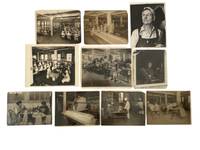
1940ref. 223731940. Women's EmploymentLaborFeminismWWII Archive of ten original photos documenting American women's industrial labor during the 1930s and 1940s. Original black-and-white press photographs taken in various factories during World War II including steel works textiles candy production and industrial assembly lines. Stamped by press agencies including Acme Newspictures Brown Brothers and International News Photos several with annotated captions on verso. This collection of press photos captures the pivotal moment when women entered the industrial workforce en masse replacing men who were fighting overseas. These images were part of a wartime propaganda campaign to normalize and promote women's factory work paving the way for long-term shifts in gender roles in the American labor force. In one striking image captioned by the N.E.A. press service as "Portrait for Mother's Day" a steel worker identified as Mrs. Neel of Gary Indiana is praised as "the American Mother- 1943 style" echoing the iconic Rosie the Riveter with a new image of female patriotism: overalls bandanna badge and goggles in hand. Another shows women boxing chocolates along a conveyor line while several others reveal the mechanical precision and physical intensity of jobs in textile finishing labeling and industrial equipment handling. This archive is emblematic of the historical inflection point that sparked the modern women's labor movement. The war effort validated women's technical skills and economic participation giving rise to a postwar generation of women who emboldened by their wartime service laid the intellectual and organizational groundwork for second wave feminism. Many of these workers would later confront the "return to domesticity" in the 1950s and become active in labor organizing civil rights and feminist causes by the 1960s. Light edge wear. Overall good to very good condition. A photographic archive capturing the genesis of modern women's industrial labor and the cultural origins of second wave feminism in the WWII workplace. unknown books
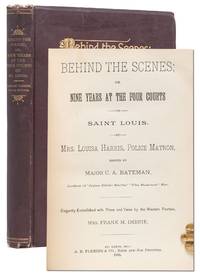
1893ref. 6644St. Louis: A. R. Fleming & Co 1893. First edition. Very Good. Original publisher's cloth binding with gilt to spine and front board. Brown coated endpapers. Some wear to corners and head and tail of spine. Some staining to covers and corresponding dampstaining to corners of endpapers. A very good copy internally clean and unmarked. Collating viii 9-220: complete including frontis. The first book published by a policewoman in America. Despite assumptions to the contrary "women have served in organized law enforcement in the U.S. almost from the beginning. The first police departments in America were established in the 19th century and in 1845 women began working as matrons in New York City jails" Smith. The practice rapidly spread across the country where police forces needed assistance in supervising female prisoners and dealing with the specific challenges faced by this population. Women's clubs -- particularly the American Female Moral Reform Society and the Women's Christian Temperance Union -- urged recognition for the widespread violence perpetrated on female prisoners and called for meaningful change. "It was these women's groups that fought for these distinctly female positions demanding there was a need for women to take care of women.and they provided police departments with funds for paid matron positions until the government could be convinced of the necessity of having women in the police force" Maiorano. Louisa Harris having served in the prisons and courts of Missouri for nearly a decade became the first of these women to publish about her experience. The resulting narrative reflects an awareness of the social forces that put women at a disadvantage driving them toward arrests or recidivism. Domestic violence poverty and the stigma placed on sex work all do damage to women; and according to Harris these women should not be treated as or placed with violent offenders when they could with proper assistance find safety or build more secure lives. This is the motivation for Harris' memoir. In the introduction she explains that while she hesitated to publish the book which might in some readers awaken a "morbid curiosity" she ultimately moved ahead because "I reasoned that if the world knew more about the unfortunate and their revolting experiences together with the causes that promote misfortune there might be more true sympathy exhibited.While I have from personal observation become familiar with so-called criminals I have had the opportunity to learn many of the causes of the committal of crimes. The law seldom recognizes the palliating influences but humanity should." Harris calls for reforming the handling of juvenile offenders advocates for therapeutic programs for young women and taps into a number of other systemic issues of concern within policing today. Very Good. A. R. Fleming & Co unknown books
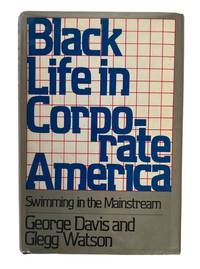
1982ref. 196801982. African American Davis George and Watson Glegg. Black Life in Corporate America: Swimming in the Mainstream. New York: Anchor Press/Doubleday 1982. Signed First Edition Hardcover with Dust Jacket. 204 pages. Measures 6" x 8.5". Signed in pen by both George Davis and Glegg Watson on the front free endpaper. The book collects over 160 interviews to convey black life in corporate America. From the front flap: "This is the first in-depth look at the professional and personal lives of black men and women trying to 'make it' in a world created by and for white males." The authors were asked to create and teach a course based on the book's insights for two terms at the Yale School of Organization and Management making it the first course in the nation in multicultural management. Black and white photo of authors featured on the back cover. Dime-sized stain on corner of front free endpaper but cover is clean textblock tight overall in very good condition. unknown books
1948ref. 200371948. African American Ottley Roi. Black Odyssey: The Story of the Negro in America. New York: Charles Scribner's Sons 1948. Hardcover with Dust Jacket. 340 pages. Measures 6" x 8.5". Born in New York City in 1906 Black author and journalist Roi Ottley began his career as a reporter for the New York Amsterdam Star-News. He went on to serve as publicity director for the National C.I.O. War Relief Committee and served as a war correspondent in the 1940s. Here he "traces the strange history of his race in America from the very beginning up to the present day. In early colonial times the Negro was a free and often respected individual; as the colonies grew and cheap labor was needed he was reduced to the status of a slave." The book includes historical moments as well as personal anecdotes from interviews and covers a wide range of events "from the day in 1664 when Maryland became the first colony to legalize slavery through the dark days of servitude to the Emancipation Proclamation and the beginning of the Negro's modern history as a free but segregated citizen." Dust jacket has only minor wear with a small piece of visible tape-repair at the top of spine. Pages are very clean and texblock still tight. Overall in very good condition. unknown books
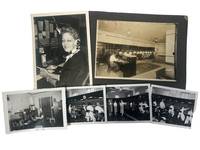
1900ref. 200911900. Telephone operator photo archive circa 1900 to 1958 documents women's labor within telephone exchange systems showing how urban communications depended on trained female operators seated at switchboards connecting calls handling information and maintaining the human infrastructure behind early and mid twentieth century telephone service. The material documents telephone communication labor through photographs of switchboard rooms operators wearing headsets plug boards supervisory presence and grouped clerical activity revealing how connection work operated in practice before automated dialing fully displaced manual exchange work. The archive supports research into women's wage labor communications history gendered office work New York telephone service and the disciplined workplace culture that positioned young women as the public voice and operational center of the telephone network. The archive consists of six black-and-white photographs including five silver gelatin photographs and one early albumen photograph with images measuring from approximately 3.5 x 4.25 inches to 7 x 9 inches. The date range appears to extend from the early twentieth century to 1958 based on the later dated images. Several photographs show women seated in tight rows facing large switchboards wearing heavy headsets with horn mouthpieces and working among dense arrangements of cords and plugs. The early albumen photograph shows a row of women facing the switchboards while a female supervisor watches over the room indicating both the gendered hierarchy and procedural discipline of the exchange floor. One image shows an operator turning toward the camera with a plug in hand smiling while gesturing toward the board. Four smaller photographs dated 1958 show teams of women moving between boards and a small group with paperwork behind the operating area; pencil inscriptions on the versos identify the location as New York. The photographs are valuable because they make visible the labor system behind telephone service: rows of operators standardized equipment supervisors paperwork and the coordinated manual routing of calls. They also record the gendered character of communications work in which women's voices posture speed and manner were made part of the service itself. Light handling wear minor edge wear and expected age toning; images remain crisp with equipment and personnel details clearly visible; overall very good. Strong women's labor and communications history archive documenting the human operation of telephone exchange systems across the first half of the twentieth century and into the postwar period. unknown books
1878ref. 189841878. Watherston Edward J. The Industrial Employment of Women in France Compared with England. London: Spottiswoods and Co. 1878. French Silk Manufactures and the Industrial Employment of Women. London: Dryden Pres - J Davy and Sons 1879. Both measure 8.5" x 5.25". 16 and 23 pages respectively. The 1878 pamphlet "The Industrial Employment of Women in France." is a comparative analysis of the labor participation rate of women in France and in England. French women were much more integrated into the labor market this study finds even despite the fact that England had a disproportionate demographic surplus of women and an even more developed industrial sector. At the conclusion of the pamphlet Watherston proposes three major steps spur female employment in England based off the French example which are the: "1. Establishment of special training schools for certain trades following a preliminary general education. 2. These training schools. must be made self-supporting within a short time. All pupils must pay a moderate fee for being taught. 3. There should be union of the managers of training schools with all manufacturers wishing to employ female labour. The union must aim both to give employment to women and to advise as to the directions in which it may be sought and into which it may be extended." Watherston lays blame for the poor labor participation rate of English women at the fact that they are barred from major employment sectors such as the railways as well as a private sector which demonstrated no inclination to hire them. He concludes that English women need organization first and foremost and should establish a "Society for the Industrial Employment of Women". The second pamphlet focuses on first the history of the French silk industry and later women's employment within it noting the unique advances that the French female silk workers enjoyed. Watherston notes that "Other countries before France made use of female labour but the French were the first who employed not only as we do the hands but also the brains of women. The technical education of female workers took place simultaneously with that of the men and it is to the results of this that not a little of the excellence of the French silk manufactures of the present day is due." Watherston goes on to examine the silk manufacture at Jujurieux which took in young women from a rural underdeveloped region and lodged fed and rigorously trained them in silk production. In both of these pamphlets he highlights and endorses enterprises that transform women into workers often through a process that includes living and training amongst fellow apprentices for years at a time. There is a prevailing belief that women must be engineered into working class subjects through this total immersion but with a confidence that they are technically and intellectually skilled enough should they be properly acclimated. Some minor chipping to left edge 3/4 in. tear on top edge of one pamphlet overall in very good condition. unknown books