707 risultati
rif. DADAX0415170516New unknown
rif. DADAX0415270537New unknown
rif. DADAX0415125324New unknown
rif. SONG0199668000Used: Good unknown
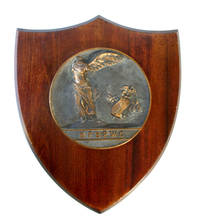
1919rif. 149951919. National Federation of Business and Professional Women's Clubs plaque 1919 commemorates the founding year of a national organization created to coordinate and advance the interests of business and professional women. Established on July 16 1919 after wartime efforts to identify women's professional skills and experience the Federation developed from organizing associated with the Women's War Council and the mobilization of women workers during World War I. Its formation preceded ratification of the Nineteenth Amendment in 1920 and placed questions of women's employment professional advancement and political participation within a national organizational structure. Large bronze embossed seal of the National Federation of Business and Professional Women's Clubs mounted on wood and dated 1919. The Federation was organized at its first national convention in St. Louis in July 1919 under the leadership of Lena Madesin Phillips with Gail Laughlin elected its first national president. Early Federation work included a national survey of business and professional women addressing their status qualifications opportunities and working conditions providing an organized basis for advocacy concerning women's economic and professional life. The plaque dates from the Federation's founding year when women were entering professional occupations in greater numbers while still lacking federally protected voting rights nationwide. The organization continued to advocate on issues affecting working women and to promote professional development leadership and economic opportunity. The bronze seal mounted on wood survives as an organizational artifact from the Federation's establishment in 1919 one year before ratification of the Nineteenth Amendment extended constitutional protection for women's suffrage nationwide. unknown
1994rif. 2081502111907407Employment 1994. Soft Cover. Fine. Number of pages: 229p Size: A4 fine Employment paperback
rif. DADAX1543857825New unknown
rif. DADAX0367086492New unknown
2001rif. x-0415252415Routledge 2001. Hardcover. New. 1st edition. 292 pages. 9.25x6.25x1.00 inches. Routledge hardcover
1935rif. 2111902160500458Not Available 1935. Soft Cover. Fine. Number of copies: Central Employment Placement Secretariat Not Available paperback
rif. 2081002109001728Employment Problem Study Group N.A. Soft Cover. Fine. Number of pages: 2 books Size: 26cm Employment Problem Study Group paperback
rif. 2090202118204604Not Available N.A. Soft Cover. Fine. The book is in fine condition. Not Available paperback
rif. DADAX1858985072New unknown
rif. DADAX0444520899New unknown
rif. DADAX1848440685New unknown
1859rif. 165681859. Parkes Bessie Rayner. The Market for Educated Female Labor 1859 argues that girls and young women should receive education or vocational training sufficient to support themselves rather than being prepared exclusively for marriage. Parkes wrote amid organized efforts to expand employment opportunities for middle-class women and in the same year that the Society for Promoting the Employment of Women was established. She rejects the assumption that marriage guaranteed lifelong financial support observing "The daughter may marry but her husband may die.or be too poor to support her and her children; let her at least be trained beforehand to some possible way of getting her bread." Her argument treats women's preparation for paid work as an ordinary parental responsibility rather than an emergency measure reserved for poverty. Parkes Bessie Rayner. The Market for Educated Female Labor. 1859. First edition. 6 pages present of an original 8 lacking the final two pages. Unbound measuring 8 1/4 x 5 inches. The text was delivered as a paper at the 1859 Bradford meeting of the Association for the Promotion of Social Science. Parkes states "We lay it down as a primary social law conceded by all political economists that a father ought to provide for all his children or give them the means of providing for themselves." She further counters the idea that paid employment among middle-class women was exceptional: "Probably every person present has a female relative or intimate friend whom trade-failure the exigencies of a numerous household or the early death of husband or father has compelled to this course; it is the experience of every family." The surviving text consequently links women's education to specific economic contingencies including business failure large households widowhood and the death of a father or husband. Parkes was then a central figure in the Langham Place circle and a founding editor of the English Woman's Journal established in 1858 to address women's employment education legal disabilities and related reforms. Her paper appeared as these activists were moving from publication and debate toward practical employment initiatives; the Society for Promoting the Employment of Women was founded in 1859 to train women and open additional occupations to them. At the time this description was prepared no copies were recorded in American institutional holdings consulted; OCLC search results remain subject to cataloging changes and should be reconfirmed. Repairs to the upper right corner and right edge of page 1 and a small repair to the left edge of page 6. Lacking the final two pages; good condition. The surviving six pages preserve Parkes's direct argument that women's education should provide the means for economic self-support in circumstances she described as common within middle-class families. unknown
rif. DADAX0415460573New unknown
rif. DADAX019510014XNew unknown
rif. DADAX0857247492New unknown
1874rif. 165741874. Women Employment Lucy Wilson. "Women and Legislation." Vigilance Association for the Defence of Personal Rights. June 20 1874. Original paper wrappers. 4 pages. First edition. 8 1/2 x 5 in. A Letter addressed to the Editors of the Leeds Mercury. "These measures all point to one conclusion that motherhood is a crime. The woman who is guilty of it unless.she is rich and independent shall not eat bread for six months thereafter or twelve as the House may determine." In this open letter Wilson decries legislation which would forbid new mothers from working yet fails to provide any public assistance for them to care for their families. "No Act has been passed decreeing that such women shall not suffer cold or hunger or to 'deem that they commit an offence' if they are hungry." Vigilance Association for the Defence of Personal Rights was a British organization dedicated to watching restraining and influencing legislation especially in matters affecting the interests of women and the personal rights and liberties of the people. Small losses along spine. Very good condition. unknown
1919rif. 163201919. Ministry of Reconstruction Women's Advisory Committee. Report of the Sub-Committee Appointed to Consider the Position after the War of Women Holding Temporary Appointments in Government Departments 1919 addresses the status of women recruited into temporary government service during World War I and the terms under which they might remain in public employment after demobilization. The report concerns the transition from wartime labor to the permanent Civil Service including questions of women's eligibility for continued appointment equality of treatment with male colleagues pay and the assignment of clerical duties. Produced as the British government confronted the employment consequences of women's expanded wartime service it records official consideration of whether women who had entered departments under emergency conditions should retain a place in the postwar state workforce. Ministry of Reconstruction. Women's Advisory Committee. Report of the Sub-Committee Appointed to Consider the Position after the War of Women Holding Temporary Appointments in Government Departments. Presented to Parliament by Command of His Majesty. London: Published by His Majesty's Stationery Office 1919. Folio. 8 pages. The sub-committee consisted of six women and two men and was charged specifically with examining the position of women holding temporary government appointments after the war. Its recommendations address routes by which women might become permanent government employees and argue for treatment on terms comparable to male colleagues including questions of equal pay and the expectation that women should not automatically be assigned additional clerical work because of their sex. As an official parliamentary publication rather than an outside campaign tract the report documents how women's wartime employment had become an administrative question within government itself. Women entered British government departments in substantially increased numbers during World War I filling posts created or expanded by wartime administration while large numbers of men were serving in the armed forces. The end of the war raised immediate questions about whether these appointments would be terminated converted into permanent positions or reorganized along sex-segregated lines. This report preserves the Women's Advisory Committee's intervention in that process and records specific arguments over permanence pay duties and women's place in the postwar Civil Service. Modern blue card wrappers with paper label. Very good condition. An official 1919 statement of the employment claims advanced for women whose wartime government service had demonstrated their capacity to perform work previously reserved largely for men. unknown
rif. GOR006782046Paperback. Very Good. paperback
rif. DADAX0198152817New unknown
1847rif. 162581847. Goddard Emily L. Archive of thirteen letters of recommendation and certification 1847-1853 documents a woman teacher establishing her professional qualifications across the common schools of western Massachusetts. Written by school officials and other individuals in Barre Wilbraham New Salem Athol Petersham and surrounding communities the letters certify Goddard's eligibility to teach in particular districts or attest to her general qualifications for common-school instruction. Spanning six years the correspondence records the repeated process by which a woman teacher obtained written approval and recommendations as she sought successive teaching positions in antebellum New England. Thirteen manuscript letters 1847-1853 concerning Emily L. Goddard's qualifications and employment as a teacher in western Massachusetts. The documents originate from multiple towns including Barre Wilbraham New Salem Athol and Petersham and consist principally of certifications and recommendations addressing Goddard's ability to teach a common school. The individual letters preserve the assessments she carried between districts as evidence of her preparation and prior work. Their geographic range and successive dates trace a professional record extending beyond a single appointment or school and show how recommendations from local authorities could accompany a teacher seeking employment elsewhere. Goddard's papers date from the expansion of the Massachusetts common-school movement when public education reform increased demand for teachers and teaching became an increasingly important occupation for women. Women's employment in common schools expanded substantially during the nineteenth century although hiring certification salaries and continued employment remained subject to local school authorities. This archive records those practices through one teacher's surviving credentials: thirteen documents produced over six years as Goddard accumulated certifications and endorsements in several Massachusetts communities. Fold lines and creases with very little foxing; handwriting remains clear and legible throughout. All thirteen letters in very good condition. A sustained documentary record of a woman building a teaching career within the local certification and recommendation practices of antebellum Massachusetts. unknown
rif. 16266Working Girls' Society. Circular of the Working Girls' Society late nineteenth century sets out the rules and benefits of a New York organization created for wage-earning women. The Society provided working women with rooms for social meetings classes reading and recreation after working hours while its bylaws governed membership and access to the organization's facilities. Contemporary accounts of New York working girls' clubs describe them as cooperative organizations in which members pursued self-education social activity and practical assistance rather than simply receiving charity. Circular of the Working Girls' Society. New York: Working Girls' Society n.d. Bylaws governing membership and use of the Society's library and rooms at 222 West 38th Street. The circular describes benefits available to members including special vacation privileges and discounted railway tickets combining educational and social provisions with practical assistance for women earning wages in the city. The regulations document the daily administration of a women's club formed around the needs of an expanding urban female workforce and show how membership could provide access to books meeting rooms instruction recreation and reduced-cost travel. The circular survives from the period in which working women's clubs expanded in New York; by the early twentieth century contemporary descriptions traced the movement to clubs organized during the 1880s and emphasized their classes member government and opportunities for social intercourse and self-improvement. Two very light horizontal folds and light thumb-soiling with a 2-inch tear at the bottom of the center fold; overall Very Good Condition. unknown