656 résultats
1847réf. 162581847. Goddard Emily L. Archive of thirteen letters of recommendation and certification 1847-1853 documents a woman teacher establishing her professional qualifications across the common schools of western Massachusetts. Written by school officials and other individuals in Barre Wilbraham New Salem Athol Petersham and surrounding communities the letters certify Goddard's eligibility to teach in particular districts or attest to her general qualifications for common-school instruction. Spanning six years the correspondence records the repeated process by which a woman teacher obtained written approval and recommendations as she sought successive teaching positions in antebellum New England. Thirteen manuscript letters 1847-1853 concerning Emily L. Goddard's qualifications and employment as a teacher in western Massachusetts. The documents originate from multiple towns including Barre Wilbraham New Salem Athol and Petersham and consist principally of certifications and recommendations addressing Goddard's ability to teach a common school. The individual letters preserve the assessments she carried between districts as evidence of her preparation and prior work. Their geographic range and successive dates trace a professional record extending beyond a single appointment or school and show how recommendations from local authorities could accompany a teacher seeking employment elsewhere. Goddard's papers date from the expansion of the Massachusetts common-school movement when public education reform increased demand for teachers and teaching became an increasingly important occupation for women. Women's employment in common schools expanded substantially during the nineteenth century although hiring certification salaries and continued employment remained subject to local school authorities. This archive records those practices through one teacher's surviving credentials: thirteen documents produced over six years as Goddard accumulated certifications and endorsements in several Massachusetts communities. Fold lines and creases with very little foxing; handwriting remains clear and legible throughout. All thirteen letters in very good condition. A sustained documentary record of a woman building a teaching career within the local certification and recommendation practices of antebellum Massachusetts. unknown
réf. 16266Working Girls' Society. Circular of the Working Girls' Society late nineteenth century sets out the rules and benefits of a New York organization created for wage-earning women. The Society provided working women with rooms for social meetings classes reading and recreation after working hours while its bylaws governed membership and access to the organization's facilities. Contemporary accounts of New York working girls' clubs describe them as cooperative organizations in which members pursued self-education social activity and practical assistance rather than simply receiving charity. Circular of the Working Girls' Society. New York: Working Girls' Society n.d. Bylaws governing membership and use of the Society's library and rooms at 222 West 38th Street. The circular describes benefits available to members including special vacation privileges and discounted railway tickets combining educational and social provisions with practical assistance for women earning wages in the city. The regulations document the daily administration of a women's club formed around the needs of an expanding urban female workforce and show how membership could provide access to books meeting rooms instruction recreation and reduced-cost travel. The circular survives from the period in which working women's clubs expanded in New York; by the early twentieth century contemporary descriptions traced the movement to clubs organized during the 1880s and emphasized their classes member government and opportunities for social intercourse and self-improvement. Two very light horizontal folds and light thumb-soiling with a 2-inch tear at the bottom of the center fold; overall Very Good Condition. unknown
1911réf. 182771911. Imperial size albumen portraits of faculty and students at American Medical College. St. Louis Missouri 1911. Large photo measures 24 x 20 inches. 40 subjects every one of them male except for a single female student listed below as "F Heflin." Photographed by Hays Studio. Mounted to photographer's board. The American Medical College a medical school founded in 1873 graduated its first woman in 1888. In 1911 the American Medical College combined with the Barnes Medical College. The following year the combined school became the Medical Department of the National University of Arts and Sciences in St. Louis. The National University then merged with the St. Louis College of Physicians and Surgeons around 1915. Female students like this one would have come in at a significant disadvantage proving her qualifications against skepticism in a field notorious for gender discrimination. The value of female doctors for female patients in particular has been profound. Board scuffed on one side does not affect images or text. Chipped at corner and top does not affect images or text. Overall very good condition. Expressions and details in images clear. unknown
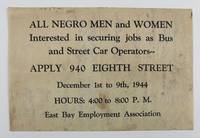
1944réf. 3081N.p. but perhaps Oakland or Berkeley 1944. Very good. Printed broadside 5.25 x 8 inches. Minor foxing and staining light edge wear penciled note covering most of verso. A small and apparently unrecorded broadside calling for African Americans interested in working as bus drivers and street car operators in the San Francisco Bay Area during the latter portion of World War II. The notice calls for interested parties to apply at the offices of the East Bay Employment Association between 4:00 and 8:00 PM between December 1 and 9 1944. We could locate no information on the East Bay Employment Association but it was almost certainly located in either Oakland or Berkeley. This employment advertisement was perhaps the result of a wartime shortage of bus drivers and street car operators in the Bay Area. We could locate no other copies of this interesting and somewhat mysterious broadside. unknown
réf. 798troisième édition entièrement refondue et très augmentée. In 8 cartonné.Pièce de titre imprimée, Faux-titre,frontispice illustré et gravé,titre,VII,568 pages.non rogné.Dondey-Dupré père & fils 1824(1/3 de la page de faux-t coupé)bon exemplaire Méthode ayant pour objet de régler le bon emploi du temps à l'aide d'une série de tableaux synoptiques présentant la suite rationnelle et progressive des occupations de la naissance à l'âge adulte.Il reprit ce plan qu'il développa à part dans son Essai sur l'Emploi du Tems,publié pour la première fois en 1808.Mêlé de très bonne heure à la politique militante,attaché à l'administration de la guerre sous le directoire, le Consulat et l'Empire,auteur d'un très grand nombre d'écrits d'actualité,Jullien de Paris (1775-1848),eut jusque dans les premières années du gouvernement de Juillet, eut une grande activité de publiciste. Buisson,Dictionnaire de Pédagogie
1972réf. mon0000584191HMSO 1972T. paperback. Acceptable. in x in x in. NOT an ex-library book. Pages are clean but cover has foxing stains along edges. HMSO paperback
1878réf. 189841878. Watherston Edward J. The Industrial Employment of Women in France Compared with England. London: Spottiswoods and Co. 1878. French Silk Manufactures and the Industrial Employment of Women. London: Dryden Pres - J Davy and Sons 1879. Both measure 8.5" x 5.25". 16 and 23 pages respectively. The 1878 pamphlet "The Industrial Employment of Women in France." is a comparative analysis of the labor participation rate of women in France and in England. French women were much more integrated into the labor market this study finds even despite the fact that England had a disproportionate demographic surplus of women and an even more developed industrial sector. At the conclusion of the pamphlet Watherston proposes three major steps spur female employment in England based off the French example which are the: "1. Establishment of special training schools for certain trades following a preliminary general education. 2. These training schools. must be made self-supporting within a short time. All pupils must pay a moderate fee for being taught. 3. There should be union of the managers of training schools with all manufacturers wishing to employ female labour. The union must aim both to give employment to women and to advise as to the directions in which it may be sought and into which it may be extended." Watherston lays blame for the poor labor participation rate of English women at the fact that they are barred from major employment sectors such as the railways as well as a private sector which demonstrated no inclination to hire them. He concludes that English women need organization first and foremost and should establish a "Society for the Industrial Employment of Women". The second pamphlet focuses on first the history of the French silk industry and later women's employment within it noting the unique advances that the French female silk workers enjoyed. Watherston notes that "Other countries before France made use of female labour but the French were the first who employed not only as we do the hands but also the brains of women. The technical education of female workers took place simultaneously with that of the men and it is to the results of this that not a little of the excellence of the French silk manufactures of the present day is due." Watherston goes on to examine the silk manufacture at Jujurieux which took in young women from a rural underdeveloped region and lodged fed and rigorously trained them in silk production. In both of these pamphlets he highlights and endorses enterprises that transform women into workers often through a process that includes living and training amongst fellow apprentices for years at a time. There is a prevailing belief that women must be engineered into working class subjects through this total immersion but with a confidence that they are technically and intellectually skilled enough should they be properly acclimated. Some minor chipping to left edge 3/4 in. tear on top edge of one pamphlet overall in very good condition. unknown
1918Features: Title page illustration of French Cavalry on the Oise Front; Two pages of illustrations of Royal visit to 'Khaki Country' - among the mills of the West Riding; Reserves and Their Employment (article); The Patron Saint of the Allies (article); Concerning National Kitchens (article); Photos of events in Italy, Portugal, Greece and France, including two photos of the funeral of Sister G.M.M. Wake, a Canadian nurse killed by a German bomb; Article on current events by G.K. Chesterton; Photos of John Robert Clynes, M.P., Sir Richard David Muir, The Duke of Rutland, Sir William James Tatem, and Sir John Merry Le Sage; Text and two illustrations describe the American's First "Big Thing" in France - The Cantigny Fight; The Moral and Material Effect of Bombing Germany (article by C.G. Grey); Six photos of British and U.S. Observers training Aerial Gunnery together; Wonderful 11-photo spread over two pages of the United States Army at the front where it is 'taking a gallant share in resisting the German offensive; Three illustrations and text describe the shelling of Paris from 74 miles by German super-gun "Long Bertha"; Seven photos of Sea-Warfare mementos from Zeebrugge - war museum additions; Centrefold illustration "The Last of the Albert Madonna - British Artillery In Action Near The Town; Photos of injured German POWs; Article on the saving of clerical labour; Two half-page aerial photos illustrate a British air attack on the main railway station at Metz; Roll of Honour - photos of 18 officers including Lieut.-Colonel James Hugh Coles, D.S.O.; Several lovely car ads; Fantastic two-colour back cover ad for "Erasmic" The Dainty Soap features well-dressed lady in boudoir studying her mirror; and more. 36 pages including several pages of marvelous vintage ads, most of which are illustrated. Unmarked with average wear. Binding intact. A sound copy of this excellent WWI-era issue. Magazine
1918273-384, [110] ads, pages. Profusely illustrated with black and white photos and drawings. Printed upon glossy stock. The many pages of ads include an abundance of nostalgic illustrations. Features: The American Country House, with particular references to types developed or improved during the war; Part I - The Charm of This Small House; Part II - The Workingman and His House; Part III - Of Fireplaces; Part IV - Some Larger Country Houses; Notes and Comments - Small Window Panes, A Red Cross Village at Pisa, A Glass Front Building, Training Schools for Employment Managers. Average external wear. Library stamp atop front cover, otherwise unmarked. Binding intact. Two small binding holes near spine. A sound copy of this wonderful vintage issue. Book
réf. 15644Early Women's Liberation and the Automobile in the Age of Suffrage. Collection of 4 pieces tracing the new path to independence gained by women with the invention of the automobile. Coming of age at the same time as the suffrage movement was reaching full swing the new technology offered by the automobile allowed women not only a newfound sense of freedom but the ability to travel unimpeded to demonstrate mastery of a new technology and even opened careers in mobility. This collection's vintage pieces include rare printed material on women and the automobile a signed license letters and photos from women who drove right over gender barriers explore the new world opening to women in the 20th century. Leading up to the 20th century automobiles became a symbol of women's increasing social mobility and financial independence. Car makers and dealers realized that a significant number of women wanted and were capable of purchasing their own cars; and so they developed vehicles and marketing campaigns specifically for the female population. This collection's early 1913 brochure "To the American Woman" represents this trend and it declares that "the automobile . is of the greatest use to the woman.because of the importance of her work a woman's need for saving time and effort is imperative." The car saved wives and mothers time as they executed familial duties. It also provided some single women with independent incomes. As young women purchased their own vehicles some used the technology to support themselves by becoming mechanics and chauffeurs. These women are represented in this collection by a 1923 "Motor Magazine" with coverage on women car owners a vintage photo of the first woman to motor from Africa to London and an original 1929 Professional Chauffeur's License for Vivian Pickard. Pioneering women like those in this collection overcame gender barriers by increasing their mobility taking advantage of opportunities for mechanical and technical education thus opening new possibilities for women in transportation technology. unknown books
193680 pages. Features: Nice colour ad for Dominion Inlaid Linoleum inside front cover; Editorial topics include - Advertising our country, Typical problems in the western provinces, The Return of Employment, and The Cost of Sickness; The Smooth Silence (short story); The Carpenter (short story); Peiping (Beijing/Peking) Under Martial Law - photo-illustrated article of events in troubled China; Not a Case for the Jury (short story); The Girl Who Wouldn't Get Up (short story); The Spongers (short story); First Easter Among the Godless - photo-illustrated article told by Alexander Welikotny describes his experiences in Russia; Heil Summer, Heil Sport, All Heil! - article looks forward to the Olympics, with photos of Canadian Crew Champions, The Leanders "Eight" of Hamilton, broad jumper "Sammy" Richardson, and walker "Hank" Cieman of Toronto; Nice one-page Plymouth ad features a four-Door Touring Sedan and photo of A.B. Ellis, Radio Engineer of station CKLW; Parker pen one-page ad features photo of Princess Rostislav; Nice one-page Dodge care ad includes photo of a Model "D2" four-door Touring Sedan, and photo of Mr. F. Lyle Kelly, of Windsor, Ontario; First report of the Bank of Canada; Great two-page Easter Chevrolet ad features a green two-door; Movie news includes photos of Warner Baxter, Charlie Chaplin, Jessie Matthews, Sonnie Hale, Norma Shearer, Leslie Howard, Billy Lee, and Shirley Temple; Great one-page Lux soap ad features photo of Grace Moore; Pond's ad includes photo of Eleanor Roosevelt, Daughter of Mr. and Mrs. Henry Latrobe Roosevelt of Washington, D.C.; Blue Jay Corn Plaster ad entitled "Corn Demon Killed"; Half-page Canadian National Railways ad features Jasper National Park; Cooking article; Nice one-page ad for Magic Baking Powder; features Miss Lillian Loughton; Spring Cleaning article; Nice one-page Heinz ad features photo of Josephine Gibson; Canadian Pacific half-page ad features photo of the Empress of Britain; Uncommon half-page ad for Ingram's Milkweed Cream; Beauty article; Tangee ad features photo of Lyle Talbot who picked the most appealing lips in an interesting test; World Sayings; Ad inside back cover protests preferential treatment of foreign periodicals in Canada; Wonderful colour back-cover ad for Tea features a Ripley's Believe it or Not theme and says "Drink More Tea for Vitality!"; and more. Average wear. A sound copy of this great vintage issue. Book
195964 pages. Features: The Court-Martial of Smedley Butler - an off-the-cuff remark about Mussolini spelled trouble for this famous Marine Corps hero - photo-illustrated feature article; Bell Telephone ad features photo of Edward Ohm, David Hogg and Robert DeGrasse working with a large horn reflector; Nice illustrated ad for the Sikorsky S-64 flying crane; Small Atomics (bombs) - a Big Problem; Tong Yong Operation near Pusan, Korea in August 1950; Block Buster - airlifting palletized Caterpillar tractors; Flying Saucers - A Hard Look - illustrated article on ground effect vehicles; No Pitch, No Roll - article on amphibious helicopters; The Soviet Officer Corps - Just how good are the officers who command the Red Army?; Article on Soviet military pay; Organized Air-Ground Reserves - 1959; Support by Fire - Part VI - Target Information; Colt .45 vs. the Luger; Employment of Recon; and more. Average wear. Unmarked. A sound vintage copy of this important issue. Magazine
1935réf. 153591935. American League Against War and Fascism. Women War and Fascism 1935 links women's labor conditions in the United States to the League's broader campaign against militarism and fascism during the Depression. The pamphlet protests the employment of women as low-paid labor in factories and offices describes dangerous work performed by women in munitions plants condemns long hours and unequal wages and calls for the defeat of discriminatory legislation and equal pay for equal work. Founded in 1933 the American League Against War and Fascism brought communists socialists liberals labor activists and clergy into a national coalition opposed to war and the expanding power of fascist governments. Its appeal for supporters to "defend peace democracy and the rights of the working people" joined opposition to fascism abroad with labor and civil-liberties campaigns in the United States. American League Against War and Fascism. Women War and Fascism. New York: The American League Against War and Fascism 1935. Original paper wrappers. 18 pages. The text identifies women's low wages as both a labor issue and a feature of militarized industrial production drawing particular attention to women employed at hazardous tasks in munitions plants for long hours and inadequate pay. Its demand that "women's wages be made equal with men's for equal work" places wage discrimination alongside discriminatory laws as conditions requiring organized political opposition. Published as Hitler consolidated Nazi rule in Germany Mussolini prepared and commenced Italy's invasion of Ethiopia and Japanese military expansion continued in Asia the pamphlet shows how the League connected developments abroad with domestic labor organizing and resistance to American militarization. The pamphlet was issued during the growth of Popular Front anti-fascist organizing several years before the United States entered the Second World War and records an effort to place women workers within campaigns against both economic exploitation and militarism. Its combination of equal-pay demands criticism of dangerous industrial labor and anti-fascist politics documents an early convergence of women's labor activism and organized opposition to fascism in the United States. Light edgewear and faint toning to wrappers with a small closed tear at the spine fold; overall Very Good. Buhle 372; Seidman M182. unknown
First edition, 12mo (160 x 100 mm), [8], 122, [14]pp., with a final advert leaf, text very clean and bright, cont. calf, joint split, spine chipped, covers held by cords (rear cover by upper cord only). The anonymous author stresses the importance of the poor laws in his introduction and also points out "that in the Streets of this great Metropolis (the Capital, for Trade and Riches, of the whole World) more Unhappy, Miserable People are to be found, than in the Cities of the Poorest Nations Abroad; which is the greatest Scandal to the Kingdom of Great-Britain. By the Abuse or Non-use of our Excellent Laws for Providing for the Poor, we have Thousands of Beggars pestering our Streets...". Of this first edition ESTC locates 6 copies (3 in the UK: BMu; L; Lu; and 3 in North America: CaOHM; CLU-C; CaOTU), the second edition of 1727 is of similar rarity. Hanson, 3252; Goldsmiths'-Kress, 6333.
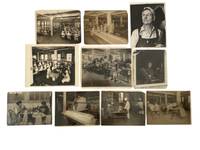
1940réf. 223731940. Women's EmploymentLaborFeminismWWII Archive of ten original photos documenting American women's industrial labor during the 1930s and 1940s. Original black-and-white press photographs taken in various factories during World War II including steel works textiles candy production and industrial assembly lines. Stamped by press agencies including Acme Newspictures Brown Brothers and International News Photos several with annotated captions on verso. This collection of press photos captures the pivotal moment when women entered the industrial workforce en masse replacing men who were fighting overseas. These images were part of a wartime propaganda campaign to normalize and promote women's factory work paving the way for long-term shifts in gender roles in the American labor force. In one striking image captioned by the N.E.A. press service as "Portrait for Mother's Day" a steel worker identified as Mrs. Neel of Gary Indiana is praised as "the American Mother- 1943 style" echoing the iconic Rosie the Riveter with a new image of female patriotism: overalls bandanna badge and goggles in hand. Another shows women boxing chocolates along a conveyor line while several others reveal the mechanical precision and physical intensity of jobs in textile finishing labeling and industrial equipment handling. This archive is emblematic of the historical inflection point that sparked the modern women's labor movement. The war effort validated women's technical skills and economic participation giving rise to a postwar generation of women who emboldened by their wartime service laid the intellectual and organizational groundwork for second wave feminism. Many of these workers would later confront the "return to domesticity" in the 1950s and become active in labor organizing civil rights and feminist causes by the 1960s. Light edge wear. Overall good to very good condition. A photographic archive capturing the genesis of modern women's industrial labor and the cultural origins of second wave feminism in the WWII workplace. unknown
1953Contents include: Retail trade establishments by geographic areas, kinds of business and type of operations, including such data as number of establishments, sales, employment, payrolls, inventories and commodities. The 1951 census, held two years after Newfoundland became part of Canada, marked Canada's first census as a nation of ten provinces and two territories. The content of the population and household questionnaire covered name, sex, age, marital status, relationship to "head" of household, and the structural type and tenure of dwelling. This census also provided information for small areas such as counties, municipalities, cities, towns, etc. Multi-paginations. 11.25" x 9" x 1.7". 2.0 kg. Forest green buckram with gilt lettering upon backstrip. Usual library markings. Average wear. Binding sound. Quality copy. Book
1953Contents include: Wholesale trade establishments and service establishments by geographic areas, kinds of business and type of operations including such data as number of establishments, sales, employment and payrolls, with inventories and commodities shown for the wholesale trade. The 1951 census, held two years after Newfoundland became part of Canada, marked Canada's first census as a nation of ten provinces and two territories. The content of the population and household questionnaire covered name, sex, age, marital status, relationship to "head" of household, and the structural type and tenure of dwelling. This census also provided information for small areas such as counties, municipalities, cities, towns, etc. Multi-paginations. 11.25" x 9" x 1.7". 2.0 kg. Forest green buckram with gilt lettering upon backstrip. Usual library markings. Average wear. Binding sound. Quality copy. Book
1931réf. 2111902160500999Not Available 1931. Soft Cover. Fine. Number of copies: Central Employment Placement Secretariat Not Available paperback
1945Features: Humorous cover art by Norris shows bored boy in church; Can We All Get Jobs? - an argument to boost exports; Home-Front Booby Traps - returning servicemen with their war earnings must beware sharpsters targeting their funds; It's The Happy Gang! - They boast over a million weekly radio listeners; Our Crazy Clothes - Eminent Toronto doctor claims never have so many worn so much - or so little - in the wrong places; This is Berlin - The crippled city struggles to its feet; Bug Busters - DDT and dimethyl phthalate; London Letter - Who Got Slapped?; Washington Memo - approval of the United Nations Charter; Backstage at Ottawa - Dominion-Provincial talks next month; Get in the Swim - photo-illustrated article on aquabats/ornamental swimmers/synchronized swimmers, including nine-time champion Doris Geldard of Toronto; It Happened in Norway - Paper shoes, paper clothes, no meat, but even traitor Quisling will get a fair trial; Turn Again Home (short story); A Date for Agnes (short story); Russian Lady (short story); Canny Canning; and more. Nice ads for: Fleet Aircraft; Moore Business Forms, Koroseal by B.F. Goodrich, Miracle Whip, White Rose petroleum products, Canada Dry sparking water, Absorbine Jr., John Labbatt Ltd., Kreml Hair Tonic, Arrid deodorant (featuring photo of Jessica Dragonette), Hiram Walker & Sons, Limited ("Serving the United Nations with War Alcohol"); Pep O Mint Life Savers; Eveready Flashlight Batteries (featuring photo of young radio singer Cleone Duncan of Calgary); Vitalis; Eversharp Red Top Lead (fantastic colour ad on back cover); Wonderful colour ad inside back cover by the Blue Top Brewing Company of Kitchener encourages readers to support Red Cross Blood Clinics to help soldiers. 52 pages. Unmarked with average wear. Small perforations in front cover to right of title. Several peripheral openings. A quality copy of this wonderful vintage issue. Book
1904216 pages, including index, plus 64 pages of advertisements. Illustrated with 184 engravings. Chocolate brown cloth exterior moderately worn with clearly legible gilt lettering upon backstrip. "I have been engaged in the construction of toothed gearing all my life, and many years ago felt the want of such a book as this. There is no work yet of this particular type published either in England or America, none which deals with the subject of toothed gearing from the standpoint of the workshop and drawing-office, none which goes over the whole field as this does. Only so much mathematics is introduced as is necessary to establish fundamental principles. But the practical methods of formation of tooth profiles, both cycloidal and involute, special forms, and the employment of Willis's Odontograph, have been treated fully. The various screw gears, angle wheels, worm wheels, helical wheels, etc. have received full illustration, and the essential elements of the practice of machine moulding have been described..." - from Preface. Prior owner's details neatly upon title page else unmarked. Fold-out drawing loose but present at page 18. Binding soundl Light to moderate soiling externally. Overall, a solid and pleasing opy of this pioneering work. Book
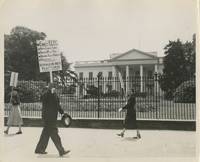
1950réf. BK0056Washington D.C.: Harris & Ewing Photographic News Service 1950. Original gelatin silver press photograph showing Paul Robeson picketing in front of the White House carrying a large placard reading "Enact F.E.P.C. / Anti-Lynch Law / Abolish Poll Tax / Amend Taft-Hartley / Housing / Republican Party Platform." Harris & Ewing Photographic News Service credit stamp and original typed caption to verso with later Globe Photos label. 8 x 10 inches. Light handling wear and creasing otherwise very good. A photograph of Paul Robeson demonstrating directly outside the Truman White House. The original Harris & Ewing caption identifies him as leading representatives of the Progressive Party who "began picketing the White House today asking for more positive action by President Truman on FEPC." The demands on Robeson's placard reflect the stalled federal civil rights agenda of the period. Roosevelt had created the Fair Employment Practice Committee in 1941 after A. Philip Randolph threatened a mass march on Washington over discrimination in defense employment. Truman's President's Committee on Civil Rights subsequently recommended a permanent FEPC federal anti-lynching legislation and abolition of the poll tax; in February 1948 Truman formally asked Congress to enact those measures. The Progressive Party's 1948 platform had called for immediate anti-poll tax legislation and an expansive federal civil-rights program. By 1950 however the major legislative proposals remained blocked in Congress. . Harris & Ewing Photographic News Service unknown
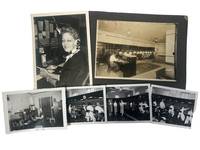
1900réf. 200911900. Telephone operator photo archive circa 1900 to 1958 documents women's labor within telephone exchange systems showing how urban communications depended on trained female operators seated at switchboards connecting calls handling information and maintaining the human infrastructure behind early and mid twentieth century telephone service. The material documents telephone communication labor through photographs of switchboard rooms operators wearing headsets plug boards supervisory presence and grouped clerical activity revealing how connection work operated in practice before automated dialing fully displaced manual exchange work. The archive supports research into women's wage labor communications history gendered office work New York telephone service and the disciplined workplace culture that positioned young women as the public voice and operational center of the telephone network. The archive consists of six black-and-white photographs including five silver gelatin photographs and one early albumen photograph with images measuring from approximately 3.5 x 4.25 inches to 7 x 9 inches. The date range appears to extend from the early twentieth century to 1958 based on the later dated images. Several photographs show women seated in tight rows facing large switchboards wearing heavy headsets with horn mouthpieces and working among dense arrangements of cords and plugs. The early albumen photograph shows a row of women facing the switchboards while a female supervisor watches over the room indicating both the gendered hierarchy and procedural discipline of the exchange floor. One image shows an operator turning toward the camera with a plug in hand smiling while gesturing toward the board. Four smaller photographs dated 1958 show teams of women moving between boards and a small group with paperwork behind the operating area; pencil inscriptions on the versos identify the location as New York. The photographs are valuable because they make visible the labor system behind telephone service: rows of operators standardized equipment supervisors paperwork and the coordinated manual routing of calls. They also record the gendered character of communications work in which women's voices posture speed and manner were made part of the service itself. Light handling wear minor edge wear and expected age toning; images remain crisp with equipment and personnel details clearly visible; overall very good. Strong women's labor and communications history archive documenting the human operation of telephone exchange systems across the first half of the twentieth century and into the postwar period. unknown
réf. 16265Woman's Work For Woman A Union Illustrated Magazine Published Monthly by the Women's Foreign Missionary Societies of the Presbyterian Church. Vol. XI No. 1. January 1896. New York. 28 pages. Vertical fold down the center of the booklet with soiling on the front and back cover water damage on the top and right edge of the front cover and small losses on the bottom edge of the back cover. Very rare; OCLC locates no other known copies. Woman's Work for Woman was published from 1890-1904. The magazine contains articles and updates about life in different missionary locations in Asia South America and the Middle East. With most of the submissions by women and with an all women Editorial Committee this magazine is indicative of some of the most acceptable ways for women to participate in public life in the late 19th century. Women were not allowed to participate in Presbyterian church councils or leadership until the mid-twentieth century but working with the Women's Missionary Societies gave new opportunities for writing organizing and leadership positions. In the late 19th century women who sought work outside the home were often criticized for abandoning family and domestic responsibilities but women who pursued religious work did not face this same criticism since they had an altruistic motive. Working on religious causes allowed women agency and independence that they would not be able to access in other occupations. Very rare; OCLC Worldcat locates no known copies at any library or institution. unknown books
réf. Z1-I-004-01527Stationery Office Books TSO. Used - Good. Ships from UK in 48 hours or less usually same day. Your purchase helps support Sri Lankan Children's Charity 'The Rainbow Centre'. Ex-library so some stamps and wear but in good overall condition. 100% money back guarantee. We are a world class secondhand bookstore based in Hertfordshire United Kingdom and specialize in high quality textbooks across an enormous variety of subjects. We aim to provide a vast range of textbooks rare and collectible books at a great price. Our donations to The Rainbow Centre have helped provide an education and a safe haven to hundreds of children who live in appalling conditions. We provide a 100% money back guarantee and are dedicated to providing our customers with the highest standards of service in the bookselling industry. Stationery Office Books (TSO) unknown
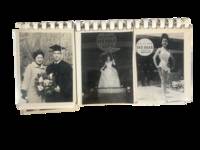
1979réf. 227401979. Korean-American Women's Employment Fashion Photo Album of a Korean-American dressmaker students and Korean pageant shows 1960s. Provenance unknown but most photos seem to be on the East Coast with a few in Korea. Collection of approximately 45 black and white and color Polaroid prints housed in a black faux-leather spiral album. Album measures 11" x 5.5" and photos approximately 3.5" x 3" each. Some have captions in Korean and/or English en verso. An evocative and culturally layered mid-century photo album documenting the life and career of a Korean American woman likely working as a tailor or dressmaking instructor in the United States during the 1960s. The album juxtaposes scenes of professional life of classroom instruction fashion shows and tailoring studios with moments of leisure and family portraiture in both Western and traditional hanbok attire that together reflect the hybrid social world of Korean immigrant professionals in postwar America. Several photographs show groups of women inside a sewing or fashion studio including one captioned in English on the verso "Me and my students." Other images depict a 1964 Miss Korea pageant with contestants modeling Western evening gowns and swimsuits possibly wearing designs by the album's compiler. Some of these images have handwritten captions in Korean script en verso. The pageant scenes bearing visible banners in Korean script suggest ties to Korean American community networks and cultural events that celebrated modern femininity and national identity during a period of postwar reconstruction and Diaspora visibility. Korean Americans in the 1960s represented a small but rapidly growing immigrant community shaped by both Cold War geopolitics and the aftermath of the Korean War. The Immigration and Nationality Act of 1965 which abolished national-origin quotas marked a turning point that encouraged the arrival of highly educated professionals including teachers engineers nurses and artists many of whom were women. These new immigrants often balanced preservation of traditional Korean customs with adaptation to American professional and social norms forming churches cultural associations and language schools that became vital centers of community life. Within this historical frame the album reflects the self-fashioning of a generation striving for both cultural dignity and modern achievement a narrative rarely preserved through visual documentation especially among women engaged in skilled trades and design education. Light wear to album exterior minor toning to some prints though images remain crisp and clean. Overall very good condition. unknown