Members of the Employment Department, Baker & McKenzie LLP and Members of Blackstone ChambersBiblio.com
628 résultats
réf. GOR006782046Paperback. Very Good. paperback
1960réf. 238201960. Civil rights law and racial justice ephemera from circa 1961 to 1975 documenting the expansion of anti discrimination policy from state and local campaigns into federal employment regulation fair housing advocacy administrative enforcement and the 1970s critique of institutional racism. The six publications move from the Kentucky Advisory Committee's reporting on discrimination in Louisville Lexington Frankfort and Hopkinsville through the federal legal apparatus created around the Civil Rights Act of 1964 and Executive Order 11246 then into national organizing and statistical analysis of racial disparities during the following decade. By 1975 Fact Sheets on Institutional Racism framed inequalities in business ownership banking education housing media health and government as products of "White Control and Minority Oppression" extending the group's documentary range from laws against discriminatory acts to an analysis of the institutions in which racial inequality persisted. Archive of six pamphlets and ephemeral publicationseach approx 7 x 8 inches to 8 x 10 inches United States circa 1961 to 1975. 1 Kentucky Advisory Committee to the U.S. Commission on Civil Rights. Kentucky. Circa 1961. Report on civil rights activity in Louisville Lexington Frankfort and Hopkinsville addressing public accommodations employment housing and the development of the Kentucky Commission on Human Rights. Its introduction describes the state committee reports as "on-the-spot findings of informed and conscientious citizens seeking to discover the extent of denials of equal justice in their respective States and possible remedies" while also recording the activity of religious groups in breaking racial barriers. 2 Fair Housing for All: We Welcome Neighbors of Any Race Creed or Color. Circa 1960s. Public facing fair housing advocacy piece built around the image of a house enclosing the words "FOR ALL" explicitly joining residential integration to opposition to discrimination by race creed or color. 3 U.S. Commission on Civil Rights. Equal Employment Opportunity Under Federal Law: A Guide to Federal Law Prohibiting Discrimination on Account of Race Religion or National Origin in Private and Public Employment. Clearinghouse Publication No. 17. August 1969. The guide sets out "The Duty of Nondiscrimination" and procedures for filing employment discrimination complaints then explains coverage under the Civil Rights Act of 1964 the Equal Employment Opportunity Commission Executive Order 11246 for federal contractors and subcontractors the National Labor Relations Act Section 1981 the Civil Rights Act of 1968 Title VI federal employment state and local government employment and "Affirmative Steps Toward Equal Employment Opportunity." 4 State of Kansas Commission on Civil Rights. The Kansas Act Against Discrimination. Circa 1972 or later. The introductory note traces the statute from its passage in 1953 through amendments in 1961 1963 1965 1967 1970 and 1972. Those amendments successively extended protection into employment hotels and restaurants broader public accommodations and real estate transactions while enlarging the Commission's investigatory and subpoena powers and in 1972 authorizing investigation of complaints of sex discrimination. 5 YWCA of the U.S.A. National Convocation on Racial Justice. Americana Hotel New York City June 15 1972. Program for a national meeting organized around plenary sessions and morning and afternoon panels naming Senator Hugh Scott Representative Ronald V. Dellums Representative Shirley Chisholm Dr. Reginald Wilson Hon. Richard Hatcher and Hon. McGeorge Bundy among its speakers. 6 Foundation for Change Inc. and Council for Interracial Books for Children. Fact Sheets on Institutional Racism: White Control and Minority Oppression. August 1975. Organized under the headings Economy Health Housing Education Media Government and Census the publication compiles contemporary statistics from sources including the U.S. Bureau of the Census Black Enterprise Ebony Jet and the Economic Priorities Report. Its economy section reports that Black Americans owned 1.2 percent of business equity 1.2 percent of farm equity and 0.1 percent of stock equity; that only one of 650 seats on the American Stock Exchange belonged to a Black firm; and that Black Americans held 72 of 14000 directorships among the 1000 largest corporations. The publications record successive stages in the institutional response to racial discrimination. The Kentucky report belongs to the period when state advisory committees gathered local testimony and documented unequal treatment before the principal federal civil rights legislation of the mid 1960s; the Kansas pamphlet records how one state repeatedly enlarged the jurisdiction and enforcement powers of its civil rights commission between 1953 and 1972. The 1969 federal employment guide shows the resulting network of statutes executive authority complaint procedures commissions and sanctions through which nondiscrimination became an administrative responsibility extending across private employment public employment organized labor and federal contracting. The fair housing piece translates the same legal and political struggle into direct public persuasion while the 1972 YWCA program places elected officials including Dellums and Chisholm within a national organizational campaign for racial justice. By 1975 Fact Sheets on Institutional Racism measured disparities that remained after more than a decade of civil rights legislation citing ownership corporate governance banking and income statistics to argue that formal legal equality had not altered the distribution of economic power. Light handling and edge wear scattered toning and occasional spotting or soiling visible to wrappers; manuscript notation and institutional library markings to the Kentucky report; contents generally clean and legible. Overall good condition. A compact documentary record of the movement from prohibiting racial discrimination in law to enforcing those prohibitions through public institutions and confronting the economic and institutional inequalities that remained. unknown
1972réf. mon0000586802Stationery Office Books 01/07/1972 00:00:01. paperback. Acceptable. in x in x in. NOT an ex-library book. Cover has a few stains but otherwise in good condition but still very useable. Stationery Office Books paperback
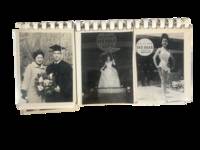
1979réf. 227401979. Korean-American Women's Employment Fashion Photo Album of a Korean-American dressmaker students and Korean pageant shows 1960s. Provenance unknown but most photos seem to be on the East Coast with a few in Korea. Collection of approximately 45 black and white and color Polaroid prints housed in a black faux-leather spiral album. Album measures 11" x 5.5" and photos approximately 3.5" x 3" each. Some have captions in Korean and/or English en verso. An evocative and culturally layered mid-century photo album documenting the life and career of a Korean American woman likely working as a tailor or dressmaking instructor in the United States during the 1960s. The album juxtaposes scenes of professional life of classroom instruction fashion shows and tailoring studios with moments of leisure and family portraiture in both Western and traditional hanbok attire that together reflect the hybrid social world of Korean immigrant professionals in postwar America. Several photographs show groups of women inside a sewing or fashion studio including one captioned in English on the verso "Me and my students." Other images depict a 1964 Miss Korea pageant with contestants modeling Western evening gowns and swimsuits possibly wearing designs by the album's compiler. Some of these images have handwritten captions in Korean script en verso. The pageant scenes bearing visible banners in Korean script suggest ties to Korean American community networks and cultural events that celebrated modern femininity and national identity during a period of postwar reconstruction and Diaspora visibility. Korean Americans in the 1960s represented a small but rapidly growing immigrant community shaped by both Cold War geopolitics and the aftermath of the Korean War. The Immigration and Nationality Act of 1965 which abolished national-origin quotas marked a turning point that encouraged the arrival of highly educated professionals including teachers engineers nurses and artists many of whom were women. These new immigrants often balanced preservation of traditional Korean customs with adaptation to American professional and social norms forming churches cultural associations and language schools that became vital centers of community life. Within this historical frame the album reflects the self-fashioning of a generation striving for both cultural dignity and modern achievement a narrative rarely preserved through visual documentation especially among women engaged in skilled trades and design education. Light wear to album exterior minor toning to some prints though images remain crisp and clean. Overall very good condition. unknown
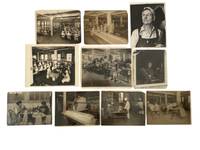
1940réf. 223731940. Women's EmploymentLaborFeminismWWII Archive of ten original photos documenting American women's industrial labor during the 1930s and 1940s. Original black-and-white press photographs taken in various factories during World War II including steel works textiles candy production and industrial assembly lines. Stamped by press agencies including Acme Newspictures Brown Brothers and International News Photos several with annotated captions on verso. This collection of press photos captures the pivotal moment when women entered the industrial workforce en masse replacing men who were fighting overseas. These images were part of a wartime propaganda campaign to normalize and promote women's factory work paving the way for long-term shifts in gender roles in the American labor force. In one striking image captioned by the N.E.A. press service as "Portrait for Mother's Day" a steel worker identified as Mrs. Neel of Gary Indiana is praised as "the American Mother- 1943 style" echoing the iconic Rosie the Riveter with a new image of female patriotism: overalls bandanna badge and goggles in hand. Another shows women boxing chocolates along a conveyor line while several others reveal the mechanical precision and physical intensity of jobs in textile finishing labeling and industrial equipment handling. This archive is emblematic of the historical inflection point that sparked the modern women's labor movement. The war effort validated women's technical skills and economic participation giving rise to a postwar generation of women who emboldened by their wartime service laid the intellectual and organizational groundwork for second wave feminism. Many of these workers would later confront the "return to domesticity" in the 1950s and become active in labor organizing civil rights and feminist causes by the 1960s. Light edge wear. Overall good to very good condition. A photographic archive capturing the genesis of modern women's industrial labor and the cultural origins of second wave feminism in the WWII workplace. unknown
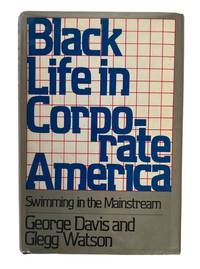
1982réf. 196801982. African American Davis George and Watson Glegg. Black Life in Corporate America: Swimming in the Mainstream. New York: Anchor Press/Doubleday 1982. Signed First Edition Hardcover with Dust Jacket. 204 pages. Measures 6" x 8.5". Signed in pen by both George Davis and Glegg Watson on the front free endpaper. The book collects over 160 interviews to convey black life in corporate America. From the front flap: "This is the first in-depth look at the professional and personal lives of black men and women trying to 'make it' in a world created by and for white males." The authors were asked to create and teach a course based on the book's insights for two terms at the Yale School of Organization and Management making it the first course in the nation in multicultural management. Black and white photo of authors featured on the back cover. Dime-sized stain on corner of front free endpaper but cover is clean textblock tight overall in very good condition. unknown
1948réf. 200371948. African American Ottley Roi. Black Odyssey: The Story of the Negro in America. New York: Charles Scribner's Sons 1948. Hardcover with Dust Jacket. 340 pages. Measures 6" x 8.5". Born in New York City in 1906 Black author and journalist Roi Ottley began his career as a reporter for the New York Amsterdam Star-News. He went on to serve as publicity director for the National C.I.O. War Relief Committee and served as a war correspondent in the 1940s. Here he "traces the strange history of his race in America from the very beginning up to the present day. In early colonial times the Negro was a free and often respected individual; as the colonies grew and cheap labor was needed he was reduced to the status of a slave." The book includes historical moments as well as personal anecdotes from interviews and covers a wide range of events "from the day in 1664 when Maryland became the first colony to legalize slavery through the dark days of servitude to the Emancipation Proclamation and the beginning of the Negro's modern history as a free but segregated citizen." Dust jacket has only minor wear with a small piece of visible tape-repair at the top of spine. Pages are very clean and texblock still tight. Overall in very good condition. unknown
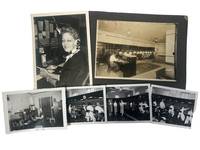
1900réf. 200911900. Telephone operator photo archive circa 1900 to 1958 documents women's labor within telephone exchange systems showing how urban communications depended on trained female operators seated at switchboards connecting calls handling information and maintaining the human infrastructure behind early and mid twentieth century telephone service. The material documents telephone communication labor through photographs of switchboard rooms operators wearing headsets plug boards supervisory presence and grouped clerical activity revealing how connection work operated in practice before automated dialing fully displaced manual exchange work. The archive supports research into women's wage labor communications history gendered office work New York telephone service and the disciplined workplace culture that positioned young women as the public voice and operational center of the telephone network. The archive consists of six black-and-white photographs including five silver gelatin photographs and one early albumen photograph with images measuring from approximately 3.5 x 4.25 inches to 7 x 9 inches. The date range appears to extend from the early twentieth century to 1958 based on the later dated images. Several photographs show women seated in tight rows facing large switchboards wearing heavy headsets with horn mouthpieces and working among dense arrangements of cords and plugs. The early albumen photograph shows a row of women facing the switchboards while a female supervisor watches over the room indicating both the gendered hierarchy and procedural discipline of the exchange floor. One image shows an operator turning toward the camera with a plug in hand smiling while gesturing toward the board. Four smaller photographs dated 1958 show teams of women moving between boards and a small group with paperwork behind the operating area; pencil inscriptions on the versos identify the location as New York. The photographs are valuable because they make visible the labor system behind telephone service: rows of operators standardized equipment supervisors paperwork and the coordinated manual routing of calls. They also record the gendered character of communications work in which women's voices posture speed and manner were made part of the service itself. Light handling wear minor edge wear and expected age toning; images remain crisp with equipment and personnel details clearly visible; overall very good. Strong women's labor and communications history archive documenting the human operation of telephone exchange systems across the first half of the twentieth century and into the postwar period. unknown
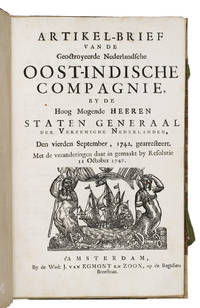
1747réf. ABC_47930Amsterdam 1747. Folio. Wed. J. van Egmont en Zoon Contemporary half vellum sewn on 3 vellum tapes laced through the joints marbled paper over boards with a heart shaped printed title-label on the front board green ties. With a woodcut printer's device on the title page and 2 decorated woodcut initials in the text. 2 2 blank 53 3 blank pp. Very rare work with the terms of employment of the Vereenigde Oost-Indische Compagnie VOC. It contains 121 clauses with rules of conduct and an extra chapter with formularies of oaths. This second revised edition was published after some changes had been made to the rules in 1747. This VOC publication is very rare. It is available in just a few libraries and we have only been able to trace one other copy in sales records of the past 100 years.The clauses deal with everything an employee of the VOC could face during employment. They explain exactly who is in charge how to deal with religion on board of the ships when and how payment of wages takes place what the VOC pays in case of injury or death how to climb in rank rations on the ships the repercussions of illegal trading and the rights of former employees. The VOC struggled with staff shortages throughout the 18th century but the situation became especially dire from 1744 onwards. This was in part because the VOC was not known to be a good employer. The present publication can likely be seen as an attempt by the VOC to improve its image as an employer and attract more staff.With an additional loose large square title-label added before the front flyleaf and with the blindstamp of a previous owner "Gulden Passer - Labores et Constantia - HV" on the front and back free flyleaves. As usual the title has been extended with a slip-cancel mounted under the title partially covering the printers device. The edges of the boards are slightly scuffed. The front endpapers the title page and following blank leaf have been reinforced in the gutter with paper the endpapers are slightly browned with a small brown stain on the title-page and first blank leaf. Overall in very good condition.l Landwehr VOC 940; STCN 17341558X 6 copies; WorldCat 48255045 1200508712 7 copies; cf. Schimmel R. De VOC als werkgever. Een vergelijkend onderzoek naar de invloed van de VOC op maritieme arbeidsmarkten in Azië master thesis 2023. hardcover
1911réf. 182771911. Imperial size albumen portraits of faculty and students at American Medical College. St. Louis Missouri 1911. Large photo measures 24 x 20 inches. 40 subjects every one of them male except for a single female student listed below as "F Heflin." Photographed by Hays Studio. Mounted to photographer's board. The American Medical College a medical school founded in 1873 graduated its first woman in 1888. In 1911 the American Medical College combined with the Barnes Medical College. The following year the combined school became the Medical Department of the National University of Arts and Sciences in St. Louis. The National University then merged with the St. Louis College of Physicians and Surgeons around 1915. Female students like this one would have come in at a significant disadvantage proving her qualifications against skepticism in a field notorious for gender discrimination. The value of female doctors for female patients in particular has been profound. Board scuffed on one side does not affect images or text. Chipped at corner and top does not affect images or text. Overall very good condition. Expressions and details in images clear. unknown
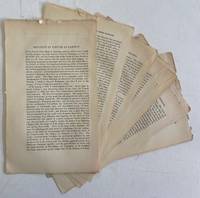
1887réf. 174331887. Women's Employment MABEL Robert F. Our Working Women and Their Earnings. United States 1887. First Edition. 13 pages measuring approximately 6" x 10" inches. At the time that this description is being written no copies are recorded in American institutions. OCLC search results are at best an estimate and can vary over time. The article begins "We as a nation have made no effort to teach our redundant female population to support itself although our position as a mother of colonies leaves us with a steadily increasing proportion of women who through the emigration of their male relatives are forces to provide for themselves." and concludes that "a woman's technical training will have still done her a good service in quickening her intelligence and in thus making her a wiser mother to her children and a more sympathetic companion to her husband above all in banishing much care by ensuring to her a means of livelihood in case of need." A compassionate thoughtful appraisal of the state of women's labor and financial prospects in the United States backed up by employment and pay statistics from the end of the 19th century. Cleanly disbound. Chipped along top edge. Toning. Pages clean and uncreased. Overall in good condition. unknown
1910réf. 175081910. Women Employment Feminism and Women's Rights Summary of Eight Papers and Discussions Upon the Disabilities of Mothers as Workers. London: Fabian Women's Group 1910. Measures 8.5" x 5" inches. 32 pages. This pamphlet summarizes the problems that arise from the modern expectation of women to work difficult industrial jobs as well as the traditional duties of motherhood. This pamphlet was produced by the Fabian Women's Group which acted as a suffrage pressure group directed at the Labour Party that also advocated for women workers. The summarized section was edited by Charlotte Payne Townshend wife of George Bernard Shaw. Paper titles include: The Physical Disabilities of Maternity The Influence of Hygiene and Physical Culture upon the Disabilities of Motherhood The Effects upon children of the Mother's Activity Outside the Home and more. From "Motherhood and Industrial Work" Frau Lily Braun states: "The evils of exploited labor are seen at their worst in the employment of married women with children. The wages of many a workman do not suffice for family maintenance and the wife's work is absolutely essential to make up what is needed.In the early morning she starts for her work; and the cooking washing cleaning and sewing must be done in the evening by an overtaxed wearied woman. Premature age and spiritual exhaustion are the result." Some minor stains from rusted staples in the gutter of the spine not affecting text. Overall in very good condition. unknown
1919réf. 163201919. Ministry of Reconstruction Women's Advisory Committee. Report of the Sub-Committee Appointed to Consider the Position after the War of Women Holding Temporary Appointments in Government Departments 1919 addresses the status of women recruited into temporary government service during World War I and the terms under which they might remain in public employment after demobilization. The report concerns the transition from wartime labor to the permanent Civil Service including questions of women's eligibility for continued appointment equality of treatment with male colleagues pay and the assignment of clerical duties. Produced as the British government confronted the employment consequences of women's expanded wartime service it records official consideration of whether women who had entered departments under emergency conditions should retain a place in the postwar state workforce. Ministry of Reconstruction. Women's Advisory Committee. Report of the Sub-Committee Appointed to Consider the Position after the War of Women Holding Temporary Appointments in Government Departments. Presented to Parliament by Command of His Majesty. London: Published by His Majesty's Stationery Office 1919. Folio. 8 pages. The sub-committee consisted of six women and two men and was charged specifically with examining the position of women holding temporary government appointments after the war. Its recommendations address routes by which women might become permanent government employees and argue for treatment on terms comparable to male colleagues including questions of equal pay and the expectation that women should not automatically be assigned additional clerical work because of their sex. As an official parliamentary publication rather than an outside campaign tract the report documents how women's wartime employment had become an administrative question within government itself. Women entered British government departments in substantially increased numbers during World War I filling posts created or expanded by wartime administration while large numbers of men were serving in the armed forces. The end of the war raised immediate questions about whether these appointments would be terminated converted into permanent positions or reorganized along sex-segregated lines. This report preserves the Women's Advisory Committee's intervention in that process and records specific arguments over permanence pay duties and women's place in the postwar Civil Service. Modern blue card wrappers with paper label. Very good condition. An official 1919 statement of the employment claims advanced for women whose wartime government service had demonstrated their capacity to perform work previously reserved largely for men. unknown
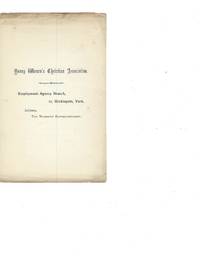
1890réf. 164641890. Young Women's Christian Association. Employment Agency Branch 1890s an organizational pamphlet documenting the policies governing a YWCA employment agency in York and the institutional mechanisms used to connect women seeking paid work with prospective employment. By the late nineteenth century YWCA branches had expanded beyond religious fellowship to provide practical services including housing vocational instruction and employment placement for women; YWCA histories record the establishment of employment bureaus and typewriting training during this period. The present pamphlet shows that employment-assistance system in practice through formal agency policies providing primary-source evidence for the study of women's labor charitable and religious social-service networks vocational placement and the changing economic position of women in late Victorian Britain. Young Women's Christian Association. Employment Agency Branch. York: Young Women's Christian Association 1890s. Self-wrappers. Pagination and dimensions not supplied. The pamphlet sets forth policies for the Association's Employment Agency Department defining the administrative framework through which the branch managed employment assistance. Its significance lies in the practical structure it records: rather than merely advocating women's economic independence the agency created a formal mechanism through which applicants and employers could be brought into contact under organizational supervision. This activity belongs to a broader late nineteenth-century transformation in women's work when employment opportunities were still strongly divided by gender but were beginning to expand into clerical professional retail medical and other occupations previously less accessible to women. The York employment agency belongs to the wider history of women's voluntary organizations intervening directly in the labor market by providing placement services training and institutional support. Such services were particularly significant for women navigating an employment landscape in which occupational options and wages remained constrained by gender. The pamphlet therefore offers evidence not simply of YWCA philanthropy but of the administrative infrastructure developed to facilitate women's entry into paid work. No specific physical defects are supplied; overall very good. A concise primary source documenting how a late Victorian women's organization translated social-service aims into a structured employment-placement program. unknown
1871réf. 165651871. To the Right Honorable Richard Assheton Cross M.P. Secretary of State for the Home Department dated 1871 in the supplied description. Petition by British women workers opposing proposed factory legislation that threatened to restrict women's paid employment particularly that of married women and mothers. The petitioners object to proposals that would "restrict the paid labour of all women.or even make all married women half-timers" arguing that legislation presented as protecting female workers could instead deprive them of wages and economic independence. Their objections distinguish between protections against dangerous industrial conditions and restrictions imposed specifically because of sex or marital status. The petition documents women's direct intervention in nineteenth-century labor legislation challenging the assumption that Parliament could protect married women by limiting their right to earn wages. To the Right Honorable Richard Assheton Cross M.P. Secretary of State for the Home Department. 1871 date requires verification. 4 pages. Measuring 8 x 5 inches. The memorialists argue that regulations imposed upon married women would discriminate against unmarried women as well establishing different legal rights to employment according to marital status. They declare "Your Memorialists assert that it is unjust to place restriction son the labour of unmarried women for the presumed protection of married women or mothers" and further maintain that "any special restrictions upon the labour of married women is practically a penalty imposed on marriage as regards to the woman." These statements identify the economic consequences of proposed restrictions and insist that marriage and motherhood should not diminish a woman's right to paid employment. The petition belongs to Victorian debates over factory regulation women's industrial employment and the distinction between protective legislation and unequal treatment under labor law. While reformers sought shorter hours and safer working conditions for women and children opponents of sex-specific restrictions argued that compulsory limits could reduce women's earnings exclude them from certain occupations and reinforce their financial dependence upon men. The memorialists articulate this objection in their own words documenting women's resistance to legislation that treated marital status as grounds for restricting employment. Chipping with small losses along the upper and right edges repairs to two tears on page 2 and loss to the upper left corner. Good condition. unknown
1873réf. 165671873. Kinnear John Boyd. The Right of Women to Labour 1873 argues against restrictions on women's employment and examines the economic consequences of industrialization for women who depended upon paid work. Kinnear a Scottish lawyer writer and later Liberal politician rejects occupational exclusion based on sex writing "there are other things which women can do at least as well as men.Then why should women not do it" His argument extends beyond access to employment to the conditions under which women worked including their difficulty in "forming effective trade unions to secure their rights." The pamphlet thus addresses both women's right to enter occupations and their limited power to protect themselves collectively once employed. Kinnear John Boyd. The Right of Women to Labour. Being Portions of an Essay Re-printed by Permission from "Woman's Work and Woman's Culture." London: Printed by Frederick Bell & Co. Chelsea S.W. 1873. First edition. 14 pages. The text reprints portions of Kinnear's contribution to Josephine Butler's Woman's Work and Woman's Culture first published in 1869 a collection addressing women's education employment legal status suffrage and professional opportunities. Kinnear argues that mechanization and the movement of production from households into factories had eliminated forms of work traditionally performed by women while exposing those who remained in industrial employment to increased competition. He answers these changes by demanding access to work according to ability rather than sex and by identifying workers' collective organization as a means of defending wages and employment rights. Published amid nineteenth-century campaigns to expand women's access to education professions property rights and political participation Kinnear's pamphlet concentrates specifically on economic independence and the organization of women workers. One pamphlet 14 pages in original paper wrappers measuring 8 x 5 1/4 inches. Very good condition. Its discussion of occupational exclusion mechanization and trade union organization records an early argument that women's economic rights required both access to paid employment and the ability to defend their position within the labor market. unknown
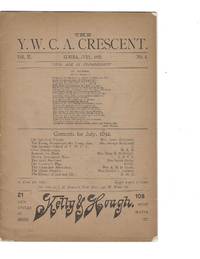
1892réf. 164651892. Young Women's Christian Association. The Y.W.C.A. Crescent July 1892 an early organizational newsletter carrying the motto "Our Aim is Progress" and documenting the public identity of the Young Women's Christian Association during the late nineteenth-century expansion of women's religious educational employment and associational activity. The emphatic language of "progress" places the publication within a culture of organized female self-improvement and collective advancement providing contemporary evidence of how a women-led Christian association presented its aims to members and readers. Without further description of the issue's internal articles its strongest interpretive value lies in this representation of YWCA community identity and the language through which women's organized activity was framed in the 1890s. The Y.W.C.A. Crescent. Vol. 2 No. 4. Young Women's Christian Association July 1892. Newsletter bearing the slogan "Our Aim is Progress." Pagination place of publication dimensions and specific internal contents are not supplied. As the fourth number of the publication's second volume the issue demonstrates an established serial publishing effort by the Association and provides material evidence of the periodical culture through which women's voluntary organizations maintained a recognizable institutional voice. An exact surviving example is independently cataloged under this title volume number and date. The issue belongs to the broader history of women's associational print culture at the close of the nineteenth century when newsletters and organizational periodicals helped sustain communities formed around religious fellowship education employment assistance and women's social development. The phrase "Our Aim is Progress" is particularly evocative of the aspirational vocabulary used by women's organizations seeking to define expanded roles for women within modern urban and professional life although the specific contents of this issue should not be inferred without examination. Covers loose or separated from the body of the newsletter; otherwise no specific defects supplied; overall very good. An early YWCA periodical useful for the study of women's organizational culture institutional publishing and the rhetoric of female advancement in the 1890s. unknown
réf. 16260Broadside calling on women to join a mass demonstration against reductions to the WPA 1937 documents organized opposition to cutbacks in one of the New Deal's principal employment programs during the continuing economic instability of the Great Depression. Addressing women specifically the broadside argues that WPA reductions threatened not only workers directly employed by the program but wage standards more broadly warning that increased unemployment would place downward pressure on earnings. Its appeal places women within contemporary campaigns over public employment wages and federal responsibility for economic relief. Broadside calling women to protest WPA cuts. Issuer not identified. 1937. 8.5 × 11 inches. The text urges women to participate in a mass demonstration protesting cuts to WPA funding and asks them to consider both their direct relationship to federal work programs and the wider consequences of rising unemployment. By connecting reduced WPA employment with falling wages the broadside frames the demonstration as a labor issue extending beyond current relief workers and calls upon women to participate in organized political action against the reductions. Very fragile with small tears and chips along the top and right edges; overall Good Condition. The broadside preserves direct evidence of women being recruited into Depression-era labor protest and of arguments linking New Deal employment programs to wage conditions across the broader workforce. unknown
réf. 16266Working Girls' Society. Circular of the Working Girls' Society late nineteenth century sets out the rules and benefits of a New York organization created for wage-earning women. The Society provided working women with rooms for social meetings classes reading and recreation after working hours while its bylaws governed membership and access to the organization's facilities. Contemporary accounts of New York working girls' clubs describe them as cooperative organizations in which members pursued self-education social activity and practical assistance rather than simply receiving charity. Circular of the Working Girls' Society. New York: Working Girls' Society n.d. Bylaws governing membership and use of the Society's library and rooms at 222 West 38th Street. The circular describes benefits available to members including special vacation privileges and discounted railway tickets combining educational and social provisions with practical assistance for women earning wages in the city. The regulations document the daily administration of a women's club formed around the needs of an expanding urban female workforce and show how membership could provide access to books meeting rooms instruction recreation and reduced-cost travel. The circular survives from the period in which working women's clubs expanded in New York; by the early twentieth century contemporary descriptions traced the movement to clubs organized during the 1880s and emphasized their classes member government and opportunities for social intercourse and self-improvement. Two very light horizontal folds and light thumb-soiling with a 2-inch tear at the bottom of the center fold; overall Very Good Condition. unknown
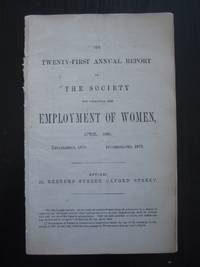
1880réf. 165711880. Society for Promoting the Employment of Women. The Twenty-First Annual Report of the Society for Promoting the Employment of Women 1880 documents an organization established to expand women's access to vocational training and paid employment in occupations beyond the limited fields conventionally open to them in nineteenth-century Britain. Founded in 1859 through the work of women's rights reformers including Jessie Boucherett Barbara Bodichon and Adelaide Anne Procter the Society connected demands for women's economic independence with practical programs for training and placement. Its purpose is stated directly in the report: "The Society is formed for promoting the Training of Women and their employment in industrial pursuits." Society for Promoting the Employment of Women. The Twenty-First Annual Report of the Society for Promoting the Employment of Women April 1880. London: Printed by John Bale & Sons 1880. First edition. The thirty-page report records the Society's work in preparing women for specific occupations and discusses the training required to enter fields including wood carving hospital nursing and hairdressing among others. Rather than arguing only for women's abstract right to employment the report records the practical means by which the Society attempted to open occupations through instruction and professional preparation. Its annual accounting of such programs shows how an organization founded by members of the mid-century women's rights movement addressed the economic restrictions confronting women through vocational initiatives maintained over more than two decades. The report appeared twenty-one years after the Society's establishment and shortly after its incorporation in 1879 when campaigns for women's property rights education professional access and suffrage were expanding the legal and economic questions surrounding women's independence. The Society's emphasis on training addressed one concrete barrier to entry into skilled occupations: women could not compete for work from which they had also been excluded from acquiring the necessary preparation. 30 pages. Original paper wrappers measuring 8 x 5 inches. Light pencil marks in the margins; otherwise very good condition. At the time this description was prepared no copies were recorded in American institutions in the OCLC search consulted; institutional holdings and OCLC records remain subject to revision. unknown
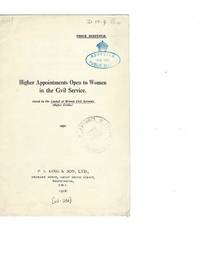
1928réf. 162621928. Council of Women Civil Servants Higher Grades. Higher Appointments Open to Women in the Civil Service 1928 publicized routes into senior British government employment three years after women became eligible for direct recruitment into the Administrative Class of the Home Civil Service. The Council founded in 1920 to represent women in administrative professional and executive grades campaigned during the interwar period for equal opportunity and equal pay and against restrictions including the marriage bar. This pamphlet addressed a practical obstacle to women's advancement: insufficient knowledge of the senior Civil Service careers then available to female applicants. Its publication belongs to the Council's broader campaign to increase women's access to government positions beyond the clerical grades. Council of Women Civil Servants Higher Grades. Higher Appointments Open to Women in the Civil Service. London: P. S. King & Son Ltd. 1928. 8½ x 5½ inches. Eight-page pamphlet in paper wrappers staple bound. The Council begins from its belief that the "number and the importance of the careers in the Civil Service open to women are not fully recognized" then supplies information intended to acquaint prospective applicants with higher appointments and the procedures for obtaining them. The text describes opportunities in administrative executive and clerical work making the pamphlet both a recruitment document and evidence of the methods used by an organization of women civil servants to encourage women to pursue positions within the government's higher grades. A contemporary listing records another copy as formerly held by the Board of Education library. The pamphlet appeared during a period when formal access to higher Civil Service employment had expanded without eliminating sex-based restrictions within government employment. Women gained access to direct recruitment into the Administrative Class in 1925 yet women civil servants continued to encounter unequal pay restricted advancement and the marriage bar; the Council subsequently presented evidence to the Royal Commission on the Civil Service in 1929-1931 and remained active in campaigns concerning equal pay and women's eligibility for government posts. The present copy has light thumb-soiling stamps on the front wrapper a library sticker on the rear and rusting to the staple binding; good condition. Its eight pages preserve the Council's own effort to translate newly available avenues of advancement into concrete information about careers and application procedures for women seeking higher appointments in the inter war British Civil Service. unknown
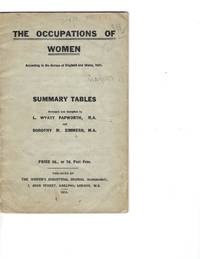
1914réf. 162641914. Papworth L. Wyatt and Dorothy M. Zimmern comps. The Occupations of Women According to the Census of England and Wales 1911 1914 uses government census data to quantify women's participation in the British labor force and identify occupations offering employment to women. Published by the Women's Industrial Council an organization concerned with women's working conditions and economic opportunities the pamphlet converts the 1911 Census into tables comparing male and female employment and distinguishing women workers according to marital and occupational status. Appearing before the First World War substantially altered women's employment in Britain the study provides a statistical record of the labor market immediately preceding wartime expansion into occupations from which women had previously been excluded or employed only in limited numbers. Papworth L. Wyatt and Dorothy M. Zimmern comps. The Occupations of Women According to the Census of England and Wales 1911. London: Women's Industrial Council 1914. Paper wrappers. The compilers arrange census figures into tables analyzing the occupations of men and women the marital status of women workers and the number of retired women workers among other categories. The statistics were assembled not simply to enumerate existing employment but to determine which industries were open to women and where further employment opportunities might be developed. By separating workers according to sex and marital status the pamphlet supplies contemporary evidence of how women's paid labor was measured and classified immediately before the economic disruptions of the First World War. This copy bears provenance from the Women's Service Library at Millicent Fawcett House connecting it to an institution devoted to collecting documentation on women's political social and economic history. The library developed from the collections of the London Society for Women's Service and was named for suffrage leader Millicent Garrett Fawcett whose work also encompassed women's educational and employment opportunities. The association is particularly pertinent to a Women's Industrial Council publication concerned with expanding women's economic participation. Handling creases and soiling to wrappers with creased corners to front wrapper and small loss at lower right corner of rear wrapper and several leaves; overall good condition. A census-based record of women's employment immediately before the First World War with provenance linking the copy to a major British collection devoted to the history of women's rights and work. unknown
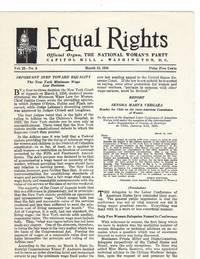
1936réf. 160251936. National Woman's Party. Equal Rights March 15 1936 documents the organization's campaign for legal equality at a time when women's workplace legislation divided American feminists over whether sex-specific protections advanced or restricted women workers. Founded in 1916 by Alice Paul and Lucy Burns during the suffrage campaign the National Woman's Party continued after ratification of the Nineteenth Amendment by advocating the Equal Rights Amendment then commonly associated with the Lucretia Mott Amendment and by opposing laws that imposed legal distinctions based solely on sex. This issue addresses the New York minimum wage controversy international equal-rights efforts and proposed workplace protections for women and children. National Woman's Party. Equal Rights. Vol. 22 No. 6. March 15 1936. 4 pages. 8 1/2 x 11 inches. Official organ of the National Woman's Party. The issue reports on the New York minimum wage case after the New York Court of Appeals struck down the state law regulating minimum wages for women; the United States Supreme Court subsequently affirmed that judgment in Morehead v. New York ex rel. Tipaldo on June 1 1936. It also discusses the Equal Rights Treaty signed at Montevideo by Cuba Ecuador Paraguay and Uruguay part of the National Woman's Party's effort to establish sex equality in international law. Another article addresses workplace hygiene and a resolution requiring employers to provide women with separate quarters for washing changing clothes and general use as well as seats for women and children when the work did not require them to remain standing. Published two years before enactment of the Fair Labor Standards Act of 1938 the issue records a central dispute in interwar women's rights politics: whether legislation written specifically for women offered necessary labor protection or created legal distinctions that could restrict women's employment and undermine demands for equal rights. The National Woman's Party pursued the latter argument while simultaneously campaigning internationally for legal equality between the sexes. The March 1936 issue therefore preserves contemporary evidence of the relationship among the Equal Rights Amendment campaign minimum wage litigation international treaty advocacy and debates over sex-specific workplace regulation. In excellent condition. unknown
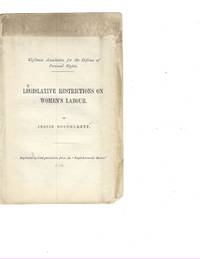
1873réf. 165771873. Boucherett Jessie. Legislative Restrictions on Women's Labour 1873 challenges proposed factory legislation limiting the hours and conditions under which women including mothers of young children could work arguing that such measures deprived adult women of authority over their own employment while providing no substitute for lost wages. Boucherett identifies the principle underlying the legislation as itself objectionable: "Another objection is that the Bill confirms the principle that women are not capable of deciding for themselves." Her opposition arose from the practical circumstances of women whose earnings supported themselves and their children placing employment restrictions within a larger debate over women's legal independence wages and control of their own labor. Boucherett Jessie. Legislative Restrictions on Women's Labour. London: Frederick Bell & Co. 1873. First edition. Reprinted by kind permission from the Englishwoman Review for the Vigilance Association for the Defence of Personal Rights. 12 pages. Original paper wrappers. 8 x 5 inches. Boucherett acknowledges the protective rationale behind the proposed measures writing "It has caused some surprise that Bills framed for so benevolent a purpose should have met with opposition from an unexpected quarter" before detailing their possible consequences for working women. She argues that reducing women's access to factory employment without guaranteeing family maintenance could produce "much suffering and some crime" since "it would always be difficult and sometimes impossible for a woman to provide sufficient food for herself and four or five little children." Her argument therefore distinguishes between women with independent means and wage-earning women for whom statutory restrictions could immediately reduce the household's supply of food and other necessities. Boucherett had founded the Society for Promoting the Employment of Women in 1859 and spent much of her career seeking expanded training and occupations for women; this pamphlet applies the same concern for economic independence to parliamentary attempts to regulate female industrial labor. Its publication also formed part of a contemporary controversy over proposals associated with Alexander Mundella and John Lubbock to extend restrictions governing women's factory employment. Rather than opposing regulation solely in the name of laissez-faire principles Boucherett bases her case on women's need to earn wages their responsibility for dependent children and their right to make employment decisions for themselves. Toning to front wrapper with a few chips and losses along the right edge. Good condition. unknown
1873réf. 165641873. Association of Factory Occupiers in the Four Counties of Lancaster York Chester and Derby. Mr. Mundella's Bill for Limiting the Hours of Labour in Factories 1873. First edition of a response by northern English factory owners to Liberal Member of Parliament Anthony John Mundella's campaign to reduce working hours for women and children in British textile mills. Following Mundella's speech before the House of Commons on June 11 1873 the employers challenged his allegations of dangerous working conditions excessive hours and elevated mortality among female and child workers. Mundella condemned the "shameful treatment" of factory laborers and drew particular attention to infant deaths associated with mothers returning to industrial employment shortly after childbirth declaring that "the return of the mother to the mill was a sentence of death on the child." The employers countered his arguments with statistics intended to demonstrate improvements in workers' health and living conditions documenting organized industrial opposition to legislation intended to protect women and children. Association of Factory Occupiers in the Four Counties of Lancaster York Chester and Derby. Mr. Mundella's Bill for Limiting the Hours of Labour in Factories. Observations of the Employers upon the Speech of Mr. Mundella M.P. Made in the House of Commons on Wednesday the 11th of June 1873. Manchester: John Heywood Excelsior Printing Works 1873. First edition. 32 pages. Original paper wrappers measuring 8¼ x 5 inches. The pamphlet reproduces passages from Mundella's parliamentary speech alongside the employers' corresponding rebuttals allowing direct comparison of the competing arguments. Three statistical tables in the appendix present mortality data employed in the controversy. Issued on behalf of the regional factory owners' association the response is dated July 24 1873 and identifies Richard Haworth as chairman Joseph Simpson as treasurer and Henry Whitworth as secretary. The dispute preceded the Factory Act of 1874 which restricted the working hours of women and young persons in textile factories and established a ten-hour working day. Mundella's campaign connected industrial working conditions with public health childhood education and infant mortality while manufacturers resisted further statutory limits by disputing the medical and statistical evidence supporting reform. The pamphlet preserves the employers' organized response to proposed labor protections including their use of mortality statistics to challenge parliamentary testimony about the consequences of factory employment. Very good condition. unknown