621 résultats
1988réf. LFA-126717204Un ouvrage de 167 pages, format 160 x 240 mm, broché, publié en 1988, Les Editions Sociales Françaises, bon état
réf. 79538Mexico D. F.: various government departments various dates. All books and booklets are in coated trade-size wraps clean and sturdy. The eleven related texts as a lot. various government departments unknown books
réf. 79538Mexico D. F.: various government departments various dates. All books and booklets are in coated trade-size wraps clean and sturdy. The eleven related texts as a lot. various government departments unknown
1981réf. LFA-126711159N° 137 (Mai 1981) - Revue trimestrielle d'Ethique et de Théologie Morale : 170 pages, format 135 x 210 mm, brochée, Editions du Cerf
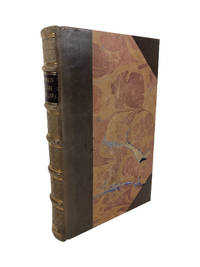
1843réf. 003795London: W. Clowes and Sons for H.M.S.O. 1843. 3 iv-xiv 2 2-378pp 2. Modern half calf and marbled paper over boards raised bands spine in six panels title label to second panel double rules in copper to either side of bands date to foot remaining panels with repeated small volute tool in blind. Externally very good. Internally lightly browned throughout a few corners creased small tear to top corner of M6 and M7. The reports of Alfred Austin Mr. Vaughan Mr. Stephen Denison and Sir Francis Doyle to Sir James Graham. Goldsmith's 33401. First Edition. Half Calf and Boards. Good. 8vo. W. Clowes and Sons for H.M.S.O. Hardcover
réf. 202300425Lausanne, Editions d'en bas - des femmes, des hommes. des parcourd se vie…, 1998 ; in-8, 286 pp., broché, couverture illustr.
réf. 201106464, Carrere, 1986 ; in-8, 410 pp., broché, couverture illustr.
réf. 202002294Paris, Eyrolles, 2013 ; in-8, 492 pp., br. Très bon état.
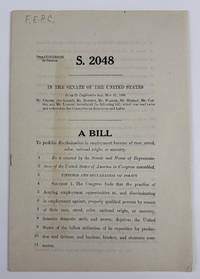
1944réf. 5698Washington DC 1944. Very good. 16pp. Gathered signatures stapled. Minor creasing light discoloration to outer leaves. Pencil note on last page reads "From Natl Council for a Permanent FEPC Wash DC." A rare slip-bill printing of Senator Dennis Chavez's first attempt at legislation intended "to prohibit discrimination in employment because of race creed color national origin or ancestry." New Mexico Senator Dennis Chavez 1888-1962 was a lawyer and only the second Mexican-American to serve in the United States Senate. The present document represents a critical moment in Chavez's career in the Senate which occurred near the end of World War II. Chavez saw the need to protect fair employment practices for minorities returning home from war or for those who had worked in the defense industry during the conflict. FDR's Executive Orders 8802 which forbid discrimination in hiring practices within the defense industry and 9346 which created a five-member Fair Employment Practices Committee FEPC to ensure fairness helped during the war but were only a temporary fix. During its three-year run Senator Chavez reported hundreds of cases of discrimination to the FEPC with regard to unfair hiring practices wage differentials and discrimination in public accommodations but he wanted a more permanent and broader-ranging solution. The present document is Senator Chavez's first shot across the bow. In it he proposes to end employment discrimination across the whole of American life through the establishment of a permanent Federal Employment Practices Commission. In addition to defining the composition and other details of the commission membership salaries reporting duties location of offices etc. the bill stipulates that the commission's chief duty is the "Prohibition of Unfair Employment Practices" defines the commission's investigative powers gives it authority to make or change regulations to align with this act requires non-discriminatory language in government contracts stipulates penalties for persons resisting impeding or interfering with the commission's work and so forth. Of course Chavez's bill did not pass into law in 1944. Through a series of procedural gymnastics including a Senate filibuster opponents killed the bill a few different times in the years to come. When Chavez finally withdrew his bill following a failed cloture vote in February 1946 he commented that it was only the beginning of the struggle for civil rights and that the country would indeed move forward. In his article entitled "Dennis Chavez and the National Agenda: 1933-1946" Roy Lujan concludes: "Chavez's failure in civil rights legislation may be attributed to the fact that his vision and goals were too far-reaching. In the mid 1940s the United States was not ready to accept civil rights. Many people throughout the country and some of his Senate colleagues could not or would not recognize or correct discriminatory practices. Nevertheless through Chavez's fight for civil rights legislation he challenged southerners longstanding control of the Senate on this issue. Chavez's strong commitment to fight racial intolerance laid the groundwork and encouraged and inspired other congressmen to introduce civil rights legislation which finally came to pass under the Lyndon Johnson administration. In 1964 twenty years after Chavez first introduced his bill to create a permanent Fair Employment Practices Commission Congress invoked cloture to cut off debate after a fifty-seven-day southern-run filibuster and then enacted the 1964 Civil Rights Act. A provision of that act prohibits employers and labor unions from discriminating because of race color sex religion or national origin." Sadly Chavez died in 1962 and thus did not live to see many of the ideas in the present document passed into law as part of the Civil Rights Act of 1964. The present document defines what could have been.twenty years earlier. Roy Lujan: "Dennis Chavez and the National Agenda: 1933-1946" New Mexico Historical Review Vol. 74 No. 1 1999 pp.55-74. unknown books
1944réf. 5698Washington DC 1944. Very good. 16pp. Gathered signatures stapled. Minor creasing light discoloration to outer leaves. Pencil note on last page reads "From Natl Council for a Permanent FEPC Wash DC." A rare slip-bill printing of Senator Dennis Chavez's first attempt at legislation intended "to prohibit discrimination in employment because of race creed color national origin or ancestry." New Mexico Senator Dennis Chavez 1888-1962 was a lawyer and only the second Mexican-American to serve in the United States Senate. The present document represents a critical moment in Chavez's career in the Senate which occurred near the end of World War II. Chavez saw the need to protect fair employment practices for minorities returning home from war or for those who had worked in the defense industry during the conflict. FDR's Executive Orders 8802 which forbid discrimination in hiring practices within the defense industry and 9346 which created a five-member Fair Employment Practices Committee FEPC to ensure fairness helped during the war but were only a temporary fix. During its three-year run Senator Chavez reported hundreds of cases of discrimination to the FEPC with regard to unfair hiring practices wage differentials and discrimination in public accommodations but he wanted a more permanent and broader-ranging solution. The present document is Senator Chavez's first shot across the bow. In it he proposes to end employment discrimination across the whole of American life through the establishment of a permanent Federal Employment Practices Commission. In addition to defining the composition and other details of the commission membership salaries reporting duties location of offices etc. the bill stipulates that the commission's chief duty is the "Prohibition of Unfair Employment Practices" defines the commission's investigative powers gives it authority to make or change regulations to align with this act requires non-discriminatory language in government contracts stipulates penalties for persons resisting impeding or interfering with the commission's work and so forth. Of course Chavez's bill did not pass into law in 1944. Through a series of procedural gymnastics including a Senate filibuster opponents killed the bill a few different times in the years to come. When Chavez finally withdrew his bill following a failed cloture vote in February 1946 he commented that it was only the beginning of the struggle for civil rights and that the country would indeed move forward. In his article entitled "Dennis Chavez and the National Agenda: 1933-1946" Roy Lujan concludes: "Chavez's failure in civil rights legislation may be attributed to the fact that his vision and goals were too far-reaching. In the mid 1940s the United States was not ready to accept civil rights. Many people throughout the country and some of his Senate colleagues could not or would not recognize or correct discriminatory practices. Nevertheless through Chavez's fight for civil rights legislation he challenged southerners longstanding control of the Senate on this issue. Chavez's strong commitment to fight racial intolerance laid the groundwork and encouraged and inspired other congressmen to introduce civil rights legislation which finally came to pass under the Lyndon Johnson administration. In 1964 twenty years after Chavez first introduced his bill to create a permanent Fair Employment Practices Commission Congress invoked cloture to cut off debate after a fifty-seven-day southern-run filibuster and then enacted the 1964 Civil Rights Act. A provision of that act prohibits employers and labor unions from discriminating because of race color sex religion or national origin." Sadly Chavez died in 1962 and thus did not live to see many of the ideas in the present document passed into law as part of the Civil Rights Act of 1964. The present document defines what could have been.twenty years earlier. Roy Lujan: "Dennis Chavez and the National Agenda: 1933-1946" New Mexico Historical Review Vol. 74 No. 1 1999 pp.55-74. unknown
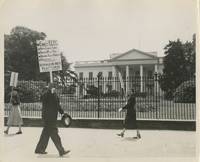
1950réf. BK0056Washington D.C.: Harris & Ewing Photographic News Service 1950. Original gelatin silver press photograph showing Paul Robeson picketing in front of the White House carrying a large placard reading "Enact F.E.P.C. / Anti-Lynch Law / Abolish Poll Tax / Amend Taft-Hartley / Housing / Republican Party Platform." Harris & Ewing Photographic News Service credit stamp and original typed caption to verso with later Globe Photos label. 8 x 10 inches. Light handling wear and creasing otherwise very good. A photograph of Paul Robeson demonstrating directly outside the Truman White House. The original Harris & Ewing caption identifies him as leading representatives of the Progressive Party who "began picketing the White House today asking for more positive action by President Truman on FEPC." The demands on Robeson's placard reflect the stalled federal civil rights agenda of the period. Roosevelt had created the Fair Employment Practice Committee in 1941 after A. Philip Randolph threatened a mass march on Washington over discrimination in defense employment. Truman's President's Committee on Civil Rights subsequently recommended a permanent FEPC federal anti-lynching legislation and abolition of the poll tax; in February 1948 Truman formally asked Congress to enact those measures. The Progressive Party's 1948 platform had called for immediate anti-poll tax legislation and an expansive federal civil-rights program. By 1950 however the major legislative proposals remained blocked in Congress. . Harris & Ewing Photographic News Service unknown books
1950réf. BK0056Washington D.C.: Harris & Ewing Photographic News Service 1950. Original gelatin silver press photograph showing Paul Robeson picketing in front of the White House carrying a large placard reading "Enact F.E.P.C. / Anti-Lynch Law / Abolish Poll Tax / Amend Taft-Hartley / Housing / Republican Party Platform." Harris & Ewing Photographic News Service credit stamp and original typed caption to verso with later Globe Photos label. 8 x 10 inches. Light handling wear and creasing otherwise very good. A photograph of Paul Robeson demonstrating directly outside the Truman White House. The original Harris & Ewing caption identifies him as leading representatives of the Progressive Party who "began picketing the White House today asking for more positive action by President Truman on FEPC." The demands on Robeson's placard reflect the stalled federal civil rights agenda of the period. Roosevelt had created the Fair Employment Practice Committee in 1941 after A. Philip Randolph threatened a mass march on Washington over discrimination in defense employment. Truman's President's Committee on Civil Rights subsequently recommended a permanent FEPC federal anti-lynching legislation and abolition of the poll tax; in February 1948 Truman formally asked Congress to enact those measures. The Progressive Party's 1948 platform had called for immediate anti-poll tax legislation and an expansive federal civil-rights program. By 1950 however the major legislative proposals remained blocked in Congress. . Harris & Ewing Photographic News Service unknown
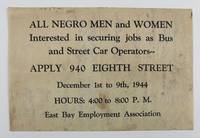
1944réf. 3081N.p. but perhaps Oakland or Berkeley 1944. Very good. Printed broadside 5.25 x 8 inches. Minor foxing and staining light edge wear penciled note covering most of verso. A small and apparently unrecorded broadside calling for African Americans interested in working as bus drivers and street car operators in the San Francisco Bay Area during the latter portion of World War II. The notice calls for interested parties to apply at the offices of the East Bay Employment Association between 4:00 and 8:00 PM between December 1 and 9 1944. We could locate no information on the East Bay Employment Association but it was almost certainly located in either Oakland or Berkeley. This employment advertisement was perhaps the result of a wartime shortage of bus drivers and street car operators in the Bay Area. We could locate no other copies of this interesting and somewhat mysterious broadside. unknown books
1944réf. 3081N.p. but perhaps Oakland or Berkeley 1944. Very good. Printed broadside 5.25 x 8 inches. Minor foxing and staining light edge wear penciled note covering most of verso. A small and apparently unrecorded broadside calling for African Americans interested in working as bus drivers and street car operators in the San Francisco Bay Area during the latter portion of World War II. The notice calls for interested parties to apply at the offices of the East Bay Employment Association between 4:00 and 8:00 PM between December 1 and 9 1944. We could locate no information on the East Bay Employment Association but it was almost certainly located in either Oakland or Berkeley. This employment advertisement was perhaps the result of a wartime shortage of bus drivers and street car operators in the Bay Area. We could locate no other copies of this interesting and somewhat mysterious broadside. unknown
réf. chcp12adelGood. The cover has a little edge wear. The pages are clean and unmarked. unknown
réf. R14conseils pratiques pour l'emploi rationnel de quelques aliments simples du bétail voir ci-dessous photos du sommaire édité avec le concours du fonds national de progrès agricole - 1958 135 pp - format 16 x 24 illustrations en noir légers défauts d'usage R 14
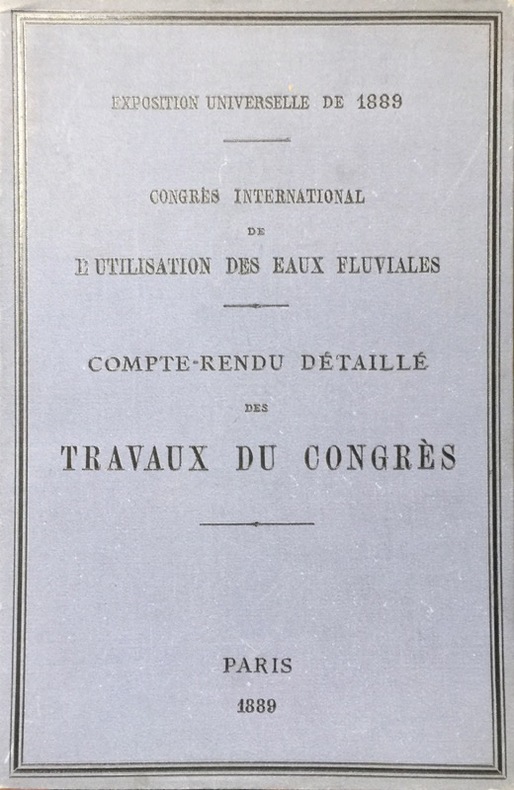
1889réf. 10732Paris, Lahure, 1889 ; in-8 ; cartonnage d'éditeur de percaline bleu-pétrole, titrage noir et doré ; (4), XXI, (3), 556 pp., nombreuses figures, 6 planches hors-texte dont 4 dépliantes, grande carte dépliante en couleurs de navigation entre Paris et Rouen.
1981réf. ABE-1540833563025L'ECHEC DU PUTSCH DE MADRID ET SES REPERCUSSIONS-LE PROCES DE CRETEIL ET LE DEBAT SUR LA PEINE DE MORT-CINEMA: "RAGING BULL" DE MARTIN SCORSESE, PAR JEAN DE BARONCELLI-LE DEBAT SUR LA SITUATION DE L'EMPLOI
réf. 011119Aurillac, Tarbes, Bordeaux, Talence, Angers, Amiens, Chartres, Paris, Chalon sur Saone 0 Agrafés
1943réf. 15298Paris P.U.F 1943 In-8 Fort 433 pp, Centre d'information interprofessionnel, par P. Waline, J. PLuyette, G. Maignan, E. Villey, G. de Lagarde, etc. ; dos insolé et quelques rousseurs.
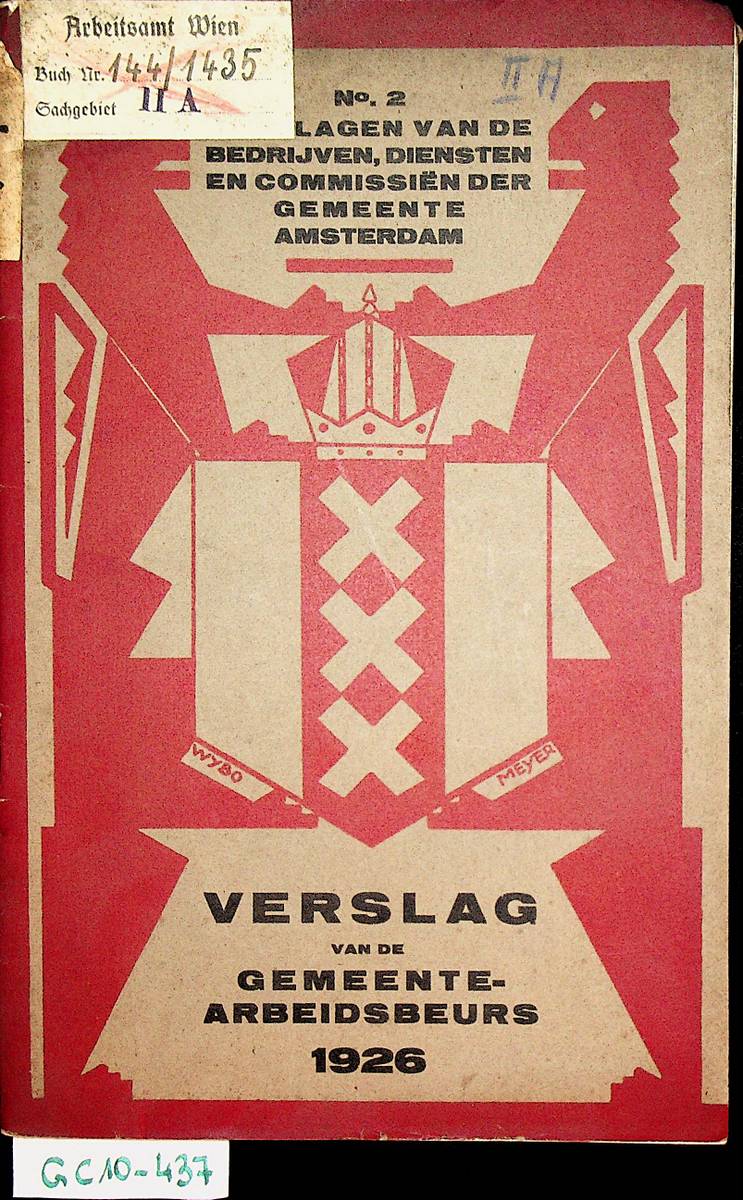
1926réf. GC10-437Amsterdam, Stadsdrukkerij, ca 1926. original Broschur, gr.-8?, 56 S.; Bibliothekstempel / bibliotheekstempel / cachet de biblioth?que / librarystamp