[Women's Employment] Harris, LouisaBiblio.com
677 résultats
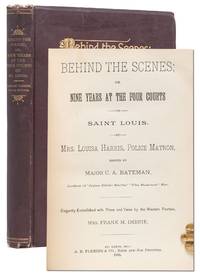
1893réf. 6644St. Louis: A. R. Fleming & Co 1893. First edition. Very Good. Original publisher's cloth binding with gilt to spine and front board. Brown coated endpapers. Some wear to corners and head and tail of spine. Some staining to covers and corresponding dampstaining to corners of endpapers. A very good copy internally clean and unmarked. Collating viii 9-220: complete including frontis. The first book published by a policewoman in America. Despite assumptions to the contrary "women have served in organized law enforcement in the U.S. almost from the beginning. The first police departments in America were established in the 19th century and in 1845 women began working as matrons in New York City jails" Smith. The practice rapidly spread across the country where police forces needed assistance in supervising female prisoners and dealing with the specific challenges faced by this population. Women's clubs -- particularly the American Female Moral Reform Society and the Women's Christian Temperance Union -- urged recognition for the widespread violence perpetrated on female prisoners and called for meaningful change. "It was these women's groups that fought for these distinctly female positions demanding there was a need for women to take care of women.and they provided police departments with funds for paid matron positions until the government could be convinced of the necessity of having women in the police force" Maiorano. Louisa Harris having served in the prisons and courts of Missouri for nearly a decade became the first of these women to publish about her experience. The resulting narrative reflects an awareness of the social forces that put women at a disadvantage driving them toward arrests or recidivism. Domestic violence poverty and the stigma placed on sex work all do damage to women; and according to Harris these women should not be treated as or placed with violent offenders when they could with proper assistance find safety or build more secure lives. This is the motivation for Harris' memoir. In the introduction she explains that while she hesitated to publish the book which might in some readers awaken a "morbid curiosity" she ultimately moved ahead because "I reasoned that if the world knew more about the unfortunate and their revolting experiences together with the causes that promote misfortune there might be more true sympathy exhibited.While I have from personal observation become familiar with so-called criminals I have had the opportunity to learn many of the causes of the committal of crimes. The law seldom recognizes the palliating influences but humanity should." Harris calls for reforming the handling of juvenile offenders advocates for therapeutic programs for young women and taps into a number of other systemic issues of concern within policing today. Very Good. A. R. Fleming & Co unknown
1993132 pages. Features: Is the Metropolitan Vancouver Economy Uncoupling from the rest of the province?; British Columbia's Private Sector in Recession, 1981-86 - Employment flexibility without Trade Diversification?; Sharks and Red Herrings - Vancouver's Male Employment Agencies, 1898-1915; Bibliography of British Columbia. Moderate wear. Unmarked. Binding intact. A sound copy. Book
1999réf. 2110502150600134Produced by Employment Problem Study Group 1999. Soft Cover. Fine. Number of pages: 205p Size: 31cm Produced by Employment Problem Study Group paperback
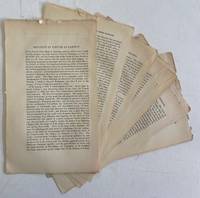
1887réf. 174331887. Women's Employment MABEL Robert F. Our Working Women and Their Earnings. United States 1887. First Edition. 13 pages measuring approximately 6" x 10" inches. At the time that this description is being written no copies are recorded in American institutions. OCLC search results are at best an estimate and can vary over time. The article begins "We as a nation have made no effort to teach our redundant female population to support itself although our position as a mother of colonies leaves us with a steadily increasing proportion of women who through the emigration of their male relatives are forces to provide for themselves." and concludes that "a woman's technical training will have still done her a good service in quickening her intelligence and in thus making her a wiser mother to her children and a more sympathetic companion to her husband above all in banishing much care by ensuring to her a means of livelihood in case of need." A compassionate thoughtful appraisal of the state of women's labor and financial prospects in the United States backed up by employment and pay statistics from the end of the 19th century. Cleanly disbound. Chipped along top edge. Toning. Pages clean and uncreased. Overall in good condition. unknown books
1887réf. 174331887. Women's Employment MABEL Robert F. Our Working Women and Their Earnings. United States 1887. First Edition. 13 pages measuring approximately 6" x 10" inches. At the time that this description is being written no copies are recorded in American institutions. OCLC search results are at best an estimate and can vary over time. The article begins "We as a nation have made no effort to teach our redundant female population to support itself although our position as a mother of colonies leaves us with a steadily increasing proportion of women who through the emigration of their male relatives are forces to provide for themselves." and concludes that "a woman's technical training will have still done her a good service in quickening her intelligence and in thus making her a wiser mother to her children and a more sympathetic companion to her husband above all in banishing much care by ensuring to her a means of livelihood in case of need." A compassionate thoughtful appraisal of the state of women's labor and financial prospects in the United States backed up by employment and pay statistics from the end of the 19th century. Cleanly disbound. Chipped along top edge. Toning. Pages clean and uncreased. Overall in good condition. unknown
1999réf. 500230165ATELIER 1999 16 2x0 8x22 8cm. 1999. Broché.
réf. 139670115X.Ghardcover. Good. Access codes and supplements are not guaranteed with used items. May be an ex-library book. hardcover
réf. wx501INSEE, UA CNRS 915 Atlas social des Pays de la Loire Feuilles sous chemise et emboitage Trois volumes in-4 (43x32.5 cm), feuilles sous chemises illustrées, 3 fascicules publiés en 1985, 1986 et 1987, nombreuses cartes ; chemises un peu jaunies, coiffes un peu frottées, bon état. Livraison a domicile (La Poste) ou en Mondial Relay sur simple demande.
1954réf. 2091202132802401Employment Security Bureau Ministry of Labor 1954. Soft Cover. Fine. Number of pages: 394 pages Size: 25cm Number of books: 1 Employment Security Bureau, Ministry of Labor paperback
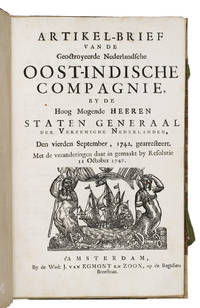
1747réf. ABC_47930Amsterdam 1747. Folio. Wed. J. van Egmont en Zoon Contemporary half vellum sewn on 3 vellum tapes laced through the joints marbled paper over boards with a heart shaped printed title-label on the front board green ties. With a woodcut printer's device on the title page and 2 decorated woodcut initials in the text. 2 2 blank 53 3 blank pp. Very rare work with the terms of employment of the Vereenigde Oost-Indische Compagnie VOC. It contains 121 clauses with rules of conduct and an extra chapter with formularies of oaths. This second revised edition was published after some changes had been made to the rules in 1747. This VOC publication is very rare. It is available in just a few libraries and we have only been able to trace one other copy in sales records of the past 100 years.The clauses deal with everything an employee of the VOC could face during employment. They explain exactly who is in charge how to deal with religion on board of the ships when and how payment of wages takes place what the VOC pays in case of injury or death how to climb in rank rations on the ships the repercussions of illegal trading and the rights of former employees. The VOC struggled with staff shortages throughout the 18th century but the situation became especially dire from 1744 onwards. This was in part because the VOC was not known to be a good employer. The present publication can likely be seen as an attempt by the VOC to improve its image as an employer and attract more staff.With an additional loose large square title-label added before the front flyleaf and with the blindstamp of a previous owner "Gulden Passer - Labores et Constantia - HV" on the front and back free flyleaves. As usual the title has been extended with a slip-cancel mounted under the title partially covering the printers device. The edges of the boards are slightly scuffed. The front endpapers the title page and following blank leaf have been reinforced in the gutter with paper the endpapers are slightly browned with a small brown stain on the title-page and first blank leaf. Overall in very good condition.l Landwehr VOC 940; STCN 17341558X 6 copies; WorldCat 48255045 1200508712 7 copies; cf. Schimmel R. De VOC als werkgever. Een vergelijkend onderzoek naar de invloed van de VOC op maritieme arbeidsmarkten in Azië master thesis 2023. ECONOMY TRADE & NUMISMATICS HISTORY LOW COUNTRIES Economic History & Trade Netherlands VOC hardcover
2023réf. __1526524007Bloomsbury Professional 2023. Paperback. New. 520 pages. 9.13x6.30x1.18 inches. Bloomsbury Professional paperback
2024réf. __1526527987Bloomsbury Professional 2024. Paperback. New. 0 edition. 704 pages. 0.04x0.04x0.04 inches. Bloomsbury Professional paperback
2025réf. __152653116XBloomsbury Professional IE 2025. Paperback. New. 544 pages. 0.04x6.14x9.21 inches. Bloomsbury Professional (IE) paperback
2022réf. __1526520230Bloomsbury Professional 2022. Paperback. New. 704 pages. 0.04x0.04x0.04 inches. Bloomsbury Professional paperback
2021réf. __1526513633Bloomsbury Professional 2021. Paperback. New. 896 pages. 0.04x0.04x0.04 inches. Bloomsbury Professional paperback
2016réf. __178451182XBloomsbury Professional 2016. Paperback. New. 686 pages. 9.25x6.25x1.50 inches. Bloomsbury Professional paperback
2020réf. __1526509709Bloomsbury Professional 2020. Paperback. New. 896 pages. 9.21x6.14x1.65 inches. Bloomsbury Professional paperback
2019réf. __1526506629Bloomsbury Professional 2019. Paperback. New. 792 pages. 9.21x6.14x1.89 inches. Bloomsbury Professional paperback
réf. 37192aaf1941, in-8°, 89 S., Stempel a.d. Titelbl., Hlwd. (Bibl.).
1870réf. 262319London: printed for George Edward Eyre and William Spottiswoode 1870. First Edition. Softcover. Poor copy in the original stiff-card wrappers; wear and tear as with age. Text remains in fine condition and without blemish. Provenance; from the libary of Eward Stanhope and the Library of the University College of Leicester with their bookplates. Physical description; 348 pages. Subjects; Reports. Commission of Children. 19th century reports. Great Britain. London: printed for George Edward Eyre and William Spottiswoode paperback
réf. 260519024Audio CD. Used: Very Good. 5x5x0. Very good condition. From a private collection. Comes from non smoking home. unknown
1960réf. 238201960. Civil rights law and racial justice ephemera from circa 1961 to 1975 documenting the expansion of anti discrimination policy from state and local campaigns into federal employment regulation fair housing advocacy administrative enforcement and the 1970s critique of institutional racism. The six publications move from the Kentucky Advisory Committee's reporting on discrimination in Louisville Lexington Frankfort and Hopkinsville through the federal legal apparatus created around the Civil Rights Act of 1964 and Executive Order 11246 then into national organizing and statistical analysis of racial disparities during the following decade. By 1975 Fact Sheets on Institutional Racism framed inequalities in business ownership banking education housing media health and government as products of "White Control and Minority Oppression" extending the group's documentary range from laws against discriminatory acts to an analysis of the institutions in which racial inequality persisted. Archive of six pamphlets and ephemeral publicationseach approx 7 x 8 inches to 8 x 10 inches United States circa 1961 to 1975. 1 Kentucky Advisory Committee to the U.S. Commission on Civil Rights. Kentucky. Circa 1961. Report on civil rights activity in Louisville Lexington Frankfort and Hopkinsville addressing public accommodations employment housing and the development of the Kentucky Commission on Human Rights. Its introduction describes the state committee reports as "on-the-spot findings of informed and conscientious citizens seeking to discover the extent of denials of equal justice in their respective States and possible remedies" while also recording the activity of religious groups in breaking racial barriers. 2 Fair Housing for All: We Welcome Neighbors of Any Race Creed or Color. Circa 1960s. Public facing fair housing advocacy piece built around the image of a house enclosing the words "FOR ALL" explicitly joining residential integration to opposition to discrimination by race creed or color. 3 U.S. Commission on Civil Rights. Equal Employment Opportunity Under Federal Law: A Guide to Federal Law Prohibiting Discrimination on Account of Race Religion or National Origin in Private and Public Employment. Clearinghouse Publication No. 17. August 1969. The guide sets out "The Duty of Nondiscrimination" and procedures for filing employment discrimination complaints then explains coverage under the Civil Rights Act of 1964 the Equal Employment Opportunity Commission Executive Order 11246 for federal contractors and subcontractors the National Labor Relations Act Section 1981 the Civil Rights Act of 1968 Title VI federal employment state and local government employment and "Affirmative Steps Toward Equal Employment Opportunity." 4 State of Kansas Commission on Civil Rights. The Kansas Act Against Discrimination. Circa 1972 or later. The introductory note traces the statute from its passage in 1953 through amendments in 1961 1963 1965 1967 1970 and 1972. Those amendments successively extended protection into employment hotels and restaurants broader public accommodations and real estate transactions while enlarging the Commission's investigatory and subpoena powers and in 1972 authorizing investigation of complaints of sex discrimination. 5 YWCA of the U.S.A. National Convocation on Racial Justice. Americana Hotel New York City June 15 1972. Program for a national meeting organized around plenary sessions and morning and afternoon panels naming Senator Hugh Scott Representative Ronald V. Dellums Representative Shirley Chisholm Dr. Reginald Wilson Hon. Richard Hatcher and Hon. McGeorge Bundy among its speakers. 6 Foundation for Change Inc. and Council for Interracial Books for Children. Fact Sheets on Institutional Racism: White Control and Minority Oppression. August 1975. Organized under the headings Economy Health Housing Education Media Government and Census the publication compiles contemporary statistics from sources including the U.S. Bureau of the Census Black Enterprise Ebony Jet and the Economic Priorities Report. Its economy section reports that Black Americans owned 1.2 percent of business equity 1.2 percent of farm equity and 0.1 percent of stock equity; that only one of 650 seats on the American Stock Exchange belonged to a Black firm; and that Black Americans held 72 of 14000 directorships among the 1000 largest corporations. The publications record successive stages in the institutional response to racial discrimination. The Kentucky report belongs to the period when state advisory committees gathered local testimony and documented unequal treatment before the principal federal civil rights legislation of the mid 1960s; the Kansas pamphlet records how one state repeatedly enlarged the jurisdiction and enforcement powers of its civil rights commission between 1953 and 1972. The 1969 federal employment guide shows the resulting network of statutes executive authority complaint procedures commissions and sanctions through which nondiscrimination became an administrative responsibility extending across private employment public employment organized labor and federal contracting. The fair housing piece translates the same legal and political struggle into direct public persuasion while the 1972 YWCA program places elected officials including Dellums and Chisholm within a national organizational campaign for racial justice. By 1975 Fact Sheets on Institutional Racism measured disparities that remained after more than a decade of civil rights legislation citing ownership corporate governance banking and income statistics to argue that formal legal equality had not altered the distribution of economic power. Light handling and edge wear scattered toning and occasional spotting or soiling visible to wrappers; manuscript notation and institutional library markings to the Kentucky report; contents generally clean and legible. Overall good condition. A compact documentary record of the movement from prohibiting racial discrimination in law to enforcing those prohibitions through public institutions and confronting the economic and institutional inequalities that remained. unknown books
1960réf. 238201960. Civil rights law and racial justice ephemera from circa 1961 to 1975 documenting the expansion of anti discrimination policy from state and local campaigns into federal employment regulation fair housing advocacy administrative enforcement and the 1970s critique of institutional racism. The six publications move from the Kentucky Advisory Committee's reporting on discrimination in Louisville Lexington Frankfort and Hopkinsville through the federal legal apparatus created around the Civil Rights Act of 1964 and Executive Order 11246 then into national organizing and statistical analysis of racial disparities during the following decade. By 1975 Fact Sheets on Institutional Racism framed inequalities in business ownership banking education housing media health and government as products of "White Control and Minority Oppression" extending the group's documentary range from laws against discriminatory acts to an analysis of the institutions in which racial inequality persisted. Archive of six pamphlets and ephemeral publicationseach approx 7 x 8 inches to 8 x 10 inches United States circa 1961 to 1975. 1 Kentucky Advisory Committee to the U.S. Commission on Civil Rights. Kentucky. Circa 1961. Report on civil rights activity in Louisville Lexington Frankfort and Hopkinsville addressing public accommodations employment housing and the development of the Kentucky Commission on Human Rights. Its introduction describes the state committee reports as "on-the-spot findings of informed and conscientious citizens seeking to discover the extent of denials of equal justice in their respective States and possible remedies" while also recording the activity of religious groups in breaking racial barriers. 2 Fair Housing for All: We Welcome Neighbors of Any Race Creed or Color. Circa 1960s. Public facing fair housing advocacy piece built around the image of a house enclosing the words "FOR ALL" explicitly joining residential integration to opposition to discrimination by race creed or color. 3 U.S. Commission on Civil Rights. Equal Employment Opportunity Under Federal Law: A Guide to Federal Law Prohibiting Discrimination on Account of Race Religion or National Origin in Private and Public Employment. Clearinghouse Publication No. 17. August 1969. The guide sets out "The Duty of Nondiscrimination" and procedures for filing employment discrimination complaints then explains coverage under the Civil Rights Act of 1964 the Equal Employment Opportunity Commission Executive Order 11246 for federal contractors and subcontractors the National Labor Relations Act Section 1981 the Civil Rights Act of 1968 Title VI federal employment state and local government employment and "Affirmative Steps Toward Equal Employment Opportunity." 4 State of Kansas Commission on Civil Rights. The Kansas Act Against Discrimination. Circa 1972 or later. The introductory note traces the statute from its passage in 1953 through amendments in 1961 1963 1965 1967 1970 and 1972. Those amendments successively extended protection into employment hotels and restaurants broader public accommodations and real estate transactions while enlarging the Commission's investigatory and subpoena powers and in 1972 authorizing investigation of complaints of sex discrimination. 5 YWCA of the U.S.A. National Convocation on Racial Justice. Americana Hotel New York City June 15 1972. Program for a national meeting organized around plenary sessions and morning and afternoon panels naming Senator Hugh Scott Representative Ronald V. Dellums Representative Shirley Chisholm Dr. Reginald Wilson Hon. Richard Hatcher and Hon. McGeorge Bundy among its speakers. 6 Foundation for Change Inc. and Council for Interracial Books for Children. Fact Sheets on Institutional Racism: White Control and Minority Oppression. August 1975. Organized under the headings Economy Health Housing Education Media Government and Census the publication compiles contemporary statistics from sources including the U.S. Bureau of the Census Black Enterprise Ebony Jet and the Economic Priorities Report. Its economy section reports that Black Americans owned 1.2 percent of business equity 1.2 percent of farm equity and 0.1 percent of stock equity; that only one of 650 seats on the American Stock Exchange belonged to a Black firm; and that Black Americans held 72 of 14000 directorships among the 1000 largest corporations. The publications record successive stages in the institutional response to racial discrimination. The Kentucky report belongs to the period when state advisory committees gathered local testimony and documented unequal treatment before the principal federal civil rights legislation of the mid 1960s; the Kansas pamphlet records how one state repeatedly enlarged the jurisdiction and enforcement powers of its civil rights commission between 1953 and 1972. The 1969 federal employment guide shows the resulting network of statutes executive authority complaint procedures commissions and sanctions through which nondiscrimination became an administrative responsibility extending across private employment public employment organized labor and federal contracting. The fair housing piece translates the same legal and political struggle into direct public persuasion while the 1972 YWCA program places elected officials including Dellums and Chisholm within a national organizational campaign for racial justice. By 1975 Fact Sheets on Institutional Racism measured disparities that remained after more than a decade of civil rights legislation citing ownership corporate governance banking and income statistics to argue that formal legal equality had not altered the distribution of economic power. Light handling and edge wear scattered toning and occasional spotting or soiling visible to wrappers; manuscript notation and institutional library markings to the Kentucky report; contents generally clean and legible. Overall good condition. A compact documentary record of the movement from prohibiting racial discrimination in law to enforcing those prohibitions through public institutions and confronting the economic and institutional inequalities that remained. unknown
réf. Z1-M-011-01488TSO. Used - Acceptable. Used - Acceptable. Ships from UK in 48 hours or less usually same day. Your purchase helps support Sri Lankan Children's Charity 'The Rainbow Centre'. Ex-library with wear and barcode page may have been removed. 100% money back guarantee. We are a world class secondhand bookstore based in Hertfordshire United Kingdom and specialize in high quality textbooks across an enormous variety of subjects. We aim to provide a vast range of textbooks rare and collectible books at a great price. Our donations to The Rainbow Centre have helped provide an education and a safe haven to hundreds of children who live in appalling conditions. We provide a 100% money back guarantee and are dedicated to providing our customers with the highest standards of service in the bookselling industry. TSO unknown
1993No marks or inscriptions. No creasing to covers or to spine. A very clean tight copy with bright unmarked boards and no bumping to corners. 207pp. The insider's guide to interviews, counselling, psychometrics, networking, head hunters, applications, assessment in employment and work.