1802ref. 26311nantes 1802 1 facture ORIGINALE d'1 page recto-verso manuscrite à l'encre brune, format : 23,5 x 18,5 cm, sur papier velin bleu, ligné et filigrané , UNE FACTURE ACQUITTÉE DE LA CITOYENNE VEUVE COSSÉ FONDEUR (A NANTES) AUX CITOYENS CRUCY FRÈRES POUR LES ARTICLES VENDUS CI-APRÈS ET LIVRÉS POUR LA GOÈLETTE "LA VIGIE" EN CONSTRUCTION, FAIT A NANTES, LE 25 VENTOSE AN 10 (16 MARS 1802), Signature manuscrite de Veuve COSSÉ Fondeur à Nantes, noté au dos à l'encre brune : Vve COSSE fournitures pour la vigie 59,17 Construction Générale Acquitté le 20 ventose an 10,
1802ref. 26312nantes 1802 1 facture ORIGINALE d'1 page recto-verso manuscrite à l'encre brune, format : 23,5 x 18 cm, sur papier velin bleu, ligné et filigrané , UNE FACTURE ACQUITTÉE DE LA CITOYENNE VEUVE COSSÉ FONDEUR (A NANTES) AUX CITOYENS CRUCY FRÈRES POUR LES ARTICLES VENDUS CI-APRÈS ET LIVRÉS POUR LES AVISOS EN CONSTRUCTION, FAIT A NANTES, LE 25 VENTOSE AN 10 (16 MARS 1802), Signature manuscrite de Veuve COSSÉ Fondeur à Nantes, noté au dos à l'encre brune : Vve COSSE, fournitures pour les Avisos, 3924,3, Construction Générale, Acquitté le 20 ventose an 10,
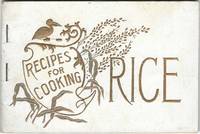
1910ref. 6626New Orleans; New York: The Board of Trade; Printed by H. R. Elliot & Co. Printers and Embossers 1910. Stapled booklet 10.25 x 15.25 cm. 14 unnumbered leaves; printed text decorated with red borders on rectos only. Cover title: Recipes for Cooking Rice. Author information inferred from external evidence. Printer from rear panel of wrappers. ~ Evident FIRST EDITION. A promotional publication designed “to create a greater interest” in a foodstuff that had yet to become a staple in many parts of the United States. With a dozen recipes including Gumbo Soup Jambalaya Belle Calas fritters Rice Pudding Riz au Lait. ~ The phrase “Louisiana Rice Exhibit” can be found in reference to displays in the agricultural halls of world’s fairs – the World’s Columbian Exposition Chicago 1893 for instance as well as the Louisiana Purchase Exposition St. Louis 1904 – but in the event the phrase is better understood not as an installation but as a program. The New Orleans Board of Trade had indeed exploited opportunities to educate the public by such means cf A. C. Cantley “Rice Display by Louisiana at World's Fair of 1904” The Planter and Sugar Manufacturer 32 no. 7 February 13 1904 page 121 but it would have been highly unlikely for booklets such as How to Cook Rice to have been produced specifically for them without bearing any mark of the association. Moreover Louisiana Rice Exhibits so-named were also staged at parish fairs livestock shows even horse races. Their visual aspect was meant to entrance and amuse. “The New Orleans Board of Trade made a very splendid exhibit” a trade paper reported “at the National Farm and Livestock Show with a display of all the products it handles with the centerpiece a working model of a rice mill” “Current Rice News Notes” The Rice Journal and Southern Farmer 19 no. 12 December 1916 page 33. ~ Founded in 1880 the Board itself coordinated among many other activities rice shipments from mills in Louisiana and to a smaller extent from eastern Texas and Arkansas too. In this case their printing contract with H. R. Elliot & Co. places the publication later than the Chicago Exposition as this form of name was not in use until after 1900 “The Manufacturing Stationer” Walden’s Stationer and Printer 31 Spring 1909 page 16. The date of issue proposed here rests on reports that the Board of Trade distributed booklets in or perhaps slightly before 1910 a note for example from the American Poultry World recorded that recipes from the Louisiana Rice Exhibit of New Orleans had been received 1 no. 5 March 1910 pages 354-355. ~ Interior clean and bright. Stapled in ivory wrappers with gilt illustration of rice plants overseen by a pelican in honor of the Pelican State. Near fine. OCLC locates four copies; Uhler 252; New Orleans Culinary History Group page 152; not in Bitting Brown or Cagle. [The Board of Trade; Printed by] H. R. Elliot & Co., Printers and Embossers paperback
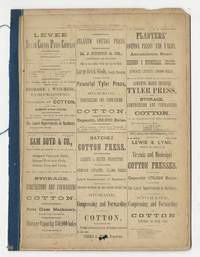
1880ref. 1631880. Photo album; Albumen prints 30; Each 5 3/4 x 4 inches An interesting and unusual album consisting of photographic reproductions of all four pages from the September 1 1880 issue followed by all 26 pages of the Annual Review of Commercial New Orleans published as a supplement on the same day. The photographs chronicle an immense amount of advertisements for the business houses stores and companies active in New Orleans at the time including ads for photographers T. Lilienthal and W. W. Washburn. Also present are ads for various insurance agencies and banks; dealers and importers of everything from musical instruments barbed wire French plate mirrors and fireworks to furniture books stationary and dry-goods; and of course odd-ball promotions for bizarre 19th-century miracle cures such as "Kidnegen: The Great Kidney Regulator and Ditretic" and Reed's Tonic "a thorough remedy in every case of Malarial fever." Also advertised are products and companies still recognized today such as Lea and Perrins Genuine Worcestershire sauce and Procter & Gamble Soaps. At least 2 pages are dedicated solely to the Cotton trade in the region and dealers in "Plantation Machinery." Meandering in-between the company advertisements are brief reports on the current state of trade in all manner of business sectors; Lumber Freight Paper-making Leather manufacturing Land prices Mineral resources and many many more. The greatest mystery here is why the album was produced in the first place; perhaps as a means to later reproduce the list of businesses--a sort of Yellow Pages. It is fairly likely that the photographs were produced by either Lilienthal or Washburn due to their inclusion in the directory. Another point of curiosity is the size of the album. While the minuscule text is mostly legible under magnification the miniature quality of the advertisements does not exactly suggest every day use! The photographs are mounted recto/verso to 15 cards which were formerly attached to the present gilt-decorated morocco album. The cloth hinges have fully deteriorated and the cards are loose and collated in order. unknown
1910ref. 6626New Orleans; New York: The Board of Trade; Printed by H. R. Elliot & Co. Printers and Embossers 1910. Stapled booklet 10.25 x 15.25 cm. 14 unnumbered leaves; printed text decorated with red borders on rectos only. Cover title: Recipes for Cooking Rice. Author information inferred from external evidence. Printer from rear panel of wrappers. ~ Evident FIRST EDITION. A promotional publication designed “to create a greater interest” in a foodstuff that had yet to become a staple in many parts of the United States. With a dozen recipes including Gumbo Soup Jambalaya Belle Calas fritters Rice Pudding Riz au Lait. ~ The phrase “Louisiana Rice Exhibit” can be found in reference to displays in the agricultural halls of world’s fairs – the World’s Columbian Exposition Chicago 1893 for instance as well as the Louisiana Purchase Exposition St. Louis 1904 – but in the event the phrase is better understood not as an installation but as a program. The New Orleans Board of Trade had indeed exploited opportunities to educate the public by such means cf A. C. Cantley “Rice Display by Louisiana at World's Fair of 1904” The Planter and Sugar Manufacturer 32 no. 7 February 13 1904 page 121 but it would have been highly unlikely for booklets such as How to Cook Rice to have been produced specifically for them without bearing any mark of the association. Moreover Louisiana Rice Exhibits so-named were also staged at parish fairs livestock shows even horse races. Their visual aspect was meant to entrance and amuse. “The New Orleans Board of Trade made a very splendid exhibit” a trade paper reported “at the National Farm and Livestock Show with a display of all the products it handles with the centerpiece a working model of a rice mill” “Current Rice News Notes” The Rice Journal and Southern Farmer 19 no. 12 December 1916 page 33. ~ Founded in 1880 the Board itself coordinated among many other activities rice shipments from mills in Louisiana and to a smaller extent from eastern Texas and Arkansas too. In this case their printing contract with H. R. Elliot & Co. places the publication later than the Chicago Exposition as this form of name was not in use until after 1900 “The Manufacturing Stationer” Walden’s Stationer and Printer 31 Spring 1909 page 16. The date of issue proposed here rests on reports that the Board of Trade distributed booklets in or perhaps slightly before 1910 a note for example from the American Poultry World recorded that recipes from the Louisiana Rice Exhibit of New Orleans had been received 1 no. 5 March 1910 pages 354-355. ~ Interior clean and bright. Stapled in ivory wrappers with gilt illustration of rice plants overseen by a pelican in honor of the Pelican State. Near fine. OCLC locates four copies; Uhler 252; New Orleans Culinary History Group page 152; not in Bitting Brown or Cagle. [The Board of Trade; Printed by] H. R. Elliot & Co., Printers and Embossers paperback books
ref. 243559Paris, Valade, 1776 fort vol. in-4, [4] ff. n. ch. (titre, dédicace, avis du libraire), 724 pp., veau fauve marbré, dos à nerfs cloisonné et fleuronné, double filet doré sur les coupes, tranches rouges (reliure de l'époque). Coiffe supérieure rognée, un mors supérieur légèrement fendu.
ref. ORD-7875Des principaux états du monde (page de titre). Paris. Théodore Lefèvre. s.d. (vers 1870). In-12 (11,8 x 18,4cm) br. couverture orange illustrée de pièces or et argent, 72pp., 30 planches hors texte de pièces or et argent. Couverture assez abîmée mais complète, bords de ff. poussiéreux, taches sur les 3 premières feuilles. Rare.
ref. 662005A Paris, De l'Imprimerie Nationale, 1789 in-8, 24 pp., dérelié.
1925ref. 36559Oakland: Hall-White Company Printers 1925. 1925. CALIFORNIA. 9" x 8" color pictorial wrappers. 24pp. including wrappers. Black and white photographs illustrations charts and Alameda County Facts. Black and white map entitled "Bird's Eye View of Alameda County California" showing the San Francisco Bay Oakland Berkeley Irvington Mt. Diablo et. al. A brochure aimed at the prospective homesteader encouraging them to come to Alameda County and experience the beauty the many industries the excellent school systems many activities such as golf tennis yachting hunting fishing et. al. Opportunities abound to those who come and participate in the development of what is destined to be one of the greatest communities on the Pacific Coast. Alameda County includes the following cities along with a description of each: Oakland Berkeley Alameda Piedmont Emeryville Albany San Leandro Hayward Pleasanton Newark Centerville Niles Irvington Alvarado Warm Springs Sunol and Livermore. Crease to center of front wrapper along with light wear to the spine and to the extremities else a very sharp and informative brochure. Hall-White Company Printers, 1925. unknown
ref. 213456Avignon, Bonnet fils, 1840 in-4, 20 pp., broché, couverture d'attente avec titre manuscrit de l'époque.
ref. 236292[Paris], Imprimerie de Cordier & Meymac, s.d. (1791) in-8, 8 pp., broché sous couverture moderne de papier bleu imprimé.
1783In -4°, pp. VIII, 182, (4). Piena pergamena con titolo al dorso. Prima edizione. Contraddittorio e inquieto studioso, Odazi (Atri, 1741 - Napoli, 1794) è considerato fra gli economisti napoletani di maggior rilievo nella seconda metà del Settecento. Allievo del Genovesi, la cui cattedra gli sarebbe stata affidata nel 1781, massone, partecipò se pure con indolenza al fermento politico che avrebbe portato nel 1799 alla guerra civile e poi alla Repubblica napoletana. Ma, imprigionato nel ’94, si era ucciso in carcere, in circostanze mai chiarite. In questo suo “dotto studio” O. invoca “contro l’opinione del Galiani, la libertà dei prezzi, col notevole intento di giovare agli umili e, di riverbero, alla prosperità nazionale” (R. di Castiglione, “La massoneria nelle due Sicilie”, Gangemi, 2006, p. 115). A restless and complex scholar, Odazi was considered one of the major neapolitan economists of the second half of XVIII century. A mason, pupil of Genovesi, whose chair he obtained in 1781, he took part in politic stirs that brong in 1799 to civil war in Naples and the to the “Repubblica”. But he was imprisoned and died in jail, probably suicide, in ’94. In this learned work O. claims, against Galiani opinion, the freedom of prices, meaning to benefit the humble classes.
1922ref. 303664Bakersfield California Kern County Chamber of Commerce 1922. 1922. 6 panel folding brochure. Illustrated with 10 halftones and one map. Very good. No signatures or bookplates. Includes information on oil and gas wells farming irrigation gold and silver. Rocq 2431 - located only 1 copy. No Binding. Very Good. Bakersfield, California, Kern County Chamber of Commerce [1922]. unknown
1922ref. 303664Bakersfield California Kern County Chamber of Commerce 1922. 1922. 6 panel folding brochure. Illustrated with 10 halftones and one map. Very good. No signatures or bookplates. Includes information on oil and gas wells farming irrigation gold and silver. Rocq 2431 - located only 1 copy. No Binding. Very Good. Bakersfield, California, Kern County Chamber of Commerce [1922]. unknown books
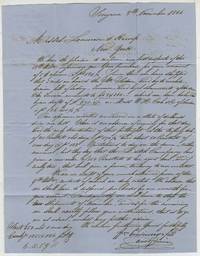
1866ref. BK0123Smyrna Turkey 1866. Autograph commercial letter signed by Cousinery & Fils to Lanman & Kemp New York. Stampless folded letter carried by the Messageries Maritimes steamer Volga departing Smyrna November 9 and arriving at Marseille November 14. Blue oval Cousinery & Fils handstamp and circular "MARSEILLE À LYON" traveling-post-office transit mark dated November 16 on the reverse; black circular "NEW YORK / 45 / DEC / 61 / NOTES" December 3 arrival marking on the front assessing forty-five cents in depreciated United States notes equivalent to the thirty-cent gold rate; manuscript "18" debit marking also apparently miscalculated. 1 pp. 8 x 10 ¼ inches. Old folds; light wear; fine to very fine. A commercial letter documenting the export of Ottoman opium from Smyrna to the United States. Cousinery & Fils confirm the purchase and shipment of five cases for the New York drug firm Lanman & Kemp invoiced at 84360 piastres and balanced through a £671 draft on London. The merchants describe the Smyrna opium market as being in a "state of dullness" with little demand and only limited sales of old and new drugs. They nevertheless report rumors that a Dutch company had ordered another 150 baskets which might strengthen prices. Responding to instructions from New York they agree to suspend purchases for one month and cancel two intended November shipments. A memorandum on the reverse records recent shipments aboard the steamers Sardis and Sidore and calculates a total of 380 cases of opium sent to the United States during 1866. A concise record of the nineteenth-century opium trade connecting Ottoman producers European financial intermediaries and the American pharmaceutical market. . unknown
1913ref. 1944London:: H.M.S.O. 1913. First separate issue 8vo original printed blue wrappers stitched in blue; pp. 219-224ii blank. Text in English and Portuguese With the neat ink stamp on cover of London County Council Library. In very fine condition. This agreement between the UK and Portugal regulated "the consumption sale & exportation of prepared opium and agreed on the repression of smuggling". It was signed shortly after the First International Opium Conference at The Hague 23 January 1912. There members of the League of Nations signed the first international drug control treaty. The UK and Portugal however set their own limits on opium imports to their colonies: 260 chests of opium per annum into Macao and 540 chests into Hong Kong for local consumption while the Government of India retained the right to purchase opium in the open market in Calcutta Bombay and elsewhere in India. H.M.S.O. unknown
1762ref. ABC_508791762. Various sizes. Ad 1-3: Contemporary sturdy paper wrappers sewn on 3 vellum supports; ad 4: the 12 documents are held together by a narrow paper wrapper with the text: "Onafgedaane Indiësche zaaken concentreerende de Amphioen Societeyt" and a string. With 12 manuscript documents and a manuscript on paper in 2 different hands. 15 1 blank; 3 ll. Collection of thirteen Dutch manuscripts concerning the Amfioensociëteit Amfioen Society documenting both its establishment in 1745 and its dissolution half a century later. Founded by the Dutch East India Company VOC to maintain its monopoly on the opium trade in the Dutch East Indies the Amfioensociëteit controlled one of the colony's most profitable monopolies until its liquidation in 1794.The earliest manuscript ads 1-3 contains the charter octrooi granted to the society for the period 1745-1755 together with its renewal for 1755-1765. Although the original charter was printed in Batavia in 1745 and survives in a single known copy that edition does not include the renewal. The present manuscript further contains a third text added in a different hand and dated November 1762 concerning the management of the society's outstanding affairs. Written on paper bearing the watermark of the VOC Chamber of Amsterdam it was probably intended for official administrative use.The remaining twelve documents relate to the financial settlement following the dissolution of the society in 1794. Most date from 1793 1794 and 1797 with one document dated 1807 reflecting the prolonged liquidation process. They concern the distribution of assets among shareholders outstanding debts and other administrative matters arising from the winding up of the company. Several documents are signed by Pieter van de Weert dates unknown cashier of the Amfioensociëteit while others mention Jacob Mossel 1704-1761 governor-general of the Dutch East Indies and the society's first director and Gerard Maximiliaan Taets van Amerongen 1727-1788 who was married to Mossel's daughter. Although several documents are headed "Copie" they are contemporary manuscript records rather than later transcripts many containing calculations annotations and other traces of active administrative use. Together they document the final years of the Amfioen Sociëteit and the administration of its dissolution.The wrappers of ads 1-3 are somewhat water stained with worm holes in the back wrapper and final leaf. The leaves are somewhat water stained especially the 3 final leaves an ink stain on leaf 12; the remaining 12 documents are folded several with small tears in the margins without loss of text occasional mild soiling. Otherwise in good condition.l Cf. Landwehr VOC 1449 printed copy of ad 1; STCN 240022416 1 copy; Wit Herman de 2012. Aandeelhouders van de opgeheven Amfioensociëteit in 1801. hardcover
1843ref. 5977New York City: H. H. Schieffelin & Co 1843. First Thus. Loose Sheet. Loose sheet printed verso and recto measuring just shy of 8 inches x 9.75 inches. Old folds now mellowed but with a nasty closed tear running down the middle of the sheet for 6.5 inches.Now housed in a removable clear archival sleeve with acid-free backing. Included is a handsomely printed handbill 4 x 6 inches for a 1988 lecture on "Victoria Opium and Empire." by Frank. J. Novak M.D. presented at Stanford University's Fairchild Auditorium. Commodities report from the Schieffelin drug firm including the going rate for opium oil. Jacob Schieffelin and his brother founded their drug company in 1794; in 1813 the firm passed to his sons who renamed the firm H. H Schieffelin located at the intersection of John St. and Cliff St. in Lower Manhattan about two blocks from today's South Street Seaport Museum. That firm dissolved in 1848. Other trade goods listed include agricultural produce soaps lucifer matches various gums sulphur asbestos ginger etc. A fine glimpse into daily American life and global trade. . H. H. Schieffelin & Co unknown
1848ref. 6240St. Louis: W. H. Gray Ed 1848. First Thus. Loose sheet. Very Good. Published Saturday January 1 1848. Sheet folding to four pages each page measuring 9 x 11.25 inches. Printed sheet with autograph address and postal cancellation. With old mailing folds wax seal ghost some smudging and small stains. A well preserved copy. Commodities prices including Turkish opium and annual statement of the business in St. Louis. Now housed in a removable clear archival sleeve with acid-free backing. W. H. Gray, Ed unknown
1866ref. BK0123Smyrna Turkey 1866. Autograph commercial letter signed by Cousinery & Fils to Lanman & Kemp New York. Stampless folded letter carried by the Messageries Maritimes steamer Volga departing Smyrna November 9 and arriving at Marseille November 14. Blue oval Cousinery & Fils handstamp and circular "MARSEILLE À LYON" traveling-post-office transit mark dated November 16 on the reverse; black circular "NEW YORK / 45 / DEC / 61 / NOTES" December 3 arrival marking on the front assessing forty-five cents in depreciated United States notes equivalent to the thirty-cent gold rate; manuscript "18" debit marking also apparently miscalculated. 1 pp. 8 x 10 ¼ inches. Old folds; light wear; fine to very fine. A commercial letter documenting the export of Ottoman opium from Smyrna to the United States. Cousinery & Fils confirm the purchase and shipment of five cases for the New York drug firm Lanman & Kemp invoiced at 84360 piastres and balanced through a £671 draft on London. The merchants describe the Smyrna opium market as being in a "state of dullness" with little demand and only limited sales of old and new drugs. They nevertheless report rumors that a Dutch company had ordered another 150 baskets which might strengthen prices. Responding to instructions from New York they agree to suspend purchases for one month and cancel two intended November shipments. A memorandum on the reverse records recent shipments aboard the steamers Sardis and Sidore and calculates a total of 380 cases of opium sent to the United States during 1866. A concise record of the nineteenth-century opium trade connecting Ottoman producers European financial intermediaries and the American pharmaceutical market. . unknown books
1925ref. 160W. Lazare-Ferry, Paris, sans date (circa 1925) - Format : 27 x 21 cm, 8 pages de photos en N&B - Etat : Très bon état général (couverture insolée aux bords fragiles, agrafes rouillées ; planches en très bon état).
ref. TK0360no place: no date. 9.5 x 12.75 inches. 40 pages. 145 numbered photographic tinted illustrations each with numerous figures. Original plain black wrappers. With apologies but there is no manufacturer name on this trade catalogue of hand-crafted ornamental 'finishing' pieces such as decorative brasses for a piece of furniture. Many are with motifs from nature leaves flowers. Other ornaments: lions lizards angel wings wheat eagle-heads sun-faces etc. Each figure is numbered with the highest number showing is 3836 ornaments are shown. [no date]. unknown
ref. TK0360no place: no date. 9.5 x 12.75 inches. 40 pages. 145 numbered photographic tinted illustrations each with numerous figures. Original plain black wrappers. With apologies but there is no manufacturer name on this trade catalogue of hand-crafted ornamental 'finishing' pieces such as decorative brasses for a piece of furniture. Many are with motifs from nature leaves flowers. Other ornaments: lions lizards angel wings wheat eagle-heads sun-faces etc. Each figure is numbered with the highest number showing is 3836 ornaments are shown. [no date]. unknown books
ref. 237764Paris, Imprimerie royale, 1783 in-4, 7 pp., en feuilles.
ref. SHL-7A Paris, 1803-1808, 20 tomes en 10 volumes in-8 (20.5 x 12.5 cm), pleine basane marbrée, dos à faux-nerfs richement orné, roulette sur les coupes : faux-titre - titre - 300 pp. [à chaque tomes, reliées par deux, soit 600 pp. par volume] - 5 pl. h-t. dont deux dépliantes au premier volume - 4 pl. h-t. dont deux dépliantes (2nd vol.) - 4 pl. h-t. dépliantes (3ème vol.) - 8 pl. h-t. dépliantes (4ème vol.) - 1 pl. h-t. dépliante (5ème vol.) - 1 pl. h-t. dépliante (6ème vol.) - 1 pl. h-t. dépliante (8ème vol.) - 1 pl. h-t. (9ème vol.) - 3 pl. h-t; dépliantes (10ème vol.). Tête de série de ce périodique mensuel, publié depuis germinal an XI -1803 jusqu'en avril 1813 (Tome 41), dont nous proposons les 20 premiers tomes reliés uniformément en 10 volumes. Défauts d’usage aux reliures : frottements, épidermures, un accroc latéral à la coiffe du dernier volume. Corps de l’ouvrage généralement en bon état néanmoins on doit noter certains défauts usuels : qq rousseurs, certaines planches avec pliures ou petites déchirures, sans manque. Le journal se décompose comme il suit : Économie Rurale : connaissance des terres - compositions des sols - calendrier des jardins - des arbres - mise à fleur et fruit des arbres - plantations - apiculture, etc. Économie domestique : entretien des bâtiments - préparations culinaires & œnologie. Économie Animale : hygiène vétérinaire - salubrité de l'air - art vétérinaire, etc. Arts industriels : mécanique, etc. Éducation physique. Éducation morale. Lois rurales. Variétés.