5.770 resultados
1883ref. 174897London: Harrison & Sons 1883. A single copy traced institutionally First edition of this valuable collection of official papers over half of which concerns Admiralty patrols and slavery cases in the Zanzibar region. Many items of correspondence were sent by or to the influential Arabist Samuel Barrett Miles 1838-1914 the political agent and consul-general. Records show only the British Library's copy. For Britain curtailing the slave trade in the Indian Ocean and Arabian Sea was a means to consolidate control over the region. In 1873 it signed anti-slaving treaties with the Sultan of Muscat and after blockading Zanzibar Sultan Barghash bin Said al-Busaidi r. 1870-88. Throughout the 1870s the Admiralty bolstered its naval presence. Textual and statistical memoranda from Miles and others reported encounters by patrolling vessels with slaving dhows and fugitive slaves the seizure and destruction of vessels and legal proceedings. An important moment was the lethal encounter in December 1881 of HMS London with a dhow flying French colours. As related by Rear-Admiral Gore Jones Commander-in-Chief East Indies Station to the Secretary of the Admiralty "no one on London was expecting action and all were personally unarmed. The Arabs instantly fired and then rushed on board." London's captain Charles Brownrigg "fought like a lion" but was fatally stabbed through the heart pp. 188-9. The incident hardened British resolve; in the late 19th century slavers were increasingly forced to seek overland rather than maritime routes. The compilation also includes two documents concerning Persia a report of a man who had escaped from slavery in Mecca and a short despatch on the sentencing of a slaver submitted by Lynedoch Needham Moncrieff the acting British consul at Jeddah. Folio. Tables in text. Original blue wrappers spine and covers lettered in black. Losses at spine ends a few chips and light stains to covers contents clean: very good. Bennett The Arab State of Zanzibar: A Bibliography 510. unknown
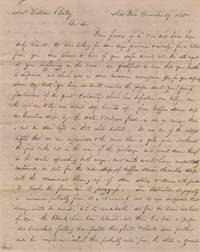
1835ref. BK0025New York City 1835. Autograph letter signed by the merchant firm Baker & Moore 4 pp. addressed to General William Battey care of Dr. Charles Luzenberg at the Franklin Infirmary on the Pontchartrain Railroad New Orleans. Stampless folded letter with red circular "NEW-YORK" December 31 datestamp and manuscript "25" rate. Appx. 1000 words. File folds; otherwise very good. A lengthy commercial letter written thirteen days after the Great Fire of New York describing the destruction of the city's mercantile district and tracing its immediate effects through insurance capital banking commodity prices and trade with New Orleans. Written by the New York firm of Baker & Moore to their associate William Battey the letter provides a near-contemporary account of the fire an assessment of the city's financial resilience and instructions for exploiting the resulting fluctuations in the markets for brandy wine raisins tobacco iron and copper. The fire began on the evening of December 16 during an extraordinary cold spell and northwest gale. Frozen hydrants wells cisterns and hoses left the city's volunteer fire companies largely unable to contain it. By the following day the fire had destroyed much of the commercial district between Wall Street and the East River including the Merchants' Exchange and hundreds of stores and warehouses. Buildings were eventually demolished with gunpowder to create firebreaks at Exchange Place and Coenties Slip. Contemporary estimates varied but approximately 674 buildings were destroyed with losses eventually placed at twenty million dollars or more.1 Baker & Moore begin by describing the extent of the burned district the severe weather and the use of explosives to arrest the flames: "Since my last you have no doubt received the paper sent you giving particulars of the great calamity which has befallen our City. On the 16th our City was about half burned up. From Coffee House Slip to Coenties Slip by the water & William Street is all in ruins. There is but one store left in that whole district. It was one of the coldest nights that we ever experienced & the wind blew a gale from Northwest. The fire broke out in the rear of the Exchange and went down through to the water spreading both ways and would have undoubtedly continued on but for the wide slips of Coffee House & Coenties Slip with the occasional blowing up of some stores & houses with powder to check the flame in its progress" The account quickly turns from the physical destruction to the distribution of its financial losses: "The destruction of property is immense probably from 10 to 15000000$ and it was supposed that many would be ruined but tis remarkable so far we have not heard of one. The Banks have been liberal and there has been a proper and benevolent feeling manifested throughout & should some further aid be brought in which probably will from the State or general government we think there may be no failures. The Insurance companies most of them are ruined and the principal loss is in Insurance capital. The loss will in some instances fall upon those who cannot well afford it. Many widows & orphans have had their all taken from them. The loss is large and New York has met with a great calamity but she is made of such materials & her facilities are so large & varied that the mercantile community will bear up under more than any other place in the Union & we think in one year's time it will be almost forgotten." The confidence expressed here correctly anticipated the city's rapid commercial recovery. Banks and government agencies extended credit and payment terms rebuilding began almost immediately and the burned district was reconstructed with new countinghouses and warehouses. The disaster also exposed the inadequacy of New York's water supply and firefighting arrangements contributing to later infrastructure and institutional reforms. Baker & Moore then apply the disaster to their own trade with New Orleans. Hundreds of warehouses and their contents had been destroyed increasing prices of imported foods wines and spirits. The firm instructs Battey to use the New York price current to obtain higher prices for their consignments: "This fire has advanced most all kinds of goods. Raisins are worth here $3-$3½. Wines such as Mess. Eastman's have advanced with us 4-6 cents. So many hundred casks destroyed must advance it and make it higher through the season. More than one half the Brandy was consumed tis now selling at $1.75 and some are asking $2. We wish what we sent you sold & this will be a favorable time to sell-show N.Y. price current-and get as good a price as you can. There will we think be no want of Brandy. Those raisins we think you had better dispose of at once. We think from N.O. current must pay something handsome for us. In regard to old Iron we find good old iron will always sell for the money for 112½ gross hundred equal to 1c per lb. Cast & wrought are same price. If you can come across a lot to do you may make it answer & pay us well. Copper if you can buy low enough may pay something. We thought hay might pay out but tis so high we cannot buy to send. We are of opinion that goods generally will be higher in consequence of this fire yet when we consign goods we wish them sold when they can to pay and we wish Eastman & Co. to sell and close up our affairs in their hands." The concluding paragraph briefly introduces events in Florida. The Second Seminole War had begun that month following mounting resistance to the forced removal of the Seminole people from Florida. Baker & Moore believed that the conflict might affect the movements of a brig expected in New Orleans: "We observe that trouble is anticipated with the Indians in Florida & if so our Brig may not get a load of them & be in N. Orleans earlier than we anticipated tis uncertain what will be the result they may detain her longer until they can get them on board." The wording appears to indicate that the vessel was expected to transport a group of Native people although the letter does not identify the brig its owners or the precise circumstances of the contemplated voyage. The recipient General William Battey was then in New Orleans apparently acting as Baker & Moore's commercial representative while also attending to his health at the Franklin Infirmary. The firm gave him considerable discretion to supervise consignments collect funds purchase goods when opportunities arose and forward current market information to New York. The address places him in the care of Dr. Charles Aloysius Luzenberg who founded the Franklin Infirmary with municipal support in 1835 and subsequently helped establish the Medical College of Louisiana the forerunner of Tulane's medical school.2 Baker & Moore appear to have been commission or importing merchants whose own affairs escaped direct damage but whose trade was immediately altered by the destruction of competing inventories. The letter thus follows the fire from the burned commercial district into the decisions of a New York firm and its representative in New Orleans. A substantial contemporary account of the Great Fire of 1835 documenting the destruction of New York's commercial center and the disaster's immediate movement through insurance banking commodity markets interregional credit and trade with New Orleans. We find no similar examples on the secondary market or in auction records. 1 Herbert Asbury "The Great Fire of 1835" The New Yorker July 26 1930. 2 Louisiana Historical Association "Luzenberg Charles Aloysius" in Dictionary of Louisiana Biography accessed August 2 2026 https://www.lahistory.org/resources/dictionary-louisiana-biography/dictionary-of-louisiana-biography-l/. . unknown
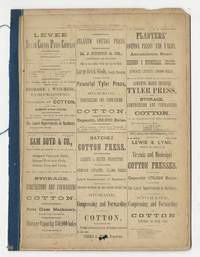
1880ref. 1631880. Photo album; Albumen prints 30; Each 5 3/4 x 4 inches An interesting and unusual album consisting of photographic reproductions of all four pages from the September 1 1880 issue followed by all 26 pages of the Annual Review of Commercial New Orleans published as a supplement on the same day. The photographs chronicle an immense amount of advertisements for the business houses stores and companies active in New Orleans at the time including ads for photographers T. Lilienthal and W. W. Washburn. Also present are ads for various insurance agencies and banks; dealers and importers of everything from musical instruments barbed wire French plate mirrors and fireworks to furniture books stationary and dry-goods; and of course odd-ball promotions for bizarre 19th-century miracle cures such as "Kidnegen: The Great Kidney Regulator and Ditretic" and Reed's Tonic "a thorough remedy in every case of Malarial fever." Also advertised are products and companies still recognized today such as Lea and Perrins Genuine Worcestershire sauce and Procter & Gamble Soaps. At least 2 pages are dedicated solely to the Cotton trade in the region and dealers in "Plantation Machinery." Meandering in-between the company advertisements are brief reports on the current state of trade in all manner of business sectors; Lumber Freight Paper-making Leather manufacturing Land prices Mineral resources and many many more. The greatest mystery here is why the album was produced in the first place; perhaps as a means to later reproduce the list of businesses--a sort of Yellow Pages. It is fairly likely that the photographs were produced by either Lilienthal or Washburn due to their inclusion in the directory. Another point of curiosity is the size of the album. While the minuscule text is mostly legible under magnification the miniature quality of the advertisements does not exactly suggest every day use! The photographs are mounted recto/verso to 15 cards which were formerly attached to the present gilt-decorated morocco album. The cloth hinges have fully deteriorated and the cards are loose and collated in order. unknown
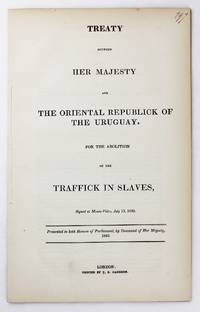
1842ref. 6316London: T.R. Harrison 1842. Near fine. 38pp. stitched. Very minor bumps to top edge of first leaf light dust-soiling to outer leaves. A very rare treaty between Queen Victoria’s Britain and the “Oriental Republick of the Uruguay” printed in both English and Spanish in two parallel columns throughout. According to the text the parties were “mutually animated by a sincere desire to co-operate for the utter extinction of the barbarous Traffick in Slaves.for the special purpose of immediately attaining this object so far as relates to the total and final abolition of the Slave Trade of the Oriental Republick of the Uruguay.” The treaty is comprised of fourteen original articles plus three annexes totaling forty-six additional articles and four additional articles at the end covering a host of issues pertaining to the suppression of the slave trade. These issues included enforcement procedures the establishment of “Mixed Courts of Justice” “Regulations in respect to treatments of liberated negroes” and much more. With regard to slaves found on international vessels the two nations hoped for “permanent good treatment and a full and complete emancipation according to the humane intentions of the Parties of the Treaty.” The present treaty was part of a larger effort by the British Crown to put an end to the transatlantic slave trade in the first half of the 19th century; at this same time Britain had reached terms on a similar treaty with the Republic of Texas and other nations. The document is signed at the end in type by J.H. Mandeville and Jose Ellauri representatives of the two countries who originally signed the treaty at Montevideo on July 13 1839; the present work was “Presented to both Houses of Parliament by Command of Her Majesty” in 1842 likely due to bureaucratic delays. Uruguay would have been an important ally for Great Britain in monitoring the seas against the transatlantic slave trade given its position opposite the South Atlantic Ocean from West Africa. OCLC records just a single physical copy of this treaty at the University of Arizona. Cundall 2854. T.R. Harrison unknown
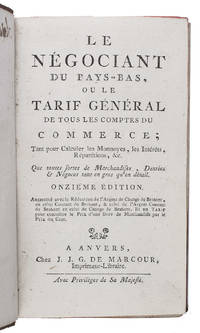
1780ref. 95L94ST53226Antwerp 1780. 12mo. Johannes Judocus Gerardus de Marcour Contemporary mottled tanned sheepskin gold-tooled spine with olive title-label red edges. XXIII 1 543 1 pp. Corrected and augmented eleventh edition of a handbook for merchants and traders in the Southern Netherlands here in a French edition but also available in Dutch Den Nederlandschen negociant . All editions appear to be very rare. It consists of numerous tables giving information for the conversion of monetary units weights and measures.The privilege p. XXIV is issued in the name of Maria Theresa who died in 1780 and De Marcour was active from 1764 to 1797. The many unnumbered editions no doubt confused publishers who probably numbered their editions to follow the highest number they had seen: the University of Kansas has a ninth edition Liege 1784 the Hendrik Conscience library a ninth Antwerp De Marcour 1792; ; and there is a tenth Antwerp Grangé 1798.With some early 19th-century annotations on endpapers. Spine slightly rubbed one leaf party detached but otherwise in very good condition.l Groote Vijftig jaar boekdrukkunst te Antwerpen p. 31; Anet 3 copies; STCV 1 of the same copies; WorldCat 2 of the same copies. ECONOMY TRADE & NUMISMATICS LOW COUNTRIES Belgium Economic History & Trade unknown
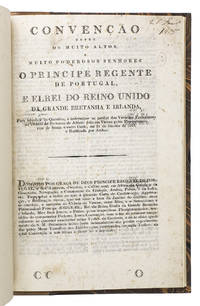
ref. ABC_48887Lisbon: Na Impressão Regia 1815. Modern half calf marbled paper sides with the title and year of publication lettered in gold on the spine. Small folio ca. 28.5 x 18 cm. With the text printed in two columns in Portuguese on the left and in English on the right. Very rare first Portuguese edition of this treaty between Portugal and the United Kingdom of Great Britain and Ireland concerning the indemnification of Portuguese subjects for certain detained slave trade vessels as a result of British actions undertaken in pursuit of the abolition of the slave trade. "Britain agreed to pay compensation for the several Portuguese slavers detained brought before and condemned by British courts on the ground of illegal slave-trading along the African coast prior to 1814" J.P. van Niekerk "British Portuguese and American judges in Adderley Street ." pp. 22-23. Another edition of this same treaty in 8 pages was printed in the same year in Rio de Janeiro with the complete imprint including the place of publication.The present bilateral treaty comprising three articles printed in two columns in Portuguese and English was drafted on 21 January 1815 during the Congress of Vienna a series of international diplomatic meetings held in Vienna from September 1814 to June 1815 concerning the new layout of the European political and constitutional order after the downfall of the French Emperor Napoleon Bonaparte. The signatories of the present treaty were plenipotentiary at the Congress of Vienna formally this treaty was concluded between the Prince Regent of Portugal - future King John VI 1767-1826 - and the King of Great Britain and Ireland George III 1738-1820 as mentioned in the title.A more detailed description is available upon request.With the book plate of "Biblioteca de Hariberto de Miranda Jordão Filho" mounted on the front pastedown. The text leaves with a vague horizontal and vertical fold in the centre a manuscript annotation "21 Janeiro 1815" in brown ink in the upper outer corner of the first page some foxing. Otherwise in good condition.l Gauz Portuguese and Brazilian books in the JCB 815/10; Porbase 3240734 1 copy; WorldCat 1042407673 12791342 38346960 4 copies; cf. Camargo & Moraes Bibl. da Impressão Régia do Rio de Janeiro I 428; Rodrigues 735 & 737 Rio de Janeiro ed.; for more context relating to the treaty: Lesaffer R. "Vienna and the Abolition of the Slave Trade" Oxford Public International Law online via: https://opil.ouplaw.com/page/498; Niekerk J.P. van "British Portuguese and American judges in Adderley Street: the international legal background to and some judicial aspects of the Cape Town Mixed Commissions for the suppression of the transatlantic slave trade in the nineteenth century Part 1" in: The Comparative and International Law Journal of Southern Africa Vol. 37 No. 1 March 2004 pp. 1-39. online via: https://journals.co.za/doi/pdf/10.10520/AJA00104051_114. Na Impressão Regia, unknown
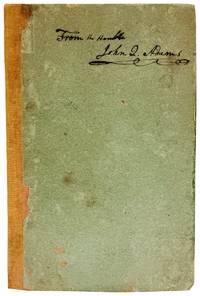
1826ref. 47522Washington DC: Gales & Seaton 1826. Very Good. Washington DC: Gales & Seaton 1826. First Edition. Octavo 22cm; original publisher's cloth over blue paper-covered boards; 77pp.; one fold-out plate. Collated complete. Boards rubbed with some spotting and dampstains; cloth on spine fraying. Front cloth joint splitting but holding; pages foxed; endpapers dampstained. Unidentified numerical ex-library stamp on top of p. 3 else free of institutional markings. Overall a Very Good copy. Inscribed on front cover: "From the Honble. John Q. Adams" who served as U.S. President at the time of publication and contributed the introductory comment published on p. 3. This inscription written on behalf of the President whose hand suffered from a tremor later in his career. Volume documenting the challenges the U.S. government faced trying to enforce an 1808 ban on the international slave trade which involved a complicated six-year-long case in which three American slave ships the Constitution the Louisa and the Merino were seized for transporting enslaved people between Havana Cuba Pensacola Florida and Mobile Alabama. More than 100 enslaved people were seized in the capture of the ships. At the conclusion of the case in 1825 only 65 of them were accounted for the others died escaped or were simply lost in the broader institution of slavery. The 65 remaining humans were sold at auction and the slave traders were not punished other than the financial loss of their ships and cargo. While the enforcement of the 1808 ban may have been a deterrent for some slave traders the National Archives estimates that 1.2 million slaves were brought into the U.S. illegally during the first half of the 19th century. Provenance: We have been unable to establish which library this came out of though we have checked each copy-specific description of the examples listed in OCLC none of which are described as being inscribed by or for Adams. The previous owner states that he purchased this copy from a Parisian dealer in the 1980s. References: "Traveling the Beaten Trail: Charles Tait's Charges to Federal Grand Juries 1822-1825" published in the Occasional Publications of the Bounds Law Library No. 8. Alabama Law Scholarly Commons 2013. National Archives and Records Administration Southeast Region Atlanta Shoemaker 27399. Gales & Seaton unknown
1839ref. 188502Likely London: Ordered by the House of Commons to be Printed 1839. A beverage of empire - the demise of the Chinese tea monopoly First edition covering material submitted by East India Company representatives between 1834 and 1838 - a crucial period during which Britain laid the foundations of its tea empire in Assam. The splendid maps incorporate the findings of explorers such as Captain Francis Jenkins and the observations of tea-growing made in China by the Macartney and Amherst embassies. The documents concern the key actors in the growth of Britain's formal tea empire including Jenkins the powerful Bengal civil servant William Hay Macnaghten and the members of the Tea Committee established by Governor William Bentinck in 1834. Pages 36-37 carry the text of the committee's momentous 24 December 1834 report announcing that the tea plant was indigenous to Assam: "We have no hesitation in declaring this discovery. to be by far the most important and valuable that has ever been made on matters connected with the agricultural or commercial resources of this empire." Five years later the first twelve chests of Assam-grown tea were auctioned in London to great fanfare. Copies are held at the British Library Linnaean Society Calke Abbey UCLA National Agricultural Library Institut de France and National Library of Australia. Folio 331 x 215 mm. With 5 lithographed plates 3 leaves of explanatory letterpress 6 folding maps 3 with hand-colouring illustrations and tables in text. Twentieth-century dark blue buckram spine lettered in gilt original blue printed wrappers bound in. Ex-Reading University Library with its bookplates including on front cover index card holder and other markings and stamps on endpapers; a little old underlining in text. Light spotting internally maps in well-preserved condition and without stamps: very good. hardcover
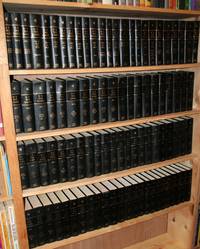
ref. 006865New York : Commerce Clearing House 1913-1986 1986. Hardcover. Fine/No Jacket. 91 volumes ; A nearly complete run from 1913-1986 ; almost 75 years of tax litigation history ; At head of title: CCH./ Published: Chicago IL : CCH Incorporated / Accompanied by separately numbered Consolidated volumes vol. 1 1913/1929-v. 5 1917/1940 published 1938-1940 which make available in permanent bound form the opinions originally reproduced and reported in the publisher's "court decisions" division of Standard federal tax service./ "The fifth vol. of the consolidated vols. presents court decisions handed down under the excess profits tax statutes which were effective from 1917 to 1921."--Foreword to v. 5 ; LC: KF6280.A2; HJ3251.A39; Dewey: 343/.73/0402643 ; OCLC: 3157871 ; ISSN: 0277-402X; Other format's ISSN: 1084-0125; National Library: 011150635; LCCN: 37-1000 ; without vols. for 79-2 80-2 81-83 84-1 and duplicates of 74 & 75-1 ; As published in book form we must point out that this set can be used without electricity computers or the internet! ; A fine first impression for anyone entering a law office ; or could make a great stage prop ; FINE New York : Commerce Clearing House, 1913-1986 hardcover
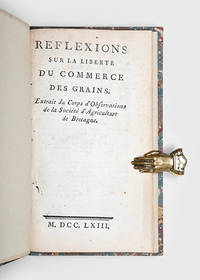
1763ref. 1730471763. Grain policy in the ancien régime First edition of this exceptionally scarce economic tract on the grain trade. We trace only two institutional copies worldwide: at the University of Chicago and the BnF. The recent spine label attributes this work to Louis Paul Abeille 1719-1807 an early convert to physiocracy and a friend of Quesnay and Mirabeau. Abeille served as secretary of commerce under Louis XV & XVI from 1769-83. A series of subsistence crises brought concerns over public access to grain to the forefront of French economic debate in the mid-18th century. In the absence of public granaries government policy was to regulate more strictly the distribution of grain by private commercial interests but periodic subsistence crises revealed the inadequacy of this policy. Over the next decade the physiocrats continued to promote deregulation of the grain trade which contributed to spiralling prices and the Flour War of 1775. The attribution to Abeille is presumably based on his publication in 1760 of the Corps d'observations de la Société d'agriculture de commerce et des arts établie par les États de Bretagne années 1757 & 1758 which brought him to the attention of Quesnay and Mirabeau in Paris. Abeille was the secretary of the Agricultural Society of Brittany a learned society for agricultural improvement. Duodecimo 159 x 92 mm. Recent marbled paper boards gilt label to spine edges sprinkled red. Minor foxing and browning: a very good copy. Not in Black Goldsmiths' or Kress. hardcover
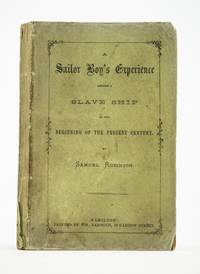
1867ref. ST20572Hamilton Scotland: W. Naismith 1867. FIRST EDITION. 168 x 106 mm. 6 1/2 x 4 1/4". vii 183 pp. In the very rare original green paper wrappers. Spine cocked wrappers somewhat soiled spine with paper beginning to lift along the bottom inch of the rear joint other minor exterior defects but the volume solid and internally in excellent condition. QUITE A GOOD COPY of a fragile inexpensively produced volume one would expect to find in shambles. Told in the form of letters drawn from the author's actual correspondence as well as his contemporary journals this first-hand account by a young sailor of the transatlantic slave trade in the years 1800-04 brings those horrific voyages vividly to life. At the same time the author writing in direct unvarnished prose makes it clear he is at least as much an observer of difficult sea life in general as he is concerned with the abolition of a great evil. In the preface Robinson 1786-1875 explains his reasons for publishing this record of his time aboard a slave ship: "I have heard so many gross misstatements respecting West Indian slavery and the horrors of the 'Middle Passage' that I formed the resolution should time be allowed me to give the result of my own experience . . . in order to disabuse the minds of many well-meaning people." He is rightly aware that some readers may be offended by unconvincing apology in an account encumbered with naïveté : "It is doubtless the opinion of many that I put myself into a wrong position and incurred blame and obloquy by entering into this obnoxious trade at all. It may be so; I will not dispute the matter. I certainly did not feel myself comfortable or at home in the service. But let it be remembered in my favour that the trade was then a lawful one; whilst at the same time I was induced to enter it by what is called an accidental circumstance . . . and an irresistible desire for a seafaring life so completely carried me away that it became a matter of perfect indifference to me where the ship went if not to the bottom provided I was aboard of her--or in what trade engaged if not a pirate." As indicated the letters originating in various ports in England West Africa and the West Indies depict a harsh life at sea for all involved but most especially for the wretches who made up the ship's cargo. An accident on board nearly cost Robinson his foot and ended his career at sea just a year before in his words "the united voice of a generous and philanthropic people" passed the Emancipation Bill into law ending British participation in the slave trade. The phrasing here makes it clear our narrator had his heart mostly in the right place. This is a very rare book which is not surprising for a pocket-sized work from a provincial press near Glasgow issued in insubstantial paper wrappers. OCLC records just two copies in libraries both in the UK while RBH and ABSA seem to list no copies at auction except the present one. W. Naismith unknown
1930ref. 42850Leicester UK: Cascelloid 1930. Very good . Beautifully-produced trade catalogue from the Cascelloid "Palitoy" company displaying a wide range of baby dolls and other toys. Several uncomfortable designs of black children with pitch-dark skin date this catalogue at roughly the 1930s when the Cascelloid company was dubbed the "House of Constant Progress" by the industry press for its material innovations with the plastics Bexoid and Plastex. One page features a celluoid model by the noted designer Mary Lucie Attwell a doll named "Diddums." The catalogue also displays the company's offerings of animal dolls die-cast trucks pool toys golf and ping-pong sets rattles pinwheels and more. Needless to say color photography was not the norm at this time and this catalogue comprises a beautiful set of vivid and sharp photographic prints. A truly exceptional example unlike anything we've seen: simultaneously surreal and nostalgic. Oblong 4to. album. Blue leather-covered boards. Contains 29 color photographs all 9" by 6.5" approx. mounted on rectos one each of light-gray cardboard leaves. About very good plus overall. Moderate rubbing and edgewear to boards. Several pages display mild soiling and offsetting from photos. Prints just a bit yellowed but remain sharp vivid and clean. [Cascelloid] unknown
1930ref. 42850Leicester UK: Cascelloid 1930. Very good . Beautifully-produced trade catalogue from the Cascelloid "Palitoy" company displaying a wide range of baby dolls and other toys. Several uncomfortable designs of black children with pitch-dark skin date this catalogue at roughly the 1930s when the Cascelloid company was dubbed the "House of Constant Progress" by the industry press for its material innovations with the plastics Bexoid and Plastex. One page features a celluoid model by the noted designer Mary Lucie Attwell a doll named "Diddums." The catalogue also displays the company's offerings of animal dolls die-cast trucks pool toys golf and ping-pong sets rattles pinwheels and more. Needless to say color photography was not the norm at this time and this catalogue comprises a beautiful set of vivid and sharp photographic prints. A truly exceptional example unlike anything we've seen: simultaneously surreal and nostalgic. Oblong 4to. album. Blue leather-covered boards. Contains 29 color photographs all 9" by 6.5" approx. mounted on rectos one each of light-gray cardboard leaves. About very good plus overall. Moderate rubbing and edgewear to boards. Several pages display mild soiling and offsetting from photos. Prints just a bit yellowed but remain sharp vivid and clean. [Cascelloid] hardcover
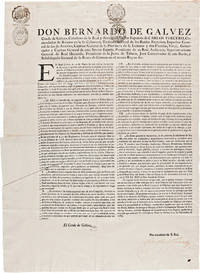
1785ref. 57874Mexico. November 22 1785. Announcing the Compañia Real de Filipinas Regulating Trade with the Philippines A very rare Mexico City printing of the announcement of the creation of the Royal Company of the Philippines by Spanish royal decree in 1785 which regulated and effectively monopolized trade with the Philippines. This copy bears the manuscript rubric of Don Bernardo de Gálvez and signature of his secretary Joseph de Gorraes. Gálvez then Viceroy of New Spain ordered this broadside printed for the reason that "An Establishment so important and of such general interest should be understood and known by all" our translation. The creation of the Royal Company would be particularly relevant to residents of Mexico as most if not all of the trade with the Philippines would come through New Spain. Accompanying the announcement this broadside also prints Articles 1 2 14 21 and 100 of the royal decree which were considered to effectively summarize the purpose and mechanics of the new Company. The articles printed here proclaim that the Company is to enjoy the protection of the Crown for at least twenty-five years establish a fund to back its shares describe how shares and subscriptions could be purchased and organize a general meeting of shareholders. Notably absent from this broadside is the important article of the decree which closed Manila's ports to foreign vessels giving the Company an effective monopoly on all trade between Asia and the Americas. The Royal Company of the Philippines quickly gained vast wealth from this lucrative deal transporting commodities such as indigo coffee sugar spices and cotton across the Pacific. Regardless of its initial success the Company did not endure - the wave of rebellions against Spanish rule in Central and South America in the early 19th century quickly rendered it obsolete and the company was officially dissolved in 1834. A rare broadside announcing this important Royal Decree to the people of the Western Hemisphere; OCLC records only one copy at the Bancroft Library. Broadside printed on two joined sheets of sealed paper 23½ x 17 inches in total. Old folds and light creases a few small worm holes. Very good. OCLC 21747301. unknown
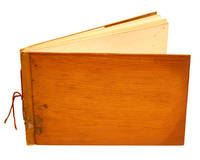
1893ref. 607017Lowman & Hanford 1893. First Edition. Wraps. Very Good. A Rare Northwest imprint; this was from the library of noted historian Edmond S. Meaney with his signature to the front pastedown and further inscribed 'From C. T. Conover Seattle Wash.' This copy has been specially bound with a leather spine and two bevelled and varnished wooden boards. 38pp. with 10 b/w plates one panorama shot of the waterfront and one map. Issued as a souvenir for Seattle's guests on the occasion of the celebration commemorating the completion of the Great Northern Railway to its Pacific terminus at Seattle and the inauguration of through traffic June 1893. WorldCat only located 3 copies. [Lowman & Hanford] unknown
1939ref. 1729691939. INK TRADE CATALOGUE. Kraski. Trest 'Poligraf'. 173 unnumbered leaves of text and illustrations. Vertical 4to 265 x 175 mm publisher's cloth fastened with string. Moscow: Nauchno-issledovatel'skii institut poligraficheskoi i izdatel'skoi tekhniki 1939. The State Trust of the All-Union Economic Council of National Economy "Poligraf" existed since 1924 and produced movable types. They also produced printing inks. In this sample book they are divided by the techniques they were intended for: movable-type printing lithography offset lithography mezzotint. The samples are on different kinds of papers to show the differences for printing. At the end is an overview of complementary mixtures and drying oils including fatty printing pastes to increase the capacity of printed forms. One of 300 copies only. Of the greatest rarity and not listed on OCLC. hardcover
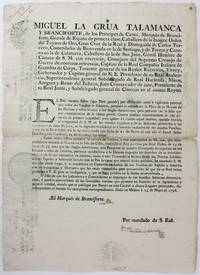
1796ref. 5074Mexico City: May 13 1796. About very good. Broadside 17 x 12.25 inches. Old fold lines. Slight separation and loss at center fold slightly affecting a few letters. Minor wear else. Proclamation made by the Viceroy of New Spain authorizing trade between Cuba and the United States. The Caribbean was in tumult in the 1790s with Toussaint L'Ouverture overthrowing the French colonial government and outlawing slavery. Likewise in Cuba there was a similar revolt against slavery demanding abolition and equality -- both revolutions were of substantial concern to slaveholders in the American South. Specifically the present decree mentions flour and other vital foodstuffs as a measure against shortages in Cuba intended to prevent further trouble. "Para precaver la escasez de viveres y con especialidad de harinas que verosimilmente causaria la guerra concedio El Rey Permiso por Real Orden de 25 Junio de 93. para que los Anglo-Americanos.pudiesen conducirlos a la Havana pagando los derechos los puertos habilitados de España." The Viceroy at the time was Don Miguel de la Grua Talamanca de Carini y Branciforte First Marques de Branciforte. The Marques was notoriously corrupt even for colonial Spain having gained position through marriage to the Prime Minister's sister. He made sure to make some profit on everything that passed through his hands including taking advantage of the war in Cuba to remove the French from their lands and sell them to his benefit. A rare and interesting decree. We locate a single copy in OCLC at the University of Minnesota. May 13 unknown
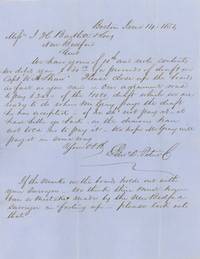
1855ref. List3333Massachusetts New York Maine Pennsylvania and others 1855. Fifty letters with four empty envelopes or covers. Forty-four letters addressed to I.H. Bartlett & Sons: two from the 1830s eight from the 1840s and thirty-four from the 1850s. With five letters addressed to Capt. John C. Blanchard 1838 1839 1844 and 1849 and one to Cumston & Hatch N.d. Overall excellent to Near Fine. Ivory Hovey Bartlett 1794–1871 was a merchant and whale oil seller based in New Bedford Massachusetts. Bartlett moved to New Bedford from Plymouth in 1819 first dealing in grain and later transitioning to general merchandise and whaling.1 Whale oil and spermaceti were widely used in lamps and as lubricant and whalebone baleen was used for structure in items like umbrellas and corsets. In the nineteenth century whaling was the basis of New Bedford’s economy—supporting shipbuilding refineries toolworks and more—making it the wealthiest city in North America at the peak of the industry in the midcentury. Whaling declined in the 1860s with the rise of petroleum which could be both used as a lubricant and distilled into kerosene for lighting. Offered here is a collection of letters mainly to Bartlett’s company I.H. Bartlett & Sons with five to Captain John C. Blanchard of Searsport Maine and one to Cumston & Hatch. The latter is unknown; Blanchard was in the cotton and sugar trades sailing between the US Europe and West Indies. Letters to Bartlett are mainly from other mercantile firms; they pay bills make purchases discuss oil prices and occasionally complain. For instance Robert Robinson of Portland Maine writes: “I have just got 4 Casks of my oil 3 of the last and 1 of the invoice of 30th ult. I cannot understand why my oil should be keep back in this way. Hyde had seven casks by yesterdays Boat the same boat which mine came by it seem’s as if the fates where against this Oil as yesterday boat did not arrive untill late yesterday afternoon and this mornings boat has arrived without the balance there must be something wrong somewhere . I must say I think such neglect should be made known but perhaps it would be better to suffer for fear of the future. I shall not be able to get off any oil untill tomorrow as the oil was not out of the boat untill this morning. it is not thirteen days since that one cask left New Bedford .”. October 13 1852 Most of Bartlett’s customers buy whale oil though beef molasses and coal are also discussed but some are interested in whalebone; as are Wright Bros & Co a Philadelphian umbrella manufacturer who write to complain about market speculation: “The fact appears to us that speculation and the calculation of holders put the price kept it so high that it considerably lessened consumption – so much so of late that some have been disposed to slide it off below New Bedford rates very quietly.” October 23 1852 The letters to all parties are generally all business except for two of the five to John Blanchard: one from his wife Caroline Houston and one from fellow Searsport captain David Nickels Jr. 1823–1888 who writes from Bangor: “I see by to day’s Mercantile gazette that you are in trouble I can sympathize with you God knows I have had a good share of it since I left the land of Gospel light and liberty as the good people say in their prayers I have been in this place fifteen days you doubtless knew I was chartered by Capt Pendleton to go from Leith to Bangor for a cargo of slates and from here to Boston I sailed from Leith on the 27th of November last for this place I got as far as the Orkney Islands on the 30th of November the wind blowing heavy from the westward and having a pilot belonging to the Orkneys on board I concluded to take the harbour of Longhope and lay till a shift of wind or till it moderated . in spite of all our endeavouring we were driven on shore broke the keel out of her filled as high as the lower deck which was on the 3d of December and on the 22d of March we left the Orkney Islands after having been near four months there When I got here I found the man who was to freight the Barque from here to Boston had neglected to place funds in the hands of the slate agent of this place consequently he refuses to put slates on board of the vessel till he receives funds from Boston .”. May 13 1849 Overall a look at the dealings of maritime merchants in the mid-nineteenth century particularly in the critical east coast whaling industry. 1 “Death of a Well-Known Merchant” The Standard-Times February 6 1871 2. unknown
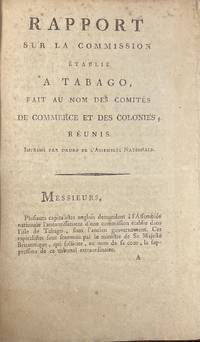
1791ref. 3649Paris: Imprimerie Nationale 1791. First edition. Bound in later hardpaper boards covered with pastepaper spine with red gilt leather title vignette. Untrimmed. Paper tanned. Otherwise in very good condition. First edition. Bound in later hardpaper boards covered with pastepaper spine with red gilt leather title vignette. 18 2 blank p. Official report on the 1786 “Commission de Tabago” an extraordinary tribunal established to examine debts between British creditors and settlers after the French conquest of the island. First edition of the National Assembly’s official report on the controversial “Commission de Tabago” an extraordinary tribunal established in 1786 under the ancien régime to review debts between British capitalists and settlers after the French conquest of Tobago. The report reconstructs the background of the island’s transfer: originally ceded to Britain in 1763 Tobago had been largely settled and financed by British investors who lent capital for the development of sugar estates secured by mortgages. Following the French conquest 1781 and definitive cession Treaty of Paris 1783 the treaty guaranteed the inhabitants’ property rights under English law. Nevertheless in 1786 the Conseil du Roi created a special commission at Tobago to investigate alleged usury and excessive interest rates in these mortgage contracts. The commission—presided by the governor and ordonnateur—confiscated titles annulled or reduced debts and declared most English claims void provoking losses estimated at over 13 million livres. This Rapport examines the legality of the tribunal under both French and English law concluding that it was arbitrary unconstitutional and in violation of the 1783 peace treaty. The committees show that English statutes were misquoted that the island’s existing courts Common Pleas and Chancery already had proper jurisdiction and that no disputes existed before the commission was imposed. The report also denounces the suppression of trial by jury and the disregard of due process. It recommends—and the Assembly accepted—that the entire commission and its judgments be annulled thereby restoring lawful jurisdiction in the colony. The episode marked one of the last acts of French administration on Tobago which was recaptured by Britain in April 1793 returned to France in 1802 under the Treaty of Amiens and formally surrendered under the Treaty of Paris in 1814. An important Revolutionary document reflecting early attempts to reconcile French constitutional principles with colonial administration and international treaty obligations. Not in Sabin. No records on RBH. WorldCat locates 6 copies. . [Imprimerie Nationale] unknown
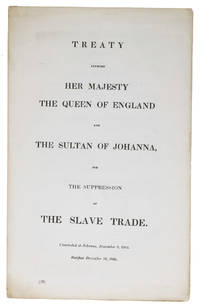
1845ref. ABC_48495Johanna Anjouan 1845. Ca. 32.5 x 20.5 cm. Original paper wrappers. 5 1 blank pp. Historically important treaty between Queen Victoria of the United Kingdom of Great Britain and Ireland 1819-1901 and Sultan Selim dates unknown of Johanna present-day Anjouan for the suppression of the slave trade. The treaty was concluded in November 1844. The present work is the ratified version from 10 December 1845 signed by Sultan Selim and Christopher Wyvill 1792-1863 captain of the HMS Cleopatra and formation commander of the British Royal Navy in Africa between 1849-1853. The publication is exceptionally rare. We have not been able to find any printed copies anywhere else either in sales records or libraries. The archives of the UK parliament make mention of the treaty but it appears to be otherwise unknown.In the present work the Sultan of Anjouan states that: "There shall be no dealing in slaves in our territory and no slaves shall be imported to be sold in our country". He further allows the British to inspect Anjouan ships and take them to an English port if they are found engaging in slave trade. The present treaty which is of significant historical importance is an excellent example of the measures that were undertaken across the world to stop the slave trade.The leaves are slightly creased and browned around the edges. Otherwise in good condition. AFRICA EUROPE HISTORY LAW PHILOSOPHY & POLITICS Broadsides Ephemera & Pamphlets Law & Politics Slavery Southern Africa UK - United Kingdom unknown
1667ref. ABC_508101667. Ca. 23.5 x 26.5 cm and ca. 20 x 24 cm. With a woodcut decorated initial on each ordinance. Two closely related Dutch Republic broadsides both concerned with the suppression of fraud in the spice trade under the monopoly and protection of the Dutch East India Company. Together they form a vivid legal response to widespread commercial adulteration of imported spices particularly pepper nutmeg and mace reflecting both the economic importance and vulnerability of the Dutch spice trade in the 17th century. Both texts are issued as public ordinances intended for proclamation and posting throughout the provinces and both impose heavy fines and confiscation for violations alongside rewards for informants and penalties distributed between officials and local relief funds.The first proclamation from 16 September 1667 responds to reports of severely compromised pepper entering the Dutch Republic via England explicitly referencing the aftermath of the Great Fire of London. The text describes burnt pepper imported after the disaster which is said to retain only the outward appearance of pepper while being stripped of all quality and even emitting a foul smell. Authorities warn that such material is being mixed with genuine spice and sold fraudulently undermining both consumers and the reputation of the VOC.The second later and more extensive proclamation of 22 November 1669 significantly broadens the scope of earlier regulations. Rather than focusing solely on pepper it addresses systematic adulteration across a wide range of spices including pepper nutmeg mace and powdered spice residues. It describes the importation of dust powder and refuse of spices from abroad which are being reprocessed and mixed with genuine goods or artificially manipulated such as being moistened with water to increase weight and deceive buyers.The margins of both of the ordinances are cut short the first ordinance shows some browning and a minor tear. Otherwise in good condition. unknown
1843ref. 24188St. Louis: John B. Sarpy 1843. Folio. 2 pp. 12 1/2 x 7 1/2 inches. Docketed on verso fold lines with some separation a few repaired. A manuscript affidavit written by fur magnate John Baptiste Sarpy of Pierre Chouteau & Co. that gives one a granular sense of the difficulities of running a frontier business dependent on mountain men like Jim Bridger and Frapp. A remarkable window onto the business dealings of famed mountain man Jim Bridger this signed manuscript affidavit of John B. Sarpy testifies to his actions on behalf of the estate of fellow fur trader Henry Fraeb also known as Frapp who was killed by Indians in the Rocky Mountains. Sarpy who was a partner in the major fur firm Pierre Chouteau &. Co. had worked closely with Frapp and knew him well. In his affidavit he writes about the Chouteau Company's concerns about Jim Bridger Frapp's partner at the time of his demise and the difficulty of getting Bridger to pay his debts. Written in St. Louis Sarpy's affidavit states: "On the 8th day of August last he was appointed . . . administrator of the estate of Henry Fraeb then lately deceased. Said Fraeb had been a trader in the mountains & was at the time of his death in partnership with a man of the name of James Bridger & said Bridger & Fraeb were indebted to the firm of Pierre Chouteau Jr. & Co. & it was feared by the members of said firm that unless some one became the administrator of the said Fraeb the said Bridger might interpose difficulties in the settlement of the accounts existing between them & Bridger & Fraeb & for the purpose of doing justice to themselves as well as to the said Fraeb the said Sarpy applied for letters of administration which were granted to him as above mentioned. The said Bridger has however since this time been here & has settled in full the accounts existing between the firm of Pierre Chouteau Jr. & Co. & the said Bridger & Fraeb. And the said Sarpy says that no property has come into his hands as the administrator of the said Fraeb although it may be that the said Fraeb has property in the mountain country or in the hands of James Bridger his former partner." Though he may have been one of the greatest and most beloved mountain men of all time Jim Bridger was not the best debtor in the world nor did Pierre Chouteau & Co. forget business. John B. Sarpy unknown
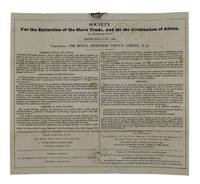
ref. AQ30000Single leaf mulready letter- sheet folded addressed to 'Mrs Clive Sanderstead Croydon Surrey' postmarked Frome with the 306 duplex cancellation to folded front and further post-marks of Croydon and Frome dated September 1844 to folded verso. Some tears to folds margins without loss of text remains of opened wax seal and old paper repairs to recto. The earliest of several known variants of this rare plea for donations for the Society for the Extinction of the Slave Trade and for the Civilization of Africa printed on the reverse of a 'Mulready' penny postal stationary sheet. First issued on 1 May 1840 in parallel with the world's first stamp - the Penny Black - these pre-paid self-folding letter sheets featured an engraved design by John Thompson after William Mulready 1786-1863 and were valid for use from 6th May. Much to postal reformer Rowland Hill's surprise unlike their adhesive philatelic counterpart the Mulready covers quickly proved unpopular both with customers and stationers - who relied upon the sale of writing paper for letters - alike. They were superseded by the introduction of simpler postal stationary with impressions akin to stamps in the top left hand corner in 1841; Mulready sheets were subsequently withdrawn from sale during the early 1840s. Despite their unpopularity soon after issue the promotional opportunities provided by advertising on the verso of the Mulready letter-sheets were seized upon by commercial and voluntary associations alike. Insurance companies banks newspapers publishers and religious institutions are all known to have advertised in such a manner; many made this stationary available in quantity at a discounted rate to ensure wide circulation to the writing desks of the literate across Britain. Advertisements for The Society for the Extinction of the African Slave Trade are known to have featured on nine slightly different advertisements to the verso of the Mulready one- and two-penny letter-sheets; this is the earliest known advertising that 'Shortly will be Published' an Abridgement of Buxton's The African Slave Trade London 1840 implying that these were issued in the very first year of the stationary's use. The fact that no fewer than four works published by John Murray are also advertised could indicate that the cost of producing these pre-paid advertising letter sheets was borne by the publisher. 'A subscription of One Guinea and upwards per annum constitutes an Annual Member. A donation of Ten Guineas and upwards constitutes a Life Member Subscriptions and donations of a smaller amount will be thankfully received.' Founded by English politician Fowell Buxton 1786-1845 in June 1839 with the aim not only of finally extinguishing the Slave Trade in Africa some decades after the original abolition of the Trade in Britain her colonies and the United States but also to 'watch over and befriend the interests of Africa' and form a commercial 'Company which shall cultivate portions of her soil'. As noted in this advertisement which sought 'subscriptions and donations' this included persuading the British Government's sending an expedition see item number 36 led by the Royal Navy to explore the Niger river which despite the death of a full third of the those involved largely to fever did secure the signing of several treaties against the slave trade with tribes in modern day Nigeria. As this advertisement - signed by secretary Irish clergyman and missionary John Trew 1792-1869 notes further expeditions 'into the interior of Africa' were envisaged at 'considerable expense' to the society; however the Society was acrimoniously dissolved in 1843 - the year before this letter-sheet was used - before any such expeditions could be repeated. Stanley Gibbons Queen Victoria Vol. 1 Pt. 1 SG MA480a. Dimensions unfolded: 220 x 200 mm; folded: 133 x 88 mm. unknown
ref. AQ27989vs.: vs. 1820-40s An archive comprised of sixty-eight loose articles of late Georgian and early Victorian manuscript and printed ephemera relating to the purchase of alcohol including a number of bill-heads for merchants in inter alia Glasgow and London. The majority of the manuscript material - predominantly receipts and purchase orders - are addressed to Nottingham-based wine merchant Thomas Bailey 1785-1856 father of poet Philip James Bailey 1816-1902 noted author of Festus 1839. The elder Bailet who established his business in 1817 relinquished control in the 1830s in order to devote himself more fully to his roles as newspaper editor and author. The later material in this archive dating to the 1840s is addressed to Bailey's son-in-law and successor John Brown. A remarkable opportunity to acquire an archive of mid-nineteenth century commercial material directly connected to the provincial wine and spirit trade. . [vs.], [1820-40s] unknown