15.997 resultados
1931ref. 90295Washington DC: United States Government Printing Office 1931. Presumed First Edition First printing. Wraps. Good. iv 85 3 pages. Illustrated front cover. Footnotes. Illustrations photographs and drawings/diagrams. Tabular Data. Appendix. Bibliography. Check List. Cover has some tears wear and soiling. Foreword by Axel H. Oxholm Director of the National Committee on Wood Utilization. The contents address Factors to Consider First by Nelson S. Perkins; Judging the Exterior Construction; The Plan; Structural Features and Mechanical Installations. Axel H. Oxholm was also at one time chief Lumber division Bureau of foreign and domestic commerce. United States Department of commerce. Nelson Secor Perkins 14 Apr 1894 - 1 Aug 1985 was a noted author and authority and is regarded as one of the key pioneers in the development and use of plywood. The National Committee on Wood Utilization was organized by Herbert Hoover as Secretary of Commerce and comprised about 200 members representing manufacturers distributors and consumers of forest products. Its object was to work for closer utilization of the U.S.'s timber resources. The committee whose headquarters were in the Department of Commerce Washington D.C. worked in close cooperation with a number of official and private organizations notably the Bureau of Standards of the Department of Commerce and the Forest Products Laboratory of the Forest Service Department of Agriculture. President Roosevelt by Executive Order 6179-B Abolished of the National Committee on Wood Utilization. Dated June 16 1933 the Executive Order stated "There is hereby abolished The National Committee on Wood Utilization. All the property of every kind files and records etc. belonging thereto are hereby transferred to the custody of the Secretary of Commerce for such disposition as he may determine; provided that if the forest products industries desire to continue in their own quarters and at their own expense the work heretofore performed by the National Committee on Wood Utilization the Secretary of Commerce may permit them to have access to or the use of the records and files of the Committee." Plywood is a composite material manufactured from thin layers or "plies" of wood veneer that have been stacked and glued together. It is an engineered wood from the family of manufactured boards which include plywood medium-density fibreboard MDF oriented strand board OSB and particle board or chipboard. All plywoods bind resin and wood fibre sheets cellulose cells are long strong and thin to form a composite material. The sheets of wood are stacked such that each layer has its grain set typically see below perpendicular to its adjacent layers. This alternation of the grain is called cross-graining and has several important benefits: it reduces the tendency of wood to split when nailed at the edges; it reduces thickness swelling and shrinkage providing improved dimensional stability; and it makes the strength of the panel consistent across all directions. There is usually an odd number of plies so that the sheet is balanced that is the surface layers have their grains set parallel to one another. This balance reduces warping. Because plywood is bonded with grains running against one another and with an odd number of composite parts it has high stiffness perpendicular to the grain direction of the surface ply. Smaller thinner and lower-quality plywoods may only have their plies layers arranged at right angles to each other. Some better-quality plywood products by design have five plies in steps of 45 degrees 0 45 90 135 and 180 degrees giving strength in multiple axes. United States Government Printing Office paperback
1926ref. 56761Washington:: Government Printing Office . 1926-1927. Second edition. publisher's lettered cloth. Cloth spotted; tight and sound. 8vo. Illustrated including three large folding plates. Government Printing Office, . hardcover
1935ref. 510786Government Printing Office 1935. FIRST EDITION. Hardcover. Very Good/No Jacket. First Edition First Printing. Published by Government Printing Office 1935. Octavo. Hardcover. Book is very good. No dust jacket. Government Printing Office hardcover

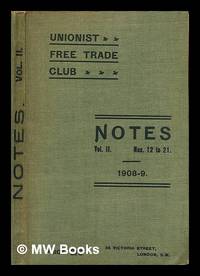
1908ref. 318147London : Unionist Free Trade Club 1908. First Edition. Softcover. Very good copy in the original stiff-card wrappers; edges slightly nicked and dust-dulled as with age. Remains particularly and surprisingly well-preserved; tight bright clean and especially sharp-cornered. Physical description: 456p. ; 21cm. Subjects: Free trade. Commerce. London : Unionist Free Trade Club paperback
2003ref. 62349Washington DC: U.S. Government Printing Office 2003. Presumed first edition/first printing. Wraps. Very good. No dust jacket as issued. iii 87 p. Serial No. 108-36. The purpose of this hearing was to examine issues associated with organ donation. Appearing as witnesses were members of the organ donation community. Among the topics discussed were new measures and initiatives that were felt to hold some promise for increasing donation rates. U.S. Government Printing Office paperback
2004ref. 64004Washington DC: U.S. Government Printing Office 2004. Presumed first edition/first printing. Wraps. Good. No dust jacket as issued. iii 260 p. Illustrations. Serial No. 108-58. This was the third hearing held by this subcommittee on Medicaid which was viewed as a critical component of the Nation's health care safety net. Challenges facing Medicaid were fiscal especially the rate of escalating costs. U.S. Government Printing Office paperback
1991ref. 62287Washington DC: U. S. Government Printing Office 1991. Presumed first edition/first printing. Wraps. Very good. No dust jacket as issued. iii 411 p. Serial No. 102-55. This appears to be Congress's first hearing on the implementaton of the Clean Air Act since the passage of the 1990 amendments. U. S. Government Printing Office paperback
2006ref. 90555Washington DC: U. S. Government Printing Office 2006. Presumed First Edition First printing. Wraps. Very good. iii 1 53 7 pages. The Chairman opened the hearing by saying "we’re anxious that this hearing be productive that while we explore these differences between the United States and our neighbor Canada we can better understand what is dividing us. And I think all of us hope for a new beginning with Canada. This is—however is an issue that has bedeviled people on both sides of the border. And a desire to have greater understanding and perhaps open up opportunities for further dialogue is the motive behind this hearing. So today’s hearing is going to examine the economic impacts of the Canadian softwood lumber dispute on the competitiveness and the survival of the American forest-products sector." The Chairman further stated "While I recognize the importance to consumers of an affordable supply of lumber that privilege neither outweighs nor is incompatible with trade laws of this country. Ultimately trade laws and trade agreements are to the advantage of American consumers but free trade assumes fair competition. Neither appears to be fully intact in the North American lumber market. This debate has lasted more than 20 years and we have two options before us. We can continue along a path of patchwork of tariffs and quotas or we can seek to resolve the differences in our lumber systems. We can continue to act as two countries with two markets or we can proceed as one continent with a shared market that abides by the same market rules. I realize that this dispute has strained relations with our neighbor to the north and that is most unfortunate. I deeply value our relationship with Canada which Churchill described once as the lynchpin of the English-speaking world. We share security and our democratic interests on this continent and throughout the world. Canada and the United States also have a very special economic relationship. Indeed we essentially form one large common market. For my part I want to extend to the new Canadian Government my sincere hope of a renewed North American relationship. The prompt resumption of negotiations with the United States on the softwood issue can and should be the inaugural act of that new relationship. The faster we can resolve our differences the sooner companies on both sides of the border can reassert themselves in the world market. If litigation is pursued at the expense of mutual settlement however I fear both countries and both economies will suffer. Mills on both sides of the border will continue to close and other nations beyond this continent will gladly fill in the gap. With respect to the U.S. Government I want to point out that the Canadian lumber dispute is the largest trade case in our history. This Administration and this Senator are both strong proponents of free trade. However my ability to continue supporting free-trade agreements rests upon confidence that U.S. industries are fully protected under U.S. trade law; by that meaning that they and their competitors are playing by the same rules. I applaud our officials at Commerce and USTR for the time and the gray hairs they have invested in this case and I very much look forward to their report." U. S. Government Printing Office paperback
2013ref. 67817Washington DC: U. S. Government Printing Office 2013. Presumed first edition/first printing. Wraps. Good. Corner of front cover and several pages creased. vi 381 p. Includes illustrations. Occasional footnotes. Title continues: "and the Subcomittee on Health of the COmmittee on Energy and Commerce House of Representatives One Hundred Twelfth Congress First Session October 12 2011. Serial No. 112-94." From Wikipedia: "Food marketing brings together the producer and the consumer. It is the chain of activities that brings food from farm gate to plate. The marketing of even a single food product can be a complicated process involving many producers and companies. For example fifty-six companies are involved in making one can of chicken noodle soup. These businesses include not only chicken and vegetable processors but also the companies that transport the ingredients and those who print labels and manufacture cans. The food marketing system is the largest direct and indirect nongovernment employer in the United States. There are three historical phases of food marketing: the fragmentation phase before 1870 1880 the unification phase 1880 1950 and the segmentation phase 1950 and later. In the fragmentation phase the United States was divided into numerous geographic fragments because transporting food was expensive leaving most production distribution and selling locally based. In the unification phase distribution was made possible by railroads coordination of sales forces was made possible by the telegraph and telephone and product consistency was made possible by advances in manufacturing. This new distribution system was led by meat processors such as Armour and Swift in midwestern cities and by companies such as Heinz Quaker Oats Campbell Soup and Coca-Cola which sold their brands nationally. Advertising in print media and direct marketing through demonstrations at stores and public venues were among the prime marketing tools. The initial Crisco campaign in 1911 was an example. In the segmentation phase 1950 and later radio television and internet advertising made it possible for a wider range of competing products to focus on different benefits and images and thus appeal to different demographic and psychographic markets. Distribution via the new national road system strengthened national brands." U. S. Government Printing Office paperback
1979ref. 63957Washington DC: U.S. Government Printing Office 1979. Presumed first edition/first printing. Wraps. Good. No dust jacket as issued. iv 163 p. 23 cm. Illustrations. Serial No. 96-65. Health manpower was a major concern of the COngress. In 1976 the Health Professions Educational Assistance Act was enacted. The expiration of the authorization was approaching at the time of this hearing and the Committee was looing for input and possible soutions from the witnesses. U.S. Government Printing Office paperback
1991ref. 62296Washington DC: U.S. Government Printing Office 1991. Presumed first edition/first printing. Wraps. Good. No dust jacket as issued. Distribution label on back cover. iv 817 p.; 24 cm. Illustrations. Occasional footnotes. Serial No. 101-206. The purpose of these hearings was to prepare the subcommittee to respond to whatever directives were issued to the Energy and Commerce Committee under the terms of the agreement reached at the budget summitt. The Subcommittee had before it six main initiatives: Medicaid Infant Mortality Amendments Medicaid Child Health Amendments Medicaid Frail Elderly COmmunity Care Amendments; Medicaid community rehabilitation services amendoments Medicaid Hospice Amendments and Medicaid AIDS and HIV Amendments. U.S. Government Printing Office paperback
2005ref. 63970Washington DC: U.S. Government Printing Office 2005. Presumed first edition/first printing. Wraps. Good. No dust jacket as issued. iii 154 p. Includes illustrations. Serial No. 109-75. This hearing had two panels to address all options in addressing the looming physician payment issue and concerns over the Sustainable Growth Rate SGR. U.S. Government Printing Office paperback
1979ref. 70413Washington DC: U.S. Government Printing Office 1979. Presumed first edition/first printing. Wraps. Good. No dust jacket. Signed by previous owner. Cover has some wear and soiling. Pencil erasure residue or front cover. iii 1 162 2 p.; 24 cm. Title continues: "26 and October 3 1978." From Wikipedia: "Nuclear reprocessing technology was developed to chemically separate and recover fissionable plutonium from irradiated nuclear fuel. 1 Reprocessing serves multiple purposes whose relative importance has changed over time. Originally reprocessing was used solely to extract plutonium for producing nuclear weapons. With the commercialization of nuclear power the reprocessed plutonium was recycled back into MOX nuclear fuel for thermal reactors. 2 The reprocessed uranium which constitutes the bulk of the spent fuel material can in principle also be re-used as fuel but that is only economic when uranium prices are high. Finally a breeder reactor is not restricted to using recycled plutonium and uranium. It can employ all the actinides closing the nuclear fuel cycle and potentially multiplying the energy extracted from natural uranium by about 60 times. 34 Nuclear reprocessing reduces the volume of high-level waste but by itself does not reduce radioactivity or heat generation and therefore does not eliminate the need for a geological waste repository. Reprocessing has been politically controversial because of the potential to contribute to nuclear proliferation the potential vulnerability to nuclear terrorism the political challenges of repository siting a problem that applies equally to direct disposal of spent fuel and because of its high cost compared to the once-through fuel cycle. 5 In the United States the Obama administration stepped back from President Bush's plans for commercial-scale reprocessing and reverted to a program focused on reprocessing-related scientific research. 6 Nuclear fuel reprocessing is performed routinely in Europe Russia and Japan." U.S. Government Printing Office paperback
2004ref. 60276Washington DC: U. S. Government Printing Office 2004. Wraps. Very good. No dust jacket. iii 564 p. Illustrations. Part 2 ONLY. Serial No. 108-103. This hearing focused on the front end of the E-Rate process the application and procession of applicaitons in the E-Rate program. This front end was where planning and competitive bidding the keystone of the program take place. U. S. Government Printing Office paperback
1982ref. 62303Washington DC: U.S. Government Printing Office 1982. Presumed first edition/first printing. Wraps. Good. No dust jacket as issued. Front cover and title page and page iii scratched. Distributation label taped to back cover. iii 583 p. 24 cm. Illustrations Maps. This hearing was called to eximine the performance of the Federal Trace COmmission's 10 regional offices and their relationship with FTC headquarters in Washington. Of overriding interest is the recently announced Commission decision to close its regional offices in Boston Denver Seattle and Los Angeles and the likely impact of that decision on the consumer protections and antitrust responsibilities of the agency. U.S. Government Printing Office paperback
2001ref. 62770Washington DC: U. S. Government Printing Office 2001. Presumed First Edition/First printing. Wraps. Very good. No dust jacket as issued. iii 230 p. Includes illustrations. Serial No. 107-13. This hearing was held to assess the security of government computer systems. In particular it sought to assess how well or how poorly the government was protectiong our most critical cyberinfrastructure and operations from the threat of disgruntled insiders hackers criminals terrorists and rogue nation-states. U. S. Government Printing Office paperback
2001ref. 66650Washington DC: U. S. Government Printing Office 2001. Presumed first edition/first printing. Wraps. Very good. iii 235 p. Footnotes. Illustrations. Title continued: June 13 2001. Serial No. 107-34. At this hearing the subcommittee considered matters within the jurisdiction of the Food and Drug Administration FDA that impact the demand for and price of pharmaceuticals. The sucbommittee addressed access to generic drugs; the authority of the FDA to change drugs from prescription to over-the-counter status; and direct to consumer broadcase advertising. U. S. Government Printing Office paperback
1978ref. 63959Washington DC: U.S. Government Printing Office 1978. Presumed first edition/first printing. Wraps. Good. No dust jacket as issued. Item has some wear and soiling. iii 218 p. 24 cm. Illustrations. Serial No. 95-136. This was an oversight hearing focusing on research needs associated with kidney and urinary tract diseases and medical conditions. U.S. Government Printing Office paperback
1981ref. 66801Washington DC: U.S. Government Printing Office 1981. Presumed first edition/first printing. Wraps. Good. No dust jacket. iv 131 1 p.24 cm. Illustrations. Serial no. 97-60. The Subcommittee considered that the United States was entering an era of revolutionary changes in the telecommunicaitons industy. Congress therefore needed to take a look at the federal policies govering the industry in light of the new and emerging technologies. U.S. Government Printing Office paperback
1981ref. 61993Washington DC: U.S. Goverment Printing Office 1981. Presumed first edition/first printing. Wraps. Good. No dust jacket as issued. Cover has some wear and soiling. iii 95 p.; 24 cm. This joint hearing was the second in a seris of two hearings to assess the results of the recently concluded United Nations special session on development and to review U. S. policy and performanace at the special session. U.S. Goverment Printing Office paperback
1953ref. 55113Washington DC: U.S. Department of Commerce 1953. good. 42 wraps footnotes stamp on front cover covers somewhat worn and soiled. Complete subtitle: History of the Appeals Board of the National Production Authority Historical Reports on Defense Production Report No. 16. This is part of the History of the Organization of the National Production Authority and Defense Production Administration. In 1951 PresentTruman directed that there be a Federal Defense History Program for the agencies engaged in emergency activities following the Korean crisis of June 1950. The Appeals Board was patterned somewhat upon the Appeals Board of the War Production Board of World War II. For official use only. U.S. Department of Commerce paperback
1979ref. 51168Washington DC: GPO 1979. First Edition. First Printing. good. 128 wraps figures tables Complete subtitle: Report together with separate additional and dissenting views and including the Congressional Budget Office cost estimate to accompany H.R. 4962. 9th Congress 1st Session Report No. 95-568. This legislation was intended to make additional children and pregnant women eligible for Medicaid coverage and established a nationwideminimum income standard for coverage. GPO paperback
1981ref. 48678Washington DC: GPO 1981. good. 744 wraps appendices figures tables margins of a few pages creased rear cover creased small tear to front cover GPO paperback
1992ref. 46874Washington DC: GPO 1992. very good. 752 wraps illus. very small edge tear to front cover. This document has a number of items deleted for security and classificationreasons. Nevertheless it is a substantial record. GPO paperback
2002ref. 23201Place_Pub: Washington DC: GPO 2002. very good. 82 wraps Testimony of William Powers Chairman Special Investigative Committee Board of Directors Enron Corporation. Serial No. 107-86. GPO paperback