14.731 resultados
1880ref. 237851880. Ceylon colonial photo archive depicting tea cultivation estate labor transportation and urban life circa 1880s to 1910s documenting the plantation economy that made the island one of Britain's principal sources of tea as British merchants shifted the enormous domestic tea market away from China and toward production within the Empire. Coffee leaf rust appeared in Ceylon in 1869 and spread rapidly through the island's coffee districts precipitating the collapse of the crop that had dominated the colonial export economy and accelerating planters' conversion of the central highlands to tea. James Taylor had established commercial tea cultivation at Loolecondera Estate near Kandy in 1867 and the new industry expanded rapidly as coffee failed; by 1900 some 380000 acres in Ceylon were planted in tea. By 1879 the results showed that in more than 70 percent of tea sold in London still came from China while by 1900 China supplied only about 10 percent and black teas from British controlled India and Ceylon constituted the bulk of the market. Photo archive of albumen and silver gelatin photographs and photographic postcards ranging from approximately 3½ x 5 to 4 x 6 inches Ceylon circa 1880s to 1910s. Tea production forms the strongest body of imagery. Women and men stand among densely planted tea bushes or work through rows of plants with women carrying the large woven baskets used to collect leaves; individual and group views are captioned "Tea plucker" "Tea picking Ceylon" "Pruning tea Kandy" and in French "Cueillette du thé à Ceylan." One Skeen & Co. Colombo card numbered 84 and captioned "Tea plucker" isolates a woman at work with a large basket strapped behind her while another shows a large group of workers seated with baskets and gathered tea in a plantation clearing. A card captioned "Estate coolies Ceylon" depicts an estate employee in European dress standing with women and a child outside a thatched dwelling preserving in its printed terminology the racial and labor classifications through which plantation workers were presented to contemporary consumers of colonial imagery. Other photographs move from plantation production into the roads vehicles and cities of colonial Ceylon: rickshaw pullers pose with European passengers and beside their vehicles; a street scene records "Native town Kandy Ceylon"; Colombo appears in views of the "Colpetty Road near Galle Face Colombo" a crowded procession captioned in French "Colombo départ des troupes Anglaises" and a civic monument among palms. Another postcard depicts "Royal visitors leaving Ceylon" while a country road scene shows pedestrians carts and roadside activity. Skeen & Co. one of the principal commercial photographic firms operating from Colombo in the late nineteenth and early twentieth centuries is identified on several cards but no single photographer can be assigned to the archive as a whole. The tea scenes record the labor at the center of one of the fastest agricultural conversions in the nineteenth century British Empire. Coffee rust Hemileia vastatrix was first observed in Ceylon in 1869 and within little more than a decade had destroyed the commercial basis of the coffee plantation system; tea already demonstrated commercially by Taylor replaced it across much of the highlands. Ceylon tea exports to Britain rose from only 282 pounds in 1875 to more than 4.3 million pounds in 1885 while the plantation landscape expanded until almost all former coffee districts had been replanted with tea during the 1890s. That expansion depended on a large year round plantation workforce much of it composed of Tamil laborers brought from southern India and on the colonial infrastructure that connected the highlands with Colombo and overseas markets. Roads and the railway between Kandy and Colombo had initially served the coffee economy and could be redirected toward tea after the blight while Colombo developed as the commercial and shipping center through which the crop entered imperial markets. The archive therefore records several stages and social spaces of the same colonial economy from plucking and pruning in the highlands to estate communities road transport Kandy and the metropolitan port city of Colombo while the postcards themselves show how plantation labor and colonial development were converted into commercial images for circulation beyond the island. Light to moderate surface wear toning occasional fading and creasing with some photographs showing age related discoloration and edge wear. Overall in good condition. A visual record of the plantation labor and colonial infrastructure behind Ceylon's transformation from a failed coffee economy into a major tea producer that helped Britain replace Chinese tea with supplies produced under imperial control. unknown books
ref. 339716Print. Color offset lithograph. Sheet measures 30" x 20". The "Decouvrez un Nouveau Monde - Visitez les Etats-Unis" poster series was produced from 1960-1963 by the United States Department of Commerce to promote American culture and travel to French-speaking audiences. This poster features an aerial view of lower Manhattan showing the Battery and many docks and piers. unknown
ref. 339716Print. Color offset lithograph. Sheet measures 30" x 20". The "Decouvrez un Nouveau Monde - Visitez les Etats-Unis" poster series was produced from 1960-1963 by the United States Department of Commerce to promote American culture and travel to French-speaking audiences. This poster features an aerial view of lower Manhattan showing the Battery and many docks and piers. unknown books
ref. B352160Leiden, Theodor Haak, 1711. 2 parts in 1 volume 12° (163x95 mm). [48] (incl. engraved frontispece), 292, [32]; 156, [12] pp. Titles printed in red and black each with engraved device, frontispiece engraved by H. Bary and 29 engraved plates (some folding). Contemporary vellum gilt with double fillets and the coat of arms of the city of Rotterdam. Binding slightly dust-soiled and rubbed.
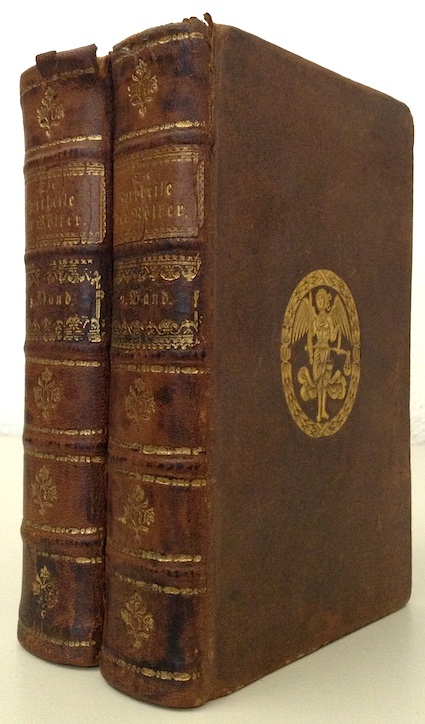
1766ref. 488595Leipzig, Weidmanns Erben u. Reich, 1766. 2 Bl., 746 S.; 2 Bl., 690 S. Leder d. Zeit mit Rückenschild, Rückenvergoldung, goldgeprägter Deckelvignette (Justitia) u. marmorierten Vorsätzen (leicht berieben, 1 Ecke bestoßen, Rücken am Kopf mit kl. Einrissen bzw. Fehlstelle). [3 Warenabbildungen]
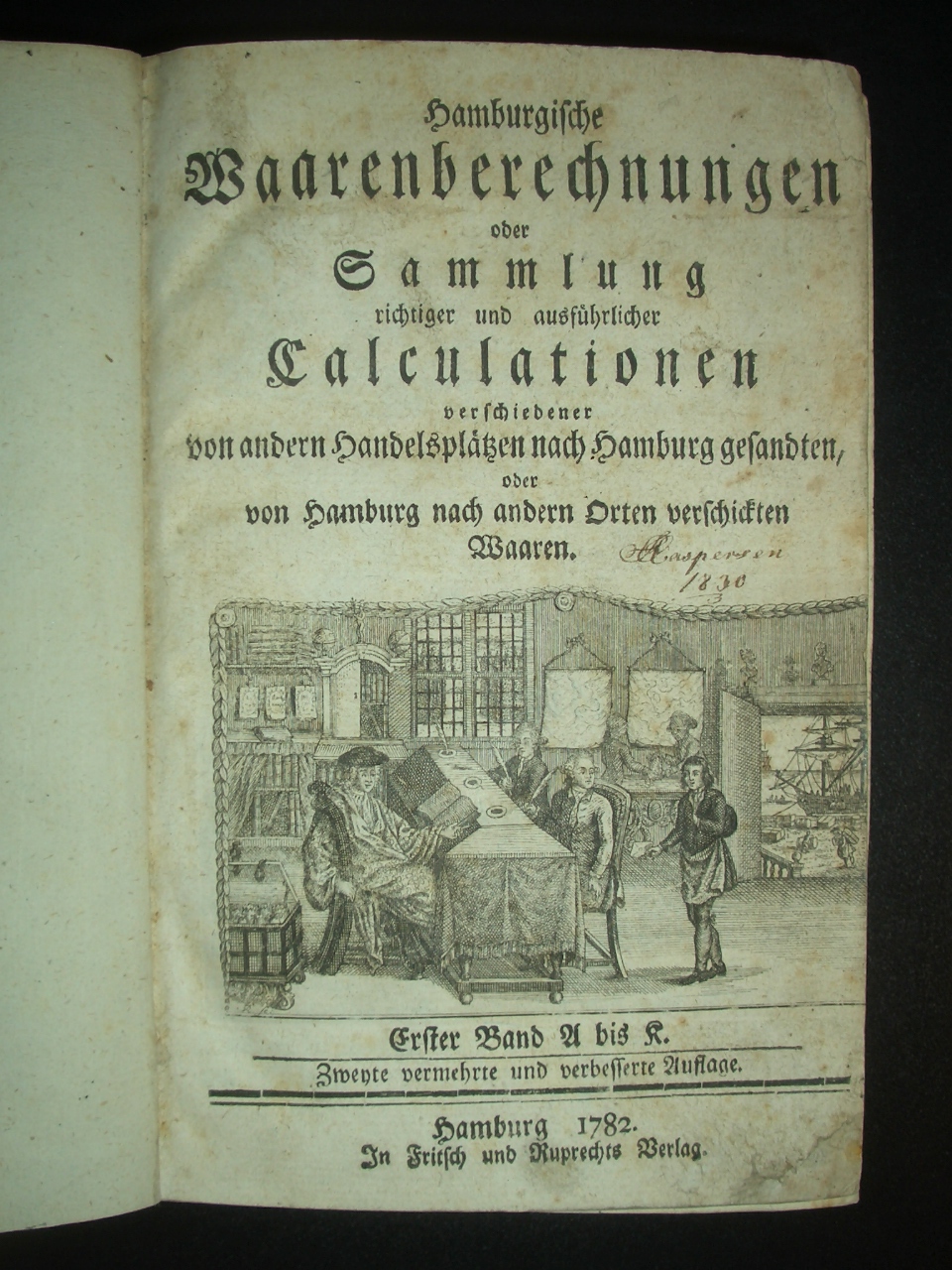
1782ref. 5638Zweyte vermehrte und verbesserte Auflage. 2 in 1 Band. Mit 2 (wiederholten) gest. Titelvignetten (wohl von Franz Nicolaus Rolffsen). Hamburg, Fritsch und Ruprecht, 1782. 8vo. (19,2 x 12,2 cm). 2 Bl., 368 S., 1 Bl. Zwischentitel, S. 369-796. Halblederband d. Zt. mit rotem Rückenschild sowie blind- u. goldgeprägtem Rücken.
ref. 24626Paris Chez H. Agasse, An XIII 1805 in 8 (21x13) 1 volume reliure demi basane claire de l'époque, dos lisse muet (petites épidermures), faux-titre, titre XVI et 300 pages, un faux-feuillet non chiffré d'errata, avec une une grande carte gravée dépliante in fine (par J.D. Barbié du Bocage, An XIII, 1805). Ouvrage enrichi d'une carte où se trouvent tracés, 1°. la navigation intérieure d'une grande partie de la Russie européenne et celle de l'ancienne Pologne; 2°. le tableau de l'Europe, servant à indiquer les routes que suit le commerce de Russie par la mer Baltique et la Mer-Noire pour les ports de la Méditerranée; 3°. le plan des cataractes du Niéper. Antoine Anthoine de Saint-Joseph, 1749-1826, relate dans cet ouvrage son expérience pour tenter de former une union économique et commerciale entre la France et la Russie en utilisant la Mer Noire et le Bosphore. Edition originale sans nom d'auteur. Bon exemplaire ( Photographies sur demande / We can send pictures of this book on simple request )
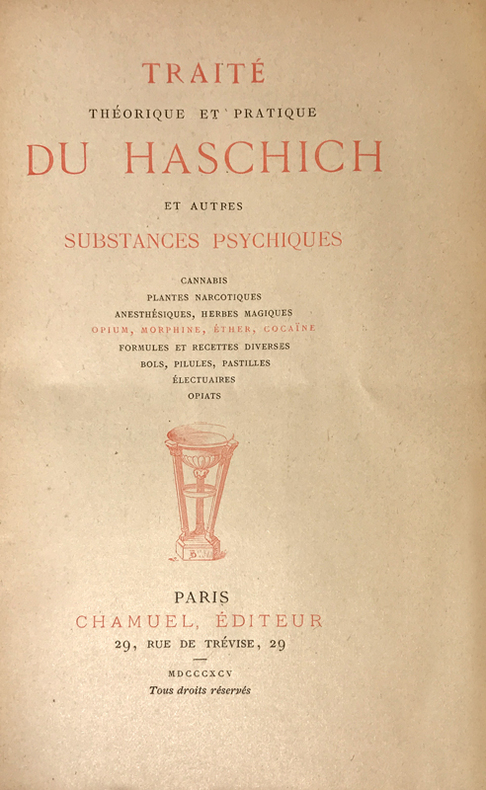
1895ref. 15352Paris, Chamuel, 1895 ; in-12, broché ; 177 pp., (1 bl.), (2) pp. de catalogue, couverture crème rempliée, illustrée, imprimée en vieux-rose et noir, petites figures.
ref. 27670Paris, chez Giraud-Badin, 1924-1928. 29 volumes petits in-4, brochés. ENSEMBLE EN PARFAIT ETAT.
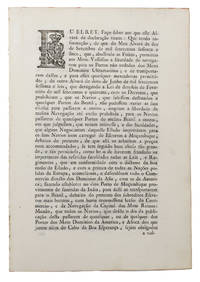
1772ref. ABC_48853Lisbon 1772. Folio ca. 29 x 20 cm. Na Regia Officina Typografica Disbound and subsequently mounted in a modern black stiff paper folder with a printed label mounted on the front wrapper. With a large decorated woodcut initial E incorporating the Portuguese royal coat of arms. 3 1 blank pp. Very rare first issue of two of a late 18th-century decree by the Portuguese King José I 1714-1777 dealing with difficulties in the transportation of enslaved people from Mozambique to Brazil. This text dated 12 December 1772 and signed Rey King at the end is also signed by the notorious Portuguese nobleman and diplomat Marquez de Pombal. Sebastião José de Carvalho e Melo 1st Marquis of Pombal 1699-1782 who was the Secretary of State of the Kingdom during the reign of Dom José I in the period of 1750-1777. It is concluded with a formal text dated 18 December 1772 and signed by João Baptista de Araújo a senior officer of the Secretariat of State.In 1761 Marquez de Pombal prohibited the importation of enslaved people in Portugal and Portuguese India not for humanitarian reasons but because they were needed for labour in Brazil. He stimulated the trade of mostly African enslaved people for that colony and with his support two companies for slave trade were founded the Companhia Geral de Comércio do Grão-Pará e Maranhão and the Companhia Geral de Comércio de Pernambuco e Paraíba. Both companies were privileged and had a monopolistic character. Their lists of shareholders included many Portuguese noblemen and clergy. Between 1757 and 1777 more than 25000 enslaved people were imported to Pará and Maranhão from West African ports.The two issues can be identified by their catchwords on p. 1: issue one shows the catchword as a vol- that catchword was changed in the second issue to a.The inner margin shows some signs of the previous binding. Otherwise in very good condition.l Gauz Portuguese and Brazilian books in the JCB 772/1; WorldCat 1045359449 3 copies; cf. Porbase 2301650 and no copies. AFRICA AMERICAS EUROPE HISTORY Brazil Broadsides Ephemera & Pamphlets East Africa Portugal Slavery South America Southern Africa unknown
ref. 78996New York NY National Blank Books 1911. 8vo 23.5 x 14.8 cm.liv 192 pp.; numerous full-colour illustrations. Publisher's full cloth. Spine with gilt title; front board with gilt and black printed panel gilt armorial company's devise and gilt number 22; rear board with gilt armorial company's device. Printed endpaper; book block with rounded corners and marbled edges. = A rare excellently preserved catalogue containing endless variety in pass books memorandum books buyers books manuscript books miniature blanks open end memorandum books scrap books counter order books invoice books printed cash books letter copying books trial balance books etc. as well as luxurious half bound and full bound blank books all manufactured by a company in the town of Holyoke Massachusetts known for its paper mills and a sales office in Duane Street Lower Manhattan. "The National Blank Book Company originally began as a small New York City outfit in 1843 known as the J.G Shaw Company named for its founder. The company manufactured quality blank book products on a small scale. As a consequence of the 1873 Wall Street panic Shaw became indebted to Massachusetts papermakers William Whiting of Holyoke and Levi L. Brown of Adams. In 1875 Shaws company reorganized in New York with Whiting and Brown as partners. Shaw withdrew from the firm by 1877 but remained a part of the industry for many years. In 1880 Whiting and Brown officially changed the companys name to National Blank Book. A year later the factory moved to Cabot Street in Holyoke MA. It was not until 1892 that the main offices also moved to Holyoke." Holyoke Library online. 1967 National Blank Book merged with Dennison a similar company to become Dennison-National. In turn in 1990 Dennison-National merged with Avery. Today Avery Dennison is a global materials science and digital identification solutions company. Catalogue unmarked clean the binding excellent with after 115 years just a few very minor signs of handling. hardcover
1944ref. 011154S.l. Messages 1944 In-12 Broché, couverture rempliée
1781ref. PHO-1928Paris, Hôtel de Thou, 1781. In-4, 2ff., xxii, 314 p., relié plein veau marbré époque, dos à nerfs ornés avec pièce de titre, tranches marbrées, coins usés, petits frottements aux charnières, quelques rousseurs, et brunissures en marges. Illustré de 4 cartes dépliantes (manque la vue dépliante de la ville de Maimatschin)
1781ref. 1099761781 Un volume In-16 (9,5 x 16cm environ), reliure pleine peau, filets, et fleurons dorés au dos, tranche marbrées en couleurs, reprenant le motif des gardes - Cinq ouvrages reliés en un volume intitulé "Recueil II" à l'aide d'une pièce de titre au dos, répartis comme suit : (1) A Amsterdam; et se trouve à Paris, Chez Méquignon l'aîné, Librairie, rue des Cordeliers - M. DCC. LXXIX. 1779 - 46 pages - (2) A Berlin, et se trouve, à Paris, Chez l'Auteur , Barrière de Reuilly; Fauxbourg Saint-Antoine. Et Chez Belin, Librairie, rue Saint-Jacques - M DCC LXXIX. 1779 - 35 pages - (3) A Paris, Chez l'Auteur, rue Croix des Petits-Champs, Maison de M. Bourdet, Chirurgien-Dentiste du Roi. et Chez Blaizot, Librire du Roi, rue Satory, à Versailles - Avec Approbation et Permission - M. DCC. LXXXI. 1781- 139 pages - Cul-de-lampe - (4) A Amsterdam; et se trouve à Paris, Chez Bastien, Libraire, rue du Petit-Lion, Fauxbourg Saint-Germain - M. DCC. LXXIV. 1774 - 56 pages - (5) A Paris, Chez Saugrain, Libraire, Quai des Augustins, près de la rue Pavée - M. DCC. LXXXI. 1781 - 116 pages
1988Complete in 4 volumes (i.e. 7 physical volumes): I: xxvii,1047pp., II (in 2 parts): xxxi,1409pp., III (in 2 parts): xxxi,1455pp., IV (in 2 parts): xxxi,1236pp., hardcover (editor's green cloth bindings with gilt lettering, few corners slightly bumped), good condition, [This reference work for art dealing in Great-Britain covers the period 1801-1820, with indexes of paintings, owners and previous owners], rare, total weight: 14kg., S84393
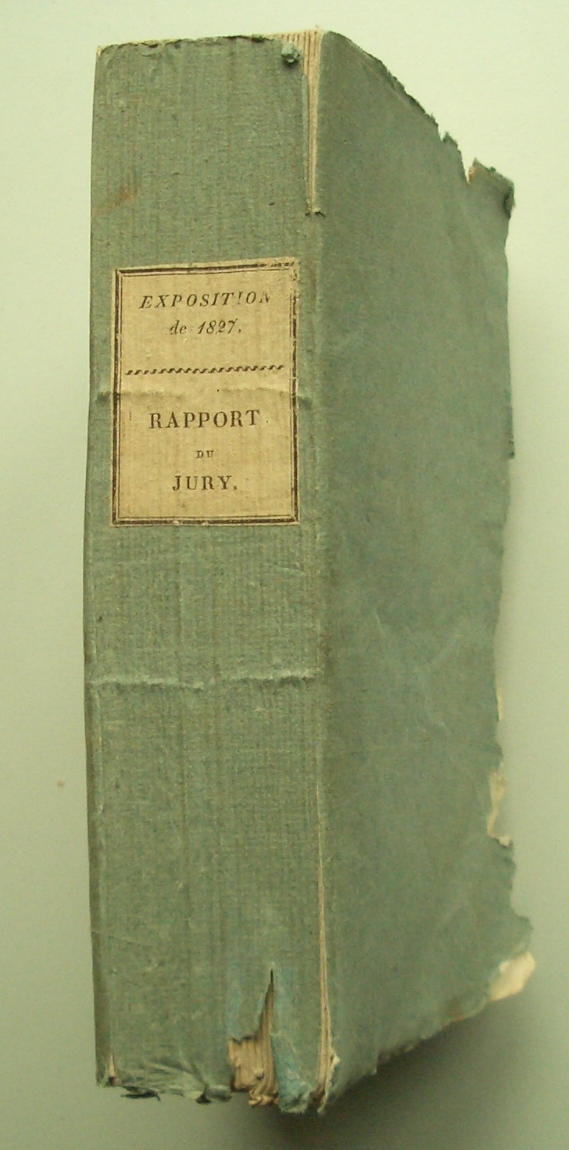
1828ref. 5919Rapport sur les produits de l'industrie française, présenté, au nom du Jury Central, à S. E. M. le Comte de Saint-Cricq. Paris, Imprimerie Royale, 1828. 8vo. (ca. 21,5 x 14,0 cm). XVI, 573 S. Blaue Orig.-Interimsbroschur mit gedrucktem Rückenschild.
ref. 16388(Paris), Imprimerie de Laurens Aîné et Compagnie, (1791). 3 works bound in 1 volume. vii, 144, (1, errata, 1 blank) pp.; (2), 67, (1) pp.; 11, (1) pp. 4to. Modern half morocco, marbled boards, gilt lettering to spine, top edge gilt. Martin & Walter 18992, 18993, 18994; Tourneux 17434, 17438, 17446. First editions, rare, of these works by the Intendant des Ponts et Chaussées very active while leading this department and instrumental in the realization of numerous bridges, canals and roads. The present works give a detailed overview of the various works in waiting with regards to the infrastructure of France in the early days of the Revolution: deals in detail with the canals in Bourgogne, Dôle, Picardie, the harbours of Dunkerque, Tréport, Dieppe, Le Havre, Rouen, Honfleur, Cherbourg, La Rochelle and many others. Deals furthermore with the department itself and its staff and possible reforms that should be implemented. The "Supplément" is the answer by the author to objections raised by a deputy from the North of France with regards to the works to be undertaken in the harbour of Dunkerque, and the third work is the author's reply to criticism from Gautier de Biauzat. The author is also critical of the "corvée" and the various abuses. Rare, espaecially with the supplementary texts.

193648 pages. This glamorous publication brought New York women important information including: news of the choicest fashion, entertainment, current happenings, where to go, what to see, and how much to pay. Features: Three-page photo-illustrated feature article on Gypsy Rose Lee "She Undressed Her Way to Fame!"; Full-page ad for the new Lastex Vassarette Girdle, featuring photo of designer Helen Wills; Nice one-page illustrated ad for Du Barry beauty preparations by Richard Hudnut; Letters; Fantastic one-page illustrated Macy's ad shows chef throwing knives at Thanksgiving turkey; Soundings - opinions of the New York Woman; Nice one-page illustrated fashion ad for Stern Brothers; Nice one-page illustrated fashion ad for Franklin Simon & Co. features upper half fashions; Seven fantastic photos of "Curb Commerce" in New York - radios, wart cures, picture postcards, socks, neckties, shoe shines, and photos; These Girls From Out of Town - fiction about 'those panting, galloping creatures - the lady buyers and how they wear down man; Romance Around Town - five photos of New York romance; Unfair to Organized Women - a man's complaint against the women of the world; Nice one-page color fashion photo of model in a glamorous Betty Wales ball gown; How to Collect Butlers; A Fashion Editor's Diary; What not to do to yourself - unfortunate accidents in the choice of clothes, cosmetics and behavior; Photos of the 'Best Dressed Women" from cities around the world; Attractive evening fashion centerfold features large black and white photo with color illustrations; So Much To Buy - and So Much to Spend!; Head to Toe - photos of fashionable hats and shoes; Cosmetics page; Two Quick and Easy Dinners Men Will Like; Photos of dinner table place settings; A Look at Our Medicine Chest; New About Food - a new thought on birthday cakes; "The Plough and the Stars" - Eight photos from the making of this movie which starred Barbara Stanwyck and Erin O'Brien Moore; "Valiant is the Word for Carrie" - photo-illustrated article about this movie; John Gielgud as Hamlet; Helen Hayes takes time to talk about backstage life as Queen Victoria; One page of color humorous illustrations by Dr. Suess illustrating how to attain social publicity!; One-page Schaefer beer ad - in cans!; Half-page photo ad for Best & Co. features pastel wool house coat; Manhattan Date Book; Glossy color cover photos feature woman attempting to install drapes which pipe-smoking husband reads paper; and more. Unmarked with modest wear. A quality copy of this great vintage depression-era item. Magazine
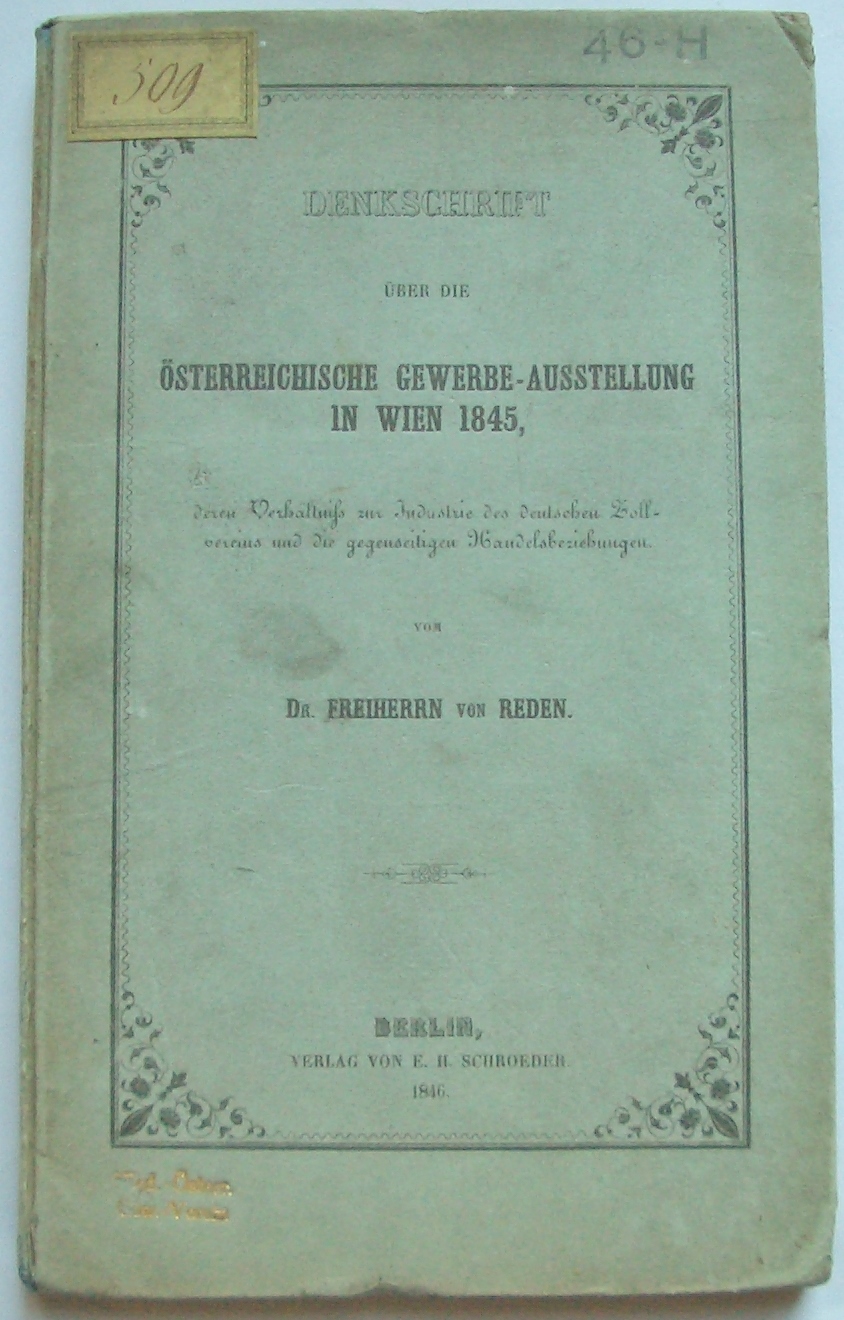
1846ref. 5876Berlin, E. H. Schroeder, 1846. 8vo. (21,4 x 13,0 cm). IV, 156 S., 1 Bl. Orig.-Pappband.
1851ref. 53844London Harrison and Son 1851. Folio. In contemporary half cloth with the original blue printed front wrapper pasted on to front board. Wear to extremities and front hindge a bit weak. One small stamp to front board and two small paper labels pasted on to pasted down front end-paper. Internally very fine and clean. xxiii 1 886 pp. 1 folded map. The Rare British parliamentary papers and correspondence with local agents on the slave trade in Africa Austria Belgium Brazil France Persia Peru Portugal Spain Tripoli Turkey United States and Venezuela containing amongst several other issues a lengthy report from James Hudson Brazil to Palmerston on the bourgeoning sentiments in Brazil towards abandoning the slave trade. An act which Palmerston instructs James Hudson to fight against.Eusébio de Queiróz Act Law 581 of 4 September 1850 ended up criminalizing the maritime slave trade as piracy and imposed other criminal sanctions on the importation of slaves in Brazil. hardcover
1851ref. 53844London, Harrison and Son, 1851. Folio. In contemporary half cloth with the original blue printed front wrapper pasted on to front board. Wear to extremities and front hindge a bit weak. One small stamp to front board and two small paper labels pasted on to pasted down front end-paper. Internally very fine and clean. xxiii, (1), 886 pp. + 1 folded map.
1883ref. 236859Kansas City Missouri: Press of Ramsey Millett & Hudson 1883. Illustrated with 2 full-page Engravings. 76 pp. 1 vols. 8vo. Original wrappers printed in red and black. Vertical crease to front wrap and a few corners previously turned down a few prices realized in pencil. Very good. Illustrated with 2 full-page Engravings. 76 pp. 1 vols. 8vo. Over sixty-five Galloway bulls and heifers on the block giving detailed pedigree. With an introduction by Matthews explaining the his interest in the breed. Not in OCLC Press of Ramsey, Millett & Hudson unknown
1883ref. 236859Kansas City Missouri: Press of Ramsey Millett & Hudson 1883. Illustrated with 2 full-page Engravings. 76 pp. 1 vols. 8vo. Original wrappers printed in red and black. Vertical crease to front wrap and a few corners previously turned down a few prices realized in pencil. Very good. Illustrated with 2 full-page Engravings. 76 pp. 1 vols. 8vo. Over sixty-five Galloway bulls and heifers on the block giving detailed pedigree. With an introduction by Matthews explaining the his interest in the breed. Not in OCLC Press of Ramsey, Millett & Hudson unknown books
1851ref. BK0071Guayaquil Ecuador 1851. Folded manuscript letter in Spanish with an earlier communication dated June 13 copied and headed "Duplicado" followed by a second communication dated July 18 on the same folded sheet. Integral address panel to "Sr. Dn. Fran.co S. Alvarez / San Francisco / Alta California" with oval "FORWARDED BY / ZACHRISSON NELSON & CO. / PANAMA" handstamp and large "20" due marking. 2 pp. 8 ¼ x 10 ¼ inches. Old folds with several small losses and separations along folds and margins only minimally affecting the text. A detailed commercial letter from the Guayaquil mercantile house V. Gómez & Ca. to Francisco Salvador Ãlvarez Pérez the prominent Valparaíso merchant then engaged in business in San Francisco during the opening years of the California Gold Rush. Ãlvarez belonged to one of Valparaíso's established commercial families and maintained extensive Pacific trading interests. He would shortly afterward serve as Chilean consul in San Francisco. In the letters Gómez & Co. supply Ãlvarez with current market information from Ecuador. They also apparently executed purchases on behalf of his Valparaíso interests. The first communication dated June 13 and recopied here as a duplicate reports extensively on the Guayaquil commodity market. Gómez & Co. describe the year's cacao crop as exceptionally poor discuss newly arrived cacao from Machala and the prices being asked for it and report purchases and quantities associated with Ãlvarez's business. They also give information on barley Jipijapa Panama hats exchange rates and other current prices. The July 18 continuation connects those commodity markets directly to the political crisis then unfolding between Ecuador and New Granada. Explaining why barley cannot be purchased below a previously quoted price Gómez & Ca. cite the fact that threats from New Granada had compelled the Ecuadorian government to form an army thereby taking many workers away from industry "la actitud amenazante que ha tomado la Nueva Granada y que ha obligado a este Gobierno a ordenar la formación de un Ejército que quite muchos brazos a la industria". The letter is dated July 18 1851 amid the military and political crisis of that summer and just one day after the Guayaquil garrison proclaimed José María Urbina Supreme Chief. The integral address leaf preserves the letter's route northward through Panama in the hands of Zachrisson Nelson & Co. one of the forwarding firms handling correspondence in the early California traffic. An interesting document of the commercial infrastructure connecting South America with California in 1851 with identifiable firms and recipients content regarding Gold Rush-era Pacific trade contemporary commentary on Ecuadorian mobilization and Panama forwarding marks. . unknown
1851ref. BK0071Guayaquil Ecuador 1851. Folded manuscript letter in Spanish with an earlier communication dated June 13 copied and headed "Duplicado" followed by a second communication dated July 18 on the same folded sheet. Integral address panel to "Sr. Dn. Fran.co S. Alvarez / San Francisco / Alta California" with oval "FORWARDED BY / ZACHRISSON NELSON & CO. / PANAMA" handstamp and large "20" due marking. 2 pp. 8 ¼ x 10 ¼ inches. Old folds with several small losses and separations along folds and margins only minimally affecting the text. A detailed commercial letter from the Guayaquil mercantile house V. Gómez & Ca. to Francisco Salvador Ãlvarez Pérez the prominent Valparaíso merchant then engaged in business in San Francisco during the opening years of the California Gold Rush. Ãlvarez belonged to one of Valparaíso's established commercial families and maintained extensive Pacific trading interests. He would shortly afterward serve as Chilean consul in San Francisco. In the letters Gómez & Co. supply Ãlvarez with current market information from Ecuador. They also apparently executed purchases on behalf of his Valparaíso interests. The first communication dated June 13 and recopied here as a duplicate reports extensively on the Guayaquil commodity market. Gómez & Co. describe the year's cacao crop as exceptionally poor discuss newly arrived cacao from Machala and the prices being asked for it and report purchases and quantities associated with Ãlvarez's business. They also give information on barley Jipijapa Panama hats exchange rates and other current prices. The July 18 continuation connects those commodity markets directly to the political crisis then unfolding between Ecuador and New Granada. Explaining why barley cannot be purchased below a previously quoted price Gómez & Ca. cite the fact that threats from New Granada had compelled the Ecuadorian government to form an army thereby taking many workers away from industry "la actitud amenazante que ha tomado la Nueva Granada y que ha obligado a este Gobierno a ordenar la formación de un Ejército que quite muchos brazos a la industria". The letter is dated July 18 1851 amid the military and political crisis of that summer and just one day after the Guayaquil garrison proclaimed José María Urbina Supreme Chief. The integral address leaf preserves the letter's route northward through Panama in the hands of Zachrisson Nelson & Co. one of the forwarding firms handling correspondence in the early California traffic. An interesting document of the commercial infrastructure connecting South America with California in 1851 with identifiable firms and recipients content regarding Gold Rush-era Pacific trade contemporary commentary on Ecuadorian mobilization and Panama forwarding marks. . unknown books