VERON de FORBONNAIS FrançoisLivre Rare Book

16.866 resultados
ref. 8351seconde édition,deux parties en deux volumes in 12 plein cuir fauve.Tome premier:plein cuir fauve à nerfs, pièce de titre cuir brun clair,tomaison cuir rouge,roulette dorée sur coupé.Faux-titre, titre,VIII,381 pages.Volume deuxième:plein cuir fauve,dos lisse, pièce de titre cuir rouge, pièce tomaison brun clair, fers, roulette,filets dorés. Filet doré sur coupe.Faux–titre,titre,347 pages, tranche rouges.A Leyde et se trouve à Paris,chez Briasson-David l’Ainé-Le Breton-Durand. 1754, reliures légèrement différentes, sinon, édition complète avec mention de seconde édition, en partie originale, parue la même année que la première, chez le même éditeur. Un coin inférieur restauré.
ref. DADAX0198226128New unknown
ref. DADAX1845422058New unknown
ref. 96433aaf1710 - 1726, in-4to, 76 p. numérotées + 1 f., manuscrit en encre d’une belle main, quelques taches d’eau en marge sur les premiers 30 p., env. 5 ff. arrachées et manquantes à la fin, sinon bon état, rel. originale en parchemin avec titre manuscrit en encre sur plat sup., 2 bandelettes en cuir (de 4 à l’origine), légèr. taché, coins usés, sinon bon état.
1743ref. 9349Sans lieu, sans nom, 1743. In-8 de 176 pages, plein veau marbré, dos à nerfs orné de filets et fleurons dorés, pièce de titre rouge, filet doré sur les coupes, tranches rouges. Premiers et derniers feuillets légèrement empoussiérés.
1669ref. 46400830Paris, Pierre Le Petit, 1669 ; in-4°, veau brun moucheté, dos orné, tranche jaspée. (Reliure de l'époque). - 8 ff., 328 pp., CXXI pp. Important et rare recueil donnant toutes les requêtes et procédures de cette affaire qui opposa à Lyon les prévôts des marchands et la police locale au sujet des foires. La ville de Lyon fut pendant des années gravement troublée par les mauvais rapports entre les marchands devenus très puissants et les officiers de la Sénéchaussée. Louis XIV dut intervenir en personne.
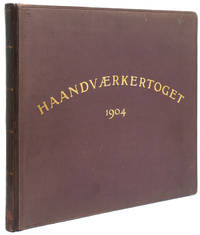
1904ref. 39516Copenhagen: forhen A. Christiansens Forlag Hermann-Petersen 1904. 50 Double-page colored plates after Rasmus Christiansen mounted on stubs. Introduction by Jul. Wulff. 1 vols. Oblong folio. Original leather-backed burgundy cloth lettered on cover in gilt. Spine repaired inner hinges strengthened. Some minor rubbing pencilled numbers in upper right margin of several plates. Very good. 50 Double-page colored plates after Rasmus Christiansen mounted on stubs. Introduction by Jul. Wulff. 1 vols. Oblong folio. DANISH TRADES FESTIVAL PARADE. In July 31/1 August 1904 a grand festival and parade was held in celebration of Danish Industry and Tradesmen. The elaborate floats representing the trades are depicted in these fine double-page colored plates including those of the printers the bakers the stroller-makers the pavers the bookbinders the furriers barrelmakers cigar and tobacco merchants bicyclewheel makers photographers metalsmiths hatmakers carriagemakers clockmakers wigmakers and many others. Under each illustration is text describing those involved. forhen A. Christiansens Forlag (Hermann-Petersen) unknown
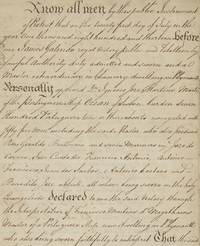
1813ref. List1947Plymouth 1813. Plymouth Devon England: 21st July 1813. Folio 7 pages 13 1/8 x 8 ¼ inches duty blindstamp small ink stamp to upper inner margin of the first page two seals to the last page signed twice by Galindo. Toned some small repaired tears using reversible archival ph-neutral paper-repair tape very good to near fine. Very Good. An interesting document of privateering in the Peninsular war this 'Public Instrument of Protest' documents a Portuguese captain and crew complaint in detail to an English notary. After sailing from Calcutta to Brazil and then from Rio to just outside of Lisbon their ship the 700-ton 'Oceano' was seized and comprehensively ransacked by a French privateer the 'Lion' out of Lorient. Most of the crew and passengers were offloaded onto a passing American vessel the 'Leda' bound for Lisbon. Meanwhile the 'Lyon' escorted her prize towards the nearest French port but before a friendly haven was reached they were both set upon by the brigantine HMS 'Achates'. The 'Lyon' escaped but the 'Ocean' was captured by Commander Morrison and the 'Achetes'. The 'Ocean' was taken to Plymouth and moored in the Hamoaze. The remaining Portuguese crew who had been forced to remain aboard the 'Ocean' by the French got a message to the 'Ocean's Master Dn. Ignacio Joze Martins and he and the boatswain made their way to Plymouth as quickly as possible. The sworn statement presented here is in English thanks to the translation given by Francisco Martins d' Magalhaens master of a Portuguese ship "now dwelling in Plymouth" The 'Oceano' sailed from Calcutta to Brazil arriving 10th February 1813. She left Rio on 4th April all was plain sailing until the afternoon of the 7th June off the Rock of Lisbon when the 'Lion' showed up first under false British colors then French. The fighting was fierce the privateer was driven off once but eventually the 'Oceano' was taken. The night of the 7th June was spent by the French 'conveying everything Moveable and Valuable from the Ocean to the Privateer'. The 'Leda' the US vessel landed the majority of the 'Ocean's crew including the Master in Lisbon on the evening of the 9th June.Monday 14th June the 'Lyon' engaged in a running battle with HMS 'Achates' and escaped but the 'Achates' did capture the 'Ocean'. Wednesday 16th June the 'Ocean' arrived in Plymouth under the watchful eye of the 'Achates'. Receiving the crew's message the Captain of the 'Ocean' left Lisbon for Falmouth and then Plymouth arriving on the 20th July. The document was dated 21st July 1813. Full transcription available. unknown
1889ref. 8382Indianapolis Ind: J.B. Allfree Co.; Gilmore & Miller Printers 1889. Octavo cord-bound in wrappers 19.5 x 13.5 cm. 70 pages. Illustrated with steel engravings throughout and with three folding plates. All pages ruled in red. FIRST EDITION. A very attractive trade catalogue of the J.B. Alfree Company manufacturers of milling machines including the "Keystone" Four Roller Flour Mill the "Success: Bolter and Dresser the J.B. Alfree Sieve Scalper the J.B.A Purifier the "Climax" Bran Duster and more. Includes specifications and diagrams. Price list and order slip one piece for bolting cloth laid-in. Some light wear to spine of wrapper; small adhesion to front panel of illustrated chromolithograph wrapper. Still near very good or a bit better. Rare. OCLC locates no copies and only one copy of any Allfree catalogue; no Alfree listings in Romaine. J.B. Allfree Co.; Gilmore & Miller, Printers hardcover
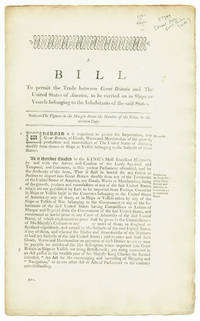
1809ref. 47399London. 1809. A Failed Opportunity to Normalize U.S.-British Trade Relations Rare printing of a British Parliamentary "slip bill" seeking to reestablish trade between Great Britain and the United States a few years before the outbreak of the War of 1812 and in the midst of great tension between the two nations. This bill was considered by Parliament in the spring of 1809 in the wake of President Jefferson's rescinding the Embargo Act and following the negotiations between U.S. Secretary of State Robert Smith and British envoy David Erskine which created a glimmer of hope that Anglo-American relations might be repaired after a period of great stress and turmoil. In March 1809 Jefferson signed the Non-Intercourse Act which rescinded the Embargo of 1807 and held out the promise of resuming trade with England and France if either of those nations ended its commercial restrictions toward the United States. The Erskine-Smith negotiations of April held out the promise of improved relations and in May the Parliament considered the present bill which permitted trade between Great Britain and the United States to be carried on in American ships. Unfortunately Prime Minister Canning disavowed the Erskine-Smith Agreement in late May and Anglo-American relations continued to deteriorate culminating in outright warfare in 1812. Slip bills are printed during the legislative process in small numbers for the use of legislators and staff. They are ephemeral items and their survival is rare. A printed note before the text of the bill reads "the figures in the margin denote the Number of the Folios in the written copy" which indicates just how early in the legislative process these bills were printed. OCLC locates only a single copy at the University of Massachusetts. Folio. Lightly tanned around the edges. Near fine. OCLC 49887290. unknown
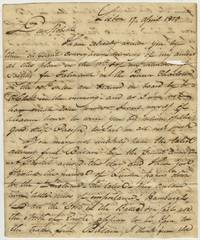
1813ref. BK0183Lisbon 1813. Autograph letter signed 3 pp. on a folded sheet with integral address panel to Messrs. Brown & Ives Providence Rhode Island and Newport "SHIP" and circular datestamps. 8 x 9 ¾ inches. Folded for mailing with considerable wear along the folds several tears and small losses including losses from opening the seal affecting scattered words. Good overall and substantially legible. A commercial letter written from Lisbon during the War of 1812 by "P. Falconer" probably the Baltimore merchant Peregrine Falconer. The identification remains somewhat tentative but the 1812 Baltimore directory lists Comegys Falconer & Co. merchants at 190 Baltimore Street while later Maryland Chancery records document the estate of Peregrine Falconer; Missouri archival records also document Falconer and Comegys and both "Perregrine" and "Perry" Falconer. Falconer was preparing to sail from Lisbon for Falmouth and writes Brown & Ives with the latest commercial and political intelligence reaching Portugal. He expected the widening European opposition to Napoleon to bring still more nations into the war then turned immediately to British policy toward American trade: "from the complexion of affairs that in the course of the Summer all the powers in Europe will be joined against France. If I am correctly informed a new duty of 6d. pr lb in addition is imposed in Britain upon American Cotton . Savannah Charleston & New York in a state of Blockade - this with the new duty has advanced the Price of Cotton .". The Russo-Prussian alliance had been concluded only weeks earlier Sweden joined the anti-Napoleonic alliance on March 24 and the coalition would continue to expand during the year. At the same time the English Parliament was debating additional duties on American cotton: on March 31 the government proposed sixpence per pound on American cotton imported in foreign vessels while Alexander Baring warned that American cotton carried by neutral ships would consequently bear a total duty of ninepence per pound. British naval pressure on the American coast was also rapidly increasing during the spring of 1813 trapping increasing amounts of American shipping in port. Falconer's letter thus records from Lisbon the immediate commercial relationship between the blockade British taxation and the price of American cotton. The war also forced Falconer to reconsider how Brown & Ives should communicate with him once he reached Britain. He gives explicit instructions intended to obscure their route: "I presume the only means of corresponding with Liverpool will be by the way of Lisbon. I have to request that you will write to me . frequently enclosing your letters under cover to Messrs. - & Brown without marking 'Via Lisbon' as letters coming from America are all opened in Britain." The remainder concerns the practical movement of merchants and shipping through the same wartime network including Falmouth and Liverpool passage arrangements vessels preparing to sail and convoying. Overall a useful merchant's-eye letter from the spring of 1813 with the blockade of American ports the British cotton duty the developing coalition against Napoleon and the routing of commercial correspondence all appearing as parts of the same Atlantic problem. . unknown
ref. 2091502135500444Not Available N.A. Soft Cover. Fine. The book is in fine condition. Not Available paperback
ref. 10746Illus. throughout. 202 pp. 4to four-ring binder with Posthumus logo on upper cover and spine. N.p.: 1960s or early 1970s. A delightful trade catalogue of stamps published by one of the leading fabricators of the time. Thousands of designs and samples are presented. Near fine but lacking the first two leaves 4 pp. unknown
ref. 10745Color illus. throughout. 45 pp. 4to pictorial covers plastic spiral-bound. Amsterdam: ca. 1970s. A superbly illustrated catalogue of stamps perforators hole-punches staplers etc. and all manner of office supplies made by Posthumus B. V. the Dutch royal manufacturer of stamps. Their products are carefully arranged and photographed in this nice catalogue. Near fine. unknown
1904ref. 39516Copenhagen: forhen A. Christiansens Forlag Hermann-Petersen 1904. 50 Double-page colored plates after Rasmus Christiansen mounted on stubs. Introduction by Jul. Wulff. 1 vols. Oblong folio. Original leather-backed burgundy cloth lettered on cover in gilt. Spine repaired inner hinges strengthened. Some minor rubbing pencilled numbers in upper right margin of several plates. Very good. 50 Double-page colored plates after Rasmus Christiansen mounted on stubs. Introduction by Jul. Wulff. 1 vols. Oblong folio. DANISH TRADES FESTIVAL PARADE. In July 31/1 August 1904 a grand festival and parade was held in celebration of Danish Industry and Tradesmen. The elaborate floats representing the trades are depicted in these fine double-page colored plates including those of the printers the bakers the stroller-makers the pavers the bookbinders the furriers barrelmakers cigar and tobacco merchants bicyclewheel makers photographers metalsmiths hatmakers carriagemakers clockmakers wigmakers and many others. Under each illustration is text describing those involved. forhen A. Christiansens Forlag (Hermann-Petersen) unknown books
1813ref. List1947Plymouth 1813. Plymouth Devon England: 21st July 1813. Folio 7 pages 13 1/8 x 8 ¼ inches duty blindstamp small ink stamp to upper inner margin of the first page two seals to the last page signed twice by Galindo. Toned some small repaired tears using reversible archival ph-neutral paper-repair tape very good to near fine. Very Good. An interesting document of privateering in the Peninsular war this 'Public Instrument of Protest' documents a Portuguese captain and crew complaint in detail to an English notary. After sailing from Calcutta to Brazil and then from Rio to just outside of Lisbon their ship the 700-ton 'Oceano' was seized and comprehensively ransacked by a French privateer the 'Lion' out of Lorient. Most of the crew and passengers were offloaded onto a passing American vessel the 'Leda' bound for Lisbon. Meanwhile the 'Lyon' escorted her prize towards the nearest French port but before a friendly haven was reached they were both set upon by the brigantine HMS 'Achates'. The 'Lyon' escaped but the 'Ocean' was captured by Commander Morrison and the 'Achetes'. The 'Ocean' was taken to Plymouth and moored in the Hamoaze. The remaining Portuguese crew who had been forced to remain aboard the 'Ocean' by the French got a message to the 'Ocean's Master Dn. Ignacio Joze Martins and he and the boatswain made their way to Plymouth as quickly as possible. The sworn statement presented here is in English thanks to the translation given by Francisco Martins d' Magalhaens master of a Portuguese ship "now dwelling in Plymouth" The 'Oceano' sailed from Calcutta to Brazil arriving 10th February 1813. She left Rio on 4th April all was plain sailing until the afternoon of the 7th June off the Rock of Lisbon when the 'Lion' showed up first under false British colors then French. The fighting was fierce the privateer was driven off once but eventually the 'Oceano' was taken. The night of the 7th June was spent by the French 'conveying everything Moveable and Valuable from the Ocean to the Privateer'. The 'Leda' the US vessel landed the majority of the 'Ocean's crew including the Master in Lisbon on the evening of the 9th June.Monday 14th June the 'Lyon' engaged in a running battle with HMS 'Achates' and escaped but the 'Achates' did capture the 'Ocean'. Wednesday 16th June the 'Ocean' arrived in Plymouth under the watchful eye of the 'Achates'. Receiving the crew's message the Captain of the 'Ocean' left Lisbon for Falmouth and then Plymouth arriving on the 20th July. The document was dated 21st July 1813. Full transcription available. unknown books
1889ref. 8382Indianapolis Ind: J.B. Allfree Co.; Gilmore & Miller Printers 1889. Octavo cord-bound in wrappers 19.5 x 13.5 cm. 70 pages. Illustrated with steel engravings throughout and with three folding plates. All pages ruled in red. FIRST EDITION. A very attractive trade catalogue of the J.B. Alfree Company manufacturers of milling machines including the "Keystone" Four Roller Flour Mill the "Success: Bolter and Dresser the J.B. Alfree Sieve Scalper the J.B.A Purifier the "Climax" Bran Duster and more. Includes specifications and diagrams. Price list and order slip one piece for bolting cloth laid-in. Some light wear to spine of wrapper; small adhesion to front panel of illustrated chromolithograph wrapper. Still near very good or a bit better. Rare. OCLC locates no copies and only one copy of any Allfree catalogue; no Alfree listings in Romaine. J.B. Allfree Co.; Gilmore & Miller, Printers hardcover books
1809ref. 47399London. 1809. A Failed Opportunity to Normalize U.S.-British Trade Relations Rare printing of a British Parliamentary "slip bill" seeking to reestablish trade between Great Britain and the United States a few years before the outbreak of the War of 1812 and in the midst of great tension between the two nations. This bill was considered by Parliament in the spring of 1809 in the wake of President Jefferson's rescinding the Embargo Act and following the negotiations between U.S. Secretary of State Robert Smith and British envoy David Erskine which created a glimmer of hope that Anglo-American relations might be repaired after a period of great stress and turmoil. In March 1809 Jefferson signed the Non-Intercourse Act which rescinded the Embargo of 1807 and held out the promise of resuming trade with England and France if either of those nations ended its commercial restrictions toward the United States. The Erskine-Smith negotiations of April held out the promise of improved relations and in May the Parliament considered the present bill which permitted trade between Great Britain and the United States to be carried on in American ships. Unfortunately Prime Minister Canning disavowed the Erskine-Smith Agreement in late May and Anglo-American relations continued to deteriorate culminating in outright warfare in 1812. Slip bills are printed during the legislative process in small numbers for the use of legislators and staff. They are ephemeral items and their survival is rare. A printed note before the text of the bill reads "the figures in the margin denote the Number of the Folios in the written copy" which indicates just how early in the legislative process these bills were printed. OCLC locates only a single copy at the University of Massachusetts. Folio. Lightly tanned around the edges. Near fine. OCLC 49887290. unknown books
1813ref. BK0183Lisbon 1813. Autograph letter signed 3 pp. on a folded sheet with integral address panel to Messrs. Brown & Ives Providence Rhode Island and Newport "SHIP" and circular datestamps. 8 x 9 ¾ inches. Folded for mailing with considerable wear along the folds several tears and small losses including losses from opening the seal affecting scattered words. Good overall and substantially legible. A commercial letter written from Lisbon during the War of 1812 by "P. Falconer" probably the Baltimore merchant Peregrine Falconer. The identification remains somewhat tentative but the 1812 Baltimore directory lists Comegys Falconer & Co. merchants at 190 Baltimore Street while later Maryland Chancery records document the estate of Peregrine Falconer; Missouri archival records also document Falconer and Comegys and both "Perregrine" and "Perry" Falconer. Falconer was preparing to sail from Lisbon for Falmouth and writes Brown & Ives with the latest commercial and political intelligence reaching Portugal. He expected the widening European opposition to Napoleon to bring still more nations into the war then turned immediately to British policy toward American trade: "from the complexion of affairs that in the course of the Summer all the powers in Europe will be joined against France. If I am correctly informed a new duty of 6d. pr lb in addition is imposed in Britain upon American Cotton . Savannah Charleston & New York in a state of Blockade - this with the new duty has advanced the Price of Cotton .". The Russo-Prussian alliance had been concluded only weeks earlier Sweden joined the anti-Napoleonic alliance on March 24 and the coalition would continue to expand during the year. At the same time the English Parliament was debating additional duties on American cotton: on March 31 the government proposed sixpence per pound on American cotton imported in foreign vessels while Alexander Baring warned that American cotton carried by neutral ships would consequently bear a total duty of ninepence per pound. British naval pressure on the American coast was also rapidly increasing during the spring of 1813 trapping increasing amounts of American shipping in port. Falconer's letter thus records from Lisbon the immediate commercial relationship between the blockade British taxation and the price of American cotton. The war also forced Falconer to reconsider how Brown & Ives should communicate with him once he reached Britain. He gives explicit instructions intended to obscure their route: "I presume the only means of corresponding with Liverpool will be by the way of Lisbon. I have to request that you will write to me . frequently enclosing your letters under cover to Messrs. - & Brown without marking 'Via Lisbon' as letters coming from America are all opened in Britain." The remainder concerns the practical movement of merchants and shipping through the same wartime network including Falmouth and Liverpool passage arrangements vessels preparing to sail and convoying. Overall a useful merchant's-eye letter from the spring of 1813 with the blockade of American ports the British cotton duty the developing coalition against Napoleon and the routing of commercial correspondence all appearing as parts of the same Atlantic problem. . unknown books
1762ref. 10095Breslau .: G G Horn 1762. First Edition. Contemporry three quarter leather. A very good copy with some wear to the binding. 8vo. There is an elaborate eng. vignette title. A two-part analysis of coinage and monetary value. The first section deals with the origin and implementation of monetary regulation and minting of money. The second is an essay on the maintenance of exchange rates and relative values of currency in the modern era. G G Horn hardcover books
ref. 10746Illus. throughout. 202 pp. 4to four-ring binder with Posthumus logo on upper cover and spine. N.p.: 1960s or early 1970s. A delightful trade catalogue of stamps published by one of the leading fabricators of the time. Thousands of designs and samples are presented. Near fine but lacking the first two leaves 4 pp. unknown books
ref. 10745Color illus. throughout. 45 pp. 4to pictorial covers plastic spiral-bound. Amsterdam: ca. 1970s. A superbly illustrated catalogue of stamps perforators hole-punches staplers etc. and all manner of office supplies made by Posthumus B. V. the Dutch royal manufacturer of stamps. Their products are carefully arranged and photographed in this nice catalogue. Near fine. unknown books
1969ref. mon0000123037Leeds Incorporated Chamber of Co 1969-01-01. Paperback. Acceptable. in x in x in. NOT ex-library. Well read copy with some spine wear but still very useable. Leeds Incorporated Chamber of Co paperback
ref. DADAX1107007615New unknown
1938ref. 2080202105101089Not Available 1938. Soft Cover. Fine. Volume: 1 Not Available paperback