16.921 resultados
1956ref. Q1492Barre VT ca. 1956-1964. None. Very good. 1964 postmark. Contents include three original gelatin silver photographs 8 x 10 inches a 16-page price list dated 1956 and a single sheet price schedule dated 1960. The envelope is tattered around the edges and has two interesting cloth tape repairs; price lists have acid discoloration but are otherwise crisp. The three photos have slightly different print qualities suggesting they may have been produced at different times all have light toning and bumping at the corners but are in VG condition. unknown
1915ref. 55739St. Louis MO: F.C. Taylor Fur Co. Nov. 8 1915. 4to. 9.5 x 12.25 in. which folds out into folio broadside. 12.25 x 19 in. 4 pp unpaginated. text illustrations diagrams w/ folds as issued slight shelfwear couple very small losed tears at fore-edges still VG. First edition of this scarce price list from the famed F.C. Taylor Fur Company in St. Louis which was one of the major fur industry companies from 1870 into the 20th century and was one of the largest manufacturers of traps and trapping equipment. During the opening decades of the 20th century there were skyrocketing prices for furs driven by the fashion market especially the more affordable ones such as mink skunk raccoon muskrat opossum and wild cat. Premiums were paid for mink beaver and especially otter. No copies located in Worldcat. F.C. Taylor Fur Co., unknown
1952ref. 54803New York: Aladdin Books 1952. 8vo. 192 pp. Colour frontisp. numerous colour-tinted text illustrations. Pictorial blue cloth maps on endpapers w/ d.j. couple minor closed tears slight creasing front cover NF/VG copy. First edition of this excellent title in the American Heritage series recounting the life of the famous mountain man and explorer. Aladdin Books, hardcover
1843ref. 24188St. Louis: John B. Sarpy 1843. Folio. 2 pp. 12 1/2 x 7 1/2 inches. Docketed on verso fold lines with some separation a few repaired. A manuscript affidavit written by fur magnate John Baptiste Sarpy of Pierre Chouteau & Co. that gives one a granular sense of the difficulities of running a frontier business dependent on mountain men like Jim Bridger and Frapp. A remarkable window onto the business dealings of famed mountain man Jim Bridger this signed manuscript affidavit of John B. Sarpy testifies to his actions on behalf of the estate of fellow fur trader Henry Fraeb also known as Frapp who was killed by Indians in the Rocky Mountains. Sarpy who was a partner in the major fur firm Pierre Chouteau &. Co. had worked closely with Frapp and knew him well. In his affidavit he writes about the Chouteau Company's concerns about Jim Bridger Frapp's partner at the time of his demise and the difficulty of getting Bridger to pay his debts. Written in St. Louis Sarpy's affidavit states: "On the 8th day of August last he was appointed . . . administrator of the estate of Henry Fraeb then lately deceased. Said Fraeb had been a trader in the mountains & was at the time of his death in partnership with a man of the name of James Bridger & said Bridger & Fraeb were indebted to the firm of Pierre Chouteau Jr. & Co. & it was feared by the members of said firm that unless some one became the administrator of the said Fraeb the said Bridger might interpose difficulties in the settlement of the accounts existing between them & Bridger & Fraeb & for the purpose of doing justice to themselves as well as to the said Fraeb the said Sarpy applied for letters of administration which were granted to him as above mentioned. The said Bridger has however since this time been here & has settled in full the accounts existing between the firm of Pierre Chouteau Jr. & Co. & the said Bridger & Fraeb. And the said Sarpy says that no property has come into his hands as the administrator of the said Fraeb although it may be that the said Fraeb has property in the mountain country or in the hands of James Bridger his former partner." Though he may have been one of the greatest and most beloved mountain men of all time Jim Bridger was not the best debtor in the world nor did Pierre Chouteau & Co. forget business. John B. Sarpy unknown
1968ref. 55492Seattle WA: University of Washington Department of Anthropology August 1968. 4to. 6 iv 80 2 pp. Photo frontisp. several photos text illustrations 2 maps 1 large folding. Colour-illustrated softcovers slight shelfwear still VG copy. First edition of this relatively scarce Reports in Archaeology No. 2 detailing the excavations held to investigate the first location of Fort Okanogan built in Sept. 1811 at the mouth of the Okanogan River by the Pacific Fur Company. Several configurations and sites are believed to have existed and there are relatively few written original documents and the archaeological investigations discovered a number of differences. University of Washington, Department of Anthropology, paperback
1916ref. 55737Fort Wayne IN: Weil Bros. & Co. Nov. 27 1916. Folio. 12 x 18 in. 4 pp unpaginated. printed in red & black w/ illustrations state map diagrams diagrams. Self-printed softcovers minor fold creases as issued couple very slight closed tears minor shelfwear NF. First edition of this scarce price list from the storied Weil Bros. fur trading company in Fort Wayne Indiana. During the opening decades of the 20th century there were skyrocketing prices for furs driven by the fashion market especially the more affordable ones such as mink skunk raccoon muskrat opossum and wild cat. Premiums were paid for mink beaver and especially otter. The Weil Bros. had initially established their business in 1870 and continued to operate for decades often issuing Trappers’ Guide books advertising in trapping and taxidermy magazines and issuing catalogues. No copies located in Worldcat. Weil Bros. & Co., paperback
1915ref. 55738St. Louis MO: I. Abraham Fur Company Dec. 1915. Folio broadside. 12 x 18 in. 2 pp unpaginated. w/ folds as issued slight shelfwear NF. First edition of this scarce price list from the Abraham Fur Company in St. Louis which dominated the fur trade market in the United States from the 19th through the 20th Century. During the opening decades of the 20th century there were skyrocketing prices for furs driven by the fashion market especially the more affordable ones such as mink skunk raccoon muskrat opossum and wild cat. Premiums were paid for mink beaver and especially otter. No copies located in Worldcat. I. Abraham Fur Company, unknown
1843ref. 24188St. Louis: John B. Sarpy 1843. Folio. 2 pp. 12 1/2 x 7 1/2 inches. Docketed on verso fold lines with some separation a few repaired. A manuscript affidavit written by fur magnate John Baptiste Sarpy of Pierre Chouteau & Co. that gives one a granular sense of the difficulities of running a frontier business dependent on mountain men like Jim Bridger and Frapp. A remarkable window onto the business dealings of famed mountain man Jim Bridger this signed manuscript affidavit of John B. Sarpy testifies to his actions on behalf of the estate of fellow fur trader Henry Fraeb also known as Frapp who was killed by Indians in the Rocky Mountains. Sarpy who was a partner in the major fur firm Pierre Chouteau &. Co. had worked closely with Frapp and knew him well. In his affidavit he writes about the Chouteau Company's concerns about Jim Bridger Frapp's partner at the time of his demise and the difficulty of getting Bridger to pay his debts. Written in St. Louis Sarpy's affidavit states: "On the 8th day of August last he was appointed . . . administrator of the estate of Henry Fraeb then lately deceased. Said Fraeb had been a trader in the mountains & was at the time of his death in partnership with a man of the name of James Bridger & said Bridger & Fraeb were indebted to the firm of Pierre Chouteau Jr. & Co. & it was feared by the members of said firm that unless some one became the administrator of the said Fraeb the said Bridger might interpose difficulties in the settlement of the accounts existing between them & Bridger & Fraeb & for the purpose of doing justice to themselves as well as to the said Fraeb the said Sarpy applied for letters of administration which were granted to him as above mentioned. The said Bridger has however since this time been here & has settled in full the accounts existing between the firm of Pierre Chouteau Jr. & Co. & the said Bridger & Fraeb. And the said Sarpy says that no property has come into his hands as the administrator of the said Fraeb although it may be that the said Fraeb has property in the mountain country or in the hands of James Bridger his former partner." Though he may have been one of the greatest and most beloved mountain men of all time Jim Bridger was not the best debtor in the world nor did Pierre Chouteau & Co. forget business. John B. Sarpy unknown books
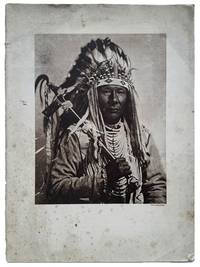
ref. TK0335London:: Bradley's no date. 4to. 3-46 pp. Lacking the title-page. Illustrated throughout. Pictorial wrappers showing a Canadian-American Indian signed "PHOTO> POLLARD CALGARY". Good. As is. With a photographic portrait by Harry Pollard of a member of the First Nations tribe. Harry Pollard 1880–1968 was a Canadian photographer known for his photographs of First Nations peoples in Western Canada. Bradley's, no date. unknown books
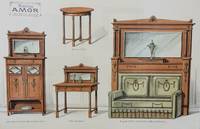
1912ref. 3220206Oblong folio 318 x 472 mm 88 chromolithograph illustrated pages; only occasional light spotting; original cloth-backed flexible boards imitating cloth front cover printed in bronze colour; spine worn a few marks. The furniture house Grocholesky situated in a small town near Hildesheim in Lower Saxony offered entire suites for living- dining- and bedrooms mainly in art nouveau style however still including the odd piece of historicist design for the more conservative buyer. The large and beautiful illustrations show suites of furniture with the measurements on each page; the furniture suitably decorated with modernist vases and mantelpiece decorations on display on dressers shelves and cupboards to give customers an idea of design potential. gProvenanceg: Inscribed on the rear inside cover by a citizen of Bockenem at a later date and with stamp and release stamp by a local museum. Bockenem: Grocholesky, Printed by H. W. & C., Berlin.
ref. 207534Paris, Imprimerie impériale, s.d. (1804) in-8, une page, en feuille.
ref. ORD-4187Reliés à la suite: 1°-Ordonnance du mois de juin 1680 sur le fait des Entrées, Aydes et autres Droits y joints. 2°-Ordonnance portant Règlement sur plusieurs Droits de ses Fermes, & sur tous en général (21 06 1680). 3°Ordonnance portant Règlement sur le Fait des 5 grosses Fermes (juillet 1681). 4°-Tarif Général des Droits de sorties et entrées du Royaume, & des Provinces esquelles les Bureaux ne sont établis, ordonnez être levez sur toutes les Marchandises & Denrées (18 09 1664). Paris. Libraires Associés. 1721. (1722 pour le Tarif). Petit in-16 basane brune, dos orné à 5 nerfs, (reliure ancienne), 168, 156, 64, 48 et 169pp. 7pp.n.ch. (Privilège et catalogue des éditeurs). Coiffe supérieure enlevée, plats lgt épidermés, sinon bon exemplaire.
1662ref. 17557Lyon, Michel Goy, 1662 ; in-4, veau jaspé, dos à nerfs décoré et doré, titre doré, tranches mouchetées de rouge (reliure de l'époque) ; 156 pp. , (4) pp. Relié à la suite : Ordonnances de nos Juges et Commissaires députez [...] pour le fait de la Police de la Ville de Lyon et Faux-bourgs ; 8 pp. (du 29 décembre 1655).Relié à la suite : Tarif provisionnel sur le prix des trois sortes de Pain, que doivent debiter les Bolangers de la Ville de Lyon, et Faux-bourgs d'icelle [...] du 7 septembre 1677, Lyon, Jean Ayné Ollier, 1687.
1893ref. 14034Genève, la Maison Ernest Meyer, [1893]. Grand in-4 de [4]-207-[5] pages, pleine percaline bleue avec décor en noir et titre doré au premier plat, décor à froid au second, dos muet.
ref. 4003Saïgon, Direction de l'Agriculture et du Commerce 1898-1899, Imprimerie Coloniale, 1900. 1 fort volume in-8, 764 pp. - XI pp. de table des matières, reliure d'époque demi-basane à coins, plats cartonnés, reliure usée et frottée, intérieur en bon état, bon état général. Ouvrage enrichi de nombreux tableaux.
ref. 175201À Amsterdam, Chez Jacques Cœur, 1756 3 vol. in-12, VIII-436 pp., VI-434 pp. et 388 pp., bradel papier vert (reliure moderne). Cachet de la bibliothèque d'un séminaire allemand.
ref. 26678In-8, broché, couverture papier moderne, tranches rouges, 35 p., rousseurs. Paris, Imprimerie nationale, [1791].
First Edition, 32 pp., pamphlet with a marbled paper spine. A defence of the administration against the popular clamour against the Convention. Kress, 4437; Goldsmith, 7669; Hanson, 5292.
In-8, broché, couverture papier moderne, tranches rouges, 35 p., rousseurs. Edition originale. Goudard expose son projet de nouveau tarif conçu autour de la réduction des droits d'entrée sur les matières premières, afin de réduire le prix de produits manufacturés, de favoriser la consommation intérieure et les exportations. Suivi du "Projet de décret" qui fut adopté en l'état. (Goldsmiths, 'Online catalogue', n° 14941.21. Stourm, p. 169).
ref. 207531Paris, Imprimerie impériale, s.d. (1804) in-8, 2 pp., en feuille.
ref. 206137Paris, Impr. de la République, An III in-8, 2 pp.
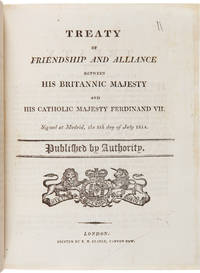
1814ref. 38942London: Printed by R.G. Clarke 1814. England Seeks a Trading Foothold in South America The final settlement between England and Spain at the end of the Napoleonic Wars. An important treaty which guarantees for England most favored nation status in the event of the commerce of Spanish America being opened to foreign trade. Includes an article of agreement regarding the injustice and inhumane nature of the traffic in slaves and a SEPARATE ARTICLE stipulating that the king of Spain not engage in any treaty with France "of the nature not known under the domination of the Family Compact." Printed in English and Spanish. Modern half morocco and marbled boards. Near fine. hardcover
1814ref. 38942London: Printed by R.G. Clarke 1814. England Seeks a Trading Foothold in South America The final settlement between England and Spain at the end of the Napoleonic Wars. An important treaty which guarantees for England most favored nation status in the event of the commerce of Spanish America being opened to foreign trade. Includes an article of agreement regarding the injustice and inhumane nature of the traffic in slaves and a SEPARATE ARTICLE stipulating that the king of Spain not engage in any treaty with France "of the nature not known under the domination of the Family Compact." Printed in English and Spanish. Modern half morocco and marbled boards. Near fine. hardcover books
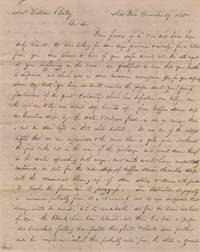
1835ref. BK0025New York City 1835. Autograph letter signed by the merchant firm Baker & Moore 4 pp. addressed to General William Battey care of Dr. Charles Luzenberg at the Franklin Infirmary on the Pontchartrain Railroad New Orleans. Stampless folded letter with red circular "NEW-YORK" December 31 datestamp and manuscript "25" rate. Appx. 1000 words. File folds; otherwise very good. A lengthy commercial letter written thirteen days after the Great Fire of New York describing the destruction of the city's mercantile district and tracing its immediate effects through insurance capital banking commodity prices and trade with New Orleans. Written by the New York firm of Baker & Moore to their associate William Battey the letter provides a near-contemporary account of the fire an assessment of the city's financial resilience and instructions for exploiting the resulting fluctuations in the markets for brandy wine raisins tobacco iron and copper. The fire began on the evening of December 16 during an extraordinary cold spell and northwest gale. Frozen hydrants wells cisterns and hoses left the city's volunteer fire companies largely unable to contain it. By the following day the fire had destroyed much of the commercial district between Wall Street and the East River including the Merchants' Exchange and hundreds of stores and warehouses. Buildings were eventually demolished with gunpowder to create firebreaks at Exchange Place and Coenties Slip. Contemporary estimates varied but approximately 674 buildings were destroyed with losses eventually placed at twenty million dollars or more.1 Baker & Moore begin by describing the extent of the burned district the severe weather and the use of explosives to arrest the flames: "Since my last you have no doubt received the paper sent you giving particulars of the great calamity which has befallen our City. On the 16th our City was about half burned up. From Coffee House Slip to Coenties Slip by the water & William Street is all in ruins. There is but one store left in that whole district. It was one of the coldest nights that we ever experienced & the wind blew a gale from Northwest. The fire broke out in the rear of the Exchange and went down through to the water spreading both ways and would have undoubtedly continued on but for the wide slips of Coffee House & Coenties Slip with the occasional blowing up of some stores & houses with powder to check the flame in its progress" The account quickly turns from the physical destruction to the distribution of its financial losses: "The destruction of property is immense probably from 10 to 15000000$ and it was supposed that many would be ruined but tis remarkable so far we have not heard of one. The Banks have been liberal and there has been a proper and benevolent feeling manifested throughout & should some further aid be brought in which probably will from the State or general government we think there may be no failures. The Insurance companies most of them are ruined and the principal loss is in Insurance capital. The loss will in some instances fall upon those who cannot well afford it. Many widows & orphans have had their all taken from them. The loss is large and New York has met with a great calamity but she is made of such materials & her facilities are so large & varied that the mercantile community will bear up under more than any other place in the Union & we think in one year's time it will be almost forgotten." The confidence expressed here correctly anticipated the city's rapid commercial recovery. Banks and government agencies extended credit and payment terms rebuilding began almost immediately and the burned district was reconstructed with new countinghouses and warehouses. The disaster also exposed the inadequacy of New York's water supply and firefighting arrangements contributing to later infrastructure and institutional reforms. Baker & Moore then apply the disaster to their own trade with New Orleans. Hundreds of warehouses and their contents had been destroyed increasing prices of imported foods wines and spirits. The firm instructs Battey to use the New York price current to obtain higher prices for their consignments: "This fire has advanced most all kinds of goods. Raisins are worth here $3-$3½. Wines such as Mess. Eastman's have advanced with us 4-6 cents. So many hundred casks destroyed must advance it and make it higher through the season. More than one half the Brandy was consumed tis now selling at $1.75 and some are asking $2. We wish what we sent you sold & this will be a favorable time to sell-show N.Y. price current-and get as good a price as you can. There will we think be no want of Brandy. Those raisins we think you had better dispose of at once. We think from N.O. current must pay something handsome for us. In regard to old Iron we find good old iron will always sell for the money for 112½ gross hundred equal to 1c per lb. Cast & wrought are same price. If you can come across a lot to do you may make it answer & pay us well. Copper if you can buy low enough may pay something. We thought hay might pay out but tis so high we cannot buy to send. We are of opinion that goods generally will be higher in consequence of this fire yet when we consign goods we wish them sold when they can to pay and we wish Eastman & Co. to sell and close up our affairs in their hands." The concluding paragraph briefly introduces events in Florida. The Second Seminole War had begun that month following mounting resistance to the forced removal of the Seminole people from Florida. Baker & Moore believed that the conflict might affect the movements of a brig expected in New Orleans: "We observe that trouble is anticipated with the Indians in Florida & if so our Brig may not get a load of them & be in N. Orleans earlier than we anticipated tis uncertain what will be the result they may detain her longer until they can get them on board." The wording appears to indicate that the vessel was expected to transport a group of Native people although the letter does not identify the brig its owners or the precise circumstances of the contemplated voyage. The recipient General William Battey was then in New Orleans apparently acting as Baker & Moore's commercial representative while also attending to his health at the Franklin Infirmary. The firm gave him considerable discretion to supervise consignments collect funds purchase goods when opportunities arose and forward current market information to New York. The address places him in the care of Dr. Charles Aloysius Luzenberg who founded the Franklin Infirmary with municipal support in 1835 and subsequently helped establish the Medical College of Louisiana the forerunner of Tulane's medical school.2 Baker & Moore appear to have been commission or importing merchants whose own affairs escaped direct damage but whose trade was immediately altered by the destruction of competing inventories. The letter thus follows the fire from the burned commercial district into the decisions of a New York firm and its representative in New Orleans. A substantial contemporary account of the Great Fire of 1835 documenting the destruction of New York's commercial center and the disaster's immediate movement through insurance banking commodity markets interregional credit and trade with New Orleans. We find no similar examples on the secondary market or in auction records. 1 Herbert Asbury "The Great Fire of 1835" The New Yorker July 26 1930. 2 Louisiana Historical Association "Luzenberg Charles Aloysius" in Dictionary of Louisiana Biography accessed August 2 2026 https://www.lahistory.org/resources/dictionary-louisiana-biography/dictionary-of-louisiana-biography-l/. . unknown
1835ref. BK0025New York City 1835. Autograph letter signed by the merchant firm Baker & Moore 4 pp. addressed to General William Battey care of Dr. Charles Luzenberg at the Franklin Infirmary on the Pontchartrain Railroad New Orleans. Stampless folded letter with red circular "NEW-YORK" December 31 datestamp and manuscript "25" rate. Appx. 1000 words. File folds; otherwise very good. A lengthy commercial letter written thirteen days after the Great Fire of New York describing the destruction of the city's mercantile district and tracing its immediate effects through insurance capital banking commodity prices and trade with New Orleans. Written by the New York firm of Baker & Moore to their associate William Battey the letter provides a near-contemporary account of the fire an assessment of the city's financial resilience and instructions for exploiting the resulting fluctuations in the markets for brandy wine raisins tobacco iron and copper. The fire began on the evening of December 16 during an extraordinary cold spell and northwest gale. Frozen hydrants wells cisterns and hoses left the city's volunteer fire companies largely unable to contain it. By the following day the fire had destroyed much of the commercial district between Wall Street and the East River including the Merchants' Exchange and hundreds of stores and warehouses. Buildings were eventually demolished with gunpowder to create firebreaks at Exchange Place and Coenties Slip. Contemporary estimates varied but approximately 674 buildings were destroyed with losses eventually placed at twenty million dollars or more.1 Baker & Moore begin by describing the extent of the burned district the severe weather and the use of explosives to arrest the flames: "Since my last you have no doubt received the paper sent you giving particulars of the great calamity which has befallen our City. On the 16th our City was about half burned up. From Coffee House Slip to Coenties Slip by the water & William Street is all in ruins. There is but one store left in that whole district. It was one of the coldest nights that we ever experienced & the wind blew a gale from Northwest. The fire broke out in the rear of the Exchange and went down through to the water spreading both ways and would have undoubtedly continued on but for the wide slips of Coffee House & Coenties Slip with the occasional blowing up of some stores & houses with powder to check the flame in its progress" The account quickly turns from the physical destruction to the distribution of its financial losses: "The destruction of property is immense probably from 10 to 15000000$ and it was supposed that many would be ruined but tis remarkable so far we have not heard of one. The Banks have been liberal and there has been a proper and benevolent feeling manifested throughout & should some further aid be brought in which probably will from the State or general government we think there may be no failures. The Insurance companies most of them are ruined and the principal loss is in Insurance capital. The loss will in some instances fall upon those who cannot well afford it. Many widows & orphans have had their all taken from them. The loss is large and New York has met with a great calamity but she is made of such materials & her facilities are so large & varied that the mercantile community will bear up under more than any other place in the Union & we think in one year's time it will be almost forgotten." The confidence expressed here correctly anticipated the city's rapid commercial recovery. Banks and government agencies extended credit and payment terms rebuilding began almost immediately and the burned district was reconstructed with new countinghouses and warehouses. The disaster also exposed the inadequacy of New York's water supply and firefighting arrangements contributing to later infrastructure and institutional reforms. Baker & Moore then apply the disaster to their own trade with New Orleans. Hundreds of warehouses and their contents had been destroyed increasing prices of imported foods wines and spirits. The firm instructs Battey to use the New York price current to obtain higher prices for their consignments: "This fire has advanced most all kinds of goods. Raisins are worth here $3-$3½. Wines such as Mess. Eastman's have advanced with us 4-6 cents. So many hundred casks destroyed must advance it and make it higher through the season. More than one half the Brandy was consumed tis now selling at $1.75 and some are asking $2. We wish what we sent you sold & this will be a favorable time to sell-show N.Y. price current-and get as good a price as you can. There will we think be no want of Brandy. Those raisins we think you had better dispose of at once. We think from N.O. current must pay something handsome for us. In regard to old Iron we find good old iron will always sell for the money for 112½ gross hundred equal to 1c per lb. Cast & wrought are same price. If you can come across a lot to do you may make it answer & pay us well. Copper if you can buy low enough may pay something. We thought hay might pay out but tis so high we cannot buy to send. We are of opinion that goods generally will be higher in consequence of this fire yet when we consign goods we wish them sold when they can to pay and we wish Eastman & Co. to sell and close up our affairs in their hands." The concluding paragraph briefly introduces events in Florida. The Second Seminole War had begun that month following mounting resistance to the forced removal of the Seminole people from Florida. Baker & Moore believed that the conflict might affect the movements of a brig expected in New Orleans: "We observe that trouble is anticipated with the Indians in Florida & if so our Brig may not get a load of them & be in N. Orleans earlier than we anticipated tis uncertain what will be the result they may detain her longer until they can get them on board." The wording appears to indicate that the vessel was expected to transport a group of Native people although the letter does not identify the brig its owners or the precise circumstances of the contemplated voyage. The recipient General William Battey was then in New Orleans apparently acting as Baker & Moore's commercial representative while also attending to his health at the Franklin Infirmary. The firm gave him considerable discretion to supervise consignments collect funds purchase goods when opportunities arose and forward current market information to New York. The address places him in the care of Dr. Charles Aloysius Luzenberg who founded the Franklin Infirmary with municipal support in 1835 and subsequently helped establish the Medical College of Louisiana the forerunner of Tulane's medical school.2 Baker & Moore appear to have been commission or importing merchants whose own affairs escaped direct damage but whose trade was immediately altered by the destruction of competing inventories. The letter thus follows the fire from the burned commercial district into the decisions of a New York firm and its representative in New Orleans. A substantial contemporary account of the Great Fire of 1835 documenting the destruction of New York's commercial center and the disaster's immediate movement through insurance banking commodity markets interregional credit and trade with New Orleans. We find no similar examples on the secondary market or in auction records. 1 Herbert Asbury "The Great Fire of 1835" The New Yorker July 26 1930. 2 Louisiana Historical Association "Luzenberg Charles Aloysius" in Dictionary of Louisiana Biography accessed August 2 2026 https://www.lahistory.org/resources/dictionary-louisiana-biography/dictionary-of-louisiana-biography-l/. . unknown books