17.648 resultados
1968ref. 25266Nantes aux Bureaux de la Société Archéologique de Nantes et de Loire-atlantique 1968 -in-8 demi-basane 2 années reliées en un volume, reliure demi-basane marron foncé in-octavo à coins (half binding sheepskin in-8 with corners) (24,2 x 16 cm), RELIURE D'ÉPOQUE, dos à 4 nerfs (spine with raised bands) décoré "or" et à froid (gilt and blind stamping decoration),Titre et Année frappées "or" (gilt title) avec un filet "or" de part et d'autre, double filets à froid de part et d'autre des nerfs et en tête et en pied, papier marbré violet et crème aux plats, toutes tranches lisses, couvertures marron Editeur imprimées en noir conservées, orné de 6 gravures hors-texte en noir + 5 gravures in-texte en noir (pour l'année 1965) + sans illustration (pour l'année 1966), (XXIII + 267) + ( L + 83) Pages, 1968 Nantes aux Bureaux de la Société Archéologique et Historique de Nantes et de Loire-Atlantique Editeur,
ref. 180660S.l., 1756 in-12, V-210 pp., demi-basane brune, dos lisse orné de filets à froid et de fleurons dorés (reliure de l'époque). Exemplaire très défraîchi. Dos frotté avec manques, un mors ouvert, plats frottés, manques aux coins. Un cahier dérelié. Annotations sur les pages de gardes. Cachet de la Bibliothèque du château de Bioul.
1831ref. BK0165Salem Massachusetts: Salem Press Palfray Ives Foote & Brown 1831. 78 pp. 8vo. Original printed wrappers. Wrappers frayed at spine; light dampstaining at margins of a portion of the leaves at rear. Good. An early catalogue of the collections of the East-India Marine Society of Salem recording the maritime journals and objects gathered by Salem captains and merchants during the city's great period of overseas trade. Founded in 1799 by captains and supercargoes who had sailed beyond the Cape of Good Hope or Cape Horn the Society required its members to contribute to a cabinet of "natural and artificial curiosities" the collection from which the present Peabody Essex Museum developed. The Society moved the collection into the newly built East India Marine Hall in 1825 and this expanded catalogue appeared only six years later. The volume includes the Society's act of incorporation bylaws lists of members and officers a catalogue of its manuscript journals of voyages and an extensive catalogue of the museum. The voyage journals occupy pages 33-42 and document Salem voyages to ports throughout Asia and the Indian Ocean; the balance of the catalogue records the ethnographic natural-history and other objects brought home by the Society's members. This was a substantially enlarged successor to the Society's 1821 catalogue which ran to 100 pages; the 1831 edition extends to 178 pages and was followed by a further supplement in 1837. A national bibliography of American library catalogues records copies of the 1831 edition at only a small group of institutional collections.1 1 Robert Singerman American Library Book Catalogues 1801-1874: A National Bibliography Graduate School of Library and Information Science University of Illinois at Urbana-Champaign 1996 94. . Salem Press, Palfray, Ives, Foote & Brown unknown
1831ref. BK0165Salem Massachusetts: Salem Press Palfray Ives Foote & Brown 1831. 78 pp. 8vo. Original printed wrappers. Wrappers frayed at spine; light dampstaining at margins of a portion of the leaves at rear. Good. An early catalogue of the collections of the East-India Marine Society of Salem recording the maritime journals and objects gathered by Salem captains and merchants during the city's great period of overseas trade. Founded in 1799 by captains and supercargoes who had sailed beyond the Cape of Good Hope or Cape Horn the Society required its members to contribute to a cabinet of "natural and artificial curiosities" the collection from which the present Peabody Essex Museum developed. The Society moved the collection into the newly built East India Marine Hall in 1825 and this expanded catalogue appeared only six years later. The volume includes the Society's act of incorporation bylaws lists of members and officers a catalogue of its manuscript journals of voyages and an extensive catalogue of the museum. The voyage journals occupy pages 33-42 and document Salem voyages to ports throughout Asia and the Indian Ocean; the balance of the catalogue records the ethnographic natural-history and other objects brought home by the Society's members. This was a substantially enlarged successor to the Society's 1821 catalogue which ran to 100 pages; the 1831 edition extends to 178 pages and was followed by a further supplement in 1837. A national bibliography of American library catalogues records copies of the 1831 edition at only a small group of institutional collections.1 1 Robert Singerman American Library Book Catalogues 1801-1874: A National Bibliography Graduate School of Library and Information Science University of Illinois at Urbana-Champaign 1996 94. . Salem Press, Palfray, Ives, Foote & Brown unknown books
1925ref. 42819Salem: Elliott Printer n.d. ca 1925. 1925. 9" x 4" in color pictorial wrappers. 28 pp. including wrappers. Illustrations. Maps. Printed in brown ink. A well-written overview of Salem and all it has to offer the tourist. 1-page map showing the Pacific Highway through Salem. 1-page map of Western Oregon showing the Pacific Highway. Numerous sepia photographs throughout to include pictures of important buildings schools scenery businesses etc. Small bend at top corner throughout along with erased pencil residue to front wrapper. Very good. Elliott, Printer, n.d. [ca 1925]. unknown
1926ref. 1791Salt Lake City: Chamber of Commerce 1926. 28pp. Sextodecimo 17 cm Tan illustrated wrappers. Near fine. Illustrated guide to Salt Lake that contains a nice concise history of the town to the early 20th century. "Whatever of individuality or charm may impress you - whatever of beauty or worth you may find bears the imprint which stamps Salt Lake City as unique among the cities of the world." p.5 Flake/Draper 7487. Chamber of Commerce unknown books
1925ref. 44303San Antonio: Chamber of Commerce n.d. ca 1925. ca 1925. TEXAS. 9" x 8" bi-fold 8 page pamphlet front and rear cover with color photographic images of San Antonio other pages with several black and white images. An in depth travel advertisement showing off all of San Antonio’s features which make it especially appealing for Winter months. Golfs mineral baths fishing and other activities are all featured. Light soiling to cover wrapper and with light wear to the extremities along with agent stamp to first page. Very good. A very nicely produced brochure. Chamber of Commerce, n.d. [ca 1925]. unknown
ref. 305482San Diego Board of Supervisors and the San Diego Chamber of Commerce ca. 1928. 31 1/2" x 7 1/4". Brochure folds to form 22 panels. Illustrated with 20 fine b/w halftone photographs. Pictorial cover. Very good. No signatures or bookplates. Rubberstamp of California Development Association San Francisco on the front cover. No Binding. Very Good. San Diego, Board of Supervisors and the San Diego Chamber of Commerce, ca. 1928. unknown books
1903ref. 224108Watsonville Chamber of Commerce 1903. 1903. 8vo. 13 illustrations; map. Original color pictorial wrappers with design of four apples. Very good. 16 pages. Printed by Sunset Press San Francisco. Rocq 14417 - locates only the Bancroft copy. Soft cover. [Watsonville, Chamber of Commerce, 1903]. paperback
1903ref. 224108Watsonville Chamber of Commerce 1903. 1903. 8vo. 13 illustrations; map. Original color pictorial wrappers with design of four apples. Very good. 16 pages. Printed by Sunset Press San Francisco. Rocq 14417 - locates only the Bancroft copy. Soft cover. [Watsonville, Chamber of Commerce, 1903]. paperback books
ref. 206846Chambéry, Louis Dufour & Jean Gorrin, s.d. (1682) placard in-folio (43 x 27 cm), armes de Savoie en tête.
ref. ORD-9821Février 1865 et Janvier 1866. Imprimerie Impériale. 1865. 1866. 2 tomes en 1 volume grand in-8, dos veau bleu nuit à 5 nerfs ornés de filets or, 205 et VIII, 248pp. La table sommaire de la 1°partie se trouve en fin de volume (page froissée). Qq. petits défauts mais bon exemplaire. Etat des différents aspects de l'activité de la nation y compris les traités de commerce avec l'étranger.
ref. 004480London: No Publisher Printed trade card approximately 75mm x 105mm in size n.d. Lightly browned minor surface soiling slight signs of old glue marks to reverse but generally fairly clean. Engraved by Kent of Holborn possibly William Kent see Alexander 'A Biographical Dictionary of British and Irish Engravers 1714-1820' page 520. At 56 High Street the street from Oxford Street to St. Giles Church Bloomsbury London. Advertises "Rowe's Manufactory for Patent Cotton Sewing Threads. Ladies will find an infinite advantage by making use of his Patent Sewings & Wire Thread the strength & uniformity renders it far Superior to any thing of the kind ever yet offered to Public Notice. Tambour Netting Lace Trafalgar Knitting & India Cottons only. If not approved of exchanged or the Money returned. The Trade supplied on the most advantageous Terms.". In the Heal collection Heal116.6. First Edition. Unbound. Good. Illus. by Kent. 32mo. Trade Card. No Publisher Paperback
ref. 8315Shanghai, Statistical Department of the Inspectorate General, 1879. China, Imperal Maritime Customs, 20th Issue. 1 volume in-4, vii-369 pp., hard covers slightly soiled, quarter-cloth binding a bit loose, good condition inside, overall a good copy.
1915ref. 26803London: John I. Thornycroft & Co. 1915. Paperback. Very good overall. Trade catalog for this shipbuilding firm with many diagrams and printed photos of a wide range of vessels "engined and boilered" by the Thornycroft company. It also includes detailed tables for evaporation specific gravity for fuel oil heat values for coal and oil etc. This was a trade catalog for a large and prosperous firm with an international clientele in a period before W.W.I. During the war the yard at Woolston yard made 26 destroyers 3 submarines and a large number of smaller craft for the Royal Navy. Interestingly John's daughter naval architect Blanche Thornycroft worked alongside her father and after his death testing models calculating and recording results Wikipedia. John I. Thornycroft had shown shipbuilding ability when aged 16 he began building a small steam launch in 1859. it proved to be the first steam launch with enough speed to follow the contenders in the University race. the company developed a water-tube boiler patented in 1885." Wikipedia Detailed tables throughout for example "Table Giving Average Heating Values of Various Coals and Oil Fuels" lists coal heating values from South Wales Best Yorkshire Midlands England Canada the US and Russia. Oil heating values include Russian Fuel Oklahoma Crude Texas Sour Lake Mexican Fuel Oil Roumanian & Texas Residuum Borneo Fuel California Trinidad Crude Shale Oil Blast Furnace Oil and Heavy Tar Oil or Creosote. The vessels pictured "Engined and Boilered" by the firm include H.M. Mystery Vessel; HMTBD Leader; HMTB Destroyer Light Cruiser Customs Cruiser Steam Yacht Cruiser Yacht Side Paddle Tug Sea Going; Shallow Draft Side Paddle Vessel Very Light Shallow Draft Side Paddle Vessel and seven more. Oblong sml. 4to pamphlet 63pp with silk cord binding. Brown card covers red and black embossed titles on front. Closed tear at back spine corner a faint crease along many pages light foxing on title otherwise very good condition. OCLC 39114883 cites 1 copy at the Mariner's Museum Library Virginia. John I. Thornycroft & Co. paperback
ref. 131113144pp original wrappers creased at corners spine torn with minor loss. Wrappers a little marked. Quarto. Filled with statistics this publication would be ideal for anyone researching Singaporean exports and imports in the mid 1950s. . unknown
ref. 207020Arras, Imprimerie de Guy Delasablonnière, s.d. (1791) placard in-folio de 46 x 35 cm, texte sur deux colonnes séparées par une frise fleurdelisée.
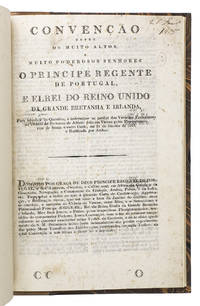
ref. ABC_48887Lisbon: Na Impressão Regia 1815. Modern half calf marbled paper sides with the title and year of publication lettered in gold on the spine. Small folio ca. 28.5 x 18 cm. With the text printed in two columns in Portuguese on the left and in English on the right. Very rare first Portuguese edition of this treaty between Portugal and the United Kingdom of Great Britain and Ireland concerning the indemnification of Portuguese subjects for certain detained slave trade vessels as a result of British actions undertaken in pursuit of the abolition of the slave trade. "Britain agreed to pay compensation for the several Portuguese slavers detained brought before and condemned by British courts on the ground of illegal slave-trading along the African coast prior to 1814" J.P. van Niekerk "British Portuguese and American judges in Adderley Street ." pp. 22-23. Another edition of this same treaty in 8 pages was printed in the same year in Rio de Janeiro with the complete imprint including the place of publication.The present bilateral treaty comprising three articles printed in two columns in Portuguese and English was drafted on 21 January 1815 during the Congress of Vienna a series of international diplomatic meetings held in Vienna from September 1814 to June 1815 concerning the new layout of the European political and constitutional order after the downfall of the French Emperor Napoleon Bonaparte. The signatories of the present treaty were plenipotentiary at the Congress of Vienna formally this treaty was concluded between the Prince Regent of Portugal - future King John VI 1767-1826 - and the King of Great Britain and Ireland George III 1738-1820 as mentioned in the title.A more detailed description is available upon request.With the book plate of "Biblioteca de Hariberto de Miranda Jordão Filho" mounted on the front pastedown. The text leaves with a vague horizontal and vertical fold in the centre a manuscript annotation "21 Janeiro 1815" in brown ink in the upper outer corner of the first page some foxing. Otherwise in good condition.l Gauz Portuguese and Brazilian books in the JCB 815/10; Porbase 3240734 1 copy; WorldCat 1042407673 12791342 38346960 4 copies; cf. Camargo & Moraes Bibl. da Impressão Régia do Rio de Janeiro I 428; Rodrigues 735 & 737 Rio de Janeiro ed.; for more context relating to the treaty: Lesaffer R. "Vienna and the Abolition of the Slave Trade" Oxford Public International Law online via: https://opil.ouplaw.com/page/498; Niekerk J.P. van "British Portuguese and American judges in Adderley Street: the international legal background to and some judicial aspects of the Cape Town Mixed Commissions for the suppression of the transatlantic slave trade in the nineteenth century Part 1" in: The Comparative and International Law Journal of Southern Africa Vol. 37 No. 1 March 2004 pp. 1-39. online via: https://journals.co.za/doi/pdf/10.10520/AJA00104051_114. Na Impressão Regia, unknown
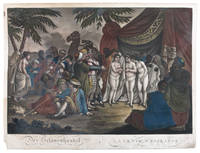
1800ref. I7DD3T6LJ6QQNo place 1800. 27 x 40 cm. Aquatint in contemporary hand colour engraved by "J. L. T." after "J. R. P." Three partly exposed women before a large tent being advertised and inspected by several men dressed in fine oriental garb. On the left is another woman whose price is under discussion while the background shows date palms and two dromedaries.Rather severe water stains and a few small holes in the blank margin; some scuff marks in the image; trimmed closely with loss to lower left corner. A very appealing print. Rare. unknown
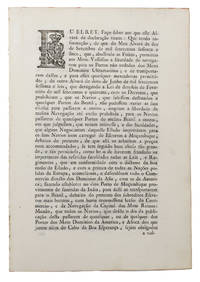
1772ref. ABC_48853Lisbon 1772. Folio ca. 29 x 20 cm. Na Regia Officina Typografica Disbound and subsequently mounted in a modern black stiff paper folder with a printed label mounted on the front wrapper. With a large decorated woodcut initial E incorporating the Portuguese royal coat of arms. 3 1 blank pp. Very rare first issue of two of a late 18th-century decree by the Portuguese King José I 1714-1777 dealing with difficulties in the transportation of enslaved people from Mozambique to Brazil. This text dated 12 December 1772 and signed Rey King at the end is also signed by the notorious Portuguese nobleman and diplomat Marquez de Pombal. Sebastião José de Carvalho e Melo 1st Marquis of Pombal 1699-1782 who was the Secretary of State of the Kingdom during the reign of Dom José I in the period of 1750-1777. It is concluded with a formal text dated 18 December 1772 and signed by João Baptista de Araújo a senior officer of the Secretariat of State.In 1761 Marquez de Pombal prohibited the importation of enslaved people in Portugal and Portuguese India not for humanitarian reasons but because they were needed for labour in Brazil. He stimulated the trade of mostly African enslaved people for that colony and with his support two companies for slave trade were founded the Companhia Geral de Comércio do Grão-Pará e Maranhão and the Companhia Geral de Comércio de Pernambuco e Paraíba. Both companies were privileged and had a monopolistic character. Their lists of shareholders included many Portuguese noblemen and clergy. Between 1757 and 1777 more than 25000 enslaved people were imported to Pará and Maranhão from West African ports.The two issues can be identified by their catchwords on p. 1: issue one shows the catchword as a vol- that catchword was changed in the second issue to a.The inner margin shows some signs of the previous binding. Otherwise in very good condition.l Gauz Portuguese and Brazilian books in the JCB 772/1; WorldCat 1045359449 3 copies; cf. Porbase 2301650 and no copies. unknown
1816ref. 40803London: Printed for J. M. Richardson Cornhill Opposite the Royal Exchange 1816. 3-28pp. Light scattered foxing. Bound in modern cloth withdrawal stamp on front pastedown; inoffensive faint blindstamp on blank corner of title leaf. Else Very Good. Our collation matches that of the bibliographers. The nameless author disclaims any "intention to advocate the revival or regret the abolition of the Slave Trade. . . It is a traffic so objectionable in almost every respect that being abolished for the most part I hope never to see it revived and that every endeavour will be made to realize those advantages which the zeal of the authors of the Abolition has induced them to expect." However "The passage of the registration bill would constitute an unwarranted interference of the central power in the planters' private affairs" Ragatz. The property right of the West Indian colonists in their slaves is non-negotiable. Slaves comprise "the most valuable property of our colonists." Parliament's interference with "the private rights and private property of our colonists. . . would absolutely and tyrannically deprive the individuals whose property it is proposed to regulate and affect of those constitutional means of redress which all British subjects are entitled to." The pamphlet prints resolutions of West Indian Planters objecting to any such intrusions on their rights. The anonymous author objects to the African Institution's "representations of the miseries and hardships of slaves and in circulating ignorantly and unguardedly no doubt the most unfounded calumnies on the subject. If these gentlemen were to compare the situation of the Irish peasantry with that of our colonial slaves they would find they were comparing the extreme of wretchedness with comparative comfort." Ragatz 442. LCP Supp. 1608. Sabin 56509. OCLC records 16 locations worldwide as of March 2025. Printed for J. M. Richardson, Cornhill, Opposite the Royal Exchange unknown
1713ref. 68433London: Printed by John Baskett 1713. Spain Grants Britain a Monopoly on the Slave Trade in the Americas First edition in English of one of the most important documents in the history of slavery in the Americas and in the political and financial history of Europe and the Americas in the early 18th century. This copy is housed in a large sammelband containing dozens of original documents and extracts related to English-Spanish relations. Though the term "assiento" could refer to any number of Spanish contracts "the Assiento" almost always refers to the "Assiento de Negros": a monopoly contract granted by the Spanish crown between 1528 and 1779 for the sole right to import slaves from Africa into the Spanish colonies. Normally granted to individual companies the 1713 Assiento was granted directly to the British crown as part of negotiations for the Treaty of Utrecht which ended the War of Spanish Succession. In the decades following this 1713 Assiento an estimated 200000 enslaved Africans were transported across the Atlantic. The document grants sole privilege for the trade to the British crown for a period of thirty years expiring in 1743. The agreement consisting of forty-two articles allows for a maximum of 4800 slaves to be introduced to the colonies each year with a provision for increasing that annual amount each year by paying an added duty places limits on sale prices sets the cost of the duty to be paid for each enslaved person allows for the use of British or Spanish ships and mariners in the slave trade provides for the French Guinea Company's extraction from the colonies and establishes the details of precisely where British ships would be allowed to travel and trade. The British were also granted the unique privilege to send one vessel with a cargo of up to 500 tons of other trade goods to the Spanish colonies each year. While the Assiento seemed a lucrative deal most Assientists over the years saw considerable losses due to the difficulty of cross-Atlantic trade and the duties paid to the Spanish king. The real benefit to its grantees was not profits from the slave trade but rather the illegal ability to send other contraband on board their vessels to the otherwise closed-off Spanish markets in the New World. Britain was eager to get their own products overseas and to deny this revenue stream to the French who had held the Assiento since 1701 thereby preventing them from refilling their coffers too quickly and upsetting the balance of power in Europe after the costly War of the Spanish Succession. Queen Anne delegated the Assiento privilege to the South Sea Company which had recently been established to pay off Britain's considerable national debt. The privilege was largely granted to them as an encouragement to investors in order to allow the Company to achieve its original purpose more readily. Ultimately however it proved to be a costly and unprofitable endeavor for the South Sea Company who were able to import only about one-third of their allowed quota of slaves each year were frequently interrupted by war and were required to render twenty-five percent of their profits to King Philip V of Spain. The present example comes from the British Foreign Office Library inlaid and bound into a folio volume of other treaties between Great Britain and Spain arranged chronologically by treaty date. Over the course of many years the library of the Great Britain Foreign Office inlaid copies of nearly every treaty involving Great Britain to folio size and bound them together by region. The library was dispersed in the late 20th century with most of the volumes and particularly the American volumes sold by this company. Most of the other treaties with Spain within this volume are clippings or extracts from larger works or true copies in manuscript of treaties dated between the years 1176 and 1739. Included in the volume however is a separately printed English edition of the Treaty between Great Britain and Spain as part of the Treaty of Utrecht ESTC T51509. There are two issues of the Assiento treaty; this is the issue with a semicolon after "Assiento" and no punctuation after "or" on the titlepage. A crucially important document in the history of colonial trade Spanish-British relations English finances and slavery in the Americas. Folio. 19th-century half roan and marbled paper boards. Boards worn some restoration at joints. Text trimmed and inlaid into folio sheets bound in volume of treaties between Great Britain and Spain. Bookplate of the British Foreign Office Library on front pastedown. HANSON 1896. ESTC T4476. EUROPEAN AMERICANA 713/85. JCB 1III:175. SABIN 2227. SPERLING 34. hardcover
1816ref. 40803London: Printed for J. M. Richardson Cornhill Opposite the Royal Exchange 1816. 3-28pp. Light scattered foxing. Bound in modern cloth withdrawal stamp on front pastedown; inoffensive faint blindstamp on blank corner of title leaf. Else Very Good. Our collation matches that of the bibliographers. The nameless author disclaims any "intention to advocate the revival or regret the abolition of the Slave Trade. . . It is a traffic so objectionable in almost every respect that being abolished for the most part I hope never to see it revived and that every endeavour will be made to realize those advantages which the zeal of the authors of the Abolition has induced them to expect." However "The passage of the registration bill would constitute an unwarranted interference of the central power in the planters' private affairs" Ragatz. The property right of the West Indian colonists in their slaves is non-negotiable. Slaves comprise "the most valuable property of our colonists." Parliament's interference with "the private rights and private property of our colonists. . . would absolutely and tyrannically deprive the individuals whose property it is proposed to regulate and affect of those constitutional means of redress which all British subjects are entitled to." The pamphlet prints resolutions of West Indian Planters objecting to any such intrusions on their rights. The anonymous author objects to the African Institution's "representations of the miseries and hardships of slaves and in circulating ignorantly and unguardedly no doubt the most unfounded calumnies on the subject. If these gentlemen were to compare the situation of the Irish peasantry with that of our colonial slaves they would find they were comparing the extreme of wretchedness with comparative comfort." Ragatz 442. LCP Supp. 1608. Sabin 56509. OCLC records 16 locations worldwide as of March 2025. Printed for J. M. Richardson, Cornhill, Opposite the Royal Exchange unknown books
1713ref. 68433London: Printed by John Baskett 1713. Spain Grants Britain a Monopoly on the Slave Trade in the Americas First edition in English of one of the most important documents in the history of slavery in the Americas and in the political and financial history of Europe and the Americas in the early 18th century. This copy is housed in a large sammelband containing dozens of original documents and extracts related to English-Spanish relations. Though the term "assiento" could refer to any number of Spanish contracts "the Assiento" almost always refers to the "Assiento de Negros": a monopoly contract granted by the Spanish crown between 1528 and 1779 for the sole right to import slaves from Africa into the Spanish colonies. Normally granted to individual companies the 1713 Assiento was granted directly to the British crown as part of negotiations for the Treaty of Utrecht which ended the War of Spanish Succession. In the decades following this 1713 Assiento an estimated 200000 enslaved Africans were transported across the Atlantic. The document grants sole privilege for the trade to the British crown for a period of thirty years expiring in 1743. The agreement consisting of forty-two articles allows for a maximum of 4800 slaves to be introduced to the colonies each year with a provision for increasing that annual amount each year by paying an added duty places limits on sale prices sets the cost of the duty to be paid for each enslaved person allows for the use of British or Spanish ships and mariners in the slave trade provides for the French Guinea Company's extraction from the colonies and establishes the details of precisely where British ships would be allowed to travel and trade. The British were also granted the unique privilege to send one vessel with a cargo of up to 500 tons of other trade goods to the Spanish colonies each year. While the Assiento seemed a lucrative deal most Assientists over the years saw considerable losses due to the difficulty of cross-Atlantic trade and the duties paid to the Spanish king. The real benefit to its grantees was not profits from the slave trade but rather the illegal ability to send other contraband on board their vessels to the otherwise closed-off Spanish markets in the New World. Britain was eager to get their own products overseas and to deny this revenue stream to the French who had held the Assiento since 1701 thereby preventing them from refilling their coffers too quickly and upsetting the balance of power in Europe after the costly War of the Spanish Succession. Queen Anne delegated the Assiento privilege to the South Sea Company which had recently been established to pay off Britain's considerable national debt. The privilege was largely granted to them as an encouragement to investors in order to allow the Company to achieve its original purpose more readily. Ultimately however it proved to be a costly and unprofitable endeavor for the South Sea Company who were able to import only about one-third of their allowed quota of slaves each year were frequently interrupted by war and were required to render twenty-five percent of their profits to King Philip V of Spain. The present example comes from the British Foreign Office Library inlaid and bound into a folio volume of other treaties between Great Britain and Spain arranged chronologically by treaty date. Over the course of many years the library of the Great Britain Foreign Office inlaid copies of nearly every treaty involving Great Britain to folio size and bound them together by region. The library was dispersed in the late 20th century with most of the volumes and particularly the American volumes sold by this company. Most of the other treaties with Spain within this volume are clippings or extracts from larger works or true copies in manuscript of treaties dated between the years 1176 and 1739. Included in the volume however is a separately printed English edition of the Treaty between Great Britain and Spain as part of the Treaty of Utrecht ESTC T51509. There are two issues of the Assiento treaty; this is the issue with a semicolon after "Assiento" and no punctuation after "or" on the titlepage. A crucially important document in the history of colonial trade Spanish-British relations English finances and slavery in the Americas. Folio. 19th-century half roan and marbled paper boards. Boards worn some restoration at joints. Text trimmed and inlaid into folio sheets bound in volume of treaties between Great Britain and Spain. Bookplate of the British Foreign Office Library on front pastedown. HANSON 1896. ESTC T4476. EUROPEAN AMERICANA 713/85. JCB 1III:175. SABIN 2227. SPERLING 34. hardcover books
ref. 239941Londres, Pelham Richardson, Ridgway, Manchester, White & Carter, 1841 in-8, 24 pp., dérelié.