Ehrenberg, RichardAntiquariat.de
15.769 resultados
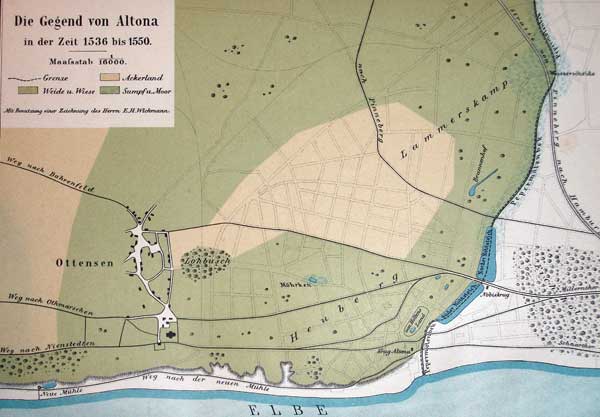
1893ref. 16188Altona, J. Harder Verlag, 1893. IX, ca.385 S. (jede Abt. extra paginiert). Mit Stammbaum d. Familie von Lohe u. 1 Farbkte. Privates HLn.
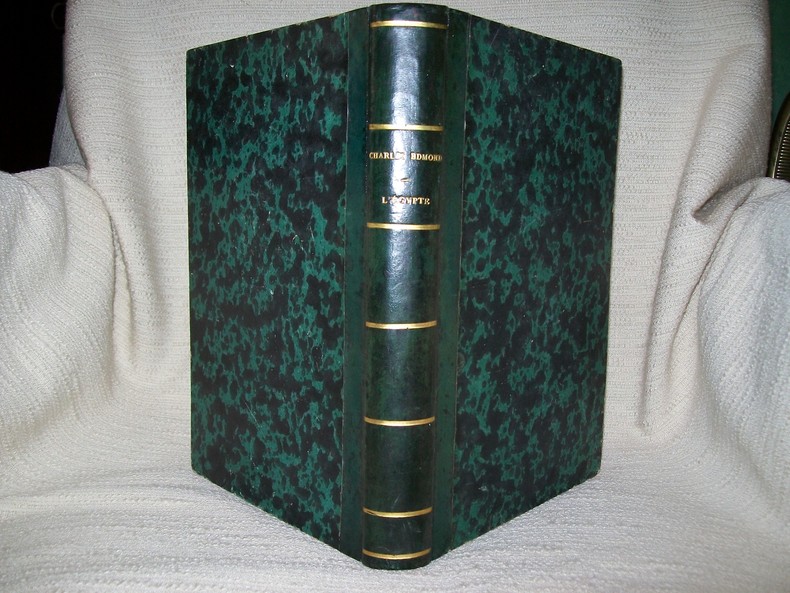
1896viii + 362pp., 24cm., hardcover binding (marbled boards, spine in leather with title in gilt), good condition, G90129
1896ref. G90129Jena, Gustav Fischer 1896 viii + 362pp., 24cm., hardcover binding (marbled boards, spine in leather with title in gilt), good condition, G90129
1983ref. R300263082Charles-Lavauzelle. 1983. in-4. Relié. Très bon état, Couv. fraîche, Dos impeccable, Intérieur frais. Paris, Charles-Lavauzelle, 1983, album in 4, reliure éditeur sous jaquette, nombreuses photos, 143 pp.. Avec Jaquette. . . Classification Dewey : 380-Commerce, communications, transports
1989ref. R300263019Heimdal. 1989. in-4. Relié. Bon état, Couv. convenable, Dos satisfaisant, Intérieur frais. Bayeux, Heimdal, 1989, album in 4, reliure éditeur, nombreuses photos et cartes, 96 pp.. . . . Classification Dewey : 380-Commerce, communications, transports
1993ref. 2083002115700125Ehime Tourism Association 1993. Soft Cover. Fine. Number of pages: 968 pages Size: 27 cm Number of books: 1 volume Ehime Tourism Association paperback
1965ref. 2083002115803970Ehime Prefectural Commerce and Industry Department Administrative Division 1965. Soft Cover. Fine. Number of books: 9 Ehime Prefectural Commerce and Industry Department, Administrative Division paperback
ref. 2083002115600619Ehime Prefecture Commerce and Industry Department Tourism Division N.A. Soft Cover. Fine. Number of pages: 595p Map size: 22cm Ehime Prefecture Commerce and Industry Department, Tourism Division paperback
1957ref. 635620Zürich, Schulthess, 1957. VII, 263; VII, 284 S. Mit Porträt. Originalleinen mit Schutzumschlag (SU. Mit Randläsuren u. kurzen Einrissen).
1957ref. 3624176Zürich, Schulthess, 1957. VII, 263; VII, 284 S. Mit Porträt. OLwd. Exlibris auf Innendeckel, sonst sauber.
1920ref. 3351Oversize quarto bound in the original printed wrappers. A fine copy with no wear or marks. 184 pages profusely illustrated with sheet metal building materials such as metal Spanish tile metal shingles roofing siding gutters awnings stamped and spun zinc and copper doors widows metal ceilings portable buildings etc. Great black and white photographs drawings and some color. An excellent reference source for the restorer. The Edwards Manufacturing Co. books
1920ref. 3351Oversize quarto bound in the original printed wrappers. A fine copy with no wear or marks. 184 pages profusely illustrated with sheet metal building materials such as metal Spanish tile metal shingles roofing siding gutters awnings stamped and spun zinc and copper doors widows metal ceilings portable buildings etc. Great black and white photographs drawings and some color. An excellent reference source for the restorer. The Edwards Manufacturing Co.
1930ref. 3346The Edwards Manufacturing Co. New York. Circa 1930 A magazine size trade catalog of sheet metal and building materials. Edwards was the largest maker of sheet metal building material in the world and this catalog of 40 pages is a great example of their offerings. Included are metal roofing materials shingles skylights ventilators doors windows iron fence and ornamental work guards even motion picture machine booths and theatre equipment. This is catalog #74 and has 10-15 illustrations on almost every page measurements and many times excellent photographs. Scarce and unusual. A fine copy with no wear or marks. Edwards Manufacturing Co. paperback books
1930ref. 3346The Edwards Manufacturing Co. New York. Circa 1930 A magazine size trade catalog of sheet metal and building materials. Edwards was the largest maker of sheet metal building material in the world and this catalog of 40 pages is a great example of their offerings. Included are metal roofing materials shingles skylights ventilators doors windows iron fence and ornamental work guards even motion picture machine booths and theatre equipment. This is catalog #74 and has 10-15 illustrations on almost every page measurements and many times excellent photographs. Scarce and unusual. A fine copy with no wear or marks. Edwards Manufacturing Co. paperback
1959ref. 84563Interstate Commerce Commission 1959-01-01. Paperback. Good. Good; Ex-Library; Soft Cover; Interstate Commerce Commission; 1959; 0 Interstate Commerce Commission paperback
1875ref. 5042York PA: E J Evans Co. ca 1875. First Edition. As issued. Very good. 4to 4 pp. Folded sheet; printed on a thin glazed paper. A large format nursery and seed catalogue. Evans' catalog is primarily devoted to trees and berries of all kinds.The last page lists the offerings in the ornamental department. Absent from Romaine. E J Evans Co. unknown books
1870ref. 5448York PA: E J Evans ca. 1870. Edition Unknown. As issued - cover title. Fine. 4to 4 pp. one leaf insert on yellow paper printed recto only. The catalog is not illustrated. A handsome closely printed nursery catalog with a single sheet laid in insert printed on yellow paper listing small fruits including at least 25 grape varieties and flowering bulbs. The 4 page catalog lists vegetables. Unlocated. E J Evans unknown books
1801ref. 10389Dentu Paris An IX (1801) 1 vol. Fort in-8 broché de VIII 490 pp., couverture muette de l'époque, pièce de titre papier.
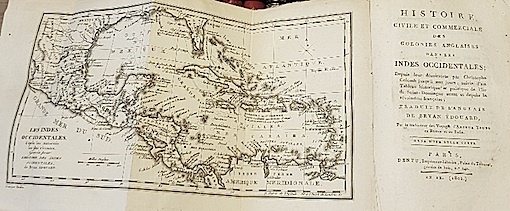
1794ref. PHO-1886John Stockdale, Londres, 1794-1801, 3 volumes in-4 (275 X 225 mm), reliés plein veau marbré époque (restauration ancienne), pièce de titre rouge et de tomaison vert. Tome I, liv-494 pp., Tome II 520 pp, Tome III (1801) xix 443 pp., illustré de 3 frontispices, 11 cartes dont une en double feuille et dépliante (720 X 620) (cartes des Indes occidentales), 2 dépliantes Saint Domingo (250 X 225) et Jamaïque et 8 planches h.t., ex-libris en page de garde, déchirures aux pliures et brunissures en marge de la grande carte, frottements, griffures, pièces de titre et tomaison avec petits manques, quelques brunissures sur les titres et quelques feuillets.
ref. 10960Scroll 385 x 8560 mm. with fine colored paintings using brush ink & various colors of wash of the route and major features along the way. Japan: mid-Edo. The route from Edo today’s Tokyo to Nagasaki and vice versa by land and by sea was one of the major thoroughfares and trade routes of Edo-period Japan. The Dutch and Chinese had been allowed to establish exclusive trading outposts in Nagasaki and Edo was the heart of domestic commerce and administration. Foreign goods especially silks other luxury items raw materials useful to the military and medicinal goods flowed through Nagasaki to Edo and the rest of Japan while Japanese goods including copper silver and porcelain were transported to Nagasaki for export. Most of the silver was sent to China to settle the trade balance. From the late 1670s to the 1740s Japan was the world’s largest copper producer and exporter. This route also carried the head of Nagasaki’s Dejima trading post to Edo for frequent mandatory ceremonial audiences with the shogun. The beginning of our scroll depicts the land route from Edo to Kyoto and then on to Osaka. The famous battleship Atake Maru is seen docked at the mouth of the Sumida River. Starting from Edo Castle in the great capital the scroll proceeds to Nagoya and Kyoto along the TÅkaidÅ road which was the most important highway of the Edo period. It depicts in great detail and with manuscript labels: stations on the route; bridges; major castles temples and shrines; the palace at Kyoto; other notable buildings; important geographical features including Mount Fuji partly shrouded in clouds; and towns and villages along the way. Distances are given and travellers are well-depicted showing their various clothing. Also shown are ships and skiffs in the nearby sea. We see more landmarks along the TÅkaidÅ road from Kyoto to the commercial hub and port city of Osaka an extension built in the 1620s. Arriving at Osaka we view the great castle the city’s canals and other sites. The rest of the scroll shows the hazardous passage from Osaka to Nagasaki through the 400 km. long Inland Sea Seto Naikai. The accomplished artist depicts the two main routes and alternate routes depending on the weather one for summertime in the open sea and the other hugging the coast for wintertime. Another route is shown that involved landing in the Bungo area of Kyūshū island and crossing overland to Nagasaki. Navigating through the Inland Sea with its 3000 plus islands and rocky outcroppings presented enormous problems in the era before modern navigation systems. Shown in very great detail are areas of turbulence including famous whirlpools numerous islands rock formations landscapes for orientation anchorages harbors along the way and fishing areas. The route then passes through the narrow Kanmon Strait the stretch of water separating the main island of Honshu and Kyūshū to the Sea of Japan finally arriving in Nagasaki. Dejima is prominently shown. A foreign ship is shown passing the GotÅ islands making its way to Nagasaki. Our scroll is finely drawn in black ink and heightened with wash in green blue gray pink and red. The routes are drawn from a partial “bird’s-eye” perspective with lovely vistas of mountains and islands and villages and towns. In fine condition preserved in an oldish wooden box which has the inscription on the outside of the lid 江戸長崎海陸é“ä¸çµµå›³ “From Edo to Nagasaki Travel by Land and by Sea Illustrated”. Inside this lid is the ownership inscription of RyÅra Gakuto. unknown books
ref. 10960Scroll 385 x 8560 mm. with fine colored paintings using brush ink & various colors of wash of the route and major features along the way. Japan: mid-Edo. The route from Edo today’s Tokyo to Nagasaki and vice versa by land and by sea was one of the major thoroughfares and trade routes of Edo-period Japan. The Dutch and Chinese had been allowed to establish exclusive trading outposts in Nagasaki and Edo was the heart of domestic commerce and administration. Foreign goods especially silks other luxury items raw materials useful to the military and medicinal goods flowed through Nagasaki to Edo and the rest of Japan while Japanese goods including copper silver and porcelain were transported to Nagasaki for export. Most of the silver was sent to China to settle the trade balance. From the late 1670s to the 1740s Japan was the world’s largest copper producer and exporter. This route also carried the head of Nagasaki’s Dejima trading post to Edo for frequent mandatory ceremonial audiences with the shogun. The beginning of our scroll depicts the land route from Edo to Kyoto and then on to Osaka. The famous battleship Atake Maru is seen docked at the mouth of the Sumida River. Starting from Edo Castle in the great capital the scroll proceeds to Nagoya and Kyoto along the TÅkaidÅ road which was the most important highway of the Edo period. It depicts in great detail and with manuscript labels: stations on the route; bridges; major castles temples and shrines; the palace at Kyoto; other notable buildings; important geographical features including Mount Fuji partly shrouded in clouds; and towns and villages along the way. Distances are given and travellers are well-depicted showing their various clothing. Also shown are ships and skiffs in the nearby sea. We see more landmarks along the TÅkaidÅ road from Kyoto to the commercial hub and port city of Osaka an extension built in the 1620s. Arriving at Osaka we view the great castle the city’s canals and other sites. The rest of the scroll shows the hazardous passage from Osaka to Nagasaki through the 400 km. long Inland Sea Seto Naikai. The accomplished artist depicts the two main routes and alternate routes depending on the weather one for summertime in the open sea and the other hugging the coast for wintertime. Another route is shown that involved landing in the Bungo area of Kyūshū island and crossing overland to Nagasaki. Navigating through the Inland Sea with its 3000 plus islands and rocky outcroppings presented enormous problems in the era before modern navigation systems. Shown in very great detail are areas of turbulence including famous whirlpools numerous islands rock formations landscapes for orientation anchorages harbors along the way and fishing areas. The route then passes through the narrow Kanmon Strait the stretch of water separating the main island of Honshu and Kyūshū to the Sea of Japan finally arriving in Nagasaki. Dejima is prominently shown. A foreign ship is shown passing the GotÅ islands making its way to Nagasaki. Our scroll is finely drawn in black ink and heightened with wash in green blue gray pink and red. The routes are drawn from a partial “bird’s-eye” perspective with lovely vistas of mountains and islands and villages and towns. In fine condition preserved in an oldish wooden box which has the inscription on the outside of the lid 江戸長崎海陸é“ä¸çµµå›³ “From Edo to Nagasaki Travel by Land and by Sea Illustrated”. Inside this lid is the ownership inscription of RyÅra Gakuto. unknown
1973ref. 8349Édouard Privat Éditeur 1973 512 pages in8. 1973. Reliure Editeur avec jaquette. 512 pages. Ouvrage historique de référence sur la ville de Marseille publié sous la direction de l'historien et archiviste spécialiste de la Provence Édouard Baratier. L'ouvrage est décrit comme bien illustré s'appuyant sur des documents publiés à la fois utile pour le travail et agréable à lire avec un ton parfois enthousiaste
ref. 1396219625.Ghardcover. Good. Access codes and supplements are not guaranteed with used items. May be an ex-library book. hardcover
1867ref. GITc125paris Dentu 1867. Grand in-8 II 383pp. Demi basane verte, dos lisse orné de filets dorés gras en place des nerfs, reliure de l'époque. Orné de 4 belles planches hors texte dont le portrait en frontispice d'Ismaël Pacha, 1 grand plan dépliant de mouvements douaniers. Bel exemplaire frais et bien relié, complet de toutes ses planches.
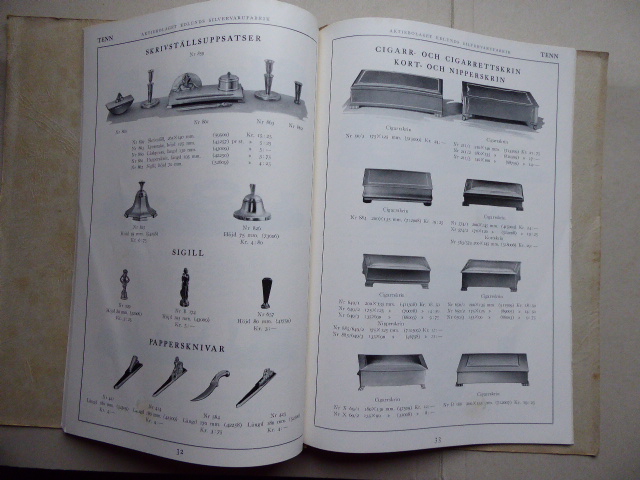
1936ref. 3559Stockholm. Caslon Press. 1936. 3 Blätter, 46, (1), 15, (1) Seiten. Mit zahlreichen Abbildungen. Originalbroschur.-Hefter. (Ein Blatt mit geringem Bildverlust durch Papierabrieb) 26x20 cm