15.859 resultados
ref. 121145aafFribourg, St-Paul, 1868, pt. in-8°, titre + 774 p. + 33 p. (index) (+1 errata), cachet ‘B. de Vevey Avocat Fribourg’, reliure en cuir d’époque, titre or au dos. Charnière à l’intérieure part. fendu.
ref. 131324aafFribourg, St-Paul, 1868, pt. in-8°, titre + 774 p. + 33 p. (index) (+1 errata) + 1 f. blanche, cachet ‘Marcel Cornu Huissier à Romont’, reliure en cuir originale, dos à 3 nerfs avec titre doré. étui ancien.
1899ref. 657101899 Saint-Etienne, Théolier, 1899, grand in 8° broché, 128 pages ; imprimé sur papier fort.
ref. ORD-9056Tome 4. Août à Octobre 1791. Paris. Imprimerie Impériale. 1806. In-8 (132 x 199mm) dos lisse basane brune, pièces de titre et de tomaison brun clair, fleurons et filets or, 2ff., 432 pages. Dos râpé; plats un peu épidermés, très bon état intérieur.
ref. ORD-9057Tome 8. 1er Brumaire au 18 Prairial an II. Paris. Imprimerie Impériale. 1807. In-8 (132 x 199mm) dos lisse basane brune, pièces de titre et de tomaison brun clair, fleurons et filets or, 2ff., 494 pages. Dos râpé, plats un peu épidermés, très bon état intérieur.
2008New English Original bdg. HC. Roy. 8vo. (24 x 17 cm). [3], 149 p. A bibliographical study of rare manuscripts and prints in the library of Istanbul Chamber of Commerce (ITO). Lonca'dan Oda'ya nadir eserler katalogu, 1882-1982: ITO Yayinlari.
ref. 1391543505.Gpaperback. Good. Access codes and supplements are not guaranteed with used items. May be an ex-library book. paperback
ref. 1396474528.Ghardcover. Good. Access codes and supplements are not guaranteed with used items. May be an ex-library book. hardcover
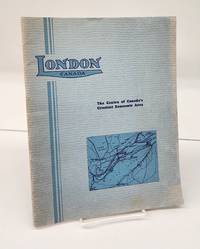
ref. 76277chLondon Ontario Canada: London Chamber of Commerce Book. Good. Soft cover. Original printed blue textured paper covers stapled booklet format. No date but circa 1922. Illustrated throughout. 4to. 48pp. Moderate soiling handling and rubbing to covers; several corners creased and centre gather loose from staples. Otherwise clean tight and unmarked. Very neat -- a sound and handsome copy. Illustrated. London Chamber of Commerce Paperback
1928ref. 157392London Ontario ca. 1928. Softcover. Good. 48 p. 28 cm. B&w illustrations. Stapled blue paper covers. Some soiling and fading to covers. Small tears in margins. Larger tear at bottom of p. 13. paperback
1894ref. 975F3London: The London Chamber of Commerce 1894 . First edition. Leather. Very Good. 9" by 6". Not Stated. A very scarce and beautifully bound volume of thanks from the London Chamber of Commerce to their treasurer George Sandeman signed by the president of the society and chairman of the council. A really rare item in the London Chamber of Commerce's striking full morocco binding with watered silk endpapers and gilt dentelles.This is a commemorative volume produced by the Chamber to formally record and present an expression of gratitude to Albert G Sandeman for his work as Treasurer to the Chamber.Elegantly bound and signed by the president Albert Pollet chairman of the council W. H. Williams and secretary Kennie B. Murray it reflects the Chamber"s civic and mercantile culture in late Victorian London where ceremonial resolutions addresses and votes of thanks were preserved as tokens of esteem. In the publisher's original full morocco binding. Light rubbing to back strip otherwise externally excellent. Watered silk endpapers and gilt dentelles. Internally text block somewhat tenderly held. Pages clean and bright. Very Good The London Chamber of Commerce hardcover
1992ref. 2092902140902012Not Available 1992. Soft Cover. Fine. Volume: 1 Not Available paperback
1929Book is in excellent condition with a little shelf wear only, light sunning to spine. Binding is solid and square, covers have sharp corners, exterior shows no blemishes, text/interior is clean and free of marking of any kind except for former owner's name inside cover and on title page. 251 pages, contents include: The foreshore, Midnight voyage, A shipping parish, The ship-runners, An Old Lloyd's register.
1892pp. x, 223, 24 [Publisher's catalogue] + folding map and two full page maps of London in various time periods. XLib stamp on title page. Engraved XLib bookplate. Text foxed. 8vo. Original full purple cloth binding. Faded gold lettered spine. Gilt decoration on front cover with embossed lettering in blind. Hardbound. Though XLib, this is still a nice copy. TRAVEL/1
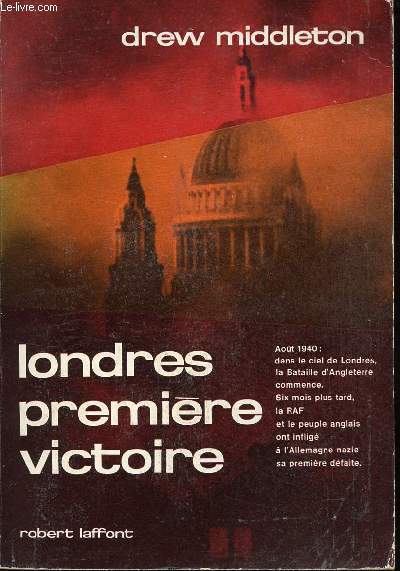
1961ref. R300263235Laffont. 1961. in-12. Broché. Etat d'usage, Couv. défraîchie, Dos satisfaisant, Intérieur frais. Paris, Laffont, 1961, in 12, broché, 306 pp.. . . . Classification Dewey : 380-Commerce, communications, transports
2010ref. DADAX1167253043Kessinger Publishing 2010-09-10. paperback. New. 6.00x1.47x9.00. Buy with confidence. Excellent Customer Service & Return policy. Kessinger Publishing paperback
ref. 112096850X.Gpaperback. Good. Access codes and supplements are not guaranteed with used items. May be an ex-library book. paperback
ref. 1167253043.Gpaperback. Good. Access codes and supplements are not guaranteed with used items. May be an ex-library book. paperback
1980ref. 159727London: Her Majesty's Stationery Office 1980. 60 Seiten. Quer 8° (17,5-22,5 cm). Orig.-Pappband. [Hardcover / fest gebunden].
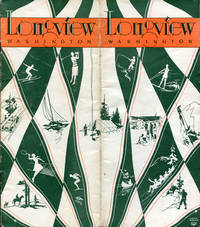
1929ref. 42454N. P.: Privately printed 1929. 1929. WASHINGTON. First edition. 8vo. 9 1/4" x 8" color pictorial wrappers folds to 9 1/4" x 4" n. p. 16 pp. including covers illustrated map. Sections on Longview Rainier National Park Mt. St. Helens and Spirit Lake Wonderland Longview Tourist park The Monticello Hotel major industries Lake Sacajawea golfing fishing etc. The Longview Columbia River Bridge to be completed in 1930 is the longest cantilever bridge in the U. S.- 1200 feet - and to be the second highest over a navigable stream in the nation at 195 feet. A section is provided that suggests that Longview is a wonderful place to live and suburban areas that adjoin Longview are also desirable. A full-page map of the area is on the rear cover. Light wear to the fore-edges and spine else a very good copy. Privately printed, [1929]. unknown
1801ref. 56123Great Britain. ca. 1801-1807. British Essay on the Importance of American Trade During the Napoleonic Wars An interesting but unattributed and apparently unpublished manuscript essay with a caption title reading: "Loose Memo. Respectg. American Commerce." The gist of the memo is set forth in the first sentence: "The Americans are at all times the best customers of G.B. - in peace they take 1/3 of her manufactured exports - in War much more." In addition to the eager American market for British goods the author notes that British goods are often trans-shipped via America to other markets where Great Britain would not normally have access thanks to America's neutral status: ".you have only to change the name of the manufacturer & the wants of the Colonists will shut their eyes on the origin of the fabric. I have known Liverpool ware ornamented with the Portrait of Geo. III passed as German manufactures." The author notes that while the understandable economic downturn during the Revolution and for several years after the "peace of '83" resulted in some problematic credit relations between the U.S. and the British market much has changed. "The industry & the enterprise of our countrymen aided no doubt by the enjoyment of a neutral position has enabled them to throw off their dependence on the British merchant or manufacturer. They now have a sufficient capital of their own and a very important proportion of their imports are now paid for in ready money or in bills at short sight." The author explains that American merchants are able to export their surpluses of their own production and surplus British goods to the Continental market and transfer that money directly to creditors in Great Britain with an added perk: "The result of this species of trade must be ruinous to France. She is drained of her wealth to enrich & invigorate her enemy." Finally the author provides a specific example of this favored trading relationship with regard cotton. At this time the author estimates that Great Britain imports three-fifths of all cotton from the United States - some 150000 bags of cotton annually weighing 250lbs. each. The U.S. buys back nearly one-third of all cotton goods manufactured in Great Britain yielding a net profit of over £2.5 million to Great Britain. The author adds that this ratio holds for almost all raw materials produced in the United States. This essay was almost certainly written during the earlier part of the Napoleonic Wars; the author cites an 1801 speech by Lord Grenville which helps narrow the date range and it seems unlikely the Embargo Act of 1807 had been passed yet. Regardless the essay promotes Anglo-American trade and cooperation at least insofar as it enriches Britain and cripples France at a time when other forces were driving the two countries toward war. Light tanning and soiling occasional ink smudges. Very good. unknown
1801ref. 56123Great Britain. ca. 1801-1807. British Essay on the Importance of American Trade During the Napoleonic Wars An interesting but unattributed and apparently unpublished manuscript essay with a caption title reading: "Loose Memo. Respectg. American Commerce." The gist of the memo is set forth in the first sentence: "The Americans are at all times the best customers of G.B. - in peace they take 1/3 of her manufactured exports - in War much more." In addition to the eager American market for British goods the author notes that British goods are often trans-shipped via America to other markets where Great Britain would not normally have access thanks to America's neutral status: ".you have only to change the name of the manufacturer & the wants of the Colonists will shut their eyes on the origin of the fabric. I have known Liverpool ware ornamented with the Portrait of Geo. III passed as German manufactures." The author notes that while the understandable economic downturn during the Revolution and for several years after the "peace of '83" resulted in some problematic credit relations between the U.S. and the British market much has changed. "The industry & the enterprise of our countrymen aided no doubt by the enjoyment of a neutral position has enabled them to throw off their dependence on the British merchant or manufacturer. They now have a sufficient capital of their own and a very important proportion of their imports are now paid for in ready money or in bills at short sight." The author explains that American merchants are able to export their surpluses of their own production and surplus British goods to the Continental market and transfer that money directly to creditors in Great Britain with an added perk: "The result of this species of trade must be ruinous to France. She is drained of her wealth to enrich & invigorate her enemy." Finally the author provides a specific example of this favored trading relationship with regard cotton. At this time the author estimates that Great Britain imports three-fifths of all cotton from the United States - some 150000 bags of cotton annually weighing 250lbs. each. The U.S. buys back nearly one-third of all cotton goods manufactured in Great Britain yielding a net profit of over £2.5 million to Great Britain. The author adds that this ratio holds for almost all raw materials produced in the United States. This essay was almost certainly written during the earlier part of the Napoleonic Wars; the author cites an 1801 speech by Lord Grenville which helps narrow the date range and it seems unlikely the Embargo Act of 1807 had been passed yet. Regardless the essay promotes Anglo-American trade and cooperation at least insofar as it enriches Britain and cripples France at a time when other forces were driving the two countries toward war. Light tanning and soiling occasional ink smudges. Very good. unknown books