16.866 resultados
ref. 1903091128.Gpaperback. Good. Access codes and supplements are not guaranteed with used items. May be an ex-library book. paperback
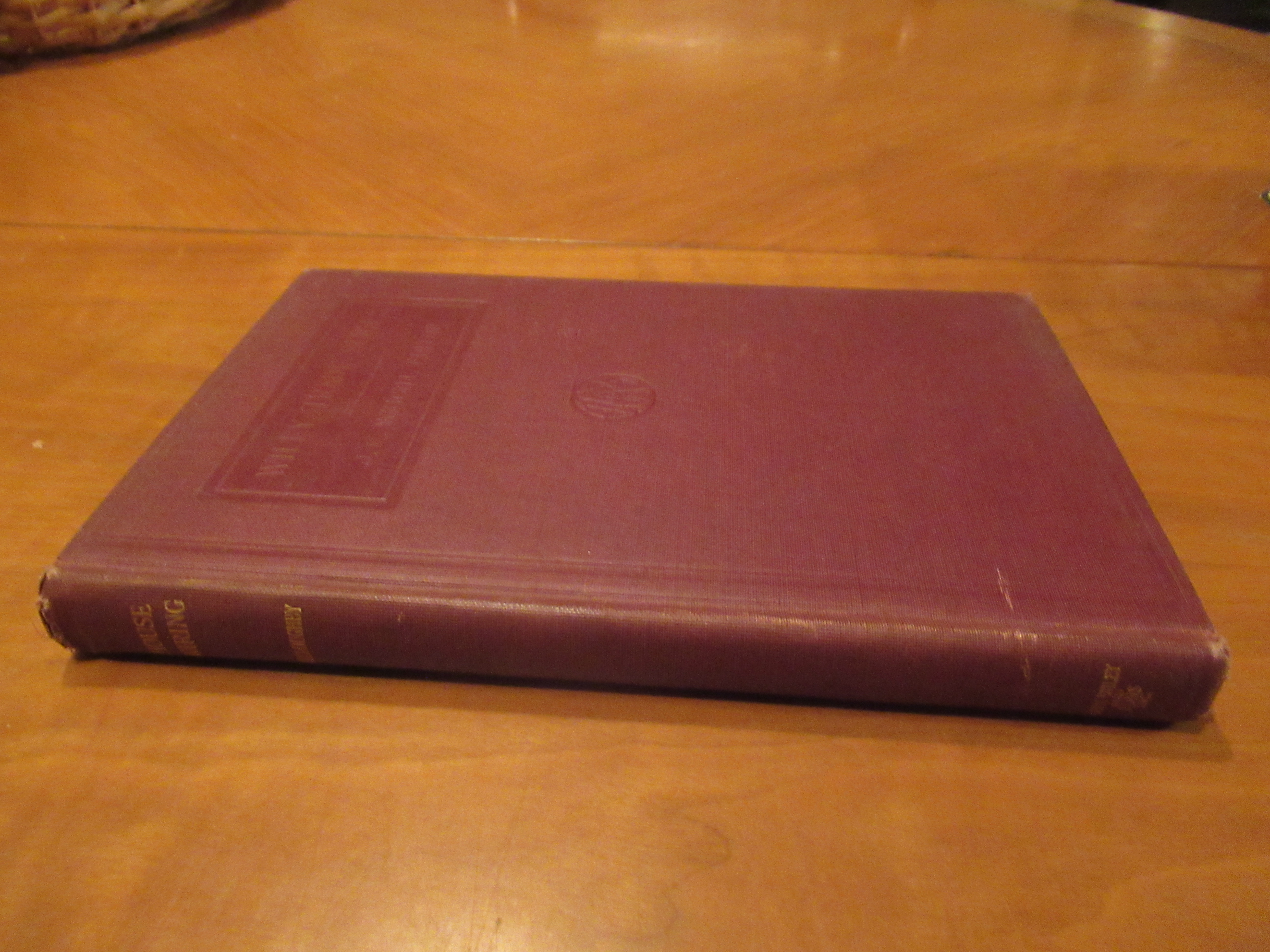
1931ref. 90295Washington DC: United States Government Printing Office 1931. Presumed First Edition First printing. Wraps. Good. iv 85 3 pages. Illustrated front cover. Footnotes. Illustrations photographs and drawings/diagrams. Tabular Data. Appendix. Bibliography. Check List. Cover has some tears wear and soiling. Foreword by Axel H. Oxholm Director of the National Committee on Wood Utilization. The contents address Factors to Consider First by Nelson S. Perkins; Judging the Exterior Construction; The Plan; Structural Features and Mechanical Installations. Axel H. Oxholm was also at one time chief Lumber division Bureau of foreign and domestic commerce. United States Department of commerce. Nelson Secor Perkins 14 Apr 1894 - 1 Aug 1985 was a noted author and authority and is regarded as one of the key pioneers in the development and use of plywood. The National Committee on Wood Utilization was organized by Herbert Hoover as Secretary of Commerce and comprised about 200 members representing manufacturers distributors and consumers of forest products. Its object was to work for closer utilization of the U.S.'s timber resources. The committee whose headquarters were in the Department of Commerce Washington D.C. worked in close cooperation with a number of official and private organizations notably the Bureau of Standards of the Department of Commerce and the Forest Products Laboratory of the Forest Service Department of Agriculture. President Roosevelt by Executive Order 6179-B Abolished of the National Committee on Wood Utilization. Dated June 16 1933 the Executive Order stated "There is hereby abolished The National Committee on Wood Utilization. All the property of every kind files and records etc. belonging thereto are hereby transferred to the custody of the Secretary of Commerce for such disposition as he may determine; provided that if the forest products industries desire to continue in their own quarters and at their own expense the work heretofore performed by the National Committee on Wood Utilization the Secretary of Commerce may permit them to have access to or the use of the records and files of the Committee." Plywood is a composite material manufactured from thin layers or "plies" of wood veneer that have been stacked and glued together. It is an engineered wood from the family of manufactured boards which include plywood medium-density fibreboard MDF oriented strand board OSB and particle board or chipboard. All plywoods bind resin and wood fibre sheets cellulose cells are long strong and thin to form a composite material. The sheets of wood are stacked such that each layer has its grain set typically see below perpendicular to its adjacent layers. This alternation of the grain is called cross-graining and has several important benefits: it reduces the tendency of wood to split when nailed at the edges; it reduces thickness swelling and shrinkage providing improved dimensional stability; and it makes the strength of the panel consistent across all directions. There is usually an odd number of plies so that the sheet is balanced that is the surface layers have their grains set parallel to one another. This balance reduces warping. Because plywood is bonded with grains running against one another and with an odd number of composite parts it has high stiffness perpendicular to the grain direction of the surface ply. Smaller thinner and lower-quality plywoods may only have their plies layers arranged at right angles to each other. Some better-quality plywood products by design have five plies in steps of 45 degrees 0 45 90 135 and 180 degrees giving strength in multiple axes. United States Government Printing Office paperback
1963pp. x, 262. Sm. 4to. Original full cloth binding. Original dust jacket, soiled with remnants of price sticker. Book Club Edition? ECON/BUS BOX 1
1910ref. 6626New Orleans; New York: The Board of Trade; Printed by H. R. Elliot & Co. Printers and Embossers 1910. Stapled booklet 10.25 x 15.25 cm. 14 unnumbered leaves; printed text decorated with red borders on rectos only. Cover title: Recipes for Cooking Rice. Author information inferred from external evidence. Printer from rear panel of wrappers. ~ Evident FIRST EDITION. A promotional publication designed “to create a greater interest” in a foodstuff that had yet to become a staple in many parts of the United States. With a dozen recipes including Gumbo Soup Jambalaya Belle Calas fritters Rice Pudding Riz au Lait. ~ The phrase “Louisiana Rice Exhibit” can be found in reference to displays in the agricultural halls of world’s fairs – the World’s Columbian Exposition Chicago 1893 for instance as well as the Louisiana Purchase Exposition St. Louis 1904 – but in the event the phrase is better understood not as an installation but as a program. The New Orleans Board of Trade had indeed exploited opportunities to educate the public by such means cf A. C. Cantley “Rice Display by Louisiana at World's Fair of 1904” The Planter and Sugar Manufacturer 32 no. 7 February 13 1904 page 121 but it would have been highly unlikely for booklets such as How to Cook Rice to have been produced specifically for them without bearing any mark of the association. Moreover Louisiana Rice Exhibits so-named were also staged at parish fairs livestock shows even horse races. Their visual aspect was meant to entrance and amuse. “The New Orleans Board of Trade made a very splendid exhibit” a trade paper reported “at the National Farm and Livestock Show with a display of all the products it handles with the centerpiece a working model of a rice mill” “Current Rice News Notes” The Rice Journal and Southern Farmer 19 no. 12 December 1916 page 33. ~ Founded in 1880 the Board itself coordinated among many other activities rice shipments from mills in Louisiana and to a smaller extent from eastern Texas and Arkansas too. In this case their printing contract with H. R. Elliot & Co. places the publication later than the Chicago Exposition as this form of name was not in use until after 1900 “The Manufacturing Stationer” Walden’s Stationer and Printer 31 Spring 1909 page 16. The date of issue proposed here rests on reports that the Board of Trade distributed booklets in or perhaps slightly before 1910 a note for example from the American Poultry World recorded that recipes from the Louisiana Rice Exhibit of New Orleans had been received 1 no. 5 March 1910 pages 354-355. ~ Interior clean and bright. Stapled in ivory wrappers with gilt illustration of rice plants overseen by a pelican in honor of the Pelican State. Near fine. OCLC locates four copies; Uhler 252; New Orleans Culinary History Group page 152; not in Bitting Brown or Cagle. [The Board of Trade; Printed by] H. R. Elliot & Co., Printers and Embossers paperback books
1910ref. 6626New Orleans; New York: The Board of Trade; Printed by H. R. Elliot & Co. Printers and Embossers 1910. Stapled booklet 10.25 x 15.25 cm. 14 unnumbered leaves; printed text decorated with red borders on rectos only. Cover title: Recipes for Cooking Rice. Author information inferred from external evidence. Printer from rear panel of wrappers. ~ Evident FIRST EDITION. A promotional publication designed “to create a greater interest” in a foodstuff that had yet to become a staple in many parts of the United States. With a dozen recipes including Gumbo Soup Jambalaya Belle Calas fritters Rice Pudding Riz au Lait. ~ The phrase “Louisiana Rice Exhibit” can be found in reference to displays in the agricultural halls of world’s fairs – the World’s Columbian Exposition Chicago 1893 for instance as well as the Louisiana Purchase Exposition St. Louis 1904 – but in the event the phrase is better understood not as an installation but as a program. The New Orleans Board of Trade had indeed exploited opportunities to educate the public by such means cf A. C. Cantley “Rice Display by Louisiana at World's Fair of 1904” The Planter and Sugar Manufacturer 32 no. 7 February 13 1904 page 121 but it would have been highly unlikely for booklets such as How to Cook Rice to have been produced specifically for them without bearing any mark of the association. Moreover Louisiana Rice Exhibits so-named were also staged at parish fairs livestock shows even horse races. Their visual aspect was meant to entrance and amuse. “The New Orleans Board of Trade made a very splendid exhibit” a trade paper reported “at the National Farm and Livestock Show with a display of all the products it handles with the centerpiece a working model of a rice mill” “Current Rice News Notes” The Rice Journal and Southern Farmer 19 no. 12 December 1916 page 33. ~ Founded in 1880 the Board itself coordinated among many other activities rice shipments from mills in Louisiana and to a smaller extent from eastern Texas and Arkansas too. In this case their printing contract with H. R. Elliot & Co. places the publication later than the Chicago Exposition as this form of name was not in use until after 1900 “The Manufacturing Stationer” Walden’s Stationer and Printer 31 Spring 1909 page 16. The date of issue proposed here rests on reports that the Board of Trade distributed booklets in or perhaps slightly before 1910 a note for example from the American Poultry World recorded that recipes from the Louisiana Rice Exhibit of New Orleans had been received 1 no. 5 March 1910 pages 354-355. ~ Interior clean and bright. Stapled in ivory wrappers with gilt illustration of rice plants overseen by a pelican in honor of the Pelican State. Near fine. OCLC locates four copies; Uhler 252; New Orleans Culinary History Group page 152; not in Bitting Brown or Cagle. [The Board of Trade; Printed by] H. R. Elliot & Co., Printers and Embossers paperback
ref. 2111902158406048Japanese Standards Association N.A. Soft Cover. Fine. Number of pages: 267p Size: 21cm Japanese Standards Association paperback
ref. 0881441910New. hardcover. New. Satisfaction Guaranteed or your money back. hardcover
ref. 0881441902New. hardcover. New. Satisfaction Guaranteed or your money back. hardcover
1964ref. 014525London John Calder 1964 In-8 Reliure de l'éditeur
1941ref. ZB322135Washington: 1941. Price HAS BEEN REDUCED by 10% until Monday Oct. 26 weekend SALE item 22 pp. issued as Information Bulletin for Inventors Engineers Scientists Technicians and Others Desirous of Aiding the National Defense Number 2; very good in paper wrappers. - If you are reading this this item is actually physically in our stock and ready for shipment once ordered. We are not bookjackers. Buyer is responsible for any additional duties taxes or fees required by recipient's country. Washington: unknown
1988312 pages. Index. "An inquiry into the inter-relations of Europe and Africa from the fifteenth century to the end of the colonial period... Examines African growth before the coming of the Europeans, using seven regions as concrete examples, and treats the European slave trade as a basic factor in African underdevelopment and technical stagnation... Places the awesome responsibility of redevelopment in the hands of Africans... Author was assassinated by agents of the Burnham government in 1980 following a year of political and industrial agitation." - from back cover. Prior owner's name inside front cover else unmarked with moderate wear. Sound copy. Book
ref. 1333217102.Gpaperback. Good. Access codes and supplements are not guaranteed with used items. May be an ex-library book. paperback
ref. 0267394225.Ghardcover. Good. Access codes and supplements are not guaranteed with used items. May be an ex-library book. hardcover
1925ref. 005924New York: John Wiley & Sons Inc. 1925. First Edition . Maroon Cloth. Very Good/No Dust Jacket. 9 1/4" High. Profusely Illustrated with Charts Diagrams and Photographs. 219 Clean Unmarked Pages. Red Cloth Gilt. First Printing With 1925 Date On Title Page. No Inscriptions. Corners And Bottom Of Spine Bumped. Top Of Spine Slightly Frayed. John Wiley & Sons, Inc. hardcover
1990ref. mon0000365036Stationery Office Books 07/03/1990 00:00:01. paperback. Good. in x in x in. Ex-library book usual marking. Clean copy in good condition. Stationery Office Books paperback
1983ref. RO30116042COLLECTIF. 1983. In-12. Broché. Bon état, Couv. convenable, Dos satisfaisant, Intérieur frais. Non paginé. Avec quelques photographies en noir et blanc de fusis.. . . . Classification Dewey : 380-Commerce, communications, transports
1982ref. RO20082188CHEZ L'AUTEUR. 1977-1982. In-12. Broché. Bon état, Couv. convenable, Dos satisfaisant, Intérieur frais. Catalogues illustrés de nombreuses photos couleurs et noir et blanc.. . . . Classification Dewey : 380-Commerce, communications, transports
1925ref. 51126Hot Springs National Park: Privately printed 1925. 1925. First edition. 10 3/4" x 8" in colorful pictorial wrappers. 24 pp. Pritned in green and black. Illustrations. Along top border of each page is an illustration printed in green of individuals involved in various activities. At toe of most pages is typed "Hot Springs Medical Waters are Owned and Controlled by the United States Government." Information on First National Park hotels and motels the bath houses golf and other outdoor activities as well as information on KTHS Broadcasting Station that "broadcasts to the world daily programs of selected entertainment and the interesting story of Hot Springs' recognized advantages." Black and white photographs throughout to include pictures of hotels bath houses individuals involved in various outdoor activities etc. Light soiling to wrappers along with light wear to extremities. Very good. Privately printed, 1925. unknown
2019ref. 029435Antwerpen 2019 Galerie Ronny van de Velde Soft cover 1st Edition
2011Upper corners slightly bumped else fine. ; Les horrea, édifices de stockage et de rangement, font partie intégrante des circuits d'approvisionnement du monde méditerranéen antique. Leur utilisation relève d'une nécessité économique et politique et renvoie à un contrôle des ressources exercé à différentes échelles, selon des logiques différenciées et pour des durées plus ou moins longues. À travers l'étude des différents types d'entrepôts de la période romaine, le présent ouvrage se propose d'analyser les logiques du stockage et les réseaux de distribution et de redistribution dans le monde méditerranéen. Il porte principalement sur la péninsule Ibérique, tout en offrant des points de comparaison avec l'Italie, l'Orient et l'Afrique. Il fournit ainsi un premier bilan sur les structures de stockage de l'Hispanie et ouvre également des perspectives plus larges sur le fonctionnement de l'économie et le rôle de l'État dans le monde romain. ; Collection De La Casa De Velázquez Volume 125; 352 pages
1953ref. R300263150Martel. 1953. in-8. Broché. Bon état, Couv. convenable, Dos satisfaisant, Intérieur frais. Paris, Martel, 1953, in 8, broché, photos, 238 pp.. Avec Jaquette. . . Classification Dewey : 380-Commerce, communications, transports
1987ref. GITj741paris Publications de la Sorbonne 1987. 2 volumes in-8 XVI 344pp et XVIII 325pp. Cartonnage de l'éditeur de papier glacé blanc, 1er plat illustré. Quelques illustrations. Brunissure sur la tranche du 1er volume sans déborder sur le texte. Exemplaire en bon état et complet. (BAL 24)
1969ref. RO80244053Dunod. 1969. In-12. Broché. Bon état, Couv. légèrement passée, Dos satisfaisant, Intérieur frais. 135 pages. Quelques photos monochromes dans le texte. Quelques planches publicitaires hors texte.. . . . Classification Dewey : 380-Commerce, communications, transports
1968ref. RO80244052Dunod. 1968. In-12. Broché. Bon état, Couv. légèrement passée, Dos satisfaisant, Intérieur frais. 143 pages. Quelques photos monochromes dans le texte. Quelques planches publicitaires hors texte.. . . . Classification Dewey : 380-Commerce, communications, transports
1967ref. RO80244047Dunod. 1966-1967. In-12. Broché. Bon état, Couv. légèrement passée, Dos satisfaisant, Intérieur frais. 135 pages. Quelques photos monochromes dans le texte. Quelques planches publicitaires hors texte.. . . . Classification Dewey : 380-Commerce, communications, transports