[Trade Catalogue]Biblio.com

8 139 résultats
1886réf. 82608Scranton: The Company 1886. First Edition. Hardcover. Very Good. Scranton The Company 1886. Quarto 272 pages extensively illustrated with engravings including 54 full-page plates of locomotives plus 2 frontispieces bird's-eye views of the two manufacturing plants. Original blind-decorated black cloth lettered in gilt on the spine and attractively so on the front panel; cloth a little bumped and rubbed at the extremities; minor professional restoration to the head and foot of the spine with new endpapers; minor worming and tidemarks to some top corner tips; trifling signs of use and age; an excellent copy with a cancelled Art Gallery of South Australia bequest stamp on the verso of the title page. The Company hardcover
2000réf. Manohar-9780521801010Cambridge University Press 2000. Hardcover. New. Cambridge University Press hardcover
2000réf. Manohar-9780521780957Cambridge University Press 2000. Hardcover. New. Cambridge University Press hardcover
2000réf. Manohar-9780521801010Cambridge University Press 2000. Hardcover. New. Cambridge University Press hardcover
2000réf. Manohar-9780521780957Cambridge University Press 2000. Hardcover. New. Cambridge University Press hardcover
1953réf. 2091502135419069The Electric Association of Japan 1953. Soft Cover. Fine. Number of books: 1 The Electric Association of Japan paperback
1937réf. 2091502135501205Korea Sinuiju Chamber of Commerce 1937. Soft Cover. Fine. Number of pages: 107p151p Size: B5 size 19x26 cm Number of books: 2 Korea Sinuiju Chamber of Commerce paperback
1939réf. 2091502135501149Jinzhou Chamber of Commerce 1939. Soft Cover. Fine. Number of pages: 130p 119p Size: A5 size 16x23 cm Jinzhou Chamber of Commerce paperback
1813réf. 1010941813. Strasbourg J. Jph. Heiligenthal 1813. 86 full-page engraved plates printed on the recto only engraved title plates 2 -86. Folio. Original dark green paper boards rubbed. Edges stained yellow. Trade catalogue of Jacques Joseph Heiligenthal 1785 - 1870 successor of M. Beunat in Strassbourg showing hundreds of ornaments for interior decoration. c.f. Metropolitan Museum of Art 59.501. hardcover
2009réf. Adhya-9780521514163CAMBRIDGE UNIVERSITY PRESS 2009. HB. New. CAMBRIDGE UNIVERSITY PRESS hardcover
2009réf. Adhya-9780521514163CAMBRIDGE UNIVERSITY PRESS 2009. HB. New. CAMBRIDGE UNIVERSITY PRESS hardcover
1983réf. 2080402107100702Iwasaki bijutsusha 1983. Soft Cover. Fine. The book is in fine condition. Iwasaki bijutsusha paperback
1883réf. 236859Kansas City Missouri: Press of Ramsey Millett & Hudson 1883. Illustrated with 2 full-page Engravings. 76 pp. 1 vols. 8vo. Original wrappers printed in red and black. Vertical crease to front wrap and a few corners previously turned down a few prices realized in pencil. Very good. Illustrated with 2 full-page Engravings. 76 pp. 1 vols. 8vo. Over sixty-five Galloway bulls and heifers on the block giving detailed pedigree. With an introduction by Matthews explaining the his interest in the breed. Not in OCLC Press of Ramsey, Millett & Hudson unknown
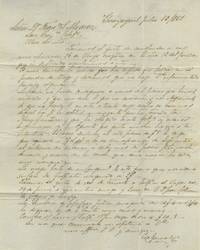
1851réf. BK0071Guayaquil Ecuador 1851. Folded manuscript letter in Spanish with an earlier communication dated June 13 copied and headed "Duplicado" followed by a second communication dated July 18 on the same folded sheet. Integral address panel to "Sr. Dn. Fran.co S. Alvarez / San Francisco / Alta California" with oval "FORWARDED BY / ZACHRISSON NELSON & CO. / PANAMA" handstamp and large "20" due marking. 2 pp. 8 ¼ x 10 ¼ inches. Old folds with several small losses and separations along folds and margins only minimally affecting the text. A detailed commercial letter from the Guayaquil mercantile house V. Gómez & Ca. to Francisco Salvador Ãlvarez Pérez the prominent Valparaíso merchant then engaged in business in San Francisco during the opening years of the California Gold Rush. Ãlvarez belonged to one of Valparaíso's established commercial families and maintained extensive Pacific trading interests. He would shortly afterward serve as Chilean consul in San Francisco. In the letters Gómez & Co. supply Ãlvarez with current market information from Ecuador. They also apparently executed purchases on behalf of his Valparaíso interests. The first communication dated June 13 and recopied here as a duplicate reports extensively on the Guayaquil commodity market. Gómez & Co. describe the year's cacao crop as exceptionally poor discuss newly arrived cacao from Machala and the prices being asked for it and report purchases and quantities associated with Ãlvarez's business. They also give information on barley Jipijapa Panama hats exchange rates and other current prices. The July 18 continuation connects those commodity markets directly to the political crisis then unfolding between Ecuador and New Granada. Explaining why barley cannot be purchased below a previously quoted price Gómez & Ca. cite the fact that threats from New Granada had compelled the Ecuadorian government to form an army thereby taking many workers away from industry "la actitud amenazante que ha tomado la Nueva Granada y que ha obligado a este Gobierno a ordenar la formación de un Ejército que quite muchos brazos a la industria". The letter is dated July 18 1851 amid the military and political crisis of that summer and just one day after the Guayaquil garrison proclaimed José María Urbina Supreme Chief. The integral address leaf preserves the letter's route northward through Panama in the hands of Zachrisson Nelson & Co. one of the forwarding firms handling correspondence in the early California traffic. An interesting document of the commercial infrastructure connecting South America with California in 1851 with identifiable firms and recipients content regarding Gold Rush-era Pacific trade contemporary commentary on Ecuadorian mobilization and Panama forwarding marks. . unknown
1851réf. 53844London Harrison and Son 1851. Folio. In contemporary half cloth with the original blue printed front wrapper pasted on to front board. Wear to extremities and front hindge a bit weak. One small stamp to front board and two small paper labels pasted on to pasted down front end-paper. Internally very fine and clean. xxiii 1 886 pp. 1 folded map. The Rare British parliamentary papers and correspondence with local agents on the slave trade in Africa Austria Belgium Brazil France Persia Peru Portugal Spain Tripoli Turkey United States and Venezuela containing amongst several other issues a lengthy report from James Hudson Brazil to Palmerston on the bourgeoning sentiments in Brazil towards abandoning the slave trade. An act which Palmerston instructs James Hudson to fight against.Eusébio de Queiróz Act Law 581 of 4 September 1850 ended up criminalizing the maritime slave trade as piracy and imposed other criminal sanctions on the importation of slaves in Brazil. hardcover
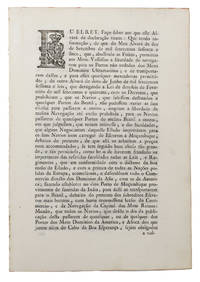
1772réf. ABC_48853Lisbon 1772. Folio ca. 29 x 20 cm. Na Regia Officina Typografica Disbound and subsequently mounted in a modern black stiff paper folder with a printed label mounted on the front wrapper. With a large decorated woodcut initial E incorporating the Portuguese royal coat of arms. 3 1 blank pp. Very rare first issue of two of a late 18th-century decree by the Portuguese King José I 1714-1777 dealing with difficulties in the transportation of enslaved people from Mozambique to Brazil. This text dated 12 December 1772 and signed Rey King at the end is also signed by the notorious Portuguese nobleman and diplomat Marquez de Pombal. Sebastião José de Carvalho e Melo 1st Marquis of Pombal 1699-1782 who was the Secretary of State of the Kingdom during the reign of Dom José I in the period of 1750-1777. It is concluded with a formal text dated 18 December 1772 and signed by João Baptista de Araújo a senior officer of the Secretariat of State.In 1761 Marquez de Pombal prohibited the importation of enslaved people in Portugal and Portuguese India not for humanitarian reasons but because they were needed for labour in Brazil. He stimulated the trade of mostly African enslaved people for that colony and with his support two companies for slave trade were founded the Companhia Geral de Comércio do Grão-Pará e Maranhão and the Companhia Geral de Comércio de Pernambuco e Paraíba. Both companies were privileged and had a monopolistic character. Their lists of shareholders included many Portuguese noblemen and clergy. Between 1757 and 1777 more than 25000 enslaved people were imported to Pará and Maranhão from West African ports.The two issues can be identified by their catchwords on p. 1: issue one shows the catchword as a vol- that catchword was changed in the second issue to a.The inner margin shows some signs of the previous binding. Otherwise in very good condition.l Gauz Portuguese and Brazilian books in the JCB 772/1; WorldCat 1045359449 3 copies; cf. Porbase 2301650 and no copies. unknown
réf. 78996New York NY National Blank Books 1911. 8vo 23.5 x 14.8 cm.liv 192 pp.; numerous full-colour illustrations. Publisher's full cloth. Spine with gilt title; front board with gilt and black printed panel gilt armorial company's devise and gilt number 22; rear board with gilt armorial company's device. Printed endpaper; book block with rounded corners and marbled edges. = A rare excellently preserved catalogue containing endless variety in pass books memorandum books buyers books manuscript books miniature blanks open end memorandum books scrap books counter order books invoice books printed cash books letter copying books trial balance books etc. as well as luxurious half bound and full bound blank books all manufactured by a company in the town of Holyoke Massachusetts known for its paper mills and a sales office in Duane Street Lower Manhattan. "The National Blank Book Company originally began as a small New York City outfit in 1843 known as the J.G Shaw Company named for its founder. The company manufactured quality blank book products on a small scale. As a consequence of the 1873 Wall Street panic Shaw became indebted to Massachusetts papermakers William Whiting of Holyoke and Levi L. Brown of Adams. In 1875 Shaws company reorganized in New York with Whiting and Brown as partners. Shaw withdrew from the firm by 1877 but remained a part of the industry for many years. In 1880 Whiting and Brown officially changed the companys name to National Blank Book. A year later the factory moved to Cabot Street in Holyoke MA. It was not until 1892 that the main offices also moved to Holyoke." Holyoke Library online. 1967 National Blank Book merged with Dennison a similar company to become Dennison-National. In turn in 1990 Dennison-National merged with Avery. Today Avery Dennison is a global materials science and digital identification solutions company. Catalogue unmarked clean the binding excellent with after 115 years just a few very minor signs of handling. hardcover
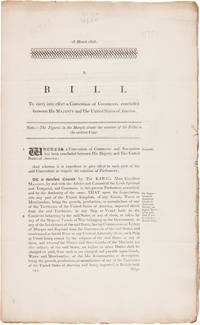
1816réf. 39129London: Ordered by the House of Commons to be Printed March 18 1816. Trade Restored After the War of 1812 Official Parliamentary draft printing of a commercial agreement between the United Kingdom and the United States passed just over a year after the signing of the Treaty of Ghent. The convention of commerce establishes that the same import and export duties be applied to goods carried by American and British ships in direct British-American commerce. Duties on and bounties for prize ships and goods are also put on the same terms. This version of the bill would have been printed while the question was being considered by Parliament. Not in Kress or TPL and not listed on OCLC. 2pp. plus docket title printed on verso of second leaf. Folio. Early horizontal folds. Near fine. Untrimmed. unknown
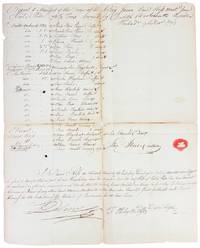
1792réf. 31794Philadelphia: s.i. 1792. Very Good. Philadelphia: 1792-93. Single folded sheet 41.5 x 33.5cm; report in manuscript verso filled nearly to completion recto a quarter filled. Signed by Captain David Ross and two other parties; docket dated 1793 signed by Inspector Jeremiah Simmons. Stock exceedingly brittle with shallow chipping long closed tears along folds with old archival mending age-toning and light soiling as well as contemporary wax seal remnants. Overall a Very Good and legible survival. Cargo report executed in manuscript and dated November 9th 1792 listing materials shipped from Port-de-Paix Saint-Domingue modern day Haiti to Philadelphia for the firm Dutilh & Wachsmuth. The date places this report in the early days of the Haitian Revolution following the August 1791 enslaved peoples' revolt. The island was a vital source of commercial interests to Philadelphia and the burgeoning revolution was at the forefront of everyone's mind making this voyage and the survival of associated documents all the more significant. Dun cites one contemporary account "'No business is going on here' one letter told 'as every one is taken up with meetings committees and arming themselves.'" Dun p. 484. Goods delivered include wine sugar and coffee and were delivered to Dutilh and a handful of others including Captain Ross himself who received a hogshead of molasses. Ross eventually rose to the rank of Continental Navy Lieutenant during the Quasi-War with France and is remembered for commanding the privateer Belvedere guiding her back to Dover after an engagement with a French brig "leaving Belvedere with 50 round shot in her hull and her sails and rigging further shredded." References: James Alexander Dun "What Avenues of Commerce Will You Americans Not Explore! Commercial Philadelphia's Vantage onto the Early Haitian Revolution." The William and Mary Quarterly July 2005 Third Series Vol. 62 No. 3 pp. 473-504 See also the Destroyer History Foundation website. [s.i.] unknown
1850réf. 61392Philadelphia PA: The company 1850. Engraved broadside 14 x 12 inches text executed in several sizes and styles of lettering. Krider was a long-time Philadelphia sporting goods dealer and sportsman and the author of Krider's Sporting Anecdotes 1853. Henderson p. 158 dating the broadside "ca. 1850". Augustus Kollner has been identified as the engraver. OCLC locates four copies Clements American Antiquarian Society Hagley Museum Library of Congress. Margins a little browned several short tears into margins but a very good example of a handsome sporting exhibition broadside. #8465. The company unknown
1880réf. 237851880. Ceylon colonial photo archive depicting tea cultivation estate labor transportation and urban life circa 1880s to 1910s documenting the plantation economy that made the island one of Britain's principal sources of tea as British merchants shifted the enormous domestic tea market away from China and toward production within the Empire. Coffee leaf rust appeared in Ceylon in 1869 and spread rapidly through the island's coffee districts precipitating the collapse of the crop that had dominated the colonial export economy and accelerating planters' conversion of the central highlands to tea. James Taylor had established commercial tea cultivation at Loolecondera Estate near Kandy in 1867 and the new industry expanded rapidly as coffee failed; by 1900 some 380000 acres in Ceylon were planted in tea. By 1879 the results showed that in more than 70 percent of tea sold in London still came from China while by 1900 China supplied only about 10 percent and black teas from British controlled India and Ceylon constituted the bulk of the market. Photo archive of albumen and silver gelatin photographs and photographic postcards ranging from approximately 3½ x 5 to 4 x 6 inches Ceylon circa 1880s to 1910s. Tea production forms the strongest body of imagery. Women and men stand among densely planted tea bushes or work through rows of plants with women carrying the large woven baskets used to collect leaves; individual and group views are captioned "Tea plucker" "Tea picking Ceylon" "Pruning tea Kandy" and in French "Cueillette du thé à Ceylan." One Skeen & Co. Colombo card numbered 84 and captioned "Tea plucker" isolates a woman at work with a large basket strapped behind her while another shows a large group of workers seated with baskets and gathered tea in a plantation clearing. A card captioned "Estate coolies Ceylon" depicts an estate employee in European dress standing with women and a child outside a thatched dwelling preserving in its printed terminology the racial and labor classifications through which plantation workers were presented to contemporary consumers of colonial imagery. Other photographs move from plantation production into the roads vehicles and cities of colonial Ceylon: rickshaw pullers pose with European passengers and beside their vehicles; a street scene records "Native town Kandy Ceylon"; Colombo appears in views of the "Colpetty Road near Galle Face Colombo" a crowded procession captioned in French "Colombo départ des troupes Anglaises" and a civic monument among palms. Another postcard depicts "Royal visitors leaving Ceylon" while a country road scene shows pedestrians carts and roadside activity. Skeen & Co. one of the principal commercial photographic firms operating from Colombo in the late nineteenth and early twentieth centuries is identified on several cards but no single photographer can be assigned to the archive as a whole. The tea scenes record the labor at the center of one of the fastest agricultural conversions in the nineteenth century British Empire. Coffee rust Hemileia vastatrix was first observed in Ceylon in 1869 and within little more than a decade had destroyed the commercial basis of the coffee plantation system; tea already demonstrated commercially by Taylor replaced it across much of the highlands. Ceylon tea exports to Britain rose from only 282 pounds in 1875 to more than 4.3 million pounds in 1885 while the plantation landscape expanded until almost all former coffee districts had been replanted with tea during the 1890s. That expansion depended on a large year round plantation workforce much of it composed of Tamil laborers brought from southern India and on the colonial infrastructure that connected the highlands with Colombo and overseas markets. Roads and the railway between Kandy and Colombo had initially served the coffee economy and could be redirected toward tea after the blight while Colombo developed as the commercial and shipping center through which the crop entered imperial markets. The archive therefore records several stages and social spaces of the same colonial economy from plucking and pruning in the highlands to estate communities road transport Kandy and the metropolitan port city of Colombo while the postcards themselves show how plantation labor and colonial development were converted into commercial images for circulation beyond the island. Light to moderate surface wear toning occasional fading and creasing with some photographs showing age related discoloration and edge wear. Overall in good condition. A visual record of the plantation labor and colonial infrastructure behind Ceylon's transformation from a failed coffee economy into a major tea producer that helped Britain replace Chinese tea with supplies produced under imperial control. unknown
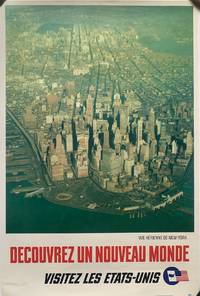
réf. 339716Print. Color offset lithograph. Sheet measures 30" x 20". The "Decouvrez un Nouveau Monde - Visitez les Etats-Unis" poster series was produced from 1960-1963 by the United States Department of Commerce to promote American culture and travel to French-speaking audiences. This poster features an aerial view of lower Manhattan showing the Battery and many docks and piers. unknown
2003réf. CBS-9780521788915Cambridge University Press 2003. New. Cambridge University Press unknown
2003réf. CBS-9780521788908Cambridge University Press 2003. New. Cambridge University Press unknown
2003réf. CBS-9780521788915Cambridge University Press 2003. New. Cambridge University Press unknown