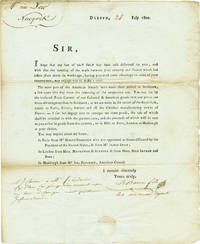
1801réf. 44263Dieppe France. July 1801. Rebuilding Trade After the Quasi War An interesting and rare artifact of the attempt to rebuild French-American trading relations in the wake of the so-called "Quasi-War" between the two nations. The Quasi-War was an undeclared conflict between the United States and France during John Adams' administration in the late 1790s manifested mostly in naval engagements between the two nations. The war wreaked havoc on American commerce with France which only began to be rebuilt with the Convention of 1800. The present printed circular was created by "Le Baron fils" the former American consular agent in Dieppe and was apparently sent to a variety of American merchants encouraging them to once again send shipments of American goods to that French port. Not much is known of Le Baron fils though he did correspond with Benjamin Franklin and he served as the American consular agent at Dieppe for several years. This copy of Le Baron fils' circular was sent to prominent New York merchant and politician Nicholas Low and is dated in manuscript July "24." It is addressed to Low in manuscript on the fourth page and his name is also written in the upper left corner of the circular. In the printed text Le Baron fils states: "you may see by the inclosed Price Current of our Colonial & American goods not present here that our prices are more advantageous than in Bordeaux as we are more in the center of the Republick nearer to Paris Rouen Amiens and all the Chiefest manufacturing towns of France." Low is encouraged to "consign me some goods the sale of which shall be attended to with the greatest care and the proceeds of which will be sent to you either in goods from this country or in Bills on Paris London or Hamburgh at your choice." The printed text concludes by giving the names of the American consuls at Paris and Hamburg as well as two English trading houses as references to Le Baron fils' character. Le Baron fils adds in manuscript: "Mr. J. Clason & Mr. C. Codwise of yr place can give you an account upon my house in case you want quick information." Old folds some edge wear small tears at edges of fold fourth page torn from wax seal. Very good overall. unknown books
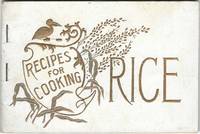
1910réf. 6626New Orleans; New York: The Board of Trade; Printed by H. R. Elliot & Co. Printers and Embossers 1910. Stapled booklet 10.25 x 15.25 cm. 14 unnumbered leaves; printed text decorated with red borders on rectos only. Cover title: Recipes for Cooking Rice. Author information inferred from external evidence. Printer from rear panel of wrappers. ~ Evident FIRST EDITION. A promotional publication designed “to create a greater interest” in a foodstuff that had yet to become a staple in many parts of the United States. With a dozen recipes including Gumbo Soup Jambalaya Belle Calas fritters Rice Pudding Riz au Lait. ~ The phrase “Louisiana Rice Exhibit” can be found in reference to displays in the agricultural halls of world’s fairs – the World’s Columbian Exposition Chicago 1893 for instance as well as the Louisiana Purchase Exposition St. Louis 1904 – but in the event the phrase is better understood not as an installation but as a program. The New Orleans Board of Trade had indeed exploited opportunities to educate the public by such means cf A. C. Cantley “Rice Display by Louisiana at World's Fair of 1904” The Planter and Sugar Manufacturer 32 no. 7 February 13 1904 page 121 but it would have been highly unlikely for booklets such as How to Cook Rice to have been produced specifically for them without bearing any mark of the association. Moreover Louisiana Rice Exhibits so-named were also staged at parish fairs livestock shows even horse races. Their visual aspect was meant to entrance and amuse. “The New Orleans Board of Trade made a very splendid exhibit” a trade paper reported “at the National Farm and Livestock Show with a display of all the products it handles with the centerpiece a working model of a rice mill” “Current Rice News Notes” The Rice Journal and Southern Farmer 19 no. 12 December 1916 page 33. ~ Founded in 1880 the Board itself coordinated among many other activities rice shipments from mills in Louisiana and to a smaller extent from eastern Texas and Arkansas too. In this case their printing contract with H. R. Elliot & Co. places the publication later than the Chicago Exposition as this form of name was not in use until after 1900 “The Manufacturing Stationer” Walden’s Stationer and Printer 31 Spring 1909 page 16. The date of issue proposed here rests on reports that the Board of Trade distributed booklets in or perhaps slightly before 1910 a note for example from the American Poultry World recorded that recipes from the Louisiana Rice Exhibit of New Orleans had been received 1 no. 5 March 1910 pages 354-355. ~ Interior clean and bright. Stapled in ivory wrappers with gilt illustration of rice plants overseen by a pelican in honor of the Pelican State. Near fine. OCLC locates four copies; Uhler 252; New Orleans Culinary History Group page 152; not in Bitting Brown or Cagle. [The Board of Trade; Printed by] H. R. Elliot & Co., Printers and Embossers paperback
1910réf. 6626New Orleans; New York: The Board of Trade; Printed by H. R. Elliot & Co. Printers and Embossers 1910. Stapled booklet 10.25 x 15.25 cm. 14 unnumbered leaves; printed text decorated with red borders on rectos only. Cover title: Recipes for Cooking Rice. Author information inferred from external evidence. Printer from rear panel of wrappers. ~ Evident FIRST EDITION. A promotional publication designed “to create a greater interest” in a foodstuff that had yet to become a staple in many parts of the United States. With a dozen recipes including Gumbo Soup Jambalaya Belle Calas fritters Rice Pudding Riz au Lait. ~ The phrase “Louisiana Rice Exhibit” can be found in reference to displays in the agricultural halls of world’s fairs – the World’s Columbian Exposition Chicago 1893 for instance as well as the Louisiana Purchase Exposition St. Louis 1904 – but in the event the phrase is better understood not as an installation but as a program. The New Orleans Board of Trade had indeed exploited opportunities to educate the public by such means cf A. C. Cantley “Rice Display by Louisiana at World's Fair of 1904” The Planter and Sugar Manufacturer 32 no. 7 February 13 1904 page 121 but it would have been highly unlikely for booklets such as How to Cook Rice to have been produced specifically for them without bearing any mark of the association. Moreover Louisiana Rice Exhibits so-named were also staged at parish fairs livestock shows even horse races. Their visual aspect was meant to entrance and amuse. “The New Orleans Board of Trade made a very splendid exhibit” a trade paper reported “at the National Farm and Livestock Show with a display of all the products it handles with the centerpiece a working model of a rice mill” “Current Rice News Notes” The Rice Journal and Southern Farmer 19 no. 12 December 1916 page 33. ~ Founded in 1880 the Board itself coordinated among many other activities rice shipments from mills in Louisiana and to a smaller extent from eastern Texas and Arkansas too. In this case their printing contract with H. R. Elliot & Co. places the publication later than the Chicago Exposition as this form of name was not in use until after 1900 “The Manufacturing Stationer” Walden’s Stationer and Printer 31 Spring 1909 page 16. The date of issue proposed here rests on reports that the Board of Trade distributed booklets in or perhaps slightly before 1910 a note for example from the American Poultry World recorded that recipes from the Louisiana Rice Exhibit of New Orleans had been received 1 no. 5 March 1910 pages 354-355. ~ Interior clean and bright. Stapled in ivory wrappers with gilt illustration of rice plants overseen by a pelican in honor of the Pelican State. Near fine. OCLC locates four copies; Uhler 252; New Orleans Culinary History Group page 152; not in Bitting Brown or Cagle. [The Board of Trade; Printed by] H. R. Elliot & Co., Printers and Embossers paperback books
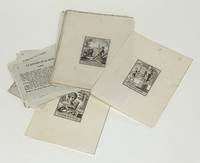
1825réf. 6446A Paris: chez E. Jourdan quai des Augustins n. 17 1825. Sixteen numbered poems printed on trimmed laid paper the largest measuring 8 x 8.5 cm. accompanied by sixteen corresponding engraved plates sheet sizes circa 12.75 x 9.75 cm. and images 5 x 3.75 cm. The imprint is provided at the bottom edge of plates no. 6 and 14. Bonbon box trade cards to be collected by children the texts including fables and poems four apiece by La Fontaine Abbé Aubert Pierre- Louis Ginguené and Antoine Le Bailly. Near fine. Bibliographie de la France 1825 no. 825 records the following publication page 871: Dont la publication et la vente sont autorisées conformément à la loi du 25 mars 1822 art. XII et à l’ordonnance du roi du 1o mai 1822. 865. Douze Planches divers petits sujets pour bonbons. A Paris chez Jourdan quai des Augustins n. 17. chez E. Jourdan, quai des Augustins, n. 17 unknown
1825réf. 6446A Paris: chez E. Jourdan quai des Augustins n. 17 1825. Sixteen numbered poems printed on trimmed laid paper the largest measuring 8 x 8.5 cm. accompanied by sixteen corresponding engraved plates sheet sizes circa 12.75 x 9.75 cm. and images 5 x 3.75 cm. The imprint is provided at the bottom edge of plates no. 6 and 14. Bonbon box trade cards to be collected by children the texts including fables and poems four apiece by La Fontaine Abbé Aubert Pierre- Louis Ginguené and Antoine Le Bailly. Near fine. Bibliographie de la France 1825 no. 825 records the following publication page 871: Dont la publication et la vente sont autorisées conformément à la loi du 25 mars 1822 art. XII et à l’ordonnance du roi du 1o mai 1822. 865. Douze Planches divers petits sujets pour bonbons. A Paris chez Jourdan quai des Augustins n. 17. chez E. Jourdan, quai des Augustins, n. 17 unknown books
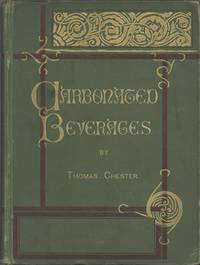
1882réf. 6662New York: P.H. Reilly Wood-Cut and Color Printer 25 Rose Street 1882. Quarto 27 x 20.5 cm. 108 4 166 2 pages. Profusely illustrated. Text in two columns. Table of contents at rear. FIRST EDITION. An early – perhaps the first – history of carbonated beverages. Issued together with a trade catalogue for the soda water supply firm of John Matthews of New York an important manufacturer of bottling equipment soda fountains and carbonation apparatus. The fountains get progressively larger and more elaborate and with wonderful names: “The Citadel” “The Horicon” “The Adriatic” “The Fire-Eater” “The Nepenthe” and “The Snow Queen”. There I also an outdoor soda fountain “The Street Spa”. Also included are the auxiliary equipment of the carbonated water industry like siphon boxes for home delivery of soda water. The historical work and the trade catalogue were issued in celebration of the firm’s 50th Anniversary. Some pencil scribbles to a few pages. Text block shaken; free front endpaper lacking. In publisher’s brown and gilt-decorated green cloth corners rubbed and extremities a bit worn. Better than good. With the ownership signature of “Leopold F. Schmidt Deer Lodge Montana” and a more recent “Olympia Brewing Company”. Very scarce. OCLC records two copies with this pagination Loma Linda Univ. & Hagley Museum and four copies with just 108 pages presumably just the history; Noling Beverage Literature page 104 for the 108 page version. P.H. Reilly, Wood-Cut and Color Printer, 25 Rose Street hardcover
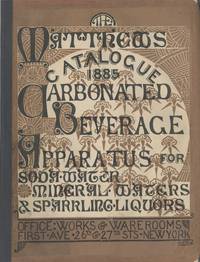
1885réf. 4833New York: John Matthews Apparatus Co 1885. Quarto 104 pages. Fully illustrated. FIRST EDITION. A lovely trade catalogue for this important manufacturer of bottling equipment soda fountains and carbonation apparatus. The fountains get progressively larger and more elaborate. Also includes siphon boxes for home delivery of soda water. Edges of wrappers and one or two pages with repair corners bumped. Some soiling throughout. In elaborately decorated printed wrappers. Good. Rare. OCLC locates just one copy in this series; Noling page 283. John Matthews Apparatus Co unknown
1885réf. 4833New York: John Matthews Apparatus Co 1885. Quarto 104 pages. Fully illustrated. FIRST EDITION. A lovely trade catalogue for this important manufacturer of bottling equipment soda fountains and carbonation apparatus. The fountains get progressively larger and more elaborate. Also includes siphon boxes for home delivery of soda water. Edges of wrappers and one or two pages with repair corners bumped. Some soiling throughout. In elaborately decorated printed wrappers. Good. Rare. OCLC locates just one copy in this series; Noling page 283. John Matthews Apparatus Co unknown books
1882réf. 6662New York: P.H. Reilly Wood-Cut and Color Printer 25 Rose Street 1882. Quarto 27 x 20.5 cm. 108 4 166 2 pages. Profusely illustrated. Text in two columns. Table of contents at rear. FIRST EDITION. An early – perhaps the first – history of carbonated beverages. Issued together with a trade catalogue for the soda water supply firm of John Matthews of New York an important manufacturer of bottling equipment soda fountains and carbonation apparatus. The fountains get progressively larger and more elaborate and with wonderful names: “The Citadel” “The Horicon” “The Adriatic” “The Fire-Eater” “The Nepenthe” and “The Snow Queen”. There I also an outdoor soda fountain “The Street Spa”. Also included are the auxiliary equipment of the carbonated water industry like siphon boxes for home delivery of soda water. The historical work and the trade catalogue were issued in celebration of the firm’s 50th Anniversary. Some pencil scribbles to a few pages. Text block shaken; free front endpaper lacking. In publisher’s brown and gilt-decorated green cloth corners rubbed and extremities a bit worn. Better than good. With the ownership signature of “Leopold F. Schmidt Deer Lodge Montana” and a more recent “Olympia Brewing Company”. Very scarce. OCLC records two copies with this pagination Loma Linda Univ. & Hagley Museum and four copies with just 108 pages presumably just the history; Noling Beverage Literature page 104 for the 108 page version. P.H. Reilly, Wood-Cut and Color Printer, 25 Rose Street hardcover books
2005réf. SONG0521857333Cambridge University Press 2005-09-05. 2003 ed. hardcover. Used: Good. 6.50x1.50x9.50. Buy with confidence. Excellent Customer Service & Return policy. Cambridge University Press hardcover
1805réf. 20131A Paris, chez Delalain fils, an XIII - 1805. In-8 de [4]-214 pages, cartonnage jaspé, dos lisse orné de filets dorés, pièce de titre rouge, tranches jaunes.
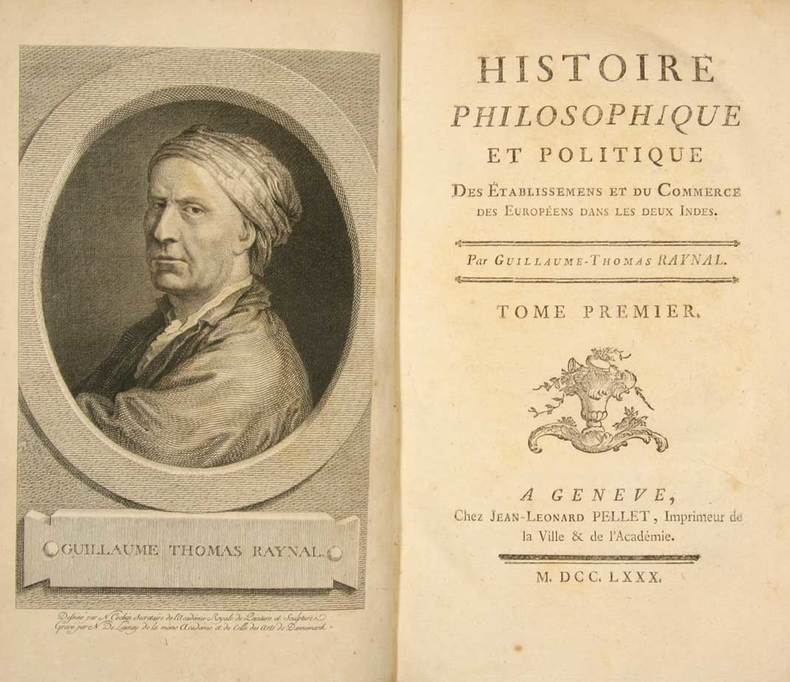
réf. 128506aafGenève, Jean-Léonard Pellet, 1780, in-8°, 10 frontispices gravés dont le portrait de l'auteur, 23 tables repl., reliures en veau marbré, dos richement orné or, encadrement d'un triple filet doré sur les plats, tranches marbrées, bel ensemble.
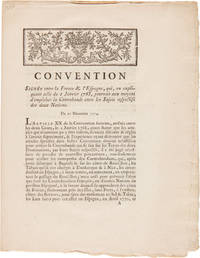
1775réf. 14145Versailles. 1775. Further Regulation of Colonial Trade An important treaty between France and Spain with significant ramifications for their colonial holdings in America. Herein Vergennes and the Conde d'Aranda further define commercial arrangements between the two countries in an attempt to control contraband. This had special impact for the Caribbean basin where the colonies of both powers were required to ship goods through European ports. Dissatisfaction over this prohibition was a key factor in the Louisiana Rebellion of 1768. This convention was agreed to at Versailles on Dec. 27 1774. Not in Wroth. 8pp. Quarto. Printed self-wrappers. Fine. DAVENPORT 155. unknown
1775réf. 14145Versailles. 1775. Further Regulation of Colonial Trade An important treaty between France and Spain with significant ramifications for their colonial holdings in America. Herein Vergennes and the Conde d'Aranda further define commercial arrangements between the two countries in an attempt to control contraband. This had special impact for the Caribbean basin where the colonies of both powers were required to ship goods through European ports. Dissatisfaction over this prohibition was a key factor in the Louisiana Rebellion of 1768. This convention was agreed to at Versailles on Dec. 27 1774. Not in Wroth. 8pp. Quarto. Printed self-wrappers. Fine. DAVENPORT 155. unknown books
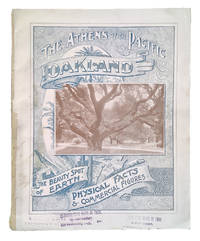
1896réf. 002571Oakland CA: Calderwood G. W. and Loofbourow G. T. 1897 Copyrighted 1896. First Edition. Very good. First edition; 11 3/4 x 9 1/4; pp. iii-v 3 9-99 1; pink wraps printed in blue with a sepia-tone photograph; illustrated with numerous maps and b & w photographs; two stamps of the Calfironia State Board of Trade to lower margin of front wrap; small antiques shop label to front wrap verso; a thin strip of clear tape to spine cover; a few spots to margins; overall bright and well-preserved; in about very good- condition. Intented to be "mailed free to prospective home seekers on application to Secretary of Merchants' Exchange or Board of Trade Oakland Cal." the book was pronounced by then former Mayor William R. Davis to be: ".the best and most accurate presentation of our resources and local attractive features and as an advertising medium yet published in the interest of Alameda County." It began with an aptly-titled chapter - "Deadly Parallel" - listing specific statistics and numbers from August 1896 of people dying of heat-stroke in cities around the country while in Oakland the temperature is balmy 65 degrees. It proceeds to describe Alameda County and the City of Oakland their climate resources modern ammenities notable businesses often with flowery and/or bombastic statements e.g. "One does not need to sniff the odor of the Chicago River or of its immense piggeries as a New Yorker contemptuously styled its huge pork-packing establishments to realize that he is in the Garden City." Several copies at institutions most e-publications; none other in the trade as of December 2019. Calderwood, G. W. and Loofbourow, G. T. paperback
1896réf. 002571Oakland CA: Calderwood G. W. and Loofbourow G. T. 1897 Copyrighted 1896. First Edition. Very good. First edition; 11 3/4 x 9 1/4; pp. iii-v 3 9-99 1; pink wraps printed in blue with a sepia-tone photograph; illustrated with numerous maps and b & w photographs; two stamps of the Calfironia State Board of Trade to lower margin of front wrap; small antiques shop label to front wrap verso; a thin strip of clear tape to spine cover; a few spots to margins; overall bright and well-preserved; in about very good- condition. Intented to be "mailed free to prospective home seekers on application to Secretary of Merchants' Exchange or Board of Trade Oakland Cal." the book was pronounced by then former Mayor William R. Davis to be: ".the best and most accurate presentation of our resources and local attractive features and as an advertising medium yet published in the interest of Alameda County." It began with an aptly-titled chapter - "Deadly Parallel" - listing specific statistics and numbers from August 1896 of people dying of heat-stroke in cities around the country while in Oakland the temperature is balmy 65 degrees. It proceeds to describe Alameda County and the City of Oakland their climate resources modern ammenities notable businesses often with flowery and/or bombastic statements e.g. "One does not need to sniff the odor of the Chicago River or of its immense piggeries as a New Yorker contemptuously styled its huge pork-packing establishments to realize that he is in the Garden City." Several copies at institutions most e-publications; none other in the trade as of December 2019. Calderwood, G. W. and Loofbourow, G. T. paperback books
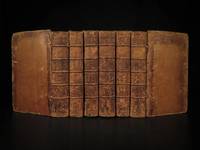
1766réf. museumrusticumLondon: R Davis; J Newbury; L Davis and C Reymers 1766. Third Edition Corrected. Hardcover. Pages are clean with text block . Museum Rusticum et Commerciale: Or Select Papers on Agriculture Commerce Arts and Manufactures. Drawn From Experience and Communicated by Gentlemen Engaged in These Pursuits full 6 volume set Third Edition Corrected. Revised b the members of Society for the Encourage of Arts Manufactures and Commerce in 1766. Numerous plates including foldout tables and woodcut illustration.Pages are clean with text block solidly bound hinges weak / separating with prior poor repair original leather boards show heavy rub wear and bumping spines show cracking to leather and title bands no longer present. R Davis; J Newbury; L Davis and C Reymers hardcover
1802réf. 55719New York: Printed and Sold by G. F. Hopkins 1802. First American edition. Leather bound. Very good. 296pp. Octavo 22 cm In a later 3/4 leather binding with brown cloth over boards. New endsheets and flyleaves. The boards are a bit warped. Repair to title and dedication pages. With map present at the front. Wright-Howes M 133. "First crossing of the continent from ocean to ocean by a white man. The narrative portion was prepared for publication by William Combe from Makenzie's notes." - Wright-Howes p. 362. Printed and Sold by G. F. Hopkins unknown
1802réf. 55719New York: Printed and Sold by G. F. Hopkins 1802. First American edition. Leather bound. Very good. 296pp. Octavo 22 cm In a later 3/4 leather binding with brown cloth over boards. New endsheets and flyleaves. The boards are a bit warped. Repair to title and dedication pages. With map present at the front. Wright-Howes M 133. "First crossing of the continent from ocean to ocean by a white man. The narrative portion was prepared for publication by William Combe from Makenzie's notes." - Wright-Howes p. 362. Printed and Sold by G. F. Hopkins unknown books
1873réf. 002874Washington DC: Published by Order of the Secretary of War 1873. First Edition. Good. Six maps for: Monday February 17 1873 - 11 P. M.; Tuesday February 18 1873 - 7:35 A. M.; Tuesday February 18 1873 - 4:35 P. M.; Wednesday February 19 1873 - 7:35 A. M.; Wednesday February 19 1873 - 4:35 P. M.; Wednesday February 19 1873 - 11 P. M.; 8 3/4 x 11 1/2; relief shown by hachures and gradient tints; small reference table in the lower half of the image; edges brittle with small chips and cuts; overall in good to very good condition. A scarce collection of maps their publication began in January of 1871 with no less than 3 maps being published every day. Samuel Morse's invention of the telegraph had made it possible to easily observe gather and transmit data from different points over the entire country. A small note at the head read: "All observations made at the same moment of actual not local time." Released by the US Army's Signal Service the maps were intented to be primarily used by farmers and merchants. They were published in at least three different sizes and formats the current being one of the smaller ones. These particular maps showed precipitation and wind velocity at various elevation points. Published by Order of the Secretary of War unknown
1873réf. 002874Washington DC: Published by Order of the Secretary of War 1873. First Edition. Good. Six maps for: Monday February 17 1873 - 11 P. M.; Tuesday February 18 1873 - 7:35 A. M.; Tuesday February 18 1873 - 4:35 P. M.; Wednesday February 19 1873 - 7:35 A. M.; Wednesday February 19 1873 - 4:35 P. M.; Wednesday February 19 1873 - 11 P. M.; 8 3/4 x 11 1/2; relief shown by hachures and gradient tints; small reference table in the lower half of the image; edges brittle with small chips and cuts; overall in good to very good condition. A scarce collection of maps their publication began in January of 1871 with no less than 3 maps being published every day. Samuel Morse's invention of the telegraph had made it possible to easily observe gather and transmit data from different points over the entire country. A small note at the head read: "All observations made at the same moment of actual not local time." Released by the US Army's Signal Service the maps were intented to be primarily used by farmers and merchants. They were published in at least three different sizes and formats the current being one of the smaller ones. These particular maps showed precipitation and wind velocity at various elevation points. Published by Order of the Secretary of War unknown books
1890réf. 21055New York: C. M. Moseman and Brothers ca:1890. 4th Edition. hard cover. Good/No jacket. http://www.parnassusbooks.com/image/data/books/2019/03/0_img_2256.jpg. New York: C. M. Moseman and Brothers. ND. ca:1890. Fifth edition. 303pp. Folio. Hardcover. Illustrated with thousands of black and white illustrations depicting everything that could have anything to do with horses as well as 11 chromolithographs; The title page 4 double sided advertisements and 6 single sided with tissue guard. The 4 double sided ads have 2 with color only on one side and 2 with color to both sides. Externally the brown cloth boards are worn faded and soiled. The cloth is separating from the boards at the front lower right hand corner and on the rear lower left hand corner. The top spine edge is torn on the right side and the bottom spine edge is frayed and worn. Internally the book is in wonderful condition. The pages are fresh and the color plates are in very good condition. A couple of the tissue guards are torn but still present. There are several pages with very small edge tears to the outside edge as if from turning the pages as the book is folio sized. The binding is tight and the front hinge is fine but the rear hinge has cracked. New York: C. M. Moseman and Brothers hardcover
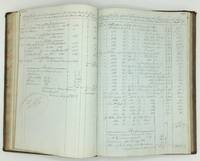
1852réf. 1338Original manuscript. 1852-1854. Folio 38 x 27cm. Full contemporary reverse calf with gilt morocco titles labels to the spine "Rough Sales Book / S & L / B". Marbling to page edges. Marbled endpapers with engraved label for "Baily Brothers Booksellers Stationers Account Book Manufacturers" London to the front pastedown. 172pp. of manuscript text in ink on red-ruled laid paper watermarked "W. King / 1850" followed by c.160pp. blank with a handful of pages torn out following the conclusion of the manuscript text section and another within the text. The majority of entries are in English with some in Spanish mostly written in the same hand. Condition is very good the binding firm with marking to the boards chipping to the head of the spine and a little wear to the extremities. The contents with a 3cm tear to the head of the first text page and two pages partially cut/torn away at the bottom are otherwise in good order. The ledger of a British sales agents operating in Panama during the mid-nineteenth century detailing the importation and sale of a wide variety European and South American goods into the country. The manuscript meticulously records the origin city/country importer ship the goods received and sold and the charges entailed for each shipment. A typical entry for example records the arrival of "gunpowder received per "Alexander" and sold on behalf of the Kames Gunpowder Company Glasgow" followed by details of the subsequent purchasers "J. D. Cordova" etc. and the charges/commissions taken by the agent including fees for landing expenses and "carriage to arsenal". Many of the entries describe large diverse cargoes combining both essential and luxury goods including: alpacas; chocolate pots; "41 cases of pickles and mustard"; lavender water; rocking chairs; a "copying machine"; cinnamon; scissors razors; bone buttons; horse brushes; compasses; gin; hatchets; bedsteads; looking glasses; children's toys; cloves; muslins; kegs of shot; cups and saucers; tobacco; machetes; claret; playing cards rat traps; "Aqua de Colonia" cologne; silk gloves; saddles; blunderbusses; padlocks; lace; pantaloons; "Jamaica rum"; almonds; vinegar; bonnets; sausages; gold frames; water closets; wash stands; champagne; mosquito nets; and much else besides. The origin ports include major European trade centres such as Liverpool and Glasgow but also include many South American ports such as Guayaquil Equador carrying beans cocoa coffee sugar and quinoa amongst other things; Buenaventura Colombia; Callao Peru carrying candlesticks coffee mills and bayonets; Lima Peru "bottled fruits" and cherry cordial; and Valparaiso Chile; as well as San Francisco and New York to the north. The importers themselves are also a mixture of British and Panamanian companies. A fascinating detailed insight into Panama's transatlantic and South American trade during the mid-nineteenth century. [Original manuscript]. hardcover
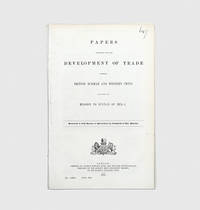
1876réf. 195373London: Eyre and Spottiswoode 1876. First edition of this collection of official documents and despatches concerning the expedition of Colonel Horace Browne launched to traverse China from west to east and consolidate the gains made by the Sladen expedition of 1868. Browne's party rendezvoused in Bhamo with the westward-travelling Augustus Margary whose murder soon after sparked a diplomatic crisis between Britain and China. Browne 1831-1914 whose most memorable feature was his large moustache left Calcutta in November 1874 and met Margary the following January. Continuing on to Yunnan the expedition encountered unexpected Chinese hostility. Scouting the route Margary and his local assistants were killed and Browne also coming under attack reversed course retreating to the safety of Rangoon. The ensuing crisis was settled by the 1876 Chefoo Convention which granted Britain further commercial concessions in China. Quarto 320 x 207 mm. Diagram and tables in text. Disbound gatherings sewn edges sprinkled green. Leaves foliated on recto. Generally clean: very good. unknown