[SLAVE TRADE].Biblio.com
15.997 risultati
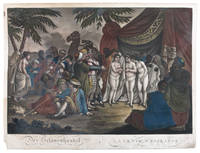
1800rif. I7DD3T6LJ6QQNo place 1800. 27 x 40 cm. Aquatint in contemporary hand colour engraved by "J. L. T." after "J. R. P." Three partly exposed women before a large tent being advertised and inspected by several men dressed in fine oriental garb. On the left is another woman whose price is under discussion while the background shows date palms and two dromedaries.Rather severe water stains and a few small holes in the blank margin; some scuff marks in the image; trimmed closely with loss to lower left corner. A very appealing print. Rare. HISTORY Prints & Print Series Slavery Women History unknown
rif. 18372A Paris, Chez Pissot, 1775. Two volumes. Together three volumes bound in one. x, 306 pp.; (4), 236 pp.; 184, (2) pp. 8vo. Contemporary speckled calf, spine richly gilt, raised bands and label with gilt lettering. First work: Kress 7071; Goldsmiths 11256; Einaudi 344; Higgs 6259; INED 276. First edition in bookform, first published in the Nouvelles Ephémérides Économiques, and published in a very limited number of copies. Famous physiocratic polemic between Baudeau and Necker, here both present.'Doctrinaire économiste, l'un des plus fervens sectateurs de cette école, et l'un de ceux qui en ont le mieux exposé les principes' (Blanqui, p. 420). The work was written following the publication of Necker's Sur la législation et le commerce des grains presenting, in magnificent style, the arguments of the Physiocrats against Necker's theories. Baudeau criticizes Necker for his preference of industry over agriculture, for his Colbertism and his preferential attitude towards commerce in luxury goods. Baudeau advocates a return to the economics of Sully, protests against the protectionist laws of the new government and argues that free trade in corn will cause a price reduction rather than raise the price of bread.Second work: Kress 7144; Goldsmiths 11267; Higgs 6260; INED 3372; not in Einaudi; Lichtenberger, Socialisme au XVIIIe siècle, pp. 305-310. First edition: although the title-page indicates that this is the second edition, it is in reality the first edition, with the errata-leaf at the end of volume two and the errata uncorrected.Necker condemned the physiocratic doctrine of free trade and was in favour of government control.
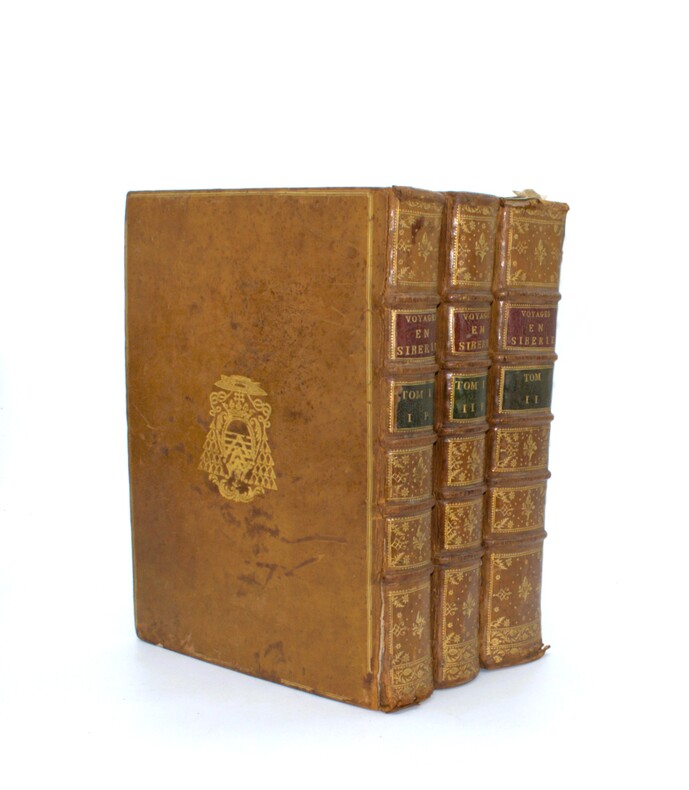
1768rif. PHO-2449Paris, Chez DEBURE père, 1768, 3 volumes in-folio (sur 4) (35x26cm), 3ff.-XXX-347pp., 1f.-348pp.-767pp., X-627pp.-2ff., plein veau glacé lavallière, dos à nerfs, caissons ornés de fleurons dorés, pièces de titre et de tomaison en maroquin rouge et vert, plats frappés aux armes de Dominique de la Rochefoucauld dans un triple encadrement doré, toutes tranches dorées, double filet doré sur les coupes, frise intérieure, doublures et gardes de papier marbré (reliure de l'époque). Épidermures, coiffes abimées, coins usés certains avec manque, charnières fendillées, quelques cahiers brunis, très petite mouillure marginale au tome 2 sur quelques feuillets.
1959rif. 015858Copenhague L'Internationale situationniste 1959 In-4 Broché, couverture à rabats
rif. 221218Genève, Jean-Léonard Pellet, 1780 10 vol. in-8 et 1 atlas in-4, veau fauve marbré, dos lisse orné, pièce de titre et de tomaison de maroquin rouge et vert, tranches marbrées, demi-veau fauve marbrée, dos lisse orné, tranches rouges pour l'atlas (reliure de l'époque). Restaurations sur certains plats, quelques épidermures. Coiffe absente et coins usés pour l'atlas. Quelques rousseurs.
rif. 18559A Paris, Chez la Veuve Estienne et Fils, 1741. 3 volumes. (8), xxvii, (1), 544 pp., (545)-1140 numbered columns; (4) pp., 1772 numbered columns; (4) pp., 1316, 684 numbered columns. Folio. Contemporary marbled calf, spines gilt with raised bands, red labels with gilt lettering. Kress 4584; Goldsmiths 7819; not in Einaudi; not in INED. Jacques Savary (1622-1690) was for some time director of the French Royal Domains, and later became general business agent to the Duke of Mantua. He had such sound notions about commerce and was so successful in his operations that Colbert appointed him in 1670 in the "Conseil de la Reforme", which was to reform and refine the rules of commercial practice. The "Commercial Code" of 1673 resulting from it was called after him "Code Savary". He was then also pressed to write down and publish all his commercial knowledge, which pressure led to the publication of the famous Le parfait Négociant (1675). It taught everything a merchant should know, but only his left papers revealed to the world the immense and universal knowledge on commerce Savary possessed. The dictionary was immensely successful and covers all aspects of commerce and trade as well as legal and historical matters. Deals among others with: trading cities throughout the world, their manufactures, operation of foreign trade, trading companies (including a short history of the South Sea Company), banking (including an account of John Law's Bank), bookkeeping, etc. etc. The dictionary was the first of its kind to appear in Europe, and has furnished the principal part of the material for most of the dictionaries that were to follow. The project was sponsored by the French government who justly considered that such a dictionary, if well executed, would be of national importance. Hence a considerable, and indeed the most valuable portion of the work is compiled from memoirs sent to the author, by order of government, by the inspectors of manufactures in France and by the French consuls in foreign countries (see: McCulloch, p. 61). The dictionary is preceded, in volume one, with an elaborate, long (upto column 544) separate essay on the "État général du commerce de l'Europe" (and followed by the other continents Africa, Asia and the Americas). - Very small damage to head of spines of volumes 1 and 2.
rif. 26145A Paris, Chez la Veuve Estienne et Fils, 1741. With nice head- and tailpieces. 3 volumes. (8), xxvii, (1), 544 pp., (545)-1140 numbered columns; (4) pp., 1772 numbered columns; (4) pp., 1316, 684 numbered columns. Folio. Contemporary marbled calf, spines gilt with raised bands, red labels with gilt lettering, red edges, joints, head and foot of spine and some corners repaired. Kress 4584; Goldsmiths 7819; not in Einaudi; not in INED. Jacques Savary (1622-1690) was for some time director of the French Royal Domains, and later became general business agent to the Duke of Mantua. He had such sound notions about commerce and was so successful in his operations that Colbert appointed him in 1670 in the "Conseil de la Reforme", which was to reform and refine the rules of commercial practice. The "Commercial Code" of 1673 resulting from it was called after him "Code Savary". He was then also pressed to write down and publish all his commercial knowledge, which pressure led to the publication of the famous Le parfait Négociant (1675). It taught everything a merchant should know, but only his left papers revealed to the world the immense and universal knowledge on commerce Savary possessed. The dictionary was immensely successful and covers all aspects of commerce and trade as well as legal and historical matters. Deals among others with: trading cities throughout the world, their manufactures, operation of foreign trade, trading companies (including a short history of the South Sea Company), banking (including an account of John Law's Bank), bookkeeping, etc. etc. The dictionary was the first of its kind to appear in Europe, and has furnished the principal part of the material for most of the dictionaries that were to follow. The project was sponsored by the French government who justly considered that such a dictionary, if well executed, would be of national importance. Hence a considerable, and indeed the most valuable portion of the work is compiled from memoirs sent to the author, by order of government, by the inspectors of manufactures in France and by the French consuls in foreign countries (see: McCulloch, p. 61). The dictionary is preceded, in volume one, by an elaborate, long (upto column 544) separate essay on the "État général du commerce de l'Europe" (and followed by other essays on the continents of Africa, Asia and the Americas). Ooii -Vviv in volume three with a wormtrack in the upper outer blank margin.
1618in -16. cc 107, ---12, 30. Pergamena coeva. Aritmetics, matematic, geometry, trade, economy, change, cambio. Computing accountancy. in cassetto a-b
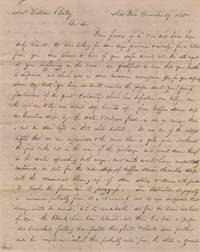
1835rif. BK0025New York City 1835. Autograph letter signed by the merchant firm Baker & Moore 4 pp. addressed to General William Battey care of Dr. Charles Luzenberg at the Franklin Infirmary on the Pontchartrain Railroad New Orleans. Stampless folded letter with red circular "NEW-YORK" December 31 datestamp and manuscript "25" rate. Appx. 1000 words. File folds; otherwise very good. A lengthy commercial letter written thirteen days after the Great Fire of New York describing the destruction of the city's mercantile district and tracing its immediate effects through insurance capital banking commodity prices and trade with New Orleans. Written by the New York firm of Baker & Moore to their associate William Battey the letter provides a near-contemporary account of the fire an assessment of the city's financial resilience and instructions for exploiting the resulting fluctuations in the markets for brandy wine raisins tobacco iron and copper. The fire began on the evening of December 16 during an extraordinary cold spell and northwest gale. Frozen hydrants wells cisterns and hoses left the city's volunteer fire companies largely unable to contain it. By the following day the fire had destroyed much of the commercial district between Wall Street and the East River including the Merchants' Exchange and hundreds of stores and warehouses. Buildings were eventually demolished with gunpowder to create firebreaks at Exchange Place and Coenties Slip. Contemporary estimates varied but approximately 674 buildings were destroyed with losses eventually placed at twenty million dollars or more.1 Baker & Moore begin by describing the extent of the burned district the severe weather and the use of explosives to arrest the flames: "Since my last you have no doubt received the paper sent you giving particulars of the great calamity which has befallen our City. On the 16th our City was about half burned up. From Coffee House Slip to Coenties Slip by the water & William Street is all in ruins. There is but one store left in that whole district. It was one of the coldest nights that we ever experienced & the wind blew a gale from Northwest. The fire broke out in the rear of the Exchange and went down through to the water spreading both ways and would have undoubtedly continued on but for the wide slips of Coffee House & Coenties Slip with the occasional blowing up of some stores & houses with powder to check the flame in its progress" The account quickly turns from the physical destruction to the distribution of its financial losses: "The destruction of property is immense probably from 10 to 15000000$ and it was supposed that many would be ruined but tis remarkable so far we have not heard of one. The Banks have been liberal and there has been a proper and benevolent feeling manifested throughout & should some further aid be brought in which probably will from the State or general government we think there may be no failures. The Insurance companies most of them are ruined and the principal loss is in Insurance capital. The loss will in some instances fall upon those who cannot well afford it. Many widows & orphans have had their all taken from them. The loss is large and New York has met with a great calamity but she is made of such materials & her facilities are so large & varied that the mercantile community will bear up under more than any other place in the Union & we think in one year's time it will be almost forgotten." The confidence expressed here correctly anticipated the city's rapid commercial recovery. Banks and government agencies extended credit and payment terms rebuilding began almost immediately and the burned district was reconstructed with new countinghouses and warehouses. The disaster also exposed the inadequacy of New York's water supply and firefighting arrangements contributing to later infrastructure and institutional reforms. Baker & Moore then apply the disaster to their own trade with New Orleans. Hundreds of warehouses and their contents had been destroyed increasing prices of imported foods wines and spirits. The firm instructs Battey to use the New York price current to obtain higher prices for their consignments: "This fire has advanced most all kinds of goods. Raisins are worth here $3-$3½. Wines such as Mess. Eastman's have advanced with us 4-6 cents. So many hundred casks destroyed must advance it and make it higher through the season. More than one half the Brandy was consumed tis now selling at $1.75 and some are asking $2. We wish what we sent you sold & this will be a favorable time to sell-show N.Y. price current-and get as good a price as you can. There will we think be no want of Brandy. Those raisins we think you had better dispose of at once. We think from N.O. current must pay something handsome for us. In regard to old Iron we find good old iron will always sell for the money for 112½ gross hundred equal to 1c per lb. Cast & wrought are same price. If you can come across a lot to do you may make it answer & pay us well. Copper if you can buy low enough may pay something. We thought hay might pay out but tis so high we cannot buy to send. We are of opinion that goods generally will be higher in consequence of this fire yet when we consign goods we wish them sold when they can to pay and we wish Eastman & Co. to sell and close up our affairs in their hands." The concluding paragraph briefly introduces events in Florida. The Second Seminole War had begun that month following mounting resistance to the forced removal of the Seminole people from Florida. Baker & Moore believed that the conflict might affect the movements of a brig expected in New Orleans: "We observe that trouble is anticipated with the Indians in Florida & if so our Brig may not get a load of them & be in N. Orleans earlier than we anticipated tis uncertain what will be the result they may detain her longer until they can get them on board." The wording appears to indicate that the vessel was expected to transport a group of Native people although the letter does not identify the brig its owners or the precise circumstances of the contemplated voyage. The recipient General William Battey was then in New Orleans apparently acting as Baker & Moore's commercial representative while also attending to his health at the Franklin Infirmary. The firm gave him considerable discretion to supervise consignments collect funds purchase goods when opportunities arose and forward current market information to New York. The address places him in the care of Dr. Charles Aloysius Luzenberg who founded the Franklin Infirmary with municipal support in 1835 and subsequently helped establish the Medical College of Louisiana the forerunner of Tulane's medical school.2 Baker & Moore appear to have been commission or importing merchants whose own affairs escaped direct damage but whose trade was immediately altered by the destruction of competing inventories. The letter thus follows the fire from the burned commercial district into the decisions of a New York firm and its representative in New Orleans. A substantial contemporary account of the Great Fire of 1835 documenting the destruction of New York's commercial center and the disaster's immediate movement through insurance banking commodity markets interregional credit and trade with New Orleans. We find no similar examples on the secondary market or in auction records. 1 Herbert Asbury "The Great Fire of 1835" The New Yorker July 26 1930. 2 Louisiana Historical Association "Luzenberg Charles Aloysius" in Dictionary of Louisiana Biography accessed August 2 2026 https://www.lahistory.org/resources/dictionary-louisiana-biography/dictionary-of-louisiana-biography-l/. . unknown
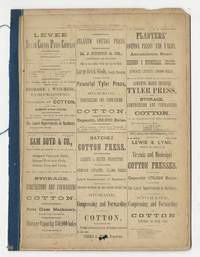
1880rif. 1631880. Photo album; Albumen prints 30; Each 5 3/4 x 4 inches An interesting and unusual album consisting of photographic reproductions of all four pages from the September 1 1880 issue followed by all 26 pages of the Annual Review of Commercial New Orleans published as a supplement on the same day. The photographs chronicle an immense amount of advertisements for the business houses stores and companies active in New Orleans at the time including ads for photographers T. Lilienthal and W. W. Washburn. Also present are ads for various insurance agencies and banks; dealers and importers of everything from musical instruments barbed wire French plate mirrors and fireworks to furniture books stationary and dry-goods; and of course odd-ball promotions for bizarre 19th-century miracle cures such as "Kidnegen: The Great Kidney Regulator and Ditretic" and Reed's Tonic "a thorough remedy in every case of Malarial fever." Also advertised are products and companies still recognized today such as Lea and Perrins Genuine Worcestershire sauce and Procter & Gamble Soaps. At least 2 pages are dedicated solely to the Cotton trade in the region and dealers in "Plantation Machinery." Meandering in-between the company advertisements are brief reports on the current state of trade in all manner of business sectors; Lumber Freight Paper-making Leather manufacturing Land prices Mineral resources and many many more. The greatest mystery here is why the album was produced in the first place; perhaps as a means to later reproduce the list of businesses--a sort of Yellow Pages. It is fairly likely that the photographs were produced by either Lilienthal or Washburn due to their inclusion in the directory. Another point of curiosity is the size of the album. While the minuscule text is mostly legible under magnification the miniature quality of the advertisements does not exactly suggest every day use! The photographs are mounted recto/verso to 15 cards which were formerly attached to the present gilt-decorated morocco album. The cloth hinges have fully deteriorated and the cards are loose and collated in order. unknown
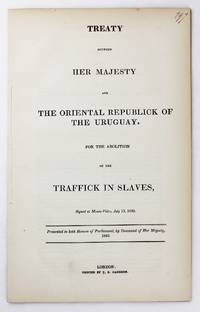
1842rif. 6316London: T.R. Harrison 1842. Near fine. 38pp. stitched. Very minor bumps to top edge of first leaf light dust-soiling to outer leaves. A very rare treaty between Queen Victoria’s Britain and the “Oriental Republick of the Uruguay” printed in both English and Spanish in two parallel columns throughout. According to the text the parties were “mutually animated by a sincere desire to co-operate for the utter extinction of the barbarous Traffick in Slaves.for the special purpose of immediately attaining this object so far as relates to the total and final abolition of the Slave Trade of the Oriental Republick of the Uruguay.” The treaty is comprised of fourteen original articles plus three annexes totaling forty-six additional articles and four additional articles at the end covering a host of issues pertaining to the suppression of the slave trade. These issues included enforcement procedures the establishment of “Mixed Courts of Justice” “Regulations in respect to treatments of liberated negroes” and much more. With regard to slaves found on international vessels the two nations hoped for “permanent good treatment and a full and complete emancipation according to the humane intentions of the Parties of the Treaty.” The present treaty was part of a larger effort by the British Crown to put an end to the transatlantic slave trade in the first half of the 19th century; at this same time Britain had reached terms on a similar treaty with the Republic of Texas and other nations. The document is signed at the end in type by J.H. Mandeville and Jose Ellauri representatives of the two countries who originally signed the treaty at Montevideo on July 13 1839; the present work was “Presented to both Houses of Parliament by Command of Her Majesty” in 1842 likely due to bureaucratic delays. Uruguay would have been an important ally for Great Britain in monitoring the seas against the transatlantic slave trade given its position opposite the South Atlantic Ocean from West Africa. OCLC records just a single physical copy of this treaty at the University of Arizona. Cundall 2854. T.R. Harrison unknown
1973rif. ZB644081Berkeley Calif. ; Vancouver : Faculty of Commerce and Business Administr 1973. Volumes 9-26 lacking Volume 18 else an uninterrupted run of complete volumes partly bound minor library markings else text clean & bindings tight. - If you are reading this this item is actually physically in our stock and ready for shipment once ordered. We are not bookjackers. Buyer is responsible for any additional duties taxes or fees required by recipient's country. Photos available upon request. Berkeley, Calif. ; Vancouver : Faculty of Commerce and Business Administr unknown
1942rif. 2091502135500375Manzhou Yingkou Chamber of Commerce 1942. Soft Cover. Fine. Number of pages: 2 2 23 364 118p Size: 16x22cm Manzhou Yingkou Chamber of Commerce paperback
1942rif. 2091502135500132Yingkou Chamber of Commerce 1942. Soft Cover. Fine. Number of pages: 2 2 23 364 118p Size: 16x22cm Yingkou Chamber of Commerce paperback
1883rif. 174897London: Harrison & Sons 1883. A single copy traced institutionally First edition of this valuable collection of official papers over half of which concerns Admiralty patrols and slavery cases in the Zanzibar region. Many items of correspondence were sent by or to the influential Arabist Samuel Barrett Miles 1838-1914 the political agent and consul-general. Records show only the British Library's copy. For Britain curtailing the slave trade in the Indian Ocean and Arabian Sea was a means to consolidate control over the region. In 1873 it signed anti-slaving treaties with the Sultan of Muscat and after blockading Zanzibar Sultan Barghash bin Said al-Busaidi r. 1870-88. Throughout the 1870s the Admiralty bolstered its naval presence. Textual and statistical memoranda from Miles and others reported encounters by patrolling vessels with slaving dhows and fugitive slaves the seizure and destruction of vessels and legal proceedings. An important moment was the lethal encounter in December 1881 of HMS London with a dhow flying French colours. As related by Rear-Admiral Gore Jones Commander-in-Chief East Indies Station to the Secretary of the Admiralty "no one on London was expecting action and all were personally unarmed. The Arabs instantly fired and then rushed on board." London's captain Charles Brownrigg "fought like a lion" but was fatally stabbed through the heart pp. 188-9. The incident hardened British resolve; in the late 19th century slavers were increasingly forced to seek overland rather than maritime routes. The compilation also includes two documents concerning Persia a report of a man who had escaped from slavery in Mecca and a short despatch on the sentencing of a slaver submitted by Lynedoch Needham Moncrieff the acting British consul at Jeddah. Folio. Tables in text. Original blue wrappers spine and covers lettered in black. Losses at spine ends a few chips and light stains to covers contents clean: very good. Bennett The Arab State of Zanzibar: A Bibliography 510. unknown
1900rif. 263502Lyon France: J. Bouvard & Cie 20 Rue Lafont 1900. 14 thick card sheets with samples centrally mounted vertically to recto and verso some sheets quite thick to accommodate larger epaulets each with manuscript notations of name size etc. 11-3/4 x 6-3/4 inches. Black cloth album with the printed label of "J. Bouvard et Cie Fabrique de Dorures Soireries Ornaments d'Eglise" to front paste-down. Some wear commensurate with age and use spotting and thumbsoiling apparently complete with all samples backing possibly restored at an early date. 14 thick card sheets with samples centrally mounted vertically to recto and verso some sheets quite thick to accommodate larger epaulets each with manuscript notations of name size etc. 11-3/4 x 6-3/4 inches. This very unusual French sample book contains a large range of epaulets and sequin samples with a few lettering and star samples. J. Bouvard & Cie 20, Rue Lafont unknown
rif. 53K000002L7EUnited States Department of Comm. unknown_binding. Like New. . No writing or tears United States Department of Comm unknown
rif. 028941Detailed manuscript archive pertaining to this vessel owned by Ichabod Goodwin 1794-1882 merchant and businessman of Portsmouth and Governor of New Hampshire1. The archive consists of correspondence bills receipts and documents pertaining to the Morning Glory and her voyage to California Washington Territory and Vancouver on what proved to be a particularly ill fated voyage. 42 letters 73 pages mainly quarto 164 bills receipts etc. 28 legal documents 112 pp. from England Esquimault Victoria Vancouver British Columbia Port Townsend and Steilacoom Washington Territory San Francisco Peru etc. The Morning Glory H. H. Hobbs masterwas engaged in coastal trade between Peru and the Northwest Coast of Washington Territory and Vancouver British Columbia. She was on a return voyage to Callao with a cargo of lumber for the South American market when disaster struck as related in the following letter from Hobbs to Ichabod Goodwin: San Francisco June 13 1858 "Hon. I Goodwin Dear Sir I am very sorry to have to inform you that I have met with a great misfortune with the ship. I was beating out of the straits of Fucu Straits of Juan de Fuca and struck a sunken rock that lays about one half mile off the race rocks. At half past 12.00 P.M. on May 30th while in the act of tacking ship. This rock is not down on any charts not even those of the British man of war it has 10 feet draft at low water. The ship remained on the rock from half past twelve until eight in the morning when she rolled over on her beam ends and slid off. The rock was very steep for the ship struck bows on and at the Break of the forcastle there was five fathoms of water and at the stern there was eleven fathoms. The ship made no water from the time she struck until five in the morning when she commenced making water very fast and by the time we had been off the rock an hour the ship was entirely full after we found that we could not make any impression on the water for we had our hands pumping the water gained two feet on us the crew refused to proceed to sea I wanted to bring the ship to San Francisco as I know there were no conveniences north of this port where the ship could be repaired. But as the crew would not work but all refused to work the Ship I was obliged to make for the first port. I brought the ship into the harbour of Esquimault where all of the British men of war lay. I came down to San Francisco to see the Underwriters Agent to see what I should do with the ship and he will not consent to let me bring the ship down as she is consequently I have been obliged to get a steam pump to take up to pump the ship out and also a diver if we can stop the leak with a diver who has a submarine armour we will use the steam pump. I return by the first steamer that leaves for Victoria. Messrs Flint & Peabody will furnish me with funds. ." The collection goes on to detail the progress of the vessels repairs in an effort to reach San Francisco the nearest place where the proper repair of the ship could be completed. However while attempting to bring the vessel from Victoria to San Francisco the ship encountered a violent gale and was run onto the beach at Port Townsend Washington Territory in hopes that the leak could be reached and repaired while partially exposed. Hobbs at length made temporary repairs and set sail for San Francisco in September 1859: Port Townsend Sept. 26 1859 Hon I. Goodwin Dear Sir I have just received yours of August 17th. I am now on the point of sailing for San Francisco I have got the leak stopped so that ten minutes pumping will do for twenty four hours. I have been obliged to sell some of the cargo of lumber to raise funds to disburse the ship. payable in ten days after the arrival of the ship in San Francisco. The parties who advance the money were not able to advance the necessary funds until the arrival of the steamer from San Francisco consequently I was obliged to sell the lumber to pay off labourers I do not know how I will raise the money to disburse the ship in San Francisco I am now of your opinion that it would have been for the Interest of all concerned to have abandoned the ship in Victoria. I shall be ready for sea tomorrow and will not be over ten or fourteen days getting to San Francisco." The Morning Glory was eventually taken to Mare Island put in dry dock and was thoroughly overhauled: Mare Island Nov. 19th 1859 "Honble I Goodwin Dear Sir The survey that I had held on the ship estimated that the cost of repairing on the ship would come less than thirty thousand dollars so under this survey I could not abandon. The repairs were all recommenced by Mr. Hanscom and he says that the ship will be as good as before. We have put in a lower piece of stern and forward piece of Keel of California live oak. The ship is now on the dock and will of next Thursday. The Knees are to be refastened and the stantions in the lower hold kneed also. P.S. We did not find the ship injured near as much as we expected every one here says that she is the strongest and most thorough built ship that has ever been on the dock." This highly detailed archive documents virtually everything that went into and out of the vessel upon this voyage. It details aspects of Northwest Coast maritime commerce maritime law insurance and salvage construction and other costs and the economics of the coastal trade at the time. 1. American National Biography vol. 9 pp. 269-271 Dictionary of American Biography volume IV pp. 408-409 Who Was Who in America Historical Volume p. 210 books
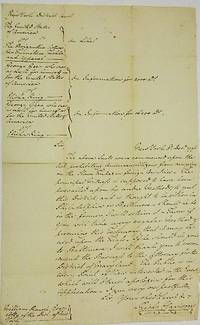
1796rif. 35853New York 1796. Single page 9-1/2" x 15-3/4" entirely in manuscript. Headed with names of three cases pending in the New York District Court followed by Harison's letter to Rawle. Old folds with a pinhole at a fold intersection no text loss. Short fold split expertly repaired. Very Good. Harison 1747-1829 was President Washington's appointee in 1789 as the first United States Attorney for the District of New York. He served until 1801 when Edward Livingston succeeded him. His correspondent William Rawle was Washington's appointee as U.S. Attorney for Pennsylvania. Rawle was founder and first president of the Historical Society of Pennsylvania president of the Pennsylvania Abolition Society and a highly respected writer on governmental matters. The Slave Trade Act of 1794 passed by the Third Congress and signed by President Washington was the first American regulation of the international slave trade. It prohibited Americans from trading in slaves to any foreign country. Harison had brought several cases under the Act as noted in this Letter: The United States vs. The Brigantine Active; and two by George Geer for himself and the USA vs. Elisha King. Harison explains "The above Suits were commenced upon the Act prohibiting American Citizens from carrying on the Slave Trade in foreign Countries." Harison's problem: "The principal witness is supposed to have been prevailed upon by undue Methods to quit this District is thought to be either in Philadelphia or Baltimore." If he's in Philadelphia "I will esteem it a Favor if you will take every regular Method of procuring his Testimony." If he's in Baltimore please "recommend the Business to the Attorney for the District of Maryland. The Public is in every Point of View interested in the Event." Diligent research has uncovered no additional information on these cases. unknown books
1900rif. 263502Lyon France: J. Bouvard & Cie 20 Rue Lafont 1900. 14 thick card sheets with samples centrally mounted vertically to recto and verso some sheets quite thick to accommodate larger epaulets each with manuscript notations of name size etc. 11-3/4 x 6-3/4 inches. Black cloth album with the printed label of "J. Bouvard et Cie Fabrique de Dorures Soireries Ornaments d'Eglise" to front paste-down. Some wear commensurate with age and use spotting and thumbsoiling apparently complete with all samples backing possibly restored at an early date. 14 thick card sheets with samples centrally mounted vertically to recto and verso some sheets quite thick to accommodate larger epaulets each with manuscript notations of name size etc. 11-3/4 x 6-3/4 inches. This very unusual French sample book contains a large range of epaulets and sequin samples with a few lettering and star samples. J. Bouvard & Cie 20, Rue Lafont unknown books
1698rif. PHO-1906London, Chiswell, 1698. In-folio (310x210mm) relié plein veau époque, dos à nerfs, x, xiii, 427, xxiv pp., illustré d’un frontispice, de 5 planches hors-texte dont 3 dépliantes et de 3 cartes, plats détachés, petit trou page 81/82, manque de papier en marge page 80. Titre imprimé en rouge et noir. Fryer était un chirurgien au service de la compagnie des Indes Orientales, pendant 9 ans il voyagea extrêmement des côtes de Coromandel et malabar. Il décrivit les villes de Surat et Bombay le commerce et les coutumes de Madras et de la Perse. Très RARE. Folio, full period paneled calf, boards and free enpaper detached, x, xiii, 427, xxiv pp., illus. with engraved frontispiece portrait of the author, 5 engraved plates (3 folding) and 3 maps, one with printed overslip; title in red and black, woodcut illustrations in text.
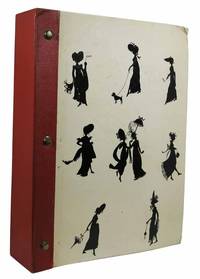
1957rif. 42918Paris: Societe Paritys / Lebotys 1957. Post binder with 3 brass posts decorative screw tops. Publisher's color pictorial glazed boards blue spine and joints. Board edges rubbed and worn; short split to rear outer joint; inner joints tender paper splitting though cloth reinforcement beneath is intact. Page block foxed occasional foxing/spotting throughout; light offsetting from fabric samples to some pages. Fabric sample generally clean and bright with occasional creasing/fraying. Overall Gd. 97 pp. 16 color fashion drawings; ~ 740 pasted or tipped-in fabric samples. 16-1/8" x 12-1/8" A mid-century salesman's sample catalogue from the winter collection of Parisian firm Société Paritys a haberdashery and fabric supplier established in 1946 and still in operation today. The fabric samples have been supplied by Lebotys a couture design firm in its own right and highly regarded for the quality of its textiles. As we find record of Lebotys having issued catalogues of its own collections in both the 1930s and 1960s we speculate that the two firms collaborated for a limited time possibly due to continuing post-war shortages and the need to adapt to the rapidly changing clothing market of the 1950s. The late 1950s saw a revolution in French fashion — and by extension Western fashion in general — due in no small part to the influence of material factors underlying the purely aesthetic side of the industry: availability of fabric continuing technological advances in synthetics and the surging post-war economies of America and Europe. The reluctant expansion of haute couture into the ready-to-wear market during the latter half of the century and the increasing reliance on synthetic fabrics to meet the demand would ultimately spell a major shift in the industry one that would impact fashion trends for decades to come. Some fashion houses like Dior whose “New Look” revitalized fashion at the beginning of the decade successfully managed to adapt by issuing couture ready-to-wear lines. Some however even long-established houses survived the war only to be undone by the prosperity that followed. The collaboration here of Société Paritys and Lebotys as well as the fabrics offered and styles displayed leads us to infer that the two firms were likely targeting the growing ready-to-wear market. The fabrics include a variety of silks cottons wools mohair etc. as well as nylon fibranne rayon Rhodia tergal crylor acetate and other “Matieres Synthètiques” often in blends and advertising their washable and/or antiwrinkling qualities. The styles in the illustrations still heavily influenced by the “New Look” emphasize wasp-waisted dresses hourglass silhouettes etc. No copies located on OCLC nor the major French institutions as searched on KVK. Societe Paritys / Lebotys hardcover books
1958rif. 42919Paris: Societe Paritys / Lebotys 1958. Post binder with 3 brass posts. Publisher's pictorial glazed boards red cloth joints. Light extremity wear to boards; bumping to upper corner of front board; short split to front and rear joints. Page block lightly foxed foxing/spotting scattered throughout. Few white nylon fabric samples discolored by paste beneath. Fabric samples otherwise clean and bright with only minor occasional creasing/fraying. Overall VG. 80 pp. 12 color fashion drawings; ~590 pasted and tipped-in fabric samples 16-1/8" x 12-1/8" A mid-century salesman's sample catalogue from the winter collection of Parisian firm Société Paritys a haberdashery and fabric supplier established in 1946 and still in operation today. The fabric samples have been supplied by Lebotys a couture design firm in its own right and highly regarded for the quality of its textiles. As we find record of Lebotys having issued catalogues of its own collections in both the 1930s and 1960s we speculate that the two firms collaborated for a limited time possibly due to continuing post-war shortages and the need to adapt to the rapidly changing clothing market of the 1950s. The late 1950s saw a revolution in French fashion — and by extension Western fashion in general — due in no small part to the influence of material factors underlying the purely aesthetic side of the industry: availability of fabric continuing technological advances in synthetics and the surging post-war economies of America and Europe. The reluctant expansion of haute couture into the ready-to-wear market during the latter half of the century and the increasing reliance on synthetic fabrics to meet the demand would ultimately spell a major shift in the industry one that would impact fashion trends for decades to come. Some fashion houses like Dior whose “New Look” revitalized fashion at the beginning of the decade successfully managed to adapt by issuing couture ready-to-wear lines. Some however even long-established houses survived the war only to be undone by the prosperity that followed. The collaboration here of Société Paritys and Lebotys as well as the fabrics offered and styles displayed leads us to infer that the two firms were likely targeting the growing ready-to-wear market. The fabrics include a variety of silks cottons wools mohair etc. as well as nylon fibranne rayon Rhodia tergal crylor lurex viscose imitation fur and other “Matieres Synthètiques” often in blends and advertising their washable and/or antiwrinkling qualities. The styles in the illustrations still heavily influenced by the “New Look” emphasize wasp-waisted dresses hourglass silhouettes etc. No copies located on OCLC nor the major French institutions as searched on KVK. Societe Paritys / Lebotys hardcover books
1959rif. 42920Paris: Societe Paritys / Lebotys 1959. Post binder with 3 brass posts. Publisher's pictorial glazed boards white cloth joints. Light extremity wear to boards; short split to rear joint. Page block lightly foxed occasional foxing/spotting to margins throughout. Few white nylon fabric samples discolored by paste beneath. Fabric samples otherwise clean and bright with only minor occasional creasing/fraying. Overall VG. 108 pp. 16 color fashion drawings; ~800 pasted and tipped-in fabric samples. 16-1/4" x 12" A mid-century salesman's sample catalogue from the summer collection of Parisian firm Société Paritys a haberdashery and fabric supplier established in 1946 and still in operation today. The fabric samples have been supplied by Lebotys a couture design firm in its own right and highly regarded for the quality of its textiles. As we find record of Lebotys having issued catalogues of its own collections in both the 1930s and 1960s we speculate that the two firms collaborated for a limited time possibly due to continuing post-war shortages and the need to adapt to the rapidly changing clothing market of the 1950s. The late 1950s saw a revolution in French fashion — and by extension Western fashion in general — due in no small part to the influence of material factors underlying the purely aesthetic side of the industry: availability of fabric continuing technological advances in synthetics and the surging post-war economies of America and Europe. The reluctant expansion of haute couture into the ready-to-wear market during the latter half of the century and the increasing reliance on synthetic fabrics to meet the demand would ultimately spell a major shift in the industry one that would impact fashion trends for decades to come. Some fashion houses like Dior whose “New Look” revitalized fashion at the beginning of the decade successfully managed to adapt by issuing couture ready-to-wear lines. Some however even long-established houses survived the war only to be undone by the prosperity that followed. The collaboration here of Société Paritys and Lebotys as well as the fabrics offered and styles displayed leads us to infer that the two firms were likely targeting the growing ready-to-wear market. The fabrics include a variety of silks cottons wools mohair muslin cashmere and others as well as nylon fibranne rayon Rhodia tergal crylor acetate Albène and other “Matieres Synthètiques” often in blends and advertising their washable and/or antiwrinkling qualities. The styles in the illustrations although still influenced by the “New Look” also show the influence of Dior's successor the young Yves St. Laurent who debuted his "trapeze line" in 1958. No copies located on OCLC nor the major French institutions as searched on KVK. Societe Paritys / Lebotys hardcover books
1957rif. 41355Paris: Societe Paritys 1957. 1st printing thus. Publisher's color pictorial glazed boards post binder; 3 brass posts decorative screw tops. Red cloth joints. Some general extremity wear to binder with slightly bumped corners. Occasional dust soiling. Minor foxing. Overall VG with cloth samples generally VG to Nr Fine with the occasional crease to the odd sample or two. 104 pp printed in red on stiff-stock paper. 16 color fashion drawings; 897 of 898 tipped-in fabric samples. Folio. 16-1/4" x 12-1/8" A mid-century salesman's sample catalogue from the summer collection of Parisian firm Société Paritys a haberdashery and fabric supplier established in 1946 and still in operation today. The fabric samples have been supplied by Lebotys a couture design firm in its own right and highly regarded for the quality of its textiles. As we find record of Lebotys having issued catalogues of its own collections in both the 1930s and 1960s we speculate that the two firms collaborated for a limited time possibly due to continuing post-war shortages and the need to adapt to the rapidly changing clothing market of the 1950s. The late 1950s saw a revolution in French fashion — and by extension Western fashion in general — due in no small part to the influence of material factors underlying the purely aesthetic side of the industry: availability of fabric continuing technological advances in synthetics and the surging post-war economies of America and Europe. The reluctant expansion of haute couture into the ready-to-wear market during the latter half of the century and the increasing reliance on synthetic fabrics to meet the demand would ultimately spell a major shift in the industry one that would impact fashion trends for decades to come. Some fashion houses like Dior whose “New Look” revitalized fashion at the beginning of the decade successfully managed to adapt by issuing couture ready-to-wear lines. Some however even long-established houses survived the war only to be undone by the prosperity that followed. The collaboration here of Société Paritys and Lebotys as well as the fabrics offered and styles displayed leads us to infer that the two firms were likely targeting the growing ready-to-wear market. The fabrics include a variety of silks cottons wools mohair etc. as well as nylon fibranne rayon Rhodia tergal crylor acetate and other “Matieres Synthètiques” often in blends and advertising their washable and/or antiwrinkling qualities. The styles in the illustrations still heavily influenced by the “New Look” emphasize wasp-waisted dresses hourglass silhouettes etc. Of particular note are the designs and fabrics for wedding dresses. No copies located on OCLC nor the major French institutions as searched on KVK. Societe Paritys hardcover books