O'HEGUERTY DE MAGNIERES (Pierre-Henry)Livre Rare Book

14 731 résultats
réf. 221448S.l., 1757 2 parties en un vol. petit in-8, [2] ff. n. ch., 206 pp., [2] ff. n. ch., 168 pp., un f. n. ch. d'errata, avec un frontispice gravé par Legrand d'après De Sève, veau fauve marbré, dos à nerfs cloisonné et fleuronné, pièce de titre cerise, hachuré doré sur les coupes, tranches mouchetées de rouge (reliure de l'époque).
réf. 234859À Paris, De l'Imprimerie des États de Languedoc, 1786 in-4, [4]-447 pp., 10 pl. dépl., demi-basane brune à coins de vélin, dos lisse orné, tranches citron (reliure de l'époque). Usure à la coiffe supérieure et petit manque au mors. Qqs piqures.
réf. 167286Amsterdam, D.J. Changuion, 1781 2 vol. in-4 carrés, VIII-619-[5] et [4]-XVI-531-[5] pp., demi-basane fauve marbrée à coins, dos lisses ornés de filets et pointillés dorés, pièces de titre et de tomaison (reliure de l'époque). Coupes et pièces de titre très frottées, une coiffe supérieure abîmée.
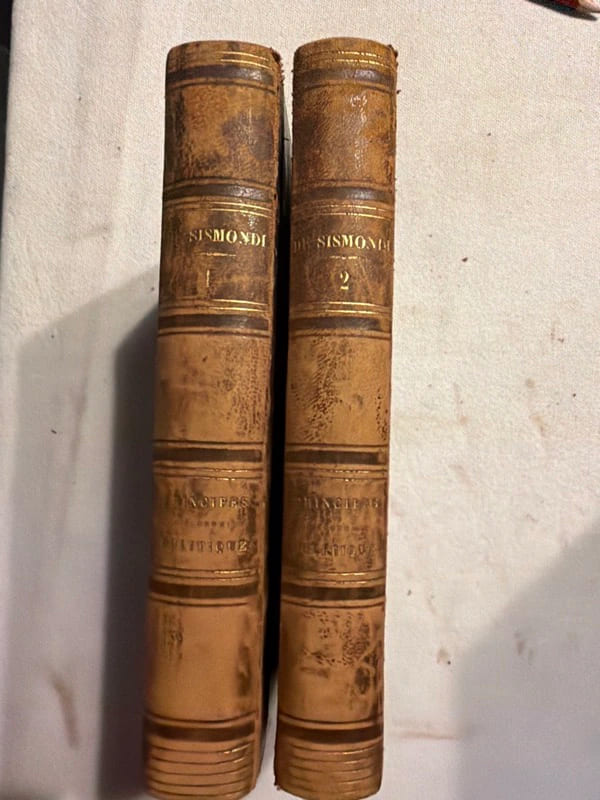
réf. 170789Paris, Delaunay, 1827 2 vol. in-8, [4]-XXIV-514 et [4]-506 pp., demi-basane brune, dos lisse, filets dorés (rel. de l'époque). Dos frotté, rousseurs.
1760réf. GIT00076A La Rochelle chez Jérôme Légier et Pierre Mesnier 1760. 2vol in-4 XLII 1f n ch 766pp 2ff blancs et XII 796pp 1f blanc. Pleine basane havane, dos à nerfs orné de compartiments dorés, pièces de titre et de tomaison rouges, tranches brique, rel époque. Coiffes et coins usés, petits manques de cuir sur les dos.
1924Telephone Talk was the glossy bimonthly publication of the British Columbia Telephone Company. It was written by employees for employees to present information of interest to those engaged in the plant, traffic, commercial, operating, accounting and other departments of the service. Each issue is replete with black and white photos and information on topics such as: company, industry and technological news, traffic levels, expansion plans, personnel announcements, publicity and social events, deaths, weddings, lists of exchanges, and more. As such, these issues serve as a vital preserve of rare and fascinating British Columbia history. This volume covers topics including: Great cover photo of Duncan operating room; Several photos of new interior plant equipment at Duncan; Sensational 9-page feature on Duncan and district with great photos of the area including Duncan Station, Maple Bay, Genoa Bay, and an aerial view; Fire deprives downtown Vancouver of service - photos and text; Grand Forks office and staff; Table showing "Exchanges in order of Per Cent Good Calls Out"; Statement of Development as of 1 January 1924 showing number of phones per community; Cover photo of steamer Jacques Cartier; Nice full-page showing two views of Vancouver Harbour with many ships in port; 7 page feature on the Port of Vancouver with several great photos; Possibilities of both radio and wire telephony; Exchanges in order of percent good out calls; Excellent full-page photo of Ballantyne pier, Burrard Inlet; Take advantage of company's new savings plan; Fine addition to shipping facilities on Burrard Inlet - Ballantyne Pier - 5 great photos with text; Greater Vancouver will benefit by reduced telephone rate; Repair shop has greatly expanded in recent years - 6 pages with nice photos; nice full-page photo of the Empress of Australia in port; Greater Vancouver Inter-Exchange Telephone Service; Fold-out map of Vancouver area exchanges, complet with great statistics; Telephone extenstion to Campbell River; 8 page feature on the flow of commerce through Canada's western port with many absolutely smashing photos; Cover photo of Glenburn office; 6-page feature on the B.C. Herring fishery with excellent photos (re: sea lions, contains the following quote "The government is undertaking to greatly lessen the numbers of this prey animal"); archival photo of laying the first underground cable in Vancouver; Statement of Development - # of phones operating in each community; Cover photo of Milner office; photo mosaic of 5 lower valley exchange offices; Wonderful 8 page feature on the great supply district (i.e. the lower Fraser Valley) of BC coastal cities - excellent photos including a shot of the only remaining original Hudson's Bay Company building at Langley; New Gordon Head Exchange cut over; New Point Grey office under way; new observation office aids efficiency; Electrical Communication Development; Full-page photo of sailors from the battleship H.M.S. Repulse marching through Vancouver; Multiple photos of British warships docked at Victoria; Article and photos of the visit of the Royal Navy to Vancouver; The Traffic Department and the Public it serves; Tennis Tournaments; Printing a phone directory; Great feature on Ship Salvors (Salvagers) with many photos; A motoring trip through the U.S., with photos; Biggest cable will cross False Creek; Oxygen Farms; Cornelius Vanderbilt writes of his long distance call from Alberni to Los Angeles; P.B.X. serves interesting purposes - 5 pages with photos; Early motor tourists to B.C., with photos; Full-page photo of the Empress of Canada; 5 page illustrated article on the reclamation of the Sumas; The switchboard as a newspaper; Health secrets of the telephone pole - 3 illustrated pages; new Victoria equipment; Bayview library proves popular; cover photo of a long-distance operator timing a call with a calculagraph; Billing toll and inter-exchange calls keeps eight clerks busy - 3 pages with photos; 7 page a Book
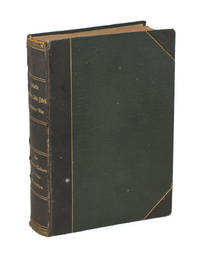
1921Telephone Talk was the glossy bimonthly publication of the British Columbia Telephone Company. It was written by employees for employees to present information of interest to those engaged in the plant, traffic, commercial, operating, accounting and other departments of the service. Each issue is replete with black and white photos and information on topics such as: company, industry and technological news, traffic levels, expansion plans, personnel announcements, publicity and social events, deaths, weddings, lists of exchanges, and more. As such, these issues serve as a vital preserve of rare and fascinating British Columbia history. This volume covers topics including: Greatest growth of company was during past year; Sound - a non-technical talk on a technical subject; Accidents which a careless workman may cause; Graph of the number of phones in service from 1903 through 1920; Table listing the exchanges in order of percent good toll calls; Statement of development - a table listing the number of phones in service per exchange across the province; Photo montage of three of the Agents of lower mainland offices; Proposed central office extensions indicate a busy year; Snow and wind storms seriously damage toll leads on Vancouver Island; Repairing submarine cable near Friday Harbor was trying experience; Preparing to lay a third cable between the mainland and Vancouver Island; Magnets - non-technical talk on a technical subject; Statistical Review of the province's industries; Nice photo montage of 5 lady Vancouver Island company representatives; Planned additions; Start of Export Trade in Bulk Wheat - nice photos; Naming a telephone office; Fourty Years of the Telephone; Photo montage of 4 lady company representatives on southern Vancouver Island; The Gathering of Material for Use of Telephone Men - 5-page illustrated article; Application for increased rates before Railway Board; Shipping railway ties to Egypt; Plant activities; Excellent 10-page article describes the laying of the second submarine cable to Vancouver Island (Point Grey to Nanaimo) - many great photos; Photo montage of four lovely ladies who serve as supervising officials in the traffic department; Railway board accedes to request for rate increase; Repair job on North Vancouver Submarine Cable - photos and map; First Convention of Canadian telephone companies very successful - 10 page article with photos; Convention Delegates tour Capilano Timber Company operations - photo montage; Photo montage of chief operators of mainland two-number offices; new Kerrisdale exchange opens; New P.B.X at Spencers (Department Store); Current phone directory is an improvement; 2 pages of samples of past phone directories; Construction of switchboard cords; laying conduit along Georgia St., Vancouver (2 photos); Emergency reveals bravery of B.C. telephone operators; photos of Port Coquitlam flood; amazing photo of washed out bridge over Capilano River; Pioneer line construction - telegraph line between Toronto and Buffalo, NY in 1846; Good Qualities of Loud Speakers; photo of timber cutting to clear a right-of-way to give service to the Broadview district; photo of underground conduit being laid in downtown Nanaimo, with horses and wagon in picture; What constitutes Central's activities at the Capital City Exchange - 4 pages with photos; Rubber covered wires and cables - 3 page article with photos; and more. Half-leather binding. Average wear. Backstrip loose along front edge. Ink stamp of company executive E.P. LaBelle upon top edge else unmarked. Binding intact. Aside from backstrip, a sound copy. Book
1903réf. R320108082IMP. GOUNOUILHOU. 1903. In-4. Relié demi-cuir. Bon état, Couv. défraîchie, Dos satisfaisant, Intérieur frais. 55 + 416 + 28 pages - Plats et contre-plats jaspés - Titres, filets, fleurons et reliure signée, dorés au dos - Dos à 5 nerfs. 3 PHOTOS DISPONIBLES -. . . . Classification Dewey : 620-Art de l'ingénieur et activités connexes
1910504 pages. Index. "The discovery of a number of minute-books and official documents has made it possible in a considerable number of cases to reach conclusions as precise as those obtainable about a modern company in the Official Intelligence or the Stock Exchange Year-Book." - from Preface. Frontis is comprised of a two-page black and white reproduction of a 1622 map illustrating the Somers Islands and the land-holdings of its shareholders. Average soiling and wear. Binding intact. Sound copy. Please note: this book is Volume II (only) of a three-volume set. Book
1812réf. 32795Quebec Printed at the New Printing-Office / Imprimé a la Nouvelle Imprimerie 1812 In-8 illustré de planches hors-texte, 6f. (titre en anglais, titre en français, Circular, Circulaire, Introduction et Discours préliminaire, par F. Vassal de Monviel), 248p., 1f. blanc, 15 planches dont 2 grands tableaux repliés, et 2f. (Index). Couvrure de l'époque, papier gris, avec pièce de titre manuscrite au dos (étiquette en queue).
1901réf. 106049Ludwigshafen am Rhein: Badische Anilin- & Soda-Fabrik 1901. First Edition. Hardcover. Very Good. Ludwigshafen am Rhein Badische Anilin- & Soda-Fabrik 1901. Quarto x last blank 534 xi index pages plus 2 plates showing the company's German French and Russian factories and 20 'Pattern Sheets' with over 620 captioned mounted samples of dyed fabrics and threads. Original half morocco-grain cloth with green cloth sides embossed with a crocodile-skin pattern; spine lettered and decorated in gilt; joints cracked but sound; covers slightly marked with light wear to the corners and minor loss to the head and foot of the spine; paper lightly toned with occasional light foxing; a few trifling signs of use; overall a very good copy with the wonderful fabric samples uniformly bright and in fine condition. A comprehensive manual to the aniline dyes produced by the Badische Anilin- & Soda-Fabrik including detailed instructions for dying yarns and printing fabrics. The mounted samples comprise wool 135 fabric swatches; cotton 180 swatches and tassels of thread; silk 138 tassels; blended fabrics 96 swatches; and printed fabrics 72 swatches and tassels. The verso of the front flyleaf contains a printed generic 'with compliments' message ending with 'For Own Use Only'; this copy was presented to the John Young & Company cotton mill in Radcliffe Manchester in January 1907. Founded in 1865 the Badische Anilin- & Soda-Fabrik was a pioneer manufacturer of synthetic dyes. Still based in Ludwigshafen and now trading as BASF it is currently the largest chemical producer in the world. Badische Anilin- & Soda-Fabrik] hardcover
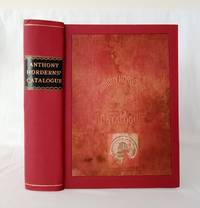
1914réf. B6358Sydney: Anthony Hordern and Sons. 1914. Hardcover. Very Good. Some light water marks confined to prelims. Some corners lightly worn.; Rebound in burgundy buckram title label in gilt. Original cloth cover laid down.; Small 4to 9" - 11" tall; 1530 pages; Overall an excellent specimen of a rare WW1 issue . Anthony Hordern and Sons hardcover
2003réf. CBS-9780521788915Cambridge University Press 2003. New. Cambridge University Press unknown
2003réf. CBS-9780521788908Cambridge University Press 2003. New. Cambridge University Press unknown
2003réf. CBS-9780521788915Cambridge University Press 2003. New. Cambridge University Press unknown
2003réf. CBS-9780521788908Cambridge University Press 2003. New. Cambridge University Press unknown
réf. 45579D. Mason & Sons. Ltd. Birmingham. N.d. c.1900. Large 4to. 135 very attractive plates mainly coloured of examples of products including harnesses for carriage horses stable and carriage lanterns saddles leather dressings portmanteaus bits riding habits rosettes and everything that could possibly be needed in relationship to a horse. Text includes index and price lists. Original green cloth printed in black. Apart from light stain to bottom corner of outer edge of pages a small patch of fading to rear board near head of spine tiny mark to spine and some slight wear to head and tail and lower joint of spine an almost immaculate copy of a very scarce and desirable item. Fine. hardcover
1952réf. 15715Montréal 1952 Collection de 156 brochures et dépliants promotionnels d'entreprises manufacturières.
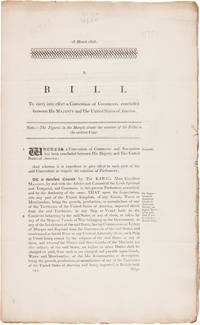
1816réf. 39129London: Ordered by the House of Commons to be Printed March 18 1816. Trade Restored After the War of 1812 Official Parliamentary draft printing of a commercial agreement between the United Kingdom and the United States passed just over a year after the signing of the Treaty of Ghent. The convention of commerce establishes that the same import and export duties be applied to goods carried by American and British ships in direct British-American commerce. Duties on and bounties for prize ships and goods are also put on the same terms. This version of the bill would have been printed while the question was being considered by Parliament. Not in Kress or TPL and not listed on OCLC. 2pp. plus docket title printed on verso of second leaf. Folio. Early horizontal folds. Near fine. Untrimmed. unknown
1816réf. 39129London: Ordered by the House of Commons to be Printed March 18 1816. Trade Restored After the War of 1812 Official Parliamentary draft printing of a commercial agreement between the United Kingdom and the United States passed just over a year after the signing of the Treaty of Ghent. The convention of commerce establishes that the same import and export duties be applied to goods carried by American and British ships in direct British-American commerce. Duties on and bounties for prize ships and goods are also put on the same terms. This version of the bill would have been printed while the question was being considered by Parliament. Not in Kress or TPL and not listed on OCLC. 2pp. plus docket title printed on verso of second leaf. Folio. Early horizontal folds. Near fine. Untrimmed. unknown books
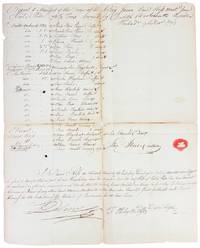
1792réf. 31794Philadelphia: s.i. 1792. Very Good. Philadelphia: 1792-93. Single folded sheet 41.5 x 33.5cm; report in manuscript verso filled nearly to completion recto a quarter filled. Signed by Captain David Ross and two other parties; docket dated 1793 signed by Inspector Jeremiah Simmons. Stock exceedingly brittle with shallow chipping long closed tears along folds with old archival mending age-toning and light soiling as well as contemporary wax seal remnants. Overall a Very Good and legible survival. Cargo report executed in manuscript and dated November 9th 1792 listing materials shipped from Port-de-Paix Saint-Domingue modern day Haiti to Philadelphia for the firm Dutilh & Wachsmuth. The date places this report in the early days of the Haitian Revolution following the August 1791 enslaved peoples' revolt. The island was a vital source of commercial interests to Philadelphia and the burgeoning revolution was at the forefront of everyone's mind making this voyage and the survival of associated documents all the more significant. Dun cites one contemporary account "'No business is going on here' one letter told 'as every one is taken up with meetings committees and arming themselves.'" Dun p. 484. Goods delivered include wine sugar and coffee and were delivered to Dutilh and a handful of others including Captain Ross himself who received a hogshead of molasses. Ross eventually rose to the rank of Continental Navy Lieutenant during the Quasi-War with France and is remembered for commanding the privateer Belvedere guiding her back to Dover after an engagement with a French brig "leaving Belvedere with 50 round shot in her hull and her sails and rigging further shredded." References: James Alexander Dun "What Avenues of Commerce Will You Americans Not Explore! Commercial Philadelphia's Vantage onto the Early Haitian Revolution." The William and Mary Quarterly July 2005 Third Series Vol. 62 No. 3 pp. 473-504 See also the Destroyer History Foundation website. [s.i.] unknown
1792réf. 31794Philadelphia: s.i. 1792. Very Good. Philadelphia: 1792-93. Single folded sheet 41.5 x 33.5cm; report in manuscript verso filled nearly to completion recto a quarter filled. Signed by Captain David Ross and two other parties; docket dated 1793 signed by Inspector Jeremiah Simmons. Stock exceedingly brittle with shallow chipping long closed tears along folds with old archival mending age-toning and light soiling as well as contemporary wax seal remnants. Overall a Very Good and legible survival. Cargo report executed in manuscript and dated November 9th 1792 listing materials shipped from Port-de-Paix Saint-Domingue modern day Haiti to Philadelphia for the firm Dutilh & Wachsmuth. The date places this report in the early days of the Haitian Revolution following the August 1791 enslaved peoples' revolt. The island was a vital source of commercial interests to Philadelphia and the burgeoning revolution was at the forefront of everyone's mind making this voyage and the survival of associated documents all the more significant. Dun cites one contemporary account "'No business is going on here' one letter told 'as every one is taken up with meetings committees and arming themselves.'" Dun p. 484. Goods delivered include wine sugar and coffee and were delivered to Dutilh and a handful of others including Captain Ross himself who received a hogshead of molasses. Ross eventually rose to the rank of Continental Navy Lieutenant during the Quasi-War with France and is remembered for commanding the privateer Belvedere guiding her back to Dover after an engagement with a French brig "leaving Belvedere with 50 round shot in her hull and her sails and rigging further shredded." References: James Alexander Dun "What Avenues of Commerce Will You Americans Not Explore! Commercial Philadelphia's Vantage onto the Early Haitian Revolution." The William and Mary Quarterly July 2005 Third Series Vol. 62 No. 3 pp. 473-504 See also the Destroyer History Foundation website. [s.i.] unknown books
1850réf. 61392Philadelphia PA: The company 1850. Engraved broadside 14 x 12 inches text executed in several sizes and styles of lettering. Krider was a long-time Philadelphia sporting goods dealer and sportsman and the author of Krider's Sporting Anecdotes 1853. Henderson p. 158 dating the broadside "ca. 1850". Augustus Kollner has been identified as the engraver. OCLC locates four copies Clements American Antiquarian Society Hagley Museum Library of Congress. Margins a little browned several short tears into margins but a very good example of a handsome sporting exhibition broadside. #8465. The company unknown
1850réf. 61392Philadelphia PA: The company 1850. Engraved broadside 14 x 12 inches text executed in several sizes and styles of lettering. Krider was a long-time Philadelphia sporting goods dealer and sportsman and the author of Krider's Sporting Anecdotes 1853. Henderson p. 158 dating the broadside "ca. 1850". Augustus Kollner has been identified as the engraver. OCLC locates four copies Clements American Antiquarian Society Hagley Museum Library of Congress. Margins a little browned several short tears into margins but a very good example of a handsome sporting exhibition broadside. #8465. The company unknown books
1880réf. 237851880. Ceylon colonial photo archive depicting tea cultivation estate labor transportation and urban life circa 1880s to 1910s documenting the plantation economy that made the island one of Britain's principal sources of tea as British merchants shifted the enormous domestic tea market away from China and toward production within the Empire. Coffee leaf rust appeared in Ceylon in 1869 and spread rapidly through the island's coffee districts precipitating the collapse of the crop that had dominated the colonial export economy and accelerating planters' conversion of the central highlands to tea. James Taylor had established commercial tea cultivation at Loolecondera Estate near Kandy in 1867 and the new industry expanded rapidly as coffee failed; by 1900 some 380000 acres in Ceylon were planted in tea. By 1879 the results showed that in more than 70 percent of tea sold in London still came from China while by 1900 China supplied only about 10 percent and black teas from British controlled India and Ceylon constituted the bulk of the market. Photo archive of albumen and silver gelatin photographs and photographic postcards ranging from approximately 3½ x 5 to 4 x 6 inches Ceylon circa 1880s to 1910s. Tea production forms the strongest body of imagery. Women and men stand among densely planted tea bushes or work through rows of plants with women carrying the large woven baskets used to collect leaves; individual and group views are captioned "Tea plucker" "Tea picking Ceylon" "Pruning tea Kandy" and in French "Cueillette du thé à Ceylan." One Skeen & Co. Colombo card numbered 84 and captioned "Tea plucker" isolates a woman at work with a large basket strapped behind her while another shows a large group of workers seated with baskets and gathered tea in a plantation clearing. A card captioned "Estate coolies Ceylon" depicts an estate employee in European dress standing with women and a child outside a thatched dwelling preserving in its printed terminology the racial and labor classifications through which plantation workers were presented to contemporary consumers of colonial imagery. Other photographs move from plantation production into the roads vehicles and cities of colonial Ceylon: rickshaw pullers pose with European passengers and beside their vehicles; a street scene records "Native town Kandy Ceylon"; Colombo appears in views of the "Colpetty Road near Galle Face Colombo" a crowded procession captioned in French "Colombo départ des troupes Anglaises" and a civic monument among palms. Another postcard depicts "Royal visitors leaving Ceylon" while a country road scene shows pedestrians carts and roadside activity. Skeen & Co. one of the principal commercial photographic firms operating from Colombo in the late nineteenth and early twentieth centuries is identified on several cards but no single photographer can be assigned to the archive as a whole. The tea scenes record the labor at the center of one of the fastest agricultural conversions in the nineteenth century British Empire. Coffee rust Hemileia vastatrix was first observed in Ceylon in 1869 and within little more than a decade had destroyed the commercial basis of the coffee plantation system; tea already demonstrated commercially by Taylor replaced it across much of the highlands. Ceylon tea exports to Britain rose from only 282 pounds in 1875 to more than 4.3 million pounds in 1885 while the plantation landscape expanded until almost all former coffee districts had been replanted with tea during the 1890s. That expansion depended on a large year round plantation workforce much of it composed of Tamil laborers brought from southern India and on the colonial infrastructure that connected the highlands with Colombo and overseas markets. Roads and the railway between Kandy and Colombo had initially served the coffee economy and could be redirected toward tea after the blight while Colombo developed as the commercial and shipping center through which the crop entered imperial markets. The archive therefore records several stages and social spaces of the same colonial economy from plucking and pruning in the highlands to estate communities road transport Kandy and the metropolitan port city of Colombo while the postcards themselves show how plantation labor and colonial development were converted into commercial images for circulation beyond the island. Light to moderate surface wear toning occasional fading and creasing with some photographs showing age related discoloration and edge wear. Overall in good condition. A visual record of the plantation labor and colonial infrastructure behind Ceylon's transformation from a failed coffee economy into a major tea producer that helped Britain replace Chinese tea with supplies produced under imperial control. unknown