[Great Lakes Region – Maritime Trade – Women] Faragher, William; Faragher, Harriet ChamberlinBiblio.com
16.921 risultati
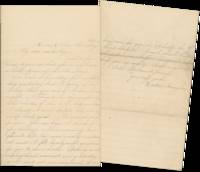
1909rif. List3421Ohio Illinois Michigan and Ontario 1909. Seventy-four letters in thirty-seven envelopes mainly dating between 1885 and 1895. With two undated and one empty envelope. Conditions vary with a few letters having damage intersecting with significant amounts of text and others Near Fine. Overall excellent. A collection of letters mainly sent between Captain William Faragher 1842–1921 and his second wife Harriet Chamberlin 1853–1920 with several from Faragher’s children from his first marriage Burton 1872–1961 and Maude 1875–1952. Most letters are from Chamberlin to Faragher with fourteen from Faragher to Chamberlin. Faragher owned and captained several merchant ships in Lake Erie and Lake St. Clair—presumably sailboats as he frequently complains of having been stuck without wind. He also describes more severe weather out on the lake writing from St. Clair Michigan: “I am anxious to get down from here but as the day advanced the wind began to frisken and it began to snow hard and as it was freezing hard it had rained then snowed and then froze hard saturday night so the poor Venture was in a sad plight but she was in a worse one when we got to where we lay run as it breezed up fresh and the wind dead ahead the water was flying over her in all directions and froze wherever it fell and besides it had turned into a blinding snow storm but we had a certain point to make . she seemed as anxious to get to a place of safety as I did and as the boys say she got there and none too soon as it has been blowing a gale ever since and snowing and freezing but we are in the lee and at a good dock and are comfortable but oh the wind is whistling through the rigging .” November 20 1887 In the 1880s steamships were increasing in popularity on the Great Lakes primarily because of sailboats’ susceptibility to both calm and weather; steamboats were bulky for their capacity and slow but more reliable whereas sailboats could carry overall more cargo.1 Generally steamers took packaged goods and passengers and sailboats mainly schooners took bulk cargo. The Great Lakes were the site of much shipping innovation; Faragher’s fleet was not yet behind the times but steam would overtake sail in the 1880s and 90s. Faragher’s cargo was mainly produce—apples and grapes—though he does mention picking up salt and other materials. His letters indicate that his business involved both shipping and mercantile aspects: he chose and bought the products shipped them to their destination and then also had to find and sell to customers. The grapes in particular seem to cause a lot of trouble: “We left Lorain Sunday morning early and had a nice trip to the Island got there at 4 PM bustled around monday morning and bought 400 baskets of grapes and had them all aboard by dark . it commenced to snow just as we got to Marine City bad bad omen for grapes but imagine my chagrin when I went up town and not a store or commission house wanted a grape folks were full of grapes and there was no sale for them and they said that I had got left and if the truth were known they were glad of it but its a cold day when I get left if trying will lit me out but one thing certain the weather and the lateness of the season were against me but you know I never cross a bridge before I get to it well we hauled up to our old Island Saturday morning and I sold out to my old friend . we had sold since 11 am 190 baskets of grapes . only half our cargo and at a good margin too. People would ask are you the man that was arrested here for selling grapes when told yes they seldom failed to buy but the strangest part was the number of ladies that came to buy”. October 28 1887 Though he does not narrate the incident in which he was arrested for grape peddling—nor does it appear to have made the paper—he later mentions yet another grape-related debacle this time at Port Huron: “Sander and I went to town to sell the grapes today . when down came a city official and wanted to know if I had a license to sell . well I couldent sell another grape without paying 5.00 a day license that was a stormer you see the whole sale men were going to drive me out of the market . but they were not as sharp as they thought they were I went and gave a bill of sale of my whole cargo to a citizen here and he appointed one of his agents to sell the grapes” September 20 1888 Faragher’s letters here do not discuss the financial state of his business but given Chamberlin’s statements it cannot have been all too positive. Chamberlin’s letters depict a woman struggling with her financial circumstances and with how the era’s expectations of her gender intersected with them. In one illustrative letter she writes: “A man drove by here Sat. asking for you. Ms. Lawler has given him her note to collect. He says the interest brings it to nearly fifty dollars. I told him I thought you could not meet it just at present but he said he must have the money and would give you just one week and if it was not paid then he would let the law settle it. Marvin and Laird are his lawyers. Mr. Laird is the one who helped get my money from father’s estate. I would not have them connected in this way about you for – O a great deal!! I have thought and planned till it seems as though my brain would burst. I have inquired about that law regarding taking any more married women as teachers. If Mr. Day would work for me it might perhaps be broken. There will be a vacancy in the Detroit building this fall. Will if I possibly can I want to commence teaching in Sept. The children would have to learn to do more about the house and with both of us earning it seems as though some of these harassing debts must be settled after a time. The frequent calls of men with bills against you have taken away all my pride and I believe I am humble enough to do most anything now.” July 11 1887 In 1887 Ohio passed the Married Women’s Property Act which allowed married women to keep their own property separate from their husbands’—in fact Chamberlin occasionally mentions “her” money in her correspondence. At the same time the state’s Board of Education was debating passing an act that would not only ban school districts from hiring married women as teachers but also fire all the married women it then employed. Newspaper reporting at the time indicates that this measure was not particularly popular not the least because married women tended to be older and more experienced with the job. Chamberlin clearly perceives her role as a wife in a rather more progressive way at one point writing to Faragher that “a true wife” is “not a doll-baby to be kept in finery” N.d. after he had taken out a loan to send her money for a new hat. Throughout their correspondence Chamberlin is perhaps surprisingly open with Faragher about her opinions particularly on his work and their financial affairs; for instance: “I should like to examine your pocket-book after that $25 tax money left it. What are you going to live on up there while you are hunting for freight Sawdust won’t put any fat on your bones. Sailing up and down past Saginaw bay won’t prolong your life or lessen your grey hairs. What are you sailing for anyway For the sake of wearing yourself out and giving employment to two or three men and keeping the Root from rusting out I guess I am naughty!” May 25 1894 She also frequently provides her opinion on whether and at what rate Faragher should sell his two other ships besides the Root the Venture and the Sassacus. She continues in the same letter: “I know I almost had a regular fight yesterday morning right there on the lounge. I wanted to do my housework and I couldn’t. I wanted to sew and I couldn’t sit up long for that. I wanted to help you and I couldn’t. I wanted to earn money and whereas I used to earn fifty-five cents for every hour I worked now I can not earn anything. Then if I could not do for self and family I wanted to make church and S.S. calls but I couldn’t walk for that.” Of course she was at that time prevented from these activities by her health not by gendered standards but she clearly had financial ambitions for herself. After her time as a regular school teacher Chamberlin taught at a Sunday school where she earned a few cents per student and in one letter reported having eighty-one students in a single session. Chamberlin also struggles with the expectations of her as step-mother to Faragher’s two children from his first marriage to Emma Humphrey 1848–1880. She writes: “I get so discouraged sometimes and it seems as though I am in the wrong place as mother. I think of Emma as my sister. I want to do as she would have me. I look upon my work as sacred. And yet sometimes I feel as though life was not worth living.” November 5 1886 She frequently describes conflict with Burt who was then in his late teens to early twenties writing that she could not “have quite the very own mother-love for him” though she is “sure that Emma was not more conscientious in her desires to do right by him than I am” May 20 1891. As it still is today the role of step-mother was a difficult and frequently demonized one with the trauma of losing a mother and wife often in conflict with the feminine duty of maintaining perfect domestic harmony. In general Chamberlin seems to have been somewhat out of step with the feminine ideal of the time even telling Faragher in a letter describing the death of an acquaintance’s baby how glad she was to not have any children of her own. Overall a look at the private lives and difficulties of a middle-class Ohio household as despite the relative prestige of its head being a captain-owner it struggled with debt. Of interest to both historians of Great Lakes trade and those of women’s roles in the late nineteenth century. 1 Dina M. Bazzill “The Missing Link Between Sail and Steam: Steambarges and the Joys of Door County Wisconsin” East Carolina University Program in Maritime Studies Research Report no. 19 2007. unknown
1909rif. List3421Ohio Illinois Michigan and Ontario 1909. Seventy-four letters in thirty-seven envelopes mainly dating between 1885 and 1895. With two undated and one empty envelope. Conditions vary with a few letters having damage intersecting with significant amounts of text and others Near Fine. Overall excellent. A collection of letters mainly sent between Captain William Faragher 1842–1921 and his second wife Harriet Chamberlin 1853–1920 with several from Faragher’s children from his first marriage Burton 1872–1961 and Maude 1875–1952. Most letters are from Chamberlin to Faragher with fourteen from Faragher to Chamberlin. Faragher owned and captained several merchant ships in Lake Erie and Lake St. Clair—presumably sailboats as he frequently complains of having been stuck without wind. He also describes more severe weather out on the lake writing from St. Clair Michigan: “I am anxious to get down from here but as the day advanced the wind began to frisken and it began to snow hard and as it was freezing hard it had rained then snowed and then froze hard saturday night so the poor Venture was in a sad plight but she was in a worse one when we got to where we lay run as it breezed up fresh and the wind dead ahead the water was flying over her in all directions and froze wherever it fell and besides it had turned into a blinding snow storm but we had a certain point to make . she seemed as anxious to get to a place of safety as I did and as the boys say she got there and none too soon as it has been blowing a gale ever since and snowing and freezing but we are in the lee and at a good dock and are comfortable but oh the wind is whistling through the rigging .” November 20 1887 In the 1880s steamships were increasing in popularity on the Great Lakes primarily because of sailboats’ susceptibility to both calm and weather; steamboats were bulky for their capacity and slow but more reliable whereas sailboats could carry overall more cargo.1 Generally steamers took packaged goods and passengers and sailboats mainly schooners took bulk cargo. The Great Lakes were the site of much shipping innovation; Faragher’s fleet was not yet behind the times but steam would overtake sail in the 1880s and 90s. Faragher’s cargo was mainly produce—apples and grapes—though he does mention picking up salt and other materials. His letters indicate that his business involved both shipping and mercantile aspects: he chose and bought the products shipped them to their destination and then also had to find and sell to customers. The grapes in particular seem to cause a lot of trouble: “We left Lorain Sunday morning early and had a nice trip to the Island got there at 4 PM bustled around monday morning and bought 400 baskets of grapes and had them all aboard by dark . it commenced to snow just as we got to Marine City bad bad omen for grapes but imagine my chagrin when I went up town and not a store or commission house wanted a grape folks were full of grapes and there was no sale for them and they said that I had got left and if the truth were known they were glad of it but its a cold day when I get left if trying will lit me out but one thing certain the weather and the lateness of the season were against me but you know I never cross a bridge before I get to it well we hauled up to our old Island Saturday morning and I sold out to my old friend . we had sold since 11 am 190 baskets of grapes . only half our cargo and at a good margin too. People would ask are you the man that was arrested here for selling grapes when told yes they seldom failed to buy but the strangest part was the number of ladies that came to buy”. October 28 1887 Though he does not narrate the incident in which he was arrested for grape peddling—nor does it appear to have made the paper—he later mentions yet another grape-related debacle this time at Port Huron: “Sander and I went to town to sell the grapes today . when down came a city official and wanted to know if I had a license to sell . well I couldent sell another grape without paying 5.00 a day license that was a stormer you see the whole sale men were going to drive me out of the market . but they were not as sharp as they thought they were I went and gave a bill of sale of my whole cargo to a citizen here and he appointed one of his agents to sell the grapes” September 20 1888 Faragher’s letters here do not discuss the financial state of his business but given Chamberlin’s statements it cannot have been all too positive. Chamberlin’s letters depict a woman struggling with her financial circumstances and with how the era’s expectations of her gender intersected with them. In one illustrative letter she writes: “A man drove by here Sat. asking for you. Ms. Lawler has given him her note to collect. He says the interest brings it to nearly fifty dollars. I told him I thought you could not meet it just at present but he said he must have the money and would give you just one week and if it was not paid then he would let the law settle it. Marvin and Laird are his lawyers. Mr. Laird is the one who helped get my money from father’s estate. I would not have them connected in this way about you for – O a great deal!! I have thought and planned till it seems as though my brain would burst. I have inquired about that law regarding taking any more married women as teachers. If Mr. Day would work for me it might perhaps be broken. There will be a vacancy in the Detroit building this fall. Will if I possibly can I want to commence teaching in Sept. The children would have to learn to do more about the house and with both of us earning it seems as though some of these harassing debts must be settled after a time. The frequent calls of men with bills against you have taken away all my pride and I believe I am humble enough to do most anything now.” July 11 1887 In 1887 Ohio passed the Married Women’s Property Act which allowed married women to keep their own property separate from their husbands’—in fact Chamberlin occasionally mentions “her” money in her correspondence. At the same time the state’s Board of Education was debating passing an act that would not only ban school districts from hiring married women as teachers but also fire all the married women it then employed. Newspaper reporting at the time indicates that this measure was not particularly popular not the least because married women tended to be older and more experienced with the job. Chamberlin clearly perceives her role as a wife in a rather more progressive way at one point writing to Faragher that “a true wife” is “not a doll-baby to be kept in finery” N.d. after he had taken out a loan to send her money for a new hat. Throughout their correspondence Chamberlin is perhaps surprisingly open with Faragher about her opinions particularly on his work and their financial affairs; for instance: “I should like to examine your pocket-book after that $25 tax money left it. What are you going to live on up there while you are hunting for freight Sawdust won’t put any fat on your bones. Sailing up and down past Saginaw bay won’t prolong your life or lessen your grey hairs. What are you sailing for anyway For the sake of wearing yourself out and giving employment to two or three men and keeping the Root from rusting out I guess I am naughty!” May 25 1894 She also frequently provides her opinion on whether and at what rate Faragher should sell his two other ships besides the Root the Venture and the Sassacus. She continues in the same letter: “I know I almost had a regular fight yesterday morning right there on the lounge. I wanted to do my housework and I couldn’t. I wanted to sew and I couldn’t sit up long for that. I wanted to help you and I couldn’t. I wanted to earn money and whereas I used to earn fifty-five cents for every hour I worked now I can not earn anything. Then if I could not do for self and family I wanted to make church and S.S. calls but I couldn’t walk for that.” Of course she was at that time prevented from these activities by her health not by gendered standards but she clearly had financial ambitions for herself. After her time as a regular school teacher Chamberlin taught at a Sunday school where she earned a few cents per student and in one letter reported having eighty-one students in a single session. Chamberlin also struggles with the expectations of her as step-mother to Faragher’s two children from his first marriage to Emma Humphrey 1848–1880. She writes: “I get so discouraged sometimes and it seems as though I am in the wrong place as mother. I think of Emma as my sister. I want to do as she would have me. I look upon my work as sacred. And yet sometimes I feel as though life was not worth living.” November 5 1886 She frequently describes conflict with Burt who was then in his late teens to early twenties writing that she could not “have quite the very own mother-love for him” though she is “sure that Emma was not more conscientious in her desires to do right by him than I am” May 20 1891. As it still is today the role of step-mother was a difficult and frequently demonized one with the trauma of losing a mother and wife often in conflict with the feminine duty of maintaining perfect domestic harmony. In general Chamberlin seems to have been somewhat out of step with the feminine ideal of the time even telling Faragher in a letter describing the death of an acquaintance’s baby how glad she was to not have any children of her own. Overall a look at the private lives and difficulties of a middle-class Ohio household as despite the relative prestige of its head being a captain-owner it struggled with debt. Of interest to both historians of Great Lakes trade and those of women’s roles in the late nineteenth century. 1 Dina M. Bazzill “The Missing Link Between Sail and Steam: Steambarges and the Joys of Door County Wisconsin” East Carolina University Program in Maritime Studies Research Report no. 19 2007. unknown books
rif. 229722Paris, Guillaumin [Imprimerie de Bourgogne et Martinet], 1837 - 1839 2 forts vol. gr. in-8, [2] ff. n. ch., 996 pp. ; [2] ff. n. ch., pp. 997-2252, texte sur deux colonnes, demi-chagrin fauve, dos à faux-nerfs ornés de filets et caissons dorés, tranches mouchetées (reliure de l'époque). Rousseurs.
rif. ORD-4804Code complet des aubergistes, maîtres d'hôtel, teneurs d'hôtel garni, logeurs, traiteurs, restaurateurs, marchands de vin, etc. Contenant l'historique des maisons où l'on donne à manger et à boire; la Législation, la Jurisprudence et les Règles de police relatives à ces Etablissements...suivi d'un traité complet De la Législation sur les Boissons,...Roret. sans date (1882)., en fait remise en vente en 1882 (?) par Roret de l'édition de Pagnères. 1838. Petit in-12 (106 x 165mm) br. couverture bleue imprimée, 204pp. et catalogue de la Librairie Roret 72pp. 2°plat rapiécé au scotch mais bel état intérieur.
rif. 203975Paris, Imprimerie nationale, An VII in-8, 10 pp., dérelié. Rousseurs.
1988rif. LFA017b6Revue trimestrielle de l'Institut international de géopolitique : environ 100 pages, format 210 x 280 mm, illustrée, brochée couverture couleurs
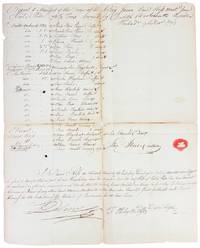
1792rif. 31794Philadelphia: s.i. 1792. Very Good. Philadelphia: 1792-93. Single folded sheet 41.5 x 33.5cm; report in manuscript verso filled nearly to completion recto a quarter filled. Signed by Captain David Ross and two other parties; docket dated 1793 signed by Inspector Jeremiah Simmons. Stock exceedingly brittle with shallow chipping long closed tears along folds with old archival mending age-toning and light soiling as well as contemporary wax seal remnants. Overall a Very Good and legible survival. Cargo report executed in manuscript and dated November 9th 1792 listing materials shipped from Port-de-Paix Saint-Domingue modern day Haiti to Philadelphia for the firm Dutilh & Wachsmuth. The date places this report in the early days of the Haitian Revolution following the August 1791 enslaved peoples' revolt. The island was a vital source of commercial interests to Philadelphia and the burgeoning revolution was at the forefront of everyone's mind making this voyage and the survival of associated documents all the more significant. Dun cites one contemporary account "'No business is going on here' one letter told 'as every one is taken up with meetings committees and arming themselves.'" Dun p. 484. Goods delivered include wine sugar and coffee and were delivered to Dutilh and a handful of others including Captain Ross himself who received a hogshead of molasses. Ross eventually rose to the rank of Continental Navy Lieutenant during the Quasi-War with France and is remembered for commanding the privateer Belvedere guiding her back to Dover after an engagement with a French brig "leaving Belvedere with 50 round shot in her hull and her sails and rigging further shredded." References: James Alexander Dun "What Avenues of Commerce Will You Americans Not Explore! Commercial Philadelphia's Vantage onto the Early Haitian Revolution." The William and Mary Quarterly July 2005 Third Series Vol. 62 No. 3 pp. 473-504 See also the Destroyer History Foundation website. [s.i.] unknown
1792rif. 31794Philadelphia: s.i. 1792. Very Good. Philadelphia: 1792-93. Single folded sheet 41.5 x 33.5cm; report in manuscript verso filled nearly to completion recto a quarter filled. Signed by Captain David Ross and two other parties; docket dated 1793 signed by Inspector Jeremiah Simmons. Stock exceedingly brittle with shallow chipping long closed tears along folds with old archival mending age-toning and light soiling as well as contemporary wax seal remnants. Overall a Very Good and legible survival. Cargo report executed in manuscript and dated November 9th 1792 listing materials shipped from Port-de-Paix Saint-Domingue modern day Haiti to Philadelphia for the firm Dutilh & Wachsmuth. The date places this report in the early days of the Haitian Revolution following the August 1791 enslaved peoples' revolt. The island was a vital source of commercial interests to Philadelphia and the burgeoning revolution was at the forefront of everyone's mind making this voyage and the survival of associated documents all the more significant. Dun cites one contemporary account "'No business is going on here' one letter told 'as every one is taken up with meetings committees and arming themselves.'" Dun p. 484. Goods delivered include wine sugar and coffee and were delivered to Dutilh and a handful of others including Captain Ross himself who received a hogshead of molasses. Ross eventually rose to the rank of Continental Navy Lieutenant during the Quasi-War with France and is remembered for commanding the privateer Belvedere guiding her back to Dover after an engagement with a French brig "leaving Belvedere with 50 round shot in her hull and her sails and rigging further shredded." References: James Alexander Dun "What Avenues of Commerce Will You Americans Not Explore! Commercial Philadelphia's Vantage onto the Early Haitian Revolution." The William and Mary Quarterly July 2005 Third Series Vol. 62 No. 3 pp. 473-504 See also the Destroyer History Foundation website. [s.i.] unknown books
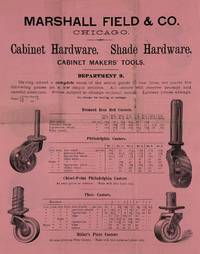
1890rif. 70447Chicago IL: Marshall Field 1890. Trade sheet. 4to. Bifolio four pages printed on pink paper illustrated from wood engravings. Tables giving the articles in various sizes and showing prices. Original illustrated self-wrappers some insect damage along several folds affecting letters but leaving text and numbers readable. Marshall Field unknown books
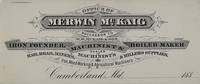
rif. 70448Cumberland MD: The company Clay and Richmond Buffalo 188no final digit. Trade slip on paper. Oblong 12mo 2 7/8 x 7 inches verso blank. This company not recorded in Romaine. Very good. The company (Clay and Richmond, Buffalo) unknown books
rif. 23695No place 4 March 1835. Two pages 4to good condition lacking at least a signature page. "An impediment in the arrangement of the Miscellaneous Records of the Exchequer which I feel it my duty to submit to the notice of the Board. I requested the Bagbearer to deliver to me for the purpose of cataloguing &c "whatever" excised all ministers Accounts of the period of Hen.8 & the immediately succeeding reigns.- These Ministers Accounts I regard as strictly Miscellaneous and for these reasons - That there is no catalogue or Index of them and That they are scattered in various places throughout the Records of the Office from "That" words added by him - perhaps indicating a draft That a considerable number are deposited in the number are deposited in the Stone Tower at Westminster without any classification or catalogue and their nature is only partially known: That Other portions of the same species of Record are distributed amongst the unarranged Miscellaneous Records at the Mews.- and that a third portion is at present in progress of being catalogues at the Augmentation Office. These "species of" elided Records I believe to be part of the large series of Ministers Accounts strictly belonging .". See the Image of the second page. Note: The additions and corrections to the text suggest this was a draft. Presumably addressed to a superior Charles Purton Cooper. No place, 4 March 1835. unknown
1934rif. 56852Dearborn MI: Henry Ford Trade School 1934. Quarto 28cm. Publisher's blue tape cloth-backed pictorial card wrappers; mixed pagination; illustrated throughout. Printed mimeograph. Light wear and a hint of spotting to extremities spine faded front corner bumped contemporary ownership rubberstamp to first page else Very Good or better. With a promotional booklet for the Henry Ford Trade School a combined high school and trade school that trained boys as Ford employees. Henry Ford Trade School unknown
1934rif. 56852Dearborn MI: Henry Ford Trade School 1934. Quarto 28cm. Publisher's blue tape cloth-backed pictorial card wrappers; mixed pagination; illustrated throughout. Printed mimeograph. Light wear and a hint of spotting to extremities spine faded front corner bumped contemporary ownership rubberstamp to first page else Very Good or better. With a promotional booklet for the Henry Ford Trade School a combined high school and trade school that trained boys as Ford employees. Henry Ford Trade School unknown books
1914rif. 0000874Washington D.C.: Government Printing Office GPO 1914. 217 pages. Maps and diagrams printed with the text. Contemporary half red morocco over beveled boards with gilt spine lettering raised bands and marbled endpapers. 29.5 x 23.5 cm. Ex-library with modest signs: faint impression of tiny removed call number at the base of the spine small discard stamp on the front endpaper and stamp of Franklin Public Library at base of the title and one other page. Else good plus. Moderate wear to the extremities front joint started at ends still quite sound. Several small stains on the rear cover. A little marginal damping to endpapers barely evident on the inner margin of the title page. FIRST EDITION. A report on the second of two special censuses of mental institutions in the United States the first having been conducted in 1904. Previously the Census Bureau had tracked rates of insanity among the general population only as part of the regular decennial censuses. The 1910 special census surveyed 366 institutions collectively holding 248560 inmates. Joseph A. Hill's report analyzes a multitude of demographics including sex age race literacy marital status state region urban vs. rural etc. Another factor considered was nativity. The inclusion of this question on the survey reflected in part contemporary nativist fears that immigrants were increasing the percentage of mentally ill in the United States although Hill's report refutes this supposition. Mary F. Griffin and Louis C. Taylor contribute a "Summary of Laws Relative to the Care of the Insane" pp. 64-105. The census of 1910 reflected a growing sophistication in analyzing statistical data. The claim that insanity was increasing rapidly Hill noted was dubious. A variety of determinants shaped the statistics of insanity he insisted including the growing practices of institutionalizing the insane; the increasing average length of life; new diagnostic methods in psychiatry leading to the detection of mental factors in physical cases; the establishment of dispensaries; provision for voluntary and emergency commitment; and better modes of transportation i.e. automobiles that made it possible to bring individuals in poor physical condition to mental hospitals. By correcting for the age distribution of the entire native and foreign-born population Hill also demonstrated that the allegation that immigrants had far higher rates of mental illness was in error. --Gerald N. Grob The Origins of American Psychiatric Epidemiology p. 232 in A.J.P.H. 1985. The general statistical tables for this volume were published separately the previous year without any of the explanatory text illustrations or additional tables present here. Government Printing Office (GPO) hardcover
1849rif. 764631849 Paris, Sagnier et Bray, 1849, fort volume in 8° relié demi-chagrin rouge, dos lisse orné, 600 pages ; des rousseurs ; quelques frottis.
rif. 8660Hongkong, 1914, Printed by the South China Morning Post. 1 volume, 8 vo, [31]-124 pp., hard cover boards, slightly soiled, leather spine, a good copy.
rif. 8296Hong Kong, Ta Kung Pao, first edition, 1957. 1 volume 8vo, hard cloth covers, 125 pp., with numerous advertisements in black and white, a very good and clean copy.
First Dublin Edition, ownership inscription of "Ph. Wolfe" on title, [2],70pp., disbound, uncut. The scarce Dublin edition. Goldsmith, 6502.
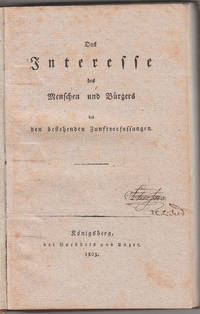
1803rif. 10056Konigsberg: Goebbels und Unzer 1803. First Edition. Contemporary paper backed boards and label. Very good; spine label partially abraded. 8vo xvi 1 - 232 pp. Statesman statistician and economist the author had an eminent career in public policy making and teaching. He was for a time the principal advisor to Hardenberg and present at Paris for the peace conference in 1813 as well as the Congress of Vienna. He was also responsible for the complete overhaul and modernization of the Prussian satistical bureau beginning in 1810. He was the author of several books on statistics as well as economics and law. The work offered here is his first publication. It is a detailed exposition of how the social and commercial maintenance of the guild system is an obstacle to the economic progress of the state and its populace. Given the author's proximity to the center of Prussian power and government it can be read as a 'map' for the future development of the German state under Prussian leadership after unification. Palgrave II p. 318. Goebbels und Unzer hardcover books
1892rif. Q2319New York: Jewelers' Circular Publishing Co. 1892. Hardcover. Fair. by one who has contributed such matter to The Jeweller's Circular for twelve years. laso deals with jewelry coloring polishing enameling annealing oxydizing etc. Large 8vo 220pp including 20 pages of advertisements many illustrated and/or artfully designed. Publisher's notice bound in. Good with heavy mottling bent textblock puncture to front pastedown and gouge at the upper edge of the rear board. Heavy soil to endpapers contents otherwise clean with excellent illustrated ads. 9 in OCLC. Jewelers' Circular Publishing Co. hardcover
1930rif. 49162Eureka: Humboldt County Board Trade n.d. ca 1930. ca 1930. First edition. 8 3/4" x 8" folded at center in self-printed pictorial wrappers with photograph of fishing on one half and trails through the Redwoods on the other. 11 1 pp. Printed in green and black. Illustrations. Map. Nicely illustrated motoring guide through Humboldt County with stops in Eureka Samoa lumber mill Hydesville Carlotta & Strong's Station on the Van Duzen River surf-fishing deep-sea fishing etc. Light soiling and with rubbing to fold and with light wear to the extremities. Very good. Humboldt County Board Trade, n.d. [ca 1930]. unknown
First edition, xxii, 240pp., library stamp on title and places in the text, early ownership signature on upper blank margin of leaf following the title, 3 folding tables at end (last defective), old water-staining of the tables and last 2 leaves, first and last few leaves chipped at margins, disbound. One of the significant works of it's era advocating free trade for Ireland, written in the form of a sequence of letters to the Lord Lieutenant of Ireland, Lord Buckinghamshire. However, "its doctrines being regarded as seditious it was ordered to be burnt by the common hangman." - DNB. Bradshaw, 2109; Wagner, 348; Kress, B203; Goldsmith, 11826.
1850rif. 81206Ministère de l’Agriculture et du Commerce, Gide et J. Baudry, éditeurs 1850 In-4. Reliure de l’époque demi-basane havane, dos lisse orné de filets dorés, VIII-184 pp., 15 planches, la plupart repliées. Reliure sensiblement frottée avec manque et accroc en tête et pied de dos, rousseurs. En l’état. Document peu courant.
rif. 95849Paris, Imp. Nationale Exécutive du Louvre, 1793 in-4, 4 pp., broché. Mouillure. Beau cachet rouge de l'époque.
rif. 175225Nevers, Imprimerie de la veuve Le Febvre, 1791 in-4, 3 pp.