14 731 résultats
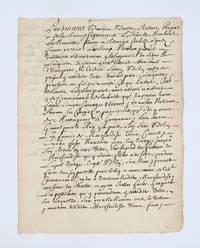
1843réf. 24188St. Louis: John B. Sarpy 1843. Folio. 2 pp. 12 1/2 x 7 1/2 inches. Docketed on verso fold lines with some separation a few repaired. A manuscript affidavit written by fur magnate John Baptiste Sarpy of Pierre Chouteau & Co. that gives one a granular sense of the difficulities of running a frontier business dependent on mountain men like Jim Bridger and Frapp. A remarkable window onto the business dealings of famed mountain man Jim Bridger this signed manuscript affidavit of John B. Sarpy testifies to his actions on behalf of the estate of fellow fur trader Henry Fraeb also known as Frapp who was killed by Indians in the Rocky Mountains. Sarpy who was a partner in the major fur firm Pierre Chouteau &. Co. had worked closely with Frapp and knew him well. In his affidavit he writes about the Chouteau Company's concerns about Jim Bridger Frapp's partner at the time of his demise and the difficulty of getting Bridger to pay his debts. Written in St. Louis Sarpy's affidavit states: "On the 8th day of August last he was appointed . . . administrator of the estate of Henry Fraeb then lately deceased. Said Fraeb had been a trader in the mountains & was at the time of his death in partnership with a man of the name of James Bridger & said Bridger & Fraeb were indebted to the firm of Pierre Chouteau Jr. & Co. & it was feared by the members of said firm that unless some one became the administrator of the said Fraeb the said Bridger might interpose difficulties in the settlement of the accounts existing between them & Bridger & Fraeb & for the purpose of doing justice to themselves as well as to the said Fraeb the said Sarpy applied for letters of administration which were granted to him as above mentioned. The said Bridger has however since this time been here & has settled in full the accounts existing between the firm of Pierre Chouteau Jr. & Co. & the said Bridger & Fraeb. And the said Sarpy says that no property has come into his hands as the administrator of the said Fraeb although it may be that the said Fraeb has property in the mountain country or in the hands of James Bridger his former partner." Though he may have been one of the greatest and most beloved mountain men of all time Jim Bridger was not the best debtor in the world nor did Pierre Chouteau & Co. forget business. John B. Sarpy unknown books
1688réf. 368775Montreal 1688. In French. 2pp. recto and verso on a single leaf. Signed by Perrot Bleinz and notary Benigne Basset. With an English transcription. Quarto. Old folds. Near fine. Provenance: Archibald de Léry MacDonald; Lawrence Lande. Exhibition: An Exhibition of Early Documents and Printed Material Relating to the Beginnings of Trade in North America from the Private Collection of Dr. Lawrence M. Lande McGill University May 30-July 15 1985 with an 8-page exhibition catalogue. In French. 2pp. recto and verso on a single leaf. Signed by Perrot Bleinz and notary Benigne Basset. With an English transcription. Quarto. Scarce seventeenth century voyageur fur trade contract for an expedition to the wilderness to trade with the Ottawa signed by one of the most important early traders and explorers of Canada and the upper midwest. "Partnership agreements such as this one of Nicholas Perrot are of great rarity" Lande. Perrot 1644-1717 was an explorer interpreter trader commandant diplomat and seigneur. He was one of the best-known figures in the early fur trade of New France particularly during the latter part of the 17th century and took possession of large tracts of land in the Great Lakes region in the name of King Louis XIV. His travels commonly took him deep into unexplored territory and he was the first Frenchman to explore the Upper Mississippi in what is now Wisconsin and Minnesota. Perrot arrived in New France about 1660 as a young donné or contracted assistant in the company of Jesuit Missionaries and travelled to the western Great Lakes region where he gained the friendship of the local First Nations people by trading guns for furs believing that they were entitled to defend themselves from their enemies. He also took the opportunity to learn several Native languages which served him well during his career. Perrot soon entered the fur trade full time and began forming business partnerships. He enlisted himself as a translator with government authorities and participated in peacekeeping missions to bring warriors of several First Nations together to sign peace treaties. By 1685 he was appointed Commandant-in-Chief at Bais des Puants present day Green Bay Wisconsin and surrounding regions and travelled to the upper reaches of the Mississippi River in the territory of the Sioux tribes where he built Fort St. Antoine in present-day Minnesota. During the spring of 1687 in preparation for taking part in raids on Indian villages in the Seneca country Perrot left his store of furs with the Jesuits at St. Francois-Xavier mission in present-day Wisconsin. While out with the raid party a fire at the mission destroyed his entire fur inventory valued at more than 40000 livres. Financially ruined Perrot returned to Montreal to deal with creditors and renew partnership agreements like the present. In the summer of 1688 Perrot partnered with Simon Bleinz to undertake an expedition to trade with the Ottawa Indians and other Nations. Perrot had always been a staunch ally of Governor Frontenac and had obtained a fur trade license from the governor for this venture to ensure that his activities were in keeping with the rules and regulations of the trade. The agreement states that Perrot would supply Bleinz with goods food provisions a canoe and other necessary supplies for the voyage and that Bleinz would convey the goods to the trading area and do all that he was able for the success of the partnership. Bleinz had the option of taking at his own expense six shirts two capots or hooded coats of blanket cloth moosehide or other material and one rifle to trade for his own personal profit. The pelts resulting from the venture were to be distributed evenly amongst Bleinz another unnamed associate of the partnership and Perrot. An "apichimon" or bonus of six beaver pelts was to be paid to Bleinz by the partnership upon the successful conclusion of the expedition. "Perrot who was often unappreciated even during his lifetime was France's best representative among the Indians of the west. His knowledge of the languages of the country his natural eloquence the happy blend of daring and coolness that were the essence of his character had made it possible for him to win the esteem confidence and even affection of the Indians. The Potawatomis the Menominees the Foxes the Miamis the Mascoutens and the Sioux granted him with the honours of the pipe of peace the rights and prerogatives enjoyed by their own chiefs. His credit was not less among the Ottawas and the Hurons. During the last four decades of the 17th century at a time when alliance with the nations of the west was indispensable in order to ward off the Iroquois peril and allow access to new territories Perrot thanks to the influence that he had acquired rendered valuable assistance to the colony" Dictionary of Canadian Biography. The present document is from the famed collection of Lawrence M. Lande 1906-1998 detailed as item 107 in his second bibliography of his collection The Founder of our Monetary System John Law Compagnie des Indes & the Early Economy of North America Montreal: 1984. Lande began collecting manuscript material relating John Law the Compagnie des Indes and the fur trade - North America's first economy - as early as the 1960s principally working with dealers Izzy Ehrlich and Alfred Van Peteghem purchasing material from the collections of Thomas Phillips Philip Sang and historian Archibald Lery MacDonald the assemblage of which Van Peteghem termed an "unparalleled feat." All of the printed material and many of the documents were donated by Lande in his lifetime; however a grouping of the manuscript items including the present document were sold by his heirs after his death. Lande Founder of our Monetary System 107 unknown books
1816Constantinople, Odessa, Canary Islands, Spain, Italy, 1816-1818. Manuscript journal chronicling two voyages with a British merchant brig called "Exchange," featuring a sixteen-month voyage for trade at the Turkish city of Constantinople and Russian ruled Odessa only five years after the conclusion of the Anglo-Russian War, and two years prior to Odessa becoming a Free Port, being a detailed nautical log made by Peter Cook, a ship's mate twenty-six years of age. Folio. 88 pages, with authorship signature. A purpose-made document produced by J. Robins & Sons of Southwark, for recording nautical data during a sea voyage, completed in manuscript by the marine. Double leafs measuring approximately 21 x 32 cm, watermarked "O & P 1812" and with the Britannia, string-tied with paper wrappers titled in manuscript to front. Together with a single leaf in the same hand, with a hand coloured manuscript drawing of a mariner's compass to recto, and manuscript notes on Traverse Sailing to verso, made by the same hand circa 1805-1810, measuring approximately 21 x 25 cm. Together with the mariner's pensioner ticket, a legal document made on vellum, completed in manuscript, dated and signed on 22 April 1872 by an administrator of the Board of Trade, measuring approximately 19,5 x 25 cm. Some age-toning, a few leafs chipped at margin, otherwise in very good and original condition. Little is known of the vessel or the writer, other than what is revealed in the present documents. Robert Ashton was the commander of the brig, "SS Exchange" whose home port at the time was Plymouth. Peter Cook, born 1790, was a man of short stature, evidently employed by the mercantile marine. He was placed on the Pension List by the Board of Trade at the Port of Milford, Surrey, effective 1 April 1871, and resided in Tenby in Wales. Manuscript
1873South Pacific Ocean, 20 May 1873. Manuscript signed letter written by an American merchant, Captain Summers of Honolulu, penned onboard a barque recently purchased by him, as he made his return voyage from Iquique (then part of the Viceroyalty of Peru) to the Sandwich Islands (Hawaii). 8vo. 4 pages. Double leaf letterhead measuring approximately 12,5 x 20 cm, with small embossed image of a colonial building. Mild age-toning and tearing at folds, otherwise in very good condition. In the July 1st 1873 issue of Honolulu's 'The Friend" magazine for mariners, this specific voyage was recorded as follows: "Liberian bark Clara Louise, Master Summers, Sailed from Iquiqui, Peru, May 4th, ... crossed the line... during three days had heavy winds and calms, took the NE trade... with fair weather, arrived on the 17th June." A letter of excellent content concerning one Honolulu ship owner's experience in the sea trade, Captain Summers describes his attempts to obtain cargo at Iquique (now in Chile, then part of Peru), mentioning saltpeter and copper, as well as the high price of fresh water. Finding little success in purchasing goods to resell on the Pacific coast of South America, he makes efforts to earn income by chartering cargo. He rightfully blames the introduction of the steamship for reduced opportunity available to independent merchants such as himself, still using sails to navigate large wooden vessels. Still, he remains optimistic of the opportunity to secure cargo in the Sandwich Islands, possibly owing to his Honolulu connections. Especially damaging to his endeavour and ambition is one unscrupulous character, referred to as 'Old Fearrington', from whom he purchased the barque Clara Louise. Upon trying to sell the vessel itself, in Callao, he found some of the vessel's wood to be rotten. His ship was therefore neither sellable, nor sea-worthy for cross-Atlantic voyages. Perhaps most disappointing, the captain could not afford the risk of transporting sugar, a lucrative and prolific commodity at the time, as the ship's hull could not be trusted with such weight. The recipient of this correspondence is the captain's brother Tom who appears to live in the San Francisco Bay area. The captain ends his letter with a request for his brother to write to San Francisco wholesaler and importer Cross & Co., most likely the captain's client. Excerpts from the letter: "My dear Tom, I have been down this way again and after a passage of 80 days anchored in Iquique itis one of the most desolate holes... not a spear of grass for 60 miles of the town, water 10 cents per gallon... 40 cents for washing a shirt." "... I discharged after 20 days delay what with holidays... I could get no cargo on this boat so I thought it best to try the Sandwich Islands... but 400 miles out of the way." "I might got some sugar if I had not been deceived in this vessel. I have had plenty of chance to sell but old Fearrington had the rotten wood all covered... had to trust his word but he did lie... I have sent him $2200 in gold of of this freight so you see that he has received $6000 from me in 15 months..." "... he deceived me, told me she was sound all through and I had not the money to spare to have her overhauled... if she had been a good sound vessel I could have sold her and made good a profit by it for both of us..." "When I wanted to sell it at Callao they overhalled and found some of her timbers rotten..." "I have not taken any wages since leaving and I think if I can get some more good charters I shall make myself whole and give him back his rotten old ship..." "... getting down to Iquique she commenced leaking... had to keep the pump going all the time... had to get caulked all over and now she is tite... " "I have been told by one of my best friends in Boston that old Fearrington will do me out of the profets & ship yet he has done so with several captains ruined them..." "... I don't know whether I will get any cargo at the Sandwich Islands but I am in hopes..." "... the business in both oceans is very dull the steamers take all the trade. If she was a sound vessel I would go to Japan or China and sell... she will not carry 300 tons with safety..." "I must now close... give my love to Sarah and all of your dear family. Write direct Cross & Co. California Strait S. Fran." "goodby from your affectionate Brother, Wm H Summers." End Excerpts. Further research is warranted to learn more about the Captain, although it appears from historical records that his home was in Honolulu. The present letter suggests that he was a man of integrity, and that he had family in San Francisco. The Annual Report of the Hawaiian Historical Society, Vol 5, mentions a Captain Summers of Honolulu who was involved in hunting seals in 1826 with a brig called Waverley. This may be the same Summers or a relation, possibly his father. A San Francisco Ship Passenger List names William Summers as making a voyage on a British schooner named Koh-i-noor in November 1851 from Lahaina to San Francisco, presumably to visit his brother. The ship had only a scant few passengers, but a substantial cargo of potatoes from Hobart Town, as well as potatoes and oranges from Hawaii. A book titled "History of Bucks County, Pennsylvania," edited by J.H. Battle; published by A. Warner & Co. in 1887, outlines genealogical connections and mentions, "Sir Richard Summers, from whom the Sandwich islands derived the name by which they were first known, as the Summers islands". This reference may lead to the lineage of Captain Summers who wrote the present letter. "The Friend" began as a monthly newspaper for seamen, which included news from both American and English newspapers, and gradually expanded to adding announcements of upcoming events, reprints of sermons, poetry, local news, editorials, ship arrivals and departures and a listing of marriages and deaths. Reverend Samuel Chenery Damon was sent by the American Seamen's Friend Society to be chaplain in Honolulu, where he began to edit and publish the periodical in 1843. Reverend Damon had published between a half million and a million copies of The Friend, most of which he personally distributed, by the time he retired in 1885. Manuscript
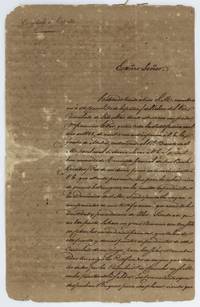
1828réf. 2401Gibraltar 1828. Good. 3pp. on a bifolium. Previously folded with separations. Tanned somewhat brittle. An interesting example of official communications concerning trade between colonial Cuba and the Spanish mainland. In this manuscript letter date March 14 1828 the new Spanish Vice Consul in Gibraltar writes to the Governor General of Cuba concerning several topics. These include the regulation of shipping to Cuba and by implication the rest of the Caribbean through Gibraltar particularly of French ships leaving Mediterranean ports. Also discussed is keeping track of individuals particularly merchants going to Cuba by means of identification papers and other documents. The consul also reminds the colonial government of the importance of documenting duties and tariffs paid for shipping cargo and goods. unknown books
réf. 221076Genève, J.-J. Paschoud, an XIII (1804); in-8, [4]-153-354 pp., un f. n. ch. d'errata, demi-basane caramel à coins, dos lisse orné de filets dorés (reliure de l'époque). Dos passé et taché.
réf. 235780Genève, J.-J. Paschoud, an XIII (1804); in-8, [4]-153-354 pp., un f. n. ch. d'errata, demi-basane blonde, dos lisse, filets dorés (reliure de l'époque).
1924réf. 2082702115000179Manchuria Cultural Association 1924. Soft Cover. Fine. Number of pages: 407 pages Size: 160x230 Number of books: 1 volume Manchuria Cultural Association paperback
1960réf. 906202423Washington D.C.: U.S. Department of Commerce Bureau of the Census 1960. Softcover. Near Fine crisp with some age toning at the folds. 3 1/2" x 8 1/2" panels folding out to a 28" x 42" street-level map with census tracts identified. Rare item. OCLC lists just two holdings one each at Cornell and Harvard. U.S. Department of Commerce, Bureau of the Census unknown
réf. 615Stockton: Chamber of Commerce circa 1925. Pages Single sheet printed both sides & folded.18.25� x 16.5� unfolded. Illustrated with photographs. Cover design by Livingston. Some soiling and wear. City map divided up into numbered sections using red pencil. Stockton: Chamber of Commerce (circa 1925.) unknown
réf. 617Stockton: Chamber of Commerce 1933. . Pages Single sheet printed both sides & folded.16� x 21� unfolded. Some soiling and wear. Some separation at creases. Stockton: Chamber of Commerce 1933. unknown
1932réf. 14372Los Angeles: Clason Map Co. 1932. 710 by 554mm. 28 by 21.75 inches. Folding lithographed map and text printed on recto and verso of a single sheet. A tourist's map and guide to the 1932 Los Angeles Olympic games. Los Angeles was the host city for the tenth Olympic games held from July 30th to August 14th 1932. Due to the Great Depression the LA Olympics were held on a shoestring budget. This unfortunate fact as well as California's relative remoteness caused these games to have the lowest athlete participation since 1904. Despite these hurdles the standard of competition at the games was excellent and it was an extremely innovative Olympics. For example the duration of the games was shortened from over 79 days to only 16 days the male athletes were all housed together in the first ever Olympic Village the podium was used during medal ceremonies for the first time there was record attendance and it was the first time that the Olympics had actually been profitable for its host city. As a result of these games Los Angeles became internationally known for the first time for reasons other than Hollywood's film industry thereby cementing its longstanding reputation as America's major West-Coast city. As a result of the Great Depression Los Angeles was forced to use mostly preexisting stadiums for the events though they changed their names temporarily and in some cases modified or renovated them. The only newly built stadium was the Coliseum here called the Los Angeles Olympic Stadium which astounded visitors with its immense size. This pamphlet intended for use by visitors to the games includes a detailed map of the city as well as information about the history of Los Angeles its landmarks museums parks stadiums public transportation and of course the times venues and ticket prices for all the Olympic events. We can only trace two examples in institutional collections U.C. Berkley Stanford and one example to have appeared at auction. Clason Map Co., unknown
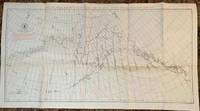
1909réf. 029499Washington D.C.: Government Printing Office 1909. 1st . Unbound. Very Good. 31" x 17. b/w & Red Map. 31" x 17" map; lovely to frame Government Printing Office unknown
1934réf. 7926Burlington Vt: Leader Evaporator Co 1934. Octavo-sized booklet stapled in wrappers 22. x 15.5 cm. 32 pages. Illustrated. Date from testimonial on page 32. A trade catalogue from a manufacturer of maple sugar making equipment and supplies including evaporators gathering tanks sap buckets sap spouts tapping bits gathering pails hydrometers thermometers filters syrup cans pails and cartons. Instructions for sugaring and testimonials from satisfied customers are included. The Leader Evaporator Company was formed in 1988. Some light fading to wrappers otherwise very good. OCLC locates one copy of this earliest of the Leader trade catalogues and a number of copies of various later editions. Leader Evaporator Co unknown
1934réf. 7926Burlington Vt: Leader Evaporator Co 1934. Octavo-sized booklet stapled in wrappers 22. x 15.5 cm. 32 pages. Illustrated. Date from testimonial on page 32. A trade catalogue from a manufacturer of maple sugar making equipment and supplies including evaporators gathering tanks sap buckets sap spouts tapping bits gathering pails hydrometers thermometers filters syrup cans pails and cartons. Instructions for sugaring and testimonials from satisfied customers are included. The Leader Evaporator Company was formed in 1988. Some light fading to wrappers otherwise very good. OCLC locates one copy of this earliest of the Leader trade catalogues and a number of copies of various later editions. Leader Evaporator Co unknown books
1916réf. 22687Portland Oregon: Portland Chamber of Commerce. Very Good. 1916. First Edition. Softcover. Maps are "fine" but the wraps are soiled and chipped. ; 8vo 8" - 9" tall . Portland Chamber of Commerce paperback
1920réf. 2220203Washington DC: Department of Commerce 1920. No Binding. Poor. 8vo - over 7¾ - 9¾" tall. See photos for condition details. This is a collection of 30 maps encased in the binder style box with a cloth shoelace style string tie down. The reason for the poor condition grade is because the slipcase is tattered and in pieces with large sections missing. Exterior also shows soiling and staining but all 30 maps are present and in good shape with no issues found other than toning of the paper and some light soiling from handling. The paper with the advertisement for the Southern Hotel may or may not be original to this publication but it was found inside the case and so it will stay with the maps. Map 16 has a fold that is offset see photo which is not a serious issue and is the only flaw found with the folded maps. Department of Commerce unknown
1984réf. 2083002116205828Tokushima County Commerce and Industry Department 1984. Soft Cover. Fine. The book is in fine condition. Tokushima County Commerce and Industry Department paperback
2003réf. R240127429FLAMMARION. 2003. In-8. Broché. Bon état, Couv. convenable, Dos satisfaisant, Intérieur frais. 355 pages. . . . Classification Dewey : 380-Commerce, communications, transports
réf. ORD-6527Bordeaux, 5 février 1869. Gd tableau (365 x 278mm) sur papier bible translucide qui donne les nombres de navires (168), les quantités expédiées pour chaque marchandises, aussi les marchandises expédiées à Buenos Ayres et Montevideo. Un tableau comparatif des expéditions pour les années 1852, 1857, 1864, 1865, 1866, 1867 et 1868. Un tableau comparatif des années 1867 et 1868 des importations de la Plata en France. Trace de plis, petite fente sans perte, bon exemplaire de ce fragile et rare document.
1986réf. 50160PUF, 1986. Format poche. Etat neuf.
1972réf. 127079Couverture souple. Broché. 128 pages.
1962réf. 127078Couverture souple. Broché. 128 pages.
1962réf. 127077Couverture souple. Broché. 128 pages.
1986réf. B118615Bruxelles/ Rome, Institut historique belge de Rome 1986 Tome 2 seul (des 2), x + 943pp., 24cm., brochure originale, dans la série "Etudes d'histoire économique et sociale publiées par l'Institut historique belge de Rome" tome IX, texte très frais, bon état, rare, poids: 1,6kg., B118615