17 208 résultats
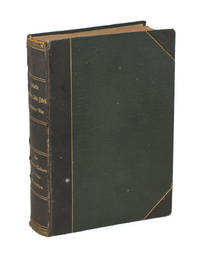
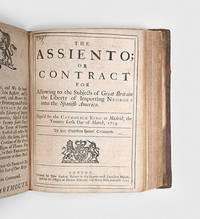
1713réf. 68433London: Printed by John Baskett 1713. Spain Grants Britain a Monopoly on the Slave Trade in the Americas First edition in English of one of the most important documents in the history of slavery in the Americas and in the political and financial history of Europe and the Americas in the early 18th century. This copy is housed in a large sammelband containing dozens of original documents and extracts related to English-Spanish relations. Though the term "assiento" could refer to any number of Spanish contracts "the Assiento" almost always refers to the "Assiento de Negros": a monopoly contract granted by the Spanish crown between 1528 and 1779 for the sole right to import slaves from Africa into the Spanish colonies. Normally granted to individual companies the 1713 Assiento was granted directly to the British crown as part of negotiations for the Treaty of Utrecht which ended the War of Spanish Succession. In the decades following this 1713 Assiento an estimated 200000 enslaved Africans were transported across the Atlantic. The document grants sole privilege for the trade to the British crown for a period of thirty years expiring in 1743. The agreement consisting of forty-two articles allows for a maximum of 4800 slaves to be introduced to the colonies each year with a provision for increasing that annual amount each year by paying an added duty places limits on sale prices sets the cost of the duty to be paid for each enslaved person allows for the use of British or Spanish ships and mariners in the slave trade provides for the French Guinea Company's extraction from the colonies and establishes the details of precisely where British ships would be allowed to travel and trade. The British were also granted the unique privilege to send one vessel with a cargo of up to 500 tons of other trade goods to the Spanish colonies each year. While the Assiento seemed a lucrative deal most Assientists over the years saw considerable losses due to the difficulty of cross-Atlantic trade and the duties paid to the Spanish king. The real benefit to its grantees was not profits from the slave trade but rather the illegal ability to send other contraband on board their vessels to the otherwise closed-off Spanish markets in the New World. Britain was eager to get their own products overseas and to deny this revenue stream to the French who had held the Assiento since 1701 thereby preventing them from refilling their coffers too quickly and upsetting the balance of power in Europe after the costly War of the Spanish Succession. Queen Anne delegated the Assiento privilege to the South Sea Company which had recently been established to pay off Britain's considerable national debt. The privilege was largely granted to them as an encouragement to investors in order to allow the Company to achieve its original purpose more readily. Ultimately however it proved to be a costly and unprofitable endeavor for the South Sea Company who were able to import only about one-third of their allowed quota of slaves each year were frequently interrupted by war and were required to render twenty-five percent of their profits to King Philip V of Spain. The present example comes from the British Foreign Office Library inlaid and bound into a folio volume of other treaties between Great Britain and Spain arranged chronologically by treaty date. Over the course of many years the library of the Great Britain Foreign Office inlaid copies of nearly every treaty involving Great Britain to folio size and bound them together by region. The library was dispersed in the late 20th century with most of the volumes and particularly the American volumes sold by this company. Most of the other treaties with Spain within this volume are clippings or extracts from larger works or true copies in manuscript of treaties dated between the years 1176 and 1739. Included in the volume however is a separately printed English edition of the Treaty between Great Britain and Spain as part of the Treaty of Utrecht ESTC T51509. There are two issues of the Assiento treaty; this is the issue with a semicolon after "Assiento" and no punctuation after "or" on the titlepage. A crucially important document in the history of colonial trade Spanish-British relations English finances and slavery in the Americas. Folio. 19th-century half roan and marbled paper boards. Boards worn some restoration at joints. Text trimmed and inlaid into folio sheets bound in volume of treaties between Great Britain and Spain. Bookplate of the British Foreign Office Library on front pastedown. HANSON 1896. ESTC T4476. EUROPEAN AMERICANA 713/85. JCB 1III:175. SABIN 2227. SPERLING 34. hardcover books
1713réf. 68433London: Printed by John Baskett 1713. Spain Grants Britain a Monopoly on the Slave Trade in the Americas First edition in English of one of the most important documents in the history of slavery in the Americas and in the political and financial history of Europe and the Americas in the early 18th century. This copy is housed in a large sammelband containing dozens of original documents and extracts related to English-Spanish relations. Though the term "assiento" could refer to any number of Spanish contracts "the Assiento" almost always refers to the "Assiento de Negros": a monopoly contract granted by the Spanish crown between 1528 and 1779 for the sole right to import slaves from Africa into the Spanish colonies. Normally granted to individual companies the 1713 Assiento was granted directly to the British crown as part of negotiations for the Treaty of Utrecht which ended the War of Spanish Succession. In the decades following this 1713 Assiento an estimated 200000 enslaved Africans were transported across the Atlantic. The document grants sole privilege for the trade to the British crown for a period of thirty years expiring in 1743. The agreement consisting of forty-two articles allows for a maximum of 4800 slaves to be introduced to the colonies each year with a provision for increasing that annual amount each year by paying an added duty places limits on sale prices sets the cost of the duty to be paid for each enslaved person allows for the use of British or Spanish ships and mariners in the slave trade provides for the French Guinea Company's extraction from the colonies and establishes the details of precisely where British ships would be allowed to travel and trade. The British were also granted the unique privilege to send one vessel with a cargo of up to 500 tons of other trade goods to the Spanish colonies each year. While the Assiento seemed a lucrative deal most Assientists over the years saw considerable losses due to the difficulty of cross-Atlantic trade and the duties paid to the Spanish king. The real benefit to its grantees was not profits from the slave trade but rather the illegal ability to send other contraband on board their vessels to the otherwise closed-off Spanish markets in the New World. Britain was eager to get their own products overseas and to deny this revenue stream to the French who had held the Assiento since 1701 thereby preventing them from refilling their coffers too quickly and upsetting the balance of power in Europe after the costly War of the Spanish Succession. Queen Anne delegated the Assiento privilege to the South Sea Company which had recently been established to pay off Britain's considerable national debt. The privilege was largely granted to them as an encouragement to investors in order to allow the Company to achieve its original purpose more readily. Ultimately however it proved to be a costly and unprofitable endeavor for the South Sea Company who were able to import only about one-third of their allowed quota of slaves each year were frequently interrupted by war and were required to render twenty-five percent of their profits to King Philip V of Spain. The present example comes from the British Foreign Office Library inlaid and bound into a folio volume of other treaties between Great Britain and Spain arranged chronologically by treaty date. Over the course of many years the library of the Great Britain Foreign Office inlaid copies of nearly every treaty involving Great Britain to folio size and bound them together by region. The library was dispersed in the late 20th century with most of the volumes and particularly the American volumes sold by this company. Most of the other treaties with Spain within this volume are clippings or extracts from larger works or true copies in manuscript of treaties dated between the years 1176 and 1739. Included in the volume however is a separately printed English edition of the Treaty between Great Britain and Spain as part of the Treaty of Utrecht ESTC T51509. There are two issues of the Assiento treaty; this is the issue with a semicolon after "Assiento" and no punctuation after "or" on the titlepage. A crucially important document in the history of colonial trade Spanish-British relations English finances and slavery in the Americas. Folio. 19th-century half roan and marbled paper boards. Boards worn some restoration at joints. Text trimmed and inlaid into folio sheets bound in volume of treaties between Great Britain and Spain. Bookplate of the British Foreign Office Library on front pastedown. HANSON 1896. ESTC T4476. EUROPEAN AMERICANA 713/85. JCB 1III:175. SABIN 2227. SPERLING 34. hardcover
1713réf. 186652London: Printed for John Baskett Printer to the Queens most Excellent Majesty And by the Assigns of Thomas Newcomb and Henry Hills deceas'd 1713. A foundational document in the transatlantic slave trade First edition of a major development of the transatlantic slave trade which greatly expanded the market for British slave traders in the Americas and helped establish Britain as the predominant slave trading power. After the War of the Spanish Succession Spain ceded to Britain the exclusive right to import African slaves into Spanish America. This monopoly the Assiento was delegated to the newly formed South Sea Company and held until 1750. The supposed value of the Assiento was the basis of the South Sea Bubble. In fact the restrictive terms - slave numbers were capped and all shipments were heavily taxed by the Spanish Crown - resulted in the South Sea Company never making substantial profit from the agreement. Nonetheless the Assiento played a major role in boosting and consolidating Britain's role in the Atlantic slave trade. The front free endpaper contains a detailed contemporary owner's note naming the binder of the volume - John Worrall - the price paid how it was constructed and how the book should be used: a very unusual survival. The notes state "This book Intituled State Pamphlets was bound by John Worrall for 2s. 2d. and containes 425 leaves". Little is recorded of John Worrall. He was apprenticed from 1674 to 1682 and was working at Warwick Court in 1709 and at Fleet Ditch in 1722. He died in 1726 all from Howe p. 103. The notes continue that the contents are consecutively numbered in manuscript and to use that numbering not the pagination of the original pamphlets. It specifies that "Remarks" are to be "entred in the proper cleane leaves as the observation thereof sees best" - blanks are bound between the tracts. It then notes that the manuscript table should be placed as the second leaf as is found. It refers the reader to another volume with more detailed instructions - it is evident the volume was held in a library which anticipated wide use. The nine other works bound in the volume - an inventory is available on request - date from 1688 to 1714 and are tracts on religion law and politics alongside the Treaty of Utrecht. It includes Jonathan Swift's first political work A Discourse of the Contests and Dissensions between the Nobles and Commons in Athens and Rome 1701 - this copy is the second issue with most of the first edition type corrected and reset. 10 works bound in 1 vol. quarto 206 x 156 mm. Contemporary calf red morocco label to style covers ruled in blind edges sprinkled red. 19th-century ownership signature "S. Louise Langdon" to verso of manuscript contents leaf. Joints and extremities restored slight staining to endpapers a little browned occasional trimming to pagination. Overall very good. ESTC T4476 another issue only has Baskett in the imprint; Kress 5020; Sabin 2227. Ellic Howe A List of London Bookbinders 1648-1815 1950. unknown
Haarlem, Netherlands Economic Institute/ Nederlandsch Economisch Instituut 1933, viii + 174pp.+ 7pp.(summary in english/résumé en français), E23283
réf. 1396239383.Ghardcover. Good. Access codes and supplements are not guaranteed with used items. May be an ex-library book. hardcover
1983102 pages. A sumptuously presented selection of the art collection displayed in The Regent in Hong Kong. This is a collection carefully acquired not only for its aesthetic beauty but also for the elements of oriental symbolism that are represented. Includes fine examples of skilfully executed screens, lacquerware and embroidery. There are specimens of Chinese export wallpaper, and several nineteenth-century China Trade oil paintings. These became popular as artistic records of the cultural and trading contacts of their period and are now collector's items. The selection of maps traces the pattern of adventure and romantic trade and travel over the centuries. Finally, a group of contemporary works pleasantly relate the collection to modern artistic trends. All illustrations in vivid colour photography. Attractive maroon cloth boards bear imprint of Chinese characters upon front board and gilt roman lettering upon spine. Illustrated slipcase shows light edgewear and several nicks. Book and slipcase bear the aroma of moth balls. Book
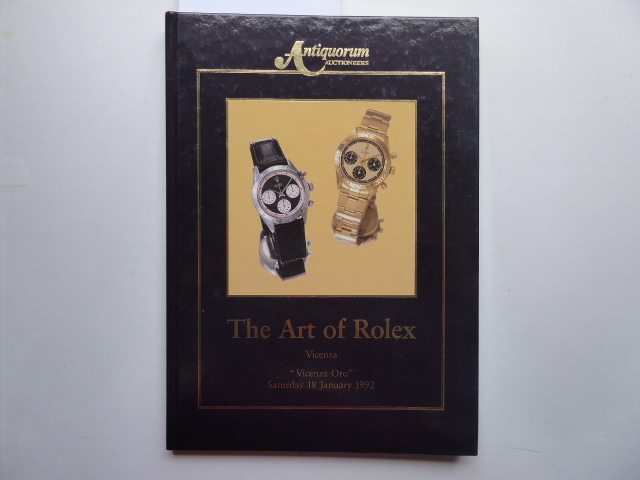
1992réf. 146283Milano, Antiquorum, Italy Srl. 19. January 1992. 108 pages. With a lot of illustrations in colour. Illustrated original hardcover binding. (A little used). 28x20 cm
réf. 1330013468.Gpaperback. Good. Access codes and supplements are not guaranteed with used items. May be an ex-library book. paperback
réf. B9781169634718New. unknown
réf. 1169634710.Ghardcover. Good. Access codes and supplements are not guaranteed with used items. May be an ex-library book. hardcover
réf. 1332102115.Gpaperback. Good. Access codes and supplements are not guaranteed with used items. May be an ex-library book. paperback
1965réf. EEzz3707Ldn., Methuen (1965). 294 S. Mit 186 Tafelabb. (dav. 30 farb.). kl.-4°. OLn. Kopfrotschn.
1803pp. viii, 252. Text drawings. Title page soiled. Text foxed. Early manuscript ownership of Thomas Carpenter (1770-1832) [likely Lancaster, PA]. Page 233 slightly torn without loss. 8vo. 220 mm. Original full leather binding, decorated with a mottled design. Original leather spine label. Small loss at head of spine. Title continues: "Mercantile Arithmetic: A New System Of Exchange, In Which The Real And Imaginary Currencies Of The Different Commercial States In The World Are Reduced To The Federal Standard. With Calculations On The Mechanical Powers." An important early American monetary exchange calculator. Scarce. S&S/AI 4201. Very good. Hardbound. **PRICE JUST REDUCED! AI BX 4
1986190 pages. Index. Black and white reproductions of photos. In 1930 the author sailed from Scotland to Canada at the age of 18 to begin work for the Hudson's Bay Company at Grassy Narrows, Ontario where the Ojibway taught him their language and survival skills. He went on to postings at: Temagami, Ontario; Waterways, Alberta; Nekina, Saskatchewan; and became District Manager of Northern Saskatchewan. In 1946 he was transferred to Hudson's Bay House in Winnipeg. "His detailed description of the trade goods and practices of the 1930s are a rare source of information for students of the fur trade and native studies. His stories of summers at two of Ontario's famous vacation spots will evoke memories for countless vacationers and cottage owners." - back cover. Clean and unmarked with moderate wear. Binding tight. A quality copy. Book
1909réf. Q2425New York: Apollo Studios 1909. Paperback. Near fine. A simple easily acquired and inexpensive means of manual training at home--for adults and children." Staplebound 27pp. 8.5 x 3.75 inches. Light toning else Near Fine. Replete with illustrations of beautiful Arts & Crafts style home goods that could be fashioned by an unskilled child or adult using the Metalography kits and item-specific patterns and stencils for metal chasing/repoussage an ancient technique that enjoyed renewed enthusiasm during the Arts & Crafts Movement. The projects advertised here include kits for building basic objects like trays and tins; piercing work is also incorporated into some designs. Quintessential "Arts & Crafts" in multiple regards the text on the cover ties in the interest in manual training characteristic of Progressive Era education. A contemporary of Tiffany & Co. the Apollo Studios grew out of New York firm Bernard Rice's Sons. They made picture frames vanity and desk sets and similar items often featuring intricate cutwork. Possibly the earliest Apollo Studios promotional booklet noting "patent pending" one was issued by the end of 1909. There do not appear to be any Apollo Studios publications in OCLC. Apollo Studios paperback
réf. A9781343692015Hardback. New. hardcover
réf. mon0000364520Stationery Office Books 17/04/1991 00:00:01. paperback. Good. 0.5995 in x 28.9780 in x 20.3845 in. Ex-library book usual marking. Clean copy in good condition. Stationery Office Books paperback
1901réf. 106049Ludwigshafen am Rhein: Badische Anilin- & Soda-Fabrik 1901. First Edition. Hardcover. Very Good. Ludwigshafen am Rhein Badische Anilin- & Soda-Fabrik 1901. Quarto x last blank 534 xi index pages plus 2 plates showing the company's German French and Russian factories and 20 'Pattern Sheets' with over 620 captioned mounted samples of dyed fabrics and threads. Original half morocco-grain cloth with green cloth sides embossed with a crocodile-skin pattern; spine lettered and decorated in gilt; joints cracked but sound; covers slightly marked with light wear to the corners and minor loss to the head and foot of the spine; paper lightly toned with occasional light foxing; a few trifling signs of use; overall a very good copy with the wonderful fabric samples uniformly bright and in fine condition. A comprehensive manual to the aniline dyes produced by the Badische Anilin- & Soda-Fabrik including detailed instructions for dying yarns and printing fabrics. The mounted samples comprise wool 135 fabric swatches; cotton 180 swatches and tassels of thread; silk 138 tassels; blended fabrics 96 swatches; and printed fabrics 72 swatches and tassels. The verso of the front flyleaf contains a printed generic 'with compliments' message ending with 'For Own Use Only'; this copy was presented to the John Young & Company cotton mill in Radcliffe Manchester in January 1907. Founded in 1865 the Badische Anilin- & Soda-Fabrik was a pioneer manufacturer of synthetic dyes. Still based in Ludwigshafen and now trading as BASF it is currently the largest chemical producer in the world. Badische Anilin- & Soda-Fabrik] hardcover
réf. 1390457656.Gpaperback. Good. Access codes and supplements are not guaranteed with used items. May be an ex-library book. paperback
réf. 1390458326.Gpaperback. Good. Access codes and supplements are not guaranteed with used items. May be an ex-library book. paperback
réf. 0428410855.Gpaperback. Good. Access codes and supplements are not guaranteed with used items. May be an ex-library book. paperback
réf. A9781377151106Paperback. New. paperback
réf. B9781377151106Paperback. New. paperback
réf. 1390981061.Gpaperback. Good. Access codes and supplements are not guaranteed with used items. May be an ex-library book. paperback
réf. 1396369309.Ghardcover. Good. Access codes and supplements are not guaranteed with used items. May be an ex-library book. hardcover