Penhale, Barry LloydMareMagnum

1.190 resultados
195548 pages. Photos and brief write-ups for dozens of wrestlers. Undated but appears to be circa 1950s. Complete facts and photos on your areana and TV favourites. Over 150 photos, wrestling analysis, Champion Lou Thesz, Canadian Promoters, Canada's Top Stars, Handsome He-Men, Leading Teams, Negro Favourites, Oriental Matmen, Flashy Mexicans, Top-Rated Indians, Beared Wrestlers, Colourful Wrestlers, The Midgets, Ring Giants, Pictorial Section, Salute to Former Greats. Above-average wear. Covers taped in place. Unmarked. A wonderful vintage guide to 1950s Canadian TV wrestling. Book
1948156 pages. Features: Nice color ad for Duraglas inside front cover; Nice color-photo 1-page ad for Elgin watches features opera star Mrs. Lawrence Tibbett; Sexy 1-page color-illustrated ad for Palmolive soap features amorous couple; Can the Army and Navy Get Together? - photo illustrated article - Secretary of Defense James Forrestal replies to criticism of the way unification of our armed services has - or has not - worked out; Fabulous Iron Ore Strike in Labrador - photo-illustrated article describes what may be the mining find of the century; The Haunted Meadow (fiction); What You Don't Know About Thanksgiving; The Unwelcome Neighbor (fiction); How We Caught Spies in World War II - part 1 of a photo-illustrated article by Stephen J. Spingarn, former commanding officer of the American 5th Army's Counter Intelligence Corps tells the real story of what spy catching was like; The Gay Deceiver of Georgia Tech - Bobby Dodd has made a name for himself as a teacher of football make-believe - article with photos; He Is My Friend - Southern White Boy Hodding Carter describes his friendship with Negro boy Son McKnight - article with photo; Man Trap (fiction); Allah's Oil - World's Richest Prize - conclusion of fascinating photo-illustrated article on Middle Eastern Oil over 60 years ago; First Quarrel (fiction); Everybody Gets In the Act - color-photo illustrated article on the John B. Rogers Company, of Fostoria, Ohio, the country's most prolific producer of amateur shows; Murder for Millions (fiction); 1-page color ad for 1949 Ford cars; Dishonored (fiction); 1-page color-photo Goodyear ad features Norma Halverson of Salt Lake City and Emile Schurmacher of N. Salem, NY; I Might Have Married Him (fiction); Nice 1-page color ad for RCA Victor radios; Nice 2-page Buick ad; Nice 1-page color ad for Mobiloil Arctic; 1-page ad for Martin Aircraft features the 202 Airliner; 1-page Plymoth ad; 1-page ad for the Underwood All Electric Typewriter; Vitalis half-page ad features illustration of Nat Holman; Nice photo-illustrated 1-page ad for radio stations of the ABC network features photos of Milton Berle, Gordon MacRae, Meredith Willson, Arlene Francis, John K.M. McCaffrey, Kay Kyser, Ted Mack, Jo Stafford, Johnny Olsen and Dr. Frank Black; 1-page illustrated ad for General Electric washing machines; 1-page Brunswick bowling ball ad features illustrations of Joe Norris, Ned Day, Catherine Fellmeth and Andy Varipapa; Nice 1-page color ad for 1949 Kaiser cars features a red convertible; 1-page 2-color ad for the new 1949 Remington De Luxe Portable Typewriter; Super 2-page Bord-Warner presents their company accomplishments in Ripley's Believe It or Not format; Very colorful and handsome 2-page Cadillac ad features a large illustration of their new engine and the front end of a red car; Photo portrait of Harry A. Bullis of General Mills in Northwestern Mutual ad; Nice color-photo 1-page Christmas ad for Zenith radios; 1-page ad for the New York Stock Exchange (NYSE); Nice 1-page ad for Cory appliances; 1-page color ad for Cutler-Hammer motor controls; Very attractive 1-page color-photo recruiting ad for the U.S. Air Force features young man in flying gear with illustration of jets overhead; Nice 1-page color ad for Corning Glass features woman holding multi-coloured Pyrex cookware; 1-page color ad for the Great Lakes Steel Corporation promotes their Quonset Huts; Nice 1-page color ad for De Beers diamonds features reprint of "Honeymoon at Sea Island, GA" by Andre Girard; Very nice one-page color-illustrated ad for Bell & Howell movie cameras; Nice 1-page color ad for Gibson electric refrigerators features two young ladies scantily clad in Eskimo clothing; 1-page color ad for Sheaffer's pens; Nostalgic half-page color ad for Dow Plastics Styron with illustrations of many vintage toys; Nice half-page color ad for Hi Ho Crackers; Nice 1-page 2-color Kleenex ad featuring Little Lulu; Nice 1-page color ad for Coolerator fridges and freezers; Photo Magazine
2011ref. BN72315Hützen & Partner Verlag 2011. 2011. Camino de la Costa Camino del Norte: Der Jakobsweg für Motorradfahrer. In acht Tagen bis ans Ende der Welt In acht Tagen bis ans Ende der Welt Motorradführer Hützen & Partner Verlag unknown
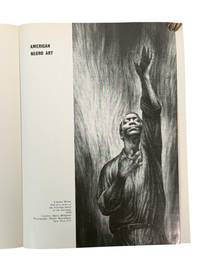
1960ref. 236661960. Cedric Dover's survey of African American visual art from early portraiture through the postwar period published in 1960 while the work of Black artists remained marginal within standard American art histories. Dover connects artistic production to slavery emancipation migration industrial labor the Harlem Renaissance federal arts programs and the growth of Black cultural institutions. Reproductions of works by Aaron Douglas Charles White Richmond Barthé Jacob Lawrence William H. Johnson Hale Woodruff Selma Burke and others establish a lineage across painting sculpture drawing printmaking and mural art. Dover Cedric. American Negro Art. New York: New York Graphic Society 1960. First edition. 186 pages. 8vo. Hardcover in original brown cloth with silver spine lettering extensively illustrated in black and white and color no dust jacket. The volume opens with Charles White's 1958 ink drawing based on the spiritual "One of a series of ink drawings based on the spirituals" and includes Aaron Douglas's The Negro Looks Ahead Richmond Barthé's sculpted head Hubert Howard's Show Girl Jacob Lawrence's Ambulance Call and a color reproduction of Aaron Douglas's A Harlem Matron. Dover's text addresses the circumstances under which Black artists studied exhibited and found patronage with sections including "Mulattoes and Atelier Art" "For Aaron Douglas" and "The Artists." One illustrated spread reproduces Charles White's mural sketch for the Harlem Hospital beside Douglas's The Continuation of Life while another places a photograph of industrial workers beside Hale Woodruff's printmaking and William H. Johnson's Aunt Alice. Dover an Anglo Indian writer and scholar who published extensively on race anthropology and modern art presents African American art as a continuous field shaped by both formal experimentation and the political conditions governing Black life. His discussion of Harlem Renaissance circles historically Black colleges museum access commercial galleries and federal patronage records the institutional structures through which artists built careers despite segregation and restricted exhibition opportunities. The book's period terminology including its title and chapter language records the vocabulary through which African American art was categorized by publishers and scholars at midcentury. Light shelf wear to binding; permanent marker block on title page else clean and firmly bound. Overall very good condition. A substantial midcentury attempt to place African American artists within the history of American modernism through named works institutions movements and individual careers. unknown
1960ref. 236661960. Cedric Dover's survey of African American visual art from early portraiture through the postwar period published in 1960 while the work of Black artists remained marginal within standard American art histories. Dover connects artistic production to slavery emancipation migration industrial labor the Harlem Renaissance federal arts programs and the growth of Black cultural institutions. Reproductions of works by Aaron Douglas Charles White Richmond Barthé Jacob Lawrence William H. Johnson Hale Woodruff Selma Burke and others establish a lineage across painting sculpture drawing printmaking and mural art. Dover Cedric. American Negro Art. New York: New York Graphic Society 1960. First edition. 186 pages. 8vo. Hardcover in original brown cloth with silver spine lettering extensively illustrated in black and white and color no dust jacket. The volume opens with Charles White's 1958 ink drawing based on the spiritual "One of a series of ink drawings based on the spirituals" and includes Aaron Douglas's The Negro Looks Ahead Richmond Barthé's sculpted head Hubert Howard's Show Girl Jacob Lawrence's Ambulance Call and a color reproduction of Aaron Douglas's A Harlem Matron. Dover's text addresses the circumstances under which Black artists studied exhibited and found patronage with sections including "Mulattoes and Atelier Art" "For Aaron Douglas" and "The Artists." One illustrated spread reproduces Charles White's mural sketch for the Harlem Hospital beside Douglas's The Continuation of Life while another places a photograph of industrial workers beside Hale Woodruff's printmaking and William H. Johnson's Aunt Alice. Dover an Anglo Indian writer and scholar who published extensively on race anthropology and modern art presents African American art as a continuous field shaped by both formal experimentation and the political conditions governing Black life. His discussion of Harlem Renaissance circles historically Black colleges museum access commercial galleries and federal patronage records the institutional structures through which artists built careers despite segregation and restricted exhibition opportunities. The book's period terminology including its title and chapter language records the vocabulary through which African American art was categorized by publishers and scholars at midcentury. Light shelf wear to binding; permanent marker block on title page else clean and firmly bound. Overall very good condition. A substantial midcentury attempt to place African American artists within the history of American modernism through named works institutions movements and individual careers. unknown books
ref. 92820Very Good. Evvelope postmarked Sept. 2 1955. Cover letter issued under the name of Vivian C. Mason National President of the National Council of Negro Woman asks members of the organization for a special "anniversary gift" of ten cents for every years of the organization's existence meaning a gift of $2.00 for 20 years. Local councils reporting 100% participation would get a trophy. Return envelope and a smaller envelope to hold a donation present the small envelope is partially glued to the flap on the return envelope. Single sheet folded twice to create a narrow 6-page brochure 22 cm. outlining 1955 events planned to celebrate their 20th anniversary and to promote gifts. And finally" a printed double-columned fundraising letter dictated by Mary McLeod Bethune on April 11 1955 which says in part: "In your expenditures for every day living where you may use a cheaper cut of meat put that in a bank for the National Council of Negro Women. If you know widowed women who need instructions for placing their funds where they might do good for the great masses of our people think sometimes of the National Council of Negro Women. Some of us could take out a little insurance policy of twenty-five cents a month which upon our death could go the the National Council of Negro Women. unknown books
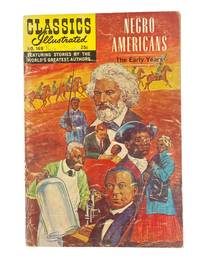
1962ref. 220401962. African American Comics Negro Americans: The Early Years Classics Illustrated No. 169. New York: Gilberton Company Inc. 1962. Staplebound with color-illustrated wrappers. A standalone issue of Classics Illustrated devoted entirely to the contributions of Black Americans from the colonial period through the 20th century. Published in 1962 during the height of the Civil Rights Movement this comic-format educational work-unusual in the Classics Illustrated series for focusing on real historical figures rather than literary fiction-was part of a broader mid-century effort to integrate African American history into mainstream curricula. As the cover proclaims the issue was intended to spotlight "the early years" of Black American achievement and in doing so it offers one of the earliest accessible visual histories of Black leaders for a youth audience. Historical figures covered in this issue include Crispus Attucks the first American killed in the Revolutionary War Benjamin Banneker mathematician and surveyor of Washington D.C. James Beckwourth a pioneering scout of the American West Harriet Tubman Frederick Douglass Daniel Hale Williams the first successful heart surgeon Booker T. Washington educator and founder of Tuskegee Institute George Washington Carver agricultural scientist and Matthew Henson co-discoverer of the North Pole. The comic also addresses Black contributions to the American Revolutionary War and Civil War with attention to the roles of enslaved people Black regiments and wartime espionage. Notably the "Inventors" section highlights Elijah McCoy lubrication systems Garrett Morgan gas mask and traffic light and Granville T. Woods rail signaling foregrounding underacknowledged Black innovation in American industrial history. Illustrated in full color throughout with strong sequential art emphasizing dignity resilience and ingenuity. Though the terminology "Negro Americans" reflects mid-century nomenclature the tone is respectful and didactic aimed at broad public education. These visual histories played an important role in the representation of African American figures in postwar American youth culture.Light wear and creasing consistent with age and small pen marks to cover but internally clean and complete. A remarkable and visually compelling early effort to narrate African American history to a popular audience. unknown
1962ref. 220401962. African American Comics Negro Americans: The Early Years Classics Illustrated No. 169. New York: Gilberton Company Inc. 1962. Staplebound with color-illustrated wrappers. A standalone issue of Classics Illustrated devoted entirely to the contributions of Black Americans from the colonial period through the 20th century. Published in 1962 during the height of the Civil Rights Movement this comic-format educational work-unusual in the Classics Illustrated series for focusing on real historical figures rather than literary fiction-was part of a broader mid-century effort to integrate African American history into mainstream curricula. As the cover proclaims the issue was intended to spotlight "the early years" of Black American achievement and in doing so it offers one of the earliest accessible visual histories of Black leaders for a youth audience. Historical figures covered in this issue include Crispus Attucks the first American killed in the Revolutionary War Benjamin Banneker mathematician and surveyor of Washington D.C. James Beckwourth a pioneering scout of the American West Harriet Tubman Frederick Douglass Daniel Hale Williams the first successful heart surgeon Booker T. Washington educator and founder of Tuskegee Institute George Washington Carver agricultural scientist and Matthew Henson co-discoverer of the North Pole. The comic also addresses Black contributions to the American Revolutionary War and Civil War with attention to the roles of enslaved people Black regiments and wartime espionage. Notably the "Inventors" section highlights Elijah McCoy lubrication systems Garrett Morgan gas mask and traffic light and Granville T. Woods rail signaling foregrounding underacknowledged Black innovation in American industrial history. Illustrated in full color throughout with strong sequential art emphasizing dignity resilience and ingenuity. Though the terminology "Negro Americans" reflects mid-century nomenclature the tone is respectful and didactic aimed at broad public education. These visual histories played an important role in the representation of African American figures in postwar American youth culture.Light wear and creasing consistent with age and small pen marks to cover but internally clean and complete. A remarkable and visually compelling early effort to narrate African American history to a popular audience. unknown books
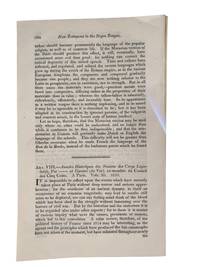
1829ref. 225831829. African AmericanReligionCarribean New Testament in the Negro Tongue. In The Eclectic Review Vol. XLIII No. LXXXVI. London: 1829. Excerpt: pp. 553-564. Disbound 12pp. A rare excerpt reviewing a missionaries' translation of the New Testament into "Negro-English" also called talkee-talkee the Creole language spoken by enslaved and free Black populations in Demerara and Surinam. The British and Foreign Bible Society issued the translation in 1829 for missionary use representing one of the earliest attempts to render the Christian scriptures into an Afro-diasporic Creole tongue of the Caribbean basin. This review in The Eclectic Review a leading 19th-century dissenting religious periodical gives a lengthy discussion of the translation providing contemporary reactions that ranged from grudging acknowledgment to outright racist dismissal. The review juxtaposes biblical passages rendered into Creole with commentary often mocking the "mixed speech" as "ridiculously offensively and incurably base." Yet despite its dismissive tone the piece captures critical evidence of how missionaries and colonial observers grappled with African- and Creole-derived linguistic traditions including debates over whether vernacular scripture empowered conversion or threatened white control. The review references Moravian missionary John Latrobe's efforts in Suriname as well as comparisons to African Dutch and Portuguese linguistic influences. Particularly striking are verbatim transcriptions of gospel passages in Creole offering researchers a rare contemporaneous witness to early printed Afro-Caribbean language. Light toning disbound with clean margins preserved; pages complete and supple. A rare document of the intersection of race religion and language in the British Caribbean revealing both the efforts made by missionaries to connect through Creole scripture and the entrenched racism of the colonial intellectual establishment. unknown
1829ref. 225831829. African AmericanReligionCarribean New Testament in the Negro Tongue. In The Eclectic Review Vol. XLIII No. LXXXVI. London: 1829. Excerpt: pp. 553-564. Disbound 12pp. A rare excerpt reviewing a missionaries' translation of the New Testament into "Negro-English" also called talkee-talkee the Creole language spoken by enslaved and free Black populations in Demerara and Surinam. The British and Foreign Bible Society issued the translation in 1829 for missionary use representing one of the earliest attempts to render the Christian scriptures into an Afro-diasporic Creole tongue of the Caribbean basin. This review in The Eclectic Review a leading 19th-century dissenting religious periodical gives a lengthy discussion of the translation providing contemporary reactions that ranged from grudging acknowledgment to outright racist dismissal. The review juxtaposes biblical passages rendered into Creole with commentary often mocking the "mixed speech" as "ridiculously offensively and incurably base." Yet despite its dismissive tone the piece captures critical evidence of how missionaries and colonial observers grappled with African- and Creole-derived linguistic traditions including debates over whether vernacular scripture empowered conversion or threatened white control. The review references Moravian missionary John Latrobe's efforts in Suriname as well as comparisons to African Dutch and Portuguese linguistic influences. Particularly striking are verbatim transcriptions of gospel passages in Creole offering researchers a rare contemporaneous witness to early printed Afro-Caribbean language. Light toning disbound with clean margins preserved; pages complete and supple. A rare document of the intersection of race religion and language in the British Caribbean revealing both the efforts made by missionaries to connect through Creole scripture and the entrenched racism of the colonial intellectual establishment. unknown books
2016New New English Original bdg. Dust wrapper. 4to. (30 x 22 cm). Edition in English. 343 p., b/w and color ills. Two coasts one sea III: Sections from Turkish-Russian common history. Translated by Natalia Kizilkaya. Two geographies both on Asia and Europe on the coasts of the Black Sea basin, Turkey and Russia. These two countries that are among the most important and strongest figures of the world area have strengthened their relations with rooted cultural, economic and social sharing besides the same lands in the past centuries. They shared the same fate and history of nearly 500 years in Eurasia that has housed several civilizations. Starting from Kiev Russia and Seljuk era, the history of these two geographies have reflected each other on the journey of each turning into strong empires such as Moscow Russia and the Ottoman Beylik and state structures respectively. Russia and Turkey weaved their similar fate of their joint past sometimes with war and sometimes with peace, alliance, aid and friendship... They underwent 12 great wars in depth but showed extraordinary solidarity as if to inspire the proverb "a neighbor is in need of another"; just like the in the war of Independence. The book "Two coasts and One Sea" gives the opportunity to analyze developments in culture, literature, arts and economy in the wide spectrum of history besides acting a unique historian that brings a perspective to our lives shaped in the same geographies. In other words, it accompanies the journey of Turkish-Russian relations from the Ottoman era to the Republic. This is third and the last volume.
1924Very Good Turkish, Ottoman (1500-1928) Original Ottoman illustrated journal. 40x27 cm. In Ottoman script (Old Turkish with Arabic letters). 8 p., richly ills. Taken from a volume. Foxing on pages, slightly chipped on hinges. Overall a very good copy. Extremely rare early issue of an Ottoman illustrated journal depicting a lynching of colored American citizens in Florida by white Americans, published one year after the proclamation of the Republic in Turkey. The first studies bearing social criticism on issues like slavery and abolition were made in the early years of the young Turkish Republic, which had refused the legacy of its imperial predecessor. In this period, several classics of American anti-slavery literature and contemporary works were translated for the first time, and texts on slavery and abolition in America were translated and published in Turkey. The term "Lynch's Law" apparently originated during the American Revolution when Patriot Charles Lynch (1736-1796), a Virginia justice of the peace, ordered extralegal punishment of the Loyalists. Variations of the term, such as "lynch law," "judge lynch," and "lynching", were standard entries in American and British English dictionaries by the 1850s. In 1811, a man named Captain William Lynch claimed that the phrase, already famous, actually came from a 1780 compact signed between him and his neighbors in Pittsylvania County, Virginia, to uphold their own brand of law independent of legal authority. In the pre-Civil War South, members of the abolitionist movement and other people opposing slavery were sometimes targets of lynch mob violence. (Source: Wikipedia).
2022ref. x-0231203705Columbia Univ Pr 2022. Hardcover. New. 265 pages. 9.25x6.25x1.00 inches. Columbia Univ Pr hardcover
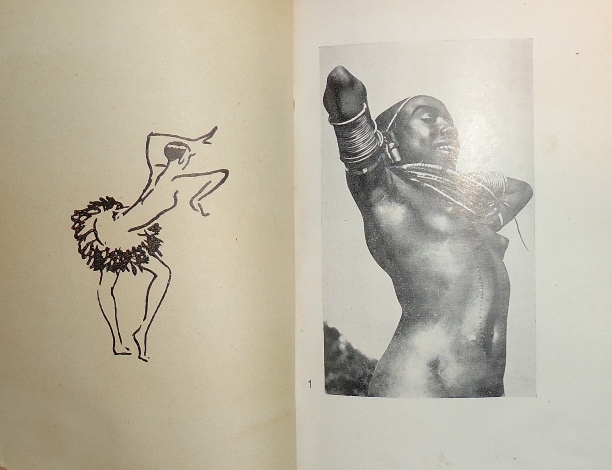
1929ref. 25973Praha, Odeon, 1929. Kl. 8°. 15 S. Text, 34 Fototafeln. 1 Bl., Typographie von Karel Teige. Halb-Pergamentband. - Burian (1904 in Pilsen - 1959 in Prag), Komponist, Dichter und Dramaturg. Seine Werke sind von Dadaismus, Futurismus und Poetismus beeinflusst. Er war Mitglied der tschechischen Künstlergruppe "Devetsil" und Begründer eines Dada-Theaters und des avantgardistischen Theaters "D 34". Zwischen 1940 und 1945 war er in den Konzentrationslagern Theresienstadt, Dachau und Neuengamme inhaftiert. 1945 konnte er sich unter dramatischen Umständen nach dem Luftangriff der Royal Air Force aus dem Schiff Cap Arcona retten. Einband etwas berieben. Tafeln im weißen Rand schwach wellig.
1963ref. 4880Philadelphia 1963. Very good. Broadside 9 x 6 inches. Overall even tanning minor wear. A striking handbill advertising the appearance of Mrs. Gladys Dickson "wife of the former Minister of Defense and now Chairman of Ghana Government Supply Commission" at a "benefit dinner and literary program" presented to "the Negro Public of North Philadelphia." The event was sponsored by the Universal Negro Improvement Association UNIA and included other guests name on the present broadside including Joseph A. Bailey Assistant Attorney general of New York and several musicians who performed at the event. The broadside also names four officials of the United Negro Improvement Association -- A.L. Crawford Assistant President General Miss Alma Golden Secretary General "Mrs. Coleburn" Secretary and Mr. Thomas Harvey President. The Ghana Division of the UNIA was formed the year the present broadside was printed. According to a letter from the group's secretary to W.E.B. Du Bois held at the University of Massachusetts Amherst the organization was formed "with the sole aim of establishing good relationships with honest and sincere Negroes in the United States of America." The UNIA was first formed in 1914 in Jamaica by Marcus Garvey in order to encourage Pan-Africanism. OCLC notes three institutional holdings for the present work at Temple Penn and Texas A&M. unknown
1963ref. 4880Philadelphia 1963. Very good. Broadside 9 x 6 inches. Overall even tanning minor wear. A striking handbill advertising the appearance of Mrs. Gladys Dickson "wife of the former Minister of Defense and now Chairman of Ghana Government Supply Commission" at a "benefit dinner and literary program" presented to "the Negro Public of North Philadelphia." The event was sponsored by the Universal Negro Improvement Association UNIA and included other guests name on the present broadside including Joseph A. Bailey Assistant Attorney general of New York and several musicians who performed at the event. The broadside also names four officials of the United Negro Improvement Association -- A.L. Crawford Assistant President General Miss Alma Golden Secretary General "Mrs. Coleburn" Secretary and Mr. Thomas Harvey President. The Ghana Division of the UNIA was formed the year the present broadside was printed. According to a letter from the group's secretary to W.E.B. Du Bois held at the University of Massachusetts Amherst the organization was formed "with the sole aim of establishing good relationships with honest and sincere Negroes in the United States of America." The UNIA was first formed in 1914 in Jamaica by Marcus Garvey in order to encourage Pan-Africanism. OCLC notes three institutional holdings for the present work at Temple Penn and Texas A&M. unknown books
1785ref. 77397Hartford:: Barlow & Babcock 1785. This is probably the first edition of Part III. old boards with a later old leather backstrip. 18th c. ink ownership signature; genealogical notes to blank areas of two leaves of text; some dampstaining and age-toning to text; short horizontal tears to a few leaves no loss of text; boards chipped and worn. . 12mo. Part III contains "The necessary Rules of reading and speaking and a Variety of Essays Dialogues and declamatory Pieces moral political and entertaining; divided into Lessons for the Use of Children. Barlow & Babcock, hardcover
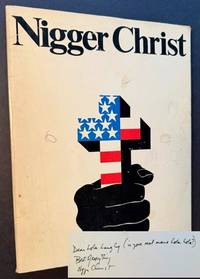
1971ref. 258231971. Original wraps. Very Good. The 1971 stated first --and almost certainly only-- edition of this undoubtedly scarce racial polemic INSCRIBED BY "NIGGER CHRIST" on the front pastedown. We have no printed information on the who or where of publishing but we do have the pseudonymous names of the father-and-son authors "American Prince" and "Nigger Christ". Presumably the name "Nigger Christ" referes to Langston Hughes' famous use of it in his 1931 poem "Christ in Alabama" which was written in response to the infamous Scottsboro Boys trial. The quarto paperback is solifd and VG in its pictorial wrappers with light staining and scuffing --and just a bit of ink scribbling-- along the panels. Internally very clean with few markings beyond the author's inscription. An incendiary reckoning of where things are at racially at this writing 1971 in The United States. Even by today's standards provocative and scorching. unknown
1971ref. 258231971. Original wraps. Very Good. The 1971 stated first --and almost certainly only-- edition of this undoubtedly scarce racial polemic INSCRIBED BY "NIGGER CHRIST" on the front pastedown. We have no printed information on the who or where of publishing but we do have the pseudonymous names of the father-and-son authors "American Prince" and "Nigger Christ". Presumably the name "Nigger Christ" referes to Langston Hughes' famous use of it in his 1931 poem "Christ in Alabama" which was written in response to the infamous Scottsboro Boys trial. The quarto paperback is solifd and VG in its pictorial wrappers with light staining and scuffing --and just a bit of ink scribbling-- along the panels. Internally very clean with few markings beyond the author's inscription. An incendiary reckoning of where things are at racially at this writing 1971 in The United States. Even by today's standards provocative and scorching. unknown books
2016ref. x-1137553561Palgrave Macmillan 2016. Hardcover. New. 359 pages. 8.50x6.25x1.00 inches. Palgrave Macmillan hardcover
2021ref. x-0128211806Academic Press 2021. Paperback. New. 327 pages. 8.75x6.00x0.75 inches. Academic Press paperback
1987ref. 241130LFY0395218Treviso: Vianello Libri 1987. Hardcover. Good Condition. Minimal shelf-wear otherwise in excellent condition. Contents clean and bright. Bindings firm and tight. 79 pp. Shipped Weight: Under 1 kilo. Category: Art & Design; Canova Antonio 1757-1822; Italy Possagno; Museo canoviano; Add. Inventory No: 241130LFY0395218. . Vianello Libri hardcover
1969This is an about very good hardcover copy, without dust jacket, as issued, with light wear. Very clean outside and inside. Previously owned by a collector of African American art from the Harlem Renaissance period, with his name on the front endpaper dated 1988. Also occasional faint pencil marks or underlinings, now barely visible. A few paperclip indentations to pages as well. Illustrated in black & white. An increasingly difficult book to find in decent condition. This is the Arno Press hardcover reprint of the 1943 original edition, now rare. 9" high X 6" wide, 272 pages. This book will be securely wrapped and packed in a sturdy box and shipped with tracking.
ref. 014903Paris Directeur-Rédacteur: René Delange 0 En feuilles
1920ref. 001767Paris Editions de La Banderole 1920