1.209 resultados
1919ref. 010045Paris A la Belle Edition 1919 In-8 broché, couverture illutrée
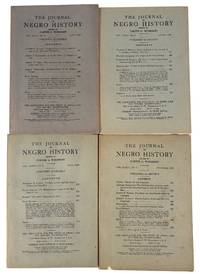
1931ref. 217891931. Woodson Carter Godwin. The Journal of Negro History. Archive of two significant issues published in 1931 and 1938 documenting the institutional growth and expanding scholarly scope of African American historiography during the interwar period. The material records Black intellectual production historical scholarship and diasporic research through the editorial and publishing activities of the Association for the Study of Negro Life and History founded by Carter G. Woodson and Jesse E. Moorland in 1915. These issues include scholarship on slavery Reconstruction Black religious institutions international colonial politics abolitionist movements and urban Black life at a time when Black scholarship remained marginalized within predominantly white academic institutions. The journal served as one of the principal vehicles through which Black historians circulated archival research fostered interdisciplinary inquiry and established African American history as a formal academic field. The archive provides primary-source evidence for the maturation of Black historical studies and diasporic intellectual thought in the early twentieth century. Woodson Carter Godwin ed. The Journal of Negro History. Lancaster PA and Washington D.C.: The Association for the Study of Negro Life and History 1931 and 1938. Two issues in publisher's printed wrappers comprising Vol. XVI No. 4 October 1931 and Vol. XXIII No. 2 April 1938. Each issue measures approximately 10 x 6.5 inches and contains 125 and 144 pages respectively. 1 Vol. XVI No. 4 October 1931. Includes Eugene Portlette Southall's "The Attitude of the Methodist Episcopal Church South Toward the Negro from 1844 to 1870" examining racial theology and denominational policy during and after slavery. Rayford W. Logan contributes "The Anglo-Egyptian Sudan a Problem in International Relations" an early analysis of colonial governance and African international politics anticipating his later work in Pan-African and diplomatic studies. Leo H. Hirsch Jr.'s extensive "The Negro and New York 1783 to 1865" surveys slavery free Black life and antislavery politics in New York before the Civil War. The issue concludes with organizational reports and a memorial tribute titled "The Passing of George W. Cook." 2 Vol. XXIII No. 2 April 1938. Opens with Benjamin Quarles's "The Breach Between Douglass and Garrison" reassessing the political and ideological divide between Frederick Douglass and William Lloyd Garrison within abolitionist movements and Black political organizing. Charles H. Wesley contributes "The Abolition of Negro Apprenticeship in the British Empire" situating emancipation and labor reform within broader imperial and diasporic contexts. Anthropologists Hortense Powdermaker and Joseph Semper examine labor and education patterns among African Americans in Connecticut through "Education and Occupation among New Haven Negroes" while Waldemar Westergaard's "A St. Croix Map of 1796" analyzes plantation geography and Caribbean slavery through archival cartographic evidence. The issue additionally contains scholarly reviews in English and French reflecting the journal's international intellectual orientation. These issues record the widening methodological and geographic range of African American scholarship during the interwar years when Black historians connected local histories of slavery and segregation to international questions of empire labor abolition and diasporic identity. The journal's interdisciplinary composition includes historical research anthropology political analysis religious studies and archival geography within a single scholarly forum. Contributions by Rayford Logan Benjamin Quarles Charles H. Wesley and Hortense Powdermaker reflect the emergence of scholars and allied researchers who reshaped twentieth-century understandings of African American and diasporic history. Minor edgewear and faint toning to wrappers with light handling wear; overall very good condition. A pair of interwar issues documenting the consolidation and internationalization of early African American historical scholarship. unknown
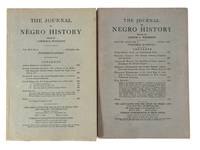
1931ref. 217891931. Woodson Carter Godwin. The Journal of Negro History. Archive of two significant issues published in 1931 and 1938 documenting the institutional growth and expanding scholarly scope of African American historiography during the interwar period. The material records Black intellectual production historical scholarship and diasporic research through the editorial and publishing activities of the Association for the Study of Negro Life and History founded by Carter G. Woodson and Jesse E. Moorland in 1915. These issues include scholarship on slavery Reconstruction Black religious institutions international colonial politics abolitionist movements and urban Black life at a time when Black scholarship remained marginalized within predominantly white academic institutions. The journal served as one of the principal vehicles through which Black historians circulated archival research fostered interdisciplinary inquiry and established African American history as a formal academic field. The archive provides primary-source evidence for the maturation of Black historical studies and diasporic intellectual thought in the early twentieth century. Woodson Carter Godwin ed. The Journal of Negro History. Lancaster PA and Washington D.C.: The Association for the Study of Negro Life and History 1931 and 1938. Two issues in publisher's printed wrappers comprising Vol. XVI No. 4 October 1931 and Vol. XXIII No. 2 April 1938. Each issue measures approximately 10 x 6.5 inches and contains 125 and 144 pages respectively. 1 Vol. XVI No. 4 October 1931. Includes Eugene Portlette Southall's "The Attitude of the Methodist Episcopal Church South Toward the Negro from 1844 to 1870" examining racial theology and denominational policy during and after slavery. Rayford W. Logan contributes "The Anglo-Egyptian Sudan a Problem in International Relations" an early analysis of colonial governance and African international politics anticipating his later work in Pan-African and diplomatic studies. Leo H. Hirsch Jr.'s extensive "The Negro and New York 1783 to 1865" surveys slavery free Black life and antislavery politics in New York before the Civil War. The issue concludes with organizational reports and a memorial tribute titled "The Passing of George W. Cook." 2 Vol. XXIII No. 2 April 1938. Opens with Benjamin Quarles's "The Breach Between Douglass and Garrison" reassessing the political and ideological divide between Frederick Douglass and William Lloyd Garrison within abolitionist movements and Black political organizing. Charles H. Wesley contributes "The Abolition of Negro Apprenticeship in the British Empire" situating emancipation and labor reform within broader imperial and diasporic contexts. Anthropologists Hortense Powdermaker and Joseph Semper examine labor and education patterns among African Americans in Connecticut through "Education and Occupation among New Haven Negroes" while Waldemar Westergaard's "A St. Croix Map of 1796" analyzes plantation geography and Caribbean slavery through archival cartographic evidence. The issue additionally contains scholarly reviews in English and French reflecting the journal's international intellectual orientation. These issues record the widening methodological and geographic range of African American scholarship during the interwar years when Black historians connected local histories of slavery and segregation to international questions of empire labor abolition and diasporic identity. The journal's interdisciplinary composition includes historical research anthropology political analysis religious studies and archival geography within a single scholarly forum. Contributions by Rayford Logan Benjamin Quarles Charles H. Wesley and Hortense Powdermaker reflect the emergence of scholars and allied researchers who reshaped twentieth-century understandings of African American and diasporic history. Minor edgewear and faint toning to wrappers with light handling wear; overall very good condition. A pair of interwar issues documenting the consolidation and internationalization of early African American historical scholarship. unknown books
2018ref. x-3319737449Springer Verlag 2018. Hardcover. New. 522 pages. 9.25x6.25x1.25 inches. Springer Verlag hardcover
1919Abundant black and white illustrations and reproductions of photos. Features: My Greatest Air-Thrill - A British airman 'blinds' a German sub with his revolver; A Woman's Travels in Unknown Asia - Part III - Mary Gaunt continues her amazing travels in China, with many photos; The Bulging Wall - a scary story from outside Havana; The Cry of the Lioness - a nurse in the South African bush is confronted by armed Kaffirs and calls upon lions for help; Hiding in a Fly-Wheel Pit - a negro burglar in a Cincinnati power-station attempts to evade capture; Adventures of a Newspaper-Man - Part I - Trips to the Underworld by Frederic Martyn; Fishing as a New Vocation - How to run your own Smack - article with nice photos; Those Russian Eggs - attempting to dispose of a shipload of rotten eggs; Romance of the World's Largest Buffalo Herd - Buffalo National Park, at Wainwright, Alberta; How the Horse-Stealers Were Outwitted - a story from Charleville, Queensland's great droving centre; My Adventures With the Hippopotamus - John Aldred Jordan relates thrilling experiences; The Ship of Misfortune - Canada Steamship Lines' Vessel "Turret Chief" was unlucky; Tracking the Diamond Smugglers - a fascinating mystery is solved in Uruguay; The Mysteries of Rhodesia - Photo-illustrated account of Vera F. Raffalorich's trip to the ancient ruins of Zimbabwe, in Rhodesia; A Tortoise Farm - curious farm at Lurais in Central France - article with photos; Lures; and more. pp. 8 [ads], [2], 88, 9-16 [ads]. Clean and unmarked with average wear. Covers detached as one but present. A quality vintage copy of this wonderful issue. Book
ref. List3403United States N.d. Double-sided memorial banner measuring 12 x 18 ¼ inches featuring Martin Luther King Jr. and John F. Kennedy with black felt and white and gold acrylic. Two-sided felt banner with machine-stitched binding on one side. Fine condition. The American Negro Public Opinion Service was a civil rights organization established in 1961 by Jesse J. Glass an ex-policeman in Chicago who also operated a detective agency.1 The group was active in Chicago in the 1960s supporting African American business networks and public life during the Civil Rights era. The organization printed this banner in two variants with this one showing the face of John F. Kennedy on the verso and another only showing Dr. King. This is a nice example in fine condition with some very light creasing at one side. 1 William Junea “Judge’s Tie to Detective Agency Eyed” Chicago Tribune April 7 1973 92. unknown
ref. List3403United States N.d. Double-sided memorial banner measuring 12 x 18 ¼ inches featuring Martin Luther King Jr. and John F. Kennedy with black felt and white and gold acrylic. Two-sided felt banner with machine-stitched binding on one side. Fine condition. The American Negro Public Opinion Service was a civil rights organization established in 1961 by Jesse J. Glass an ex-policeman in Chicago who also operated a detective agency.1 The group was active in Chicago in the 1960s supporting African American business networks and public life during the Civil Rights era. The organization printed this banner in two variants with this one showing the face of John F. Kennedy on the verso and another only showing Dr. King. This is a nice example in fine condition with some very light creasing at one side. 1 William Junea “Judge’s Tie to Detective Agency Eyed” Chicago Tribune April 7 1973 92. unknown books
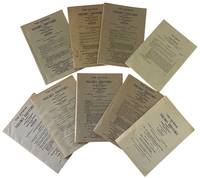
1942ref. 217921942. Woodson Carter Godwin. The Journal of Negro History. 1942-1949. Foundational issues of the journal established by Carter G. Woodson documenting the institutionalization of Black historical scholarship in the United States and advancing early academic study of African American military service political rights and diaspora culture. Issued by the Association for the Study of Negro Life and History which Woodson co-founded in 1915 these volumes situate Black experience within national and Atlantic frameworks including Revolutionary War service Reconstruction governance and twentieth-century military participation. The selection highlights how mid-century scholars constructed a documentary record of African American life in direct response to exclusion from mainstream historiography with particular emphasis on suffrage labor naval service and racial legislation. Woodson Carter Godwin ed. The Journal of Negro History. Washington D.C.: Association for the Study of Negro Life and History 1942 1947 1949. Four issues. 1 Jackson Luther P. "Virginia Negro Soldiers and Seamen in the American Revolution." The Journal of Negro History. Vol. XXVII No. 3. Washington D.C.: ASNLH 1942. Establishes early documentation of African American military participation in the Revolutionary War. Additional contents include Frank J. Klingberg's study of Jamaican legislation 1837 Ronald V. Sires's analysis of the Jamaica Slave Insurrection Loan 1832-1863 and Harold Courlander's "Profane Songs of the Haitian People" presenting vernacular cultural material from Haiti. 2 Wesley Charles H. "Negro Suffrage in the Period of Constitution-Making 1787-1865." The Journal of Negro History. Vol. XXXII No. 2. Washington D.C.: ASNLH 1947. Examines the development of Black political rights before the Civil War. Herbert Aptheker's "The Negro in the Union Navy" and Lawrence D. Reddick's "The Negro in the United States Navy during World War II" connect nineteenth-century and contemporary military service while Mercer Cook's essay surveys modern Haitian literature. 3 Lofton Williston H. "Northern Labor and the Negro during the Civil War." The Journal of Negro History. Vol. XXXIV No. 3. Washington D.C.: ASNLH 1949. Traces relationships between African American workers and Northern labor movements. Sidney Kaplan's "The Miscegenation Issue in the Election of 1864" analyzes race in wartime political discourse and Morris U. Schappes reprints Ernestine L. Rose's address on West Indian emancipation preserving a nineteenth-century abolitionist voice. 4 Bernstein Leonard. "The Participation of Negro Delegates in the Constitutional Convention of 1868 in North Carolina." The Journal of Negro History. Vol. XXXIV No. 4. Washington D.C.: ASNLH 1949. Documents Black political participation in Reconstruction governance. Additional contributions include Joseph H. Taylor on disfranchisement in Alabama Jessie P. Guzman on Monroe Nathan Work's scholarly contributions and a reprinted 1774 letter by Phillis Wheatley identified by Benjamin Quarles. These issues were published during World War II and the early Cold War when African American military service abroad and civil rights struggles at home intensified scholarly and political attention to Black history. Articles on the Union Navy and World War II naval service align with wartime debates over segregation and citizenship while studies of suffrage Reconstruction conventions and disfranchisement reflect renewed examination of constitutional rights in the context of emerging civil rights activism. Four issues in publisher's printed wrappers each approximately 108 to 118 pages. Light wear occasional foxing and minor soiling to wrappers; overall very good to near fine. A cohesive grouping illustrating how Black historians and intellectuals built an evidentiary foundation for African American history as a formal academic discipline in the mid twentieth century. unknown
1967ref. 235281967. Woodson Carter Godwin. The Journal of Negro History traces Black historical scholarship from the civil rights movement of the late 1960s to the constitutional battles over affirmative action in the early 1980s. Kenneth B. Clark a psychologist whose work with Mamie Phipps Clark on children and racial segregation was cited in Brown v. Board of Education opens the January 1968 issue with "The Present Dilemma of the Negro" while other issues examine racial thought in colonial America Black sailors in the Navy and merchant service discipline under industrial slavery in the Old South antislavery agents working with free Black communities from 1833 to 1838 and the Bakke Weber and Fullilove affirmative-action cases. William M. Brewer and Alton Hornsby Jr. eds. The Journal of Negro History. Washington D.C.: The Association for the Study of Negro Life and History Inc. 1967-1982. Nine quarterly issues. Vol. LIII Nos. 3 and 4 July and October 1967; Vol. LIII Nos. 1 and 2 January and April 1968; Vol. LIV Nos. 1 2 3 and 4 January April July and October 1969; Vol. LV No. 1 January 1970; and Vol. LXVII No. 3 Fall 1982. Including writings "The Emergence of DuBois As An African Nationalist"; Max Welborn "Racial Massacre In Atlanta September 22 1906"; Valeria W. Weaver "The Failure Of Civil Rights 1875-1883 And Its Repercussions"; and "The Ethel Johns Report: Black Women In The Nursing Profession 1925." These issues show Woodson's program in the decades after civil rights activism brought Black historical scholarship into debates over school desegregation voting rights enforcement affirmative action and the recovery of African origins in Atlantic slavery. January 1969 number includes the annual report "The Mis-Education of The Negro" tying the Association's current work to Woodson's critique of American schooling while the 1982 number places King's memory Central African slavery Black women's nursing labor affirmative action and Civil War freedom claims in the same scholarly forum. A compact run of The Journal of Negro History that connects ASALH's Woodson-era mission to late twentieth-century scholarship on enslavement civil rights enforcement African Diaspora origins Black labor and affirmative action law. Wrappers show toning some scattered stains with some issues showing binding weakness; interiors remain readable. Overall very good condition. unknown
1942ref. 217921942. Woodson Carter Godwin. The Journal of Negro History. 1942-1949. Foundational issues of the journal established by Carter G. Woodson documenting the institutionalization of Black historical scholarship in the United States and advancing early academic study of African American military service political rights and diaspora culture. Issued by the Association for the Study of Negro Life and History which Woodson co-founded in 1915 these volumes situate Black experience within national and Atlantic frameworks including Revolutionary War service Reconstruction governance and twentieth-century military participation. The selection highlights how mid-century scholars constructed a documentary record of African American life in direct response to exclusion from mainstream historiography with particular emphasis on suffrage labor naval service and racial legislation. Woodson Carter Godwin ed. The Journal of Negro History. Washington D.C.: Association for the Study of Negro Life and History 1942 1947 1949. Four issues. 1 Jackson Luther P. "Virginia Negro Soldiers and Seamen in the American Revolution." The Journal of Negro History. Vol. XXVII No. 3. Washington D.C.: ASNLH 1942. Establishes early documentation of African American military participation in the Revolutionary War. Additional contents include Frank J. Klingberg's study of Jamaican legislation 1837 Ronald V. Sires's analysis of the Jamaica Slave Insurrection Loan 1832-1863 and Harold Courlander's "Profane Songs of the Haitian People" presenting vernacular cultural material from Haiti. 2 Wesley Charles H. "Negro Suffrage in the Period of Constitution-Making 1787-1865." The Journal of Negro History. Vol. XXXII No. 2. Washington D.C.: ASNLH 1947. Examines the development of Black political rights before the Civil War. Herbert Aptheker's "The Negro in the Union Navy" and Lawrence D. Reddick's "The Negro in the United States Navy during World War II" connect nineteenth-century and contemporary military service while Mercer Cook's essay surveys modern Haitian literature. 3 Lofton Williston H. "Northern Labor and the Negro during the Civil War." The Journal of Negro History. Vol. XXXIV No. 3. Washington D.C.: ASNLH 1949. Traces relationships between African American workers and Northern labor movements. Sidney Kaplan's "The Miscegenation Issue in the Election of 1864" analyzes race in wartime political discourse and Morris U. Schappes reprints Ernestine L. Rose's address on West Indian emancipation preserving a nineteenth-century abolitionist voice. 4 Bernstein Leonard. "The Participation of Negro Delegates in the Constitutional Convention of 1868 in North Carolina." The Journal of Negro History. Vol. XXXIV No. 4. Washington D.C.: ASNLH 1949. Documents Black political participation in Reconstruction governance. Additional contributions include Joseph H. Taylor on disfranchisement in Alabama Jessie P. Guzman on Monroe Nathan Work's scholarly contributions and a reprinted 1774 letter by Phillis Wheatley identified by Benjamin Quarles. These issues were published during World War II and the early Cold War when African American military service abroad and civil rights struggles at home intensified scholarly and political attention to Black history. Articles on the Union Navy and World War II naval service align with wartime debates over segregation and citizenship while studies of suffrage Reconstruction conventions and disfranchisement reflect renewed examination of constitutional rights in the context of emerging civil rights activism. Four issues in publisher's printed wrappers each approximately 108 to 118 pages. Light wear occasional foxing and minor soiling to wrappers; overall very good to near fine. A cohesive grouping illustrating how Black historians and intellectuals built an evidentiary foundation for African American history as a formal academic discipline in the mid twentieth century. unknown books
1967ref. 235281967. Woodson Carter Godwin. The Journal of Negro History traces Black historical scholarship from the civil rights movement of the late 1960s to the constitutional battles over affirmative action in the early 1980s. Kenneth B. Clark a psychologist whose work with Mamie Phipps Clark on children and racial segregation was cited in Brown v. Board of Education opens the January 1968 issue with "The Present Dilemma of the Negro" while other issues examine racial thought in colonial America Black sailors in the Navy and merchant service discipline under industrial slavery in the Old South antislavery agents working with free Black communities from 1833 to 1838 and the Bakke Weber and Fullilove affirmative-action cases. William M. Brewer and Alton Hornsby Jr. eds. The Journal of Negro History. Washington D.C.: The Association for the Study of Negro Life and History Inc. 1967-1982. Nine quarterly issues. Vol. LIII Nos. 3 and 4 July and October 1967; Vol. LIII Nos. 1 and 2 January and April 1968; Vol. LIV Nos. 1 2 3 and 4 January April July and October 1969; Vol. LV No. 1 January 1970; and Vol. LXVII No. 3 Fall 1982. Including writings "The Emergence of DuBois As An African Nationalist"; Max Welborn "Racial Massacre In Atlanta September 22 1906"; Valeria W. Weaver "The Failure Of Civil Rights 1875-1883 And Its Repercussions"; and "The Ethel Johns Report: Black Women In The Nursing Profession 1925." These issues show Woodson's program in the decades after civil rights activism brought Black historical scholarship into debates over school desegregation voting rights enforcement affirmative action and the recovery of African origins in Atlantic slavery. January 1969 number includes the annual report "The Mis-Education of The Negro" tying the Association's current work to Woodson's critique of American schooling while the 1982 number places King's memory Central African slavery Black women's nursing labor affirmative action and Civil War freedom claims in the same scholarly forum. A compact run of The Journal of Negro History that connects ASALH's Woodson-era mission to late twentieth-century scholarship on enslavement civil rights enforcement African Diaspora origins Black labor and affirmative action law. Wrappers show toning some scattered stains with some issues showing binding weakness; interiors remain readable. Overall very good condition. unknown books
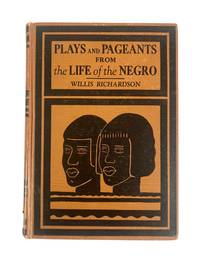
1930ref. 216541930. Richardson Willis. Plays and Pageants from the Life of the Negro 1930 is a major African American dramatic anthology compiled during the Harlem Renaissance to give Black actors students and audiences historically grounded material outside minstrel caricature and dialect convention. Richardson a pioneering Black playwright whose The Chip Woman's Fortune was produced on Broadway in 1923 assembled works by African American writers that used drama and pageantry to teach Black history affirm racial dignity and widen the cultural uses of school and community performance. The anthology belongs to African American theatrical and educational culture illustrating how Black dramatists used stage writing to preserve historical memory and support racial self-representation in the early twentieth century. Richardson Willis. Plays and Pageants from the Life of the Negro. Washington D.C.: The Associated Publishers Inc. 1930. First edition. 373 pages. Illustrated by James Lesesne Wells. Brown boards with black cover illustration no jacket as issued 8vo. The anthology includes plays and pageants by Richardson and other African American writers including Thelma Myrtle Duncan Maud Cuney-Hare John Matheus May Miller Inez M. Burke Dorothy C. Guinn Frances Gunn and Edward J. McCoo. Richardson notes the exclusion of dialect plays and later commentary on the volume identifies Carter G. Woodson and The Associated Publishers as central to its educational purpose: encouraging African Americans to know their history cultural contributions and responses to the modern world. James Lesesne Wells's cover and interior block-print illustrations strengthen the book's place in Harlem Renaissance visual culture; Wells taught at Howard University and was identified by James A. Porter as the "dean of Negro print-makers." The volume's combination of Black-authored drama historical pageantry Woodson's publishing network and Wells's modernist design makes it a substantial artifact of African American performance pedagogy and cultural self-definition. Ex-library stamps on front and rear pastedowns rear flyleaf bottom of spine and top and bottom fore edge; minor cover wear; penciled writing on title page; binding tight pages crisp and clean; very good. A significant 1930 anthology connecting Black theater historical education and Harlem Renaissance book design. unknown
1930ref. 216541930. Richardson Willis. Plays and Pageants from the Life of the Negro 1930 is a major African American dramatic anthology compiled during the Harlem Renaissance to give Black actors students and audiences historically grounded material outside minstrel caricature and dialect convention. Richardson a pioneering Black playwright whose The Chip Woman's Fortune was produced on Broadway in 1923 assembled works by African American writers that used drama and pageantry to teach Black history affirm racial dignity and widen the cultural uses of school and community performance. The anthology belongs to African American theatrical and educational culture illustrating how Black dramatists used stage writing to preserve historical memory and support racial self-representation in the early twentieth century. Richardson Willis. Plays and Pageants from the Life of the Negro. Washington D.C.: The Associated Publishers Inc. 1930. First edition. 373 pages. Illustrated by James Lesesne Wells. Brown boards with black cover illustration no jacket as issued 8vo. The anthology includes plays and pageants by Richardson and other African American writers including Thelma Myrtle Duncan Maud Cuney-Hare John Matheus May Miller Inez M. Burke Dorothy C. Guinn Frances Gunn and Edward J. McCoo. Richardson notes the exclusion of dialect plays and later commentary on the volume identifies Carter G. Woodson and The Associated Publishers as central to its educational purpose: encouraging African Americans to know their history cultural contributions and responses to the modern world. James Lesesne Wells's cover and interior block-print illustrations strengthen the book's place in Harlem Renaissance visual culture; Wells taught at Howard University and was identified by James A. Porter as the "dean of Negro print-makers." The volume's combination of Black-authored drama historical pageantry Woodson's publishing network and Wells's modernist design makes it a substantial artifact of African American performance pedagogy and cultural self-definition. Ex-library stamps on front and rear pastedowns rear flyleaf bottom of spine and top and bottom fore edge; minor cover wear; penciled writing on title page; binding tight pages crisp and clean; very good. A significant 1930 anthology connecting Black theater historical education and Harlem Renaissance book design. unknown books
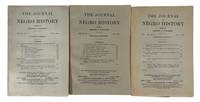
1924ref. 217871924. Woodson Carter Godwin. The Journal of Negro History. Archive of three landmark issues published between 1924 and 1928 documenting the institutional development of African American historical scholarship during the early twentieth century. The material records Black intellectual production historical recovery and scholarly publishing through the Association for the Study of Negro Life and History founded by Carter G. Woodson and Jesse E. Moorland in 1915. These issues include Black scholarship challenging white supremacist interpretations of Reconstruction slavery labor and African diasporic history through archival research and independent academic publication. The journal served as one of the central vehicles through which African American historians established scholarly networks disseminated original research and institutionalized the study of Black history within American intellectual life. The archive provides primary-source evidence for the emergence of modern African American historiography and the scholarly movement that later gave rise to Negro History Week and Black History Month. Woodson Carter Godwin ed. The Journal of Negro History. Lancaster PA and Washington D.C.: The Association for the Study of Negro Life and History 1924 1926 and 1928. Three issues in publisher's printed wrappers comprising Vol. IX No. 3 July 1924; Vol. XI No. 3 July 1926; and Vol. XIII No. 3 July 1928. Each issue measures approximately 10 x 6.5 inches and ranges between 120 and 176 pages. 1 Vol. IX No. 3 July 1924. Devoted primarily to Alrutheus Ambush Taylor's major study "The Negro in South Carolina During the Reconstruction" examining demographic change labor transition religion education and political organization in the post-emancipation South. Written while Taylor served as the first full-time Black researcher employed by Woodson's organization the study foregrounds African American agency during Reconstruction and anticipates interpretive frameworks later expanded by W.E.B. Du Bois in Black Reconstruction. 2 Vol. XI No. 3 July 1926. Continues Taylor's Reconstruction scholarship with "The Negro in the Reconstruction of Virginia" detailing Black political participation church organization disenfranchisement campaigns and the reestablishment of white political control in Virginia after Reconstruction. The article constitutes one of the earliest extended scholarly treatments of Black Reconstruction politics in the state. 3 Vol. XIII No. 3 July 1928. Broadens the journal's scope beyond the Reconstruction South through studies including N. Andrew N. Cleven's "The First Panama Mission and the Congress of the United States" W. Sherman Savage's early survey "The Negro in the History of the Pacific Northwest" and Jean Trapp's "The Liverpool Movement for the Abolition of the English Slave Trade." The issue additionally includes Ruth A. Fisher's extensive 109-page documentary compilation "Extracts from the Records of the African Companies" reproducing archival material relating to British commercial participation in the transatlantic slave trade. These issues record the emergence of African American historical scholarship as an organized intellectual discipline during a period when Black historians faced systematic exclusion from mainstream academic institutions and publishing networks. The journal's sustained attention to Reconstruction history preceded revisionist scholarship that later transformed the field with early interpretations centered on Black political participation labor and institutional development rather than Lost Cause narratives dominant in white historiography of the era. Studies on the Pacific Northwest Panama and British antislavery movements extend the journal's diasporic approach to Black history beyond the American South. Minor edgewear and faint toning to wrappers; overall very good condition. An archive of foundational African American historical scholarship and one of the central publishing achievements of twentieth-century Black intellectual life. unknown
1924ref. 217871924. Woodson Carter Godwin. The Journal of Negro History. Archive of three landmark issues published between 1924 and 1928 documenting the institutional development of African American historical scholarship during the early twentieth century. The material records Black intellectual production historical recovery and scholarly publishing through the Association for the Study of Negro Life and History founded by Carter G. Woodson and Jesse E. Moorland in 1915. These issues include Black scholarship challenging white supremacist interpretations of Reconstruction slavery labor and African diasporic history through archival research and independent academic publication. The journal served as one of the central vehicles through which African American historians established scholarly networks disseminated original research and institutionalized the study of Black history within American intellectual life. The archive provides primary-source evidence for the emergence of modern African American historiography and the scholarly movement that later gave rise to Negro History Week and Black History Month. Woodson Carter Godwin ed. The Journal of Negro History. Lancaster PA and Washington D.C.: The Association for the Study of Negro Life and History 1924 1926 and 1928. Three issues in publisher's printed wrappers comprising Vol. IX No. 3 July 1924; Vol. XI No. 3 July 1926; and Vol. XIII No. 3 July 1928. Each issue measures approximately 10 x 6.5 inches and ranges between 120 and 176 pages. 1 Vol. IX No. 3 July 1924. Devoted primarily to Alrutheus Ambush Taylor's major study "The Negro in South Carolina During the Reconstruction" examining demographic change labor transition religion education and political organization in the post-emancipation South. Written while Taylor served as the first full-time Black researcher employed by Woodson's organization the study foregrounds African American agency during Reconstruction and anticipates interpretive frameworks later expanded by W.E.B. Du Bois in Black Reconstruction. 2 Vol. XI No. 3 July 1926. Continues Taylor's Reconstruction scholarship with "The Negro in the Reconstruction of Virginia" detailing Black political participation church organization disenfranchisement campaigns and the reestablishment of white political control in Virginia after Reconstruction. The article constitutes one of the earliest extended scholarly treatments of Black Reconstruction politics in the state. 3 Vol. XIII No. 3 July 1928. Broadens the journal's scope beyond the Reconstruction South through studies including N. Andrew N. Cleven's "The First Panama Mission and the Congress of the United States" W. Sherman Savage's early survey "The Negro in the History of the Pacific Northwest" and Jean Trapp's "The Liverpool Movement for the Abolition of the English Slave Trade." The issue additionally includes Ruth A. Fisher's extensive 109-page documentary compilation "Extracts from the Records of the African Companies" reproducing archival material relating to British commercial participation in the transatlantic slave trade. These issues record the emergence of African American historical scholarship as an organized intellectual discipline during a period when Black historians faced systematic exclusion from mainstream academic institutions and publishing networks. The journal's sustained attention to Reconstruction history preceded revisionist scholarship that later transformed the field with early interpretations centered on Black political participation labor and institutional development rather than Lost Cause narratives dominant in white historiography of the era. Studies on the Pacific Northwest Panama and British antislavery movements extend the journal's diasporic approach to Black history beyond the American South. Minor edgewear and faint toning to wrappers; overall very good condition. An archive of foundational African American historical scholarship and one of the central publishing achievements of twentieth-century Black intellectual life. unknown books
1943ref. 217911943. Woodson Carter Godwin. The Journal of Negro History. Archive of three significant issues published between 1943 and 1946 documenting the continued expansion of African American historical scholarship during the Second World War and immediate postwar period. The material records Black intellectual production historical recovery and interdisciplinary scholarship through the editorial and publishing work of the Association for the Study of Negro Life and History founded by Carter G. Woodson and Jesse E. Moorland in 1915. These issues include archival evidence and field research on slavery Black political organization African diasporic identity labor systems and racial discrimination across the United States the Caribbean and Latin America. The journal served as one of the central institutional vehicles through which African American scholars circulated research challenging dominant white historical narratives while building an international framework for Black historical studies. The archive provides primary-source evidence for the maturation of mid-century African American historiography and the broadening geographic scope of Black intellectual inquiry during the 1940s. Woodson Carter Godwin ed. The Journal of Negro History. Washington D.C.: The Association for the Study of Negro Life and History 1943 and 1946. Three issues in publisher's printed wrappers comprising Vol. XXVIII No. 3 July 1943; Vol. XXXI No. 3 July 1946; and Vol. XXXI No. 4 October 1946. Each issue measures approximately 10 x 6.5 inches and ranges between 111 and 137 pages. 1 Vol. XXVIII No. 3 July 1943. Includes Vincent W. Byas' "Ethnologic Aspects of the Martinique Creole" examining Creole identity and cultural formation in the French Caribbean; John Hope Franklin's influential "Slaves Virtually Free in Ante-Bellum North Carolina" reassessing the legal and social complexities of slavery in the Upper South; W. Sherman Savage's "The Contest over Slavery between Illinois and Missouri" addressing sectional political tensions; and Arthur J. Alexander's "Federal Officeholders in New York State as Slaveholders 1789-1805" documenting Northern political participation in slavery. 2 Vol. XXXI No. 3 July 1946. Features Charles W. Cobb Jr.'s "The Outlook Regarding State FEPC Legislation" analyzing anti-discrimination policy and fair employment campaigns during the early civil rights era; Mozell C. Hill's "The All-Negro Communities of Oklahoma: The Natural History of a Social Movement" documenting Black autonomous communities and rural self-governance in Oklahoma; and Gonzalo Aguirre Beltrán's "Tribal Origins of Slaves in Mexico" tracing African ethnic origins and cultural survivals within Mexican slavery and the broader Atlantic world. 3 Vol. XXXI No. 4 October 1946. Opens with the Annual Report of the Director and includes Bernard H. Nelson's "Confederate Slave Impressment Legislation 1861-1865" examining the forced wartime conscription of enslaved labor; Marion J. Russell's "American Slave Discontent in Records of the High Courts" focusing on legal evidence of enslaved resistance; Bella Gross' "The First National Negro Convention" revisiting antebellum Black political organizing; and John A. Schutz and Maud O'Neil's "Arthur Holt Anglican Clergyman Reports on Barbados 1725-1733" documenting Caribbean plantation society through missionary observation. These issues record the international and interdisciplinary character of African American scholarship under Woodson's editorial leadership during the 1940s. Contributors examine Black political organization labor systems diasporic identity formation and legal structures across multiple regions of the Atlantic world. Work by John Hope Franklin Charles W. Cobb Jr. Gonzalo Aguirre Beltrán and other scholars reflects the journal's role in shaping modern African American and African diasporic historiography during the mid-twentieth century. Light edge toning and faint foxing to wrappers with minor handling wear; overall very good to near fine condition. An archive documenting the intellectual development and international reach of Black historical scholarship in the World War II and immediate postwar era. unknown
1943ref. 217911943. Woodson Carter Godwin. The Journal of Negro History. Archive of three significant issues published between 1943 and 1946 documenting the continued expansion of African American historical scholarship during the Second World War and immediate postwar period. The material records Black intellectual production historical recovery and interdisciplinary scholarship through the editorial and publishing work of the Association for the Study of Negro Life and History founded by Carter G. Woodson and Jesse E. Moorland in 1915. These issues include archival evidence and field research on slavery Black political organization African diasporic identity labor systems and racial discrimination across the United States the Caribbean and Latin America. The journal served as one of the central institutional vehicles through which African American scholars circulated research challenging dominant white historical narratives while building an international framework for Black historical studies. The archive provides primary-source evidence for the maturation of mid-century African American historiography and the broadening geographic scope of Black intellectual inquiry during the 1940s. Woodson Carter Godwin ed. The Journal of Negro History. Washington D.C.: The Association for the Study of Negro Life and History 1943 and 1946. Three issues in publisher's printed wrappers comprising Vol. XXVIII No. 3 July 1943; Vol. XXXI No. 3 July 1946; and Vol. XXXI No. 4 October 1946. Each issue measures approximately 10 x 6.5 inches and ranges between 111 and 137 pages. 1 Vol. XXVIII No. 3 July 1943. Includes Vincent W. Byas' "Ethnologic Aspects of the Martinique Creole" examining Creole identity and cultural formation in the French Caribbean; John Hope Franklin's influential "Slaves Virtually Free in Ante-Bellum North Carolina" reassessing the legal and social complexities of slavery in the Upper South; W. Sherman Savage's "The Contest over Slavery between Illinois and Missouri" addressing sectional political tensions; and Arthur J. Alexander's "Federal Officeholders in New York State as Slaveholders 1789-1805" documenting Northern political participation in slavery. 2 Vol. XXXI No. 3 July 1946. Features Charles W. Cobb Jr.'s "The Outlook Regarding State FEPC Legislation" analyzing anti-discrimination policy and fair employment campaigns during the early civil rights era; Mozell C. Hill's "The All-Negro Communities of Oklahoma: The Natural History of a Social Movement" documenting Black autonomous communities and rural self-governance in Oklahoma; and Gonzalo Aguirre Beltrán's "Tribal Origins of Slaves in Mexico" tracing African ethnic origins and cultural survivals within Mexican slavery and the broader Atlantic world. 3 Vol. XXXI No. 4 October 1946. Opens with the Annual Report of the Director and includes Bernard H. Nelson's "Confederate Slave Impressment Legislation 1861-1865" examining the forced wartime conscription of enslaved labor; Marion J. Russell's "American Slave Discontent in Records of the High Courts" focusing on legal evidence of enslaved resistance; Bella Gross' "The First National Negro Convention" revisiting antebellum Black political organizing; and John A. Schutz and Maud O'Neil's "Arthur Holt Anglican Clergyman Reports on Barbados 1725-1733" documenting Caribbean plantation society through missionary observation. These issues record the international and interdisciplinary character of African American scholarship under Woodson's editorial leadership during the 1940s. Contributors examine Black political organization labor systems diasporic identity formation and legal structures across multiple regions of the Atlantic world. Work by John Hope Franklin Charles W. Cobb Jr. Gonzalo Aguirre Beltrán and other scholars reflects the journal's role in shaping modern African American and African diasporic historiography during the mid-twentieth century. Light edge toning and faint foxing to wrappers with minor handling wear; overall very good to near fine condition. An archive documenting the intellectual development and international reach of Black historical scholarship in the World War II and immediate postwar era. unknown books
1922ref. 16148Paris, Crès "Mémoires d’Ecrivains et d’Artistes", 1922 (Albi, Imprimerie Edouard Julien) ; in-16, broché ; 275, (2) pp., (1) f. blanc, portrait photographique en frontispice, couverture crème richement décorée par Nila d’Ivori en beige, titre en rouge.
1877ref. 52662Kinsale Ireland: printed at the 50th Regimental Press 1877. Bifolium program 8.5 x 13 cm pp. 4 the last blank; minor foxing previous fold formerly from an album the remains of a card and an engraved illustration on the final blank. Also a manuscript caption: "Programme Garrison Nigger Troupe Camden Fort Feb. 9 1877." With manuscript notes and corrections in a contemporary hand. The Negro Troupe was led by Lieutenant Yaldwyn. Provenance: Major-General Sir Francis Walter de Winton 1835-1901. printed at the 50th Regimental Press unknown
1877ref. 52662Kinsale Ireland: printed at the 50th Regimental Press 1877. Bifolium program 8.5 x 13 cm pp. 4 the last blank; minor foxing previous fold formerly from an album the remains of a card and an engraved illustration on the final blank. Also a manuscript caption: "Programme Garrison Nigger Troupe Camden Fort Feb. 9 1877." With manuscript notes and corrections in a contemporary hand. The Negro Troupe was led by Lieutenant Yaldwyn. Provenance: Major-General Sir Francis Walter de Winton 1835-1901. printed at the 50th Regimental Press unknown books
1977ref. 239851New York: Del Rey / Ballantine 1977. First hardcover edition first printing. Publisher's grey paper-covered boards in John Berkey dust jacket unpriced. Very mild shelf wear a fine copy in very good lightly edge worn and rubbed dust jacket with spot of soiling upper front corner. 183 1 blank pp. 8.5" x 5.75" A PIECE OF STAR WARS HISTORY The spring of 1977 reshaped popular culture as one of the most important narrative universes burst onto the screen and into the literary marketplace. Though credited to George Lucas the novelization which appeared in paperback form in the fall of 1976 was in fact written by science-fiction legend Alan Dean Foster whose text introduced readers to the galaxy far far away just months before the film's release. Presented here is the first hardcover edition issued by the Science Fiction Book Club in 1977 and preceded only by the 1976 Ballantine paperback original. With identifying "S27" gutter code and preserved in its original dust jacket this edition is illustrated with dozens of color photographs from the cinematic production securing the book as a piece of literary cinematic and cultural history. Del Rey / Ballantine unknown
1996ref. BN313102Edisud 1996. 1996. Hardcover. The Riviera Of Charles Negre The Riviera Of Charles Negre Joseph Nègre Edisud hardcover
1926Very Good Turkish, Ottoman (1500-1928) A modern fine full leather bdg. in the Ottoman style. Cr. 8vo. (20 x 14 cm). In Ottoman script (Old Turkish with Arabic letters). 134, [1] p., 1 Washington's portrait, 3 unnumbered b/w plates. First and only Turkish edition of this exceedingly rare biography of the important African-American leader Booker T. Washington. The first studies and translations regarding slavery and abolition were made in the early years of the young Turkish Republic, which had refused the legacy of its imperial predecessor. In this period, several classics of American anti-slavery literature and the present work were translated for the first time. Booker Taliaferro Washington was an American educator, author, orator, and adviser to multiple presidents of the United States. Between 1890 and 1915, Washington was the dominant leader of the African American community and the contemporary black elite. Washington was from the last generation of black American leaders born into slavery and became the leading voice of the former slaves and their descendants. Özege 11210.
1976ref. 192297New York: Ballantine Books 1976. A long time ago in a publishing house far far away. First edition signed by the ghostwriter Alan Dean Foster on the title page though solely credited to George Lucas. Published five months before the film's release this popular novelization was the world's first encounter with a long-form story from the galaxy far far away. The cover bears one of Ralph McQuarrie's famous concept illustrations a critical element in 20th Century Fox's decision to greenlight the Star Wars project. Before audiences had seen the special effects heard the sound design or absorbed John Williams's orchestral score Lucas's fast and intense story sold millions of copies. This book version is "perhaps most notable for allowing its readers to experience the interiority of characters from the film. Although the film establishes Leia's willingness to shoot the stormtroopers the novelization allows its readers to imagine the consequences of her act more vividly by narrating the stormtrooper's thoughts and aspirations" Webster p. 51. The novelization includes several key details omitted from the finished 1977 film but later retconned into the series including Palpatine p. 1 the Sith p. 8 and a medal for Chewbacca p. 219. By contrast the most famous opening line in film is here given as "Another galaxy another time". Octavo. Original pictorial wrappers designed by Ralph McQuarrie edges yellow. Bookseller ink stamp to first leaf. Extremities of wrappers creased and rubbed rear wrapper and bottom edge warped occasional spotting. A very good copy. Jeremy W. Webster "Leia Shot First: Transmedia Storytelling and the National Public Radio Dramatization of Star Wars" Star Wars and the History of Transmedia Storytelling 2018. unknown
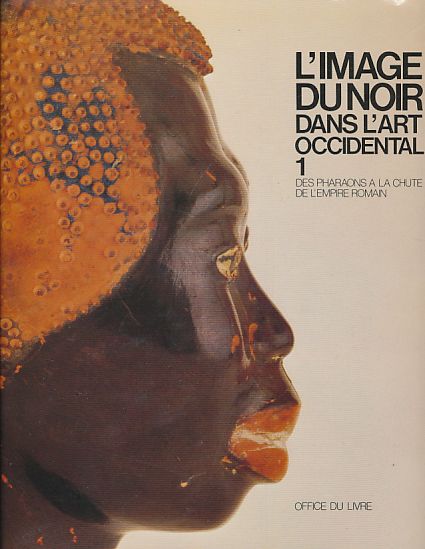
1979ref. 1062615Office du livre / Harvard, 1979. / - 1989. 281 S.; Abb. / 350 S.; Abb. / 325 S.; Abb. / 281 S.; Abb. / 379 S.; Abb. und 306 S. mit Abb.; ca. 25 cm. Originalleinenbände mit Schutzumschlag.