1277 resultados
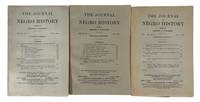
1924ref. 217871924. Woodson Carter Godwin. The Journal of Negro History. Archive of three landmark issues published between 1924 and 1928 documenting the institutional development of African American historical scholarship during the early twentieth century. The material records Black intellectual production historical recovery and scholarly publishing through the Association for the Study of Negro Life and History founded by Carter G. Woodson and Jesse E. Moorland in 1915. These issues include Black scholarship challenging white supremacist interpretations of Reconstruction slavery labor and African diasporic history through archival research and independent academic publication. The journal served as one of the central vehicles through which African American historians established scholarly networks disseminated original research and institutionalized the study of Black history within American intellectual life. The archive provides primary-source evidence for the emergence of modern African American historiography and the scholarly movement that later gave rise to Negro History Week and Black History Month. Woodson Carter Godwin ed. The Journal of Negro History. Lancaster PA and Washington D.C.: The Association for the Study of Negro Life and History 1924 1926 and 1928. Three issues in publisher's printed wrappers comprising Vol. IX No. 3 July 1924; Vol. XI No. 3 July 1926; and Vol. XIII No. 3 July 1928. Each issue measures approximately 10 x 6.5 inches and ranges between 120 and 176 pages. 1 Vol. IX No. 3 July 1924. Devoted primarily to Alrutheus Ambush Taylor's major study "The Negro in South Carolina During the Reconstruction" examining demographic change labor transition religion education and political organization in the post-emancipation South. Written while Taylor served as the first full-time Black researcher employed by Woodson's organization the study foregrounds African American agency during Reconstruction and anticipates interpretive frameworks later expanded by W.E.B. Du Bois in Black Reconstruction. 2 Vol. XI No. 3 July 1926. Continues Taylor's Reconstruction scholarship with "The Negro in the Reconstruction of Virginia" detailing Black political participation church organization disenfranchisement campaigns and the reestablishment of white political control in Virginia after Reconstruction. The article constitutes one of the earliest extended scholarly treatments of Black Reconstruction politics in the state. 3 Vol. XIII No. 3 July 1928. Broadens the journal's scope beyond the Reconstruction South through studies including N. Andrew N. Cleven's "The First Panama Mission and the Congress of the United States" W. Sherman Savage's early survey "The Negro in the History of the Pacific Northwest" and Jean Trapp's "The Liverpool Movement for the Abolition of the English Slave Trade." The issue additionally includes Ruth A. Fisher's extensive 109-page documentary compilation "Extracts from the Records of the African Companies" reproducing archival material relating to British commercial participation in the transatlantic slave trade. These issues record the emergence of African American historical scholarship as an organized intellectual discipline during a period when Black historians faced systematic exclusion from mainstream academic institutions and publishing networks. The journal's sustained attention to Reconstruction history preceded revisionist scholarship that later transformed the field with early interpretations centered on Black political participation labor and institutional development rather than Lost Cause narratives dominant in white historiography of the era. Studies on the Pacific Northwest Panama and British antislavery movements extend the journal's diasporic approach to Black history beyond the American South. Minor edgewear and faint toning to wrappers; overall very good condition. An archive of foundational African American historical scholarship and one of the central publishing achievements of twentieth-century Black intellectual life. unknown
1924ref. 217871924. Woodson Carter Godwin. The Journal of Negro History. Archive of three landmark issues published between 1924 and 1928 documenting the institutional development of African American historical scholarship during the early twentieth century. The material records Black intellectual production historical recovery and scholarly publishing through the Association for the Study of Negro Life and History founded by Carter G. Woodson and Jesse E. Moorland in 1915. These issues include Black scholarship challenging white supremacist interpretations of Reconstruction slavery labor and African diasporic history through archival research and independent academic publication. The journal served as one of the central vehicles through which African American historians established scholarly networks disseminated original research and institutionalized the study of Black history within American intellectual life. The archive provides primary-source evidence for the emergence of modern African American historiography and the scholarly movement that later gave rise to Negro History Week and Black History Month. Woodson Carter Godwin ed. The Journal of Negro History. Lancaster PA and Washington D.C.: The Association for the Study of Negro Life and History 1924 1926 and 1928. Three issues in publisher's printed wrappers comprising Vol. IX No. 3 July 1924; Vol. XI No. 3 July 1926; and Vol. XIII No. 3 July 1928. Each issue measures approximately 10 x 6.5 inches and ranges between 120 and 176 pages. 1 Vol. IX No. 3 July 1924. Devoted primarily to Alrutheus Ambush Taylor's major study "The Negro in South Carolina During the Reconstruction" examining demographic change labor transition religion education and political organization in the post-emancipation South. Written while Taylor served as the first full-time Black researcher employed by Woodson's organization the study foregrounds African American agency during Reconstruction and anticipates interpretive frameworks later expanded by W.E.B. Du Bois in Black Reconstruction. 2 Vol. XI No. 3 July 1926. Continues Taylor's Reconstruction scholarship with "The Negro in the Reconstruction of Virginia" detailing Black political participation church organization disenfranchisement campaigns and the reestablishment of white political control in Virginia after Reconstruction. The article constitutes one of the earliest extended scholarly treatments of Black Reconstruction politics in the state. 3 Vol. XIII No. 3 July 1928. Broadens the journal's scope beyond the Reconstruction South through studies including N. Andrew N. Cleven's "The First Panama Mission and the Congress of the United States" W. Sherman Savage's early survey "The Negro in the History of the Pacific Northwest" and Jean Trapp's "The Liverpool Movement for the Abolition of the English Slave Trade." The issue additionally includes Ruth A. Fisher's extensive 109-page documentary compilation "Extracts from the Records of the African Companies" reproducing archival material relating to British commercial participation in the transatlantic slave trade. These issues record the emergence of African American historical scholarship as an organized intellectual discipline during a period when Black historians faced systematic exclusion from mainstream academic institutions and publishing networks. The journal's sustained attention to Reconstruction history preceded revisionist scholarship that later transformed the field with early interpretations centered on Black political participation labor and institutional development rather than Lost Cause narratives dominant in white historiography of the era. Studies on the Pacific Northwest Panama and British antislavery movements extend the journal's diasporic approach to Black history beyond the American South. Minor edgewear and faint toning to wrappers; overall very good condition. An archive of foundational African American historical scholarship and one of the central publishing achievements of twentieth-century Black intellectual life. unknown books
1943ref. 217911943. Woodson Carter Godwin. The Journal of Negro History. Archive of three significant issues published between 1943 and 1946 documenting the continued expansion of African American historical scholarship during the Second World War and immediate postwar period. The material records Black intellectual production historical recovery and interdisciplinary scholarship through the editorial and publishing work of the Association for the Study of Negro Life and History founded by Carter G. Woodson and Jesse E. Moorland in 1915. These issues include archival evidence and field research on slavery Black political organization African diasporic identity labor systems and racial discrimination across the United States the Caribbean and Latin America. The journal served as one of the central institutional vehicles through which African American scholars circulated research challenging dominant white historical narratives while building an international framework for Black historical studies. The archive provides primary-source evidence for the maturation of mid-century African American historiography and the broadening geographic scope of Black intellectual inquiry during the 1940s. Woodson Carter Godwin ed. The Journal of Negro History. Washington D.C.: The Association for the Study of Negro Life and History 1943 and 1946. Three issues in publisher's printed wrappers comprising Vol. XXVIII No. 3 July 1943; Vol. XXXI No. 3 July 1946; and Vol. XXXI No. 4 October 1946. Each issue measures approximately 10 x 6.5 inches and ranges between 111 and 137 pages. 1 Vol. XXVIII No. 3 July 1943. Includes Vincent W. Byas' "Ethnologic Aspects of the Martinique Creole" examining Creole identity and cultural formation in the French Caribbean; John Hope Franklin's influential "Slaves Virtually Free in Ante-Bellum North Carolina" reassessing the legal and social complexities of slavery in the Upper South; W. Sherman Savage's "The Contest over Slavery between Illinois and Missouri" addressing sectional political tensions; and Arthur J. Alexander's "Federal Officeholders in New York State as Slaveholders 1789-1805" documenting Northern political participation in slavery. 2 Vol. XXXI No. 3 July 1946. Features Charles W. Cobb Jr.'s "The Outlook Regarding State FEPC Legislation" analyzing anti-discrimination policy and fair employment campaigns during the early civil rights era; Mozell C. Hill's "The All-Negro Communities of Oklahoma: The Natural History of a Social Movement" documenting Black autonomous communities and rural self-governance in Oklahoma; and Gonzalo Aguirre Beltrán's "Tribal Origins of Slaves in Mexico" tracing African ethnic origins and cultural survivals within Mexican slavery and the broader Atlantic world. 3 Vol. XXXI No. 4 October 1946. Opens with the Annual Report of the Director and includes Bernard H. Nelson's "Confederate Slave Impressment Legislation 1861-1865" examining the forced wartime conscription of enslaved labor; Marion J. Russell's "American Slave Discontent in Records of the High Courts" focusing on legal evidence of enslaved resistance; Bella Gross' "The First National Negro Convention" revisiting antebellum Black political organizing; and John A. Schutz and Maud O'Neil's "Arthur Holt Anglican Clergyman Reports on Barbados 1725-1733" documenting Caribbean plantation society through missionary observation. These issues record the international and interdisciplinary character of African American scholarship under Woodson's editorial leadership during the 1940s. Contributors examine Black political organization labor systems diasporic identity formation and legal structures across multiple regions of the Atlantic world. Work by John Hope Franklin Charles W. Cobb Jr. Gonzalo Aguirre Beltrán and other scholars reflects the journal's role in shaping modern African American and African diasporic historiography during the mid-twentieth century. Light edge toning and faint foxing to wrappers with minor handling wear; overall very good to near fine condition. An archive documenting the intellectual development and international reach of Black historical scholarship in the World War II and immediate postwar era. unknown
1943ref. 217911943. Woodson Carter Godwin. The Journal of Negro History. Archive of three significant issues published between 1943 and 1946 documenting the continued expansion of African American historical scholarship during the Second World War and immediate postwar period. The material records Black intellectual production historical recovery and interdisciplinary scholarship through the editorial and publishing work of the Association for the Study of Negro Life and History founded by Carter G. Woodson and Jesse E. Moorland in 1915. These issues include archival evidence and field research on slavery Black political organization African diasporic identity labor systems and racial discrimination across the United States the Caribbean and Latin America. The journal served as one of the central institutional vehicles through which African American scholars circulated research challenging dominant white historical narratives while building an international framework for Black historical studies. The archive provides primary-source evidence for the maturation of mid-century African American historiography and the broadening geographic scope of Black intellectual inquiry during the 1940s. Woodson Carter Godwin ed. The Journal of Negro History. Washington D.C.: The Association for the Study of Negro Life and History 1943 and 1946. Three issues in publisher's printed wrappers comprising Vol. XXVIII No. 3 July 1943; Vol. XXXI No. 3 July 1946; and Vol. XXXI No. 4 October 1946. Each issue measures approximately 10 x 6.5 inches and ranges between 111 and 137 pages. 1 Vol. XXVIII No. 3 July 1943. Includes Vincent W. Byas' "Ethnologic Aspects of the Martinique Creole" examining Creole identity and cultural formation in the French Caribbean; John Hope Franklin's influential "Slaves Virtually Free in Ante-Bellum North Carolina" reassessing the legal and social complexities of slavery in the Upper South; W. Sherman Savage's "The Contest over Slavery between Illinois and Missouri" addressing sectional political tensions; and Arthur J. Alexander's "Federal Officeholders in New York State as Slaveholders 1789-1805" documenting Northern political participation in slavery. 2 Vol. XXXI No. 3 July 1946. Features Charles W. Cobb Jr.'s "The Outlook Regarding State FEPC Legislation" analyzing anti-discrimination policy and fair employment campaigns during the early civil rights era; Mozell C. Hill's "The All-Negro Communities of Oklahoma: The Natural History of a Social Movement" documenting Black autonomous communities and rural self-governance in Oklahoma; and Gonzalo Aguirre Beltrán's "Tribal Origins of Slaves in Mexico" tracing African ethnic origins and cultural survivals within Mexican slavery and the broader Atlantic world. 3 Vol. XXXI No. 4 October 1946. Opens with the Annual Report of the Director and includes Bernard H. Nelson's "Confederate Slave Impressment Legislation 1861-1865" examining the forced wartime conscription of enslaved labor; Marion J. Russell's "American Slave Discontent in Records of the High Courts" focusing on legal evidence of enslaved resistance; Bella Gross' "The First National Negro Convention" revisiting antebellum Black political organizing; and John A. Schutz and Maud O'Neil's "Arthur Holt Anglican Clergyman Reports on Barbados 1725-1733" documenting Caribbean plantation society through missionary observation. These issues record the international and interdisciplinary character of African American scholarship under Woodson's editorial leadership during the 1940s. Contributors examine Black political organization labor systems diasporic identity formation and legal structures across multiple regions of the Atlantic world. Work by John Hope Franklin Charles W. Cobb Jr. Gonzalo Aguirre Beltrán and other scholars reflects the journal's role in shaping modern African American and African diasporic historiography during the mid-twentieth century. Light edge toning and faint foxing to wrappers with minor handling wear; overall very good to near fine condition. An archive documenting the intellectual development and international reach of Black historical scholarship in the World War II and immediate postwar era. unknown books
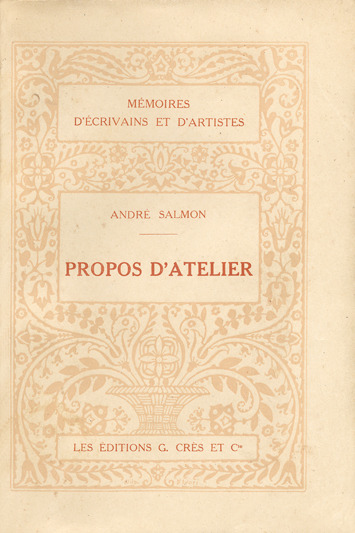
1922ref. 16148Paris, Crès "Mémoires d’Ecrivains et d’Artistes", 1922 (Albi, Imprimerie Edouard Julien) ; in-16, broché ; 275, (2) pp., (1) f. blanc, portrait photographique en frontispice, couverture crème richement décorée par Nila d’Ivori en beige, titre en rouge.
1877ref. 52662Kinsale Ireland: printed at the 50th Regimental Press 1877. Bifolium program 8.5 x 13 cm pp. 4 the last blank; minor foxing previous fold formerly from an album the remains of a card and an engraved illustration on the final blank. Also a manuscript caption: "Programme Garrison Nigger Troupe Camden Fort Feb. 9 1877." With manuscript notes and corrections in a contemporary hand. The Negro Troupe was led by Lieutenant Yaldwyn. Provenance: Major-General Sir Francis Walter de Winton 1835-1901. printed at the 50th Regimental Press unknown
1877ref. 52662Kinsale Ireland: printed at the 50th Regimental Press 1877. Bifolium program 8.5 x 13 cm pp. 4 the last blank; minor foxing previous fold formerly from an album the remains of a card and an engraved illustration on the final blank. Also a manuscript caption: "Programme Garrison Nigger Troupe Camden Fort Feb. 9 1877." With manuscript notes and corrections in a contemporary hand. The Negro Troupe was led by Lieutenant Yaldwyn. Provenance: Major-General Sir Francis Walter de Winton 1835-1901. printed at the 50th Regimental Press unknown books
1977ref. 239851New York: Del Rey / Ballantine 1977. First hardcover edition first printing. Publisher's grey paper-covered boards in John Berkey dust jacket unpriced. Very mild shelf wear a fine copy in very good lightly edge worn and rubbed dust jacket with spot of soiling upper front corner. 183 1 blank pp. 8.5" x 5.75" A PIECE OF STAR WARS HISTORY The spring of 1977 reshaped popular culture as one of the most important narrative universes burst onto the screen and into the literary marketplace. Though credited to George Lucas the novelization which appeared in paperback form in the fall of 1976 was in fact written by science-fiction legend Alan Dean Foster whose text introduced readers to the galaxy far far away just months before the film's release. Presented here is the first hardcover edition issued by the Science Fiction Book Club in 1977 and preceded only by the 1976 Ballantine paperback original. With identifying "S27" gutter code and preserved in its original dust jacket this edition is illustrated with dozens of color photographs from the cinematic production securing the book as a piece of literary cinematic and cultural history. Del Rey / Ballantine unknown
1996ref. BN313102Edisud 1996. 1996. Hardcover. The Riviera Of Charles Negre The Riviera Of Charles Negre Joseph Nègre Edisud hardcover
1926Very Good Turkish, Ottoman (1500-1928) A modern fine full leather bdg. in the Ottoman style. Cr. 8vo. (20 x 14 cm). In Ottoman script (Old Turkish with Arabic letters). 134, [1] p., 1 Washington's portrait, 3 unnumbered b/w plates. First and only Turkish edition of this exceedingly rare biography of the important African-American leader Booker T. Washington. The first studies and translations regarding slavery and abolition were made in the early years of the young Turkish Republic, which had refused the legacy of its imperial predecessor. In this period, several classics of American anti-slavery literature and the present work were translated for the first time. Booker Taliaferro Washington was an American educator, author, orator, and adviser to multiple presidents of the United States. Between 1890 and 1915, Washington was the dominant leader of the African American community and the contemporary black elite. Washington was from the last generation of black American leaders born into slavery and became the leading voice of the former slaves and their descendants. Özege 11210.
1976ref. 192297New York: Ballantine Books 1976. A long time ago in a publishing house far far away. First edition signed by the ghostwriter Alan Dean Foster on the title page though solely credited to George Lucas. Published five months before the film's release this popular novelization was the world's first encounter with a long-form story from the galaxy far far away. The cover bears one of Ralph McQuarrie's famous concept illustrations a critical element in 20th Century Fox's decision to greenlight the Star Wars project. Before audiences had seen the special effects heard the sound design or absorbed John Williams's orchestral score Lucas's fast and intense story sold millions of copies. This book version is "perhaps most notable for allowing its readers to experience the interiority of characters from the film. Although the film establishes Leia's willingness to shoot the stormtroopers the novelization allows its readers to imagine the consequences of her act more vividly by narrating the stormtrooper's thoughts and aspirations" Webster p. 51. The novelization includes several key details omitted from the finished 1977 film but later retconned into the series including Palpatine p. 1 the Sith p. 8 and a medal for Chewbacca p. 219. By contrast the most famous opening line in film is here given as "Another galaxy another time". Octavo. Original pictorial wrappers designed by Ralph McQuarrie edges yellow. Bookseller ink stamp to first leaf. Extremities of wrappers creased and rubbed rear wrapper and bottom edge warped occasional spotting. A very good copy. Jeremy W. Webster "Leia Shot First: Transmedia Storytelling and the National Public Radio Dramatization of Star Wars" Star Wars and the History of Transmedia Storytelling 2018. unknown
1979ref. 1062615Office du livre / Harvard, 1979. / - 1989. 281 S.; Abb. / 350 S.; Abb. / 325 S.; Abb. / 281 S.; Abb. / 379 S.; Abb. und 306 S. mit Abb.; ca. 25 cm. Originalleinenbände mit Schutzumschlag.
ref. 8,0011E+12DAL NEGRO. new. Tarô de Luigi e Giulia Scapini publicado pela editora Dal Negro. Baralho com 78 cartas. Inclui livreto com instruções em Inglês e italiano. Tarô inspirado nas obras de Bacco idealizado por Giordano Berti e desenhado por Luigi e Giulia Scapini. DAL NEGRO unknown
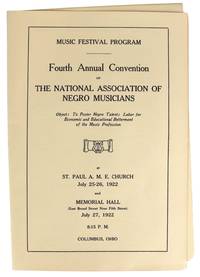
1922ref. 47910Columbus OH: The National Association of Negro Musicians 1922. Near Fine. Columbus OH: The National Association of Negro Musicians 1922. First Edition. Bifolium 22.5cm; black ink on beige paper stock. Vertical spine fold slightly off-center otherwise fine. An unrecorded program from the fourth annual convention of the National Association of Negro Musicians NANM held in Columbus Ohio July 25-27 1922 notably ending with performances by a 25-year-old Marian Anderson in an early and significant national appearance. An article by Carl Diton who accompanied Anderson on piano for these Columbus performances in The Crisis gives a contemporary dispatch on this 1922 Columbus convention: "At present the most brilliant achievement of the National Association of Negro Musicians is its conventions. This fact should not be under-estimated for in point of constructive thought to say nothing of the vast crowds of people attendant upon its evening concert sessions which the standing room of the largest procurable auditoriums is at a premium these conventions go far towards rivaling those of older and more experienced national associations. Every year brings forth an amazing wealth of the noblest kind of talent which is even to the older and more seasoned members vividly startling." Diton continues with praise of the Columbus convention "It is however the consensus of opinion that the Columbus Ohio convention of 1922 characterized by the absolute satisfaction of the delegates as to their personal comfort the total absence of anything that savoured of graft and the absolute punctuality of the sessions was the masterpiece of them all." pp. 21-22 The program concluded with a performance of three selections by Marian Anderson followed by the presentation of a scholarship to her. Soon after Anderson continued her study with voice teacher Giuseppe Boghetti and had her first studio recordings with the Victor Talking Machine Company in 1923 launching one of the most important careers in Black American music. Not separately cataloged in OCLC and early NANM material quite uncommon in retail. Carl Diton "The National Association of Negro Musicians." The Crisis: Volume 26 Issue 1 May 1923 pp. 21-22. The National Association of Negro Musicians unknown
1922ref. 47910Columbus OH: The National Association of Negro Musicians 1922. Near Fine. Columbus OH: The National Association of Negro Musicians 1922. First Edition. Bifolium 22.5cm; black ink on beige paper stock. Vertical spine fold slightly off-center otherwise fine. An unrecorded program from the fourth annual convention of the National Association of Negro Musicians NANM held in Columbus Ohio July 25-27 1922 notably ending with performances by a 25-year-old Marian Anderson in an early and significant national appearance. An article by Carl Diton who accompanied Anderson on piano for these Columbus performances in The Crisis gives a contemporary dispatch on this 1922 Columbus convention: "At present the most brilliant achievement of the National Association of Negro Musicians is its conventions. This fact should not be under-estimated for in point of constructive thought to say nothing of the vast crowds of people attendant upon its evening concert sessions which the standing room of the largest procurable auditoriums is at a premium these conventions go far towards rivaling those of older and more experienced national associations. Every year brings forth an amazing wealth of the noblest kind of talent which is even to the older and more seasoned members vividly startling." Diton continues with praise of the Columbus convention "It is however the consensus of opinion that the Columbus Ohio convention of 1922 characterized by the absolute satisfaction of the delegates as to their personal comfort the total absence of anything that savoured of graft and the absolute punctuality of the sessions was the masterpiece of them all." pp. 21-22 The program concluded with a performance of three selections by Marian Anderson followed by the presentation of a scholarship to her. Soon after Anderson continued her study with voice teacher Giuseppe Boghetti and had her first studio recordings with the Victor Talking Machine Company in 1923 launching one of the most important careers in Black American music. Not separately cataloged in OCLC and early NANM material quite uncommon in retail. Carl Diton "The National Association of Negro Musicians." The Crisis: Volume 26 Issue 1 May 1923 pp. 21-22. The National Association of Negro Musicians unknown books
1915ref. 002118New York: George H. Doran Company 1915. First Edition. Hardcover. Very Good/very good. New York: George H. Doran Company 1915. First Edition second-state binding. VG in VG- jacket. Exceptionally rare in dustjacket. DJ has a single shallow chip off the spine crown cutting off about 1/3 of the word Tennis. Period bookseller price tag $2.50 on the spine. Minor soiling and a few closed tears. These defects noted the jacket is still attractive in the mylar sleeve. The book itself has a neat POS on the title page otherwise completely free of markings pages very clean and bright no foxing. Endpapers foxing and some spotting to top edge and front paper edge bottom edge clean. Cloth boards have virtually no wear and are bright and clean sharp cloth corners. Preface by Richard Norris Williams. Illustrated from photographs. 9x6 gilt-lettered green cloth. Ghost-written by Sinclair Lewis when he was a struggling writer about 5 years before Main Street was published. Lewis was working for George Doran at the time. George H. Doran Company hardcover
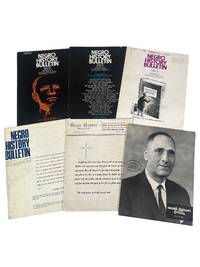
1964ref. 212461964. Woodson Carter G. ed. The Negro History Bulletin. These mid-twentieth century periodicals document the expansion of African American historical scholarship and pedagogy during the Civil Rights era when educational institutions activists and scholars increasingly challenged the exclusion of Black history from mainstream curricula. Issued between 1964 and 1971 these issues reflect the evolving intellectual priorities of the period including the emergence of Black Studies programs renewed attention to Reconstruction and slavery and the growing influence of Black Power thought. Founded in 1937 at the urging of Mary McLeod Bethune the Negro History Bulletin functioned as a teaching-oriented publication under the direction of Carter G. Woodson and the Association for the Study of Negro Life and History providing accessible but research-informed content for educators students and general readers. The issues in this group demonstrate how African American history was interpreted and taught during a period of legislative change cultural transformation and increased institutional recognition. Woodson Carter G. ed. The Negro History Bulletin. Washington D.C.: Association for the Study of Negro Life and History 1964-1971. Archive of six issues. Quarto. Stapled wrappers. Archive includes: 1 May 1964 issue with a dedication to Albert N. D. Brooks; 2 December 1964 issue featuring articles on John Willis Menard African American education and Black military service; 3 January 1969 issue including content on Wiley College Library poetry book reviews and contemporary educational policy developments; 4 January 1971 issue addressing music W. E. B. Du Bois's The Souls of Black Folk and the expansion of Black Studies programs; 5 October 1971 issue including discussions of Freedmen's schools antebellum Black separatist rhetoric Southern Black political organizations and housing and social policy; 6 November 1971 issue featuring articles on Black Power five years after its emergence the Gabriel Insurrection of 1800 Southern integration and prominent Black professionals. Each issue approximately 20-22 pages measuring 8.5 x 11 inches illustrated with black and white photographs and line drawings. These issues were produced during a period in which African American history moved from the margins toward institutional recognition particularly through the establishment of Black Studies programs and curriculum reforms in schools and universities. The Negro History Bulletin played a central role in translating scholarly research into classroom practice shaping how history was taught during a decade of social and political transformation. Its continued publication now under the title Black History Bulletin reflects its long-standing influence within the field. Light wear to covers; bindings generally sound with clean interiors; overall very good condition. The archive provides a focused record of African American historiography and educational practice during the Civil Rights era. unknown
1964ref. 212461964. Woodson Carter G. ed. The Negro History Bulletin. These mid-twentieth century periodicals document the expansion of African American historical scholarship and pedagogy during the Civil Rights era when educational institutions activists and scholars increasingly challenged the exclusion of Black history from mainstream curricula. Issued between 1964 and 1971 these issues reflect the evolving intellectual priorities of the period including the emergence of Black Studies programs renewed attention to Reconstruction and slavery and the growing influence of Black Power thought. Founded in 1937 at the urging of Mary McLeod Bethune the Negro History Bulletin functioned as a teaching-oriented publication under the direction of Carter G. Woodson and the Association for the Study of Negro Life and History providing accessible but research-informed content for educators students and general readers. The issues in this group demonstrate how African American history was interpreted and taught during a period of legislative change cultural transformation and increased institutional recognition. Woodson Carter G. ed. The Negro History Bulletin. Washington D.C.: Association for the Study of Negro Life and History 1964-1971. Archive of six issues. Quarto. Stapled wrappers. Archive includes: 1 May 1964 issue with a dedication to Albert N. D. Brooks; 2 December 1964 issue featuring articles on John Willis Menard African American education and Black military service; 3 January 1969 issue including content on Wiley College Library poetry book reviews and contemporary educational policy developments; 4 January 1971 issue addressing music W. E. B. Du Bois's The Souls of Black Folk and the expansion of Black Studies programs; 5 October 1971 issue including discussions of Freedmen's schools antebellum Black separatist rhetoric Southern Black political organizations and housing and social policy; 6 November 1971 issue featuring articles on Black Power five years after its emergence the Gabriel Insurrection of 1800 Southern integration and prominent Black professionals. Each issue approximately 20-22 pages measuring 8.5 x 11 inches illustrated with black and white photographs and line drawings. These issues were produced during a period in which African American history moved from the margins toward institutional recognition particularly through the establishment of Black Studies programs and curriculum reforms in schools and universities. The Negro History Bulletin played a central role in translating scholarly research into classroom practice shaping how history was taught during a decade of social and political transformation. Its continued publication now under the title Black History Bulletin reflects its long-standing influence within the field. Light wear to covers; bindings generally sound with clean interiors; overall very good condition. The archive provides a focused record of African American historiography and educational practice during the Civil Rights era. unknown books
1893ref. 010081Paris Alphonse Lemerre 1893 Demi-reliure
1967ref. 49507Paris: Bouchet-Lakara 1967. Very Good/Very Good. Paris: Bouchet-Lakara 1967. First Edition. Square quarto 25cm; publisher's cloth in glossy black photo-illustrated dust jacket; 155pp.; full color tipped in frontispiece and nineteen plates collated complete halftone photographs throughout text. Dust jacket a bit rubbed and worn at margins with brief bubbling of lamination creasing and shallow dog-earing to frontispiece and a few tipped in plates else a Very Good and sound example. Text entirely in French. Scarce catalog published in the wake of the first World Festival of Negro Arts held in Dakar in 1966 to showcase Black art dance theater film and literature. Bouchet-Lakara unknown
1967ref. 49507Paris: Bouchet-Lakara 1967. Very Good/Very Good. Paris: Bouchet-Lakara 1967. First Edition. Square quarto 25cm; publisher's cloth in glossy black photo-illustrated dust jacket; 155pp.; full color tipped in frontispiece and nineteen plates collated complete halftone photographs throughout text. Dust jacket a bit rubbed and worn at margins with brief bubbling of lamination creasing and shallow dog-earing to frontispiece and a few tipped in plates else a Very Good and sound example. Text entirely in French. Scarce catalog published in the wake of the first World Festival of Negro Arts held in Dakar in 1966 to showcase Black art dance theater film and literature. Bouchet-Lakara unknown books
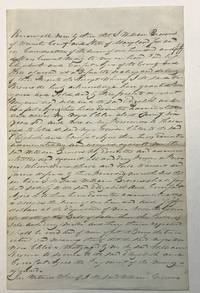
1849ref. 41786Worcester County Maryland 1849. Single pale blue sheet 8" x 12-1/2" recto and verso entirely in ink manuscript. Signed by Brown with facsimile seal and witnessed. Acknowledgment by Justice of the Peace. Very Good. unknown
1849ref. 41786Worcester County Maryland 1849. Single pale blue sheet 8" x 12-1/2" recto and verso entirely in ink manuscript. Signed by Brown with facsimile seal and witnessed. Acknowledgment by Justice of the Peace. Very Good. unknown books
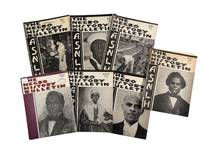
1941ref. 211681941. Woodson Carter G. The Negro History Bulletin. These mid-twentieth century periodicals document the institutionalization of African American historical scholarship and pedagogy under the leadership of Carter G. Woodson whose work established Black history as a formal field of study in the United States. Issued between 1941 and 1949 these issues provide primary evidence of how African American history was researched interpreted and disseminated during a period shaped by World War II migration and ongoing struggles for civil rights. Founded in 1937 at the urging of Mary McLeod Bethune the Negro History Bulletin functioned as an educational tool for teachers and students presenting accessible scholarship on African American life the African diaspora and global Black history. Editorial direction under Woodson emphasized correcting omissions in dominant historical narratives and foregrounding Black agency with content ranging from slavery and Reconstruction to contemporary wartime contributions and cultural production. Woodson Carter G. ed. The Negro History Bulletin. Washington D.C.: Association for the Study of Negro Life and History 1941-1949. Seven issues. Quarto. Stapled wrappers. Archive of seven issues spanning April 1941 through June 1949 each approximately 20-22 pages and measuring 8.5 x 11 inches illustrated with black and white photographs and line drawings. Contents include: 1 April 1941 issue with articles on the Underground Railroad Black communities in Canada and book reviews; 2 May 1944 issue addressing World War II and African American participation across military and civilian life; 3 March 1945 issue featuring Sojourner Truth labor equality free Black populations in antebellum Alabama and racial violence; 4 May 1945 issue examining the Department of Negro Affairs and early American attitudes toward slavery; 5 May 1947 issue including studies of formerly enslaved families such as the Loguens and Tanners suffrage in the South and profiles of Black educators; 6 January 1949 issue with articles on education in Haiti the Negro Little Theatre Movement Negro spirituals and a biography of Frederick Douglass; 7 June 1949 issue addressing intersections of Jewish and Black history modernization in the Virgin Islands regional Black history in Maryland and Virginia and educational policy. These issues were produced during a formative period in the expansion of African American historical consciousness when Woodson's efforts challenged the exclusion of Black experiences from mainstream curricula and scholarly discourse. The Negro History Bulletin operated as a bridge between academic research and classroom instruction shaping generations of teachers and students and contributing to the eventual institutionalization of Black Studies programs in the later twentieth century. The publication continues today as the Black History Bulletin recognized as the longest continuously published journal for practitioners in the field. Clean pages with light handling wear; fragile binding to the earliest issue and a punch hole to the upper corner of the June 1949 issue; overall very good condition. The archive provides a concentrated record of early African American historiography and educational practice during a critical period of intellectual and social transformation. unknown
1941ref. 211681941. Woodson Carter G. The Negro History Bulletin. These mid-twentieth century periodicals document the institutionalization of African American historical scholarship and pedagogy under the leadership of Carter G. Woodson whose work established Black history as a formal field of study in the United States. Issued between 1941 and 1949 these issues provide primary evidence of how African American history was researched interpreted and disseminated during a period shaped by World War II migration and ongoing struggles for civil rights. Founded in 1937 at the urging of Mary McLeod Bethune the Negro History Bulletin functioned as an educational tool for teachers and students presenting accessible scholarship on African American life the African diaspora and global Black history. Editorial direction under Woodson emphasized correcting omissions in dominant historical narratives and foregrounding Black agency with content ranging from slavery and Reconstruction to contemporary wartime contributions and cultural production. Woodson Carter G. ed. The Negro History Bulletin. Washington D.C.: Association for the Study of Negro Life and History 1941-1949. Seven issues. Quarto. Stapled wrappers. Archive of seven issues spanning April 1941 through June 1949 each approximately 20-22 pages and measuring 8.5 x 11 inches illustrated with black and white photographs and line drawings. Contents include: 1 April 1941 issue with articles on the Underground Railroad Black communities in Canada and book reviews; 2 May 1944 issue addressing World War II and African American participation across military and civilian life; 3 March 1945 issue featuring Sojourner Truth labor equality free Black populations in antebellum Alabama and racial violence; 4 May 1945 issue examining the Department of Negro Affairs and early American attitudes toward slavery; 5 May 1947 issue including studies of formerly enslaved families such as the Loguens and Tanners suffrage in the South and profiles of Black educators; 6 January 1949 issue with articles on education in Haiti the Negro Little Theatre Movement Negro spirituals and a biography of Frederick Douglass; 7 June 1949 issue addressing intersections of Jewish and Black history modernization in the Virgin Islands regional Black history in Maryland and Virginia and educational policy. These issues were produced during a formative period in the expansion of African American historical consciousness when Woodson's efforts challenged the exclusion of Black experiences from mainstream curricula and scholarly discourse. The Negro History Bulletin operated as a bridge between academic research and classroom instruction shaping generations of teachers and students and contributing to the eventual institutionalization of Black Studies programs in the later twentieth century. The publication continues today as the Black History Bulletin recognized as the longest continuously published journal for practitioners in the field. Clean pages with light handling wear; fragile binding to the earliest issue and a punch hole to the upper corner of the June 1949 issue; overall very good condition. The archive provides a concentrated record of early African American historiography and educational practice during a critical period of intellectual and social transformation. unknown books