1,190 results
1877ref. 52662Kinsale Ireland: printed at the 50th Regimental Press 1877. Bifolium program 8.5 x 13 cm pp. 4 the last blank; minor foxing previous fold formerly from an album the remains of a card and an engraved illustration on the final blank. Also a manuscript caption: "Programme Garrison Nigger Troupe Camden Fort Feb. 9 1877." With manuscript notes and corrections in a contemporary hand. The Negro Troupe was led by Lieutenant Yaldwyn. Provenance: Major-General Sir Francis Walter de Winton 1835-1901. printed at the 50th Regimental Press unknown books
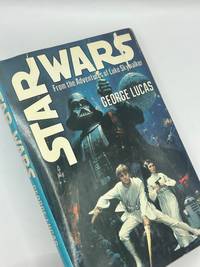
1977ref. 239851New York: Del Rey / Ballantine 1977. First hardcover edition first printing. Publisher's grey paper-covered boards in John Berkey dust jacket unpriced. Very mild shelf wear a fine copy in very good lightly edge worn and rubbed dust jacket with spot of soiling upper front corner. 183 1 blank pp. 8.5" x 5.75" A PIECE OF STAR WARS HISTORY The spring of 1977 reshaped popular culture as one of the most important narrative universes burst onto the screen and into the literary marketplace. Though credited to George Lucas the novelization which appeared in paperback form in the fall of 1976 was in fact written by science-fiction legend Alan Dean Foster whose text introduced readers to the galaxy far far away just months before the film's release. Presented here is the first hardcover edition issued by the Science Fiction Book Club in 1977 and preceded only by the 1976 Ballantine paperback original. With identifying "S27" gutter code and preserved in its original dust jacket this edition is illustrated with dozens of color photographs from the cinematic production securing the book as a piece of literary cinematic and cultural history. Del Rey / Ballantine unknown
1996ref. BN313102Edisud 1996. 1996. Hardcover. The Riviera Of Charles Negre The Riviera Of Charles Negre Joseph Nègre Edisud hardcover
1926Very Good Turkish, Ottoman (1500-1928) A modern fine full leather bdg. in the Ottoman style. Cr. 8vo. (20 x 14 cm). In Ottoman script (Old Turkish with Arabic letters). 134, [1] p., 1 Washington's portrait, 3 unnumbered b/w plates. First and only Turkish edition of this exceedingly rare biography of the important African-American leader Booker T. Washington. The first studies and translations regarding slavery and abolition were made in the early years of the young Turkish Republic, which had refused the legacy of its imperial predecessor. In this period, several classics of American anti-slavery literature and the present work were translated for the first time. Booker Taliaferro Washington was an American educator, author, orator, and adviser to multiple presidents of the United States. Between 1890 and 1915, Washington was the dominant leader of the African American community and the contemporary black elite. Washington was from the last generation of black American leaders born into slavery and became the leading voice of the former slaves and their descendants. Özege 11210.
1976ref. 192297New York: Ballantine Books 1976. A long time ago in a publishing house far far away. First edition signed by the ghostwriter Alan Dean Foster on the title page though solely credited to George Lucas. Published five months before the film's release this popular novelization was the world's first encounter with a long-form story from the galaxy far far away. The cover bears one of Ralph McQuarrie's famous concept illustrations a critical element in 20th Century Fox's decision to greenlight the Star Wars project. Before audiences had seen the special effects heard the sound design or absorbed John Williams's orchestral score Lucas's fast and intense story sold millions of copies. This book version is "perhaps most notable for allowing its readers to experience the interiority of characters from the film. Although the film establishes Leia's willingness to shoot the stormtroopers the novelization allows its readers to imagine the consequences of her act more vividly by narrating the stormtrooper's thoughts and aspirations" Webster p. 51. The novelization includes several key details omitted from the finished 1977 film but later retconned into the series including Palpatine p. 1 the Sith p. 8 and a medal for Chewbacca p. 219. By contrast the most famous opening line in film is here given as "Another galaxy another time". Octavo. Original pictorial wrappers designed by Ralph McQuarrie edges yellow. Bookseller ink stamp to first leaf. Extremities of wrappers creased and rubbed rear wrapper and bottom edge warped occasional spotting. A very good copy. Jeremy W. Webster "Leia Shot First: Transmedia Storytelling and the National Public Radio Dramatization of Star Wars" Star Wars and the History of Transmedia Storytelling 2018. unknown
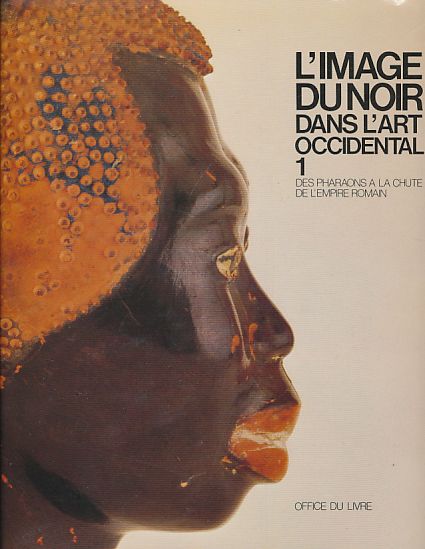
1979ref. 1062615Office du livre / Harvard, 1979. / - 1989. 281 S.; Abb. / 350 S.; Abb. / 325 S.; Abb. / 281 S.; Abb. / 379 S.; Abb. und 306 S. mit Abb.; ca. 25 cm. Originalleinenbände mit Schutzumschlag.
ref. 8,0011E+12DAL NEGRO. new. Tarô de Luigi e Giulia Scapini publicado pela editora Dal Negro. Baralho com 78 cartas. Inclui livreto com instruções em Inglês e italiano. Tarô inspirado nas obras de Bacco idealizado por Giordano Berti e desenhado por Luigi e Giulia Scapini. DAL NEGRO unknown
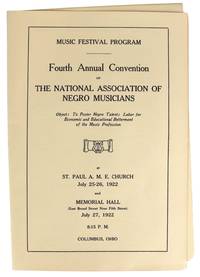
1922ref. 47910Columbus OH: The National Association of Negro Musicians 1922. Near Fine. Columbus OH: The National Association of Negro Musicians 1922. First Edition. Bifolium 22.5cm; black ink on beige paper stock. Vertical spine fold slightly off-center otherwise fine. An unrecorded program from the fourth annual convention of the National Association of Negro Musicians NANM held in Columbus Ohio July 25-27 1922 notably ending with performances by a 25-year-old Marian Anderson in an early and significant national appearance. An article by Carl Diton who accompanied Anderson on piano for these Columbus performances in The Crisis gives a contemporary dispatch on this 1922 Columbus convention: "At present the most brilliant achievement of the National Association of Negro Musicians is its conventions. This fact should not be under-estimated for in point of constructive thought to say nothing of the vast crowds of people attendant upon its evening concert sessions which the standing room of the largest procurable auditoriums is at a premium these conventions go far towards rivaling those of older and more experienced national associations. Every year brings forth an amazing wealth of the noblest kind of talent which is even to the older and more seasoned members vividly startling." Diton continues with praise of the Columbus convention "It is however the consensus of opinion that the Columbus Ohio convention of 1922 characterized by the absolute satisfaction of the delegates as to their personal comfort the total absence of anything that savoured of graft and the absolute punctuality of the sessions was the masterpiece of them all." pp. 21-22 The program concluded with a performance of three selections by Marian Anderson followed by the presentation of a scholarship to her. Soon after Anderson continued her study with voice teacher Giuseppe Boghetti and had her first studio recordings with the Victor Talking Machine Company in 1923 launching one of the most important careers in Black American music. Not separately cataloged in OCLC and early NANM material quite uncommon in retail. Carl Diton "The National Association of Negro Musicians." The Crisis: Volume 26 Issue 1 May 1923 pp. 21-22. The National Association of Negro Musicians unknown
1922ref. 47910Columbus OH: The National Association of Negro Musicians 1922. Near Fine. Columbus OH: The National Association of Negro Musicians 1922. First Edition. Bifolium 22.5cm; black ink on beige paper stock. Vertical spine fold slightly off-center otherwise fine. An unrecorded program from the fourth annual convention of the National Association of Negro Musicians NANM held in Columbus Ohio July 25-27 1922 notably ending with performances by a 25-year-old Marian Anderson in an early and significant national appearance. An article by Carl Diton who accompanied Anderson on piano for these Columbus performances in The Crisis gives a contemporary dispatch on this 1922 Columbus convention: "At present the most brilliant achievement of the National Association of Negro Musicians is its conventions. This fact should not be under-estimated for in point of constructive thought to say nothing of the vast crowds of people attendant upon its evening concert sessions which the standing room of the largest procurable auditoriums is at a premium these conventions go far towards rivaling those of older and more experienced national associations. Every year brings forth an amazing wealth of the noblest kind of talent which is even to the older and more seasoned members vividly startling." Diton continues with praise of the Columbus convention "It is however the consensus of opinion that the Columbus Ohio convention of 1922 characterized by the absolute satisfaction of the delegates as to their personal comfort the total absence of anything that savoured of graft and the absolute punctuality of the sessions was the masterpiece of them all." pp. 21-22 The program concluded with a performance of three selections by Marian Anderson followed by the presentation of a scholarship to her. Soon after Anderson continued her study with voice teacher Giuseppe Boghetti and had her first studio recordings with the Victor Talking Machine Company in 1923 launching one of the most important careers in Black American music. Not separately cataloged in OCLC and early NANM material quite uncommon in retail. Carl Diton "The National Association of Negro Musicians." The Crisis: Volume 26 Issue 1 May 1923 pp. 21-22. The National Association of Negro Musicians unknown books
1915ref. 002118New York: George H. Doran Company 1915. First Edition. Hardcover. Very Good/very good. New York: George H. Doran Company 1915. First Edition second-state binding. VG in VG- jacket. Exceptionally rare in dustjacket. DJ has a single shallow chip off the spine crown cutting off about 1/3 of the word Tennis. Period bookseller price tag $2.50 on the spine. Minor soiling and a few closed tears. These defects noted the jacket is still attractive in the mylar sleeve. The book itself has a neat POS on the title page otherwise completely free of markings pages very clean and bright no foxing. Endpapers foxing and some spotting to top edge and front paper edge bottom edge clean. Cloth boards have virtually no wear and are bright and clean sharp cloth corners. Preface by Richard Norris Williams. Illustrated from photographs. 9x6 gilt-lettered green cloth. Ghost-written by Sinclair Lewis when he was a struggling writer about 5 years before Main Street was published. Lewis was working for George Doran at the time. George H. Doran Company hardcover
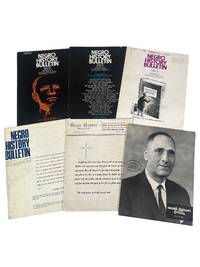
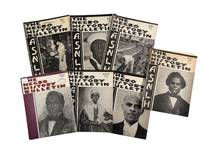
1964ref. 212461964. Woodson Carter G. ed. The Negro History Bulletin. These mid-twentieth century periodicals document the expansion of African American historical scholarship and pedagogy during the Civil Rights era when educational institutions activists and scholars increasingly challenged the exclusion of Black history from mainstream curricula. Issued between 1964 and 1971 these issues reflect the evolving intellectual priorities of the period including the emergence of Black Studies programs renewed attention to Reconstruction and slavery and the growing influence of Black Power thought. Founded in 1937 at the urging of Mary McLeod Bethune the Negro History Bulletin functioned as a teaching-oriented publication under the direction of Carter G. Woodson and the Association for the Study of Negro Life and History providing accessible but research-informed content for educators students and general readers. The issues in this group demonstrate how African American history was interpreted and taught during a period of legislative change cultural transformation and increased institutional recognition. Woodson Carter G. ed. The Negro History Bulletin. Washington D.C.: Association for the Study of Negro Life and History 1964-1971. Archive of six issues. Quarto. Stapled wrappers. Archive includes: 1 May 1964 issue with a dedication to Albert N. D. Brooks; 2 December 1964 issue featuring articles on John Willis Menard African American education and Black military service; 3 January 1969 issue including content on Wiley College Library poetry book reviews and contemporary educational policy developments; 4 January 1971 issue addressing music W. E. B. Du Bois's The Souls of Black Folk and the expansion of Black Studies programs; 5 October 1971 issue including discussions of Freedmen's schools antebellum Black separatist rhetoric Southern Black political organizations and housing and social policy; 6 November 1971 issue featuring articles on Black Power five years after its emergence the Gabriel Insurrection of 1800 Southern integration and prominent Black professionals. Each issue approximately 20-22 pages measuring 8.5 x 11 inches illustrated with black and white photographs and line drawings. These issues were produced during a period in which African American history moved from the margins toward institutional recognition particularly through the establishment of Black Studies programs and curriculum reforms in schools and universities. The Negro History Bulletin played a central role in translating scholarly research into classroom practice shaping how history was taught during a decade of social and political transformation. Its continued publication now under the title Black History Bulletin reflects its long-standing influence within the field. Light wear to covers; bindings generally sound with clean interiors; overall very good condition. The archive provides a focused record of African American historiography and educational practice during the Civil Rights era. unknown
1964ref. 212461964. Woodson Carter G. ed. The Negro History Bulletin. These mid-twentieth century periodicals document the expansion of African American historical scholarship and pedagogy during the Civil Rights era when educational institutions activists and scholars increasingly challenged the exclusion of Black history from mainstream curricula. Issued between 1964 and 1971 these issues reflect the evolving intellectual priorities of the period including the emergence of Black Studies programs renewed attention to Reconstruction and slavery and the growing influence of Black Power thought. Founded in 1937 at the urging of Mary McLeod Bethune the Negro History Bulletin functioned as a teaching-oriented publication under the direction of Carter G. Woodson and the Association for the Study of Negro Life and History providing accessible but research-informed content for educators students and general readers. The issues in this group demonstrate how African American history was interpreted and taught during a period of legislative change cultural transformation and increased institutional recognition. Woodson Carter G. ed. The Negro History Bulletin. Washington D.C.: Association for the Study of Negro Life and History 1964-1971. Archive of six issues. Quarto. Stapled wrappers. Archive includes: 1 May 1964 issue with a dedication to Albert N. D. Brooks; 2 December 1964 issue featuring articles on John Willis Menard African American education and Black military service; 3 January 1969 issue including content on Wiley College Library poetry book reviews and contemporary educational policy developments; 4 January 1971 issue addressing music W. E. B. Du Bois's The Souls of Black Folk and the expansion of Black Studies programs; 5 October 1971 issue including discussions of Freedmen's schools antebellum Black separatist rhetoric Southern Black political organizations and housing and social policy; 6 November 1971 issue featuring articles on Black Power five years after its emergence the Gabriel Insurrection of 1800 Southern integration and prominent Black professionals. Each issue approximately 20-22 pages measuring 8.5 x 11 inches illustrated with black and white photographs and line drawings. These issues were produced during a period in which African American history moved from the margins toward institutional recognition particularly through the establishment of Black Studies programs and curriculum reforms in schools and universities. The Negro History Bulletin played a central role in translating scholarly research into classroom practice shaping how history was taught during a decade of social and political transformation. Its continued publication now under the title Black History Bulletin reflects its long-standing influence within the field. Light wear to covers; bindings generally sound with clean interiors; overall very good condition. The archive provides a focused record of African American historiography and educational practice during the Civil Rights era. unknown books
1893ref. 010081Paris Alphonse Lemerre 1893 Demi-reliure
1967ref. 49507Paris: Bouchet-Lakara 1967. Very Good/Very Good. Paris: Bouchet-Lakara 1967. First Edition. Square quarto 25cm; publisher's cloth in glossy black photo-illustrated dust jacket; 155pp.; full color tipped in frontispiece and nineteen plates collated complete halftone photographs throughout text. Dust jacket a bit rubbed and worn at margins with brief bubbling of lamination creasing and shallow dog-earing to frontispiece and a few tipped in plates else a Very Good and sound example. Text entirely in French. Scarce catalog published in the wake of the first World Festival of Negro Arts held in Dakar in 1966 to showcase Black art dance theater film and literature. Bouchet-Lakara unknown
1967ref. 49507Paris: Bouchet-Lakara 1967. Very Good/Very Good. Paris: Bouchet-Lakara 1967. First Edition. Square quarto 25cm; publisher's cloth in glossy black photo-illustrated dust jacket; 155pp.; full color tipped in frontispiece and nineteen plates collated complete halftone photographs throughout text. Dust jacket a bit rubbed and worn at margins with brief bubbling of lamination creasing and shallow dog-earing to frontispiece and a few tipped in plates else a Very Good and sound example. Text entirely in French. Scarce catalog published in the wake of the first World Festival of Negro Arts held in Dakar in 1966 to showcase Black art dance theater film and literature. Bouchet-Lakara unknown books
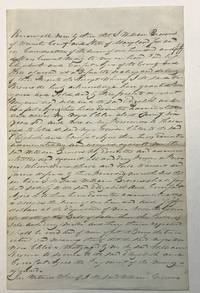
1849ref. 41786Worcester County Maryland 1849. Single pale blue sheet 8" x 12-1/2" recto and verso entirely in ink manuscript. Signed by Brown with facsimile seal and witnessed. Acknowledgment by Justice of the Peace. Very Good. unknown
1849ref. 41786Worcester County Maryland 1849. Single pale blue sheet 8" x 12-1/2" recto and verso entirely in ink manuscript. Signed by Brown with facsimile seal and witnessed. Acknowledgment by Justice of the Peace. Very Good. unknown books
1941ref. 211681941. Woodson Carter G. The Negro History Bulletin. These mid-twentieth century periodicals document the institutionalization of African American historical scholarship and pedagogy under the leadership of Carter G. Woodson whose work established Black history as a formal field of study in the United States. Issued between 1941 and 1949 these issues provide primary evidence of how African American history was researched interpreted and disseminated during a period shaped by World War II migration and ongoing struggles for civil rights. Founded in 1937 at the urging of Mary McLeod Bethune the Negro History Bulletin functioned as an educational tool for teachers and students presenting accessible scholarship on African American life the African diaspora and global Black history. Editorial direction under Woodson emphasized correcting omissions in dominant historical narratives and foregrounding Black agency with content ranging from slavery and Reconstruction to contemporary wartime contributions and cultural production. Woodson Carter G. ed. The Negro History Bulletin. Washington D.C.: Association for the Study of Negro Life and History 1941-1949. Seven issues. Quarto. Stapled wrappers. Archive of seven issues spanning April 1941 through June 1949 each approximately 20-22 pages and measuring 8.5 x 11 inches illustrated with black and white photographs and line drawings. Contents include: 1 April 1941 issue with articles on the Underground Railroad Black communities in Canada and book reviews; 2 May 1944 issue addressing World War II and African American participation across military and civilian life; 3 March 1945 issue featuring Sojourner Truth labor equality free Black populations in antebellum Alabama and racial violence; 4 May 1945 issue examining the Department of Negro Affairs and early American attitudes toward slavery; 5 May 1947 issue including studies of formerly enslaved families such as the Loguens and Tanners suffrage in the South and profiles of Black educators; 6 January 1949 issue with articles on education in Haiti the Negro Little Theatre Movement Negro spirituals and a biography of Frederick Douglass; 7 June 1949 issue addressing intersections of Jewish and Black history modernization in the Virgin Islands regional Black history in Maryland and Virginia and educational policy. These issues were produced during a formative period in the expansion of African American historical consciousness when Woodson's efforts challenged the exclusion of Black experiences from mainstream curricula and scholarly discourse. The Negro History Bulletin operated as a bridge between academic research and classroom instruction shaping generations of teachers and students and contributing to the eventual institutionalization of Black Studies programs in the later twentieth century. The publication continues today as the Black History Bulletin recognized as the longest continuously published journal for practitioners in the field. Clean pages with light handling wear; fragile binding to the earliest issue and a punch hole to the upper corner of the June 1949 issue; overall very good condition. The archive provides a concentrated record of early African American historiography and educational practice during a critical period of intellectual and social transformation. unknown
1941ref. 211681941. Woodson Carter G. The Negro History Bulletin. These mid-twentieth century periodicals document the institutionalization of African American historical scholarship and pedagogy under the leadership of Carter G. Woodson whose work established Black history as a formal field of study in the United States. Issued between 1941 and 1949 these issues provide primary evidence of how African American history was researched interpreted and disseminated during a period shaped by World War II migration and ongoing struggles for civil rights. Founded in 1937 at the urging of Mary McLeod Bethune the Negro History Bulletin functioned as an educational tool for teachers and students presenting accessible scholarship on African American life the African diaspora and global Black history. Editorial direction under Woodson emphasized correcting omissions in dominant historical narratives and foregrounding Black agency with content ranging from slavery and Reconstruction to contemporary wartime contributions and cultural production. Woodson Carter G. ed. The Negro History Bulletin. Washington D.C.: Association for the Study of Negro Life and History 1941-1949. Seven issues. Quarto. Stapled wrappers. Archive of seven issues spanning April 1941 through June 1949 each approximately 20-22 pages and measuring 8.5 x 11 inches illustrated with black and white photographs and line drawings. Contents include: 1 April 1941 issue with articles on the Underground Railroad Black communities in Canada and book reviews; 2 May 1944 issue addressing World War II and African American participation across military and civilian life; 3 March 1945 issue featuring Sojourner Truth labor equality free Black populations in antebellum Alabama and racial violence; 4 May 1945 issue examining the Department of Negro Affairs and early American attitudes toward slavery; 5 May 1947 issue including studies of formerly enslaved families such as the Loguens and Tanners suffrage in the South and profiles of Black educators; 6 January 1949 issue with articles on education in Haiti the Negro Little Theatre Movement Negro spirituals and a biography of Frederick Douglass; 7 June 1949 issue addressing intersections of Jewish and Black history modernization in the Virgin Islands regional Black history in Maryland and Virginia and educational policy. These issues were produced during a formative period in the expansion of African American historical consciousness when Woodson's efforts challenged the exclusion of Black experiences from mainstream curricula and scholarly discourse. The Negro History Bulletin operated as a bridge between academic research and classroom instruction shaping generations of teachers and students and contributing to the eventual institutionalization of Black Studies programs in the later twentieth century. The publication continues today as the Black History Bulletin recognized as the longest continuously published journal for practitioners in the field. Clean pages with light handling wear; fragile binding to the earliest issue and a punch hole to the upper corner of the June 1949 issue; overall very good condition. The archive provides a concentrated record of early African American historiography and educational practice during a critical period of intellectual and social transformation. unknown books
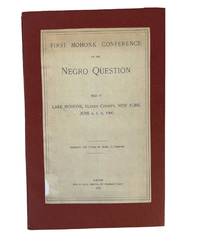
1890ref. 196721890. Barrows Isabel C. ed. First Mohonk Conference on the Negro Question Held at Lake Mohonk Ulster County New York June 4 5 6 1890 1890 records one of the earliest organized national discussions among white reformers politicians and intellectuals addressing the status of African Americans in the decades following Reconstruction. Convened at a moment when Black political rights were being systematically dismantled across the South through disenfranchisement and violence the conference brought together predominantly white Northern and Southern participants to debate labor education and civil status. The proceedings include the intervention of Reconstruction advocate Albion W. Tourgée whose address "The Negro's View of the Race Problem" directly challenged the exclusion of Black voices and concluded with a proposed resolution that failed to gain support. Statements within the conference reflect prevailing racial barriers including the observation that in Philadelphia "a colored man may carry mortar up a ladder but he is not allowed to lay the bricks" underscoring systemic exclusion from skilled labor and economic advancement. Barrows Isabel C. ed. First Mohonk Conference on the Negro Question Held at Lake Mohonk Ulster County New York June 4 5 6 1890. Boston: Geo. H. Ellis 1890. Softcover pamphlet format 142 pages measuring approximately 24 cm. Original front cover preserved and laid in with a color facsimile wrapper supplied for protection. Text printed as conference proceedings compiling speeches discussions and resolutions delivered across the three-day meeting. Produced during the consolidation of Jim Crow policies and the retreat from Reconstruction-era protections this document provides direct evidence of how white-led reform movements framed and debated Black citizenship at the national level. The absence of substantive Black participation alongside Tourgée's protest highlights tensions between advocacy and paternalism within late nineteenth-century reform discourse. As a printed record of policy-oriented discussion the volume supports research into labor exclusion education policy and the ideological foundations of segregation-era governance. Minor staining to lower margins; otherwise very good condition. unknown
1890ref. 196721890. Barrows Isabel C. ed. First Mohonk Conference on the Negro Question Held at Lake Mohonk Ulster County New York June 4 5 6 1890 1890 records one of the earliest organized national discussions among white reformers politicians and intellectuals addressing the status of African Americans in the decades following Reconstruction. Convened at a moment when Black political rights were being systematically dismantled across the South through disenfranchisement and violence the conference brought together predominantly white Northern and Southern participants to debate labor education and civil status. The proceedings include the intervention of Reconstruction advocate Albion W. Tourgée whose address "The Negro's View of the Race Problem" directly challenged the exclusion of Black voices and concluded with a proposed resolution that failed to gain support. Statements within the conference reflect prevailing racial barriers including the observation that in Philadelphia "a colored man may carry mortar up a ladder but he is not allowed to lay the bricks" underscoring systemic exclusion from skilled labor and economic advancement. Barrows Isabel C. ed. First Mohonk Conference on the Negro Question Held at Lake Mohonk Ulster County New York June 4 5 6 1890. Boston: Geo. H. Ellis 1890. Softcover pamphlet format 142 pages measuring approximately 24 cm. Original front cover preserved and laid in with a color facsimile wrapper supplied for protection. Text printed as conference proceedings compiling speeches discussions and resolutions delivered across the three-day meeting. Produced during the consolidation of Jim Crow policies and the retreat from Reconstruction-era protections this document provides direct evidence of how white-led reform movements framed and debated Black citizenship at the national level. The absence of substantive Black participation alongside Tourgée's protest highlights tensions between advocacy and paternalism within late nineteenth-century reform discourse. As a printed record of policy-oriented discussion the volume supports research into labor exclusion education policy and the ideological foundations of segregation-era governance. Minor staining to lower margins; otherwise very good condition. unknown books
192892 pages. Lovely A.J. Casson painting of a bustling winter street on front cover Features: Great vintage photo ad for the New International "Special Delivery" Truck; Cream of Wheat ad claims it keeps pupils more alert; When Men Kill for Whisky - Millionaire Carling Breweries Executive Sam Low of Walkerville, Ontario was kidnapped by Gangsters for a $35k ransom - great photo-illustrated article about rum-running between Windsor, Ontario and Detroit; Brummagen Love, by Thelma Rudge; What I Learned from Europe, by Ontario Premier G. Howard Ferguson; Ottawa-Vancouver in 32 Hours - The Stirring Story of Canada's First Transcontinental Air Mail Flight - with photos; The Mystery of Number Nine, by Leslie McFarlane - Part 1; Louis Letourneau, Leo Dandurand and Joe Cattarinich - a colorful description of the adventures and achievements of The Three Musketeers of Modern Sport; Canada's Pictorial War Records - Adequate Housing Required, by W.W. Murray; Lights in the Windows, by Lillian Beynon Thomas; Full-colour colour reproduction of painting "Canada's Answer" by Norman Wilkinson, R.I.; The Work Cure - Vetcraft has brought health, happiness and economic being to hundreds of veterans; By Especial Corespondent, by Geoffrey Hewelcke; The Devil Guards His Own, by Victor Lauriston; Amazing photo of Malahat Drive on Vancouver Island - not much more than a couple of ruts through the forest; Nice ad for the De Soto Six, by Chrysler; "New York Now Huge Negro City - Black Invasion of Harlem"; Art Deco-style ad for the New Frigidaire refrigerator; Science Teaching Weather Control - Man has made enormous progress in combat with nature; Fantastic colour full-page ad for Packard cars; Great colour full-page ad for Wahl-Eversharp Pens, Pencils, Desk Sets; Wonderful full-page ad for Erector Set toys; Color ad for Chipso Laundry Soap; *Magnificent* Colour Centerfold ad for Parker Duofold Pens, Pencils and Duettes; Great full-page colour ad for Westclox Clocks; Ad for Mueller Faucets of Sarnia, Ontario; "Let the Laundry Do It" - a two-colour ad encouraging readers to let laundries clean their clothes; Nice Hupmobile Ad for their Century Six and Eight; Colour photo ad for Kodak cameras; Lovely colour full-page ad for Moirs Chocolates; Article about collector Walter McRaye; Buses Hurt British Railways - with photo of their first auto Pullman which allows passengers to sleep on the bus; The Road to Perth - short history article by Donald McNicol; Ad for the T-N Toilet which promises to 'banish embarrassment' because it is quiet; Colour ad for Swift's Premium Hams and Bacon; Two-Colour full-page Christmas-themed ad for Eveready flashlights and batteries; Home-Made Christmas Gifts; Short write-up and photo of Elizabeth Styring Nutt; Rug Magic, by Mary Agnes Pease; Stewart Warner radio ad; Business Article - "Adventuring in Speculation is Highly Specialized Business"; Colour ad fo Sun-Maid Puffed seeded Muscat Raisins inside back cover. Average wear to textblock. Crossword completed on page 83 otherwise unmarked. Chips and openings along cover fold. Covers loose as one but present. Back cover in rough shape. Particularly wonderful content to go with the excellent front cover artwork. Book
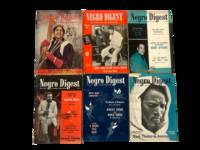
1947ref. 223891947. Johnson John H. founder. Negro Digest 1947-1969 documents African American political thought literary production and cultural criticism across the postwar period the Civil Rights Movement and the emergence of the Black Arts Movement. Published as a digest format periodical the magazine brought together essays fiction journalism and commentary by leading Black writers and public intellectuals establishing a widely circulated forum for debate on race identity labor international politics and the arts. The issues in this archive include contributions by figures such as LeRoi Jones Alice Childress C. Eric Lincoln Arna Bontemps and Barbara Ann Teer supporting research into African American intellectual history Black theater and mid twentieth century print culture. Negro Digest. Chicago: Johnson Publishing Company 1947-1969. Archive of six issues in printed wrappers each approximately 7.5 x 5.5 inches. Issues included are: 1 January 1947 with articles including Richard Wright's "How Jim Crow Feels" Eleanor Roosevelt's contributions and "How Jackie Robinson Took It"; 2 February 1951 featuring "I Didn't Raise My Boy to Be a Fighter" by Lillie Brooks and articles by Walter White and Roi Ottley; 3 November 1961 including "The New Black Renaissance" by Arna Bontemps and commentary by Duke Ellington and C. Eric Lincoln; 4 December 1962 featuring "The Menace of Mediocrity" by C. Eric Lincoln and essays on African American urban life and global politics; 5 April 1967 Second Annual Theater Issue including LeRoi Jones's play Slave Ship and essays by Alice Childress Ronald Milner and others on Black theater and performance; 6 April 1969 Annual Report on Black Theater in America with contributions by Barbara Ann Teer Woodie King Jr. and a roundtable including Sam Greenlee and Hoyt W. Fuller. The issues include essays reportage literary excerpts and visual material documenting cultural and political developments. Published during a period of expanding Black media and activism Negro Digest functioned as a central platform connecting literary production with political discourse tracing shifts from integrationist arguments in the postwar years to the cultural nationalism and artistic experimentation of the late 1960s. The inclusion of theater-focused issues reflects the increasing importance of performance as a site of political expression within the Black Arts Movement while earlier issues address labor segregation and international Black identity. Light edge wear and rubbing particularly to earlier issues; covers remain vibrant with pages clean and intact; overall very good condition. This archive provides sustained documentation of African American intellectual and cultural life across a critical period of twentieth century history. unknown
1947ref. 223891947. Johnson John H. founder. Negro Digest 1947-1969 documents African American political thought literary production and cultural criticism across the postwar period the Civil Rights Movement and the emergence of the Black Arts Movement. Published as a digest format periodical the magazine brought together essays fiction journalism and commentary by leading Black writers and public intellectuals establishing a widely circulated forum for debate on race identity labor international politics and the arts. The issues in this archive include contributions by figures such as LeRoi Jones Alice Childress C. Eric Lincoln Arna Bontemps and Barbara Ann Teer supporting research into African American intellectual history Black theater and mid twentieth century print culture. Negro Digest. Chicago: Johnson Publishing Company 1947-1969. Archive of six issues in printed wrappers each approximately 7.5 x 5.5 inches. Issues included are: 1 January 1947 with articles including Richard Wright's "How Jim Crow Feels" Eleanor Roosevelt's contributions and "How Jackie Robinson Took It"; 2 February 1951 featuring "I Didn't Raise My Boy to Be a Fighter" by Lillie Brooks and articles by Walter White and Roi Ottley; 3 November 1961 including "The New Black Renaissance" by Arna Bontemps and commentary by Duke Ellington and C. Eric Lincoln; 4 December 1962 featuring "The Menace of Mediocrity" by C. Eric Lincoln and essays on African American urban life and global politics; 5 April 1967 Second Annual Theater Issue including LeRoi Jones's play Slave Ship and essays by Alice Childress Ronald Milner and others on Black theater and performance; 6 April 1969 Annual Report on Black Theater in America with contributions by Barbara Ann Teer Woodie King Jr. and a roundtable including Sam Greenlee and Hoyt W. Fuller. The issues include essays reportage literary excerpts and visual material documenting cultural and political developments. Published during a period of expanding Black media and activism Negro Digest functioned as a central platform connecting literary production with political discourse tracing shifts from integrationist arguments in the postwar years to the cultural nationalism and artistic experimentation of the late 1960s. The inclusion of theater-focused issues reflects the increasing importance of performance as a site of political expression within the Black Arts Movement while earlier issues address labor segregation and international Black identity. Light edge wear and rubbing particularly to earlier issues; covers remain vibrant with pages clean and intact; overall very good condition. This archive provides sustained documentation of African American intellectual and cultural life across a critical period of twentieth century history. unknown books
1974ref. SBBIH-W2XZK4OMNF27Hodder & Stoughton Ltd 1974. hardcover. Good. Our good condition books are generally good for reading but not for gifting or collecting. They could have imperfections such as creasing fanning inscriptions margin notes yellowing staining on edge or cover or pages bumps scuffs etc etc sometimes multiple of these. It's a wide category that encompasses anything that isn't almost-new down to anything that is slightly better than poor. We would NOT recommend gifting Good books - these should be considered reading copies. Our books are dispatched from a Yorkshire former cotton mill. We list via barcode/ISBN so please note that the images are stock images and may not be the exact copy you receive furthermore the details about edition and year might not be accurate as many publishers reuse the same ISBN for multiple editions and as we simply scan a barcode or enter an ISBN we do not check the validity of the edition data when listing. If you're looking for an exact edition please don't order at least not without checking with us first although we don't always have time to check. We aim to dispatch prompty the service used will depend on order value and book size. We can ship to most countries see our shipping policies. Payment is via Abe only. Hodder & Stoughton Ltd hardcover