Arena, NinoABAA

8 résultats
1977réf. 166700Modena: Stem Mucchi Modena 1977. Hardcover. Three substantial volumes 209 263 247p. heavily illustrated with b&w period photography from every theatre of the war and from every combattant country very unusual stuff especially the aviation volumes II and III and portions of v.I where one sees a great variety of aircraft in states of repair and disrepair. This trilogy is softbound in 8.25x10.5 inch oversize wraps and in very good condition. NB text is entirely in Italian. Le macchine e la storia. Stem Mucchi Modena hardcover books
réf. B197057-1Nîmes 1987. 40pp. Prof. illus. in color. 4to. Wraps. Organized by the Carré dArt Musée dArt Contemporain Nîmes. Signed by the artist on the title-page 1986. Nîmes, 1987. paperback books
1967réf. 138946Roma Rome Italy: Accademia Nazionale dei Lincei 1967. Softcover. Never used but general sunning from age; pages uncut; one notation of this book being gifted to a known museum by original owner; museum lib. stamp. Brown paper wraps with black lettering; 142 pp. text with 96 figures followed by 34 bw plates in 34 pp. Volume 13 in Series 8 this centers on Corinthian inscriptions on vases. The text is in Italian except for examples of Corinthian writing. Inscribed to a former curator at the Met Museum. Accademia Nazionale dei Lincei paperback books
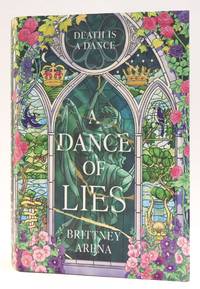
2025réf. 1416295London: Bloomsbury; FairyLoot 2025. First Edition Thus. Hardcover. Octavo 442 pages. In Very Good condition with a Very Good dust jacket. Spine is green and floral with gilt lettering. Dust jacket is protected with a mylar covering. Minor bumping to head and tail of spine. Mild bumping to edges of dust jacket. Text block digitally sprayed. Shelved in Hardcover Science Fiction/Fantasy. 1416295. Shelved Dupont Bookstore. Bloomsbury; FairyLoot hardcover books
2019réf. 213071Milan: Skira 2019. Hardcover. VG. Minor rubbing/scuffing to boards otherwise clean and unmarked. Quarto. Hardcover. Blue cloth boards with red stamped titles. No jacket as issued. 272 pages : color illustrations ; 25 cm. 5468 days is the number of days between the date of the first and last of Francesco Arena's works documented in this monograph. Through sixty works produced between 2004 and 2019 the book goes back over the most significant stages of the artist's two decade-long career. Skira hardcover books
1968réf. 170761Los Angeles: Olympic International Films 1968. Eight vintage studio still photographs from the 1968 film. The first of director Lee Frost and producer Bob Cresse's "sex westerns" wherein a Mexican stable boy kidnaps a rancher's wife in revenge for the killing of his sister years earlier. Set in Texas in 1869. 10 x 8 inches. Fine. Olympic International Films unknown books
1970réf. 169000N.p.: N.p. 1970. A small archive of a vintage French moyenne poster and nine vintage French lobby cards for the French release of the 1968 film here under the French release title "L'éperon brûlant." The first of director Lee Frost and producer Bob Cresse's "sex westerns" wherein a Mexican stable boy kidnaps a rancher's wife in revenge for the rape and killing of his sister years earlier. Set in Texas in 1869. Moyenne poster: 22.75 x 30 inches. Folded as issued. Very Good plus with some light creasing and pinholes at the extremities and two small paper tape repairs to the verso at the top and bottom of the vertical fold. Bright and unfaded. Nine French lobby cards: 9.5 x 11.5 inches. Very Good plus with pinholes at the extremities. N.p. unknown books
1670réf. 2332Stampatus in Stampatura Stampatorum" i.e. Paris 1670. 12mo 142 x 80 mm. 191 pp. Two parts separately titled but continuously paginated. Woodcut peacock device on title. A pretty copy; occasional light foxing to upper margins. Eighteenth-century French red morocco sides with triple gilt fillet smooth spine gold-tooled with green morocco lettering-piece edges gilt over marbling marbled endpapers edges slightly scuffed. Provenance: Marquis de Rognes engraved armorial bookplate signed and dated Nicolas de Mire 1777; coded purchase note "ca" in pencil on recto of final free endleaf probably from Jean-Jacques Debure ca. 1800 thanks to Erick Aguirre for this information. Most complete edition of one of the earliest collections of French macaronic poetry an often burlesque admixture of the vernacular and Latin celebrated for its valuable descriptions of and notations of early Provençal dance. The preface from the supposed publisher "Librarius" is addressed to the "bragardissimis" dancers of France: bragare in Arena's personal brand of Latin means to "have fun" but Arena's work addressed to students was intended to meet a semi- serious need: To attract students to the University of Aix less popular than the faculties of Avignon and Montpellier the rector had decided to authorize a ball at the time of graduation for the graduates and their families but "for certain students dancing in public was a much more forbidding test than all of those that they had undergone during their studies" Louisson-Lassablière p. 268 our translation. Thus Arena's goal was to familiarize students with the many different "basses danses" currently in fashion. Following a prose introduction to the subject the poem in 1896 lines is in two parts the first being an autobiography in which the author successively a law student soldier and lawyer of whom little else is known recalls his horrific experiences in the Italian campaigns including an eye-witness account of the Sack of Rome in 1527. Following his final return from Italy in 1528 he had given his first dance lessons and thus the work segues into a largely tongue-in-cheek introduction to dance and to proper comportment. Of greatest interest for dance historians are the technical descriptions of dances found in a four-page section pp. 86-90 in French in which the author uses a stenographic notation system in which each step is designated by the initial of its name repeated to indicate a repetition of the step. Thus in the description "R c ss d ss d d d ss r c ss a ss r c" "c" signifies "congé" "ss" signifies "deux simples" "d d d" signifies "trois doubles" and so on. Such detailed choreographic records are rare for this period. Each dance description occupying no more than one line is prefaced by the title or titles of popular songs or melodies to which it should be danced. The earliest known edition of the work was printed anonymously probably in Lyons in 1528; at least 40 more editions followed the last from 1758 a full census including untraced and "ghost" editions is provided by R. Mullally. The present edition includes other previously published macaronic verse including Rémy Belleau's "Poema macaronicum de bello huguenotico" and separately titled a collection of Italian macaronic poetry by Bartolomeo Bolla first printed in 1604 with satirical poems such as one addressed to the "culinary Muse" p. 147 humourous lists of attributes including types of women associated with various Italian towns pp. 121-129 and poems in the patois of Bergamo. On textual grounds Mullally revised the attribution of this edition to Paris; it was traditionally assigned to Lyon. Brunet I 393 "Edition la plus complète que l'on ait de ce recueil" ; Fletcher Bibliographical Descriptions of Forty Dance Books 3a ; Clarke Four Hundred Years of Dance Notation 1987 no. 6; Robert Mullally "The editions of Antonius Arena's Ad suos compagnones studiante" Gutenberg-Jahrbuch 1979:146-57 edition P12. Cf. Marie-Joëlle Louisson-Lassablière "Antonius Arena ou le Latin macaronique" in E. Bury Tous vos gens à Latin 2005. Stampatus in Stampatura Stampatorum," [i.e., Paris] unknown books