904 risultati
rif. 40362Paris, Tallandier, 2003. 13 x 22, 249 pp., broché, très bon état.
rif. 104.431Chicago, Ezra A. Cook, Publisher, 1925. 11 x 16, 639 pp., nombreux dessins, reliure d'édition pleine percaline bordeaux, bon état.
1987rif. LFA-126738513Un ouvrage de 207 pages, format 135 x 210 mm, illustré, broché, publié en 1987, Elie Bellier Editeur, bon état, rare
1987rif. 1189921987 Elie Bellier, Editeur - 1987 - In-8, broché, couverture illustrée - 206 p.
rif. 048416757X.Ghardcover. Good. Access codes and supplements are not guaranteed with used items. May be an ex-library book. hardcover
rif. 1332821049.Gpaperback. Good. Access codes and supplements are not guaranteed with used items. May be an ex-library book. paperback
1956Very Good Arabic Original wrappers. Cr. 8vo. (20 x 14 cm). In Arabic. 63, [1] p., 1 portrait of Atilhan. First edition of this Arabic edition of Turkish "Kendi vesikalarina go?re Masonluk nedir?" [i.e. What is Freemasonry according to their own documents?], written by Atilhan who was a Turkish career officer and antisemitic writer, who was one of the initiators of the 1934 Thrace pogroms. It was published in Iraq, probably Qirkuk (The phone number of the publishing house is written on the cover). During the Turkish War of Independence, Atilhan was appointed as the commander of the Zonguldak-Bartin and Havalisi Fronts. It prevented the spread of the French Army in this region. Upon the victory of the War of Independence, he left the army and went into writing. In his anti-semitic book "Suzy Liberman, Jewish Spy", in 1935 the Turkish Army gave the order to buy 40000 copies and distributed them amongst the officers. The book is banned on September 17, 1936. In 1942, he was arrested by the government of the time on the grounds that the coup was being prepared. He was incarcerated for 11 months before being released by the results of an investigation led by Fevzi Çakmak. During the one-party period of Turkey, Atilhan who was close to the ideas of Turkism contributed writings to two of the most influential magazines of Islamic politics in early Turkey; Sebilürresad and Büyük Dogu. His writings and his political activities affected the growing Islamic movements in Turkey. He was one of the founders of Millî Kalkinma Partisi in 1945 and the Islam Democratic Party in 1951. He was arrested in 1952 along with Necip Fazil Kisakürek in Malatya as responsible for the assassination attempt of Ahmet Emin Yalman. He was detained for 11 months and 15 days. In August 1964 he was invited to the congress of Islamic State in Somalia. He was elected as the Chairman of the executive committee of Congress. This post was his last major mission. Only two copies of this edition can be traced in OCLC: 320298568.
1920Very Good Turkish, Ottoman (1500-1928) Original manuscript on freemasonry. 28x21 cm. In Ottoman script (Turkish with Arabic letters). 3 p. Chipped on margins, folded. Otherwise a very good manuscript. Written on a paper watermarked "Labor: Extra Strong Bank". It includes "How should a Mason be and act?", it gives some hints on the last Ottoman Freemasonry. The history of Freemasonry in Turkey stretches back to the 18th century under Ottoman imperial rule. The first lodge in Turkey was probably established around 1721 in Istanbul by Levantines. Although Freemasonry in Turkey can be traced into the 18th century, for much of that time it was limited to lodges under the jurisdiction of foreign grand lodges, and there was no independent Turkish Grand Lodge. This changed in 1856 when the first Turkish Grand Lodge was established. Sultan Murad V was a member of the lodge, becoming the first and only Ottoman sultan to join. This first Grand Lodge was banned in 1876 by Murad's successor Sultan Abdulhamit Han. The Grand Lodge came back in 1909 in Istanbul under a new administration. Because the Grand Lodge was used to operate in secret, it was closed again in 1922, only to be opened in the year 1925 again. In 1935 the Grand Lodge has closed again. As a result of the repeated closures, the former Grand Lodge and its members were reluctant to support Kemal Atatürk's reformist policies. (Source: Wikipedia). No information about Dr. Nami.
rif. 1024109399.Ghardcover. Good. Access codes and supplements are not guaranteed with used items. May be an ex-library book. hardcover
rif. 0366264907.Ghardcover. Good. Access codes and supplements are not guaranteed with used items. May be an ex-library book. hardcover
rif. 1330461509.Gpaperback. Good. Access codes and supplements are not guaranteed with used items. May be an ex-library book. paperback
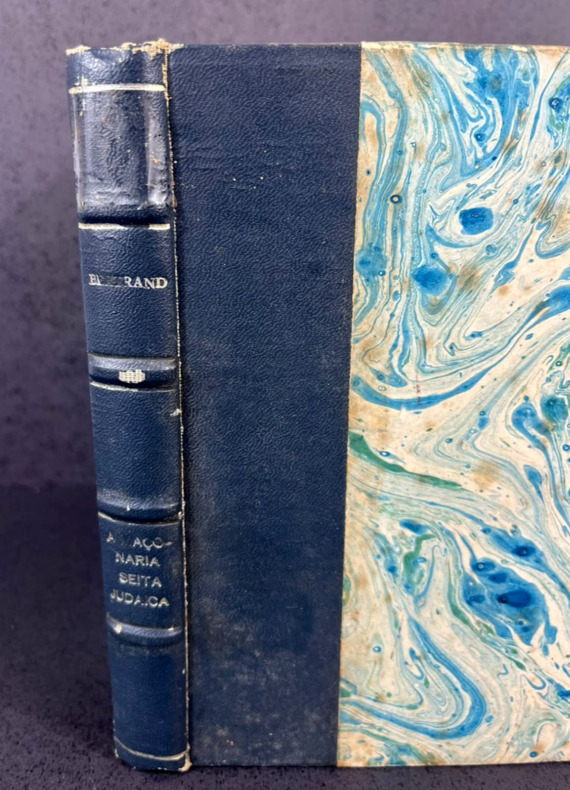
1938rif. 569São Paulo, Minerva, 1938. Com um prefácio sobre "A maçonaria e o Brasil" e um apêndice sobre "O Talmud e os judeus" do G. Barroso. Primeira edição em português brasileiro desse texto publicado em 1905 na França. In-12, 18 x 13 cm, (vii) 152 pp. Encadernação de meio tecido azul parecendo couro, papeis marmorizados azul claro, 4 nervos na lombada. Seções: O Estado no Estado, Internacionalismo maçônico, Ação anticristã, A kabala ortodoxa e farisaica, Sóbre a moral talmúdica, etc. Raro.
rif. 0428619754.Ghardcover. Good. Access codes and supplements are not guaranteed with used items. May be an ex-library book. hardcover
rif. 0428148247.Gpaperback. Good. Access codes and supplements are not guaranteed with used items. May be an ex-library book. paperback
rif. 0267417543.Ghardcover. Good. Access codes and supplements are not guaranteed with used items. May be an ex-library book. hardcover
rif. 1019918357.Ghardcover. Good. Access codes and supplements are not guaranteed with used items. May be an ex-library book. hardcover
rif. 1396761926.Ghardcover. Good. Access codes and supplements are not guaranteed with used items. May be an ex-library book. hardcover
rif. 1396762108.Ghardcover. Good. Access codes and supplements are not guaranteed with used items. May be an ex-library book. hardcover
rif. 0364579730.Ghardcover. Good. Access codes and supplements are not guaranteed with used items. May be an ex-library book. hardcover
rif. 0666241872.Gpaperback. Good. Access codes and supplements are not guaranteed with used items. May be an ex-library book. paperback
2010rif. LFA-126716689Numéro 104 (Janvier 2010) : 82 pages, format 210 x 295 mm, broché couverture couleurs, illustré, bon état
2010rif. LFA-126716690Numéro 105 (Mars-Avril 2010) : 62 pages, format 210 x 295 mm, broché couverture couleurs, illustré, bon état
1999rif. LFA-126717991Numéro 37 (Juillet 1999) : 68 pages, format 150 x 230 mm, broché couverture couleurs, illustré, bon état
2002rif. LFA-126720453Numéro Spécial (Mai 2002) : 142 pages, format 150 x 240 mm, broché couverture couleurs, illustré, bon état
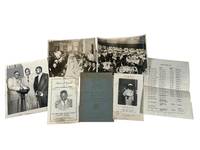
1969rif. 214941969. African American Fraternal Organizations Prince Hall Freemasonry Archive documenting Prince Hall Freemasonry and African American fraternal life from the 1940s through the 1990s illustrating the role of Black Masonic organizations as enduring centers of fellowship leadership mutual support and community organization. Spanning approximately five decades and including material from Pennsylvania Louisiana and Illinois the collection traces Prince Hall activities from formal lodge banquets and Grand Lodge meetings to membership records and the funerary traditions surrounding members of the broader Masonic community. Archive of 7 pieces including three approximately 8.5 x 11 inch press photographs dating from the 1940s through the 1960s a 1969 Golden Star Lodge No. 143 yearbook two 1993 funeral programs and a birthday roster containing members' names and contact information. Together the material provides a cross-section of the institutional and social life sustained by African American fraternal organizations during the mid- and late twentieth century. A 1946 photograph records a large gathering of Pittsburgh's Golden Shield Lodge No. 69. Black lodge members and their female guests fill two long banquet tables beneath a prominent "Golden Shield Lodge No. 69" banner. The image provides a striking visual record of the lodge as a social institution extending beyond formal Masonic ritual into the wider community of members spouses families and guests. A 1969 photograph taken at the annual workshop of the M.W. Prince Hall Grand Lodge of Louisiana in New Orleans shows three African American Masons in suits conferring during the proceedings. They are identified on the verso as W.S. Finister Jr. Rufus Mayfield and Richard Turnley. The photograph documents the administrative and leadership structure of Prince Hall Masonry and the organized exchange between members that helped sustain its network of local lodges. Also included is the 1969 yearbook of Golden Star Lodge No. 143 of Pittsburgh Pennsylvania. Its cover bears the Masonic square and compass and records the lodge's meeting place at 143 Orr Street in Pittsburgh. The volume contains membership information meeting schedules guiding principles and tributes to past Worshipful Masters and other members documenting the importance placed upon institutional continuity leadership and collective memory within Black Freemasonry. Two funeral programs from 1993 illustrate the close relationship between African American fraternal religious and community life. A "Home Going Service" for Sister Mattie White was held at Central Baptist Church in Pittsburgh under the direction of Dr. Isaac Green and includes a portrait of White dressed in white. Her identification as "Sister" may indicate participation in a Masonic-affiliated women's organization although a specific affiliation cannot be established from the program alone. A "Service of Triumph" for John Columbus Coger held at New Hope Temple Baptist Church in Philadelphia similarly preserves the dignified commemorative traditions through which African American communities memorialized their members. A September birthday roster listing individuals' names addresses and telephone numbers further documents the interpersonal networks maintained through such organizations. Although utilitarian in purpose records of this kind provide unusually direct evidence of the everyday social infrastructure underlying fraternal organizations: the personal connections through which members maintained relationships beyond formal meetings and ceremonies. Prince Hall Freemasonry developed from the efforts of Prince Hall and other free Black men in eighteenth-century Massachusetts who sought participation in a Masonic tradition from which African Americans were largely excluded. African Lodge No. 459 received its charter from the Premier Grand Lodge of England in 1784 establishing the institutional foundation from which Prince Hall Freemasonry developed. Over subsequent generations its lodges became important institutions within African American communities fostering networks of fellowship mutual assistance civic engagement and leadership at a time when racial segregation excluded Black Americans from many white civic and fraternal organizations. Spanning the 1940s through the 1990s the present archive demonstrates the continuity of those networks across the transformations of the Civil Rights and post-Civil Rights eras. The photographs lodge publication membership material and funeral programs document Prince Hall Freemasonry not simply as a ceremonial organization but as part of a broader infrastructure of Black civic and community life connecting fraternal affiliation with social gatherings institutional leadership churches families and remembrance. Minor edge wear and age-related handling. Photographs retain original editorial markings in margins and on versos. Overall very good condition. unknown