2.667 Ergebnisse
Best.-Nr. 223875À Paris, De l'Imprimerie du Comité de Salut public, an II (1794) in-4, [4]-VIII-231 pp., 4 tableaux, 60 planches repliées, demi-basane brune, dos lisse orné, tranches marbrées (reliure postérieure). Dos frotté, mors et coiffe restaurés, manque à la coiffe inférieure, reliure craquelée. Quelques rousseurs et mouillures (texte et planches). Galerie de vers en marge inférieure de quelques planches. Ex-libris Jacques Jourquin.
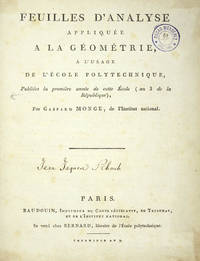
Best.-Nr. 10878Paris, Baudouin, An VII (1798-1799). In-4, (8)-132 pp. et 25 pl., reliure de l'époque demi-basane, dos orné (dos frotté, coins émoussés, quelques rousseurs). Ex-libris manuscrit : Frédéric Duroyer, 1808.
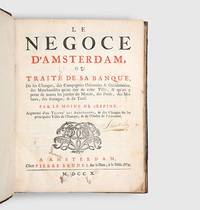
1710Best.-Nr. 135031Amsterdam: Pierre Brunel 1710. Second edition bound as issued with Jacques Mondoteguy's Traité des Arbitrages also published by Pierre Brunel in 1710 but in Paris. Le negoce d'Amsterdam was first published in both Dutch and French in 1694. Jacques le Moine de l'Espine d. 1696 was a merchant dealer in art and maps mathematician and writer on economics who was based in Amsterdam from 1697 onwards. Quarto 221 x 165 mm. Title printed in red and black separate divisional title leaf for Traité des Arbitrages continuously paginated with that gathering Hh having five leaves. Woodcut title page vignettes to both head- and tailpieces initials numerous tables to text. Contemporary calf rebacked preserving the original spine title lettered in gilt to second compartment rest elaborately tooled in gilt raised bands marbled endpapers edges sprinkled red and blue. Early ownership signature "Jouxtel" hand written in ink to front pastedown "Jouxtely" to title page and final page "Jou:tel" to fore edge of book block likely the same hand which has carefully amended the catchword on the final page of Le Moine de L'Espine's work to match the first word of Mondoteguy's title page and neatly corrected a figure on p. 235; engraved bookplate of Jean R. Perrette to front pastedown. Corners restored a few marks to boards lower corner of book block up to p. 170 a little gnawed front free endpaper laid onto following blank occasional marginal dampstain but generally contents crisp a few pen trials to title page and last few blanks natural paper flaw along lower margin of leaf Ff1 resulting in small loss to lower corner not affecting text. Overall a very good copy. Goldsmiths' 4601. hardcover
2009Best.-Nr. SBS-9780754624998ASHGATE 2009. Hardcover. New. ASHGATE hardcover
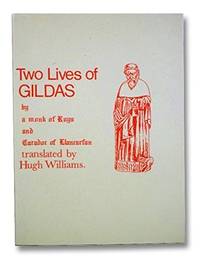
1990Best.-Nr. SBBI-mon0000162264Llanerch Press 1990. paperback. Good. Our good condition books are generally good for reading but not for gifting or collecting. They could have imperfections such as creasing fanning inscriptions margin notes yellowing staining on edge or cover or pages bumps scuffs etc etc sometimes multiple of these. It's a wide category that encompasses anything that isn't almost-new down to anything that is slightly better than poor. We would NOT recommend gifting Good books - these should be considered reading copies. Our books are dispatched from a Yorkshire former cotton mill. We list via barcode/ISBN so please note that the images are stock images and may not be the exact copy you receive furthermore the details about edition and year might not be accurate as many publishers reuse the same ISBN for multiple editions and as we simply scan a barcode or enter an ISBN we do not check the validity of the edition data when listing. If you're looking for an exact edition please don't order at least not without checking with us first although we don't always have time to check. We aim to dispatch prompty the service used will depend on order value and book size. We can ship to most countries see our shipping policies. Payment is via Abe only. Llanerch Press paperback
Best.-Nr. 37410P., Bachelier, 1827, un volume in 4 relié en demi-basane, dos orné de fers et filets dorés, étiquette de titre rouge, tranches jaspées (reliure de l'époque), 20pp., 188pp., 28 PLANCHES DEPLIANTES
1983Best.-Nr. 3459Berkeley : Asian Humanities Press ; Seoul : Po Chin Chai 1983. 1983. Soft cover. Very Good. 135 pp. : chiefly illustrations some in color ; numerous photographs ; 35 cm. ; OCLC: 11766799 ; LC: ND2073.6.Z8 ; a rare collection of action photographs ceramics and calligraphic paintings and lithographs executed by Jung Kwang the Mad Monk ; " The present volume is an attempt to present a partial retrospective of his paintings including the latest work which has expanded into the use of lithographs.In 1980-81 he took an extended trip his first to the U.S. and Europe giving demonstrations of his painting style."--preface ; "Jung Kwang the painter has his artistic roots firmly placed within a style of art that was nourished by the monastic communities of East Asia. Using only the brush and ink monks made their art using rapid and yet disciplined brush strokes. The paintings only took seconds to complete; they could not be retouched or corrected; each was finished when the brush left the paper. As might be imagined this style was particularly favored by the Zen schools. The paintings were used as a test for the state of enlightenment of the painter.Jung Kwang began to separate his art from this traditional school and with that separation came many questions about the value of his work. The controversies of his art continue to the present.Having introduced all sorts of new subjects into his paintings: bulls guardian figures roosters fish and more shocking penises on all the animals and even coming out of the head of Dharma it is little wonder that the traditionalists were horrified."--Introduction ; Jung Kwang's reputation as "The Mad Monk" is here fully represented by the use of color non-traditional brushes and pens even to the shocking photographs of him using his penis as th e brush on a series of paintings! ; he was ordained a monk in the Chongye Buddhist Order at Tong-do Monastery near Pusan in 1962 and practiced meditation under direction of Master Kuha and was later a member of the Chongye National Council as its art consultant but was then expelled in 1983 presumably for his movement away from traditional forms ; nonetheless there are many who would consider the paintings in this book enlightened visual Zen koans of a sublime nature ; SIGNED presentation by Jung Kwang from 1986 on the front ep ; folio bound in color pictorial stiff paper wrappers ; some wear but otherwise VG. Very scarce with only 25 copies known held by libraries worldwide. This online listing contains text in Chinese and Korean fonts Berkeley : Asian Humanities Press ; Seoul : Po Chin Chai, 1983. paperback
1794Best.-Nr. 56237Paris, Comité de Salut Public, AN 2 (1794). 4to. Contemp. hcalf. Gilt spine. Titlelabel with gilt lettering. A small tear to leather at top of spine and joint. (4),VIII,231 pp., 4 folded tables and 60 large folded engraved plates. The first few leaves with scattered brownspots.
1794Best.-Nr. 56237Paris Comité de Salut Public AN 2 1794. 4to. Contemp. hcalf. Gilt spine. Titlelabel with gilt lettering. A small tear to leather at top of spine and joint. 4VIII231 pp. 4 folded tables and 60 large folded engraved plates. The first few leaves with scattered brownspots. First edition. The plates are identical with those in Panckoucke's Encyclopedie. " Between 1786 and 1788 Monge investigated with Berthollet and Vandermonde the principles of metallurgy and the composition of irons cast metals and steels. This research enabled them to unite previous findings in these areas to obtain precise theoretical knowledge by means of painstaking analyses and to apply this knowledge to the improvement of various techniques." DSB - Poggendorff II184. hardcover
1789Best.-Nr. 90025Rue et Hôtel Serpente | Paris 1789-1792 | 12.8 x 19.6 cm | Relié
1794Best.-Nr. 1599Reliure pleine basane marron racinée. Dos lisse orné de filets dorés, pièce de titre rouge. Trois tranches sanguines. Intérieur très propre. Illustré de 4 tableaux imprimés sur papier bleu et de 60 planches repliées hors texte (fourneaux, moulages en terre et en sable, grues, marmites, fonderies, tours et tourillons). Les deux dernières planches, de grande dimension, présentent l'ensemble des canons réalisés grâce à la méthode de Monge. ÉDITION ORIGINALE.
1794Best.-Nr. 1311130103Impr. du Comite de salut public 1794-01-01. Hardcover. Very Good. 4to. Contemporary leather boards rebacked on modern leather spine. 27 cm. Good binding and cover. viii 231 p. lx folded leaves of plates. Lovely copper plates throughout. Generally clean unmarked pages. Collated. Goldsmiths'-Kress no. 16024.5-1. D.S.B. 9: 469-478. Impr. du Comite de salut public hardcover
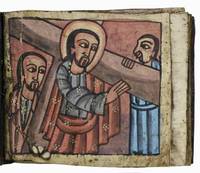
1890Best.-Nr. 516Ethiopia: Unknown 1890. First edition. Hand-made: Hand-tooled red-brown leather over wood boards. Good/`. Ethiopian Monk. Pocket-sized Ethiopian Coptic Christian Manuscript Book of the Cross. Handmade handwritten and hand-painted on vellum. This is a small pocket-sized 4 1/2 inches x 3 5/8 inches 38-page manuscript of the Ethiopian Book of the Cross. In Ethiopia the Cross is not only a Christian symbol but also a sacred matrix in religious life embedded in rituals art and identity. The Book of the Cross reflects this deep tradition showing how the Cross is celebrated in liturgy devotion and theological reflection. It was hand-made by a rural/provincial Ethiopian monk circa late 1700s to mid-1800s. The ink materials used are organic and local as access to foreign materials was more limited than in larger cities closer to trade routes. It is handwritten entirely in the classical Semitic liturgical language Ge'ez on vellum and bound in blind-tooled goatskin or sheepskin tightly stretched over wooden boards. ABOUT THE WORK The Book of the Cross is a devotional material comprised of the following elements: 1 Honors the Cross of Christ as the central symbol of salvation. 2 Contains hymns təwÄb prayers and readings that recount the Passion Resurrection and the veneration of the Cross. 3 Is used in worship to focus the faithful on the theological meaning of the Cross - the 'made one' Tewahedo unity of Christ's divine and human natures. 4 Often includes narratives and psalms that parallel the biblical Passion accounts but are framed in the Ethiopian liturgical tradition. It contains Cross hymns təwÄb praising the Cross and the Passion of Christ; prayers for the faithful especially during Timkat and other feasts; scriptural readings from the Old and New Testaments that focus on the Cross e.g. Psalms the Passion narratives in the Gospels; traditional narratives of the veneration of the Cross in Ethiopian history and tradition and liturgical instructions for how the Cross is venerated in the church. The Ge'ez script is written in strokes quickly executed in a more flowing rounded style than the rigidly aligned and exacting calligraphy associated with scribal monks in more structured urban environments particularly during the 18th century Gandarian style. Elongated razor-sharp geometric strokes were demanded by early to mid-18th-century imperial scriptoriums. The alternating black and red ink red being used for sacred names or section headers utilizes traditional organic soot or another local carbon source for the black ink and local organic sources like red‑colored leaves bark and roots for the red ink. The latter is evident by the fading of the antique and environmentally exposed red ink to a rust-brown color over time. Imported raw materials like cinnabar and vermillion introduced along trade routes in Eastern Africa were also used to make red ink at the time of this manuscript's creation but they do not fade in the same way as organic sources instead remaining a red or red-orange hue when naturally aged. ELEMENTS OF THE MANUSCRIPT The prayer book is bound in a dark red-brown goatskin or sheepskin the heavy dye job obscures the grain size and pattern but it looks to be sheep stretched tightly over wooden boards with intricate tooling in blind framing side-by-side Ethiopian crosses - a characteristic design for a Book of the Cross manuscript. Interlaced within the text are four full-page miniatures in groupings of two that are painted in a more rustic style by an amateur artist more typical of a small village with limited resources versus by a more practiced hand found in large Ethiopian monasteries or affluent cities. In order of appearance: 1. Jesus Carrying the True Cross Along the Via Dolorosa During the Passion. This illustration serves as the visual centerpiece of the prayer cycle and is the opening page to the manuscript. Jesus is depicted with a halo atserga dressed in traditional striped garments physically carrying the massive wooden cross on His shoulder. To the right stands Simon of Cyrene who was compelled by the Roman soldiers to help carry the cross. The figure on the left represents either a disciple watching in mourning or one of the Roman guards leading the procession. The painting follows a rural or provincial derivative of Ethiopian iconographic art. Key features include the large stylized almond-shaped eyes thick bold black outlines simple flat color planes using earth-tone reds yellows and blues and the lack of three-dimensional perspective. 2. Christ Teaching or Delivering a Decree. The illustration emphasizes the divine authority of Christ's word seamlessly connecting to the theological themes of the surrounding text. The text on the scroll Jesus is carrying translates to 'In the name of the Father and of the Son and of the Holy Spirit.' 3. The Crucifixion. As the foundational visual of this Haza Mesqel Book of the Cross manuscript this scene serves as the ultimate theological anchor for the surrounding prayers and praises. On the left side of the painting The Virgin Mary Maryam is shown wrapped in a dark blue-grey mantle holding her hands up to her face in a traditional posture of deep mourning and weeping. On the right Saint John the Evangelist is depicted similarly shrouded in a red mantle mirroring Mary's grief-stricken gesture as he witnesses the event. 4. Christ in Majesty Offering a Blessing. This illumination acts as a celebratory closing or protective visual within your Haza Mesqel Book of the Cross manuscript emphasizing Christ's eternal authority and power after the Resurrection. HOW THIS MANUSCRIPT WAS MADE Ge'ez calligraphy executed in natural local-based black and red ink with a reed pen in double columns and rubricated throughout adorns hand-made parchment made from goatskin or sheepskin. The large vellum sheets in this manuscript have been cut in half horizontally to fit inside this diminutive pocket-sized binding. The leaves were not placed back in their original order but rather comprise a mix of prayers and liturgy from the Book of the Cross. The binding was simply sewn together and does not use a link chain stitch for the quires as is typically found. The wooden boards are made from local trees typically olive or wanza. The leather appears to be sheepskin was tanned dyed and treated and stretched tightly over the wooden boards and then intricately tooled in blind. HISTORY OF ETHIOPIAN COPTIC MANUSCRIPTS IN GE'EZ Ethiopian Handwritten Coptic Ge'ez Bibles and liturgical texts were produced as early as the fourteenth century until the early 20th century throughout Ethiopia the first country to become an independent African nation. Christianity was introduced to Ethiopia in the 4th century when Syrian missionaries first translated the Bible into Ge'ez the language of the Ethiopian Orthodox Tewahedo Church. The surviving body of Ge'ez literature is composed almost entirely of Christian liturgy as education was exclusively the responsibility of priests and monks. The bibles produced typically contain the gospels of the New Testament recounting the life of Jesus of Nazareth and the foundation of the Christian. The Ethiopian Bible contains a significantly larger canon of books than Western Bibles including texts like the Book of Enoch and the Book of Jubilees which are often found in its broader canon. It is considered one of the oldest and most complete Bibles containing more than 80 books compared to the 66 in the Protestant canon. The world's earliest illustrated Christian book is the Garima Gospels written in Ge'ez found in a remote Ethiopian monastery. It is named after a monk who arrived in Ethiopia in the 5th century and is beautifully illustrated. For perspective it predates the first King James Bible by about 1200 years. CONDITION REPORT Fair by book standards but this is a hand-made Ethiopian prayer manual used in religious ceremonies and kept in an open-air environment for over 150 years so it's hard to truly compare. Good by rural Ethiopian manuscript standards. Exterior and binding: Cracked hinges. Spine leather with a large vertical tear. The leather is hand-worn and soiled from generations of use. All edges blackened with soot and sun-exposure. Interior: The vellum pages are soiled with dust and soot from candles and incense burners. There are multiple water dampening stains smudges finger soiling some old repairs made from sinew and natural yellowing and shrinking of the vellum both with age and exposure to the natural environment. The first leaf with an old repair to a tear main image and second painting shown. One leaf has a quarter-sized hole 1" x 1" in the middle of the text. There is loss of letters and words from where leaves were sliced in half. All in all a Book of the Cross broken down to a more manageable pocket-size with four full-page paintings. This is not a book carefully shelved on a bookcase in an English manor for the past 150 years. Rather it is a sturdily made religious manuscript heavily used in a rural agrarian setting where it was likely stored outside at times exposed to the elements. It has seen a lot of 'love' and 'honest wear.' . Unknown unknown
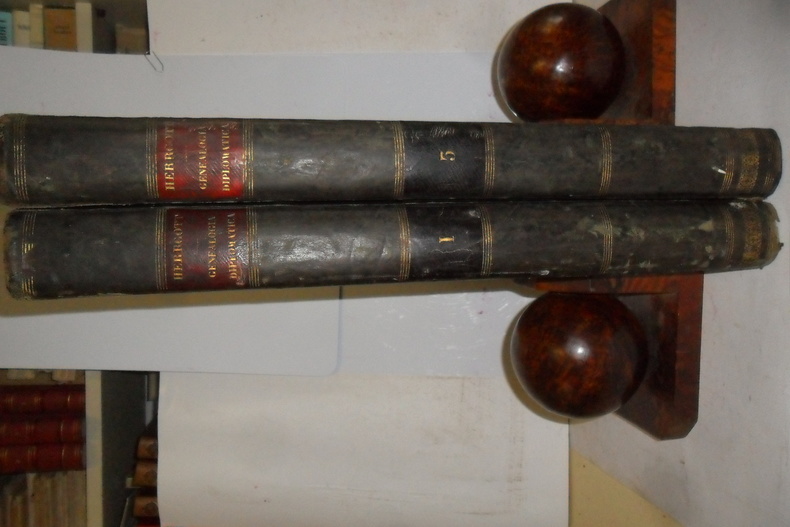
1737Best.-Nr. 219511737 Viennae Austriae, Typ. Leopolsi Joannis Kaliwoda - 1737 - Edition Originale du plus beau livre sur les Habsbourg - 2 tomes sur 3: T. I, T. III & dernier - 2 volumes In-folio - 1/2 Reliure frottée postérieure - Dos lisse à filets dorés - Pages de titre bi-colore rouge et noire avec vignette - Très grands Bandeaux, Lettrines & Culs-de-lampe - I) 2 tableaux dépliants: Fac-similé de documents & 1 Tableau Généalogique, illustrations en texte, 6 planches de sceaux in-fine PP HT - (18), LXXII-338 pages + Index 34 pages & Corrigenda (1) & 6 planches de sceaux.II) (17), Pagination 412 à 851 + Index (56) pages - Les 2 volumes très propres - En langues allemande et latine - Envoi rapide et soigné
Best.-Nr. Z1-U-002-01376Joseph Rowntree Foundation. Used - Good. Ships from UK in 48 hours or less usually same day. Your purchase helps support Sri Lankan Children's Charity 'The Rainbow Centre'. Ex-library so some stamps and wear but in good overall condition. 100% money back guarantee. We are a world class secondhand bookstore based in Hertfordshire United Kingdom and specialize in high quality textbooks across an enormous variety of subjects. We aim to provide a vast range of textbooks rare and collectible books at a great price. Our donations to The Rainbow Centre have helped provide an education and a safe haven to hundreds of children who live in appalling conditions. We provide a 100% money back guarantee and are dedicated to providing our customers with the highest standards of service in the bookselling industry. Joseph Rowntree Foundation unknown
2012Best.-Nr. SONG1938552016Taos Institute Publications 2012-10-11. paperback. Used: Good. 5.50x0.32x8.50. Buy with confidence. Excellent Customer Service & Return policy. Taos Institute Publications paperback
1623Best.-Nr. 25379London: William Stansby 1623. Book. Very Good. Hardcover. Folio. Pp. 6 xvi 218. Title in red and black woodcut headpieces and initials and large woodcut textual medallion. Bound in modern quarter calf over marbled boards new endpapers. Faint marginal dampstain to opening leaves light even browning throughout text signature of William Beattie 1795-1875 noted physician and travel writer on title. Overall a very clean attractive copy. Edited by John Selden from a manuscript in the Cotton Library this is the First Edition of Eadmer's most important work the "Historiae Novorum" a chronicle of contemporary events from the time of the Conquest in 1066 to the early 12 th century. STC 7438.2; Sarton II 275. William Stansby Hardcover
Best.-Nr. 46577Hamburg: Gyula Trebitsch Produktion 1981. Manuscript. Hardcover. g to fine. Quarto. 1 19 19 leaves. Original black cloth with gilt lettering on cover and spine. The screenplay is based on the novel "Die Geschwister Oppermann" by Lion Feuchtwanger. Nineteen-page original screenplay in English at front accompanied by nineteen original b/w photographs 9 15/ x 7" pasted to cream heavy stock paper with brief captions. The screenplay was realized and aired as a TV miniseries in 1983. Telling the story of the family Oppenheim a dynasty in furniture manufacturing. The name of Feuchtwanger's original novel "Geschwister Oppenheim" was changed to "Geschwister Oppermann" due to the efforts of a German National Socialist with the same name who forced the name change. Therefore the third edition of the novel was published as "Die Geschwister Oppermann." The screenplay starts at the beginning of November of 1931 telling the tragic story of the family Oppermann in the years 1932 and 1933 against the backdrop of the Nazis taking power in Germany. The original photographs vividly represent the historic events including Hitler's arrival in Berlin riots demonstrations police action the election the boycott of Jewish business the Reichtagsbrand and a head shot of Lion Feuchtwanger in 1930 among others. Egon Monk 1927-2007 after serving in the German Air Force from 1943-1945 became an actor and joined the Berliner Ensemble as an assistant director. From 1954-1959 he worked for RIAS Berlin and for the NDR North German Broadcast after that. Monk won various Tele play Awards and the German Critics Association Award in 1988. His first realized project of "Senora Carrar's Rifles" by Bertolt Brecht in 1953 was a life television production for the East German Television. Some rubbing and few marks on covers with gilt lettering somewhat faded. Binding in overall good interior in very good photographs in fine condition. Protected in modern mylar. Gyula Trebitsch Produktion hardcover
Best.-Nr. 46577Hamburg: Gyula Trebitsch Produktion 1981. Manuscript. Hardcover. g to fine. Quarto. 1 19 19 leaves. Original black cloth with gilt lettering on cover and spine. The screenplay is based on the novel "Die Geschwister Oppermann" by Lion Feuchtwanger. Nineteen-page original screenplay in English at front accompanied by nineteen original b/w photographs 9 15/ x 7" pasted to cream heavy stock paper with brief captions. The screenplay was realized and aired as a TV miniseries in 1983. Telling the story of the family Oppenheim a dynasty in furniture manufacturing. The name of Feuchtwanger's original novel "Geschwister Oppenheim" was changed to "Geschwister Oppermann" due to the efforts of a German National Socialist with the same name who forced the name change. Therefore the third edition of the novel was published as "Die Geschwister Oppermann." The screenplay starts at the beginning of November of 1931 telling the tragic story of the family Oppermann in the years 1932 and 1933 against the backdrop of the Nazis taking power in Germany. The original photographs vividly represent the historic events including Hitler's arrival in Berlin riots demonstrations police action the election the boycott of Jewish business the Reichtagsbrand and a head shot of Lion Feuchtwanger in 1930 among others. Egon Monk 1927-2007 after serving in the German Air Force from 1943-1945 became an actor and joined the Berliner Ensemble as an assistant director. From 1954-1959 he worked for RIAS Berlin and for the NDR North German Broadcast after that. Monk won various Tele play Awards and the German Critics Association Award in 1988. His first realized project of "Senora Carrar's Rifles" by Bertolt Brecht in 1953 was a life television production for the East German Television. Some rubbing and few marks on covers with gilt lettering somewhat faded. Binding in overall good interior in very good photographs in fine condition. Protected in modern mylar. Gyula Trebitsch Produktion hardcover books
1946Best.-Nr. 602664New York: Monograph Music Company 1946. Softcover. Very Good. Contract. Single octavo sheet with two holes punched at the topedge. Two small stains staple holes at one corner and a small tears and creases at the edges very good. A music contract Signed by Thelonious Monk assigning the copyright of "Nameless" to Monograph Music Company for the "sum of One Dollar $1.00 and other good and valuable consideration." A contract for the song "52nd Street Theme" listed by its working title and also referred to as "Bip Bop" by Monk. The piece was a regular part of Monk's set and quickly became a popular intro or outro tune for bands playing clubs on 52nd Street in Manhattan at the time. Monograph Music Company unknown
1946Best.-Nr. 602664New York: Monograph Music Company 1946. Softcover. Very Good. Contract. Single octavo sheet with two holes punched at the topedge. Two small stains staple holes at one corner and a small tears and creases at the edges very good. A music contract Signed by Thelonious Monk assigning the copyright of "Nameless" to Monograph Music Company for the "sum of One Dollar $1.00 and other good and valuable consideration." A contract for the song "52nd Street Theme" listed by its working title and also referred to as "Bip Bop" by Monk. The piece was a regular part of Monk's set and quickly became a popular intro or outro tune for bands playing clubs on 52nd Street in Manhattan at the time. Monograph Music Company unknown books
1789Best.-Nr. 90025Paris: Rue et Hôtel Serpente 1789. Fine. Opening run of the journal ""Annales de chimie"" vehicle of ""The New Chemistry"" founded and directed by Antoine de Lavoisier Rue et Hôtel Serpente Paris 1789-1792 12.8 x 19.6 cm Relié First edition highly sought after in the 19th century comprising 14 of the first 15 volumes published between 1789 and 1792 of the first series of the celebrated French scientific periodical Annales de chimie. Volume 10 missing. Contemporary full brown calf spines smooth with gilt fillets brown morocco lettering-piece and green morocco numbering-piece blind-ruled border to covers red speckled edges bookplate of P. H. Chavoix to front pastedown of each volume. Volumes 1 and 11 numbered in Roman rather than Arabic numerals. Overall discreet restorations corners rubbed occasional light foxing and browning some worming to bindings not affecting text head and tail of headcaps worn on volumes 7 13 14 and 15. The complete first series of the Annales de chimie published between 1789 and 1815 runs to 96 volumes. From 1793 to 1797 publication was suspended following the arrest of Antoine Lavoisier the journal's treasurer and in Édouard Grimaux's words its ""true director."" The opening run here contains nearly all the issues produced under the direction of and with contributions from the chemists Antoine de Lavoisier and Baron Philippe Frédéric de Dietrich. Both were condemned to the guillotine during the Reign of Terror in 1794 and 1793 respectively. This set is further illustrated with 12 scientific plates including two by the engraver Sellier as well as a map of the county of Bigorre. The majority of the articles and essays are first editions written by distinguished French and foreign chemists and physicists who helped disseminate ""The New Chemistry"": in order of appearance Louis-Bernard Guyton de Morveau Antoine de Lavoisier Gaspard Monge Claude-Louis Berthollet Anne-François Fourcroy Philippe-Frédéric de Dietrich Jean Henri Hassenfratz Pierre-Auguste Adet Jean-Antoine Chaptal Martin Heinrich Klaproth Johann Georg Albrecht Höpfner Christoph Girtanner Johann Christian Wiegleb Jacques-Anselme Dorthes Johann Friedrich Westrumb Armand Seguin Henry Cavendish William Austin Martin van Marum l'abbé René Just Haüy Peter Jacob Hjelm Jan Ingenhousz Isaac Milner Johan Gadolin James Watt Lorenz Florenz Friedrich von Crell Charles Blagden Jean Senebier Jean d'Arcet William Higgins Nicolas-Louis Vauquelin Nicolas Joseph Thiéry de Ménonville Dom Michel Rubin de Celis Jacques Louis Schurer Augustin-François de Silvestre l'abbé Claude Chappe Antoine Augustin Parmentier Nicolas Deyeux Bertrand Pelletier Charles-Augustin Coulomb Joseph Priestley Richard Kirwan Jean André de Luc Jean-François Clouet chevalier Marsilio Landriani Jean-Noël Hallé François Pierre Nicolas Gillet de Laumont Georges-Charles Bartholdi Alexandre Brongniart Jean-Michel Haussmann Henri Reboul François René Curaudau Thomas Henry Jean-Anthyme Margueron Nicolas Leblanc Johann Rudolph Deiman Pieter Nieuwland Pierre de Ribaucourt Pissis fils Jean-Baptiste Van Mons ou encore Louis François Antoine Arbogast. In 1816 the Annales de chimie was retitled Annales de chimie et de physique. In 1913 the journal split into two separate publications Annales de chimie and Annales de physique. The titles have undergone further changes up to the present day. A collection of 14 volumes from the opening run of the prestigious French scientific periodical Annales de chimie containing numerous essays and articles most in first edition published under the editorship of distinguished figures: Antoine de Lavoisier Louis-Bernard Guyton de Morveau Gaspard Monge Claude-Louis Berthollet Anne-François Fourcroy Philippe-Frédéric de Dietrich Jean Henri Hassenfratz and Pierre-Auguste Adet. Rue et Hôtel Serpente unknown
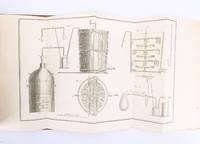
Best.-Nr. 55951Paris, Imprimerie du Comité de Salut Public, an 2 (1794), in-4, [4]-VIII-231 pp, 4 tabl. et 60 pl, Basane de l'époque, dos à 5 nerfs orné et portant une pièce de titre en maroquin noir, super ex-libris [Schneider, officier d'artillerie], Première édition. Gaspard Monge (1746-1818), créateur de la géométrie descriptive, fut l'un des fondateurs de l'École Polytechnique. Il entreprit la rédaction de ce livre par ordre du Comité de Salut Public afin de proposer une méthode rapide de fabrication des canons pour satisfaire les nécessités de la défense nationale. Les 4 tableaux dépliants imprimés sur papier azuré donnent les tables des dimensions des canons de fer pour l'artillerie de mer et des canons de bronze pour l'artillerie de terre ; et les 60 planches dépliantes représentent les machines utilisées pour leur fabrication (fourneaux, moulages en terre et en sable, grues, marmites, fonderies, tours et tourillons) ; les deux dernières planches, de grande dimension, présentent l'ensemble des canons réalisés grâce à la méthode de Monge. Piqûres éparses, exemplaire grande de marges. Poggendorff II, 184. Couverture rigide
Best.-Nr. 92468Paris Badouin An 9 1801. . Second edition; 4to; 3 engraved plates; contemporary half calf neatly rebacked very good condition; 142 pp. Second edition enlarged of this significant work by the inventor of descriptive geometry originally published as a series of lectures in 1795. Descriptive geometry is the science of presenting a three dimensional object on a two dimensional plane. Monge's methods which allowed for accurate representation of objects including shadows and vanishing points were so revolutionary at the time that they were made military secrets. Using his formulae one could send accurate representations of objects to allies information on fortifications was particularly useful as the Napoleonic wars were ongoing. Monge later led the production of the Description de l'Égypte and the accuracy of many of the depictions is testimony to his methods. Current applications of his breakthrough are numerous and include 3D films and architectural modelling. Paris, Badouin, An 9 [1801]. unknown