3305 risultati
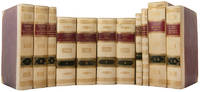
rif. 108192various places various publishers 1810-1841. . 11 vols in all comprising: I Fisica de' Corpi Ponderabili: first edition; 4 vols thick 8vo; 18 folding plates scattered light foxing slight toning to leaves; II Opuscoli Matematici e Fisici: first edition; 2 vols in one 4to; 2 folding plates scattered light foxing; III Mémoire sur la Dispersion de la Lumière: first edition; 4to; numerous tables to text many full-page some browning to leaves; IV Traité des fonctions elliptiques et des intégrales eulériennes: first edition; 3 vols 4to; 4 folding plates lacking portrait of Euler in volume 2 some leaves browned scattered light foxing; V Géométrie Descriptive: fifth edition; 4to; 28 folding plates light dampstaining to prelims scattered light foxing; VI Mécanique Analytique: first edition; 4to; 4 folding plates scattered light foxing light dampstaining to plates; contemporary half vellum 7 vols and full vellum 4 vols bound to match red and green morocco title labels with gilt lettering gilt tooling to spines light wear to extremities overall an attractive set. I First edition of Avogadro's magnum opus containing the first announcement of 'Avogadro's Number'. A major treatise containing Avogadro's famous hypothesis that the number of integral molecules in any gas is always the same for equal volumes or always proportional to the volumes. This was of great importance for nineteenth-century chemistry in effectively distinguishing between atoms and molecules. Avogadro first published this hypothesis in 1811 but it was largely ignored for another half century partly because it was published first in Italian when Italy was at the periphery of scientific research and subsequently only in minor French German and English scientific journals. II First edition of this rare publication considered an important scientific journal above all for being the means of dissemination of the mathematical theories of A.L. Cauchy in Italy. The second volume contains some of Cauchy's fundamental works translated into Italian including Sulla meccanica celeste. III First publication of Cauchy's equation which determined the relationship between the wavelength of light and the refractive index of a material the light passes through. Cauchy produced this publication which consisted of his own papers in 1835 and 1836. This memoir was issued as eight parts of his periodical Nouveaux Exercices de Mathématiques and was a successor to his earlier Exercices de Mathématiques published from 1826 to 1830. A prolific and rigourous mathematician Cauchy's works covered refraction and polarisation of light mechanics elasticity number theory and complex functions. IV The rare first edition of Legendre's great work on the theory of elliptic functions its application to geometry and mechanics methods of constructing elliptical tables Eulerian integrals etc. This copy is complete with the three supplements published successively in 1828 1829 and 1832. 'Legendre's research covers all areas of mathematics including celestial mechanics but his favourite subjects are elliptic functions and number theory. From 1786 he worked with elliptic integrals. His Exercices de calcul intégral 1811-1816 and the three volumes of his monumental Traité des fonctions elliptiques et des intégrales eulériennes 1825-1828 followed by three supplements in which he expounded the work of Abel and Jacobi made him the undisputed specialist' from the French text. V Fifth edition of this classic work on geometry. 'Monge should be considered the true creator of descriptive geometry for it was he who elegantly and methodically converted the group of graphical procedures used by practitioners into a general uniform technique based on simple and rigourous geometric reasoning and methods. Within a few years this new discipline was being taught in French scientific and technical schools and had spread to several other Continental countries' DSB. VI First edition of this apparently unfinished work on analytical mechanics. Statics and dynamics were to have been augmented with hydrostatics and hydrodynamics and possibly a fifth part giving applications. Scarce - the two parts are not often found bound together. Norman 89; Honeyman 168 for Avogadro. [various places], [various publishers], 1810-1841. hardcover
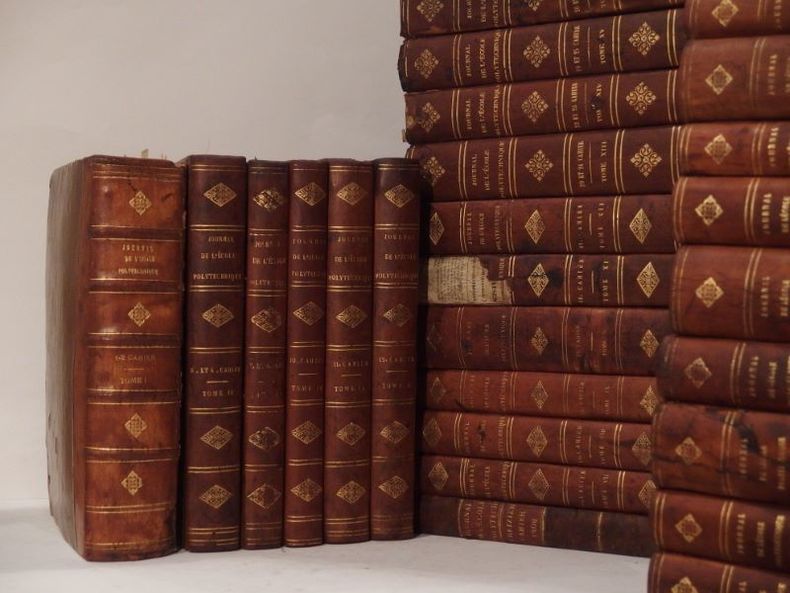
rif. 13594Paris, De l'Imprimerie de la République, Régent et Bernard, Bachelier, Mallet-Bachelier, Gauthier-Villars, An III (1794) - 1881. 48 tomes (1 à 8 et 10 à 49) in-4 reliés en 27 volumes, 160 planches hors-texte, quelques figures dans le texte, reliure demi-basane ou veau à coins (reliure frottée, manques à quelques coiffes, quelques mors fendillés, manque la moitié du dos au tome 11, dos du tome 20 tabîmé, mors supérieur du tome 1 fendu, rousseurs éparses). Tampons humides ("Bibliothèque de l'Université de France", "Echange autorisé", "Dons n° 12961", "Ecole Polytechnique") et ex-libris : Citoyen Messier (manuscrit), Lefebure de Fourcy 1869 (impr.) et "Monsieur Lefebvre" (manuscrit), Paul Serret (d'après un certificat de la Librairie scientifique A. Hermann, daté 1884 et signé par le libraire, qui confirme qu'il s'agit d'une collection ayant fait l'objet d'un échange autorisé avec la Bibliothèque de l'Université - cf. cachets, et par exemple l'ex-dono manuscrit suivant, répété : "à Mr. Lefebvre, Elève de l 'Ecole Polytechnique, De la part du Conseil de la dite Ecole").
rif. 67180A Paris, chez L. Reynier [et de l'Imprimerie du cercle social], an IV [1795], , 7 volumes in-8, 28 [+ 2] planches gravées en taille-douce, 6 volumes reliés veau havane de l'époque, dos à nerfs et fleuronnés, pièces de titre et de tomaison fauve ; et 1 volume broché sous couverture d'attente bleue, TRÈS RARE COLLECTION COMPLÈTE, EN ÉDITION ORIGINALE, DES COURS DONNÉS DANS LES ÉPHÉMÈRES ÉCOLES NORMALES ; bien complète du 7e volume de Débats, et des 28 planches gravées sur cuivre, dont 2 (planches 1 et 2 de l'histoire naturelle) sont répétées et reliées à la fin du volume 6. L'ensemble comprend donc : 24 planches de Géométrie descriptive, 2 planches de mathématiques et 2 planches d'histoire naturelle. Créées le 9 brumaire an III par décret de la Convention Nationale afin de former les instituteurs de langue française, les Écoles normales ont eu une durée de vie très courte ; 4 mois, du 1er pluviôse au 30 floréal de l'an III (20 janvier - 19 mai 1795). MONGE Y EXPOSA SA GÉOMÉTRIE DESCRIPTIVE ET LAPLACE SON HYPOTHÈSE COSMOGONIQUE. Les leçons qui étaient professées, par les savants les plus illustres, devaient être toutes improvisées, recueillies par la sténographie et publiées dans le journal de l'école créé à cet effet, de même que les débats ayant lieu une fois par décade, à l'occasion desquels les élèves discutaient avec les professeurs. Plus de 180 cours furent ainsi donnés, par 14 professeurs nommés par décrets : Lagrange et Laplace pour les mathématiques, Monge pour la géométrie descriptive, Haüy pour la physique, Daubenton pour l'histoire naturelle, Berthollet pour la chimie, Buache et Mentelle pour la géographie, Volney pour l'histoire, Bernardin de Saint-Pierre à la morale, Sicard à la grammaire, Garat à l'analyse de l'entendement, La Harpe pour la littérature et Vandermonde pour l'économie politique (Thouin, nommé pour l'agriculture, ne put jamais donner de cours). Ex-libris manuscrit de l'époque aux titres des 6 premiers tomes. Très bon exemplaire en reliure uniforme, sauf pour le tome 7, non rogné, sous couverture d'attente de l'époque (usagée). Petits accrocs au plat supérieur du tome 6 et à la coiffe inférieure du tome 5. Une lacune de 2 cm environ à un feuillet du tome II, avec perte de texte. Quelques annotations anciennes. Rares rousseurs. Ferdinand Buisson, Nouveau Dictionnaire de Pédagogie et d'Instruction primaire. Couverture rigide
1953rif. 819991953-54. From the collection of Jazz Hall-of-Famer Junior Mance from his time as house pianist at the Bee Hive in Chicago. None of the leaves are personalized apart from that of Coltrane who has inscribed "Best to Junior John Coltrane." The Coltrane leaf is mounted with a studio printed photograph by Francis Wolff a portrait of 'Trane taken in 1956 at bassist Paul Chambers's Blue Note recording sessions for Whims Of Chambers; Pres with an image by the Dutch jazz photographer Gerrit Schilp; Monk the leaf inscribed "Good luck always" with an original photograph of Monk by Duncan Schiedt; and Bird mounted with a high quality reproduction of the famous James Kriegsmann studio portrait of the young Bird. Junior Mance began playing the piano at the age of five not receiving formal training until the age of eight and starting to play professionally during his early teens. He attended Roosevelt College in Chicago as a music major. In 1947 Mance left Roosevelt College to join Gene Ammons' band and began his recording career with Gene. He joined Lester Young in 1949 for almost two years and rejoined Ammons several months in 1951 before being drafted into the U. S. Army serving in the 36th Army Band at Fort Knox Kentucky along with Julian "Cannonball" Adderley. After his discharge from the Army in 1953 he became part of the house rhythm section at the Bee Hive Jazz Club in Chicago for a year accompanying musicians such as Charlie Parker Coleman Hawkins Eddie "Lockjaw" Davis and Sonny Stitt. In 1954 Mance joined and toured with Dinah Washington later working with Dizzy Gillespie before forming his own trio. Junior Mance was inducted into the International Jazz Hall of Fame in 1997 he continues to work in NYC and Japan. A really lovely group of important and uncommon signatures with a most excellent provenance. Four individual autograph album leaves from an album kept by pianist Junior Mance each archivally mounted framed and glazed together with a photographic portrait of subject accompanied by a similarly presented image of Mance himself with signature. Very good condition. unknown
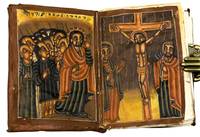
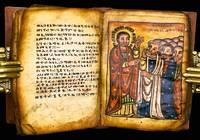
1780rif. 507Ethiopia: Unknown 1780. First edition. Hand-made: Hand-tooled full red morocco over wood boards. Very Good/`. Ethiopian Monk. MAGNIFICENT EXAMPLE OF AN ANTIQUE ETHIOPIAN-HANDMADE HANDWRITTEN AND HAND-PAINTED- COPTIC MANUSCRIPT ON PARCHMENT. This is a large luxurious monastic psalter comprised of about 75 psalms of 151 total handwritten and handmade at an Ethiopian monastery by a talented scribe at the height of the Second Gondarine period in Ethiopia or shortly thereafter circa 1750s- 1830s judging by the aging of the vellum signs of centuries-old wear and the distinct paleography. Its four hand-painted miniatures were added later by a skilled artist over existing text circa late 19th to early 20th century. The beautifully preserved leather wrap-around binding over heavy wood boards is later with remnants of unremoved goat hair still intact. Most examples of Ethiopian Coptic manuscripts are quite small usually ranging between 3" x 5" to 7" x 5" or pocket-sized for personal use and often lack illustrations or sparsely and crudely have a page or two illustrated. This example is quite large for an Ethiopian Coptic manuscript: 9" x 8" 2 to 5 times larger than a typical example and features 122 total unnumbered pages written in Ge'ez - the ancient liturgical language of the Ethiopian Orthodox Tewahedo Church. This lovely lectern copy was designed to be used during religious ceremonies. The Ge'ez script is written in a confident highly practiced monastic hand. The letters are bold sharp and tightly spaced which is characteristic of the late Gondarine literary renaissance. The alternating black and red ink red being used for sacred names or section headers utilizes traditional organic soot and mineral pigments. The symbol composed of red and black dots at the end of each text line is a traditional scribal anchor called a kechel. The Liturgical Purpose: because the Psalter is written in poetic verse rather than prose verses often end before reaching the outer margin. To prevent later readers from illicitly adding unauthorized words or marginal glosses directly into the sacred text block scribes used these alternating red and black dot flourishes to permanently 'lock' and close the line. The prayer book is bound in luxurious red-brown morocco Beranna stretched tightly over wooden boards with intricate tooling in blind framing a large centralized cross. Interlaced within the text are four full-page miniatures that were added later and painted over existing text in a Gondarine style using more modern pigments. The paintings are themes commonly featured in psalters from the late 18th century to early 20th century. 1. Saint George Slaying the Dragon. This painting is a classic representation of Saint George. In the Ethiopian tradition he is deeply venerated as the patron saint of the nation a protector of the faithful and a symbol of unwavering courage. The large expressive almond-shaped eyes of St. George the three-quarter turn of the head the specific layout of the horse's tack and the warm earth-and-mineral pigments reds yellows and deep charcoals are highly characteristic of Second Gondarine and post-Gondarine art styles. In the upper right corner is Birutawit the maiden of Beirut whom Saint George saved from being sacrificed to the dragon. 2. The Masqalaor the Image of the Virgin and Child with Her Guardians. A foundational piece of art frequently included in highly sacred texts like the Psalter Dawit. The Virgin Mary is holding the Christ Child Maryam and Iyasus flanked by the Archangels Michael and Gabriel wielding drawn swords. Mary is wearing a deep indigo or charcoal-colored maphorion cloak with distinct fold lines a Gondarine art form not developed until the late 1700s adorned with small golden stars. The decorative red and gold borders on her clothing are highly characteristic of styles used late18th century to early 20th century. The inscription written in Ge'ez above Mary's shoulder translates to 'With Her Beloved Son.' 3. The Crucifixion. Jesus is depicted on a dark T-shaped or Latin cross wearing a traditional striped loincloth. His frame is long and thin and his ribs are prominently exposed. His head leans gently to the side representing his death. Jesus is flanked by the two traditional figures from the Gospels. On the left stands the Virgin Mary Maryam and on the right stands Saint John the Evangelist Yohannes holding a book in one hand and offering a blessing with the other. 4. The Resurrection. Rather than showing Christ emerging from a stone tomb like in Western European art Ethiopian icons depict Jesus standing victoriously upon a stylized pedestal platform which represents Hades or the broken gates of Death. He holds a long slender staff capped with a cross Qewami Meskel that serves as a sign of victory over death showing that the tool of his execution has become his instrument of triumph. His multi-layered radiant golden halo indicates his divinity. He is accompanied by witnesses bottom and angels in the sky. HOW THIS MANUSCRIPT WAS MADE Ge'ez calligraphy executed in natural red and black inks with a reed pen in single columns a format unique to psalters for religious texts otherwise two or three columns were used to maximize the use of expensive parchment and rubricated throughout adorns hand-made parchment made from goatskin or sheepskin. The parchment sheets are folded and then bound together using reed with a link chain stitch for the quires and housed in wooden boards made from local trees. Goatskin was tanned dyed and treated and stretched tightly over the wooden boards and then intricately tooled in blind. These same techniques have been consistently used for more than 1000 years and it is this consistency of technique that makes Ethiopian Coptic texts notoriously difficult to exactly date without carbon dating methods. HISTORY OF ETHIOPIAN COPTIC MANUSCRIPTS IN GE'EZ Ethiopian Handwritten Coptic Ge'ez Bibles and liturgical texts were produced as early as the fourteenth century until the early 20th century throughout Ethiopia the first country to become an independent African nation. Christianity was introduced to Ethiopia in the 4th century when Syrian missionaries first translated the Bible into Ge'ez the language of the Ethiopian Orthodox Tewahedo Church. The surviving body of Ge'ez literature is composed almost entirely of Christian liturgy as education was exclusively the responsibility of priests and monks. The bibles produced typically contain the gospels of the New Testament recounting the life of Jesus of Nazareth and the foundation of the Christian. The Ethiopian Bible contains a significantly larger canon of books than Western Bibles including texts like the Book of Enoch and the Book of Jubilees which are often found in its broader canon. It is considered one of the oldest and most complete Bibles containing more than 80 books compared to the 66 in the Protestant canon. The world's earliest illustrated Christian book is the Garima Gospels written in Ge'ez found in a remote Ethiopian monastery. It is named after a monk who arrived in Ethiopia in the 5th century and is beautifully illustrated. For perspective it predates the first King James Bible by about 1200 years. CONDITION REPORT Very Good for a hand-made Ethiopian psalter used in religious ceremonies for centuries. 'Good' by antiquarian book standards. Exterior and binding: Firmly bound. Minimal wear beautifully preserved. Some light scratches and areas of light rubbing. Interior: The vellum pages show significant natural aging - internal cracking within the parchment caused by the breakdown of collagen over the centuries and shrinking and yellowing of the vellum - all caused by fluctuating changes in heat and humidity over long periods of time. The page margins are layered in hand-soiling and handoils as well as soot and residue from wax candles and frankincense censers which burn continuously in monastic buildings. Over decades and centuries this airborne resin and carbon settle directly onto the exposed outer page edges and the first few pages of a book left on a lectern or internally if a book is left open as is the case in several spots in this manuscript. This created the classic gray-black 'church dust' film visible on the first two miniatures while the other two are in FINE condition and exceptionally preserved. The edges of the pages are brittle with age and there are numerous cracks chips creases and marginal tears. There are a few spots of immature marginal art in a child's hand added in more modern timesa and some examples of later added Ethiopian writing in pen. Other signs of use like stains soiling and water dampening spots. All in all a lovely large example of a late 18th century to early 19th century Ethiopian hand-made psalter used in religious ceremonies for generations and with later added masterfully painted religious scenes bound in luxurious red-brown morocco hand-tooled in blind. Unknown unknown
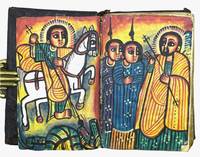
1890rif. 513Ethiopia: Unknown 1890. First edition. Hand-made: Hand-tooled red-brown morocco over wood boards. Very Good/`. Ethiopian Monk. BEAUTIFUL ANTIQUE ETHIOPIAN-HANDMADE HANDWRITTEN AND HAND-PAINTED RELIGIOUS MANUSCRIPT ON VELLUM. WITHIN THIS LITURGIC WORK IN ADDITION TO THE MANY PRAYERS AND INVOCATIONS INVOLVING JESUS AND THE VIRGIN MARY THE MANUSCRIPT IS BLESSED AND SANCTIFIED TO PROTECT THE OWNER AND HIS ENTIRE BLOODLINE FROM EVIL AND HARM INCLUDING DARK SPIRITS PHANTOM ILLUSIONS DEMONS DISEASE WAR AND SORCERY. This is a medium pocket-sized 6 3/8 inches x 4 1/4 inches 92-page collection of Christian liturgical prayers and blessings found in the sacred Ethiopian religious works Sene Golgotha and the Miracles of Mary. It was hand-made and personalized for an individual and his family by an Ethiopian monk circa 1890s to 1920s. It is handwritten entirely in the classical Semitic liturgical language Ge'ez on vellum and bound in blind-tooled morocco tightly stretched over wooden boards. The manuscript serves a dual purpose: 1 it functions as an active liturgical devotional script used by a priest during family or church gatherings and 2 it acts as an apotropaic evil-averting physical shield meant to safeguard an individual and his entire multi-generational bloodline. A hand-made prayer manual of this quality with six miniatures and finely bound in morocco would have been a luxurious and expensive item of importance made for a more affluent family. ABOUT THE WORK The original recipient's personal info has been painted over and replaced with that of a new recipient throughout the manuscript. The final page of the manuscript is a colophon page written by a prior owner not the scribe. It is dated 1914 Ethiopian 1921-1922 in Western years in both purple and blue ink and lists personal and family tree information. In traditional Ethiopian manuscripts a page like this located at the very end of a prayer book was frequently used as a family register or a commemorative prayer list. The owner would write down the baptismal names of their family members so that a priest could read them aloud during services asking for a blessing over their household. It is quite lovely to find provenance of ownership and specific dates as they are often lacking in Ethiopian Coptic manuscripts. The original owner of the manuscript is unknown 'whited out' but the subsequent owner is identified as Walda Yared throughout the manuscript. In 1921-1922 ownership passed on to Wongelawi Wolde Rufael whose name and family tree is identified on the last page colophon. The Ge'ez script is written in strokes executed with a thick heavy rounded hand using a split-nib reed pen bila. The scribe is writing efficiently and smoothly in a style typical of the late 19th century to turn-of-the-century expansion of book production rather than using the strict elongated razor-sharp geometric strokes demanded by early to mid-18th-century imperial scriptoriums. The alternating black and red ink red being used for sacred names the recipient's and his family member's names or section headers utilizes traditional organic soot or another local carbon source for the black ink and imported vermillion or another source like cinnabar introduced via trade for the red ink. Subject matters include the following prayers and blessings: For and from the Virgin Mary and Jesus for the man and his bloodline for whom this prayer manual was made from passages found in the New Testament - birth of Jesus Jesus's teachings the Crucifixion and Annunciation the archangels and more and specific prayers and blessings to ward off evil and offer protection to the family who possessed this holy prayer book. Some examples of striking content: 1. The manuscript opens with hand paintings and opening prayers for the owner and transitions into the protective amulet-style properties of the manuscript page 6 declaring how its physical presence shields against natural disasters sickness and attacks while prominently inserting a personal blessing for the manuscript's owner Walda Yared. 2 There is a section emphasizing Christ's absolute dominion over death and the underworld. It states that by binding the names that command Sheol subdue the primeval serpent and govern cosmic borders like Jordan Mary guarantees that the Covenant of Mercy she is securing reaches into the deepest abyss to rescue souls from damnation Miracles of Mary. 3 There is a vivid passage that functions as a powerful exorcism and protective shield explicitly listing various categories of dark spirits phantom illusions and sorceries that are completely paralyzed and banished by the presence of this prayer manuscript. 3 The manuscript owner's name is written in red text by a scribe and included throughout the work; it is the ultimate fulfillment of the manuscript's purpose. By writing the name directly into the climax of Sene Golgotha for example the scribe structurally links his soul and those of his loved ones to Christ's promise: that anyone who commissions or possesses this text is guaranteed safety from the powers of darkness and absolute remission of sins. 4 Page 4 Jesus speaking Sene Golgotha: 'Whether they are tested by a sudden affliction or by evil spirits or by a snake's bite; whether by a burning fire or by deep water. They shall be saved when they enter or when they go out. All of these shall not be able to draw near to anyone who carries this prayer. And the power of human curses and sorcery and the evil eye of man or woman shall not be able to draw near to anyone who carries this prayer. The power of evil spirits and demons shall find no place against anyone who carries this prayer. And inside their fields if they read this prayer the pests that destroy the harvest shall not be able to draw near. And all their crops shall be blessed and multiply up to thirtyfold and sixtyfold and an hundredfold and all the fruits of the earth. And no destruction or plague shall come upon them.' ELEMENTS OF THE MANUSCRIPT The prayer book is bound in luxurious and dark red-brown morocco Beranna stretched tightly over wooden boards with intricate tooling in blind framing a large centralized cross. Interlaced within the text are six full-page miniatures in groupings of two that are painted in the artistic revival style prominent during the reign of Emperor Menelik II 1889 - 1913 style. The paintings are themes commonly featured in Ethiopian Christian liturgical texts. In order of appearance: 1. Saint George Slaying the Dragon. This painting is a classic representation of Saint George. In the Ethiopian tradition he is deeply venerated as the patron saint of the nation a protector of the faithful and a symbol of unwavering courage. The very large expressive almond-shaped eyes and vividly colorful robes are characteristic of the late 19th century to early 20th century period in Ethiopian manuscript painting. 2. A Saint Blessing Disciples. The scene features a saint as designated by the halo and cross-staff possibly Saint Philip the Evangelist or Saint Peter or Saint Paul all who are often depicted in similar fashion. The saint is scene offering a blessing with his right hand to the people in attendance. 3. Nativity Scene. The Virgin Mary is with the swaddled Christ Child; they have matching radiant halos. Mary is wearing a deep indigo or charcoal-colored maphorion cloak with distinct fold lines a Gondarine art form first developed in the late 1700s. 4. & 5. Jesus & Disciples. Jesus is depicted offering prayer and guidance to his disciples. 5. Virgin Mary. Mary is shown offering blessings or intercessory prayer to two holy attendants with hands reverently crossed. HOW THIS MANUSCRIPT WAS MADE Ge'ez calligraphy executed in natural carbon-based black ink and imported vermillion- or cinnabar-based red inks with a reed pen in double columns and rubricated throughout adorns hand-made parchment made from goatskin or sheepskin. The vellum sheets are folded and then bound together using reed with a link chain stitch for the quires and housed in wooden boards made from local trees typically olive or wanza. Goatskin was tanned dyed and treated and stretched tightly over the wooden boards and then intricately tooled in blind. These same techniques have been consistently used for more than 1000 years and it is this consistency of technique that makes Ethiopian Coptic texts notoriously difficult to exactly date without carbon dating methods or in this case distinct paleography artistic style paint sources used and most importantly provided dates of ownership. HISTORY OF ETHIOPIAN COPTIC MANUSCRIPTS IN GE'EZ Ethiopian Handwritten Coptic Ge'ez Bibles and liturgical texts were produced as early as the fourteenth century until the early 20th century throughout Ethiopia the first country to become an independent African nation. Christianity was introduced to Ethiopia in the 4th century when Syrian missionaries first translated the Bible into Ge'ez the language of the Ethiopian Orthodox Tewahedo Church. The surviving body of Ge'ez literature is composed almost entirely of Christian liturgy as education was exclusively the responsibility of priests and monks. The bibles produced typically contain the gospels of the New Testament recounting the life of Jesus of Nazareth and the foundation of the Christian. The Ethiopian Bible contains a significantly larger canon of books than Western Bibles including texts like the Book of Enoch and the Book of Jubilees which are often found in its broader canon. It is considered one of the oldest and most complete Bibles containing more than 80 books compared to the 66 in the Protestant canon. The world's earliest illustrated Christian book is the Garima Gospels written in Ge'ez found in a remote Ethiopian monastery. It is named after a monk who arrived in Ethiopia in the 5th century and is beautifully illustrated. For perspective it predates the first King James Bible by about 1200 years. CONDITION REPORT Very Good for a hand-made Ethiopian prayer manual used in religious ceremonies and rites of protection for over a century. Exterior and binding: Firmly bound with some spine twist. Boards and spine are naturally worn by generations of handling and rubbing. Some scrapes and spots of soiling. Interior: The vellum pages show light natural aging - mostly light toning more yellowed and browned on occasion. Marginal finger soiling particularly the bottom margin which was intentionally made wide for handling purposes. Quite a few pages soiled in a thin layer of dust that the vellum has soaked up. The first and last pages are quite grubby. The colophon hand-written 1921-22 is faded. The paintings are well-preserved colorful and bright and nicely executed. Signs of handling like stains some creases smudges dust soiling 'whited out names replaced with family names of a new owner. A few small areas of marginal vellum loss. All in all a lovely medium-sized example of a late 19th century to early 1920s Ethiopian hand-made prayer manuscript and protective ward from physical and spiritual harm used by multiple families over the past 100 years. Please view pictures as they are an important part of the condition description and book information. As a fellow book collector I know how frustrating it can be when items aren't accurately described or poorly packaged for shipping. That is why I 1 take a lot of pictures and try to describe condition issues as accurately as possible and 2 pack your book purchases with the utmost care before shipping. . Unknown unknown
rif. 16924Paris, Impr. du Comité de Salut public, 1794 - An 2.
rif. 169-Eo.J. Feder und Pinsel in Grau, Aquarell, mit einigen Deckweißlichtern, auf Velin, auf graues Bütten aufgezogen. 19,5:18 cm. Gutachten: O.R. von Lutterotti, Innsbruck, vom 20.02.1977 (in Fotokopie). Lutterotti hat das Aquarell in die Jahre 1785/91 datiert und als Vergleich auf die Abb. 91-94 in seiner Monographie über Koch, hingewiesen. Vergleichsliteratur: O.R. von Lutterotti, Joseph Anton Koch, 1768 - 1839. Mit Werkverzeichnis und Briefen des Künstlers. Berlin, 1940, Abb. 91 - 94.
rif. 20871Amsterdam: Pierre Brunel 1710. 18th-century half vellum sewn on 3 vellum tapes marbled endpapers Dutch pattern in red blue yellow and white swirled manuscript title at head of spine edges sprinkled red & blue. 4to. With 2 title pages the general one in red and black each with Brunels woodcut PB cypher monogram 2 woodcut decorated initials and decorations built up from typographic ornaments. 2 parts in 1 volume. Rare second and greatly expanded French edition of an important treatise on the trade and commerce of the city of Amsterdam by the art dealer Jacques Le Moine de l'Espine d. 1696 first published in both Dutch and French in 1694. It gives detailed information on the Amsterdam banking and exchange systems and on the structure and trade of the VOC and WIC Dutch East and West India Companies and gives accounts of the whaling industry trade in Russia Scandinavia the whole of Europe and the Levant. It compares the volume and value of goods going in and out of Amsterdam with those of other cities. It also reports standard weights measures and monies as well as exchange rates. The second Dutch edition appeared in 1704 with some additions but the present French edition has further additions including for the first time the entire second part pp. 243-388 on arbitrage the trade in bills of exchange and stocks and exchange rates between the principal cities of Europe and Amsterdam by the French-Basque architect and merchant Jacques Mondoteguy ca. 1672/73-1739. The book gives valuable and detailed information about the trade with the Spanish Portuguese and other colonies in a period when the Netherlands financed and operated a fleet of over 8000 ships.With water stains in the first few and last few leaves the latter with a few marginal restorations and a couple worm holes in the gutter margin but still in good condition. The binding is slightly rubbed and somewhat loose in the hinges but still good. A rare and important practical handbook for merchants trading in or with Amsterdam.l Goldsmiths 4601; J. Hoock & P. Jeannin Ars mercatoria II 1991 L26.6 3 copies; NCC 2 copies; cf. Kress 1849 1694 Dutch ed.; this ed. not in STCN. Pierre Brunel, hardcover
1795rif. 024317Paris chez L. Reynier, sans date [An III], [1795] 1795 Cinq volumes in-8°, VIII 9-289 puis 277-458 pp. (1) pp. (table), 489 pp. (1) pp. (table), 471 pp. (1) pp. (table), 351 pp. (1) pp. (table) et 545 pp. (1) pp. (table) 7 pp. (arrêté des représentants du peuple près les écoles normales). Reliure en demi-basane fauve racinée, dos lisses ornés de pièces de titre et de tomaison en maroquin rouge et vert, filets et pointillés dorés, tranches jaunes, signet (reliures du début du xixe siècle). (présence de quelques trous sur les dos des volumes et de petites galeries de ver en bordure des dos des tomes I-III et de celui des débats, quelques feuillets maladroitement rognés au tome I, présence de rousseurs pâles, mouillures à de nombreuses pages au tome V avec parfois atteinte au texte, sont manquantes les tomes II et VI ainsi que 11 planches, quelques erreurs de paginations notamment au tome III). Créées par décret de la Convention Nationale afin de former les instituteurs de langue française, les Écoles normales ont eu une durée de vie très courte : 4 mois, du 1er pluviôse au 30 floréal de l'an III ( 20 janvier - 19 mai 1795 ). Les leçons qui étaient professées, par les savants les plus illustres, devaient être toutes improvisées, recueillies par la sténographie et publiées dans le journal de l'école créé à cet effet, de même que les débats ayant lieu une fois par décade, à l'occasion desquels les élèves discutaient avec les professeurs. Notre série ne contient que 17 planches ( sur 28, gravées sur cuivre ), ces planches ont été placées à la fin du tome V; elles concernent les cours de géométrie descriptive. Ensemble en reliures uniformes, ce qui est rare, car ces cours étaient distribués feuille par feuille. SONT MANQUANTS 2 TOMES ( II - VI ) et 11 planches. RARE.
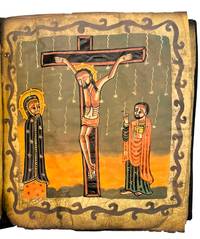
1780rif. 517Ethiopia: Unknown 1780. First edition. Hand-tooled full brown morocco over wood boards. Very Good/`. Ethiopian Monk. BEAUTIFULLY PRESERVED EXAMPLE OF AN ANTIQUE ETHIOPIAN-HANDMADE HANDWRITTEN AND HAND-PAINTED- COPTIC MANUSCRIPT ON PARCHMENT. This is an Ethiopian monastic work covering Christ's Teaching of the Secrets The Mystagogia and Commemoration of Saints and Prophets handwritten and handmade at an Ethiopian monastery by a master scribe in the imperialistic artistic revival style initiated under Emperor Menelik II circa 1890-1920s. In the Ethiopian Orthodox Tewahedo Church the phrase 'Teaching of the Secrets' is most closely connected to the Church's mystagogical instruction - the process of guiding the faithful into the 'mysteries' sacraments of the faith. In Greek mystagogia means 'initiation into the mysteries' and in the Ethiopian context it refers to the spiritual and theological teaching that reveals the hidden grace of God through the Church's sacraments Ethiopian Coptic manuscripts are notoriously hard to pin down an exact composition date without advanced carbon dating techniques due to centuries of similarly produced anonymous undated works by monastic scribes. However there are tell-tale signs which help narrow down a time period including the aging of the vellum signs of wear paleography artistic style and sources of pigment used. This manuscript substitutes a synthetic bright pink or magenta/fuchsia ink for traditional natural organic red hues when rubricating text. These vibrant pink colors were not introduced to Ethiopia until the late 1890s about 40 years after they were first developed in Europe. They were at their height in use in the late 19th century to about mid-20th century. Most examples of Ethiopian Coptic manuscripts are quite small usually ranging between 3" x 5" to 7" x 5" or pocket-sized for personal use and often lack illustrations or sparsely and crudely have a page or two illustrated. This example is medium-sized at 6.25" x 4" and is finely bound showcasing masterful calligraphy and painting techniques and a lovely state of preservation. It features 40 total unnumbered pages written in Ge'ez - the ancient liturgical language of the Ethiopian Orthodox Tewahedo Church and 4 full-page miniatures. The Ge'ez script is written in a confident highly practiced monastic hand. The letters are bold sharp blocky and tightly spaced which is characteristic of the literary and artistic renaissance at its height between 1890-1929. The spelling is exact and the text is neatly aligned in rows and columns. The alternating black and vivid pink ink pink being used for sacred names or section headers utilizes traditional carbon-based soot for black text and imported synthetic European dyes for the pink rubricated text. This liturgical work is bound in lovely brown morocco Beranna stretched tightly over wooden boards with intricate tooling in blind framing a large centralized cross. Interlaced within the text are four full-page miniatures painted in the imperialistic revival style under Emperor Menelik II using a more simplified late-Gondarine to post-Gondarine color scheme: heavy locally sourced charcoal black for outlines and colorful hues derived from materials acquired along trade routes. The style features thick black outlines dramatic almond-shaped eyes flat blocks of vivid color and gradient orange/ochre washes to represent uncreated divine light. The paintings are as follows: 1. The Communion / Apparition of Maundy Thursday. This scene visualizes the events of Holy Week leading to the Last Supper. On the right stands Jesus Christ identifiable by His distinct cruciform halo lifting His hand in a traditional gesture of blessing and instruction. Gathered on the left is the tight cluster of His disciples rendered with overlapping deep-set large eyes and draped in flowing robes. The background features a striking split field of deep charcoal and glowing ochre symbolizing the transition from worldly darkness to spiritual light. The scene is titled Ze-Hamus Ze-Egzi'ena Of the Thursday of Our Lord. 2. The Crucifixion. A dramatic full-page depiction of the sacrifice on Golgotha. The background transitions from a somber charcoal-brown at the top to a bright golden ochre at the bottom. To His left stands the Virgin Mary in deep mourning her dark cloak decorated with delicate details while Saint John the Evangelist Yohannes stands to His right holding a witness cloth to his face as he stares at the scene in shock and disbelief. 3. The Mystagogia / Post-Resurrection Teaching. The central theme of this Ethiopian manuscript. A haloed Jesus stands at the center holding a delicate spear-cross. He looks upward to Heaven raising His hand with two fingers extended in a formal gesture of blessing. In the upper corners heavenly cherubim emerge from stylized geometric clouds to bear witness. Below the disciples flank Him in strict profile looking upward in rapt attention to absorb the hidden teachings. The work is titled Temeherte Hebu'at The Teaching of Secrets. 4. The Creation and Fall of Adam and Eve. A vibrant highly expressive Old Testament miniature set against a fiery orange and yellow paradise wash. On the left the Tree of Knowledge is depicted with a thick textured winding trunk culminating in a massive dense canopy of leaves. Satan in snake form is coiled around the tree his head menacingly angled downward from the canopy at Eve's head. Adam and Eve stand flanking the center painted in warm ochre body washes with defined linear muscle markings. Caught in the immediate aftermath of the transgression they gesture toward each other and look outward with large startled eyes. Eve covers her nakedness with a small apron of leaves while Adam covers his nether regions with his hand. HOW THIS MANUSCRIPT WAS MADE Ge'ez calligraphy executed in natural black inks and synthetic color inks with a reed pen in double columns and rubricated throughout in pink adorns hand-made parchment made from goatskin or sheepskin. The parchment sheets are folded and then bound together using reed with a link chain stitch for the quires and housed in wooden boards made from local trees. Goatskin was tanned dyed and treated and stretched tightly over the wooden boards and then intricately tooled in blind. These same techniques have been consistently used for more than 1000 years. HISTORY OF ETHIOPIAN COPTIC MANUSCRIPTS IN GE'EZ Ethiopian Handwritten Coptic Ge'ez Bibles and liturgical texts were produced as early as the fourteenth century until the early 20th century throughout Ethiopia the first country to become an independent African nation. Christianity was introduced to Ethiopia in the 4th century when Syrian missionaries first translated the Bible into Ge'ez the language of the Ethiopian Orthodox Tewahedo Church. The surviving body of Ge'ez literature is composed almost entirely of Christian liturgy as education was exclusively the responsibility of priests and monks. The bibles produced typically contain the gospels of the New Testament recounting the life of Jesus of Nazareth and the foundation of the Christian. The Ethiopian Bible contains a significantly larger canon of books than Western Bibles including texts like the Book of Enoch and the Book of Jubilees which are often found in its broader canon. It is considered one of the oldest and most complete Bibles containing more than 80 books compared to the 66 in the Protestant canon. The world's earliest illustrated Christian book is the Garima Gospels written in Ge'ez found in a remote Ethiopian monastery. It is named after a monk who arrived in Ethiopia in the 5th century and is beautifully illustrated. For perspective it predates the first King James Bible by about 1200 years. CONDITION REPORT Very Good for a hand-made Ethiopian manuscript. This was clearly a treasured heirloom infrequently used in ceremonies and safeguarded for generations. Exterior and binding: Firmly bound. Minimal wear beautifully preserved. Some light scratches and areas of light rubbing. Minimal darkening to page edges. Interior: The vellum leaves are in well-preserved condition overall showing light natural aging and yellowing and some light dust that has been soaked up by the pages. A few leaves with a bit darker thicker layer of dust. Some of the leaves are still a creamy white. One leaf has a small 1/8" diameter hole affecting a few letters of text. The final page of text has a modern ink pen with '20 4' apparently indicating 20 leaves of text and the 4 paintings. The art is very well preserved overall colorful and bright. The final painting shows an old repair using sinew along the fore-margin not affecting the image. Minimal wear to page edges and only light marginal soiling. All in all a lovely higher-grade example of a late 19th century to early 20th century hand-made Ethiopian Christian liturgic manuscript crafted by a highly skilled artist and well-trained scribe. It that has been carefully preserved for generations. Unknown unknown
1963rif. 123055Los Angeles: Columbia Records 1963. Inscribed by Monk to "the lady who ran the store and dance hall" Boldly signed in full on the upper part of the front cover "Good Luck always Mrs Tiejen sic Thelonious Monk." Monk's signature on an album cover is uncommon and this is a particularly fine example with a fittingly left-field provenance. We believe the recipient was Marian Tietjen 1920-2013 who "during her teenage years. worked as a waitress in La Grange Texas and in her spare time played piano in her father's jazz band. Many people who visited Swiss Alp Texas throughout the decades knew and loved Marian as 'Mrs. Tietjen' - she was the lady who ran the store and dance hall" The Schulenburg Sticker weekly newspaper online. This would have almost certainly been inscribed by Monk when he headlined at the Longhorn Jazz Festival in Austin Texas in late April 1967 alongside the Dizzy Gillespie Quartet and Nina Simone. This is the original Columbia Records release of Monk's second album for Columbia following Monk's Dream also 1963. The quartet included Charlie Rouse tenor John Ore bass and Frankie Dunlop drums and "features some of the finest work that Monk ever did in the studio with his '60s trio and quartet. This is prime Monk" AllMusic website. 12-inch LP Monaural-CL 2038. With album liner and pictorial sleeve. Sleeve with a few slight marks to front panel some surface loss along right edge. In excellent condition. unknown
2017rif. SKU0637819Archimedes Publishing 2017. paperback. New. 0x0x0. New Textbook Ships with Tracking Archimedes Publishing paperback
1771rif. CLL-214Paris, chez Vente, 1771 2 tomes en un volume in-12 de (3) ff., XLIV, 202, 261, (3) pp., maroquin olive, filets dorés en encadrement avec fleurs de lys aux angles, armes au centre avec écu central de maroquin rouge, dos à nerfs orné et doré, pièce de titre de maroquin rouge, coupes et bordures décorées, tranches dorées (reliure de l'époque).
1930rif. 151357Los Angeles: First National Pictures 1930. Archive of 68 vernacular photographs housed in a contemporary photo album each photo with descriptions in silver manuscript ink just below it and distributed in three sections as follows: 1 34 photos taken on the set of "The Dawn Patrol" Howard Hawks 1930 an aviation drama set during World War I. Included are shots of planes in flight and several others of star Douglas Fairbanks Jr. With manuscript annotations to the album pages identifying most of the photographs; 2 16 vernacular photographs taken on the set of the pre-Code film "The Life of the Party" Roy Del Ruth 1930 and 18 vernacular photographs of the sinking of the RMS Tahiti off cost of Rarotonga in the Cook Islands on August 16-17 1930 taken from the nearby SS Ventura. The front cover of the photo album identifies the photographer as J.N. Boucher and he appears four times in the album twice dressed as a pilot in "The Dawn Patrol" section and twice in "The Life of the Party" section in one standing in front of a Vitaphone truck along with a man identified as Dolph Thomas who worked as an uncredited sound engineer on the film. Photographs variously sized generally between 3.5 x 2.5 and 5.25 x 3.25 inches Very Good plus. Photo album Good only with several pages detached a few loose photographs. First National Pictures unknown
1930rif. 151357Los Angeles: First National Pictures 1930. Archive of 68 vernacular photographs housed in a contemporary photo album each photo with descriptions in silver holograph ink just below it and distributed in three sections as follows: 1 34 photos taken on the set of "The Dawn Patrol" Howard Hawks 1930 an aviation drama set during World War I. Included are shots of planes in flight and several others of star Douglas Fairbanks Jr. With holograph annotations to the album pages identifying most of the photographs; 2 16 vernacular photographs taken on the set of the pre-Code film "The Life of the Party" Roy Del Ruth 1930 and 18 vernacular photographs of the sinking of the RMS Tahiti off cost of Rarotonga in the Cook Islands on August 16-17 1930 taken from the nearby SS Ventura. The front cover of the photo album identifies the photographer as J.N. Boucher and he appears four times in the album twice dressed as a pilot in "The Dawn Patrol" section and twice in "The Life of the Party" section in one standing in front of a Vitaphone truck along with a man identified as Dolph Thomas who worked as an uncredited sound engineer on the film. Photographs variously sized generally between 3.5 x 2.5 and 5.25 x 3.25 inches Very Good plus. Photo album Good only with several pages detached a few loose photographs. First National Pictures unknown books
rif. Z1-V-020-01819Armand Colin. Used - Good. Ships from UK in 48 hours or less usually same day. Your purchase helps support Sri Lankan Children's Charity 'The Rainbow Centre'. Ex-library so some stamps and wear but in good overall condition. 100% money back guarantee. We are a world class secondhand bookstore based in Hertfordshire United Kingdom and specialize in high quality textbooks across an enormous variety of subjects. We aim to provide a vast range of textbooks rare and collectible books at a great price. Our donations to The Rainbow Centre have helped provide an education and a safe haven to hundreds of children who live in appalling conditions. We provide a 100% money back guarantee and are dedicated to providing our customers with the highest standards of service in the bookselling industry. Armand Colin unknown
2004rif. BRG-40_5_683Viking 2020-04-21. hardcover. Good. 6x1x9. Good condition.No marking/highlighting.Cover and pages may show some wear.Not Satisfied Contact us to get a refund. Viking hardcover
1780rif. 518Ethiopia: Unknown 1780. First edition. Hand-tooled full red morocco over wood boards. `. Ethiopian Monk. ANTIQUE ETHIOPIAN-HANDMADE HANDWRITTEN AND HAND-PAINTED- COPTIC CHRISTIAN MANUSCRIPT PRIEST MISSAL ON PARCHMENT. This is a small monastic handmade Christian missal Maṣḥafa Qeddase made for a priest of the Ethiopian Orthodox Tewahedo Church when leading masses/religious ceremonies. It contains the divine liturgy of the church and is comprised of prayers and psalms handwritten at an Ethiopian monastery by a talented scribe circa 1890 - 1920 during the imperialistic revival period ushered in during the reign of Emperor Menelik II 1844-1913 of Ethiopia or his successor. This is evident through careful analysis of paint pigments used artistic style natural aging of the vellum signs of antiquarian wear and the distinct paleography of the period. Its four hand-painted full-page miniatures show an exceptional artistry influenced by European schools of art typical of the period. They show greater technical achievement and refinement than typically seen showing more proficient training in color balance perspective and proportionalism aside from curious uneven eye placement at times. The beautiful red morocco is later circa latter part of the 20th century and is exceptionally well-crafted and tooled in blind using traditional Ethiopian religious iconography. Most examples of Ethiopian Coptic manuscripts are quite small usually ranging between 3" x 5" to 7" x 5" or pocket-sized for personal use and often lack illustrations or sparsely and crudely have a page or two illustrated. This example is of a typical size used for an Ethiopian Coptic manuscript: 5.5 in. x 4.25 in. and features 116 total unnumbered pages written in Ge'ez - the ancient liturgical language of the Ethiopian Orthodox Tewahedo Church. Unlike most examples this missal was designed for use by a priest: there are rubrics in red ink-instructions and also horizontal red-and-black cross-shaped marks indicating when the priest should perform a specific action cantillation marks called melekket. Melekket guide the priest's movements gestures and timing and his leading of the congregation throughout the ceremony. The Ge'ez script is written in a confident highly practiced monastic hand. The letters are bold sharp and tightly spaced which is characteristic of the late- to post-Gondarine literary renaissance. The alternating black and red ink red being used for sacred names section headers or priest instructions utilizes traditional organic soot for the black ink and an imported material like cinnabar or vermillion for the red pigment. There are also harags rectangular horizontal headers with geometric patterns which signal the opening page of a new chapter or major liturgical section within the Maṣḥafa Qeddas. Some are contemporary to the text and others are more modern using ballpoint ink. The missal is bound in a later 20th century luxurious red morocco karta stretched tightly over wooden boards with exceptional tooling in blind comprised of traditional Ethiopian Christian religious symbols and motifs framing a large centralized cross. There is uniform precision in the blind-tooled geometric stamps crisp overlapping corner turn-ins and tight structural integrity of the binding. The boards and binding cords are original to the work. Interlaced within the text are four full-page miniatures in the imperialistic revival style at its height between 1890-1929. The paintings use more modern pigments made accessible through the burgeoning trade with Europe at this time. The four paintings showcase famous healing miracles performed by Jesus: 1. The Healing of the Man Born Blind from the Gospel of John Chapter 9. Jesus stands on the left adorned with a cruciform halo. He is extending his hand to touch the eyes of a blind man who is leaning forward respectfully with closed eyes. A disciple stands closely behind the blind man looking on to witness the miracle. The Ge'ez script in the top-right corner explicitly labels the scene: Wa-aḥyawo əgzi əna la- əwur which translates directly to 'And our Lord healed the blind man. 2. The Commissioning or Healing of the Apostles. Christ stands with a radiant cruciform halo raising His right hand in a classic gesture of blessing and instruction. He extends His left hand angles toward Saint Peter who stands directly at the front of the group of disciples touching his face or gesturing toward him in dialogue. Behind Saint Peter a dense layered cluster of disciples looks onward. Their highly structured stacked halo-like head shapes behind them represent the larger group of the Twelve Apostles. The Ge'ez script in the top-right corner translates to 'And our Lord taught the Apostles' - a symbolic healing of their minds and spirits. 3. The Healing of the Paralytic Man from the Gospel of Mark 2:1-12 or John 5:1-9. Jesus stands with a golden cruciform halo dressed in red and green vestments. He extends His right hand to touch the shoulder of a man dressed in a patterned dark blue robe. The healed man is walking away while carrying his bed/cot strapped to his back directly illustrating Jesus's famous scriptural command: 'Rise take up your bed and walk.' Behind Jesus Saint Peter distinguished by his white hair and beard watches the miracle with a hand extended in reverence. The Ge'ez script in the top-right corner translates directly to 'And our Lord healed the paralytic.' 4. The Raising of Lazarus from the Gospel of John Chapter 11. Jesus has His right hand raised in a gesture of divine authority and blessing commanding the dead man to arise. On the left Lazarus is shown wrapped tightly in white burial shrouds mummy-like bindings standard for Orthodox icons of this scene. He is rising vertically directly out of his open block-like wooden tomb box. Behind Jesus Saint Peter looks on closely witnessing the miraculous return to life. The painting inscription translation: 'And our Lord raised Lazarus.' HOW THIS MANUSCRIPT WAS MADE Ge'ez calligraphy executed in natural red and black inks with a reed pen in single column a format unique to psalters and missals for where many lines end in verse; otherwise two or three columns were used to maximize the use of expensive parchment and rubricated throughout adorns hand-made parchment made from goatskin or sheepskin. The parchment sheets are folded and then bound together using reed with a link chain stitch for the quires and housed in wooden boards made from local trees. Goatskin was tanned dyed and treated and stretched tightly over the wooden boards and tooled in blind. These same techniques have been consistently used for more than 1000 years and it is this consistency of technique that makes Ethiopian Coptic texts notoriously difficult to exactly date without carbon dating methods. Time periods of construction can be narrowed down with knowledge of period artistic styles pigments and materials used analysis of vellum aging and wear and the distinct changes in Ethiopian paleography over time and setting. HISTORY OF ETHIOPIAN COPTIC MANUSCRIPTS IN GE'EZ Ethiopian Handwritten Coptic Ge'ez Bibles and liturgical texts were produced as early as the fourteenth century until the early 20th century throughout Ethiopia the first country to become an independent African nation. Christianity was introduced to Ethiopia in the 4th century when Syrian missionaries first translated the Bible into Ge'ez the language of the Ethiopian Orthodox Tewahedo Church. The surviving body of Ge'ez literature is composed almost entirely of Christian liturgy as education was exclusively the responsibility of priests and monks. The bibles produced typically contain the gospels of the New Testament recounting the life of Jesus of Nazareth and the foundation of the Christian. The Ethiopian Bible contains a significantly larger canon of books than Western Bibles including texts like the Book of Enoch and the Book of Jubilees which are often found in its broader canon. It is considered one of the oldest and most complete Bibles containing more than 80 books compared to the 66 in the Protestant canon. The world's earliest illustrated Christian book is the Garima Gospels written in Ge'ez found in a remote Ethiopian monastery. It is named after a monk who arrived in Ethiopia in the 5th century and is beautifully illustrated. For perspective it predates the first King James Bible by about 1200 years. CONDITION REPORT Exterior and binding are NEAR FINE. Interior is Poor. The missal has been subjected to severe natural weathering. The sacred manuscript was salvaged and rebound in its current beautiful modern fine goatskin binding over its original wooden boards. Exterior and binding: Firmly bound. Minimal wear beautifully preserved. Some light scratches and areas of light rubbing. Vellum page edges heavily darkened with soot sun and natural aging. Interior: The vellum leaves show significant wear soiling warping and water damage. It appears as if the entire manuscript was water-logged at some point perhaps caught up a torrential East-African downpour during the rainy season. Many of the leaves are heavily water-browned and there are many areas where the text is obscured. There are also multiple areas of text loss from rips tears fading holes and heavy soiling/vellum darkening. Fortunately the exceptional paintings avoided most of the condition issues and are still colorful though darkened with age and a thin film of dust. The first painting has a large area of loss to the gutter margin fortunately only affecting the border and not the painted figural scene. There are multiple instances of modern ink marginalia and a few text corrections and insertions of harags divisional borders. All in all a scarce heavily weathered surviving example of a priest's missal rebound in modern fine goatskin leather over its original wood boards with four high-quality hand-painted miniatures. Most of the value is retained in the beautiful art fine binding and scarcity as a priest missal. Unknown unknown
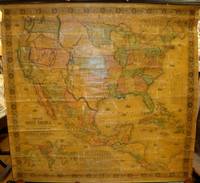
1854rif. M7535Baltimore: Jacob Monk 1854. Some minor discolourations and some marginal chipping and staining not affecting the map altogether a very good copy laid down on original canvas as a scroll on two wooden rods. . Notes: Inset map of the world sits beneath the title in the lower left corner. It is centred on the Americas and charts the course of Wilkes' circumnavigation of the globe in the 1840s. To its right sits an index of counties and towns. Above the title on the left side are a legend and scale. On the right by the mid margin is a table of distances. The oceans are decorated with tall ships and the whole map sits within a decorative floral border. This map marks the dawn of the Manifest Destiny era of American history. Soon after the American victory of Mexico large new states and territories were carved out from the newly acquired land. Here we see the newly formed California and Texas along with the Oregon and Washington territories securing the country's claim to the Pacific coast. With California's gold rush getting into full swing the map accentuates many details of that state's gold region. North-South tensions are revealed in the ambiguity of the central states and territories: Northern interests sought to create a massive Nebraska territory which would have included present-day Kansas; however Southern lawmakers pressed Congress to make two separate territories. Size : 1405x1500 mm 55.31x59.06 Inches Coloring: Original Hand Coloring Reference: Wheat 794 earlier edition; Rumsey 603. Category: Maps Central America; Maps North America; Maps West Indies Whole; Maps Wall Maps; Jacob Monk unknown
1798rif. 17204Paris, Baudouin, an VII (1798-1799) ; in-4 , demi-basane marbrée, dos lisse titre en long (rel. moderne) ; VIII, la dernière blanche, 132pp., 25 planches gravées dépliantes.
rif. elala3713Quebec: Hunter Rose & Company 1865. First Edition. A total of seven series were published between 1863 and 1906. Sabin and TPL call for only 2 plates in this third series on Quebec country seats. "During his eight years as a professional photographer he died prematurely at the age of thirty-four Livernois characteristically maintained two and sometimes three studios in Quebec Upper Town and the more popular faubourg Saint-Roch.Within his profession he was remarkable as his contemporary Henri-Raymond Casgrain makes clear: "Photography would have been no more than a trade for him as for many others if he had not had the intelligence to enhance its practice by unselfish research.".His son Jules Ernest Livernois and his grandson Jules followed in his footsteps. The photographic firm he founded is one of the rare examples of a business enterprise that reached its centenary." Louis Hamel-Minh in DCB IX pp. 47-48. Dionne III 1103. Sabin 40005. TPL 6165. 8vo. pp. 1 p.l. iv 137 1 leaferrata & opinions of the press. 3 lithographed maps & plans 2 folding. 24 mounted photographs of Quebec manor houses by Jules IsaÔ BenoÓt dit Livernois 1830-1865. full gilt-paneled red morocco by T.Lemieux Quebec gilt inside dentelles gilt edges moirÈ silk endleaves possibly bound for presentation occasional light spotting. former owner's name in gilt on upper cover: L.K.Andrews Quebec: Hunter, Rose & Company, 1865 unknown
2002rif. 62554Gallery. New. Hardcover. FREE UPGRADE to Courier/Priority Shipping Upon Request – – IN STOCK AND IMMEDIATELY AVAILABLE FOR SHIPMENT - Flawless copy brand new pristine never opened -- 88 pp. With 59 ills. 57 col. . 25 x 21 cm. -- with a bonus offer-- . 2002. 1894212010 . Gallery hardcover
2012rif. 100266D. A. P. Distribution . New. Hardcover. FREE UPGRADE to Courier/Priority Shipping Upon Request - IN STOCK AND IMMEDIATELY AVAILABLE FOR SHIPMENT - Flawless copy brand new pristine never opened -- 112 pp. ; 165 illus. 159 in color. -- with a bonus offer--; Collaborating with a varied cast of characters--beekeepers mycologists astronomers physicists bees cats snowballs tango dancers passersby plants curators hotel porters--Canadian artist Diane Borsato creates works that propose eccentric models for relating to one another and to the world. For her project Italian Lessons she attempted to learn Italian by learning salsa physics first aid and beekeeping by way of Italian instruction. In Terrestrial/Celestial Borsato coordinated an unconventional exchange of observational practices--from opposite ends of the scale--between amateur mycologists and amateur astronomers. In a new work Walking Studio Borsato proposes a different space for research and reflection with her mobile field study lab comprised of a study center and fully functional sauna. This overview is published to accompany a solo exhibition at the Art Gallery of York University in 2012. . 2012. 0921972644 . D. A. P. (Distribution) hardcover
1998rif. 60550D. A. P. /Distributed Art Publishers Distribution . As New. Paperback. FREE UPGRADE to Courier/Priority Shipping Upon Request – – IN STOCK AND IMMEDIATELY AVAILABLE FOR SHIPMENT - AS NEW THE TEXT BLOCK IS PRISTINE CLEAN UNMARKED AND IN EXCELLENT CONDITION - -- 178 pp. With 198 ills. 70 col. . 23 x 19 cm. -- with a bonus offer-- . 1998. 0935640568 . D. A. P. /Distributed Art Publishers (Distribution) paperback