3 289 résultats
réf. DADAX0226493164New unknown
réf. DADAX0387259619New unknown
réf. DADAX0199259607New unknown
réf. DADAX0198202032New unknown
réf. DADAX0313302391New unknown
1963réf. 1270140697Desclee 1963. Hardcover. Good. Pages can have notes/highlighting. Spine may show signs of wear. ~ ThriftBooks: Read More Spend Less.Dust jacket placed in mylar for preservation. Previous owner's name on front end page. Foxing to text block and pages. Binding is sound. This could have light cosmetic flaws but remains in good condition. Dust jacket condition is Acceptable. Secure packaging for safe delivery.Dust jacket quality is not guaranteed. Desclee hardcover
réf. P-19483London: Blackie & Son. Hardcover. Very Good. Octavo. Price clipped. In Mylar cover. Bound in 1930's style but no date as is usual of this publisher. Scarce and out of print. The Caterpillar Club Trans-Pacific Flight Capt. Mathy Sir Reginal Bacon and the Dover Patrol etc. Illustrated with photographs. First or early edition. Binding is cloth boards. n.d. 1930s. Blackie & Son hardcover
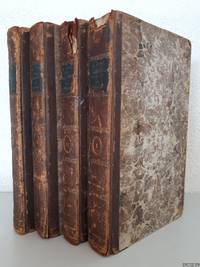
1801réf. 426788-XQ36Amsterdam/Dordrecht/Leiden/Harlingen : J. de Groot/G. Warnars/A. en P. Blussé/S.en J. Luchtmans/V. van der Plaats 1801. 10. Hardcover. Fair. 4 uniforme halflederen banden met gemarmerde platten 1801-1802 tabellen uitvouwbare plattegrond van de beurs in Amsterdam achterin deel 1 uitvouwbare tabel deel II 4 uitvouwbare tabellen deel III register achterin deel IV 47938134637916 pagina's 8vo.; Sijtage randen kaft; onder-en bovenzijden ruggen beschadigd met name deel 1 bovenaan; ex libris uitgesneden uit verso voorplat alle delen. Amsterdam/Dordrecht/Leiden/Harlingen : J. de Groot/G. Warnars/A. en P. Blussé/S.en J. Luchtmans/V. van der Plaats hardcover
réf. 15569752-20Scarecrow Press Incorporated. Used - Good. Former library copy. Pages intact with minimal writing/highlighting. The binding may be loose and creased. Dust jackets/supplements are not included. Includes library markings. Stock photo provided. Product includes identifying sticker. Better World Books: Buy Books. Do Good. Scarecrow Press, Incorporated unknown
réf. 67538688-6Penguin Publishing Group. Used - Good. Former library copy. Pages intact with minimal writing/highlighting. The binding may be loose and creased. Dust jackets/supplements are not included. Includes library markings. Stock photo provided. Product includes identifying sticker. Better World Books: Buy Books. Do Good. Penguin Publishing Group unknown
réf. 28119888like new. unknown
réf. 6100045301Columbia University Press . Hardback. New. pp. 247 Columbia University Press hardcover
réf. Adh 9780357676783USA Edition . New. Brand New! Fast Delivery US Edition and ship within 24-48 hours. Deliver by FedEx and Dhl & Aramex UPS & USPS and we do accept APO and PO BOX Addresses. Order can be delivered worldwide within 6-10 days and we do have flat rate for up to 2LB. Extra shipping charges will be requested if the Book weight is more than 5 LB. This Item May be shipped from India United states & United Kingdom. Depending on your location and availability. unknown
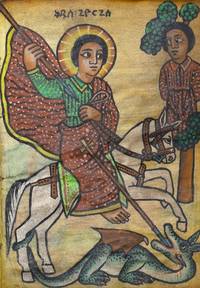
1890réf. 529Ethiopia: Ethiopian monastery 1890. Ethiopian monastic cross-stich four-hold wood boards. ANTIQUE ETHIOPIAN-HANDMADE HANDWRITTEN AND HAND-PAINTED- COPTIC CHRISTIAN MANUSCRIPT PRIEST'S MISSAL ON PARCHMENT. This is a medium-sized monastic handmade Christian missal Mäṣḥafä Qəddase appended with two smaller works Haza Mesqel Book of the Cross and the Gadl Acts of the Archangels. It is a fantastic and scarce example of a First Gondarine revival work made circa 1890-1920. This is a pocket-sized missal made for a likely traveling priest of the Ethiopian Orthodox Tewahedo Church when leading religious ceremonies with chants and songs. Interestingly the missal omits liturgic text that was exclusively used for baptized congregation members meaning all people were welcome baptized church member or not to participate in ceremonies using this missal. The Ethiopian Christian missal contains the divine liturgy of the church and contains specific directions and cues for the priest that are synchronized with the spoken prayers and sung liturgy. Meticulously included by the original scribe are tiny interlinear musical notations called melekket between the lines of the Ge'ez liturgical text. The melekket guide the priest or liturgical singer a dabtaraon on what pitch and rhythm to use with the corresponding liturgy. Throughout the text rectangular purple marks are used to obfuscate some of the melekket. On the final blank page there is a brief ecclesiastical ownership record written in pencil by a contemporary hand which translates to 'This is the book of the Church of Saint Mary'. Most Ethiopian Coptic manuscripts are quite small usually ranging between 3" x 5" to 7" x 5" or pocket-sized for personal use and often lack illustrations or sparsely and crudely have a page or two illustrated. This manuscript is 6.75" x 5" and features 222 total unnumbered pages written in Ge'ez - the ancient liturgical language of the Ethiopian Orthodox Tewahedo Church. It is richly illustrated with 11 hand-painted pages an expensive and time-consuming proposition. There are rubrics in red ink and also special marks indicating when the priest should perform a specific action. The codex was hand-written and hand-painted at an Ethiopian monastery by a scribe circa 1890 - 1920 during the imperialistic revival period of Emperor Menelik II 1844-1913 or his successor. Its 11 striking illuminations were painted in a First Gondarine style early 17th to early 18th century incorporating the following compositional hallmarks of the period: 1 neutral backgrounds for colorful figures typically the naked vellum itself the chief distinction of this era; 2 art comprised of solid vivid colors with minimal blending or color gradients; 3 strikingly vivid color pigments used; 4 deep perspective avoided an emphasis on delicate facial shading and thick black outlines. While the sammelband contains many First Gondarine elements it still retains distinct characteristics of high-end imperialistic Gondarine revival craftsmanship ushered under the rule of Manelik II. The writing is more rounded fluid and quickly executed rather than the consistently neat uniform and methodically executed First Gondarine calligraphy. The figures are painted in 3/4 profile rather than the First Gondarine style in which full faces are shown for the righteous and one-eyed profiles for the villainous like Judas and Roman guards. The definitive tell-tale indicator is the use of paint pigments that were simply not available until the late 19th century including the striking purple hues and vibrant fluorescent-like light greens. Following are eleven paintings painted in the manuscript in order featured: 1 Saint Yared and the Three Heavenly Birds. The 6th-century Aksumite father of Ethiopian music is depicted holding a golden Sistrum and a prayer staff with a polished golden pommel. Three divine birds from Paradise are nested beside him in a stylized round-canopy tree imparting the heavenly melodies of the church. 2 The Betrayal in the Garden / The Arrest of Christ: Shows Judas leaning in close to deliver the signal the infamous kiss of Judas kissing while surrounded by a tightly packed group of temple guards. Christ is depicted with a finely detailed red-and-gold striped halo while a central guard behind Him holds a drawn weapon. 3 The Madonna and Child. A magnificent double-bordered iconographic centerpiece showing the Virgin Mary holding the Christ Child. They are flanked by the protective wings and drawn swords of the Archangels Michael and Gabriel. 4 Saint George Slaying the Dragon. This painting is a classic representation of Saint George. In the Ethiopian tradition he is deeply venerated as the patron saint of the nation a protector of the faithful and a symbol of unwavering courage. In the upper right corner is Birutawit the maiden of Beirut whom Saint George saved from being sacrificed to the dragon. 5 Christ Teaching His Disciples and Followers. Christ acts as the tall anchor on the left with his hand raised in instruction while the stacked crowd listens attentively. 6 The Crucifixion. Jesus is depicted nailed to the cross wearing a crown of thorns and blood flowing from his wounds. His frame is long and thin and his ribs are exposed. His head leans gently to the side with his eyes closed representing his death. Jesus is flanked by the two traditional figures from the Gospels. On the left stands the Virgin Mary Maryam and on the right stands Saint John the Evangelist Yohannes offering a blessing with the other. Tears stream down their faces which are filled with grief. 7 The Via Dolorosa Christ Carrying the Cross: Depicts Christ physically bearing the massive wooden beam of the cross on his shoulders pushed forward by a tightly packed column of guards and onlookers. To the right stands Simon of Cyrene who was compelled by the Roman soldiers to help carry the cross. 8 The Deliverance of the Three Holy Children: Archangel Gabriel descends from heaven with a drawn sword and a cross-topped staff to shield Shadrach Meshach and Abednego as they stand in the middle of a blazing bright red fiery furnace with their arms crossed in prayer profound reference and humility before God. They are unharmed through this divine intervention. 9 The Entombment of Christ. Shows the shrouded body of Christ being bound tightly with cords and laid to rest. A teary-eyed Virgin Mary and disciples are in the foreground of a massive multi-row stacked background of mourning followers of Christ. 10 The Raising of Lazarus. Christ extends his hand in a gesture of blessing toward a completely swaddled Lazarus rising vertically from his tomb. Martha the sister of Lazarus lifts a hand to her face in profound emotion. Surrounding them is a dense crowd of onlookers. 11 The Assembly of the Holy Fathers / Monastic Saints: A powerful liturgical gathering depicting nine high-ranking church fathers clad in traditional monastic caps and decorative capes kaba each tightly clutching a hand-cross Masqal and gospel codex. The nine saints were a group of missionaries who arrived in Axum Ethiopia during the late 5th century. They are credited with significantly expanding and cementing Christianity across the region. They were also responsible for translating the Bible and liturgical texts from Greek into Classical Ge'ez. HOW THIS MANUSCRIPT WAS MADE Ge'ez calligraphy executed in natural red and black inks with a reed pen in double columns and rubricated throughout adorns hand-made parchment made from goatskin or sheepskin. The parchment sheets are folded and then bound together using reed with a link chain stitch for the quires and housed in wooden boards made from local trees. These same techniques have been consistently used for more than 1000 years and it is this consistency of technique that makes Ethiopian Coptic texts notoriously difficult to exactly date without carbon dating and other advanced scientific methods. HISTORY OF ETHIOPIAN COPTIC MANUSCRIPTS IN GE'EZ Ethiopian Handwritten Coptic Ge'ez Bibles and liturgical texts were produced as early as the fourteenth century until the early 20th century throughout Ethiopia the first country to become an independent African nation. Christianity was introduced to Ethiopia in the 4th century when Syrian missionaries first translated the Bible into Ge'ez the language of the Ethiopian Orthodox Tewahedo Church. The surviving body of Ge'ez literature is composed almost entirely of Christian liturgy as education was exclusively the responsibility of priests and monks. The bibles produced typically contain the gospels of the New Testament recounting the life of Jesus of Nazareth and the foundation of the Christian. The Ethiopian Bible contains a significantly larger canon of books than Western Bibles including texts like the Book of Enoch and the Book of Jubilees which are often found in its broader canon. It is considered one of the oldest and most complete Bibles containing more than 80 books compared to the 66 in the Protestant canon. The world's earliest illustrated Christian book is the Garima Gospels written in Ge'ez found in a remote Ethiopian monastery. It is named after a monk who arrived in Ethiopia in the 5th century and is beautifully illustrated. For perspective it predates the first King James Bible by about 1200 years. CONDITION REPORT Exterior and binding: The uneven hand-carved boards have been worn smooth with a natural patina from over a century of use within a church by a priest. The boards have been darkened by soot smoke and the natural oils from hands. All page edges are heavily darkened. The last quartile of the codex is loose with several signatures detached and the rear board hanging on by a single cord. This takes place where the appended works were added within the missal likely creating a structural weak point when rebound. Interior: The vellum has mostly darkened to a yellowish to golden amber. with the leaves most preserved toward the center of the manuscript. The page margins are darkened and toned with hand-soiling and hand oils. The miniatures and initial dozen or so leaves and last dozen or so leaves are particularly infused with smoke and have layers of soot and residue from wax candles and frankincense censers which burned continuously in monastic buildings where this missal resided. This airborne resin and carbon settle directly onto the exposed outer page edges and the terminal pages of a book left on a lectern on its side and on certain internal pages left open for an extended period of time. This created the classic gray-black 'church dust' film visible on all the miniatures which have all been darkened. The first miniature is the least impacted and the final miniature of the nine holy fathers is heavily darkened. There are a few spots of more modern blue ink runs and writing. Other signs of use like stains soiling and water dampening spots. Evidence of bio-predation from insects on multiple leaves with holes or areas of loss with some words/letters and the bottom of one miniature impacted. One leaf has an antique repair using animal sinew stitching. All in all a scarce example of a well-loved and authentically used and aged priest's Coptic manuscript missal sammelband in Ge'ez with Ethiopian ecclesiastical provenance and 11 beautiful First Gondarine Revival paintings. . Ethiopian monastery unknown
2006réf. G0810857464I4N00Scarecrow Press 2006. Paperback. Very Good. May have limited writing in cover pages. Pages are unmarked. ~ ThriftBooks: Read More Spend Less.Dust jacket quality is not guaranteed. Scarecrow Press paperback
réf. 2493601-6Cornell University Press. Used - Very Good. Former library copy. Pages intact with possible writing/highlighting. Binding strong with minor wear. Dust jackets/supplements may not be included. Includes library markings. Stock photo provided. Product includes identifying sticker. Better World Books: Buy Books. Do Good. Cornell University Press unknown
réf. 4398070-75Regnery Publishing. Used - Very Good. Pages intact with possible writing/highlighting. Binding strong with minor wear. Dust jackets/supplements may not be included. Stock photo provided. Product includes identifying sticker. Better World Books: Buy Books. Do Good. Regnery Publishing unknown
réf. DADAX0359647979New unknown
réf. DADAX0271066512New unknown
réf. DADAX0199367590New unknown
réf. DADAX019007308XNew unknown
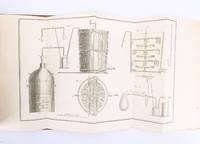
1789réf. 90025Paris: Rue et Hôtel Serpente 1789. Fine. Opening run of the journal ""Annales de chimie"" vehicle of ""The New Chemistry"" founded and directed by Antoine de Lavoisier Rue et Hôtel Serpente Paris 1789-1792 12.8 x 19.6 cm Relié First edition highly sought after in the 19th century comprising 14 of the first 15 volumes published between 1789 and 1792 of the first series of the celebrated French scientific periodical Annales de chimie. Volume 10 missing. Contemporary full brown calf spines smooth with gilt fillets brown morocco lettering-piece and green morocco numbering-piece blind-ruled border to covers red speckled edges bookplate of P. H. Chavoix to front pastedown of each volume. Volumes 1 and 11 numbered in Roman rather than Arabic numerals. Overall discreet restorations corners rubbed occasional light foxing and browning some worming to bindings not affecting text head and tail of headcaps worn on volumes 7 13 14 and 15. The complete first series of the Annales de chimie published between 1789 and 1815 runs to 96 volumes. From 1793 to 1797 publication was suspended following the arrest of Antoine Lavoisier the journal's treasurer and in Édouard Grimaux's words its ""true director."" The opening run here contains nearly all the issues produced under the direction of and with contributions from the chemists Antoine de Lavoisier and Baron Philippe Frédéric de Dietrich. Both were condemned to the guillotine during the Reign of Terror in 1794 and 1793 respectively. This set is further illustrated with 12 scientific plates including two by the engraver Sellier as well as a map of the county of Bigorre. The majority of the articles and essays are first editions written by distinguished French and foreign chemists and physicists who helped disseminate ""The New Chemistry"": in order of appearance Louis-Bernard Guyton de Morveau Antoine de Lavoisier Gaspard Monge Claude-Louis Berthollet Anne-François Fourcroy Philippe-Frédéric de Dietrich Jean Henri Hassenfratz Pierre-Auguste Adet Jean-Antoine Chaptal Martin Heinrich Klaproth Johann Georg Albrecht Höpfner Christoph Girtanner Johann Christian Wiegleb Jacques-Anselme Dorthes Johann Friedrich Westrumb Armand Seguin Henry Cavendish William Austin Martin van Marum l'abbé René Just Haüy Peter Jacob Hjelm Jan Ingenhousz Isaac Milner Johan Gadolin James Watt Lorenz Florenz Friedrich von Crell Charles Blagden Jean Senebier Jean d'Arcet William Higgins Nicolas-Louis Vauquelin Nicolas Joseph Thiéry de Ménonville Dom Michel Rubin de Celis Jacques Louis Schurer Augustin-François de Silvestre l'abbé Claude Chappe Antoine Augustin Parmentier Nicolas Deyeux Bertrand Pelletier Charles-Augustin Coulomb Joseph Priestley Richard Kirwan Jean André de Luc Jean-François Clouet chevalier Marsilio Landriani Jean-Noël Hallé François Pierre Nicolas Gillet de Laumont Georges-Charles Bartholdi Alexandre Brongniart Jean-Michel Haussmann Henri Reboul François René Curaudau Thomas Henry Jean-Anthyme Margueron Nicolas Leblanc Johann Rudolph Deiman Pieter Nieuwland Pierre de Ribaucourt Pissis fils Jean-Baptiste Van Mons ou encore Louis François Antoine Arbogast. In 1816 the Annales de chimie was retitled Annales de chimie et de physique. In 1913 the journal split into two separate publications Annales de chimie and Annales de physique. The titles have undergone further changes up to the present day. A collection of 14 volumes from the opening run of the prestigious French scientific periodical Annales de chimie containing numerous essays and articles most in first edition published under the editorship of distinguished figures: Antoine de Lavoisier Louis-Bernard Guyton de Morveau Gaspard Monge Claude-Louis Berthollet Anne-François Fourcroy Philippe-Frédéric de Dietrich Jean Henri Hassenfratz and Pierre-Auguste Adet. Rue et Hôtel Serpente unknown
réf. 35121436-nnew. unknown
réf. 5827477like new. unknown
réf. 52614859-6Course Technology. Used - Good. Pages intact with minimal writing/highlighting. The binding may be loose and creased. Dust jackets/supplements are not included. Stock photo provided. Product includes identifying sticker. Better World Books: Buy Books. Do Good. Course Technology unknown