MONGE (Gaspard).Livre Rare Book

3,275 results
1820ref. 41708Paris, Veuve Courcier, 1820. In-4 de XX-187 pp.HACHETTE (Jean Nicolas Pierre). Supplément de la géométrie descriptive. Paris, J. Klostermann, 1812. In-4 de (4)-VIII-118-(2) pp.Ensemble 1 vol. in-4, demi-basane taupe, dos lisse orné d'arabesques romantiques à froid et de filets dorés (reliure de l'époque).
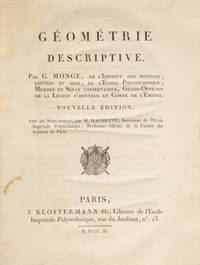
ref. 2407SB006Par G. Monge de l'Institut des sciences lettres et arts de l'École Polytechnique; Membre du Sénat conservateur Grand-Officier de la Légion d'honneur et Comte de l'Empire. Nouvelle Édition Avec un Supplément par M. Hachette Instituteur de l'Ecole Impériale Polytechnique Professeur-Adjoint de la Faculté des Sciences de Paris. PARIS J. KLOSTERMANN fils Libraire de l'École Impériale Polytechnique rue du Jardinet n.º 17. M. DCCC. XI. 1811 M. DCCC. XII. 1812. De 26x205 cm. Com xii 162 xlviii iv 118 ii xxii págs. Encadernação da época inteira de pele com rótulo laranja e elaborados ferros a ouro na lombada. Ilustrado com um total de 35 folhas desdobráveis com 78 figuras muito nítidas. O final da primeira parte da obra contém 24 folhas com 48 figuras com exercícios e desenhos; o suplemento contém 11 folhas desdobráveis das quais quatro são de grandes dimensões perto do tamanho de um A3 com 30 figuras. São apresentadas as formas de desenhar planos figuras geométricas e diversas intersecções. Exemplar com desgaste superficial nas pastas. Obra muito importante para a história da geometria descritiva disciplina essencial para o desenho técnico a arquitetura e a engenharia. Terceira edição muito rara não é catalogada pela BNF. A primeira edição foi publicada em 1798 e a quarta em 1820. Não se conhece a data da segunda edição. A obra está estruturada em cinco capítulos que abordam a definição e a forma de projetar pontos linhas e planos; planos tangentes a superfícies curvas propriedades da intersecção de planos com esferas e cilindros linhas cónicas; intersecção entre superfícies curvas e respetivas retas tangentes e aplicações várias da resolução destes problemas. Inclui um suplemento escrito pelo discípulo e professor-adjunto de Monge Jean-Nicolas-Pierre Hachette que ampliou o impacto educacional da obra que continuou a ser uma referência fundamental no ensino da geometria aplicada durante várias décadas. O suplemento é registado na folha de rosto principal tem paginação e folha de rosto própria pelo mesmo editor com a data de 1812. Gaspard Monge conde de Péluse Beaune 1746 Paris 1818 foi um eminente matemático francês conhecido como o fundador da geometria descritiva uma disciplina que revolucionou o modo de representar objetos tridimensionais em planos bidimensionais. Monge demonstrou desde cedo uma aptidão notável para a matemática tendo começado a lecionar física aos 16 anos na escola dos Oratorianos em Lyon. Em 1762 Monge elaborou um plano detalhado da sua cidade natal utilizando métodos inovadores de observação e instrumentos de topografia por ele construídos. Esta habilidade levou-o a ser recomendado para a Escola Militar de Mézières onde desenvolveu uma metodologia geométrica para determinar a colocação de baterias de canhões um trabalho que foi considerado segredo militar. Foi em Mézières que Monge concebeu a sua obra-prima a «Géométrie Descriptive» publicada pela primeira vez em 1799 onde apresenta as bases desta disciplina com base nas suas aulas na École Normale. Durante a Revolução Francesa Monge desempenhou um papel crucial participando na criação do sistema métrico e na fundação da École Polytechnique onde foi professor e administrador formando engenheiros que contribuíram para o desenvolvimento da França. Além das suas contribuições matemáticas Monge foi um fervoroso Bonapartista e acompanhou Napoleão nas campanhas em Itália e no Egito onde ajudou a fundar o Instituto do Egito inspirado no Instituto Nacional de França. Contudo após a queda de Napoleão Monge foi despojado dos seus títulos e honras pelos Bourbons passando os seus últimos anos afastado da vida pública mas com um legado duradouro na matemática e na engenharia. Jean-Nicolas-Pierre Hachette Mézières 1769 - Paris 1834 foi um matemático e engenheiro francês conhecido por ser um dos principais discípulos de Gaspard Monge. Formado na École Polytechnique onde mais tarde se tornaria professor Hachette contribuiu significativamente para o desenvolvimento e ensino da geometria descritiva. Publicou também obras em mecânica e foi um defensor fervoroso da aplicação prática das ciências matemáticas à engenharia. EN 26x20.5 cm. xii 162 xlviii iv 118 ii xxii pages. Contemporary full leather binding with an orange label and elaborate gilt tools on the spine. Illustrated with a total of 35 fold-out sheets with 78 very clear engravings. The end of the first part of the book contains 24 sheets with 48 figures with exercises and drawings; the supplement contains 11 fold-out sheets four of which are large about the size of an A3 with 30 figures. Ways of drawing planes geometric figures and various intersections are presented. Copy with superficial signs of wear on the boards. Very important work for the history of descriptive geometry an essential discipline for technical drawing architecture and engineering. Very rare third edition not catalogued by the BNF. The first edition was published in 1798 and the fourth in 1820. The date of the second edition is unknown. The book is structured in five chapters that cover the definition and how to project points lines and planes; tangent planes to curved surfaces properties of the intersection of planes with spheres and cylinders conic lines; intersection between curved surfaces and their tangent lines and various applications of solving these problems. Includes a supplement written by Monge's disciple and assistant professor Jean-Nicolas-Pierre Hachette which extended the educational impact of the work which continued to be a fundamental reference in the teaching of applied geometry for several decades. The supplement is recorded on the main title page has its own pagination and title page by the same publisher with the date 1812. Gaspard Monge Count of Péluse Beaune 1746 - Paris 1818 was an eminent French mathematician known as the founder of descriptive geometry a discipline that revolutionised the way of representing three-dimensional objects on two-dimensional planes. Monge showed a remarkable aptitude for maths from an early age and began teaching physics at the age of 16 at the Oratorian school in Lyon. In 1762 Monge drew up a detailed plan of his home town using innovative methods of observation and surveying instruments he had built himself. This skill led him to be recommended to the Military School of Mézières where he developed a geometric methodology to determine the placement of cannon batteries a work that was considered a military secret. It was at Mézières that Monge conceived his masterpiece "Géométrie Descriptive" first published in 1799 where he presents the foundations of this discipline based on his classes at the École Normale. During the French Revolution Monge played a crucial role participating in the creation of the metric system and founding the École Polytechnique where he was a professor and administrator training engineers who contributed to the development of France. In addition to his mathematical contributions Monge was a fervent Bonapartist and accompanied Napoleon on his campaigns in Italy and Egypt where he helped found the Institute of Egypt inspired by the National Institute of France. However after the fall of Napoleon Monge was stripped of his titles and honours by the Bourbons and spent his last years away from public life but with a lasting legacy in mathematics and engineering. Jean-Nicolas-Pierre Hachette Mézières 1769 - Paris 1834 was a French mathematician and engineer known for being one of Gaspard Monge's main disciples. A graduate of the École Polytechnique where he would later become a professor Hachette contributed significantly to the development and teaching of descriptive geometry. He also published works on mechanics and was a fervent advocate of the practical application of mathematical sciences to engineering. Referências/References: Britannica recurso em linhaonline: Gaspard Monge count de Péluse BNF - ark:/12148/cb30962716z FRBNF30962716 primeira edição BNF - ark:/12148/cb309627179 FRBNF30962717 quarta edição M-8-C-55 hardcover
1798ref. 25LEWIS'S "TO THE READER" EXPLAINS HIS AFRICAN SLAVE CHARACTER HIS "MISANTHROPIC NEGRO" LEWIS Matthew Gregory "Monk". The Castle Spectre: A Drama. In Five Acts. First Performed at the Theatre Royal Drury-Lane on Thursday December 14 1797. By M. G. Lewis M. P. Author of The Monk &c. 8vo disbound pp. 103 1 ad. London: Printed for J. Bell 1798. First Edition. An extraordinary commercial success although not a universal favorite of the critics. To the critics who objected to his use of black slaves in a Gothic story he defended himself by saying that if he could "have produced the same effect by making my heroine blue blue I should have made her." "As far as Lewis's search for novelty and striking effects is concerned it is interesting to highlight the character of Hassan an African servant.Hassan is in Ormond's service because the earl has cruelly snatched him from his family and hating the white race that he considers responsible for his sufferences the black slave refuses to escape only because he is aware of his master's evil propensity to torture people around him. Lewis exploited this unusual figure to introduce something new and surprising in his play but also to underline the demonic instincts of the villain."-Bertrand Evans Gothic Drama from Walpole to Shelley1947 online. Lewis's To The Reader pp. 100-103 admits borrowing from other authors saying: "To the originality of character I make no pretence.but I shall not so readily give up my claim to novelty when I mention my misanthropic Negro: He has been compared to Zanga but Young's hero differs widely from what I meant in Hassan.Hassan is a man of violent passions and warm feelings whose bosom is filled with the milk of human kindness but that milk is soured by despair.he has lost everything even hope; he has no single object against which he can direct his vengeance and he directs it at large against mankind. He hates all the world.that heart was once feeling and kind." This Lewis's most famous play went into eight printed editions by the following year and a total of eleven by 1803. "A brilliant example of the more thrilling type of melodrama accompanied by music by Michael Kelly.The story tells how Osmond the villain captures Angela.Father Paul is based on Juliet's nurse and on Sheridan's Father Paul."-Nicoll A History of English Drama 1660-1900 vol. III pp. 99-100. The play was particularly indebted to The Castle of Otranto The Mysteries of Udolpho andDie Räuber. Coleridge described it as a "peccant thing of Noise Froth and Impermanence." Despite its lack of originality "it was an excellent vehicle for presenting a series of striking scenes of suspense or spectacle--the sudden appearance of the ghost in an atmosphere prepared by forebodings.Kemble and Mrs. Jordan were by all accounts superb in the leading roles.But the principle reason for its success was the appearance of the ghost in Act IV.Louis F. Peck A Life of Matthew G. Lewis 1961 pp. 73-74. Edith Birkhead The Tale of Terror: A Study of the Gothic Romance p. 66. Summers A Gothic Bibliography p. 254. Nicoll III p. 281. No copies have appeared at auction since at least 1975 nor as of this writing are there any online. Minor browning first and last leaves moderately so. 84146 ABAA-VBF J. Bell
ref. Z1-X-024-00255Butterworth-Heinemann. Used - Good. CD Missing. Ships from UK in 48 hours or less usually same day. Your purchase helps support Sri Lankan Children's Charity 'The Rainbow Centre'. Ex-library so some stamps and wear but in good overall condition. 100% money back guarantee. We are a world class secondhand bookstore based in Hertfordshire United Kingdom and specialize in high quality textbooks across an enormous variety of subjects. We aim to provide a vast range of textbooks rare and collectible books at a great price. Our donations to The Rainbow Centre have helped provide an education and a safe haven to hundreds of children who live in appalling conditions. We provide a 100% money back guarantee and are dedicated to providing our customers with the highest standards of service in the bookselling industry. Butterworth-Heinemann unknown
1785ref. 44970(Paris, Moutard, 1785). 4to. Extracted from ""Mémoires fe Mathematique et de Physique, Présentés à l'Academie des Sciences par divers Savans"", Tome X. Pp. 511-550 a. 2 folded engraved plates. Clean and fine.
1785ref. 44970Paris Moutard 1785. 4to. Extracted from "Mémoires fe Mathematique et de Physique Présentés à l'Academie des Sciences par divers Savans" Tome X. Pp. 511-550 a. 2 folded engraved plates. Clean and fine. First appearance of this importent paper by the "greatest geometer of the century" in which he solves some main problems in coordinate geometry especially he introduced the "distant formula" for three dimensions years before it was used by Lagrange. He laid the foundation of a completely new branch of mathematics known as descriptive geometry. The paper was delivered already in 1771 but not published until 1785. "His first important original work was "Memoire sur les développées les rayons de courbure et différents genres d inflexions des courbes á double courbure" He published an extract from it in June 1769 in the Journal encycyclop´matiques and in October 1770 he finished a more complete version that he read before the Academie des Sciences in August 1771; the latter however was not published until 1785 Mémoires de mathématiques et de physique présentés á ’Academic par divers scavanns. By then some of the most important ideas in the memoir no longer seemed so original because Monge had employed them in other works published in the intervening years. Nevertheless this memoir is of exceptional interest for it presents most of the new conceptions that Monge developed in his later works as well as his very personal method of exposition which combined pure geometry analytic geometry and infinitesimal calculus."DSB. unknown
1805ref. 17590Paris, Bernard (imprimerie de H.L. Perronneau), XIII-(1805) ; in-4, demi-basane marbré, dos lisse, titre en long (reliure moderne) ; (4), 56 pp., 1 planche hors texte gravée par Aubertin d'après L.J. Girard.
1798ref. 6018Paris, Baudoin, An VII (1798/1799). In-4 de VII-[1]-132p., 25 pl., plein veau raciné, dos lisse orné de filets et fleurons dorés, pièce de titre en maroquin rouge, minime petit choc sur le haut du dos, quelques petites rousseurs sans importance. Joli exemplaire bien établi.
ref. 223875À Paris, De l'Imprimerie du Comité de Salut public, an II (1794) in-4, [4]-VIII-231 pp., 4 tableaux, 60 planches repliées, demi-basane brune, dos lisse orné, tranches marbrées (reliure postérieure). Dos frotté, mors et coiffe restaurés, manque à la coiffe inférieure, reliure craquelée. Quelques rousseurs et mouillures (texte et planches). Galerie de vers en marge inférieure de quelques planches. Ex-libris Jacques Jourquin.
ref. 10878Paris, Baudouin, An VII (1798-1799). In-4, (8)-132 pp. et 25 pl., reliure de l'époque demi-basane, dos orné (dos frotté, coins émoussés, quelques rousseurs). Ex-libris manuscrit : Frédéric Duroyer, 1808.
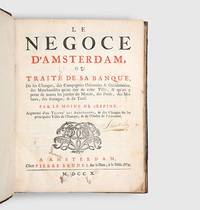
1710ref. 135031Amsterdam: Pierre Brunel 1710. Second edition bound as issued with Jacques Mondoteguy's Traité des Arbitrages also published by Pierre Brunel in 1710 but in Paris. Le negoce d'Amsterdam was first published in both Dutch and French in 1694. Jacques le Moine de l'Espine d. 1696 was a merchant dealer in art and maps mathematician and writer on economics who was based in Amsterdam from 1697 onwards. Quarto 221 x 165 mm. Title printed in red and black separate divisional title leaf for Traité des Arbitrages continuously paginated with that gathering Hh having five leaves. Woodcut title page vignettes to both head- and tailpieces initials numerous tables to text. Contemporary calf rebacked preserving the original spine title lettered in gilt to second compartment rest elaborately tooled in gilt raised bands marbled endpapers edges sprinkled red and blue. Early ownership signature "Jouxtel" hand written in ink to front pastedown "Jouxtely" to title page and final page "Jou:tel" to fore edge of book block likely the same hand which has carefully amended the catchword on the final page of Le Moine de L'Espine's work to match the first word of Mondoteguy's title page and neatly corrected a figure on p. 235; engraved bookplate of Jean R. Perrette to front pastedown. Corners restored a few marks to boards lower corner of book block up to p. 170 a little gnawed front free endpaper laid onto following blank occasional marginal dampstain but generally contents crisp a few pen trials to title page and last few blanks natural paper flaw along lower margin of leaf Ff1 resulting in small loss to lower corner not affecting text. Overall a very good copy. Goldsmiths' 4601. hardcover
2009ref. SBS-9780754624998ASHGATE 2009. Hardcover. New. ASHGATE hardcover
2009ref. SBS-9780754624998ASHGATE 2009. Hardcover. New. ASHGATE hardcover
1990ref. SBBI-mon0000162264Llanerch Press 1990. paperback. Good. Our good condition books are generally good for reading but not for gifting or collecting. They could have imperfections such as creasing fanning inscriptions margin notes yellowing staining on edge or cover or pages bumps scuffs etc etc sometimes multiple of these. It's a wide category that encompasses anything that isn't almost-new down to anything that is slightly better than poor. We would NOT recommend gifting Good books - these should be considered reading copies. Our books are dispatched from a Yorkshire former cotton mill. We list via barcode/ISBN so please note that the images are stock images and may not be the exact copy you receive furthermore the details about edition and year might not be accurate as many publishers reuse the same ISBN for multiple editions and as we simply scan a barcode or enter an ISBN we do not check the validity of the edition data when listing. If you're looking for an exact edition please don't order at least not without checking with us first although we don't always have time to check. We aim to dispatch prompty the service used will depend on order value and book size. We can ship to most countries see our shipping policies. Payment is via Abe only. Llanerch Press paperback
ref. 37410P., Bachelier, 1827, un volume in 4 relié en demi-basane, dos orné de fers et filets dorés, étiquette de titre rouge, tranches jaspées (reliure de l'époque), 20pp., 188pp., 28 PLANCHES DEPLIANTES
1983ref. 3459Berkeley : Asian Humanities Press ; Seoul : Po Chin Chai 1983. 1983. Soft cover. Very Good. 135 pp. : chiefly illustrations some in color ; numerous photographs ; 35 cm. ; OCLC: 11766799 ; LC: ND2073.6.Z8 ; a rare collection of action photographs ceramics and calligraphic paintings and lithographs executed by Jung Kwang the Mad Monk ; " The present volume is an attempt to present a partial retrospective of his paintings including the latest work which has expanded into the use of lithographs.In 1980-81 he took an extended trip his first to the U.S. and Europe giving demonstrations of his painting style."--preface ; "Jung Kwang the painter has his artistic roots firmly placed within a style of art that was nourished by the monastic communities of East Asia. Using only the brush and ink monks made their art using rapid and yet disciplined brush strokes. The paintings only took seconds to complete; they could not be retouched or corrected; each was finished when the brush left the paper. As might be imagined this style was particularly favored by the Zen schools. The paintings were used as a test for the state of enlightenment of the painter.Jung Kwang began to separate his art from this traditional school and with that separation came many questions about the value of his work. The controversies of his art continue to the present.Having introduced all sorts of new subjects into his paintings: bulls guardian figures roosters fish and more shocking penises on all the animals and even coming out of the head of Dharma it is little wonder that the traditionalists were horrified."--Introduction ; Jung Kwang's reputation as "The Mad Monk" is here fully represented by the use of color non-traditional brushes and pens even to the shocking photographs of him using his penis as th e brush on a series of paintings! ; he was ordained a monk in the Chongye Buddhist Order at Tong-do Monastery near Pusan in 1962 and practiced meditation under direction of Master Kuha and was later a member of the Chongye National Council as its art consultant but was then expelled in 1983 presumably for his movement away from traditional forms ; nonetheless there are many who would consider the paintings in this book enlightened visual Zen koans of a sublime nature ; SIGNED presentation by Jung Kwang from 1986 on the front ep ; folio bound in color pictorial stiff paper wrappers ; some wear but otherwise VG. Very scarce with only 25 copies known held by libraries worldwide. This online listing contains text in Chinese and Korean fonts Berkeley : Asian Humanities Press ; Seoul : Po Chin Chai, 1983. paperback
1794ref. 56237Paris, Comité de Salut Public, AN 2 (1794). 4to. Contemp. hcalf. Gilt spine. Titlelabel with gilt lettering. A small tear to leather at top of spine and joint. (4),VIII,231 pp., 4 folded tables and 60 large folded engraved plates. The first few leaves with scattered brownspots.
1794ref. 56237Paris Comité de Salut Public AN 2 1794. 4to. Contemp. hcalf. Gilt spine. Titlelabel with gilt lettering. A small tear to leather at top of spine and joint. 4VIII231 pp. 4 folded tables and 60 large folded engraved plates. The first few leaves with scattered brownspots. First edition. The plates are identical with those in Panckoucke's Encyclopedie. " Between 1786 and 1788 Monge investigated with Berthollet and Vandermonde the principles of metallurgy and the composition of irons cast metals and steels. This research enabled them to unite previous findings in these areas to obtain precise theoretical knowledge by means of painstaking analyses and to apply this knowledge to the improvement of various techniques." DSB - Poggendorff II184. hardcover
1789ref. 90025Rue et Hôtel Serpente | Paris 1789-1792 | 12.8 x 19.6 cm | Relié
1794ref. 1599Reliure pleine basane marron racinée. Dos lisse orné de filets dorés, pièce de titre rouge. Trois tranches sanguines. Intérieur très propre. Illustré de 4 tableaux imprimés sur papier bleu et de 60 planches repliées hors texte (fourneaux, moulages en terre et en sable, grues, marmites, fonderies, tours et tourillons). Les deux dernières planches, de grande dimension, présentent l'ensemble des canons réalisés grâce à la méthode de Monge. EDITION ORIGINALE.
1794ref. 1311130103Impr. du Comite de salut public 1794-01-01. Hardcover. Very Good. 4to. Contemporary leather boards rebacked on modern leather spine. 27 cm. Good binding and cover. viii 231 p. lx folded leaves of plates. Lovely copper plates throughout. Generally clean unmarked pages. Collated. Goldsmiths'-Kress no. 16024.5-1. D.S.B. 9: 469-478. Impr. du Comite de salut public hardcover
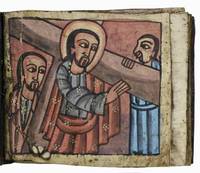
1890ref. 516Ethiopia: Unknown 1890. First edition. Hand-made: Hand-tooled red-brown leather over wood boards. Good/`. Ethiopian Monk. Pocket-sized Ethiopian Coptic Christian Manuscript Book of the Cross. Handmade handwritten and hand-painted on vellum. This is a small pocket-sized 4 1/2 inches x 3 5/8 inches 38-page manuscript of the Ethiopian Book of the Cross. In Ethiopia the Cross is not only a Christian symbol but also a sacred matrix in religious life embedded in rituals art and identity. The Book of the Cross reflects this deep tradition showing how the Cross is celebrated in liturgy devotion and theological reflection. It was hand-made by a rural/provincial Ethiopian monk circa late 18th century to 19th century. The ink materials used are organic and local as access to foreign materials was more limited than in larger cities closer to trade routes. It is handwritten entirely in the classical Semitic liturgical language Ge'ez on vellum and bound in blind-tooled goatskin or sheepskin tightly stretched over wooden boards. ABOUT THE WORK The Book of the Cross is a devotional material comprised of the following elements: 1 Honors the Cross of Christ as the central symbol of salvation. 2 Contains hymns təwÄb prayers and readings that recount the Passion Resurrection and the veneration of the Cross. 3 Is used in worship to focus the faithful on the theological meaning of the Cross - the 'made one' Tewahedo unity of Christ's divine and human natures. 4 Often includes narratives and psalms that parallel the biblical Passion accounts but are framed in the Ethiopian liturgical tradition. It contains Cross hymns təwÄb praising the Cross and the Passion of Christ; prayers for the faithful especially during Timkat and other feasts; scriptural readings from the Old and New Testaments that focus on the Cross e.g. Psalms the Passion narratives in the Gospels; traditional narratives of the veneration of the Cross in Ethiopian history and tradition and liturgical instructions for how the Cross is venerated in the church. The Ge'ez script is written in strokes quickly executed in a more flowing rounded style versus the rigidly aligned and exacting calligraphy associated with scribal monks in more structured urban environments particularly during the 18th century Gandarian style or late 19th century imperialistic revival period. Elongated razor-sharp geometric strokes were demanded by early to mid-18th-century imperial scriptoriums. The alternating black and red ink red being used for sacred names or section headers utilizes local organic and mineral sources. The black ink does not appear to be made from soot or another burnt carbon source as is typically found based on the fading of the black ink in spots; fading of black ink from soot-based sources is a largely absent occurrence under normal environmental circumstances even after many hundreds of years. Local organic sources like red‑colored leaves bark and roots were used for the red ink. The latter is evident by the fading and color changes to the red ink over time. Imported raw materials like cinnabar and vermillion introduced along trade routes in Eastern Africa were also used to make red ink at the time of this manuscript's creation but they do not fade in the same way as organic sources instead remaining a red or red-orange hue when naturally aged. ELEMENTS OF THE MANUSCRIPT The prayer book is bound in a dark red-brown goatskin or sheepskin the heavy dye job obscures the grain size and pattern but it looks to be sheep stretched tightly over wooden boards with intricate tooling in blind framing side-by-side Ethiopian crosses - a characteristic design for a Book of the Cross manuscript. Interlaced within the text are four full-page miniatures in groupings of two that are painted in a more rustic style by an amateur artist more typical of a small village with limited resources versus by a more practiced hand found in large Ethiopian monasteries or affluent cities. In order of appearance: 1. Jesus Carrying the True Cross Along the Via Dolorosa During the Passion. This illustration serves as the visual centerpiece of the prayer cycle and is the opening page to the manuscript. Jesus is depicted with a halo atserga dressed in traditional striped garments physically carrying the massive wooden cross on His shoulder. To the right stands Simon of Cyrene who was compelled by the Roman soldiers to help carry the cross. The figure on the left represents either a disciple watching in mourning or one of the Roman guards leading the procession. The painting follows a rural or provincial derivative of Ethiopian iconographic art. Key features include the large stylized almond-shaped eyes thick bold black outlines simple flat color planes using earth-tone reds yellows and blues and the lack of three-dimensional perspective. 2. Christ Teaching or Delivering a Decree. The illustration emphasizes the divine authority of Christ's word seamlessly connecting to the theological themes of the surrounding text. The text on the scroll Jesus is carrying translates to 'In the name of the Father and of the Son and of the Holy Spirit.' 3. The Crucifixion. As the foundational visual of this Haza Mesqel Book of the Cross manuscript this scene serves as the ultimate theological anchor for the surrounding prayers and praises. On the left side of the painting The Virgin Mary Maryam is shown wrapped in a dark blue-grey mantle holding her hands up to her face in a traditional posture of deep mourning and weeping. On the right Saint John the Evangelist is depicted similarly shrouded in a red mantle mirroring Mary's grief-stricken gesture as he witnesses the event. 4. Christ in Majesty Offering a Blessing. This illumination acts as a celebratory closing or protective visual within your Haza Mesqel Book of the Cross manuscript emphasizing Christ's eternal authority and power after the Resurrection. HOW THIS MANUSCRIPT WAS MADE Ge'ez calligraphy executed in natural local-based black and red ink with a reed pen in double columns and rubricated throughout adorns hand-made parchment made from goatskin or sheepskin. The large vellum sheets in this manuscript have been cut in half horizontally to fit inside this diminutive pocket-sized binding. The leaves were not placed back in their original order but rather comprise a mix of prayers and liturgy from the Book of the Cross. The binding was simply sewn together and does not appear to use a link chain stitch for the quires as is typically found. The wooden boards are made from local trees typically olive or wanza. The leather appears to be sheepskin was tanned dyed and treated and stretched tightly over the wooden boards and then intricately tooled in blind. HISTORY OF ETHIOPIAN COPTIC MANUSCRIPTS IN GE'EZ Ethiopian Handwritten Coptic Ge'ez Bibles and liturgical texts were produced as early as the fourteenth century until the early 20th century throughout Ethiopia the first country to become an independent African nation. Christianity was introduced to Ethiopia in the 4th century when Syrian missionaries first translated the Bible into Ge'ez the language of the Ethiopian Orthodox Tewahedo Church. The surviving body of Ge'ez literature is composed almost entirely of Christian liturgy as education was exclusively the responsibility of priests and monks. The bibles produced typically contain the gospels of the New Testament recounting the life of Jesus of Nazareth and the foundation of the Christian. The Ethiopian Bible contains a significantly larger canon of books than Western Bibles including texts like the Book of Enoch and the Book of Jubilees which are often found in its broader canon. It is considered one of the oldest and most complete Bibles containing more than 80 books compared to the 66 in the Protestant canon. The world's earliest illustrated Christian book is the Garima Gospels written in Ge'ez found in a remote Ethiopian monastery. It is named after a monk who arrived in Ethiopia in the 5th century and is beautifully illustrated. For perspective it predates the first King James Bible by about 1200 years. CONDITION REPORT Fair by book standards but this is a hand-made Ethiopian prayer manual used in religious ceremonies and kept in an open-air environment for over 150 years so it's hard to truly compare. Good by rural Ethiopian manuscript standards. Exterior and binding: Cracked hinges. Spine leather with a large vertical tear. The leather is hand-worn and soiled from generations of use. All edges blackened with soot and sun-exposure. Interior: The vellum pages are soiled with dust and soot from candles and incense burners. There are multiple water dampening stains smudges finger soiling some old repairs made from sinew and natural yellowing and shrinking of the vellum both with age and exposure to the natural environment. The first leaf with an old repair to a tear main image and second painting shown. One leaf has a quarter-sized hole 1" x 1" in the middle of the text. There is loss of letters and words from where leaves were sliced in half. All in all a Book of the Cross broken down to a more manageable pocket-size with four full-page paintings. This is not a book carefully shelved on a bookcase in an English manor for the past 150 years. Rather it is a sturdily made religious manuscript heavily used in a rural agrarian setting where it was likely stored outside at times exposed to the elements. It has seen a lot of 'love' and 'honest wear.' . Unknown unknown
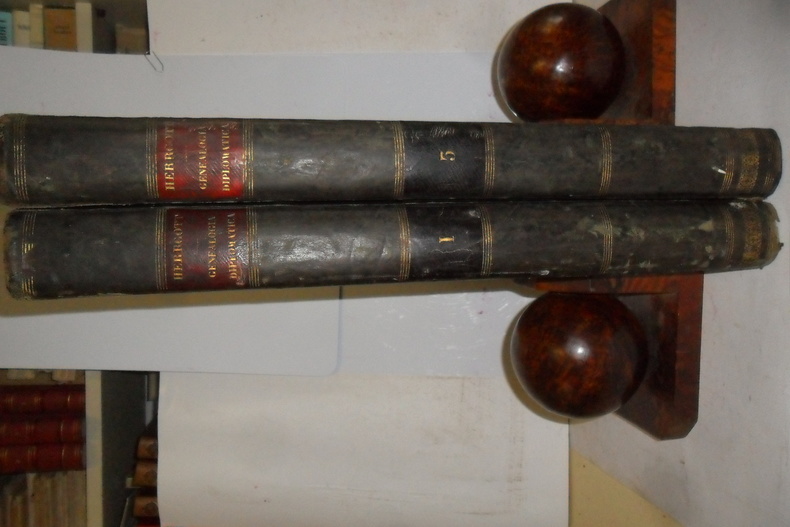
1737ref. 219511737 Viennae Austriae, Typ. Leopolsi Joannis Kaliwoda - 1737 - Edition Originale du plus beau livre sur les Habsbourg - 2 tomes sur 3: T. I, T. III & dernier - 2 volumes In-folio - 1/2 Reliure frottée postérieure - Dos lisse à filets dorés - Pages de titre bi-colore rouge et noire avec vignette - Très grands Bandeaux, Lettrines & Culs-de-lampe - I) 2 tableaux dépliants: Fac-similé de documents & 1 Tableau Généalogique, illustrations en texte, 6 planches de sceaux in-fine PP HT - (18), LXXII-338 pages + Index 34 pages & Corrigenda (1) & 6 planches de sceaux.II) (17), Pagination 412 à 851 + Index (56) pages - Les 2 volumes très propres - En langues allemande et latine - Envoi rapide et soigné
ref. Z1-U-002-01376Joseph Rowntree Foundation. Used - Good. Ships from UK in 48 hours or less usually same day. Your purchase helps support Sri Lankan Children's Charity 'The Rainbow Centre'. Ex-library so some stamps and wear but in good overall condition. 100% money back guarantee. We are a world class secondhand bookstore based in Hertfordshire United Kingdom and specialize in high quality textbooks across an enormous variety of subjects. We aim to provide a vast range of textbooks rare and collectible books at a great price. Our donations to The Rainbow Centre have helped provide an education and a safe haven to hundreds of children who live in appalling conditions. We provide a 100% money back guarantee and are dedicated to providing our customers with the highest standards of service in the bookselling industry. Joseph Rowntree Foundation unknown
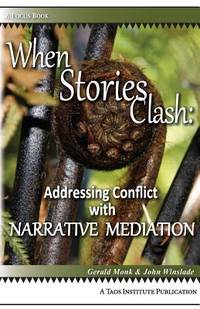
2012ref. SONG1938552016Taos Institute Publications 2012-10-11. paperback. Used: Good. 5.50x0.32x8.50. Buy with confidence. Excellent Customer Service & Return policy. Taos Institute Publications paperback