640 resultados
2014ref. UKHOWHE00abmNorthwestern University 2014. Very Good. Khoury-Ghata Venus. Where Are the Trees Going. Hacker Marilyn translator. Evanston IL: Northwestern University 2014. 109pp. 8vo. Paperback. Book condition: Very good. Northwestern University paperback books
2001ref. UKHOHER00acmfOberlin College 2001. Fine. Khoury-Ghata Venus. Here There was Once a Country. Hacker Marilyn. Oberlin Ohio: Oberlin College 2001. 103pp. Paperback. Book condition: Near fine. Oberlin College paperback books
1966ref. 9772gcsTampa Florida: Krewe of Venus 1966. Octavo white stapled wrappers 22 pp. Containing portraits of: Miss Denise Chavez Miss Gail Marguerite Corcoran Miss Stephanie Davis Miss Josephine Anne Franklin Miss Margaret Lee Franklin Miss Ann Frecker Miss Helene R. Girone Miss Geranne Hutchinson Miss Patricia Anne McCloskey Miss Cheryl Ann Merin Miss Gail Nelson Miss Kathleen Horting Owrey Miss Karen Ann Pedersen Miss Ann Robinson Miss Eve Louise Roddye Miss Laura Ann Smoak Miss Dianne Elizabeth Ware Miss Sharon Leigh White. Interior clean & tight portraits clear and bright wrappers have light inked doodling. Krewe of Venus, 1966. unknown books
1979ref. S7030In: Science Vol. 205 No. 4401 6 July 1979. Washington D.C.:: American Association for the Advancement of Science 1979. 1979. FIRST EDITION. 4to. Pages 99-102. Entire issue: 1-130 pp. 4 figs. 1 table. Pictorial wrappers. Fine. with: KLIORE et al. "Polar ionosphere of Venus near the terminator from early pioneer Venus Orbiter radio occultations." In: Science Vol. 203 No. 4382 23 February 1979. Washington D.C.: American Association for the Advancement of Science 1979. FIRST EDITION. 4to. Pages 695-826. Entire issue: 1-130 pp. 3 figs. 1 table. Pictorial wrappers. Fine. American Association for the Advancement of Science, 1979. unknown books
1967ref. S8162Washington D.C.:: NASA 1967. 1967. 8vo. v 132 pp. Figs. glossary. Pictorial wrappers. Ownership rubber stamp of Norman Horowitz California Institute of Technology. FINE. NASA, 1967. unknown books
2010ref. 94110New York: Amistad 2010. 1st ed. Hardcover. Near Fine/Near Fine. xxii 357p. Original cloth backed boards. dj. 23 cm. Minor spotting on jacket and top edge of pages SIGNED by Williams as "Venus" on title-page. Amistad hardcover books

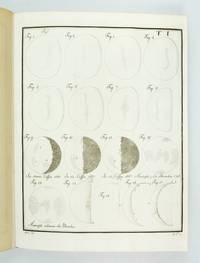
1796ref. ST20813Helmstedt: Printed and commissioned by C. G. Fleckeisen 1796. FIRST EDITION. 275 x 225 mm. 10 3/4 x 9". XVI 250 2 pp. Contemporary brown paste paper boards smooth spine with red roan label. WITH 10 ENGRAVED PLATES one folding by "G. T." after Schröter. Honeyman 2825; de la Lande p. 635; Poggendorff II 846; cf. DSB XII p. 226 NDB XXIII 590 Schröter and 510 Schrader. See also Sheehan and Baum "Observations and inference: Johann Hieronymous Schroeter 1745-1816" Journal of the British Astronomical Association vol.105 no.4 p.171-175. Joints and extremities somewhat rubbed boards with a hint of chafing occasional very minor foxing including to the final plate half a dozen leaves with faint dampstain to head edge but a really excellent copy the other plates clean and bright the text especially clean and fresh and the binding entirely sound. This is a very rarely seen early work on the topography of Venus written by the astronomer who first observed the planet's so-called phase anomaly and illustrated with 10 folding plates. One of a series of "fragments" Schröter published--the others concerning the sun the moon Saturn and Mercury--"Aphroditographische Fragmente" discusses the author's observations of Venus' surface at the same time coining the term "Aphroditographie" in reference to the Greek version of the goddess' name. The most important observation contained in our work concerns the phases of Venus: like the moon Venus appears to wax and wane when observed through a telescope. However due to the thickness of its atmosphere the planet will always appear less full than mathematical calculations indicate it should be. This phenomenon known as Venus' phase anomaly--or the Schröter Effect--first observed by the man who gave it its name in 1793 is discussed in detail in this text which is accompanied by highly detailed plates. Eight of these are focused on Venus primarily depicting its phases; another is a diagram of the telescope; and the other depicts the Orion Nebula to which there is a short addendum. Schröter 1745-1816 built a state-of-the-art observatory at Lilienthal in Lower Saxony equipped with the largest telescopes available at the time. One such instrument which he built in his own workshop was an impressive 27-foot telescope discussed in the present work which has sometimes been incorrectly credited to Schröter's colleague William Herschel 1738-1822. Schröter made systematic long-term observations of the surfaces of the moon and planets something DSB tells us he was the first to do. Not everything he discovered or asserted turned out to be true. Based on his findings he posited the existence of a mountain range on Venus' surface and suggested a rotation period for the planet. Both subsequently were disproven modern scientists have suggested that Schröter's "mountain" may have been an overly optimistic observation of a cloud formation but like the rest of his work they demonstrated the commitment to observational astronomy that leads astronomy historians William Sheehan and Richard Baum to call Schröter "the man who laid the foundations of planetology and modern selenography." His long and impressive astronomical career came to an unfortunate end in 1813 when during the Napoleonic invasion the French reportedly set fire to his observatory. His library instruments unpublished notes and copies of many of his works which were published in small runs at his expense were said to have been destroyed in the fire a fact that may partly explain the current rarity of our book. We have been able to trace at auction only an ex-library copy of the book with significant condition problems that sold in 1981 for a hammer price of £260; the fact that such an unattractive copy came from the distinguished Honeyman collection reinforces how difficult the work is to obtain. Printed and commissioned by C. G. Fleckeisen unknown books
1917ref. 172147New York: Fifth Avenue Publishing Co 1917. Hardcover. Good. First edition. Illustrated from photographs. Blue cloth stamped in red and gilt. Owner's name and address inked on rear endpaper lacking the front fly small stains on rear endpapers cloth soiled and stained with moderate edgewear spine darkened with lettering faded a good only copy lacking the dust jacket. Fifth Avenue Publishing Co hardcover books
1986ref. 349403New York: William Morrow and Company 1986. Hardcover. Fine/Near Fine. First edition. Fine in near fine lightly edge rubbed dust jacket. William Morrow and Company hardcover books
2015ref. 231389Tallahassee: Bella Books 2015. Paperback. 206p. creased cover "Review Copy" stamped on top edge of textblock otherwise good first edition trade paperback original in pictorial wraps. An art teacher falls for an English professor. Bella Books paperback books
ref. B205860-1New York 2013. 66pp. Prof. illus. largely in color. Oblong sm. 4to. Wraps. A double exhibition pairing the work of William Copley with that of Bjarne Melgaard here appearing under his corporate alter ego Big Fat Black Cock Inc. New York, 2013. paperback books
1966Sm. folio, First Edition, with numerous full-page photographs throughout; handsomely bound in full red morocco, gilt back with raised bands, a most attractive copy ideal as gift or for presentation. Lovely copy of one of the great iconic photographic statements of the Sixties - on a par with Haskins' 'Five Girls' and 'Cowboy Kate'. Hasselblad, 'The Open Book', pp. 224-225.
1953Mulhouse, Braun et Cie, 1953. Un fascicule de 16 pp. nombreuses héliogravures. Edité par les Laboratoires Fluxines à l'intention des médecins. Vénus vue au travers de peintres célèbres. Bel état.
Imprimé par Bequet frères à Paris, 1880 circa. Litografia in coeva coloritura a mano (N. 11 - Peint d'après nature et lithographié par C. Bargue - Imprimé par Bequet frères à Paris), cm 40 x 55,5 (il foglio). Bella scena con due fanciulle su un'altalena avvolte soltanto da un velo che copre le parti intime, in un contesto di bosco, sopra uno stagno. Esemplare in piacevole coloritura e in buono stato di conservazione.
Paris, L. Turgis, 1850 circa. Numero quattro litografie in colore d'epoca, cm 53 x 66 (il foglio). In basso al centro "Lithographiées par Lafosse d'après Lazerges", la firma di Lafosse nella parte figurata alla metà del margine laterale sinistro. Non facile a reperirsi la serie completa delle quattro. L'Asia e l'Europa presentano abrasioni del foglio nella parte superiore, lievissime fioriture d'insieme, tenue e bella la coloritura, molto decorative.
Paris, 1830 circa. Incisione in rame all'acquaforte in pointellisme, b/n, cm 30 x 34,5 (il foglio). Da un dipinto della Kauffmann, piacevole soggetto decorativo con figure di fanciulle impegnate nel gioco della "mosca cieca". Difetti marginali della carta e piccole macchioline di umido, buona l'impressione e l'inciso.
1938Nîmes, Librairie Teissier, 1938. Grand In-8 broché de151 pages + XVI planches photos en hors-texte en fin. Exemplaire non coupé en parfait état.
1843Bella cromolitografia del 1843 tratta dalla celebre opera di botanica "Flora der Schweiz" di Heinrich Romer sulla flora della Svizzera. In buone condizioni, qualche fioritura. Segni di colla al verso. Specularia arvensis TECNICA: Cromolitografia DIMENSIONI FOGLIO: cm 17,5x11 DIMENSIONI INCISIONE: cm 16x9,5 EPOCA: 1843 CONDIZIONI: Buone condizioni, qualche fioritura. Resto di colla al verso.Beautiful chromolythography of 1843 taken form the famous work of botany "Flora der Schweiz" by Heinrich Romer about flowers of Switzerland. In good conditions, some foxings. Glue signs in the verso of page. TECHNIQUE: Lytography PAGE SIZE: cm 17,5x11 PRINT'S SIZE: cm 16x9,5 PERIOD: 1843 CONDITION: good conditions with some foxings. Little tears in the lower edge. Glue signs in the verso of page.
188435pp. illustré de quelques tableaux et figures dans le texte + 2 planches hors-texte dont une dépliante, 32cm., br., extrait des Annales de l'observatoire royal de Bruxelles (tome V. 1e fasc.), qqs. rousseurs, bon état, rare, W94738
1959A clean, unmarked book with a tight binding. 174 pages. Appears to be a First Edition by this publisher, as no other printings are indicated. Discoloration to spine and some spots on back cover.
19681st edition. Pages browned else very good condition paperback. (Contemporary Science Paperbacks ; 16). 51040. eng
2011Huge book: 15" w x 22" h, in Near Fine condition with a bumped lower back corner, small tear at front lower corner, small impact mark at bottom spine with very small tear, some light scuffing. Otherwise Fine. Contents include: stories from Weird Fantasy #12, 13, 17; Weird Science #13, (two stories) 16, 18, 22, Weird Science-Fantasy, #23, 24,, 27 with three previously unpublished works from Spawn of Venus, one a "splash page pencil rough." Shock and War Stories (pp. 98 -- 133): Shock Suspenstories, Frontline Combat, #15, Two-Fisted Tales #13, 33, 34, 41, with (13) full page cover art prints from other editions of the above publications. 152 pages. This is a very large object and will require special shipping to be arranged by seller at time of purchase.
2004" In the spring of 1820, on the Aegean island of Melos, an unsuspecting farmer was digging for marble building blocks when he unearthed the statue that would come to be known as the Venus de Milo. From the moment of its discovery a battle for possession ensued and was won, eventually, by the French. Touted by her keepers in the Louvre as the great classical find of the era, the sculpture gained instant celebrity - but its origins had yet to be documented or verified.From the flurry of excitement surrounding her discovery, to the raging disputes over her authenticity, to the politics and personalities that have given rise to her mystique, Gregory Curtis has given us a riveting look at the embattled legacy of a beloved icon and a remarkable tribute to one of the world's great works of art" 272p. illus. bibliography. index. Book
1949"A deliciously provocative tale . Venus was a late-comer among the Olympian gods, and her origins were shrouded in mystery. Some said she had risen from the sea, but there was no certainty about it. As the young wife of Vulcan, she came to as human a family of gods as you're likely to meet. Enjoying their transitory godhead, they were little interested in such weighty matters as Progress and Reform, and among then Vulcan was the only one who ever did any work. Venus started out as an exemplary daughter-in-law - ignoring Juno's feline suspicion of her youth and beauty; meeting Jupiter's double entendres with trusting innocence; and inspiring friendship in the roguish heart of Mars.Here are polished wit and a wicked use of humor for ulterior motives - Ambrosia sprinkled with Attic salt" 155p. illus.Coles bookstore stamp on ffep.Dj now in protective seeve/ Book