Grant, Ulysses SABAA
2969 risultati
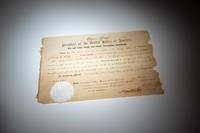
1873rif. 19315Washington D.C.: Executive Branch 1873. Signed Political Appointment. Parchment. Good. Signed by President Ulysses S. Grant the political appointment of Charles C. Miller as Deputy Postmaster at Penn Yan New York dated March 26 1873. Document printed on parchment paper seal at bottom left corner. Notable chipping and wear along margins. Document is countersigned by Secretary of State Hamilton Fish. Signed by Ulysses S. Grant along the bottom right with his signature partially obscured by dampstain. The recipient of this appointment Sergeant Charles C. Miller was a Republican political appointee who served as postmaster from 1873 to 1879. Miller served in Company I 148th New York Volunteers during the Civil War. Full document reads: "Ulysses S. Grant President of the United States of America to all who shall see these presents Greeting: Know ye That reposing special trust and confidence in the Integrity Ability and Punctuality of Charles C. Miller I do appoint him Deputy Postmaster at Penn Yan in the State of New York and do authorize and empower him to execute and fulfil the duties of that Office according to law to have and to hold the said Office with all the powers privileges and emoluments to the same of right appertaining unto him the said Charles C. Miller for the term of four years from the day of the date hereof; subject to the conditions prescribed by law. In testimony whereof I have caused these Letters to be made Patent and the Seal of the United States to be hereunto affixed. Given under my hand at the City of Washington the Twenty-sixth day of March in the year of Our Lord one thousand eight hundred and Seventy-three and of the Independence of the United States of America the Ninety-seventh. By the President. [Executive Branch] unknown books
rif. 51-3727Paris: H. Combes Gérant 54 rue Taitbout 1891. Folio. 25 x 32cm. Qtr. red morocco.Gravure portraits on rag paper hors teste. In-4 demi-chagrin rouge dos fleuronné à cinq nerfs seul le premier plat de la première livraison a été conservé tache d'encre. Paris 9 mai 1891 - 3 octobre 1891.Rare. Only one copy in OCLC 472353504 Portraits en héliogravure: Yvette Guilbert Berthe d'Egreville Marguerite Réter Madeleine Canjerack Jane Caylus Gabrielle Fleury Léonie de Glayeul Zizi Liane de Pougy Hélène d'Omerg Georgette de Riane Blanche Bruney de Saint-Étienne Albanie Rivière Debriège Maria Gentis Antonia Derville Valentine Valti Émilienne d'Alençon Méaly Pâquerette et J. de Clairvaux. Et deux portraits hors texte de Marie Gauthier et Suzanne d'Estrée.Caricatures ou croquis de Maurice de Lambert Maurice Marais G. Guérin Ulysse Roy Vignola V. Morland. La livraison du 19 septembre contient une illustration hors texte sur double page intitulée «Un Collectionneur».Deux ou trois petites déchirures marginales. Exemplaire en bonne condition. Paris: H. Combes, Gérant, 54 rue Taitbout, 1891 unknown
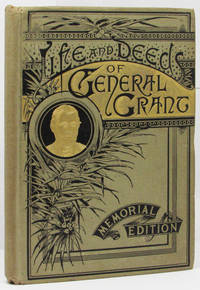
1885rif. 34195Boston: Boyle Brothers 1885. A rare original publisher's 'Salesman's Dummy' for the Memorial Edition of this early biography of Grant published almost immediately after his death. Specimen pages include two engraved portraits one with facsimile autograph 62 pages of engraved illustrations maps or facsimile records sixteen pages of facsimile manuscripts and 60 pages of text many of which are also illustrated. Bound in the rear are several ruled pages for recording orders including the subscribers' names addresses and preferred binding ten orders are already recorded. 8vo in the original olive cloth decorated in gilt and black on the upper cover and in blind on the lower cover attached to the front endpaper is the sample spine for cloth binding option and attached to the rear endpaper the sample spines for the deluxe morocco and calf binding options floral endpapers. A very fresh copy especially so. The binding is bright and clean the text is free of foxing stains or other evidence of use. A SCARCE SALES DUMMY AND A BEAUTIFULLY PRESERVED ITEM OF PUBLISHING HISTORY AS RELATES TO THE 18th AMERICAN PRESIDENT AND HERO OF THE CIVIL WAR. These 'dummies' were used by door-to-door publisher's salesmen to pre-sell the upcoming publication through subscription. Thus they are full with illustrations and passages of the book chosen to be the most appealing to potential buyers. Boyle Brothers hardcover
2002rif. BN424062Schulthess 2002. 2002. Private Equity Finanzierungsverträge: Funktion Recht Steuern. Private Equity Finanzierungsverträge: Funktion Recht Steuern. Salis-Lütolf Ulysses von Schulthess unknown
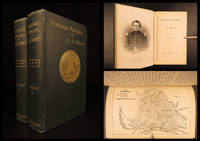
1885rif. 048 - 122 - 912First edition in the publisher's green cloth binding Publisher and Year: New York: Charles L. Webster and Company 1885 Vol 1 and 1886 Vol 2 Edition: First edition first printing in the publisher's cloth binding. Customers could order their sets in cloth sheep leather three-quarter morocco full morocco and tree calf ranging in price from $7 to $25. Although cloth was the cheapest of these bindings at $7 it was still expensive to consumers amounting to about $234 today when adjusting for inflation. Publisher's Prospectus Condition and Description: Octavos two volumes publisher's green cloth stamped in gilt plain edges floral endpapers frontispieces with tissue guards. Vol 1: 584 pp; Vol 2: 654 pp index errata. Additional in-text plates. Complete with all pages tissue guards and fold-out materials present. Rubbing and handling marks to the boards of each volume including to the gilt medallions. Tips bumped with some exposure. Foxing to the frontispieces tissue guards and title pages. In Vol 1 there is a partially erased prior owner's name to the top-right corner of the front free endpaper and a small bookseller stamp on the front pastedown. In Vol 2 there is a small partially erased note "2 Vols" in pencil to the front free endpaper. No other writing or underlining. Pages exhibit occasional minor imperfections. A handsome set with uncommonly well-preserved covers. "The natural disposition of most people is to clothe a commander of a large army whom they do not know with almost superhuman abilities. A large part of the National army for instance and most of the press of the country clothed General Lee with just such qualities but I had known him personally and knew that he was mortal; and it was just as well that I felt this." Inventory ID: 048 - 122 - 912 Charles L. Webster and Company
1858rif. 49829Chur 1858. Nach dem unedirten italiänischen Originalmanuskript bearbeitet mit Anmerkungen erläutert. Beigebunden: Salis-Seewis J.U.von; Gesammelte Schriften zur Bündner Geschichte Zwei Bände in einem Einband-Ecken u. Kanten berieben ansonsten in gutem Zustand Pradella 8°. Hln. marm. Raetica unknown
20048vo., First Edition thus, with illustrations by Paladino; full blue morocco, sides and backstrip blocked in gilt and black, ribbon marker, a near fine copy in publisher's board slip-case lettered in gilt. EDITION LIMITED TO 1760 COPIES [1750 FOR SALE]. This limited edition was published on 16 June 2004 to mark the Centenary of the day on which the action of the book is set.
1885rif. 259311885 Civil War 1ed Memoirs of Union General Ulysses S. Grant Illustrated MAPS 2v "The art of war is simple enough. Find out where your enemy is. Get at him as soon as you can. Strike him as hard as you can and keep moving on." – Ulysses S. Grant An important historical memoir of the Civil War arguably the most important and the best thing that Grant ever wrote. General Norman Schwartzkopf has recently called this the finest memoir of war experiences that has ever been penned. As such it is valuable in its scope its plain and clear analysis and language and its broad conclusions about the conduct of the war. Item number: #25931 Price: $795 GRANT Ulysses S Personal Memoirs of U.S. Grant New York: Charles L. Webster and Co. 1885-86. First edition. Details: <!-- if !supportLists-->· <!--endif-->Collation: Complete with all pages; 2 volumes <!-- if !supportLists-->o <!--endif-->Vol. I – 584 <!--endif-->19 illustrations <!-- if !supportLists-->o <!--endif-->Vol. II – 647 1 <!--endif-->31 illustrations <!-- if !supportLists-->· <!--endif-->Language: English <!-- if !supportLists-->· <!--endif-->Binding: Hardcover; tight and secure <!-- if !supportLists-->o <!--endif-->Green cloth <!-- if !supportLists-->· <!--endif-->Size: ~9.5in X 6.5in 24cm x 16.5cm Our Guarantee: Very Fast. Very Safe. Free Shipping Worldwide. Customer satisfaction is our priority! Notify us with 7 days of receiving and we will offer a full refund without reservation! 25931 Photos available upon request. Charles L. Webster and Co hardcover
1885rif. 276301885 General Ulysses S. Grant 1ed Civil War Memoirs of Union Illustrated MAPS 2v "The art of war is simple enough. Find out where your enemy is. Get at him as soon as you can. Strike him as hard as you can and keep moving on." – Ulysses S. Grant An important historical memoir of the Civil War arguably the most important and the best thing that Grant ever wrote. General Norman Schwartzkopf has recently called this the finest memoir of war experiences that has ever been penned. As such it is valuable in its scope its plain and clear analysis and language and its broad conclusions about the conduct of the war. Item number: #27630 Price: $795 GRANT Ulysses S Personal Memoirs of U.S. Grant New York: Charles L. Webster and Co. 1885-86. First edition. Details: · Collation: Complete with all pages; 2 volumes o Vol. I – 584 § 19 illustrations o Vol. II – 647 1 § 31 illustrations · Language: English · Binding: Hardcover; secure o Green cloth · Size: ~9.5in X 6.5in 24cm x 16.5cm Our Guarantee: Very Fast. Very Safe. Free Shipping Worldwide. Customer satisfaction is our priority! Notify us with 7 days of receiving and we will offer a full refund without reservation! Charles L. Webster and Co. hardcover
1885rif. Alibris.0017715New York: C. L. Webster & Co 1885. First edition. Hard cover. Very good. No dust jacket. Light stains to Volume 1 cover. 2 volume set. 2 v. front. ports. plates maps facsims. 24 cm. Includes: Maps Portraits Plates Facsimiles. C. L. Webster & Co hardcover
1981rif. 508300Viking 1981. First Edition. Hardcover with Dust Jacket. NEAR FINE/NEAR FINE. First American Edition first printing. SIGNED by the Odysseus Elytis on the half title and inscribed in Greek to his friend photographer and publisher Stathis Orphanos. 114pp. 8vo beige paper over boards backed in black cloth with silver gilt spine lettering machine-deckled fore edge. NEAR FINE in NEAR FINE DJ. Some trivial toning to extremities owner's initials to FFEP and some very faint offsetting to the endsheets otherwise exceedingly clean and sharp with crisp fresh pages. DJ price clipped crisp and bright otherwise. Orphanos a renowned photographer was born of Greek parents and maintained a residence on the Greek islans of Samos. A native of Crete and leader of the Greek resistance to the Nazis Elytis the Nobel Prize for Literature in 1979. In their presentation the academy stated that his poetry "depicts with sensual strength and intellectual clearsightedness modern man's struggle for freedom and creativeness . In its combination of fresh sensuous flexibility and strictly disciplined implacability in the face of all compulsion Elytis' poetry gives shape to its distinctiveness which is not only very personal but also represents the traditions of the Greek people." Translated by Edmund Keeley and Philip Sherrard. Translated by Edmund Keeley George Savidis Philip Sherrard John Stathatos and Nanos Valaoritis. Viking hardcover
rif. 105957Affiche 460 X 305 mm. imprimée recto seul, pliée en 2.
1954rif. List3210Greenville Illinois 1954. Two stapled packets of mimeographed typed pages eighty-seven and twenty-eight pages with one signed. Excellent to Near Fine. An autobiography and genealogy written by Ulysses S. DeMoulin 1871–1955 founder of DeMoulin Bros. a uniform manufacturing company which now mainly supplies marching band attire. The genealogy incorrectly traces the family’s history back to French Revolutionary figure Camille Desmoulins though it appears accurate otherwise. It includes a description of early Sebastopol Highland Illinois with a simple map. In the autobiography which is told in a large number of short anecdotes DeMoulin discusses his childhood and early life in Jamestown and Sebastopol and goes into detail about the early years of his company beginning with the formation of the Modern Woodmen of America fraternal organization for which the company supplied uniforms and items used in ‘rituals’. DeMoulin used the profits from this enterprise to invest in a number of others including a mine near Gold Hill Colorado and oil drilling land in Illinois. However the most interesting portions of the autobiography concern DeMoulin’s role in the development of agriculture in California’s Imperial Valley. DeMoulin first travels to southern California in 1903 happening to meet several engineers involved with the Imperial Irrigation System who take him to see the new town of Brawley: “Here by lantern light we sat around on the ground in the evening discussing many kinds of farm lands and if soft hard or sandy. We slept in ‘remadas’ made by setting posts to protrude about twelve feet above the ground which were then braced and divided into small box-like stalls. The remada was then covered with tree branches and a huge heavy taupalin sic curtain hung over the sides and front at night to keep out the dust of which you might find two or three inches at your door in the morning. A pitcher of water and a bowl were your only means of bathing. There were no streets in Brawley at this time only trails as the town had not yet been surveyed having only been founded in October 1902. People were living in tents while waiting for completion of hotel accommodations and other living quarters under construction.” DeMoulin begins buying land in the Brawley area to rent to farmers and traveling to the area regularly. He describes the building of the Laguna Dam spending a week at the workers’ camp “at which time I slept in the workmen’s crudely-built bunks and ate with them at the long rough pine tables”; and befriends author Harold Bell Wright. He also witnesses several conflicts with the IWW: “In 1908 there moved into Brawley about 200 International Workmen of the World or more familiarly known as ‘I.W.W.’s’ I won’t Work and in command was a Captain Stanley. However as most unwelcome guests they proceeded to join a strike in the cantaloupe sheds and inserting razor blades into apples the strikers threw them at workers. ‘Goons’ also tried to interfere with the trucking operations from the fields to the packing sheds. I recall of one driver telling a goon that if he even attempted to place a foot in his truck he would shoot him. And defying the driver the goon was instantly killed. Naturally this would cause a riot and they sent to El Centro for a tank such as it was in those days - a cannon and several machine guns. But soon after the Mayor had issued orders to shoot anyone getting out of hand an agreement was easily reached.” University of Washington’s IWW History Project documents two IWW actions in Brawley between 1905 and 1920 neither of which match DeMoulin’s description; nor does the event appear in newspapers. However “Captain” William Stanley was in the area serving as the secretary of the I.W.W.’s chapter in the Imperial Valley. In 1911 Stanley was killed in an early battle of the Mexican Revolution assisting Mexican Liberal Party fighters in occupying Mexicali. DeMoulin claims to have traveled with several others to watch the fighting that would end the occupation: “It was suddenly discovered one morning that Captain Stanley and his I.W.W.’s had disappeared during the night and word had gotten around they had settled in Mexicalo sic a Mexican border town and were so strong in number they overpowered the police pillaged the shops and stores defying the Mexican Government by taking over complete possession of Mexicalo. However after putting up with this condition for several months the Mexican Government sent in about 500 Infantrymen with orders to get rid of them immediately under any condition. . Stanley’s men had made a large opening in the river bank to a depth of about five feet which led through to the bank facing south. From this vantage point his men could fire their muskets when the Mexicans advanced towards them and soon took to their heels when Stanley’s men began firing. . Several of us had driven down to sic Brawley to witness the fighting and bullets had been spattered everywhere. Many of the people never thinking of danger stood out in the open so as not to miss what was going on but I was glad to stay in the back of the adobes at least where one was protected from stray bullets. And having heard rumors of their retreating possibly the next day which was Sunday we drove down again but all was quiet and we met with no resistance. Many of the men were swimming and others were entertaining their wives and families in one way or another. We didn’t stay too long on that trip as one never knew what might happen. But it wasn’t long before they disappeared from Mexicalo entirely for which everyone was most grateful and happy.” DeMoulin is none too fond of Mexican workers either describing how the 1928 construction of a primitive border wall “didn’t stop the wetbacks . from swimming across” and complaining that “regardless of having no sense nor education many were hired and the employers would hide them in groves because if they were arrested it would cost $160.00 including court and attorney fees to have each one returned to Mexico.” DeMoulin’s other targets for racial abuse include “a couple of crooked ‘Jewish Kikes’” who were “certainly professionals when it came to putting the money in their pockets” and several Black men who he claims steal from him. DeMoulin credits himself with bringing grapefruit production to the Imperial Valley and describes a scam by the area’s real estate agents to unload inferior farmland onto unsuspecting investors. He recounts his company making leather “‘Red Men’s’ costumes” for a “Chief Gray Eagle” in Oklahoma whose “squaws wouldn’t work for him any more.” Of interest to historians of the Imperial Valley’s development and especially of labor relations in the agriculture industry. unknown
1954rif. List3210Greenville Illinois 1954. Two stapled packets of mimeographed typed pages eighty-seven and twenty-eight pages with one signed. Excellent to Near Fine. An autobiography and genealogy written by Ulysses S. DeMoulin 1871–1955 founder of DeMoulin Bros. a uniform manufacturing company which now mainly supplies marching band attire. The genealogy incorrectly traces the family’s history back to French Revolutionary figure Camille Desmoulins though it appears accurate otherwise. It includes a description of early Sebastopol Highland Illinois with a simple map. In the autobiography which is told in a large number of short anecdotes DeMoulin discusses his childhood and early life in Jamestown and Sebastopol and goes into detail about the early years of his company beginning with the formation of the Modern Woodmen of America fraternal organization for which the company supplied uniforms and items used in ‘rituals’. DeMoulin used the profits from this enterprise to invest in a number of others including a mine near Gold Hill Colorado and oil drilling land in Illinois. However the most interesting portions of the autobiography concern DeMoulin’s role in the development of agriculture in California’s Imperial Valley. DeMoulin first travels to southern California in 1903 happening to meet several engineers involved with the Imperial Irrigation System who take him to see the new town of Brawley: “Here by lantern light we sat around on the ground in the evening discussing many kinds of farm lands and if soft hard or sandy. We slept in ‘remadas’ made by setting posts to protrude about twelve feet above the ground which were then braced and divided into small box-like stalls. The remada was then covered with tree branches and a huge heavy taupalin sic curtain hung over the sides and front at night to keep out the dust of which you might find two or three inches at your door in the morning. A pitcher of water and a bowl were your only means of bathing. There were no streets in Brawley at this time only trails as the town had not yet been surveyed having only been founded in October 1902. People were living in tents while waiting for completion of hotel accommodations and other living quarters under construction.” DeMoulin begins buying land in the Brawley area to rent to farmers and traveling to the area regularly. He describes the building of the Laguna Dam spending a week at the workers’ camp “at which time I slept in the workmen’s crudely-built bunks and ate with them at the long rough pine tables”; and befriends author Harold Bell Wright. He also witnesses several conflicts with the IWW: “In 1908 there moved into Brawley about 200 International Workmen of the World or more familiarly known as ‘I.W.W.’s’ I won’t Work and in command was a Captain Stanley. However as most unwelcome guests they proceeded to join a strike in the cantaloupe sheds and inserting razor blades into apples the strikers threw them at workers. ‘Goons’ also tried to interfere with the trucking operations from the fields to the packing sheds. I recall of one driver telling a goon that if he even attempted to place a foot in his truck he would shoot him. And defying the driver the goon was instantly killed. Naturally this would cause a riot and they sent to El Centro for a tank such as it was in those days - a cannon and several machine guns. But soon after the Mayor had issued orders to shoot anyone getting out of hand an agreement was easily reached.” University of Washington’s IWW History Project documents two IWW actions in Brawley between 1905 and 1920 neither of which match DeMoulin’s description; nor does the event appear in newspapers. However “Captain” William Stanley was in the area serving as the secretary of the I.W.W.’s chapter in the Imperial Valley. In 1911 Stanley was killed in an early battle of the Mexican Revolution assisting Mexican Liberal Party fighters in occupying Mexicali. DeMoulin claims to have traveled with several others to watch the fighting that would end the occupation: “It was suddenly discovered one morning that Captain Stanley and his I.W.W.’s had disappeared during the night and word had gotten around they had settled in Mexicalo sic a Mexican border town and were so strong in number they overpowered the police pillaged the shops and stores defying the Mexican Government by taking over complete possession of Mexicalo. However after putting up with this condition for several months the Mexican Government sent in about 500 Infantrymen with orders to get rid of them immediately under any condition. . Stanley’s men had made a large opening in the river bank to a depth of about five feet which led through to the bank facing south. From this vantage point his men could fire their muskets when the Mexicans advanced towards them and soon took to their heels when Stanley’s men began firing. . Several of us had driven down to sic Brawley to witness the fighting and bullets had been spattered everywhere. Many of the people never thinking of danger stood out in the open so as not to miss what was going on but I was glad to stay in the back of the adobes at least where one was protected from stray bullets. And having heard rumors of their retreating possibly the next day which was Sunday we drove down again but all was quiet and we met with no resistance. Many of the men were swimming and others were entertaining their wives and families in one way or another. We didn’t stay too long on that trip as one never knew what might happen. But it wasn’t long before they disappeared from Mexicalo entirely for which everyone was most grateful and happy.” DeMoulin is none too fond of Mexican workers either describing how the 1928 construction of a primitive border wall “didn’t stop the wetbacks . from swimming across” and complaining that “regardless of having no sense nor education many were hired and the employers would hide them in groves because if they were arrested it would cost $160.00 including court and attorney fees to have each one returned to Mexico.” DeMoulin’s other targets for racial abuse include “a couple of crooked ‘Jewish Kikes’” who were “certainly professionals when it came to putting the money in their pockets” and several Black men who he claims steal from him. DeMoulin credits himself with bringing grapefruit production to the Imperial Valley and describes a scam by the area’s real estate agents to unload inferior farmland onto unsuspecting investors. He recounts his company making leather “‘Red Men’s’ costumes” for a “Chief Gray Eagle” in Oklahoma whose “squaws wouldn’t work for him any more.” Of interest to historians of the Imperial Valley’s development and especially of labor relations in the agriculture industry. unknown books
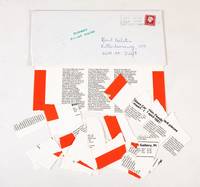
rif. 8076Single sheet exhibition invitation torn into ca. two dozen pieces. Amsterdam: Pieter Brattinga Gallery 1981. One of Ulises Carrión’s rarest mail art projects with the original mailed envelope sent to the collector Tjeerd Deelstra b. 1937. As the artist intended explained below a small torn portion is not present. “In 1981 when the Print Gallery Pieter Brattinga invited Carrión to exhibit his work there Carrión thought of a response project in which he instructed participants to reconstruct in any way they desired the bottom half of an invitation which had been shredded. They were then to sign it and mail it back to the gallery. The lower section of the invitation included a definition of mail art which the artist had torn up and from which he had then removed a small fragment. This way the definition of mail art could never be reconstructed and the instruction given by the artist was impossible to accomplish. The project resulted in 243 responses in all sorts of formats; not only intervened letters but also objects. By making participants reconstruct the invitation the project had a cyclical component that was emphasized by having the word ‘feedback’ in its title. In this way Feedback Pieces takes one step further Carrión’s intentions to reformulate not only the artwork but also the communication system through which it travels.”–Aimé Iglesias Lukin “King Kong Archives: Ulises Carrión on Mail and Art” in Ulises Carrión: The Big Monster 2019 pp. 11-13 pictured. Both the envelope and torn-up invitation are in excellent condition. ⧠Juan J. Agius ed. Ulises Carrión & The Big Monster 2014 pp. 120-35 pictured. unknown
rif. 796023 1 leaves mimeographed on rectos only. Small folio 288 x 187 mm. self-bound stapled. Warsaw: Galeria Remont 1977. One of Carrión’s rarest exhibition catalogues. The artist curated this show at the Galeria Remont in Warsaw a contemporary art space established by the Polish artist and filmmaker Henryk Gajewski b. 1948 in a dormitory student club at the Warsaw University of Technology. The gallery operated from April 1972 to November 1979 hosting performance art exhibitions of photography stamp art and bookworks and many other events. Carrión had staged an exhibition called Contents at the gallery the previous December. The present exhibition’s title translates as “Other Books.” Gajewski and Carrión contributed essays to the catalogue both in Polish. The majority of the catalogue consists of an extensive list of artists engaging with the book form and their bookworks. They include Robert Altman John Armleder Daniel Buren Mirtha Dermisache Peter Downsbrough General Idea Michael Gibbs Klaus Groh Ian Hamilton Finlay Dick Higgins Douglas Huebler Alison Knowles Richard Kostelanetz Joseph Kosuth Anna Kutera George Maciunas Raul Marroquin Maurizio Nannucci Clemente Padin Dieter Roth Ed Ruscha Takako Saito Carolee Schneemann Mieko Shiomi Telfer Stokes Endre Tot Jiri Valoch Wolf Vostell Herman de Vries Lawrence Weiner etc. etc. Leaves 16-23 present Carrión’s selections of seminal books along with essays theorizing on bookworks and mail art. Among the bookworks shown we note: Carrión’s Looking for Poetry 1973 General Idea’s Manipulating the Self 1971 Hamilton Finlay’s Honey by the Water 1973 Huebler’s Location Piece 2 1970 Kosuth’s Notebook on Water 1965-66 1970 Maciunas’s Flux Paper Events 1976 Ruscha’s Every Building on the Sunset Strip 1966 Schneemann’s Up to and Including Her Limits 1974 Shiomi’s Spatial Poem 1976 and Weiner’s Various Manners and with Various Things 1976. Near fine copy; staples rusted. The pictorial wrappers added to some examples of this catalogue were never bound with the present copy. ⧠For more information on the Galeria Remont see the Museum of Modern Art in Warsaw’s website page “Art Prints of the Exchange Gallery” then the section on Gajewski and Galeria Remont. U. Carrión Quant aux Livres 2008 p. 209. Juan J. Agius & Ricardo Ocampo eds. Ulises Carrión: Books & More Catalogue Raisonné 2013 p. 116. unknown
rif. 8076Single sheet exhibition invitation torn into ca. two dozen pieces. Amsterdam: Pieter Brattinga Gallery 1981. One of Ulises Carrión’s rarest mail art projects with the original mailed envelope sent to the collector Tjeerd Deelstra b. 1937. As the artist intended explained below a small torn portion is not present. “In 1981 when the Print Gallery Pieter Brattinga invited Carrión to exhibit his work there Carrión thought of a response project in which he instructed participants to reconstruct in any way they desired the bottom half of an invitation which had been shredded. They were then to sign it and mail it back to the gallery. The lower section of the invitation included a definition of mail art which the artist had torn up and from which he had then removed a small fragment. This way the definition of mail art could never be reconstructed and the instruction given by the artist was impossible to accomplish. The project resulted in 243 responses in all sorts of formats; not only intervened letters but also objects. By making participants reconstruct the invitation the project had a cyclical component that was emphasized by having the word ‘feedback’ in its title. In this way Feedback Pieces takes one step further Carrión’s intentions to reformulate not only the artwork but also the communication system through which it travels.”–Aimé Iglesias Lukin “King Kong Archives: Ulises Carrión on Mail and Art” in Ulises Carrión: The Big Monster 2019 pp. 11-13 pictured. Both the envelope and torn-up invitation are in excellent condition. ⧠Juan J. Agius ed. Ulises Carrión & The Big Monster 2014 pp. 120-35 pictured. unknown books
rif. 796023 1 leaves mimeographed on rectos only. Small folio 288 x 187 mm. self-bound stapled. Warsaw: Galeria Remont 1977. One of Carrión’s rarest exhibition catalogues. The artist curated this show at the Galeria Remont in Warsaw a contemporary art space established by the Polish artist and filmmaker Henryk Gajewski b. 1948 in a dormitory student club at the Warsaw University of Technology. The gallery operated from April 1972 to November 1979 hosting performance art exhibitions of photography stamp art and bookworks and many other events. Carrión had staged an exhibition called Contents at the gallery the previous December. The present exhibition’s title translates as “Other Books.” Gajewski and Carrión contributed essays to the catalogue both in Polish. The majority of the catalogue consists of an extensive list of artists engaging with the book form and their bookworks. They include Robert Altman John Armleder Daniel Buren Mirtha Dermisache Peter Downsbrough General Idea Michael Gibbs Klaus Groh Ian Hamilton Finlay Dick Higgins Douglas Huebler Alison Knowles Richard Kostelanetz Joseph Kosuth Anna Kutera George Maciunas Raul Marroquin Maurizio Nannucci Clemente Padin Dieter Roth Ed Ruscha Takako Saito Carolee Schneemann Mieko Shiomi Telfer Stokes Endre Tot Jiri Valoch Wolf Vostell Herman de Vries Lawrence Weiner etc. etc. Leaves 16-23 present Carrión’s selections of seminal books along with essays theorizing on bookworks and mail art. Among the bookworks shown we note: Carrión’s Looking for Poetry 1973 General Idea’s Manipulating the Self 1971 Hamilton Finlay’s Honey by the Water 1973 Huebler’s Location Piece 2 1970 Kosuth’s Notebook on Water 1965-66 1970 Maciunas’s Flux Paper Events 1976 Ruscha’s Every Building on the Sunset Strip 1966 Schneemann’s Up to and Including Her Limits 1974 Shiomi’s Spatial Poem 1976 and Weiner’s Various Manners and with Various Things 1976. Near fine copy; staples rusted. The pictorial wrappers added to some examples of this catalogue were never bound with the present copy. ⧠For more information on the Galeria Remont see the Museum of Modern Art in Warsaw’s website page “Art Prints of the Exchange Gallery” then the section on Gajewski and Galeria Remont. U. Carrión Quant aux Livres 2008 p. 209. Juan J. Agius & Ricardo Ocampo eds. Ulises Carrión: Books & More Catalogue Raisonné 2013 p. 116. unknown books
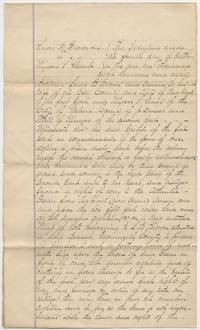
rif. 415194Unbound. Near Fine. One legal folio folded at the top to make four pages. Old folds as filed soiling and small tears at the extremities of the folds very good or better. A certified handwritten copy prepared in March 1885 shortly before Grant's death of an 1880 contract between Grant and Lewis B. Brown of New York City. Signed by various clerks with one seal but NOT SIGNED BY GRANT. The document gives Grant ".forever a right of way to the Atlantic Ocean from Seabrook now Ocean Avenue over and upon the lot. and the privilege to erect a bathing house of moderate size upon the Shore of said Ocean. ." Presumably the "bathing house" was what we'd call a cabana. The document has been docketed and stamped in 1887 two years after Grant's death. Grant's shore house served as the Summer White House during his two terms from 1869-1877 obviously this right-of-way was issued after his term was over. unknown
rif. 415194Unbound. Near Fine. One legal folio folded at the top to make four pages. Old folds as filed soiling and small tears at the extremities of the folds very good or better. A certified handwritten copy prepared in March 1885 shortly before Grant's death of an 1880 contract between Grant and Lewis B. Brown of New York City. Signed by various clerks with one seal but NOT SIGNED BY GRANT. The document gives Grant ".forever a right of way to the Atlantic Ocean from Seabrook now Ocean Avenue over and upon the lot. and the privilege to erect a bathing house of moderate size upon the Shore of said Ocean. ." Presumably the "bathing house" was what we'd call a cabana. The document has been docketed and stamped in 1887 two years after Grant's death. Grant's shore house served as the Summer White House during his two terms from 1869-1877 obviously this right-of-way was issued after his term was over. unknown books
1981rif. 509897Houghton Mifflin 1981. First Edition. Hardcover with Dust Jacket. FINE/NEAR FINE. SIGNED and INSCRIBED by Elytis on half-title 'For Stathis and Ralph' in GREEK. First English Edition First Printing. 74pp. Orange speckled paper over boards with blue-gilt lettering to front cover backed in blue finished cloth with silver-gilt spine lettering red endpapers. An exceedingly clean and crisp copy. Dust jacket has some trivial rubbing to head and tail of spine entirely crisp and bright otherwise. Ralph Sylvester and Stathis Orphanos were publishers of the fine-press publishing company 'Sylvester & Orphanos.' Stathis was a noted photographer and born of Greek parents maintaining a residence on the island of Samos throughout his life. First published in Greece in 1978 the year before Elytis was awarded the Nobel Prize Maria Nefeli was a stark departure from the earlier work that had won him renown as the greatest Greek poet of his generation. Its novelty gave many early readers pause but 'despite the initial reservations voiced by some critics Maria Nefeli came to be regarded as the summa of Elytis's later writings.' Poetry Foundation. Houghton Mifflin hardcover
rif. 123182aafWinterthur, Steinerische Buchhandlung, 1806- 07- 08- 09, in-8vo, X + 2 Bl. (Inhaltsverz.) + 438 S. + 1 Bl. ‘Druckfehler’ / X + 1 Bl. ‘Druckfehler’ + 367 S. (recte 397) + 1 S. weiss / VIII + 530 S. + 1 Bl. (Druckfehler aus dem zweiten Band) / VIII + 457 S. + 1 S. Druckfehler + 1 Bl. (Druckfehler im dritten Band) + 1 gef. Tabelle zwischen S. 26/27 + 1 (von 2) gef. Karte‘, heraldisches Ex-Libris von ‘Theophil Studer, Professor in Bern’ + Bernhard Studer, Prof: der Geologie’ + Stempel ‘Dr. Th. Studer Professor Bern’, Hlwd. um 1900 mit goldgepr. Rückentiteln (Kapitale teils etw. berieben).
rif. 121187aafO.A.: Wilhelm Haas Sohn, Basel, 1792, kl. in-8vo, 2 Titelbl. (mit wiederholter allegor. Vignette gest. v. Heiz) + XXX + 371 S., 2. Titelbl. etwas fleckig, ansonsten sehr frisch / Titelbl. mit gest. Vign. + 187 S. ; Titelbl. + + 258 S. + 1 Bl. Druckfehler, hs. Besitzervermerk ‘Richard Kirchgraber’ auf Titelbl., Gebunden in Halbleder d. Zeit, Lederrückenschildchen. Schönes Exemplar
rif. DADAX0814318347Brand: Wayne State University Press 0000-00-00. paperback. New. 1.00x11.00x9.00. Buy with confidence. Excellent Customer Service & Return policy. Brand: Wayne State University Press paperback
1967rif. 63382Carbondale & Edwardsville IL: Southern Illinois University Press 1967- 1991. Eighteen vols. xxxix 1 458; xxxiii 1 399 1; xxv 1 479 1; xxv 1 520; xxv 1 458; xxiv 2 492; xxiv 588; xxiii 1 609 1; xxiv 700; xxv 1 618; xxvi 497 1; xxv 1 520; xxvi 599 1; xxvi 548; xxv 1 691 1; xxvi 635 1; xxiii 1 663 1; xxiii 1 661 1; xxiv 651 1 pp. With frontispiece’s photo illustrations facsimiles of letters maps. Uniformly bound in brick-red publisher’s cloth black & gilt spine labels minor bumping to upper right corner vol. 1 w/ d.j.’s from the Clark County Historical Society deaccessioning material. First editions of the first 18 volumes in this massive project encompassing Ulysses Grant’s letters and correspondence from his Prewar career through Reconstruction. Beginning with his 17-year-old cadet letters home at West Point and then service in Louisiana Texas the Mexican War and at Fort Vancouver entry into the Civil War the early campaigns of Fort Donelson Battles of Shiloh Corinth Vicksburg ascension to Lieutenant General the battles of Petersburg Cold Harbor & the Wilderness General Sherman’s March Appomattox assassination of President Lincoln the capture of Jefferson Davis and finally the disbanding of the immense Union Army. Simon d. 2008 drew upon a vast number of previously unpublished or unknown letters memorandum and writings of Grant and together with extensive notes and analysis offered an essential research tool for the study of American History the Civil War Reconstruction and the steps to the Grant Presidency. The set continues in production and Simon himself oversaw the first 31 annotated volumes. He also edited the memoirs of Julia Dent Grant. Southern Illinois University Press, hardcover